

Drawing Faces and Hands (Recovery)
 |
Description
Book Introduction
2020 Recover Edition with New Cover
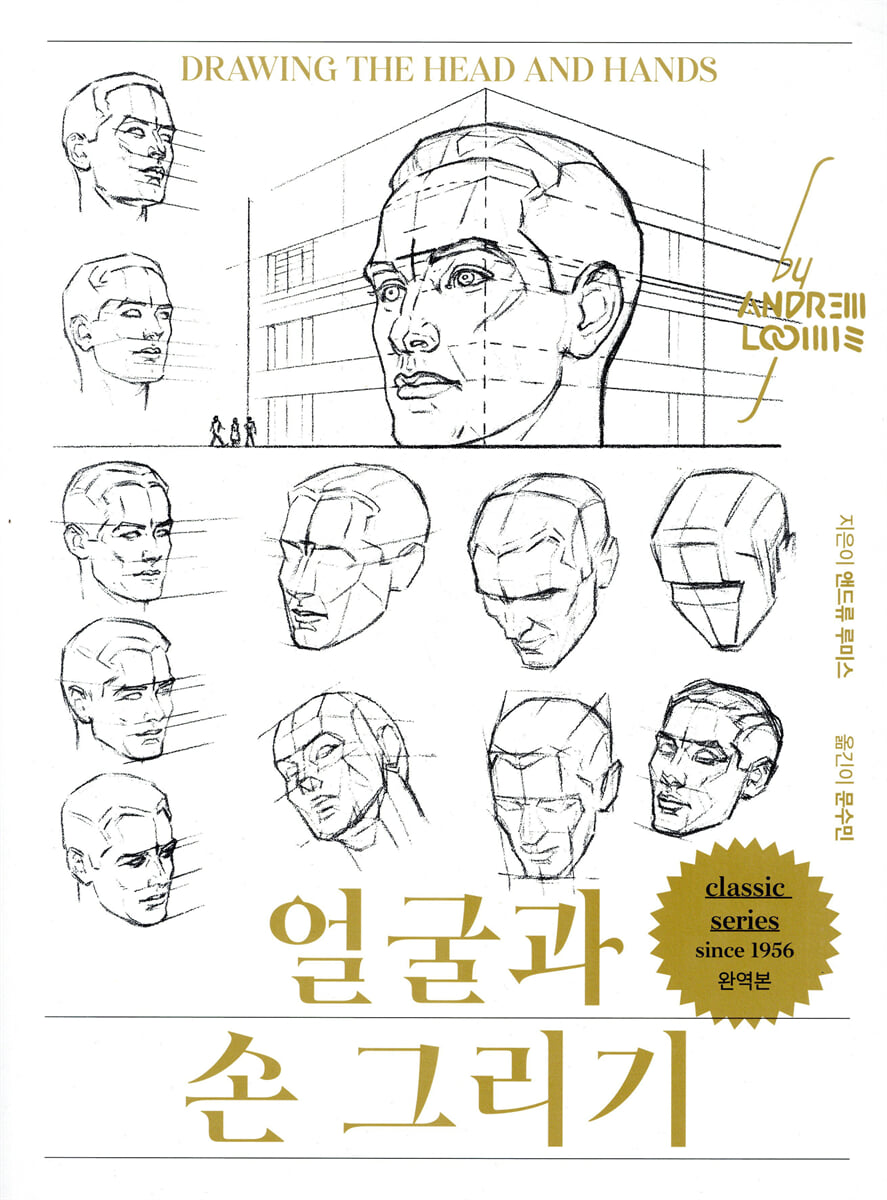
When drawing a picture, the most important part is probably the face.
The face is the key to portraiture, as it brings life to the painting and gives personality to the subject.
Andrew Loomis, the author of Easy and Clear Drawing Techniques, presents a method for drawing detailed parts such as facial expressions, movement, and shading based on anatomy.
Additionally, by applying basic composition principles, it depicts various models of all ages, including men, women, babies, children, teenagers, adults, and the elderly.
In addition, it details the universal characteristics of each type and shows how to express the individuality of each type model.
In portraiture, hands are a tricky part even for professional artists.
Therefore, when drawing hands, we encourage readers to first examine their own hands in detail, and we have included sketches and illustrations of all types of hands.
Once you fully understand the structure and proportions of the hand, you'll be able to draw the hands of women, babies, children, and older models with ease, each with its own unique personality.
With the 93 examples and detailed explanations in 『Drawing Faces and Hands』, you will be able to perfectly embody the basic techniques of drawing faces and hands.
When drawing a picture, the most important part is probably the face.
The face is the key to portraiture, as it brings life to the painting and gives personality to the subject.
Andrew Loomis, the author of Easy and Clear Drawing Techniques, presents a method for drawing detailed parts such as facial expressions, movement, and shading based on anatomy.
Additionally, by applying basic composition principles, it depicts various models of all ages, including men, women, babies, children, teenagers, adults, and the elderly.
In addition, it details the universal characteristics of each type and shows how to express the individuality of each type model.
In portraiture, hands are a tricky part even for professional artists.
Therefore, when drawing hands, we encourage readers to first examine their own hands in detail, and we have included sketches and illustrations of all types of hands.
Once you fully understand the structure and proportions of the hand, you'll be able to draw the hands of women, babies, children, and older models with ease, each with its own unique personality.
With the 93 examples and detailed explanations in 『Drawing Faces and Hands』, you will be able to perfectly embody the basic techniques of drawing faces and hands.
- You can preview some of the book's contents.
Preview
index
A word to the readers
Introduction
Part 1: The Male Head
1 The head is basically ball-shaped
2 Let's draw the most important cross when drawing a face.
3 The cross and center line determine the direction of the head
4 Let's set the center line
5. Briefly understand the structure of bones
6 Let's take a look at the skeleton that makes up the head.
Learn the movements of the neck and head, taking into account the 7 rotation points.
Draw the head by fitting together 8 parts.
Face treatment
9 Basic facial composition and detailed facial composition
10 Let's change the direction of the head
11 Let's give perspective to the face
12 Draw different types of heads by adjusting the spacing between the facial features.
13 Always draw based on the center line
14 Let's draw the type of hair you want
15. Changes to the ball and face create different types.
16 Let's express the personality of the character
sense of rhythm
17 Let's show the rhythmic lines of the head.
General composition of the head
18 Learn the basic proportions of a male head
Draw the head according to the 19 units
muscles of the head and face
20 Learn the anatomy of the head
21 Learn how muscles move
22 Muscles extend at multiple angles
Why You Should Learn Anatomy When Drawing Heads
23 Learn about the mechanical principles of the mouth
24 Let's look at the mechanical principles of the eye.
25 Observe the movement of the lips
26 Let's look at the structure of the nose and ears.
27 Let's draw a smiling face
28 Let's draw various facial expressions
29 Express your personality through facial expressions
30 Let's analyze the wrinkles on your face
31 Let's show your age on your face
Light and shade
Let's express the volume of 32 sides.
33 Let's combine anatomical structures, compositions, and surfaces.
It shows light and shade on 34 sides
35 All heads are different
36 Identify different types of personalities
37 Let's draw a smiling male face.
38 Let's draw an older man's head.
39 Let's show your individuality
Part 2: Women's Heads
Let's take a look at the composition of 40 women's hair.
41 Configure the head to fit each model
42 The bones and muscles of the female head are not as prominent as those of the male.
43 Charm comes from the basic drawing stage.
44 A woman's face also has angles
45 Let's draw a woman's head
46 Let's practice some more with women's hair
47 Women's Works 1
48 Women's Practice 2
49 Let's draw a grandmother
50 Observing the aging process
Part 3: Baby's Head
51 Let's learn about the proportions of a baby's head (1 year old)
52 Let's learn about the proportions of a baby's head (ages 2-3)
53 Let's make a baby's head
54 Baby Sketch
55 Let's Draw a Baby 1
56 Let's Draw a Baby 2
57 Let's Draw a Baby 3
58 Divide the area between the eyebrows and chin into four sections (ages 3-4)
Part 4: The Child's Head
Chapter 1: Drawing for Children (Ages 4-8)
59 Find out the proportions of a boy's head
60 Find out the proportions of a girl's head
61 Let's learn the structure of a boy's head.
62 Let's learn the structure of a girl's hair.
63 Drawing a Boy 1
64 Drawing a Girl 1
65 Drawing a Boy 2
66 Drawing a Girl 2
Chapter 2: Drawing for Elementary School Students (Ages 8-13)
67 Let's find out the proportions of a boy's head.
68 Let's find out the proportions of a female student's head.
Let's divide the 69-year-old boy's face into four sections.
Let's divide the face of a 70-year-old girl into four sections.
Let's draw a 71-year-old boy.
Let's draw a 72-year-old girl
Chapter 3: Drawing for Teenagers (Ages 14-18)
73 Let's find out the proportions of a male teenager's head.
74 Let's find out the proportions of a girl's head
Let's draw a 75 year old male teenager.
Let's draw a 76-year-old girl.
Part 5: Drawing Hands
77 Let's take a look at the anatomical structure of the hand.
78 Let's represent the hand as a square mass.
79 Hands: Learn the proportions of each part
Let's observe the composition of the 80 hands.
81 The palms are hollow
82 Hands represent distance
83 Let's draw a moving hand
Let's draw 84 knuckles
85 Practice drawing your own hands
86 Let's draw a woman's hand
87 Let's draw fingers with slender fingertips.
88 You need to practice a lot to draw hands well.
89 Let's draw a baby's hand
90 Baby Hands Practice
91 Let's draw a child's hand
The 92 hand ratio hardly changes
93 Traces of time appear on hands too
A final message to the readers
Introduction
Part 1: The Male Head
1 The head is basically ball-shaped
2 Let's draw the most important cross when drawing a face.
3 The cross and center line determine the direction of the head
4 Let's set the center line
5. Briefly understand the structure of bones
6 Let's take a look at the skeleton that makes up the head.
Learn the movements of the neck and head, taking into account the 7 rotation points.
Draw the head by fitting together 8 parts.
Face treatment
9 Basic facial composition and detailed facial composition
10 Let's change the direction of the head
11 Let's give perspective to the face
12 Draw different types of heads by adjusting the spacing between the facial features.
13 Always draw based on the center line
14 Let's draw the type of hair you want
15. Changes to the ball and face create different types.
16 Let's express the personality of the character
sense of rhythm
17 Let's show the rhythmic lines of the head.
General composition of the head
18 Learn the basic proportions of a male head
Draw the head according to the 19 units
muscles of the head and face
20 Learn the anatomy of the head
21 Learn how muscles move
22 Muscles extend at multiple angles
Why You Should Learn Anatomy When Drawing Heads
23 Learn about the mechanical principles of the mouth
24 Let's look at the mechanical principles of the eye.
25 Observe the movement of the lips
26 Let's look at the structure of the nose and ears.
27 Let's draw a smiling face
28 Let's draw various facial expressions
29 Express your personality through facial expressions
30 Let's analyze the wrinkles on your face
31 Let's show your age on your face
Light and shade
Let's express the volume of 32 sides.
33 Let's combine anatomical structures, compositions, and surfaces.
It shows light and shade on 34 sides
35 All heads are different
36 Identify different types of personalities
37 Let's draw a smiling male face.
38 Let's draw an older man's head.
39 Let's show your individuality
Part 2: Women's Heads
Let's take a look at the composition of 40 women's hair.
41 Configure the head to fit each model
42 The bones and muscles of the female head are not as prominent as those of the male.
43 Charm comes from the basic drawing stage.
44 A woman's face also has angles
45 Let's draw a woman's head
46 Let's practice some more with women's hair
47 Women's Works 1
48 Women's Practice 2
49 Let's draw a grandmother
50 Observing the aging process
Part 3: Baby's Head
51 Let's learn about the proportions of a baby's head (1 year old)
52 Let's learn about the proportions of a baby's head (ages 2-3)
53 Let's make a baby's head
54 Baby Sketch
55 Let's Draw a Baby 1
56 Let's Draw a Baby 2
57 Let's Draw a Baby 3
58 Divide the area between the eyebrows and chin into four sections (ages 3-4)
Part 4: The Child's Head
Chapter 1: Drawing for Children (Ages 4-8)
59 Find out the proportions of a boy's head
60 Find out the proportions of a girl's head
61 Let's learn the structure of a boy's head.
62 Let's learn the structure of a girl's hair.
63 Drawing a Boy 1
64 Drawing a Girl 1
65 Drawing a Boy 2
66 Drawing a Girl 2
Chapter 2: Drawing for Elementary School Students (Ages 8-13)
67 Let's find out the proportions of a boy's head.
68 Let's find out the proportions of a female student's head.
Let's divide the 69-year-old boy's face into four sections.
Let's divide the face of a 70-year-old girl into four sections.
Let's draw a 71-year-old boy.
Let's draw a 72-year-old girl
Chapter 3: Drawing for Teenagers (Ages 14-18)
73 Let's find out the proportions of a male teenager's head.
74 Let's find out the proportions of a girl's head
Let's draw a 75 year old male teenager.
Let's draw a 76-year-old girl.
Part 5: Drawing Hands
77 Let's take a look at the anatomical structure of the hand.
78 Let's represent the hand as a square mass.
79 Hands: Learn the proportions of each part
Let's observe the composition of the 80 hands.
81 The palms are hollow
82 Hands represent distance
83 Let's draw a moving hand
Let's draw 84 knuckles
85 Practice drawing your own hands
86 Let's draw a woman's hand
87 Let's draw fingers with slender fingertips.
88 You need to practice a lot to draw hands well.
89 Let's draw a baby's hand
90 Baby Hands Practice
91 Let's draw a child's hand
The 92 hand ratio hardly changes
93 Traces of time appear on hands too
A final message to the readers
Detailed image
.jpg)
Publisher's Review
A drawing book that teaches you how to draw faces and hands clearly and easily.
Andrew Loomis, author of "Drawing the Human Figure: Easy," which has become a standard for portraiture, now focuses on how to draw faces and hands.
Drawing the face and hands, which are the core parts of portraiture, is essential for artists.
It will help you build a solid foundation for drawing faces and hands, from basic structures to detailed details, and help you find your own way of expressing yourself.
Systematically explains how to draw faces and hands by type.
Loomis says, “When you draw a head, you don’t really draw it until you feel the unseen side of it.”
In Drawing Faces and Hands, Loomis applies basic compositional principles to illustrate a variety of models of all ages, including men, women, babies, children, teenagers, adults, and the elderly.
In addition, it details the universal characteristics of each type and shows how to express the individuality of each type model.
Even the most difficult hand drawing requires understanding the principles first.
Hands, along with the face, are the parts that detail the character's emotions and personality.
But drawing hands realistically is not an easy task.
Additionally, it is difficult to find material that covers hand drawing in detail.
In this book, Loomis begins with the compositional principles of drawing hands and goes on to detail how to draw realistically.
A complete translation of the original first edition, faithful to the original!
This book is the most faithful original first edition translation of Andrew Loomis' original work, Drawing the Head and Hands.
Loomis's drawings and sketches and other wonderful works have been reproduced in larger and clearer form.
The text explains the basic principles and provides example diagrams to illustrate each step in detail.
Containing 93 examples, this book will be a valuable guide for self-study or as a textbook for classes.
Andrew Loomis, author of "Drawing the Human Figure: Easy," which has become a standard for portraiture, now focuses on how to draw faces and hands.
Drawing the face and hands, which are the core parts of portraiture, is essential for artists.
It will help you build a solid foundation for drawing faces and hands, from basic structures to detailed details, and help you find your own way of expressing yourself.
Systematically explains how to draw faces and hands by type.
Loomis says, “When you draw a head, you don’t really draw it until you feel the unseen side of it.”
In Drawing Faces and Hands, Loomis applies basic compositional principles to illustrate a variety of models of all ages, including men, women, babies, children, teenagers, adults, and the elderly.
In addition, it details the universal characteristics of each type and shows how to express the individuality of each type model.
Even the most difficult hand drawing requires understanding the principles first.
Hands, along with the face, are the parts that detail the character's emotions and personality.
But drawing hands realistically is not an easy task.
Additionally, it is difficult to find material that covers hand drawing in detail.
In this book, Loomis begins with the compositional principles of drawing hands and goes on to detail how to draw realistically.
A complete translation of the original first edition, faithful to the original!
This book is the most faithful original first edition translation of Andrew Loomis' original work, Drawing the Head and Hands.
Loomis's drawings and sketches and other wonderful works have been reproduced in larger and clearer form.
The text explains the basic principles and provides example diagrams to illustrate each step in detail.
Containing 93 examples, this book will be a valuable guide for self-study or as a textbook for classes.
GOODS SPECIFICS
- Date of issue: September 16, 2020
- Pages, weight, size: 156 pages | 706g | 225*303*20mm
- ISBN13: 9788994796154
You may also like
카테고리
korean


korean

![GQ KOREA Mark (Monthly): December [2025]](http://librairie.coreenne.fr/cdn/shop/files/8ef265dbbfbf186523ed75ba7319009d.jpg?v=1765340328&width=3840)


