

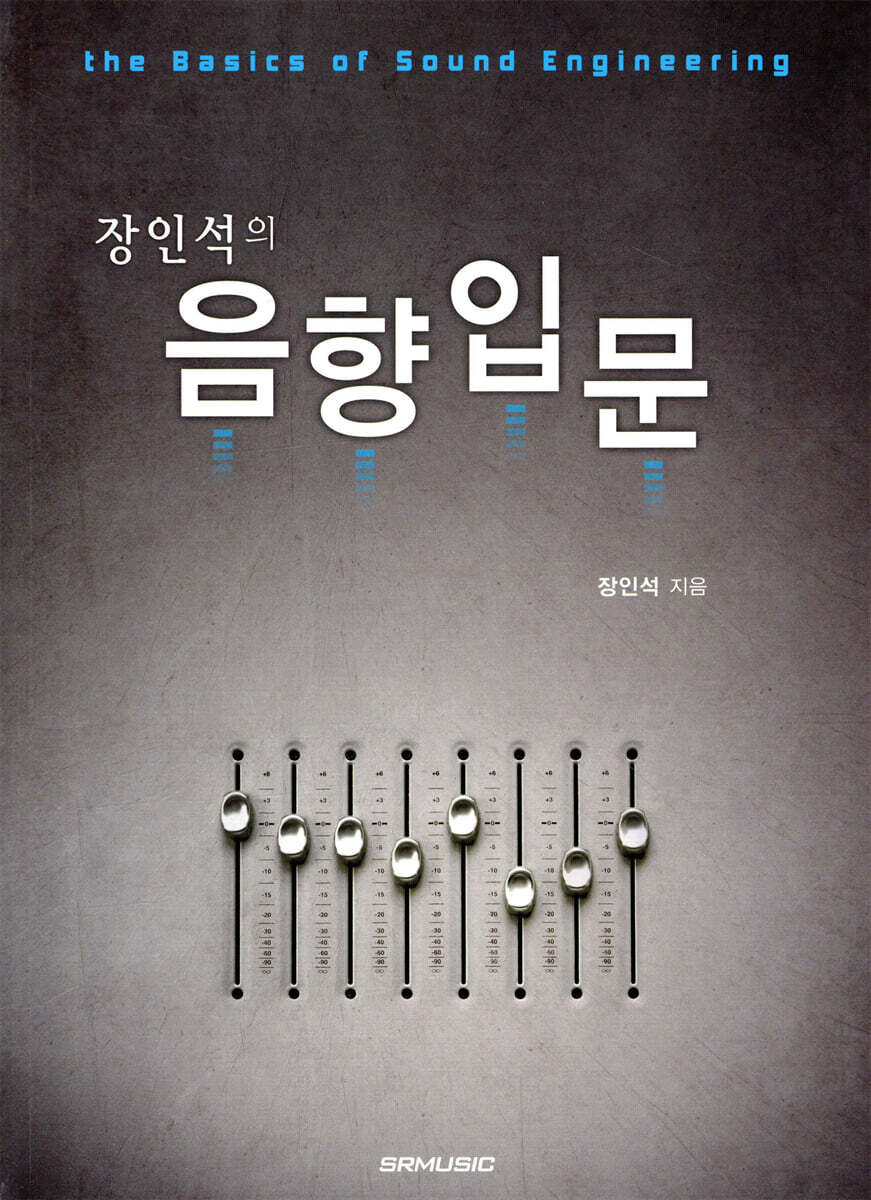
Jang In-seok's Introduction to Sound
 |
Description
Book Introduction
A new guide for beginners in audio
This is an easy, new, and fun introduction to sound for anyone preparing to learn sound, written in a friendly and comfortable style by Professor Jang In-seok, a living legend in the Korean recording industry who recorded over 1,000 albums, including those by Cho Yong-pil and Lee Sun-hee, as if he were lecturing to a student right in front of him.
Recent sound has changed from the past when it depended on the sound quality and meters of the equipment to a sound with a more emotional and creative artistic sense.
Looking at engineers working these days, the range of people entering the field of acoustics is expanding considerably, including not only engineering majors but also art and even humanities majors.
Another interesting change is that recording and mixing, which were previously the domain of engineers, are now required subjects for MIDI music composers and performers as well.
However, most digital audio equipment and plug-ins use terms similar to conventional analog electronic engineering concepts, making it difficult for those in the humanities or arts who are not familiar with them to understand them.
This book will serve as a guide to help readers bring their creative ideas to life through sound.
This is an easy, new, and fun introduction to sound for anyone preparing to learn sound, written in a friendly and comfortable style by Professor Jang In-seok, a living legend in the Korean recording industry who recorded over 1,000 albums, including those by Cho Yong-pil and Lee Sun-hee, as if he were lecturing to a student right in front of him.
Recent sound has changed from the past when it depended on the sound quality and meters of the equipment to a sound with a more emotional and creative artistic sense.
Looking at engineers working these days, the range of people entering the field of acoustics is expanding considerably, including not only engineering majors but also art and even humanities majors.
Another interesting change is that recording and mixing, which were previously the domain of engineers, are now required subjects for MIDI music composers and performers as well.
However, most digital audio equipment and plug-ins use terms similar to conventional analog electronic engineering concepts, making it difficult for those in the humanities or arts who are not familiar with them to understand them.
This book will serve as a guide to help readers bring their creative ideas to life through sound.
- You can preview some of the book's contents.
Preview
index
Chapter 1 Sound
sound
Amplitude and Loudness
Frequency and Pitch
fundamental, harmonic, overtone, overtone
Frequency Band
Frequency Spectrum
Period
Phase
Polarity
Wavelength
Dynamic Envelop
Chapter 2 Hearing
decibel
Decibels for electrical and acoustic signals
Level
Dynamic Range
Headroom
Loudness Level
Equal Loudness Contour
Masking
Octaves
Chapter 3 Indoor Acoustics
sound field
sound field
Free Field
Inverse Square Law
Diffuse Field
Critical Distance
Ambience Miking
Reverberation
Live and Dead
Flutter and Slapback Echo
Indoor resonance
Jeong Jae-pa
Sound diffuser
sound absorption
Porous Absorber
Membrane Absorber
Helmholtz Resonator
Soundproofing and dustproofing
wall
ceiling
floor
door
window
Chapter 4 Studio Audio System
Studio audio equipment
Mixing Console
Recorder
Microphone
Direct Box (DI Box)
Control room monitor system
Cue System
Audio Cable
Connector
Rack and Patch Bay
Signal path of audio system
Recording
Mixdown
Chapter 5 Microphone
Conversion method
Dynamic Microphone
Condenser Microphone
Phantom Power
Diameter, mass and case of the diaphragm
High Pass Filter
Pad
Directionality
Omnidirectional
Unidirectional
Bidirectional
Off-axis Coloration
Proximity Effect
directional structure
Microphone electrical characteristics
Frequency Response
Transient Response
Sensitivity
Special microphone
PZM (Pressure Zone Microphone)
Lavalier Microphone
Electret Condenser Microphone
Dummy Head
Stereo Microphone
Direct Box
Microphone Accessories
Shock Mount
Pop Filter and Windscreen
Representative microphones
Neumann U47
Neumann U47FET
Neumann M49/50
Neumann KM84 series
Neumann U87
AKG D12/112
AKG C451
AKG C414 series
Shure SM57
Sennheiser MD421
Sennheiser MD441
Beyerdynamic M160
Electro-Voice RE-20
Royer R-121
Preamp
Preamplifier gain setup
Chapter 6 Microphone Techniques
Comb filtering
Floor reflection comb filtering
Two or more microphone comb filtering
3:1 rule
How to choose a microphone location
Stereo miking
Spaced Pair (AB)
Coincident Pair (XY)
Near Coincident Pair
multi-micing
kick drum
snare drum
hi-hat
Tamtam
symbol
overhead
Drum Kit Room Miking
Simple drum kit
piano
electric guitar
acoustic guitar
lead vocals
flute
clarinet
saxophone
trumpet
trombone
soul
harp
marimba
Classical piano miking
Orchestra, piano, and vocal miking
Surround Sound Miking Techniques
Delos VR2 (Virtual Reality Recording format)
NHK style
Chapter 7 Monitor System
loudspeaker system
Speaker Driver
Crossover Network
enclosure
Seal Type
Bass Reflex Type
Speaker type
Studio Monitoring
Loudspeaker Monitoring
Nearfield Monitor System
Headphones
Cue System
Studio Vocal Headphone Monitoring
Chapter 8 Equalizer
filter
High Pass Filter (HPF)
Low Pass Filter (LPF)
Equalizer
Graphic Equalizer
Parametric Equalizer
Dynamic Equalizer
Enhancer
Chapter 9 Compressors and Noise Gates
Compressor (limiter)
How a compressor works
Signal gain adjustment method
Adjustment parameters
Stereo Compressor
Multiband Compressor
DeEsser
Compressor Adjustment Hearing Training
Noise gate, expander
Adjustment parameters
Manual gating and editing
DeNoiser
Chapter 10 Reverb and Delay Systems
Reverberation System
Main Presets
Reverb adjustment
Delay system
Doubling
Echo
Modulation effects
Flanging
Phasing
Chorusing
Vibrato
Pitch Shifter
Chapter 11 Analog and Digital Recording Methods
Analog open-reel recorder
Tape transport system
electric circuit
Types of recorders
Track type
Multitrack synchronized recording
Cleaning
digital audio
Sampling Rate
Anti-aliasing Filter
Oversampling
Quantization
Dithering
Digital recording and playback process
coding
Digital Interface
Jitter
Synchronization
Data Reduction
digital audio recorder
Stationary Head Digital System
Rotary Head Digital System
MD (Mini Disc)
hard disk recorder
Digital Audio Workstation
USB
FireWire (IEEE 1394, iLink)
Thunderbolt (Lightpeak)
Soundfile Format
Digital Audio Interface
Chapter 12 Mixing Console
Console configuration and types
Input section
MIC/LINE
Preamplifier OVERLOAD LED
GAIN TRIM
48V
Insert Send, Insert Return
FADER
AUX
EQ
fan port
Direct Out
Channel Assign
Output section
Group mixing circuit, group fader, bus output connector
Stereo mix bus, master fader, main output connectors
Metering
Monitor Section
Monitor selection button
Solo
MUTE
Patch Bay
Open
Half-normalled
Normalled
Parallel
Additional features
Oscillator
Talkback
DIM
MONO
digital mixing console
Digitally controlled analog mixing console
digital mixing console
DAW software mixer
Track and mixer strips
Chapter 13 Recording
Recording method
Live Stereo Recording
Live Mix Recording
Multi-Track Recording
Recording level
Level setting
Equalizing
Live Sound Equalizing
Studio Equalizing
Instrument-specific processing
drums
bass guitar
electric guitar
acoustic guitar
vocal
piano
brass instruments
Chapter 14 Mixing
auditory training
Frequency band-specific sound identification training
Understanding comb filtering
Understanding sound dynamics, spatiality, and depth through excellent music
Identifying the increase in low-frequency response due to proximity effect
Monitoring
Monitor level
Mono Monitoring
Six Key Elements of a Mix
Level Balance
Panning
kick drum
snare drum
hi-hat
Tamtam
overhead
drum set
bass guitar
lead vocal
background vocals
grand piano
etc
String section
delay
Flanging, chorusing, phasing
Reverberation
Equalizing
frequency spectrum
Compression
Compressor adjustment
Parallel Compression
Serial compression
Mix Bus Compression
Noise Gate Adjustment Order
Delay and reverb
Type and number of effectors
reverberation system
Reverb Equalization
How to create spatiality
Chapter 15 Mastering
Mastering adjustment order
Equalization
Frequency balance adjustment
Compression
Leveling
Manual gain riding
Normalization
Digital limiting
MaxxBass
S1 Stereo Imager
Apply mastering
Chapter 16 Cabling and Grounding
Shielding
Foil Shield
Braid Shield and Wrapped Shield
Unbalanced and balanced shielded cables
Cables and connecting equipment
Unshielded cables and speaker cables
connector
phone plug
Phono plug
XLR and other connectors
Grounding
ground loop
Studio Ground
Rack Ground
electric guitar amplifier
Studio power system
electrical noise
supplement
Glossary
sound
Amplitude and Loudness
Frequency and Pitch
fundamental, harmonic, overtone, overtone
Frequency Band
Frequency Spectrum
Period
Phase
Polarity
Wavelength
Dynamic Envelop
Chapter 2 Hearing
decibel
Decibels for electrical and acoustic signals
Level
Dynamic Range
Headroom
Loudness Level
Equal Loudness Contour
Masking
Octaves
Chapter 3 Indoor Acoustics
sound field
sound field
Free Field
Inverse Square Law
Diffuse Field
Critical Distance
Ambience Miking
Reverberation
Live and Dead
Flutter and Slapback Echo
Indoor resonance
Jeong Jae-pa
Sound diffuser
sound absorption
Porous Absorber
Membrane Absorber
Helmholtz Resonator
Soundproofing and dustproofing
wall
ceiling
floor
door
window
Chapter 4 Studio Audio System
Studio audio equipment
Mixing Console
Recorder
Microphone
Direct Box (DI Box)
Control room monitor system
Cue System
Audio Cable
Connector
Rack and Patch Bay
Signal path of audio system
Recording
Mixdown
Chapter 5 Microphone
Conversion method
Dynamic Microphone
Condenser Microphone
Phantom Power
Diameter, mass and case of the diaphragm
High Pass Filter
Pad
Directionality
Omnidirectional
Unidirectional
Bidirectional
Off-axis Coloration
Proximity Effect
directional structure
Microphone electrical characteristics
Frequency Response
Transient Response
Sensitivity
Special microphone
PZM (Pressure Zone Microphone)
Lavalier Microphone
Electret Condenser Microphone
Dummy Head
Stereo Microphone
Direct Box
Microphone Accessories
Shock Mount
Pop Filter and Windscreen
Representative microphones
Neumann U47
Neumann U47FET
Neumann M49/50
Neumann KM84 series
Neumann U87
AKG D12/112
AKG C451
AKG C414 series
Shure SM57
Sennheiser MD421
Sennheiser MD441
Beyerdynamic M160
Electro-Voice RE-20
Royer R-121
Preamp
Preamplifier gain setup
Chapter 6 Microphone Techniques
Comb filtering
Floor reflection comb filtering
Two or more microphone comb filtering
3:1 rule
How to choose a microphone location
Stereo miking
Spaced Pair (AB)
Coincident Pair (XY)
Near Coincident Pair
multi-micing
kick drum
snare drum
hi-hat
Tamtam
symbol
overhead
Drum Kit Room Miking
Simple drum kit
piano
electric guitar
acoustic guitar
lead vocals
flute
clarinet
saxophone
trumpet
trombone
soul
harp
marimba
Classical piano miking
Orchestra, piano, and vocal miking
Surround Sound Miking Techniques
Delos VR2 (Virtual Reality Recording format)
NHK style
Chapter 7 Monitor System
loudspeaker system
Speaker Driver
Crossover Network
enclosure
Seal Type
Bass Reflex Type
Speaker type
Studio Monitoring
Loudspeaker Monitoring
Nearfield Monitor System
Headphones
Cue System
Studio Vocal Headphone Monitoring
Chapter 8 Equalizer
filter
High Pass Filter (HPF)
Low Pass Filter (LPF)
Equalizer
Graphic Equalizer
Parametric Equalizer
Dynamic Equalizer
Enhancer
Chapter 9 Compressors and Noise Gates
Compressor (limiter)
How a compressor works
Signal gain adjustment method
Adjustment parameters
Stereo Compressor
Multiband Compressor
DeEsser
Compressor Adjustment Hearing Training
Noise gate, expander
Adjustment parameters
Manual gating and editing
DeNoiser
Chapter 10 Reverb and Delay Systems
Reverberation System
Main Presets
Reverb adjustment
Delay system
Doubling
Echo
Modulation effects
Flanging
Phasing
Chorusing
Vibrato
Pitch Shifter
Chapter 11 Analog and Digital Recording Methods
Analog open-reel recorder
Tape transport system
electric circuit
Types of recorders
Track type
Multitrack synchronized recording
Cleaning
digital audio
Sampling Rate
Anti-aliasing Filter
Oversampling
Quantization
Dithering
Digital recording and playback process
coding
Digital Interface
Jitter
Synchronization
Data Reduction
digital audio recorder
Stationary Head Digital System
Rotary Head Digital System
MD (Mini Disc)
hard disk recorder
Digital Audio Workstation
USB
FireWire (IEEE 1394, iLink)
Thunderbolt (Lightpeak)
Soundfile Format
Digital Audio Interface
Chapter 12 Mixing Console
Console configuration and types
Input section
MIC/LINE
Preamplifier OVERLOAD LED
GAIN TRIM
48V
Insert Send, Insert Return
FADER
AUX
EQ
fan port
Direct Out
Channel Assign
Output section
Group mixing circuit, group fader, bus output connector
Stereo mix bus, master fader, main output connectors
Metering
Monitor Section
Monitor selection button
Solo
MUTE
Patch Bay
Open
Half-normalled
Normalled
Parallel
Additional features
Oscillator
Talkback
DIM
MONO
digital mixing console
Digitally controlled analog mixing console
digital mixing console
DAW software mixer
Track and mixer strips
Chapter 13 Recording
Recording method
Live Stereo Recording
Live Mix Recording
Multi-Track Recording
Recording level
Level setting
Equalizing
Live Sound Equalizing
Studio Equalizing
Instrument-specific processing
drums
bass guitar
electric guitar
acoustic guitar
vocal
piano
brass instruments
Chapter 14 Mixing
auditory training
Frequency band-specific sound identification training
Understanding comb filtering
Understanding sound dynamics, spatiality, and depth through excellent music
Identifying the increase in low-frequency response due to proximity effect
Monitoring
Monitor level
Mono Monitoring
Six Key Elements of a Mix
Level Balance
Panning
kick drum
snare drum
hi-hat
Tamtam
overhead
drum set
bass guitar
lead vocal
background vocals
grand piano
etc
String section
delay
Flanging, chorusing, phasing
Reverberation
Equalizing
frequency spectrum
Compression
Compressor adjustment
Parallel Compression
Serial compression
Mix Bus Compression
Noise Gate Adjustment Order
Delay and reverb
Type and number of effectors
reverberation system
Reverb Equalization
How to create spatiality
Chapter 15 Mastering
Mastering adjustment order
Equalization
Frequency balance adjustment
Compression
Leveling
Manual gain riding
Normalization
Digital limiting
MaxxBass
S1 Stereo Imager
Apply mastering
Chapter 16 Cabling and Grounding
Shielding
Foil Shield
Braid Shield and Wrapped Shield
Unbalanced and balanced shielded cables
Cables and connecting equipment
Unshielded cables and speaker cables
connector
phone plug
Phono plug
XLR and other connectors
Grounding
ground loop
Studio Ground
Rack Ground
electric guitar amplifier
Studio power system
electrical noise
supplement
Glossary
Publisher's Review
This book is an easy, new, and fun introduction to sound for anyone preparing to learn sound, written in a friendly and comfortable style by Professor Jang In-seok, a living legend in the Korean recording industry who has recorded over 1,000 albums, including for Cho Yong-pil and Lee Sun-hee, as if he were lecturing to a student right in front of him.
Recent sound has changed from the past when it depended on the sound quality and meters of the equipment to a sound with a more emotional and creative artistic sense.
Looking at engineers working these days, the range of people entering the field of acoustics is expanding considerably, including not only engineering majors but also art and even humanities majors.
Another interesting change is that recording and mixing, which were previously the domain of engineers, are now required subjects for MIDI music composers and performers as well.
This may be because he recognized that in order to convey his work more faithfully, he needed not only a musical message but also a perfect sound balance.
This is similar to how a performer prefers a more sonically superior instrument to faithfully convey his musical inclinations.
However, most digital audio equipment and plug-ins use terms similar to conventional analog electronic engineering concepts, making it difficult for those in the humanities or arts who are not familiar with them to understand them.
While writing The Recording, which was published recently, most of the questions I received from my students and MIDI music students were similar to these.
For these various reasons, I worked on this book while writing The Recording.
Just as a composer or performer cannot express his or her own musical ideas if he or she cannot visualize the notes written on the score, even if one has extensive knowledge of acoustics, one cannot concretize one's own sonic imagination if one cannot listen and analyze the sound.
This book will serve as a great guide to bringing your creative ideas to life through sound.
Recent sound has changed from the past when it depended on the sound quality and meters of the equipment to a sound with a more emotional and creative artistic sense.
Looking at engineers working these days, the range of people entering the field of acoustics is expanding considerably, including not only engineering majors but also art and even humanities majors.
Another interesting change is that recording and mixing, which were previously the domain of engineers, are now required subjects for MIDI music composers and performers as well.
This may be because he recognized that in order to convey his work more faithfully, he needed not only a musical message but also a perfect sound balance.
This is similar to how a performer prefers a more sonically superior instrument to faithfully convey his musical inclinations.
However, most digital audio equipment and plug-ins use terms similar to conventional analog electronic engineering concepts, making it difficult for those in the humanities or arts who are not familiar with them to understand them.
While writing The Recording, which was published recently, most of the questions I received from my students and MIDI music students were similar to these.
For these various reasons, I worked on this book while writing The Recording.
Just as a composer or performer cannot express his or her own musical ideas if he or she cannot visualize the notes written on the score, even if one has extensive knowledge of acoustics, one cannot concretize one's own sonic imagination if one cannot listen and analyze the sound.
This book will serve as a great guide to bringing your creative ideas to life through sound.
GOODS SPECIFICS
- Date of issue: February 20, 2012
- Page count, weight, size: 328 pages | 188*257*30mm
- ISBN13: 9788997185108
- ISBN10: 8997185101
You may also like
카테고리
korean


korean

![GQ KOREA Mark (Monthly): December [2025]](http://librairie.coreenne.fr/cdn/shop/files/8ef265dbbfbf186523ed75ba7319009d.jpg?v=1765340328&width=3840)


