

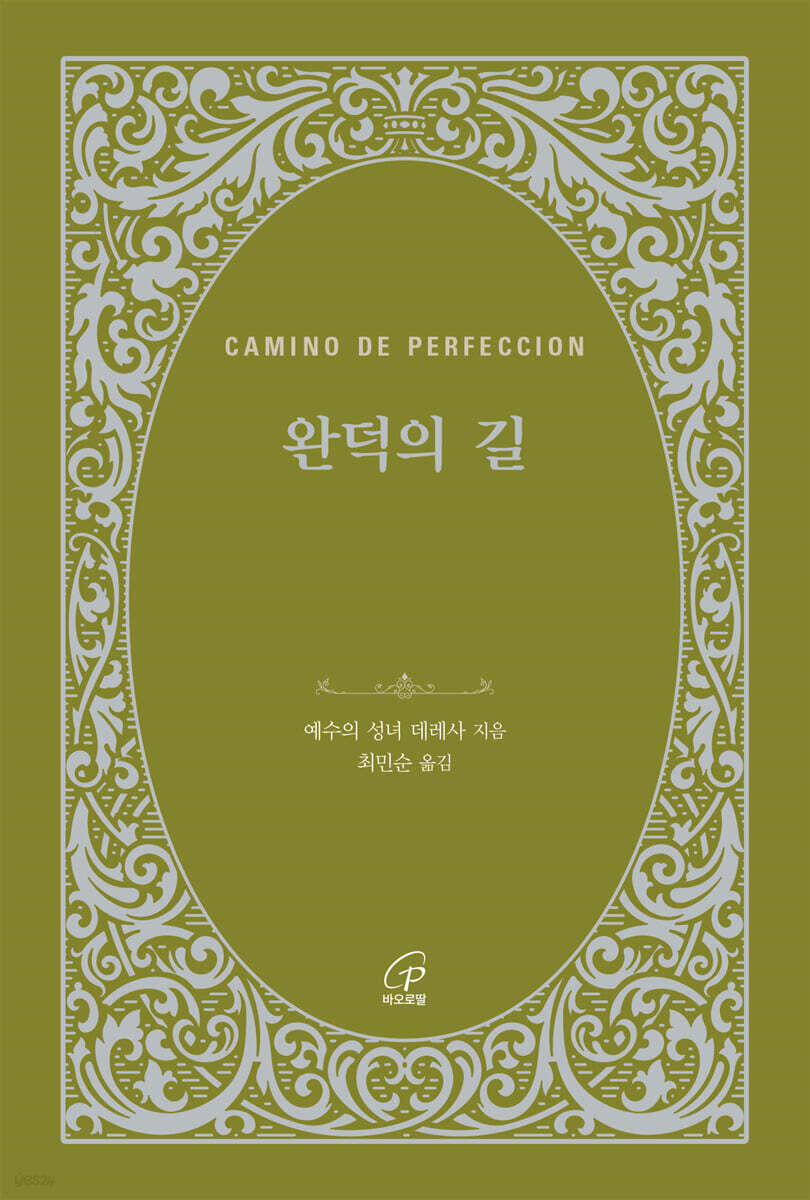
The Path of Perfection
 |
Description
Book Introduction
One of the most exquisite works of Saint Teresa of Jesus (also known as Teresa the Great or Teresa of Avila), it contains teachings imparted to the nuns of the Monastery of Saint Joseph, the first reformed Carmelite monastery she founded.
It was first translated into Korean by the late Father Choi Min-sun and introduced to Korea in 1967. It is a representative spiritual classic that has been loved by numerous theology students, monks, and believers.
It was first translated into Korean by the late Father Choi Min-sun and introduced to Korea in 1967. It is a representative spiritual classic that has been loved by numerous theology students, monks, and believers.
- You can preview some of the book's contents.
Preview
index
A letter that floats you to heaven
A word of caution
preface
Chapter 1
The reason why I established this monastery under strict scrutiny.
Chapter 2
It speaks of not caring about the physical needs and of the benefits of poverty.
Chapter 3
Continuing from what was covered in Chapter 1.
We ask the nuns to always pray that the Lord will help those who work for the Church.
Chapter 4
He encourages observance of the Rule and mentions three important things for spiritual life.
The first of the three is love for one's neighbor, and the harm of favoritism is mentioned.
Chapter 5
He continues to talk about the confessor.
He also spoke about the need for a learned confessor.
Chapter 6
To reiterate the issue of perfect love that I spoke of before.
Chapter 7
To discuss the problem of spiritual love and offer some suggestions for obtaining it.
Chapter 8
We are urged to bear in mind that it is greatly beneficial to detach ourselves from all creatures, both internally and externally.
Chapter 9
It speaks of the great benefit that those who have renounced the world receive from distancing themselves from their relatives, and the way to gain truer friends by doing so.
Chapter 10
The teaching that leaving what is not me without leaving myself is an act of inadequacy, and that the virtue of detachment and humility are always together.
Chapter 11
He continues to talk about self-discipline and how to overcome oneself when sick.
Chapter 12
The teaching that those who truly love God should take life and honor lightly.
Chapter 13
Continuing the question of self-denial, he speaks of how one must avoid worldly honors and wisdom in order to attain true wisdom.
Chapter 14
Those whose spirit runs counter to what has been said above should not be permitted to enter monasticism.
Chapter 15
When you are being unfairly scolded, it is very beneficial not to make excuses.
Chapter 16
The perfection of those who live a contemplative life and those who are content with meditation is different, and the reason why God sometimes raises even a distracted soul to perfect contemplation.
Chapter 17
It is said that contemplation is not something that everyone can do, some arrive at it late, and that only the truly humble can willingly follow the path the Lord leads.
Chapter 18
This means that we must keep in mind that those who lead a contemplative life have greater hardships than those who lead an active life.
Words of great comfort to those who lead active lives.
Chapter 19
Begin to deal with prayer.
A word used to describe a soul that cannot reason with its own intellect.
Chapter 20
There are many paths to prayer and there is never a lack of comfort, so the sisters are advised to always listen and speak of them.
Chapter 21
Before embarking on a life of prayer, a firm resolution is required, and obstacles placed by the devil must be ignored.
Chapter 22
Revealed through meditative prayer.
Chapter 23
It is important for those who have started on the path of prayer not to back down and it is important to have a firm resolve.
Chapter 24
It talks about how to do the full prayer of recitation, and how to combine the prayer of recitation and meditative prayer.
Chapter 25
The soul that completely devotes itself to the prayer of recitation gains much, and it speaks of how God raises such a soul to a supernatural state.
Chapter 26
This chapter teaches the secret of how to collect one's thoughts, and is very helpful for those who are beginning to pray.
Chapter 27
The first words of the “Our Father” (Lord’s Prayer) show the Lord’s great love for us, and it is said that those who truly want to be daughters of God must treat their own members lightly.
Chapter 28
Talk about the prayer of reaping and teach some ways to become familiar with it.
Chapter 29
He continues to talk about how to pray well and that we should not take the favors of adults for granted.
Chapter 30
They say that when you pray, you should know what you are praying for.
From the Lord's Prayer, he added the phrase "Hallowed be thy name, thy kingdom come" to the "Silent Prayer" and began to talk about the Silent Prayer.
Chapter 31
Continuing with the issues discussed above, I offer some lessons for those who are praying in silence.
Chapter 32
Interpreting the phrase “Father, your will be done on earth as it is in heaven” from the Lord’s Prayer.
He who memorizes this word with firm determination will do great things, and it is said that the Lord will reward him well.
Chapter 33
An explanation of the phrase “Give us this day our daily bread” from the Lord’s Prayer.
Chapter 34
A very helpful chapter for those after Communion, continuing to deal with the same issue.
Chapter 35
We conclude the above-mentioned matters by petitioning the Eternal Father.
Chapter 36
Interpreting the phrase “Forgive us our trespasses” from the Lord’s Prayer.
Chapter 37
Speaking of the excellence of the 'Lord's Prayer' and the many comforts we can find in it.
Chapter 38
The phrase “And lead us not into temptation, but deliver us from evil” tells us that it is most necessary to pray so that we may obtain what we ask for, and reveals some temptations.
Important chapter.
Chapter 39
Continuing to address the same issue, he warns us against several different temptations and teaches us two ways to be saved from them.
Chapter 40
It says that if we always strive to live in love and fear of God, we can remain safe in all temptations.
Chapter 41
Talking about fearing God and avoiding sin.
Chapter 42
Interpreting the last words of the Lord's Prayer, "Deliver us from evil, Amen."
Words of encouragement to the nuns
A word of caution
preface
Chapter 1
The reason why I established this monastery under strict scrutiny.
Chapter 2
It speaks of not caring about the physical needs and of the benefits of poverty.
Chapter 3
Continuing from what was covered in Chapter 1.
We ask the nuns to always pray that the Lord will help those who work for the Church.
Chapter 4
He encourages observance of the Rule and mentions three important things for spiritual life.
The first of the three is love for one's neighbor, and the harm of favoritism is mentioned.
Chapter 5
He continues to talk about the confessor.
He also spoke about the need for a learned confessor.
Chapter 6
To reiterate the issue of perfect love that I spoke of before.
Chapter 7
To discuss the problem of spiritual love and offer some suggestions for obtaining it.
Chapter 8
We are urged to bear in mind that it is greatly beneficial to detach ourselves from all creatures, both internally and externally.
Chapter 9
It speaks of the great benefit that those who have renounced the world receive from distancing themselves from their relatives, and the way to gain truer friends by doing so.
Chapter 10
The teaching that leaving what is not me without leaving myself is an act of inadequacy, and that the virtue of detachment and humility are always together.
Chapter 11
He continues to talk about self-discipline and how to overcome oneself when sick.
Chapter 12
The teaching that those who truly love God should take life and honor lightly.
Chapter 13
Continuing the question of self-denial, he speaks of how one must avoid worldly honors and wisdom in order to attain true wisdom.
Chapter 14
Those whose spirit runs counter to what has been said above should not be permitted to enter monasticism.
Chapter 15
When you are being unfairly scolded, it is very beneficial not to make excuses.
Chapter 16
The perfection of those who live a contemplative life and those who are content with meditation is different, and the reason why God sometimes raises even a distracted soul to perfect contemplation.
Chapter 17
It is said that contemplation is not something that everyone can do, some arrive at it late, and that only the truly humble can willingly follow the path the Lord leads.
Chapter 18
This means that we must keep in mind that those who lead a contemplative life have greater hardships than those who lead an active life.
Words of great comfort to those who lead active lives.
Chapter 19
Begin to deal with prayer.
A word used to describe a soul that cannot reason with its own intellect.
Chapter 20
There are many paths to prayer and there is never a lack of comfort, so the sisters are advised to always listen and speak of them.
Chapter 21
Before embarking on a life of prayer, a firm resolution is required, and obstacles placed by the devil must be ignored.
Chapter 22
Revealed through meditative prayer.
Chapter 23
It is important for those who have started on the path of prayer not to back down and it is important to have a firm resolve.
Chapter 24
It talks about how to do the full prayer of recitation, and how to combine the prayer of recitation and meditative prayer.
Chapter 25
The soul that completely devotes itself to the prayer of recitation gains much, and it speaks of how God raises such a soul to a supernatural state.
Chapter 26
This chapter teaches the secret of how to collect one's thoughts, and is very helpful for those who are beginning to pray.
Chapter 27
The first words of the “Our Father” (Lord’s Prayer) show the Lord’s great love for us, and it is said that those who truly want to be daughters of God must treat their own members lightly.
Chapter 28
Talk about the prayer of reaping and teach some ways to become familiar with it.
Chapter 29
He continues to talk about how to pray well and that we should not take the favors of adults for granted.
Chapter 30
They say that when you pray, you should know what you are praying for.
From the Lord's Prayer, he added the phrase "Hallowed be thy name, thy kingdom come" to the "Silent Prayer" and began to talk about the Silent Prayer.
Chapter 31
Continuing with the issues discussed above, I offer some lessons for those who are praying in silence.
Chapter 32
Interpreting the phrase “Father, your will be done on earth as it is in heaven” from the Lord’s Prayer.
He who memorizes this word with firm determination will do great things, and it is said that the Lord will reward him well.
Chapter 33
An explanation of the phrase “Give us this day our daily bread” from the Lord’s Prayer.
Chapter 34
A very helpful chapter for those after Communion, continuing to deal with the same issue.
Chapter 35
We conclude the above-mentioned matters by petitioning the Eternal Father.
Chapter 36
Interpreting the phrase “Forgive us our trespasses” from the Lord’s Prayer.
Chapter 37
Speaking of the excellence of the 'Lord's Prayer' and the many comforts we can find in it.
Chapter 38
The phrase “And lead us not into temptation, but deliver us from evil” tells us that it is most necessary to pray so that we may obtain what we ask for, and reveals some temptations.
Important chapter.
Chapter 39
Continuing to address the same issue, he warns us against several different temptations and teaches us two ways to be saved from them.
Chapter 40
It says that if we always strive to live in love and fear of God, we can remain safe in all temptations.
Chapter 41
Talking about fearing God and avoiding sin.
Chapter 42
Interpreting the last words of the Lord's Prayer, "Deliver us from evil, Amen."
Words of encouragement to the nuns
Into the book
Please keep this in mind.
The pursuit of fame is always accompanied by the desire for money or property.
…but true poverty comes with a tremendous name that no one can bear.
It refers to being poor only for the Lord's sake, and in this case there is no need to try to please anyone other than God.
It is a very obvious fact, and I know this from experience, that when you have no one to worry about, you will have many friends.
--- p.82~83
What could be more humbling than humility for a queen to command a king? It is humility to bring the king from heaven and place him in the arms of the Virgin Mary. It is also humility to carry the king as if flying and place him in our souls.
--- p.179
Dear daughters, if you want to know whether you have progressed in virtue, there is one way to know.
Everyone thinks of himself as the most insignificant person, and this thought is expressed in his actions, which bring good and benefit to others.
This is not in the taste felt during prayer, or in the ecstasy, revelation, or any other grace bestowed by the Lord.
--- p.200
How can you, who often converse with others, have nothing to talk about with the Lord? Don't even think about it.
If you have developed the habit of talking to the Lord, this will not be the case.
You also have to get into the habit of talking.
--- p.263
When speaking during prayer, you should first think about which One within you you are speaking to, and when listening, you should first think about which One is speaking next to you.
--- p.287
You too, know that being with the Lord is a joy.
The best time is after receiving Holy Communion, so don't miss it.
…If, as soon as you receive the Eucharist, you immediately turn your thoughts away and ignore the One who is within you, how can He reveal Himself to you?
The pursuit of fame is always accompanied by the desire for money or property.
…but true poverty comes with a tremendous name that no one can bear.
It refers to being poor only for the Lord's sake, and in this case there is no need to try to please anyone other than God.
It is a very obvious fact, and I know this from experience, that when you have no one to worry about, you will have many friends.
--- p.82~83
What could be more humbling than humility for a queen to command a king? It is humility to bring the king from heaven and place him in the arms of the Virgin Mary. It is also humility to carry the king as if flying and place him in our souls.
--- p.179
Dear daughters, if you want to know whether you have progressed in virtue, there is one way to know.
Everyone thinks of himself as the most insignificant person, and this thought is expressed in his actions, which bring good and benefit to others.
This is not in the taste felt during prayer, or in the ecstasy, revelation, or any other grace bestowed by the Lord.
--- p.200
How can you, who often converse with others, have nothing to talk about with the Lord? Don't even think about it.
If you have developed the habit of talking to the Lord, this will not be the case.
You also have to get into the habit of talking.
--- p.263
When speaking during prayer, you should first think about which One within you you are speaking to, and when listening, you should first think about which One is speaking next to you.
--- p.287
You too, know that being with the Lord is a joy.
The best time is after receiving Holy Communion, so don't miss it.
…If, as soon as you receive the Eucharist, you immediately turn your thoughts away and ignore the One who is within you, how can He reveal Himself to you?
--- p.335
Publisher's Review
A Timeless Prayer Guide
"The Way of Perfection" is a writing by Saint Teresa of Jesus (1515-1582), a prominent mystic in Christian history, and contains teachings given to the nuns of the Monastery of Saint Joseph, the first reformed Carmelite (Discreet Carmel) monastery founded by the saint.
The saint states that she wrote this for members who asked for guidance on prayer, and she unfolds her teachings in a humble yet bold and honest narrative, ranging from specific and practical advice on monastic life and spiritual life in general to mystical experiences.
The text consists of 42 chapters, emphasizing the virtues that can be considered prerequisites for prayer (poverty, pure love, detachment, humility, etc.) and explaining the various paths and stages of prayer (oral prayer, meditative prayer, contemplative prayer, etc.).
In particular, it teaches the journey of prayer and ways to deal with the temptations of evil through explanations of each verse of the 'Lord's Prayer'.
The saint's powerful voice, encouraging us to serve and follow the Lord, who is all, with our whole being and to walk together on the 'path of perfection,' seems to transcend time and reach our ears.
In Korea, the first edition was published in 1967 with the translation by the late Father Choi Min-sun, and a new revised edition (4th edition) was published with a format and design that are consistent with the previously revised "Soul Castle."
This revised edition also preserves the symbolism and value of being the first Korean translation, while preserving Father Choi Min-sun's poetic and flowing style as much as possible. Furthermore, expressions that are difficult to understand or have ambiguous meanings have been modified or explained to facilitate readers' understanding.
Target audience
Seminary students, monks, pastors, those interested in spiritual theology and spiritual classics, and those who long for a spiritual life
"The Way of Perfection" is a writing by Saint Teresa of Jesus (1515-1582), a prominent mystic in Christian history, and contains teachings given to the nuns of the Monastery of Saint Joseph, the first reformed Carmelite (Discreet Carmel) monastery founded by the saint.
The saint states that she wrote this for members who asked for guidance on prayer, and she unfolds her teachings in a humble yet bold and honest narrative, ranging from specific and practical advice on monastic life and spiritual life in general to mystical experiences.
The text consists of 42 chapters, emphasizing the virtues that can be considered prerequisites for prayer (poverty, pure love, detachment, humility, etc.) and explaining the various paths and stages of prayer (oral prayer, meditative prayer, contemplative prayer, etc.).
In particular, it teaches the journey of prayer and ways to deal with the temptations of evil through explanations of each verse of the 'Lord's Prayer'.
The saint's powerful voice, encouraging us to serve and follow the Lord, who is all, with our whole being and to walk together on the 'path of perfection,' seems to transcend time and reach our ears.
In Korea, the first edition was published in 1967 with the translation by the late Father Choi Min-sun, and a new revised edition (4th edition) was published with a format and design that are consistent with the previously revised "Soul Castle."
This revised edition also preserves the symbolism and value of being the first Korean translation, while preserving Father Choi Min-sun's poetic and flowing style as much as possible. Furthermore, expressions that are difficult to understand or have ambiguous meanings have been modified or explained to facilitate readers' understanding.
Target audience
Seminary students, monks, pastors, those interested in spiritual theology and spiritual classics, and those who long for a spiritual life
GOODS SPECIFICS
- Date of issue: February 5, 2025
- Page count, weight, size: 408 pages | 470g | 135*200*25mm
- ISBN13: 9788933115527
You may also like
카테고리
korean


korean

![ELLE 엘르 스페셜 에디션 A형 : 12월 [2025]](http://librairie.coreenne.fr/cdn/shop/files/b8e27a3de6c9538896439686c6b0e8fb.jpg?v=1766436872&width=3840)


