

Logic is my strength
 |
Description
Book Introduction
The unrivaled bestseller in the field of logic and argumentation
Required Reading for the Law Aptitude Test (LEET) and the Public Service Aptitude Test (PSAT)
A comprehensively revised and expanded edition commemorating the 20th anniversary has been published!
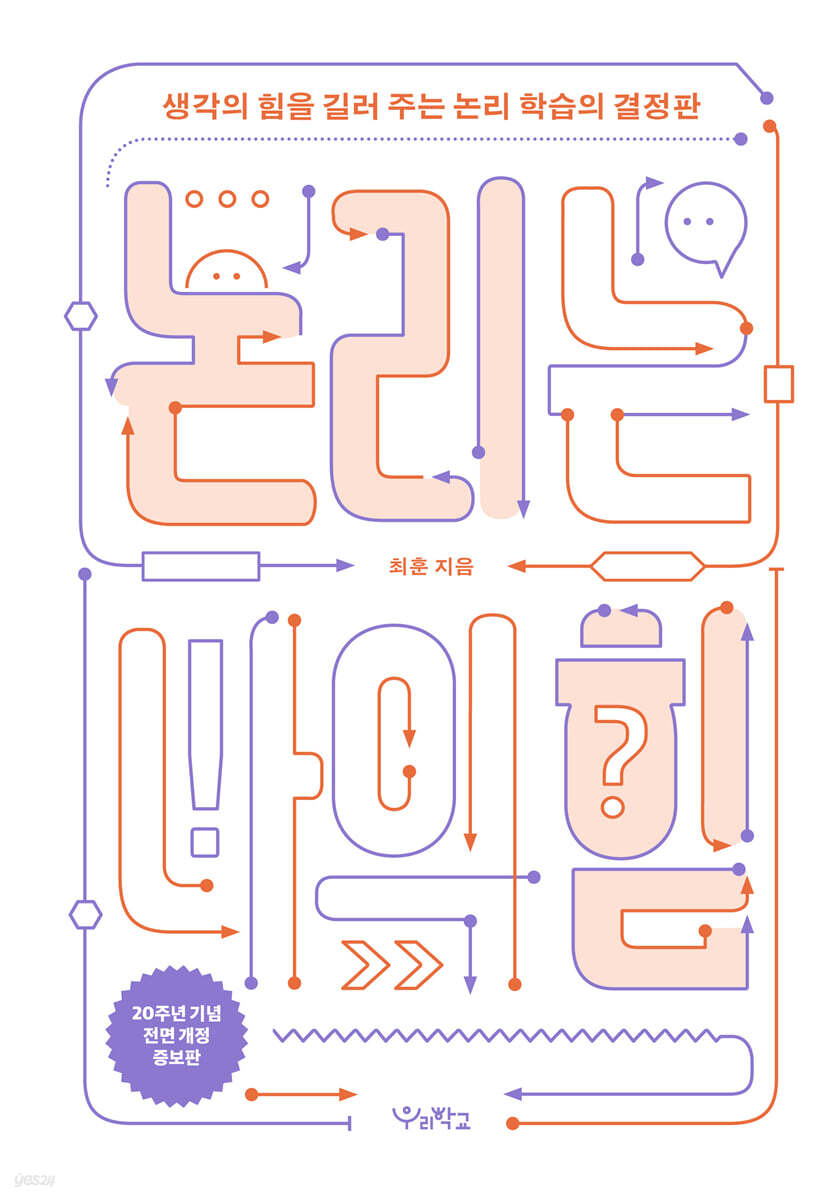
The easiest and most accurate explanation of logic, "Logic is My Power," which has been an unrivaled bestseller for 20 years, has returned with a new look.
This book is a must-read for students preparing for the Law Aptitude Test (LEET) and the Public Service Aptitude Test (PSAT), and serves as another textbook for high school students preparing for essay tests and college students who want to develop their logical thinking skills. As a logic textbook that has been loved by countless readers for the past 20 years, it contains even more abundant examples and explanations.
Even though times have changed, the need for logical thinking remains.
No, it became more urgent.
In modern society, where countless values and perspectives coexist, and with the advancement of technology, communication has become much easier, but proper communication is actually becoming more difficult.
As we become accustomed to the convenience of algorithms, it becomes easier to become trapped in a narrow perspective.
In these chaotic times, the power of logic is necessary to maintain direction, maintain one's own thoughts, and effectively listen to and communicate with others.
"Logic is My Power" emphasizes "practical" logic that can be applied directly in real life.
Therefore, in this comprehensively revised and expanded edition, various examples in the book have been revised and supplemented to suit modern times.
It is particularly noteworthy that the number of logic practice problems has increased significantly.
Because logical thinking is a skill rather than knowledge, it cannot be limited to simply learning the concepts and methods of logic.
We need to see many good examples of logical thinking and practice and put it into practice sufficiently.
Accordingly, the amount of practice problems has been greatly increased.
As you read the book and practice one by one, you will find that your logical power will grow significantly.
Required Reading for the Law Aptitude Test (LEET) and the Public Service Aptitude Test (PSAT)
A comprehensively revised and expanded edition commemorating the 20th anniversary has been published!
The easiest and most accurate explanation of logic, "Logic is My Power," which has been an unrivaled bestseller for 20 years, has returned with a new look.
This book is a must-read for students preparing for the Law Aptitude Test (LEET) and the Public Service Aptitude Test (PSAT), and serves as another textbook for high school students preparing for essay tests and college students who want to develop their logical thinking skills. As a logic textbook that has been loved by countless readers for the past 20 years, it contains even more abundant examples and explanations.
Even though times have changed, the need for logical thinking remains.
No, it became more urgent.
In modern society, where countless values and perspectives coexist, and with the advancement of technology, communication has become much easier, but proper communication is actually becoming more difficult.
As we become accustomed to the convenience of algorithms, it becomes easier to become trapped in a narrow perspective.
In these chaotic times, the power of logic is necessary to maintain direction, maintain one's own thoughts, and effectively listen to and communicate with others.
"Logic is My Power" emphasizes "practical" logic that can be applied directly in real life.
Therefore, in this comprehensively revised and expanded edition, various examples in the book have been revised and supplemented to suit modern times.
It is particularly noteworthy that the number of logic practice problems has increased significantly.
Because logical thinking is a skill rather than knowledge, it cannot be limited to simply learning the concepts and methods of logic.
We need to see many good examples of logical thinking and practice and put it into practice sufficiently.
Accordingly, the amount of practice problems has been greatly increased.
As you read the book and practice one by one, you will find that your logical power will grow significantly.
- You can preview some of the book's contents.
Preview
index
Opening remarks
[Part 1: What is Logical Thinking?]
Chapter 1: Learning Logic from Heo Saeng-won and the Harry Potter Series - Logical and Illogical Thinking
Chapter 2: What's Good About Thinking Logically? - An Open Mind and a Critical Mind
Chapter 3: Logical Thinking Easier Than Riding a Bike - Logical Power and Skills
Chapter 4: Is Argument War? - The Ethical Responsibility of Argument
Chapter 5: Will Learning Logic Make You Think Logically? - Logic and Logical Thinking
[Part 2: Overcoming Language: The Obstacle to Logical Thinking]
Chapter 6: Do I Need to Carry an Apple to Say "Apple"? - Language and Meaning
Chapter 7: Is Son Heung-min Korean or a Soccer Player? - The Abstraction of Meaning
Chapter 8: Learning Economics from "Flea Market"? - The Ambiguity and Vagueness of Language
Chapter 9: The one who defines wins the argument - Justice
[Part 3: Understanding and Analyzing Arguments]
Chapter 10: Why is the weather nice today? - Arguments and Non-Arguments
Chapter 11: Finding Hidden Premises and Conclusions - Premises and Conclusions
Chapter 12: Do You Like Certainty or New Things? - Deduction and Induction
Chapter 13: You Cannot Love or Hate Without Knowing - Analysis of the Argument
[Part 4: The First Criteria for Identifying a Good Argument]
Chapter 14: How to Get Your Points across: Evaluating Arguments
Chapter 15 A Good Beginning Makes a Good End - The First Criteria for Argument Evaluation: Are the Premises Acceptable?
Chapter 16: IU's Propaganda - An Appeal to Inappropriate Authority
Chapter 17: Do You Drink Because You're Embarrassed? - The Fallacy of Asking the Beggar, the False Dilemma
[Part 5: The Second Criteria for Identifying Good Arguments]
Chapter 18: Google Shows the Most Relevant Pages - The Second Criteria for Argument Evaluation: Are the Premises Relevant to the Conclusion?
Chapter 19: How Old Are You? Stop and Ask - Digression, Appeal to the People, Appeal to the Masses
Chapter 20: Socrates' Apology, Women's Affairs, and Agent Orange - Appeals to Emotion, the Fallacy of Straw Man Attacks, and Appeals to Ignorance
[Part 6: The Third Criteria for Identifying Good Arguments]
Chapter 21: Are beauties sleepyheads? So, am I also beautiful? - Antecedent affirmative, consequent negative
Chapter 22: Do I have to eat the whole cake to taste it? - Induction by enumeration, statistical induction, and abduction
Chapter 23: Will Eating Corn Frost Make Me Feel Like a Tiger? - The Argument from Liu Bei, The Argument from Causality
Chapter 24: Now, the Power of Logic Comes to Life - A Comprehensive Review
[Part 7: Logical Writing]
Chapter 25: Logic and Argumentation: Friends - Logical Writing and Argumentation
Logic Practice Answers and Explanations
Search
[Part 1: What is Logical Thinking?]
Chapter 1: Learning Logic from Heo Saeng-won and the Harry Potter Series - Logical and Illogical Thinking
Chapter 2: What's Good About Thinking Logically? - An Open Mind and a Critical Mind
Chapter 3: Logical Thinking Easier Than Riding a Bike - Logical Power and Skills
Chapter 4: Is Argument War? - The Ethical Responsibility of Argument
Chapter 5: Will Learning Logic Make You Think Logically? - Logic and Logical Thinking
[Part 2: Overcoming Language: The Obstacle to Logical Thinking]
Chapter 6: Do I Need to Carry an Apple to Say "Apple"? - Language and Meaning
Chapter 7: Is Son Heung-min Korean or a Soccer Player? - The Abstraction of Meaning
Chapter 8: Learning Economics from "Flea Market"? - The Ambiguity and Vagueness of Language
Chapter 9: The one who defines wins the argument - Justice
[Part 3: Understanding and Analyzing Arguments]
Chapter 10: Why is the weather nice today? - Arguments and Non-Arguments
Chapter 11: Finding Hidden Premises and Conclusions - Premises and Conclusions
Chapter 12: Do You Like Certainty or New Things? - Deduction and Induction
Chapter 13: You Cannot Love or Hate Without Knowing - Analysis of the Argument
[Part 4: The First Criteria for Identifying a Good Argument]
Chapter 14: How to Get Your Points across: Evaluating Arguments
Chapter 15 A Good Beginning Makes a Good End - The First Criteria for Argument Evaluation: Are the Premises Acceptable?
Chapter 16: IU's Propaganda - An Appeal to Inappropriate Authority
Chapter 17: Do You Drink Because You're Embarrassed? - The Fallacy of Asking the Beggar, the False Dilemma
[Part 5: The Second Criteria for Identifying Good Arguments]
Chapter 18: Google Shows the Most Relevant Pages - The Second Criteria for Argument Evaluation: Are the Premises Relevant to the Conclusion?
Chapter 19: How Old Are You? Stop and Ask - Digression, Appeal to the People, Appeal to the Masses
Chapter 20: Socrates' Apology, Women's Affairs, and Agent Orange - Appeals to Emotion, the Fallacy of Straw Man Attacks, and Appeals to Ignorance
[Part 6: The Third Criteria for Identifying Good Arguments]
Chapter 21: Are beauties sleepyheads? So, am I also beautiful? - Antecedent affirmative, consequent negative
Chapter 22: Do I have to eat the whole cake to taste it? - Induction by enumeration, statistical induction, and abduction
Chapter 23: Will Eating Corn Frost Make Me Feel Like a Tiger? - The Argument from Liu Bei, The Argument from Causality
Chapter 24: Now, the Power of Logic Comes to Life - A Comprehensive Review
[Part 7: Logical Writing]
Chapter 25: Logic and Argumentation: Friends - Logical Writing and Argumentation
Logic Practice Answers and Explanations
Search
Detailed image

Into the book
To summarize, logical thinking begins with finding and asking the reasons for a certain claim.
If you don't just say "that's it" and just give a reason or basis for something, you are already thinking logically.
But if we're going to do it, we should think more logically.
To do so, you must base your argument on appropriate reasons, not on emotions or reasons that are contrary to the facts.
So what exactly is a good reason? That's what this book is about.
--- p.26
To think logically, you must have an open mind and a critical attitude.
Ultimately, thinking logically is first a matter of our attitude and posture, and the ability and skills to think logically are secondary issues.
So, if you want to become a logical person right now, listen carefully to what the other person is saying.
--- p.34
Argumentation is not a destructive task of overthrowing the opponent, but a constructive task of working together to find the best conclusion.
Of course, you should not view your opponent in the debate as someone to be subdued, but as a partner.
To do that, you must first provide the other party with sufficient information and allow them to make decisions freely.
Since the purpose of argument is not to win but to find the best solution, deliberately hiding information that is advantageous to the other party is fatal and ultimately unhelpful to me.
--- p.68
Applying the principle of compassionate interpretation when making arguments does not mean you have to be a good person.
This is for the practical purpose of saving unnecessary time.
Even if we interpret Hyung-seok's argument as the first one, if Hyung-seok were a rational person, he would immediately respond that that was not his original intention.
If you were merciful from the beginning, this process would not have been necessary.
--- p.72
The new logic emerged from the question of how to develop the ability to think logically and critically in everyday life.
Therefore, studying informal logic means practicing how to think logically.
This book aims to introduce the practice method and content and to help with practice.
Rather than taking on the role of an exercise physiology professor studying the physical changes of runners, you take on the role of a trainer who trains runners.
--- p.84
For anyone who wants to think rationally and logically, it is really important to examine whether those abstractions are truly relevant to the topic being discussed.
In particular, the abstractions that a person has—such as being from a certain region, Korean, or female—are not abstractions that he or she has chosen through his or her own efforts, so judging others, whether positively or negatively, based on such abstractions is not only illogical but also unethical.
--- p.117
In fact, much of the ability to think logically, including finding premises and conclusions, often depends on knowledge or interest in the field rather than solely on analytical and logical abilities.
If you feel you lack logical thinking skills, it's often because you don't have the specialized knowledge necessary to solve problems, or because the problems are too abstract or outside your interests to properly grasp them.
--- p.176
However, in order to evaluate an argument, you must have a clear understanding of what the argument is trying to claim and what basis it provides for that claim.
It would be absurd to accept or reject the other person's argument without fully understanding it.
[Omitted] The primary goal of argument analysis is understanding, not refutation.
First, you need to find out what conclusion the person making the argument is trying to argue, and then you need to find the premises presented to support that conclusion to make the other person's argument as reasonable as possible.
--- pp.215-216
Evaluating an argument means checking whether the premises of the other party's argument can be accepted and whether the relationship between the premises and the conclusion is correct. However, many people evaluate the conclusion right away when evaluating an argument.
As I just said, whether or not you accept the conclusion itself is not the criterion for evaluating an argument.
Yet, when people hear an argument they don't agree with, they simply disagree without examining the basis for the argument or the relationship between the basis and the argument.
Likewise, you simply agree with any argument you agree with.
--- p.248
He said that the reason we argue is to try to convince others of a somewhat surprising conclusion that they do not take for granted, based on assumptions that are taken for granted.
Soon, the premise must be more certain than the conclusion.
This way, the listener can rationally accept the conclusion from the premises.
--- p.289
What on earth does the age of the person making the argument, where they're from, or what school they graduated from have to do with whether their argument is right or wrong? Yet, in our country, when an argument gets stuck, people blurt out, "How old are you?" or "You went to a crappy school..."
--- pp.335-336
We believe that the critic's moral standing and past conduct are relevant to the content of our criticism, and so we attack each other in that way.
However, logic textbooks teach that in this case, one commits the fallacy of the long-wave fallacy.
So, when we criticize, can we never bring up the other person's moral standing or past actions? And if so, in what cases?
If you don't just say "that's it" and just give a reason or basis for something, you are already thinking logically.
But if we're going to do it, we should think more logically.
To do so, you must base your argument on appropriate reasons, not on emotions or reasons that are contrary to the facts.
So what exactly is a good reason? That's what this book is about.
--- p.26
To think logically, you must have an open mind and a critical attitude.
Ultimately, thinking logically is first a matter of our attitude and posture, and the ability and skills to think logically are secondary issues.
So, if you want to become a logical person right now, listen carefully to what the other person is saying.
--- p.34
Argumentation is not a destructive task of overthrowing the opponent, but a constructive task of working together to find the best conclusion.
Of course, you should not view your opponent in the debate as someone to be subdued, but as a partner.
To do that, you must first provide the other party with sufficient information and allow them to make decisions freely.
Since the purpose of argument is not to win but to find the best solution, deliberately hiding information that is advantageous to the other party is fatal and ultimately unhelpful to me.
--- p.68
Applying the principle of compassionate interpretation when making arguments does not mean you have to be a good person.
This is for the practical purpose of saving unnecessary time.
Even if we interpret Hyung-seok's argument as the first one, if Hyung-seok were a rational person, he would immediately respond that that was not his original intention.
If you were merciful from the beginning, this process would not have been necessary.
--- p.72
The new logic emerged from the question of how to develop the ability to think logically and critically in everyday life.
Therefore, studying informal logic means practicing how to think logically.
This book aims to introduce the practice method and content and to help with practice.
Rather than taking on the role of an exercise physiology professor studying the physical changes of runners, you take on the role of a trainer who trains runners.
--- p.84
For anyone who wants to think rationally and logically, it is really important to examine whether those abstractions are truly relevant to the topic being discussed.
In particular, the abstractions that a person has—such as being from a certain region, Korean, or female—are not abstractions that he or she has chosen through his or her own efforts, so judging others, whether positively or negatively, based on such abstractions is not only illogical but also unethical.
--- p.117
In fact, much of the ability to think logically, including finding premises and conclusions, often depends on knowledge or interest in the field rather than solely on analytical and logical abilities.
If you feel you lack logical thinking skills, it's often because you don't have the specialized knowledge necessary to solve problems, or because the problems are too abstract or outside your interests to properly grasp them.
--- p.176
However, in order to evaluate an argument, you must have a clear understanding of what the argument is trying to claim and what basis it provides for that claim.
It would be absurd to accept or reject the other person's argument without fully understanding it.
[Omitted] The primary goal of argument analysis is understanding, not refutation.
First, you need to find out what conclusion the person making the argument is trying to argue, and then you need to find the premises presented to support that conclusion to make the other person's argument as reasonable as possible.
--- pp.215-216
Evaluating an argument means checking whether the premises of the other party's argument can be accepted and whether the relationship between the premises and the conclusion is correct. However, many people evaluate the conclusion right away when evaluating an argument.
As I just said, whether or not you accept the conclusion itself is not the criterion for evaluating an argument.
Yet, when people hear an argument they don't agree with, they simply disagree without examining the basis for the argument or the relationship between the basis and the argument.
Likewise, you simply agree with any argument you agree with.
--- p.248
He said that the reason we argue is to try to convince others of a somewhat surprising conclusion that they do not take for granted, based on assumptions that are taken for granted.
Soon, the premise must be more certain than the conclusion.
This way, the listener can rationally accept the conclusion from the premises.
--- p.289
What on earth does the age of the person making the argument, where they're from, or what school they graduated from have to do with whether their argument is right or wrong? Yet, in our country, when an argument gets stuck, people blurt out, "How old are you?" or "You went to a crappy school..."
--- pp.335-336
We believe that the critic's moral standing and past conduct are relevant to the content of our criticism, and so we attack each other in that way.
However, logic textbooks teach that in this case, one commits the fallacy of the long-wave fallacy.
So, when we criticize, can we never bring up the other person's moral standing or past actions? And if so, in what cases?
--- pp.340-341
Publisher's Review
What is logical and what is irrational?
The core of a vast philosophical theory is put into concrete reality.
The best logic textbook in one volume
Aristotle believed that logic was a tool for correct thinking.
In fact, logical thinking is an essential skill for navigating the world, helping us carefully examine and evaluate the arguments of others.
"Logic is My Power" is a book that explains what logical thinking is, how to understand, analyze, and evaluate arguments, and even how to write logically.
We are talking about informal logic, which can help develop the ability to think logically and critically, especially in everyday life.
This ability is so important that questions related to it are frequently asked in various official exams such as LEET and PSAT in Korea and GRE, GMAT, and LAST in the United States.
The author explains various logical fallacies in the book, but emphasizes that logical thinking is not simply knowledge.
Logic is a matter of attitude and technique.
One of the important goals of logical thinking is to listen to another person's argument and carefully evaluate whether it is acceptable.
However, in order to evaluate an argument, you must clearly understand what the argument is trying to claim and what basis it provides for that claim.
Why go to such trouble? The goal of argument is not to win, but to find the best solution.
You must interpret the other party's argument as rationally as possible.
The author emphasizes the 'principle of compassionate interpretation' that explains this at the beginning of the book, and emphasizes the necessity of logic as a means of saving unnecessary time and communicating effectively.
The author, Professor Choi Hoon, is a scholar who stands out in the field of logic education in Korea.
Through research in the philosophy of psychology and cognitive science, we have laid an academic foundation in fields that previously lacked a theoretical foundation, and we have actively shared our research findings with the public.
The author argues that in an age of communication deprivation, philosophical reflection and logical thinking are essential to enriching individual lives and making society more rational.
This is why 『Logic is My Power』 helps you develop the ability to think, read, write, and speak logically, and gently guides you to make more careful and correct decisions on the numerous issues that cross your life.
As you read the fascinating examples in the book and solve various practice problems, you will find your thinking muscles growing before you know it.
"Logic is My Power" is composed of seven parts.
In Part 1, we consider what logical thinking is and why it is necessary.
Part 2 examines the importance of language in argumentation.
Since the most crucial task in logical thinking is constructing and evaluating arguments, Part 3 will explore how to understand and analyze arguments.
The following parts 4, 5, and 6 are where you learn how to evaluate arguments in earnest.
First, I will present three criteria for evaluating arguments and explain what each criterion evaluates.
We also look at the errors that can occur when each standard is violated.
Then, we will organize the process of evaluating arguments step by step and practice actually evaluating them comprehensively.
The final part, Part 7, presents five steps to logical writing so that you can apply the logical thinking skills and abilities you learned in the previous chapters to actual writing.
“We still need logic.”
Returning with more robust content and structure, concrete examples, and abundant practice problems.
There are things that have unchanging value and power over time.
The power of logic is one of them.
Not only students preparing for essays and interviews, but also all of us living in modern society face moments every day that require logical thinking.
Because when we search and comment on the Internet, when we talk to others, when we read newspapers or books, and even when we think to ourselves, we have to decide what is right and what is wrong, what to believe and what not to believe.
Instead of complex and difficult theories, we need tools that can be applied in real life.
This is why "Logic is My Power" has been consistently loved, filled with easy and fun explanations and vivid examples.
So, what's different about this 20th-anniversary, comprehensively revised and expanded edition? We've revised the content that has changed over time and added a wealth of new material.
It meets readers with a hardcover binding and jacket cover that matches the enriched content.
Above all, in response to requests from readers preparing for various exams such as PAST, LEET, and college entrance essays, we have significantly increased the amount of questions that help practice logical thinking.
However, the easy and fun explanations, practicality that can be applied in real life, and the author's signature humor that adds vitality to the book remain unchanged.
With its more robust content and structure, "Logic is My Power" will satisfy both existing readers and first-time readers.
The core of a vast philosophical theory is put into concrete reality.
The best logic textbook in one volume
Aristotle believed that logic was a tool for correct thinking.
In fact, logical thinking is an essential skill for navigating the world, helping us carefully examine and evaluate the arguments of others.
"Logic is My Power" is a book that explains what logical thinking is, how to understand, analyze, and evaluate arguments, and even how to write logically.
We are talking about informal logic, which can help develop the ability to think logically and critically, especially in everyday life.
This ability is so important that questions related to it are frequently asked in various official exams such as LEET and PSAT in Korea and GRE, GMAT, and LAST in the United States.
The author explains various logical fallacies in the book, but emphasizes that logical thinking is not simply knowledge.
Logic is a matter of attitude and technique.
One of the important goals of logical thinking is to listen to another person's argument and carefully evaluate whether it is acceptable.
However, in order to evaluate an argument, you must clearly understand what the argument is trying to claim and what basis it provides for that claim.
Why go to such trouble? The goal of argument is not to win, but to find the best solution.
You must interpret the other party's argument as rationally as possible.
The author emphasizes the 'principle of compassionate interpretation' that explains this at the beginning of the book, and emphasizes the necessity of logic as a means of saving unnecessary time and communicating effectively.
The author, Professor Choi Hoon, is a scholar who stands out in the field of logic education in Korea.
Through research in the philosophy of psychology and cognitive science, we have laid an academic foundation in fields that previously lacked a theoretical foundation, and we have actively shared our research findings with the public.
The author argues that in an age of communication deprivation, philosophical reflection and logical thinking are essential to enriching individual lives and making society more rational.
This is why 『Logic is My Power』 helps you develop the ability to think, read, write, and speak logically, and gently guides you to make more careful and correct decisions on the numerous issues that cross your life.
As you read the fascinating examples in the book and solve various practice problems, you will find your thinking muscles growing before you know it.
"Logic is My Power" is composed of seven parts.
In Part 1, we consider what logical thinking is and why it is necessary.
Part 2 examines the importance of language in argumentation.
Since the most crucial task in logical thinking is constructing and evaluating arguments, Part 3 will explore how to understand and analyze arguments.
The following parts 4, 5, and 6 are where you learn how to evaluate arguments in earnest.
First, I will present three criteria for evaluating arguments and explain what each criterion evaluates.
We also look at the errors that can occur when each standard is violated.
Then, we will organize the process of evaluating arguments step by step and practice actually evaluating them comprehensively.
The final part, Part 7, presents five steps to logical writing so that you can apply the logical thinking skills and abilities you learned in the previous chapters to actual writing.
“We still need logic.”
Returning with more robust content and structure, concrete examples, and abundant practice problems.
There are things that have unchanging value and power over time.
The power of logic is one of them.
Not only students preparing for essays and interviews, but also all of us living in modern society face moments every day that require logical thinking.
Because when we search and comment on the Internet, when we talk to others, when we read newspapers or books, and even when we think to ourselves, we have to decide what is right and what is wrong, what to believe and what not to believe.
Instead of complex and difficult theories, we need tools that can be applied in real life.
This is why "Logic is My Power" has been consistently loved, filled with easy and fun explanations and vivid examples.
So, what's different about this 20th-anniversary, comprehensively revised and expanded edition? We've revised the content that has changed over time and added a wealth of new material.
It meets readers with a hardcover binding and jacket cover that matches the enriched content.
Above all, in response to requests from readers preparing for various exams such as PAST, LEET, and college entrance essays, we have significantly increased the amount of questions that help practice logical thinking.
However, the easy and fun explanations, practicality that can be applied in real life, and the author's signature humor that adds vitality to the book remain unchanged.
With its more robust content and structure, "Logic is My Power" will satisfy both existing readers and first-time readers.
GOODS SPECIFICS
- Date of issue: August 26, 2024
- Format: Hardcover book binding method guide
- Page count, weight, size: 528 pages | 1,036g | 160*233*35mm
- ISBN13: 9791167552839
You may also like
카테고리
korean


korean

![GQ KOREA Mark (Monthly): December [2025]](http://librairie.coreenne.fr/cdn/shop/files/8ef265dbbfbf186523ed75ba7319009d.jpg?v=1765340328&width=3840)


