

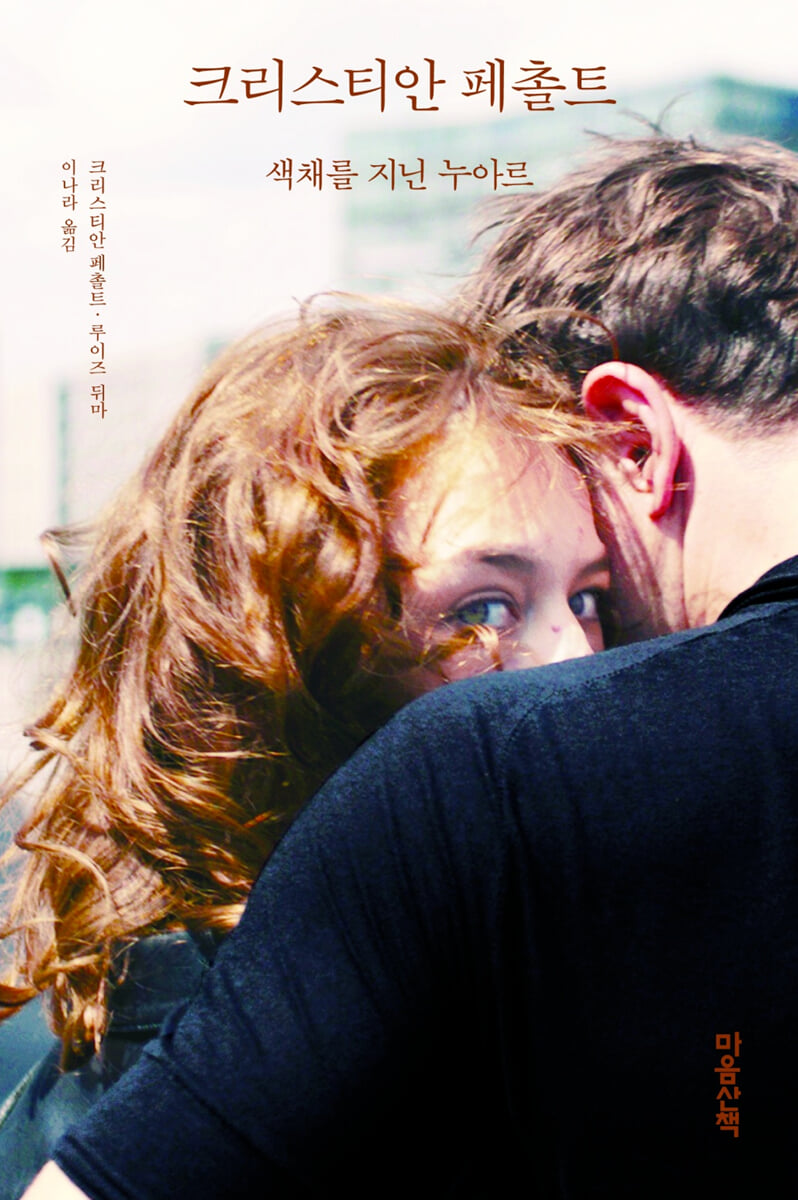
Christian Petzold
 |
Description
Book Introduction
“His films are closest to the essence of cinema.”
?Film director Lee Chang-dong
Christian Petzold's
Korea's first book containing words and writing
The first Korean book containing the words and writings of director Christian Petzold, who gained international fame through films such as “Phoenix,” “Undine,” and “Afire,” has been published by Maumsanchaek.
Christian Petzold is a representative figure of contemporary German cinema and has been evaluated as “Germany’s most notable director since 1989” (Senses of Cinema).
As the successor to German auteur films following in the footsteps of Wim Wenders, Rainer Werner Fassbinder, and Werner Herzog, he has also been introduced in Korea through numerous special exhibitions and has gained support from art film fans.
This book, Christian Petzold, covers Petzold's entire filmography, from his 1994 feature debut, Pilot, to his 2023 film, Afire.
Based on a six-year conversation with French film critic Louise Dumas, this book delves into Petzold's cinematic world, exploring his historical heritage as a German, his collaborations with female actors including Nina Hoss and Paula Beer, themes of "transition" and "drifting," and his way of working across screen and television.
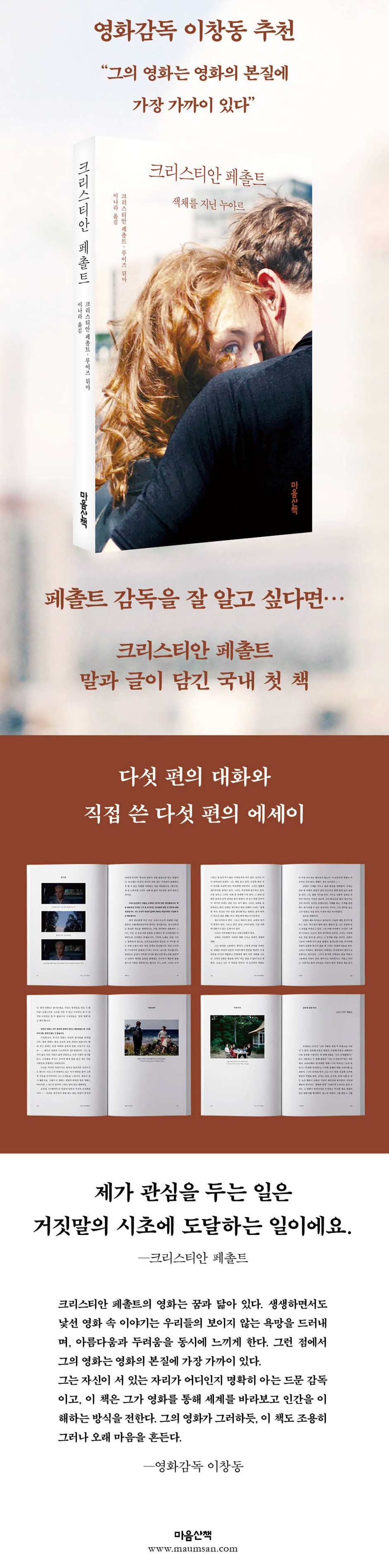
At the end of each chapter, director Petzold himself writes an essay, allowing readers to delve deeper into his political, social, and aesthetic perspectives. Over 60 photographs provide a glimpse into Petzold's cinematic world.
?Film director Lee Chang-dong
Christian Petzold's
Korea's first book containing words and writing
The first Korean book containing the words and writings of director Christian Petzold, who gained international fame through films such as “Phoenix,” “Undine,” and “Afire,” has been published by Maumsanchaek.
Christian Petzold is a representative figure of contemporary German cinema and has been evaluated as “Germany’s most notable director since 1989” (Senses of Cinema).
As the successor to German auteur films following in the footsteps of Wim Wenders, Rainer Werner Fassbinder, and Werner Herzog, he has also been introduced in Korea through numerous special exhibitions and has gained support from art film fans.
This book, Christian Petzold, covers Petzold's entire filmography, from his 1994 feature debut, Pilot, to his 2023 film, Afire.
Based on a six-year conversation with French film critic Louise Dumas, this book delves into Petzold's cinematic world, exploring his historical heritage as a German, his collaborations with female actors including Nina Hoss and Paula Beer, themes of "transition" and "drifting," and his way of working across screen and television.
At the end of each chapter, director Petzold himself writes an essay, allowing readers to delve deeper into his political, social, and aesthetic perspectives. Over 60 photographs provide a glimpse into Petzold's cinematic world.
- You can preview some of the book's contents.
Preview
index
Preface | Louise Dumas
Sights of Germany
First conversation
Zombies of the Land of Reincarnation | Christian Petzold
survivor
Second conversation
The Unfaithful Woman | Christian Petzold
implementation
Third conversation
Monopole: Solingen | Christian Petzold
Artists and craftsmen
Fourth conversation
Mediation Conference | Christian Petzold
From the origin
Fifth conversation
The Child in Prison | Christian Petzold
Conclusion | Louise Dumas
Translator's Note
annual report
Filmography
Search
Sights of Germany
First conversation
Zombies of the Land of Reincarnation | Christian Petzold
survivor
Second conversation
The Unfaithful Woman | Christian Petzold
implementation
Third conversation
Monopole: Solingen | Christian Petzold
Artists and craftsmen
Fourth conversation
Mediation Conference | Christian Petzold
From the origin
Fifth conversation
The Child in Prison | Christian Petzold
Conclusion | Louise Dumas
Translator's Note
annual report
Filmography
Search
Detailed image
Into the book
The ancient, the mythical, the secret lies beneath its surface.
The movie shows this wonderfully.
--- p.66
One day, I heard him doing several interviews, and he was asked a similar question to mine.
“Why are your protagonists almost always women?” Chabrol replied.
“Men live, women survive.
The film focuses on people trying to survive.”
--- p.82
They believed that the scenario had pure exchange value.
This belief has resulted in poor movies.
This is also an American film.
--- p.106
This invisible door, the movie theater in the shopping center that we pass by without seeing, these two exist together.
That's why I like movies that draw us into small cracks that we can squeeze into, rather than movies that open a big door and start.
--- p.139
I'm very interested in crime.
Crime contains a desire for liberation.
I want to get out of this relationship, I want to get rich, I want to leave this town… … .
But because I don't want to be patient, I end up committing a sin.
But how should we handle that?
--- p.148
Films are particularly well-suited to observing how guilt works.
How can we eliminate this wrongdoing, how can we suppress it? These are all activities the film observes.
--- p.159
What we were taught to emulate was not Sidney Lumet's films, but the 90-minute format, processed to a standard.
And it was very unsettling to see this standardized playwriting approach being accepted by some of my fellow students.
--- p.185
We are looking for warmth, not advice.
This is what I call the essence of drift.
--- p.190
If you think about it, a story has some similarities to a house.
A house must stand on its own and have some elements even in the corners.
And actors need to have a history (not a story, but a history) that they can physically embody.
The movie shows this wonderfully.
--- p.66
One day, I heard him doing several interviews, and he was asked a similar question to mine.
“Why are your protagonists almost always women?” Chabrol replied.
“Men live, women survive.
The film focuses on people trying to survive.”
--- p.82
They believed that the scenario had pure exchange value.
This belief has resulted in poor movies.
This is also an American film.
--- p.106
This invisible door, the movie theater in the shopping center that we pass by without seeing, these two exist together.
That's why I like movies that draw us into small cracks that we can squeeze into, rather than movies that open a big door and start.
--- p.139
I'm very interested in crime.
Crime contains a desire for liberation.
I want to get out of this relationship, I want to get rich, I want to leave this town… … .
But because I don't want to be patient, I end up committing a sin.
But how should we handle that?
--- p.148
Films are particularly well-suited to observing how guilt works.
How can we eliminate this wrongdoing, how can we suppress it? These are all activities the film observes.
--- p.159
What we were taught to emulate was not Sidney Lumet's films, but the 90-minute format, processed to a standard.
And it was very unsettling to see this standardized playwriting approach being accepted by some of my fellow students.
--- p.185
We are looking for warmth, not advice.
This is what I call the essence of drift.
--- p.190
If you think about it, a story has some similarities to a house.
A house must stand on its own and have some elements even in the corners.
And actors need to have a history (not a story, but a history) that they can physically embody.
--- p.209
Publisher's Review
“The film is conscious of loss,
“You can leap forward when you take up the topic”
Christian Petzold is considered a representative figure of the 'Berlin School' in the history of German cinema.
In the late 1980s, with the fall of the Berlin Wall, works attempting to imitate American films began to appear in the German film industry.
Unlike a series of films that attempted to ignore the massive event of the Holocaust and the guilt it left behind, the Berlin School cineastes that emerged in the early 2000s focused on "German" themes that were distinct from mainstream Hollywood films.
Among them, Christian Petzold is a director who is clearly aware of the fact that “mainstream German films are embarrassed to use Germany as a setting.”
For Petzold, cinema is an art that “looks to the future but always to the past,” and facing the past and reconstructing the future from its ruins becomes a central task of his films.
Christian Petzold shows how deeply Petzold contemplates his origins and his place as a German male cinematographer.
I am German and was born in the early 1960s.
This means that I grew up in a story of the greatest oppression imaginable.
There was a colossal mistake, an abyss called German fascism.
People tried to suppress this false history.
I try to go back to its origins through film.
_From "German Sights"
A film about drifting after exile,
Noir with Color
The keywords that run through Petzold's filmography, which includes his representative works well known to international film fans, as well as television films and drama series that are still unfamiliar in Korea, are 'drifting' and 'transition.'
His characters are adrift, “either on the run after committing a crime (Pilot, Wolfsburg), in exile (The Country I Belong To, Barbara, Transit), yearning for a fantasy place (Cuba Libre), or denying the cruel reality (Phoenix).”
The motif of drifting that Petzold presents continues in his latest work, Mirror No. 3, which deals with the time he spends at the home of an unknown woman immediately after a car accident.
In the book, Petzold says that “we all fear and desire drifting, finding ourselves drifting, stepping out of line.”
The drift away from the everyday is the moment when the character discovers forgotten desires and the story of Petzold's film begins.
Why do we so passionately read these works, which depict the downfall of a character? Because these characters are consumed in their downfall, and we can warm ourselves through their embers.
We are looking for warmth, not advice.
This is what I call the essence of drift.
_From "Origin"
The motif of 'drifting' is also connected to the way Petzold positions himself within the history of German cinema.
German film directors such as Fritz Lang and Edgar Ulmer, who left Germany during the Nazi regime and continued working in Hollywood, were “deeply influenced by the experience of exile” and created the film noir genre, characterized by strong black and white contrasts.
Petzold calls his films, which follow in that lineage, “color noir.”
This book is filled with the director's vivid desire to renew the future through films that observe exile and transition, drift and loss.
“You can leap forward when you take up the topic”
Christian Petzold is considered a representative figure of the 'Berlin School' in the history of German cinema.
In the late 1980s, with the fall of the Berlin Wall, works attempting to imitate American films began to appear in the German film industry.
Unlike a series of films that attempted to ignore the massive event of the Holocaust and the guilt it left behind, the Berlin School cineastes that emerged in the early 2000s focused on "German" themes that were distinct from mainstream Hollywood films.
Among them, Christian Petzold is a director who is clearly aware of the fact that “mainstream German films are embarrassed to use Germany as a setting.”
For Petzold, cinema is an art that “looks to the future but always to the past,” and facing the past and reconstructing the future from its ruins becomes a central task of his films.
Christian Petzold shows how deeply Petzold contemplates his origins and his place as a German male cinematographer.
I am German and was born in the early 1960s.
This means that I grew up in a story of the greatest oppression imaginable.
There was a colossal mistake, an abyss called German fascism.
People tried to suppress this false history.
I try to go back to its origins through film.
_From "German Sights"
A film about drifting after exile,
Noir with Color
The keywords that run through Petzold's filmography, which includes his representative works well known to international film fans, as well as television films and drama series that are still unfamiliar in Korea, are 'drifting' and 'transition.'
His characters are adrift, “either on the run after committing a crime (Pilot, Wolfsburg), in exile (The Country I Belong To, Barbara, Transit), yearning for a fantasy place (Cuba Libre), or denying the cruel reality (Phoenix).”
The motif of drifting that Petzold presents continues in his latest work, Mirror No. 3, which deals with the time he spends at the home of an unknown woman immediately after a car accident.
In the book, Petzold says that “we all fear and desire drifting, finding ourselves drifting, stepping out of line.”
The drift away from the everyday is the moment when the character discovers forgotten desires and the story of Petzold's film begins.
Why do we so passionately read these works, which depict the downfall of a character? Because these characters are consumed in their downfall, and we can warm ourselves through their embers.
We are looking for warmth, not advice.
This is what I call the essence of drift.
_From "Origin"
The motif of 'drifting' is also connected to the way Petzold positions himself within the history of German cinema.
German film directors such as Fritz Lang and Edgar Ulmer, who left Germany during the Nazi regime and continued working in Hollywood, were “deeply influenced by the experience of exile” and created the film noir genre, characterized by strong black and white contrasts.
Petzold calls his films, which follow in that lineage, “color noir.”
This book is filled with the director's vivid desire to renew the future through films that observe exile and transition, drift and loss.
GOODS SPECIFICS
- Date of issue: November 15, 2025
- Page count, weight, size: 248 pages | 322g | 133*200*20mm
- ISBN13: 9788960909595
- ISBN10: 8960909599
You may also like
카테고리
korean


korean

![GQ KOREA Mark (Monthly): December [2025]](http://librairie.coreenne.fr/cdn/shop/files/8ef265dbbfbf186523ed75ba7319009d.jpg?v=1765340328&width=3840)


