

Non-literature classes
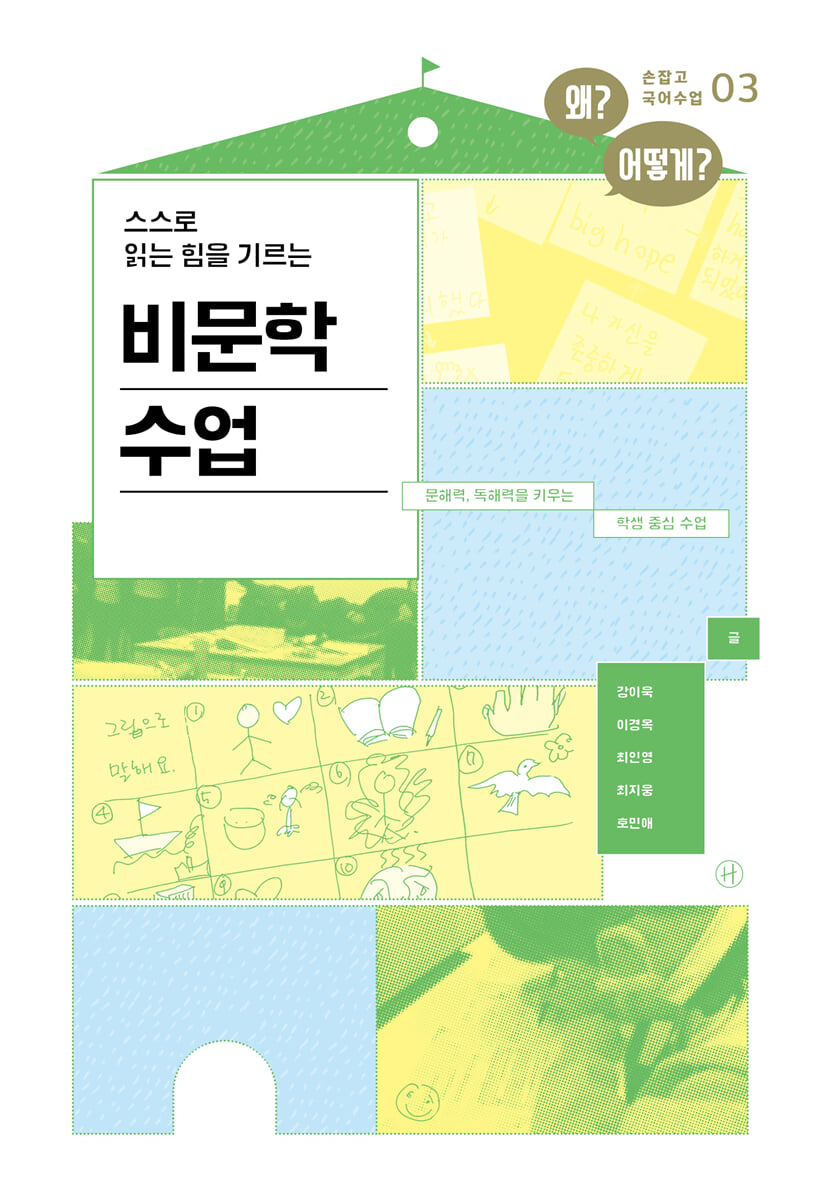 |
Description
Book Introduction
A non-fiction class that lets students read, think, and understand on their own!
Veteran teachers teach you how with proven lessons.
This book began with a request from teachers: “Please create a guide to teaching non-literature classes well.”
The reality is that even Korean language teachers find non-literature classes burdensome.
This applies not only to teachers but also to students.
Children who are accustomed to the digital environment dislike reading and find it difficult.
So, it seems that non-fiction is an unwelcome subject for both Korean language teachers and students.
However, students' ability to develop vocabulary, literacy, and reading comprehension through reading, that is, to read and understand texts, is an essential skill for living properly in the world.
Of course, this is also an ability that students must have in order to achieve their primary goal of entering university.
Therefore, Korean language teachers cannot neglect non-literature and must find their own methods to teach it properly.
This book is a friendly guide for all Korean language teachers who struggle with non-literature classes.
It contains vivid class stories that veteran Korean language teachers have deeply pondered, researched, and shared with their students.
Classes that incorporate play, reading classes that involve copying, classes that use visual thinking to summarize and read, classes where students explain and ask questions while reading, and classes where students research and read papers to explore career paths.
Through these classes, students will not only experience immersion in reading but also find joy in reading, and teachers will feel a sense of pride and efficacy.
A class where teachers and students grow together, a class that helps students in their lives, a class filled with fun and communication, a class where everyone participates enthusiastically…
This book will serve as a valuable guide for Korean language teachers who dream of such classes.
Veteran teachers teach you how with proven lessons.
This book began with a request from teachers: “Please create a guide to teaching non-literature classes well.”
The reality is that even Korean language teachers find non-literature classes burdensome.
This applies not only to teachers but also to students.
Children who are accustomed to the digital environment dislike reading and find it difficult.
So, it seems that non-fiction is an unwelcome subject for both Korean language teachers and students.
However, students' ability to develop vocabulary, literacy, and reading comprehension through reading, that is, to read and understand texts, is an essential skill for living properly in the world.
Of course, this is also an ability that students must have in order to achieve their primary goal of entering university.
Therefore, Korean language teachers cannot neglect non-literature and must find their own methods to teach it properly.
This book is a friendly guide for all Korean language teachers who struggle with non-literature classes.
It contains vivid class stories that veteran Korean language teachers have deeply pondered, researched, and shared with their students.
Classes that incorporate play, reading classes that involve copying, classes that use visual thinking to summarize and read, classes where students explain and ask questions while reading, and classes where students research and read papers to explore career paths.
Through these classes, students will not only experience immersion in reading but also find joy in reading, and teachers will feel a sense of pride and efficacy.
A class where teachers and students grow together, a class that helps students in their lives, a class filled with fun and communication, a class where everyone participates enthusiastically…
This book will serve as a valuable guide for Korean language teachers who dream of such classes.
index
Publishing the 'Hand-in-Hand Korean Language Class' series
preface
Part 1.
Non-fiction reading classes, why?
1.
Strange swimming pool
2.
Non-fiction is a matter of survival.
3.
The term 'non-literature'
4.
The difficulties of non-literature education
5.
Non-literature classes that develop reading comprehension skills
6.
Introducing Student-Centered Non-Fiction Classes
Part 2.
How about a non-fiction reading class?
Lesson Case 1 - Opening Your Mind Through Play
Reading and Writing Classes Anyone Can Do _ Lee Kyung-ok
[Play Lesson 1] Telling with Pictures - Reading with Prediction
[Play Class 2] We are Cooking Guides - Reading while Understanding Systematic Information
[Play Lesson 3] Folding Fingers - Reading to Understand the Main Content
[Play Lesson 4] Our Rap Festival - Critical Reading
Lesson Example 2 - Immersing Yourself in Reading
The Power of Copying _Choi In-young
[Preparation] Why and how do we copy?
[Step 1] Copy the entire text as is.
[Step 2] Copy and summarize sentence by sentence
[Step 3] Copy and summarize paragraph by paragraph.
[Step 4] Summarize and copy the entire passage.
[Summary] Evaluate the class and share your thoughts.
Lesson Case 3 - Reading with a Summary
Cultivating Literacy through Visual Thinking _ Hominae
[Step 1] Motivation and Visual Language Learning
[Step 2] Learn visual thinking summarization strategies through video.
[Step 3] Reading textbooks, non-fiction, and newspapers
[Ending Class] The Meaning of Summarizing Visual Thinking
Lesson Example 4 - Reading Independently
Reading Class: Explaining and Asking Questions _ Kang Lee-wook
[Preparation] Why and how should we explain, ask questions, and read?
[Step 1-1] Reading with explanation - Pair explanation
[Steps 1-2] Reading with explanation - Teaching group representatives
[Step 2] Read while asking questions
Lesson Example 5 - Deep Reading
Reading Papers to Explore Career Paths _Jiwoong Choi
[Preparation] Sharing everyone's career path using keywords
[Step 1] Understanding the Project and Becoming Familiar with the Paper
[Step 2] Practice finding papers
[Step 3] Selecting a Topic: Broadly Together, Deeply Alone
[Step 4] Create a research report or presentation
[Summary] Our Own Research Report Presentation
preface
Part 1.
Non-fiction reading classes, why?
1.
Strange swimming pool
2.
Non-fiction is a matter of survival.
3.
The term 'non-literature'
4.
The difficulties of non-literature education
5.
Non-literature classes that develop reading comprehension skills
6.
Introducing Student-Centered Non-Fiction Classes
Part 2.
How about a non-fiction reading class?
Lesson Case 1 - Opening Your Mind Through Play
Reading and Writing Classes Anyone Can Do _ Lee Kyung-ok
[Play Lesson 1] Telling with Pictures - Reading with Prediction
[Play Class 2] We are Cooking Guides - Reading while Understanding Systematic Information
[Play Lesson 3] Folding Fingers - Reading to Understand the Main Content
[Play Lesson 4] Our Rap Festival - Critical Reading
Lesson Example 2 - Immersing Yourself in Reading
The Power of Copying _Choi In-young
[Preparation] Why and how do we copy?
[Step 1] Copy the entire text as is.
[Step 2] Copy and summarize sentence by sentence
[Step 3] Copy and summarize paragraph by paragraph.
[Step 4] Summarize and copy the entire passage.
[Summary] Evaluate the class and share your thoughts.
Lesson Case 3 - Reading with a Summary
Cultivating Literacy through Visual Thinking _ Hominae
[Step 1] Motivation and Visual Language Learning
[Step 2] Learn visual thinking summarization strategies through video.
[Step 3] Reading textbooks, non-fiction, and newspapers
[Ending Class] The Meaning of Summarizing Visual Thinking
Lesson Example 4 - Reading Independently
Reading Class: Explaining and Asking Questions _ Kang Lee-wook
[Preparation] Why and how should we explain, ask questions, and read?
[Step 1-1] Reading with explanation - Pair explanation
[Steps 1-2] Reading with explanation - Teaching group representatives
[Step 2] Read while asking questions
Lesson Example 5 - Deep Reading
Reading Papers to Explore Career Paths _Jiwoong Choi
[Preparation] Sharing everyone's career path using keywords
[Step 1] Understanding the Project and Becoming Familiar with the Paper
[Step 2] Practice finding papers
[Step 3] Selecting a Topic: Broadly Together, Deeply Alone
[Step 4] Create a research report or presentation
[Summary] Our Own Research Report Presentation
Publisher's Review
Avoid lecture-style classes and pursue student-centered classes.
A proven "non-literature class" story introduced by veteran Korean language teachers.
In the Korean language field, ‘reading, literacy, and reading comprehension’ are emerging as issues.
There are also worrisome sighs about students' significantly declining vocabulary and literacy skills, and news reports that reading and writing academies in Gangnam are becoming crowded as the weight of comprehensive student records and essays in college entrance exams increases relatively.
It appears that the Office of Education and schools are also aware of this problem and are looking for various methods.
In any case, the reality is that students lack reading skills, and Korean language teachers have a responsibility to fill this gap to some extent.
『Non-literature classes (that cultivate the ability to read independently)』 is a guide to 'non-literature reading classes' that provides a path to the responsibility of such Korean language teachers.
Non-literature classes that teachers find burdensome to teach and students find boring or difficult.
"What kind of writing are students interested in? How can we get them to read well? How can we make them focus on reading? Can we help them think more and understand better while reading? How can we help them realize the necessity of reading and apply it in their daily lives?" In response to these questions, veteran Korean language teachers share five proven non-fiction teaching practices they've learned through trial and error.
A reading and writing class that utilizes play to make it easy for anyone to do, a copying class that provides a surprising immersive reading experience, a summarizing class that utilizes visual thinking to cultivate literacy and critical thinking skills, a class where students explain and ask questions while reading, and a class where they research and read papers to explore career paths.
All of these classes are structured as 'student-centered classes' rather than the lecture-style classes commonly used in traditional non-literature classes.
Students will find reading enjoyable through class and will be able to develop their reading comprehension, thinking, and communication skills, while teachers will be able to feel a sense of accomplishment and efficacy as they see their students grow step by step.
A Guide to Korean Language Classes Where Teachers and Students Grow Together
Hand-in-Hand Korean Class Series
The starting point of this series was the 'high school credit system'.
At a time when teachers lacked awareness and preparedness for the high school credit system, I thought it would be helpful to have a teaching guide that could ease the burden of designing individual class programs and lesson plans.
The discussion that started there continued to the ‘essence of Korean language classes.’
The conclusion was that teachers need to have a proper understanding of the philosophy and meaning of their classes in order to set the right direction for their classes and develop specific methods.
The 'Hand-in-Hand Korean Class' series is a 'Korean language class guide' planned and created by Korean language teachers who hope for better Korean language education.
The books in this series are broadly divided into two parts, building on the preceding conclusions.
Part 1, "Why?", explains the reasons and significance of teaching Korean from the perspective of a Korean language teacher, and Part 2, "How?", presents various examples of Korean language classes that can enrich students' lives.
Based on the teaching practices of Korean language teachers who have implemented fun and meaningful classes, classes where students and teachers grow together, classes that help students lead happier lives now and in the future, and classes that promote human maturity beyond textbooks and tests, you will be able to discover the path to "better Korean language education."
Three books were published, starting with 『Short Story Writing Class』, 『START-UP Literacy Class』, and 『Non-literature Class (to develop independent reading skills)』.
Going forward, we plan to consistently publish lesson guides that will assist Korean language teachers in designing their classes, including ‘novel reading classes,’ ‘writing classes,’ ‘vocabulary classes,’ ‘grammar classes,’ ‘discussion classes,’ and ‘village fusion classes.’
A proven "non-literature class" story introduced by veteran Korean language teachers.
In the Korean language field, ‘reading, literacy, and reading comprehension’ are emerging as issues.
There are also worrisome sighs about students' significantly declining vocabulary and literacy skills, and news reports that reading and writing academies in Gangnam are becoming crowded as the weight of comprehensive student records and essays in college entrance exams increases relatively.
It appears that the Office of Education and schools are also aware of this problem and are looking for various methods.
In any case, the reality is that students lack reading skills, and Korean language teachers have a responsibility to fill this gap to some extent.
『Non-literature classes (that cultivate the ability to read independently)』 is a guide to 'non-literature reading classes' that provides a path to the responsibility of such Korean language teachers.
Non-literature classes that teachers find burdensome to teach and students find boring or difficult.
"What kind of writing are students interested in? How can we get them to read well? How can we make them focus on reading? Can we help them think more and understand better while reading? How can we help them realize the necessity of reading and apply it in their daily lives?" In response to these questions, veteran Korean language teachers share five proven non-fiction teaching practices they've learned through trial and error.
A reading and writing class that utilizes play to make it easy for anyone to do, a copying class that provides a surprising immersive reading experience, a summarizing class that utilizes visual thinking to cultivate literacy and critical thinking skills, a class where students explain and ask questions while reading, and a class where they research and read papers to explore career paths.
All of these classes are structured as 'student-centered classes' rather than the lecture-style classes commonly used in traditional non-literature classes.
Students will find reading enjoyable through class and will be able to develop their reading comprehension, thinking, and communication skills, while teachers will be able to feel a sense of accomplishment and efficacy as they see their students grow step by step.
A Guide to Korean Language Classes Where Teachers and Students Grow Together
Hand-in-Hand Korean Class Series
The starting point of this series was the 'high school credit system'.
At a time when teachers lacked awareness and preparedness for the high school credit system, I thought it would be helpful to have a teaching guide that could ease the burden of designing individual class programs and lesson plans.
The discussion that started there continued to the ‘essence of Korean language classes.’
The conclusion was that teachers need to have a proper understanding of the philosophy and meaning of their classes in order to set the right direction for their classes and develop specific methods.
The 'Hand-in-Hand Korean Class' series is a 'Korean language class guide' planned and created by Korean language teachers who hope for better Korean language education.
The books in this series are broadly divided into two parts, building on the preceding conclusions.
Part 1, "Why?", explains the reasons and significance of teaching Korean from the perspective of a Korean language teacher, and Part 2, "How?", presents various examples of Korean language classes that can enrich students' lives.
Based on the teaching practices of Korean language teachers who have implemented fun and meaningful classes, classes where students and teachers grow together, classes that help students lead happier lives now and in the future, and classes that promote human maturity beyond textbooks and tests, you will be able to discover the path to "better Korean language education."
Three books were published, starting with 『Short Story Writing Class』, 『START-UP Literacy Class』, and 『Non-literature Class (to develop independent reading skills)』.
Going forward, we plan to consistently publish lesson guides that will assist Korean language teachers in designing their classes, including ‘novel reading classes,’ ‘writing classes,’ ‘vocabulary classes,’ ‘grammar classes,’ ‘discussion classes,’ and ‘village fusion classes.’
GOODS SPECIFICS
- Date of issue: November 25, 2024
- Page count, weight, size: 264 pages | 150*220*13mm
- ISBN13: 9791170872788
You may also like
카테고리
korean


korean

![GQ KOREA Mark (Monthly): December [2025]](http://librairie.coreenne.fr/cdn/shop/files/8ef265dbbfbf186523ed75ba7319009d.jpg?v=1765340328&width=3840)


