

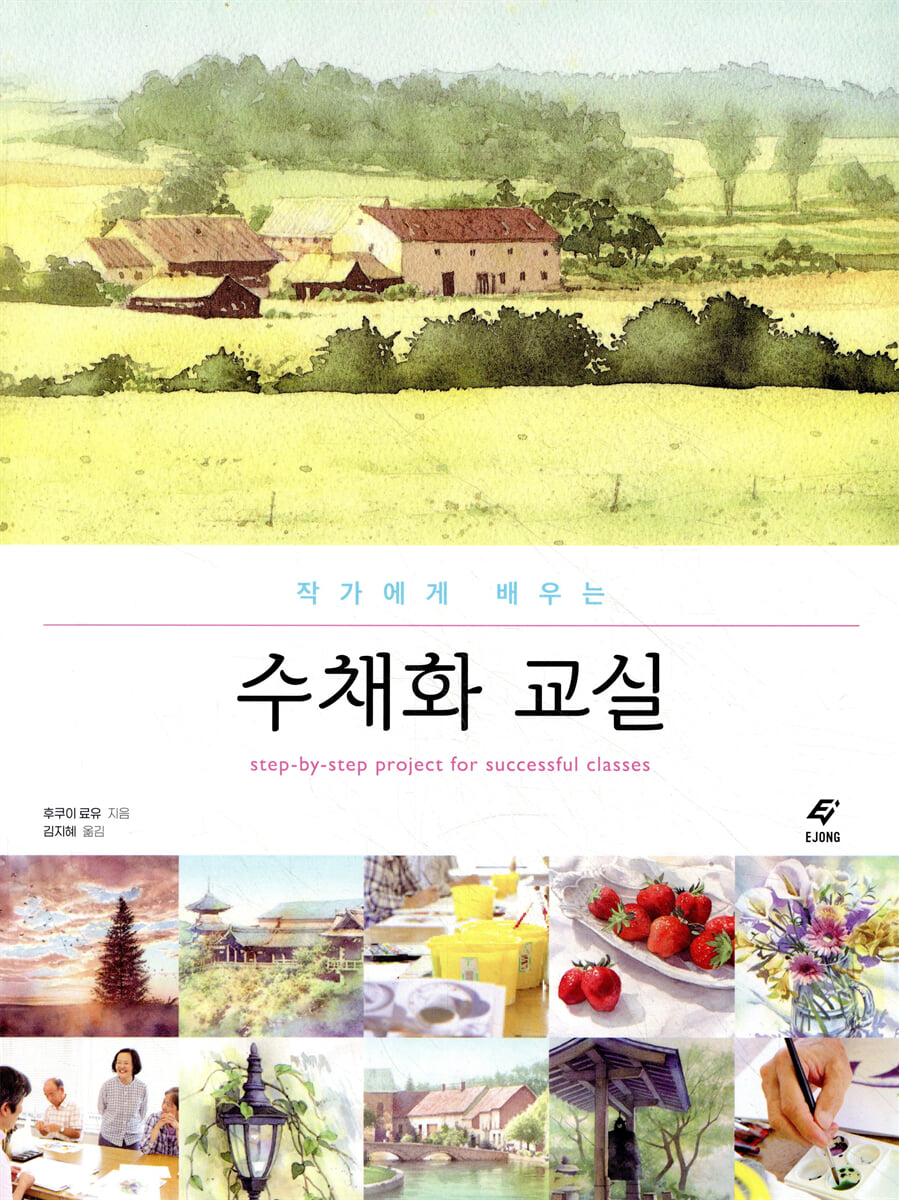
Watercolor class taught by the artist
 |
Description
Book Introduction
60 Special Lessons from Your Own Watercolor Teacher
If you're feeling overwhelmed by trying watercolor painting on your own, try "Watercolor Classroom: Learn from the Artist."
This book explains the basic techniques of watercolor painting and the step-by-step coloring process in an easy-to-understand way.
It contains advice the author shares in actual classes and answers to frequently asked questions from students, giving you the feeling of being in a real-life lesson.
Each lesson can be studied in order, or you can choose the content you want to learn at your own pace, independent of the order, to suit your skill level.
Discover the joy of watercolor painting and further improve your skills with this book.
If you're feeling overwhelmed by trying watercolor painting on your own, try "Watercolor Classroom: Learn from the Artist."
This book explains the basic techniques of watercolor painting and the step-by-step coloring process in an easy-to-understand way.
It contains advice the author shares in actual classes and answers to frequently asked questions from students, giving you the feeling of being in a real-life lesson.
Each lesson can be studied in order, or you can choose the content you want to learn at your own pace, independent of the order, to suit your skill level.
Discover the joy of watercolor painting and further improve your skills with this book.
- You can preview some of the book's contents.
Preview
index
Entering 2
Chapter 1: The Mindset Before Painting with Watercolors 7
Lesson No. 01 Understanding Transparent Watercolor
Transparent watercolor is a unique painting tool 8
Lesson No. 02: Light and shade and balance are important.
Enjoy transparency and brightness 10
Lesson No.03 Accent on important points
Let's draw it a little brighter than it actually is 11
Lesson No.04 The white of paper is beautiful!
Let's bring out the whiteness of the paper 12
Lesson No.05 Let's take a closer look first.
Let's express the texture of objects by leaving some space 13
Lesson No.06 What's More Important Than Technique
Let's look at light and shadow 14
Lesson No. 07 There are many things that deceive our eyes.
Let's realize that our eyes are deceptive 16
Chapter 2: Watercolor Basics
Lesson No.08 Get familiar with paint colors
The difference between right after painting and when it dries is this great! 20
Lesson No.09: 100 Steps Forward with This
Get used to applying it generously 21
Lesson No. 10 Let's paint neatly and draw like a pro
Let's add some color 22
Lesson No. 11 There are many benefits to applying generously.
It all starts with a wash 24
Lesson No.12 Let's paint with varying colors.
26 Spread of the color painted right next to it
Lesson No. 13 The Charm of Transparent Watercolor
Wet in Wet 28
Lesson No. 14: Experience the Joy of Watercolor
Let's draw boldly with a relaxed mind 30
Lesson No. 15: Ideas for not drawing too carefully
Let's draw a pattern 32
Lesson No.16 With the same mindset as when drawing a pattern
Let's draw a simple motif 35
Lesson No. 17 Mastering Color Mixing
Let's guess the color after mixing 42
Lesson No.18 What color will the color you want to paint on be on top of?
Let's place the colors of the paint on the color wheel 44
Lesson No. 19 Let's make it by mixing yellow and blue
Green of the Tree 46
Lesson No. 20: Let's make it by mixing complementary colors
How to Make Gray 48
Lesson No.21 Unique Color Mixing
50 different color combinations and ideas
Lesson No. 22 Enjoying Watercolors More
If you learn the basics, you can draw anything 52
Lesson No. 23 Another Barim Technique
There is also a way to paint water from a distance 55
Lesson No. 24: Pencil Sketching and Watercolor: A Unity
A pencil sketch is not just a rough sketch, it is part of a painting. 60
Lesson No. 25 Don't Sketch Natural Objects Too Consciously
Buildings and natural objects change the sketch 62
Lesson No. 26: Starting with a color painting will help you improve your skills quickly.
64 Basics of Watercolor Painting
Chapter 3: Hints on Coloring Order 65
Lesson No. 27: Coloring Order Basics 1
Should I start with light colors or dark colors first? 66
Lesson No. 28: Coloring Order Basics 2
Can't you paint a light color over a dark color? 67
Lesson No.29 The coloring order from light to dark is standard, but…
How to start drawing? 68
Lesson No. 30: The Best Way to Create a Unified Screen
Let's start by painting the base color 69
Lesson No.31 Where should I start painting?
Let's think about how we want to draw 70
Lesson No.32 The extensibility of images expressed as backgrounds
Let's start with the background 71
Lesson No.33 Patterned things
The pattern is drawn last 72
Lesson No.34 When to use the calligraphy technique?
Let's use the calligraphy technique at the beginning 73
Lesson No. 35: Finish the overcoat within 3 coats for a neat finish.
Consider the number of overpaints 74
Lesson No. 36 Let's paint while imagining a continuous work 1
Order is the accumulation of short tasks 76
Lesson No. 37 Let's paint while imagining continuous work 2
Work without stopping until dry 77
Lesson No. 38 Let's paint while imagining a continuous work 3
78 repetitions of continuous work and rest
Lesson No.39 Landscape Painting in Clear Order
Let's draw it by dividing it into light and shadow 80
Lesson No. 40: Expressing Light and Shadow
Let's draw with the grisaille technique 81
Lesson No.41 On Completion
The last one is work 82 that gives accents
Chapter 4: Trees and Water 83
Lesson No.42 How to Determine Volume
The shade of the tree is roughly understood 84
Lesson No. 43 Characteristics of Trees
Tree silhouette is important 86
Lesson No.44: Clear three-dimensional expression
Draw the shade, then paint the light parts 93
Lesson No.45 Expressing the texture of wood
Let's express the texture of leaves using the brush technique 94
Lesson No.46 How to Draw Cherry Blossoms
Figure out how many lumps there are 95
Lesson No. 47 The shape of the reflection changes depending on the size and type of waves.
Let's pay attention to the state of the water we want to draw 98
Lesson No. 48: Focus on the Three Lights
The feeling changes completely depending on the direction of the light 100
Lesson No.49 Reflections
It also varies depending on the visible distance 101
Lesson No. 50: Memorize the reflection patterns and sequences.
Let's draw the intersection of houses and sky that are reflected 102
Lesson No.51 Why do the waves and the landscape reflected in the water appear alternately?
Let's experiment with mirrors to create a structure that reflects the landscape. 103
Lesson No. 52 How to Enjoy Sketching
Feel the scenery with all five senses 106
Chapter 5: Enjoying the Composition of Pictures 107
Lesson No. 53 Drawing the Air Layer
Expressing Perspective and Space 108
Lesson No. 54 Enjoy Yourself Freely
Create space 110
Lesson No. 55: The Hidden Meaning of a Painting in Composition
I feel stability in horizontal lines and impulse in vertical lines 112
Lesson No. 56 When in doubt, try
There is a basic pattern to the composition 114
Lesson No. 57 Think about what you want to express
Clearly distinguish between the main character and supporting characters 120
Lesson No. 58: On Eye Guiding
Both the artist and the viewer can enjoy 122
Lesson No. 59 The woman in the center is the main character.
Let's draw with the intention of guiding the gaze 124
Lesson No. 60: 7 Rules for Transparent Watercolor
How to Get Along with Transparent Watercolor 126
About the Author 127
128 in the making of this book
Chapter 1: The Mindset Before Painting with Watercolors 7
Lesson No. 01 Understanding Transparent Watercolor
Transparent watercolor is a unique painting tool 8
Lesson No. 02: Light and shade and balance are important.
Enjoy transparency and brightness 10
Lesson No.03 Accent on important points
Let's draw it a little brighter than it actually is 11
Lesson No.04 The white of paper is beautiful!
Let's bring out the whiteness of the paper 12
Lesson No.05 Let's take a closer look first.
Let's express the texture of objects by leaving some space 13
Lesson No.06 What's More Important Than Technique
Let's look at light and shadow 14
Lesson No. 07 There are many things that deceive our eyes.
Let's realize that our eyes are deceptive 16
Chapter 2: Watercolor Basics
Lesson No.08 Get familiar with paint colors
The difference between right after painting and when it dries is this great! 20
Lesson No.09: 100 Steps Forward with This
Get used to applying it generously 21
Lesson No. 10 Let's paint neatly and draw like a pro
Let's add some color 22
Lesson No. 11 There are many benefits to applying generously.
It all starts with a wash 24
Lesson No.12 Let's paint with varying colors.
26 Spread of the color painted right next to it
Lesson No. 13 The Charm of Transparent Watercolor
Wet in Wet 28
Lesson No. 14: Experience the Joy of Watercolor
Let's draw boldly with a relaxed mind 30
Lesson No. 15: Ideas for not drawing too carefully
Let's draw a pattern 32
Lesson No.16 With the same mindset as when drawing a pattern
Let's draw a simple motif 35
Lesson No. 17 Mastering Color Mixing
Let's guess the color after mixing 42
Lesson No.18 What color will the color you want to paint on be on top of?
Let's place the colors of the paint on the color wheel 44
Lesson No. 19 Let's make it by mixing yellow and blue
Green of the Tree 46
Lesson No. 20: Let's make it by mixing complementary colors
How to Make Gray 48
Lesson No.21 Unique Color Mixing
50 different color combinations and ideas
Lesson No. 22 Enjoying Watercolors More
If you learn the basics, you can draw anything 52
Lesson No. 23 Another Barim Technique
There is also a way to paint water from a distance 55
Lesson No. 24: Pencil Sketching and Watercolor: A Unity
A pencil sketch is not just a rough sketch, it is part of a painting. 60
Lesson No. 25 Don't Sketch Natural Objects Too Consciously
Buildings and natural objects change the sketch 62
Lesson No. 26: Starting with a color painting will help you improve your skills quickly.
64 Basics of Watercolor Painting
Chapter 3: Hints on Coloring Order 65
Lesson No. 27: Coloring Order Basics 1
Should I start with light colors or dark colors first? 66
Lesson No. 28: Coloring Order Basics 2
Can't you paint a light color over a dark color? 67
Lesson No.29 The coloring order from light to dark is standard, but…
How to start drawing? 68
Lesson No. 30: The Best Way to Create a Unified Screen
Let's start by painting the base color 69
Lesson No.31 Where should I start painting?
Let's think about how we want to draw 70
Lesson No.32 The extensibility of images expressed as backgrounds
Let's start with the background 71
Lesson No.33 Patterned things
The pattern is drawn last 72
Lesson No.34 When to use the calligraphy technique?
Let's use the calligraphy technique at the beginning 73
Lesson No. 35: Finish the overcoat within 3 coats for a neat finish.
Consider the number of overpaints 74
Lesson No. 36 Let's paint while imagining a continuous work 1
Order is the accumulation of short tasks 76
Lesson No. 37 Let's paint while imagining continuous work 2
Work without stopping until dry 77
Lesson No. 38 Let's paint while imagining a continuous work 3
78 repetitions of continuous work and rest
Lesson No.39 Landscape Painting in Clear Order
Let's draw it by dividing it into light and shadow 80
Lesson No. 40: Expressing Light and Shadow
Let's draw with the grisaille technique 81
Lesson No.41 On Completion
The last one is work 82 that gives accents
Chapter 4: Trees and Water 83
Lesson No.42 How to Determine Volume
The shade of the tree is roughly understood 84
Lesson No. 43 Characteristics of Trees
Tree silhouette is important 86
Lesson No.44: Clear three-dimensional expression
Draw the shade, then paint the light parts 93
Lesson No.45 Expressing the texture of wood
Let's express the texture of leaves using the brush technique 94
Lesson No.46 How to Draw Cherry Blossoms
Figure out how many lumps there are 95
Lesson No. 47 The shape of the reflection changes depending on the size and type of waves.
Let's pay attention to the state of the water we want to draw 98
Lesson No. 48: Focus on the Three Lights
The feeling changes completely depending on the direction of the light 100
Lesson No.49 Reflections
It also varies depending on the visible distance 101
Lesson No. 50: Memorize the reflection patterns and sequences.
Let's draw the intersection of houses and sky that are reflected 102
Lesson No.51 Why do the waves and the landscape reflected in the water appear alternately?
Let's experiment with mirrors to create a structure that reflects the landscape. 103
Lesson No. 52 How to Enjoy Sketching
Feel the scenery with all five senses 106
Chapter 5: Enjoying the Composition of Pictures 107
Lesson No. 53 Drawing the Air Layer
Expressing Perspective and Space 108
Lesson No. 54 Enjoy Yourself Freely
Create space 110
Lesson No. 55: The Hidden Meaning of a Painting in Composition
I feel stability in horizontal lines and impulse in vertical lines 112
Lesson No. 56 When in doubt, try
There is a basic pattern to the composition 114
Lesson No. 57 Think about what you want to express
Clearly distinguish between the main character and supporting characters 120
Lesson No. 58: On Eye Guiding
Both the artist and the viewer can enjoy 122
Lesson No. 59 The woman in the center is the main character.
Let's draw with the intention of guiding the gaze 124
Lesson No. 60: 7 Rules for Transparent Watercolor
How to Get Along with Transparent Watercolor 126
About the Author 127
128 in the making of this book
Detailed image

Publisher's Review
A sense of realism, as if you were taking an actual class
When you learn watercolor painting on your own, there are times when you feel limited.
Learning at a cultural center or art class is a great option, but you may find it difficult to attend classes or find classes that are appropriate for your level.
In such cases, try opening 『Watercolor Classroom Learned from the Artist』 and experiencing a watercolor class just for you.
This book contains the author's long-term experience and practical lessons as a representative of the Japan Transparent Watercolor Society (JWS) and as a watercolor instructor at numerous cultural centers.
Along with advice from actual classes, I explain the difficulties encountered in watercolor painting and how to overcome them in an easy-to-understand way using pictures and photos.
From basic coloring techniques to how to improve the perfection of your drawings, all in one book.
This book begins by understanding the characteristics of watercolor paints, which are painted using water.
And basic painting techniques such as layering, washing, and wet-in-wet are explained step by step using simple and easy materials such as apples and maple leaves.
Then, we will gradually increase the level of explanation by introducing the coloring order and efficient working methods.
In particular, it includes not only advanced techniques for expressing trees and water, which are considered the most difficult in watercolor, but also various methods for enhancing the completeness of a painting, such as composition, spatial direction, and guidance of the gaze.
Systematic watercolor lessons tailored to your skill level and learning pace.
Each lesson is independent yet organically connected, allowing you to choose and learn the parts you want at your own pace and skill level.
For example, after learning coloring techniques in Chapter 2, Watercolor Basics, you can move straight to Chapter 4 to learn how to paint subjects like leafy summer trees or lakeside landscapes.
If you've gained some skill but find yourself making frequent mistakes or feeling like your progress is slow, go back to Chapter 1, "The Mindset Before Starting Watercolor Painting," and review the basics.
In this way, freely adjust your learning pace and deeply explore the charm of watercolor.
When you learn watercolor painting on your own, there are times when you feel limited.
Learning at a cultural center or art class is a great option, but you may find it difficult to attend classes or find classes that are appropriate for your level.
In such cases, try opening 『Watercolor Classroom Learned from the Artist』 and experiencing a watercolor class just for you.
This book contains the author's long-term experience and practical lessons as a representative of the Japan Transparent Watercolor Society (JWS) and as a watercolor instructor at numerous cultural centers.
Along with advice from actual classes, I explain the difficulties encountered in watercolor painting and how to overcome them in an easy-to-understand way using pictures and photos.
From basic coloring techniques to how to improve the perfection of your drawings, all in one book.
This book begins by understanding the characteristics of watercolor paints, which are painted using water.
And basic painting techniques such as layering, washing, and wet-in-wet are explained step by step using simple and easy materials such as apples and maple leaves.
Then, we will gradually increase the level of explanation by introducing the coloring order and efficient working methods.
In particular, it includes not only advanced techniques for expressing trees and water, which are considered the most difficult in watercolor, but also various methods for enhancing the completeness of a painting, such as composition, spatial direction, and guidance of the gaze.
Systematic watercolor lessons tailored to your skill level and learning pace.
Each lesson is independent yet organically connected, allowing you to choose and learn the parts you want at your own pace and skill level.
For example, after learning coloring techniques in Chapter 2, Watercolor Basics, you can move straight to Chapter 4 to learn how to paint subjects like leafy summer trees or lakeside landscapes.
If you've gained some skill but find yourself making frequent mistakes or feeling like your progress is slow, go back to Chapter 1, "The Mindset Before Starting Watercolor Painting," and review the basics.
In this way, freely adjust your learning pace and deeply explore the charm of watercolor.
GOODS SPECIFICS
- Date of issue: March 5, 2025
- Page count, weight, size: 128 pages | 614g | 215*285*20mm
- ISBN13: 9788979294422
- ISBN10: 8979294425
You may also like
카테고리
korean


korean

![GQ KOREA Mark (Monthly): December [2025]](http://librairie.coreenne.fr/cdn/shop/files/8ef265dbbfbf186523ed75ba7319009d.jpg?v=1765340328&width=3840)


