

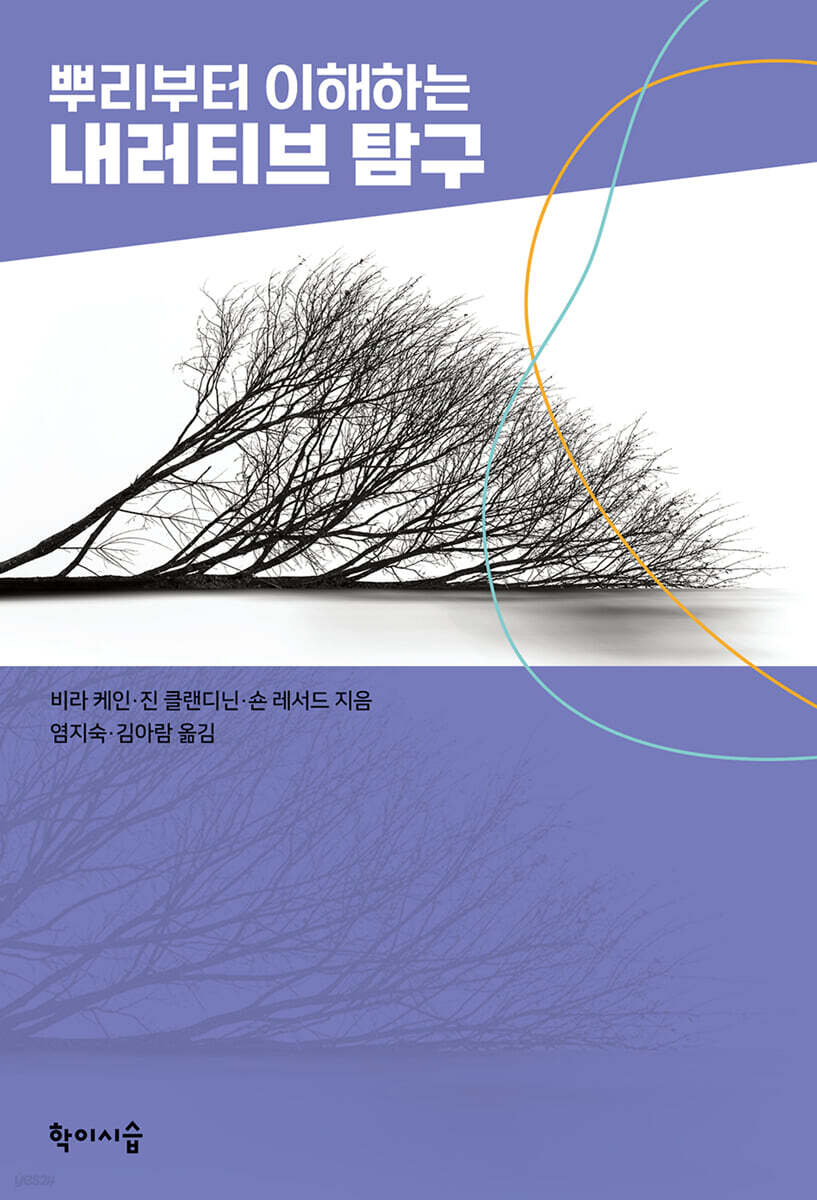
Narrative exploration that understands from the root
 |
Description
Book Introduction
It reveals the philosophical roots of 'narrative inquiry', a research method based on relational ontology.
At this time, the root is not a single, unchanging source.
Let us look into and experience the 'roots' that are connected and created through constant re-formation, and the lives, histories, places, and social relationships intertwined with them.
You will naturally understand what narrative inquiry is and what to consider when conducting research using narrative inquiry.
At this time, the root is not a single, unchanging source.
Let us look into and experience the 'roots' that are connected and created through constant re-formation, and the lives, histories, places, and social relationships intertwined with them.
You will naturally understand what narrative inquiry is and what to consider when conducting research using narrative inquiry.
index
Translator's Preface
Preface for Korean Readers
Acknowledgements
Introduction
Part 1: Starting with a Specific Perspective on Experience
Chapter 1 Experience
Chapter 2 Knowledge
Chapter 3: Embodiment
Methodology Notes
Part 2 Temporality
In the middle of chapter 4
Chapter 5 Memory
Chapter 6 Intergenerational Connectivity
Methodology Notes
Living Inside and Outside the Scenery Part 3
Chapter 7 Location
Chapter 8 Community
Methodology Notes
Part 4: Imagination, Exploration, Wonder, and Playfulness: Entering Liminality and Uncertainty
Chapter 9 Imagination
Chapter 10: Exploration and Wonder
Chapter 11: Uncertainty and Liminality
Chapter 12 Playfulness
Methodology Notes
Part 5 Relationships
Chapter 13 Political and Social Landscape
Chapter 14: Dedication, Responsibility, and Obligation
Methodology Notes
Epilogue
References
Translator's References
Search
Preface for Korean Readers
Acknowledgements
Introduction
Part 1: Starting with a Specific Perspective on Experience
Chapter 1 Experience
Chapter 2 Knowledge
Chapter 3: Embodiment
Methodology Notes
Part 2 Temporality
In the middle of chapter 4
Chapter 5 Memory
Chapter 6 Intergenerational Connectivity
Methodology Notes
Living Inside and Outside the Scenery Part 3
Chapter 7 Location
Chapter 8 Community
Methodology Notes
Part 4: Imagination, Exploration, Wonder, and Playfulness: Entering Liminality and Uncertainty
Chapter 9 Imagination
Chapter 10: Exploration and Wonder
Chapter 11: Uncertainty and Liminality
Chapter 12 Playfulness
Methodology Notes
Part 5 Relationships
Chapter 13 Political and Social Landscape
Chapter 14: Dedication, Responsibility, and Obligation
Methodology Notes
Epilogue
References
Translator's References
Search
Into the book
Knowledge “permeates all the experiences that constitute a person’s existence.
“Its meaning is derived from the individual’s experiential history and is understood in terms of that experience” … We focus on the embodiment of narrative.
This embodiment can be seen both in the vividness of our lives and in the silence.
--- p.23~24
This view of experience implies that life is always in the middle, that experience is always evolving, and that experience builds on experience.
Therefore, experience is something that is always being created, formed and re-formed over time as we encounter new situations.
Experience is neither fixed nor certain.
--- p.26
Jin's life as a school counselor within the institutional narrative of school education was shaped by an institutional temporality different from that of her fellow teachers.
The teachers' experiences were shaped by the need to assess Sandra's progress and report card across the time cycle from kindergarten through 12th grade and the annual grade-by-grade time cycle, not by Sandra's experiences in the midst of a shortened life.
--- p.128
The 'in-between' space is... the site of loving perception (Lugones, 1987), and we think that "it is loving perception that breathes life into our relationships, allowing us to feel the wind, to travel lovingly and joyfully through each other's worlds, to believe and imagine" (Caine & Steeves, 2009:8).
These in-between spaces speak of relationships, but at the same time they make visible how we are embedded in the larger communities that shape our lives, and the possibility of seeing “things as if they could be other things” (Greene, 1994:495).
--- p.270
As Dewey argued, learning begins when certainty ends.
Learning “involves a state of mental difficulty, which is the origin of doubt, hesitation, perplexity, and thinking; and it involves the act of searching, hunting, and inquiring to resolve doubt, relieve perplexity, and find material to process” (Dewey, 1933:12).
--- p.311~312
Silence always exists only in relation to what surrounds it.
It is the space between words, and so it helps to construct the meaning of what can be said as well as what is said, and it becomes a refuge for both what is not said and what cannot be said.
--- p.387
The function of memory is experienced as deeply personal, yet surprisingly political.
“Its meaning is derived from the individual’s experiential history and is understood in terms of that experience” … We focus on the embodiment of narrative.
This embodiment can be seen both in the vividness of our lives and in the silence.
--- p.23~24
This view of experience implies that life is always in the middle, that experience is always evolving, and that experience builds on experience.
Therefore, experience is something that is always being created, formed and re-formed over time as we encounter new situations.
Experience is neither fixed nor certain.
--- p.26
Jin's life as a school counselor within the institutional narrative of school education was shaped by an institutional temporality different from that of her fellow teachers.
The teachers' experiences were shaped by the need to assess Sandra's progress and report card across the time cycle from kindergarten through 12th grade and the annual grade-by-grade time cycle, not by Sandra's experiences in the midst of a shortened life.
--- p.128
The 'in-between' space is... the site of loving perception (Lugones, 1987), and we think that "it is loving perception that breathes life into our relationships, allowing us to feel the wind, to travel lovingly and joyfully through each other's worlds, to believe and imagine" (Caine & Steeves, 2009:8).
These in-between spaces speak of relationships, but at the same time they make visible how we are embedded in the larger communities that shape our lives, and the possibility of seeing “things as if they could be other things” (Greene, 1994:495).
--- p.270
As Dewey argued, learning begins when certainty ends.
Learning “involves a state of mental difficulty, which is the origin of doubt, hesitation, perplexity, and thinking; and it involves the act of searching, hunting, and inquiring to resolve doubt, relieve perplexity, and find material to process” (Dewey, 1933:12).
--- p.311~312
Silence always exists only in relation to what surrounds it.
It is the space between words, and so it helps to construct the meaning of what can be said as well as what is said, and it becomes a refuge for both what is not said and what cannot be said.
--- p.387
The function of memory is experienced as deeply personal, yet surprisingly political.
--- p.441
Publisher's Review
Where did narrative inquiry come from, what is it, and where is it going?
Author Gene Clandinin first coined the term narrative inquiry and has developed and researched narrative inquiry methodology.
He was concerned that narrative inquiry was overemphasizing only the technical aspects, such as the techniques for conducting narrative inquiry and the process of writing a paper using narrative inquiry, and sought to counter the growing neglect by many researchers of the philosophical roots of research methods and phenomena.
At the same time, we wanted to counter the criticism that it was ‘lacking in theorization.’
But what we must be wary of is the expectation that we will find a single, unchanging source.
The roots this book speaks of are things that are connected and created through constant re-formation.
This book offers a glimpse into the authors' journey of finding the core ideas and grounding they need to think, research, and live narratively, then returning to their experiences and lives to vary and expand upon them.
Experience the study of narratives and experiences through narrative inquiry.
Each chapter delves into the core ideas of narrative inquiry.
What is noteworthy is 'how' this is handled.
Clandinin and his disciples chose a writing style and structure that connected their experiences with knowledge and drew on theories.
The names and works of pragmatist and feminist philosophers, as well as indigenous elders, novelists, and poets, appear, and the authors seem to be in conversation with them.
This clearly shows that the ideas contained in the book come from their lives, history, places, and social relationships.
Rather than dissecting ideas and explaining them in terms divorced from experience, it reveals the very act of playing with ideas based on imagination.
By delving into the authors' stories related to each idea, the reasons they tell those stories to readers, and the multi-layered and complex meanings contained within those stories, you will naturally learn what narrative inquiry is and what to consider when conducting research using narrative inquiry.
This book is a kind of narrative about narrative inquiry, and it allows you to experience the study of experience.
Methodological Notes for Narrative Inquirers
However, the readers of this book will be those who want to engage in narrative inquiry.
This means that we cannot separate our attention from techniques, procedures, and research results.
At the end of each section, the authors provide "methodological notes" that illustrate how the ideas discussed in this book—experience, knowledge, representation, memory, place, community, imagination, and playfulness—work in practice during the research process.
It reveals the research process of working with a refugee family from Syria to Canada and shows how this can be expressed narratively.
Each chapter deals with different ideas independently, but is brought together and revealed through methodological notes.
Author Gene Clandinin first coined the term narrative inquiry and has developed and researched narrative inquiry methodology.
He was concerned that narrative inquiry was overemphasizing only the technical aspects, such as the techniques for conducting narrative inquiry and the process of writing a paper using narrative inquiry, and sought to counter the growing neglect by many researchers of the philosophical roots of research methods and phenomena.
At the same time, we wanted to counter the criticism that it was ‘lacking in theorization.’
But what we must be wary of is the expectation that we will find a single, unchanging source.
The roots this book speaks of are things that are connected and created through constant re-formation.
This book offers a glimpse into the authors' journey of finding the core ideas and grounding they need to think, research, and live narratively, then returning to their experiences and lives to vary and expand upon them.
Experience the study of narratives and experiences through narrative inquiry.
Each chapter delves into the core ideas of narrative inquiry.
What is noteworthy is 'how' this is handled.
Clandinin and his disciples chose a writing style and structure that connected their experiences with knowledge and drew on theories.
The names and works of pragmatist and feminist philosophers, as well as indigenous elders, novelists, and poets, appear, and the authors seem to be in conversation with them.
This clearly shows that the ideas contained in the book come from their lives, history, places, and social relationships.
Rather than dissecting ideas and explaining them in terms divorced from experience, it reveals the very act of playing with ideas based on imagination.
By delving into the authors' stories related to each idea, the reasons they tell those stories to readers, and the multi-layered and complex meanings contained within those stories, you will naturally learn what narrative inquiry is and what to consider when conducting research using narrative inquiry.
This book is a kind of narrative about narrative inquiry, and it allows you to experience the study of experience.
Methodological Notes for Narrative Inquirers
However, the readers of this book will be those who want to engage in narrative inquiry.
This means that we cannot separate our attention from techniques, procedures, and research results.
At the end of each section, the authors provide "methodological notes" that illustrate how the ideas discussed in this book—experience, knowledge, representation, memory, place, community, imagination, and playfulness—work in practice during the research process.
It reveals the research process of working with a refugee family from Syria to Canada and shows how this can be expressed narratively.
Each chapter deals with different ideas independently, but is brought together and revealed through methodological notes.
GOODS SPECIFICS
- Date of issue: August 30, 2024
- Page count, weight, size: 502 pages | 128*188*30mm
- ISBN13: 9791128865763
- ISBN10: 1128865769
You may also like
카테고리
korean


korean

![GQ KOREA Mark (Monthly): December [2025]](http://librairie.coreenne.fr/cdn/shop/files/8ef265dbbfbf186523ed75ba7319009d.jpg?v=1765340328&width=3840)


