

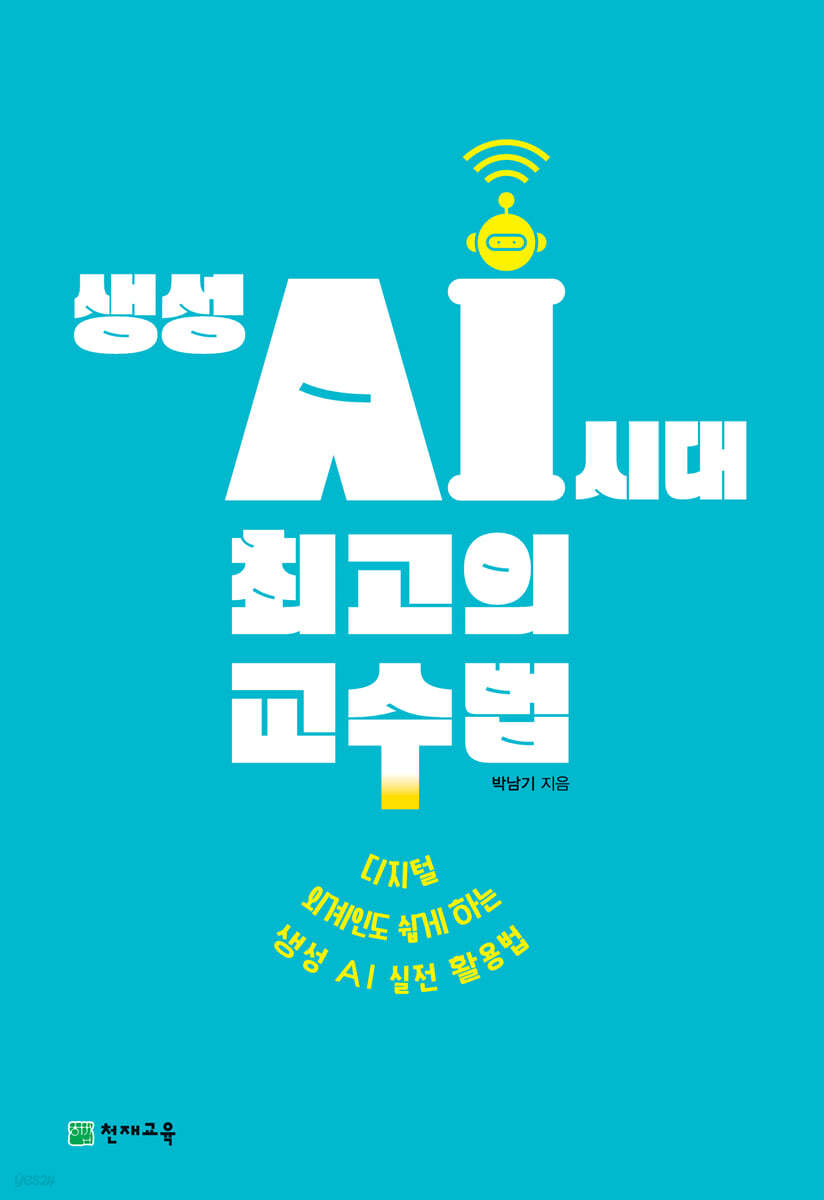
The Best Teaching Methods in the Age of Generative AI
 |
Description
Book Introduction
Among the artificial intelligence services currently available in education, generative AI is a representative example.
Generative AI is expected to usher in a new era in education, including lesson design, motivation, and student assessment.
Teachers who actively utilize generative AI will become more competent, while those who do not will have their expertise diminished, leading to a deepening polarization.
"The Best Teaching Methods in the Age of Generative AI" is a friendly guide to generative AI for educators considering the use of generative AI in education.
Generative AI is expected to usher in a new era in education, including lesson design, motivation, and student assessment.
Teachers who actively utilize generative AI will become more competent, while those who do not will have their expertise diminished, leading to a deepening polarization.
"The Best Teaching Methods in the Age of Generative AI" is a friendly guide to generative AI for educators considering the use of generative AI in education.
- You can preview some of the book's contents.
Preview
index
Part 1: Digital Aliens and Generative AI
Chapter 1: What Educators Need to Know in the Age of Generative AI
1.
The era of generative AI is convenient, but somehow scary.
2.
How to navigate the digital educational media deluge?
3.
When using generative AI, this is something you must remember:
4.
We need a consulting system that utilizes generative AI.
Chapter 2: Basics of Writing Commands for Digital Aliens
1.
You must be good at giving orders
2.
To give good orders
3.
Command structure framework
4.
Effective expressions to complement commands
5.
Creating commands using generative AI
6.
Refer to other people's commands
Part 2: School Education in the Age of Generative AI
Chapter 3: Changes in School Education in the Age of Generative AI
1.
The best way to predict the future is to invent it.
2.
In light of the case of the introduction of electronic calculators
3.
If an ideal educational generative AI were to emerge
4.
What role will generative AI play in school education?
Chapter 4: Changing Writing Styles in the Age of Generative AI
1.
ChatGPT: Changing the Writing Paradigm
2.
ChatGPT's Lies and the Potential for Creative Collaboration
3.
Using Bard and Bing AI's Search and Summary Functions
Part 3: Innovating Classrooms Using Generative AI
Chapter 5: Using Generative AI to Prepare for Classes
1.
Creating a Syllabus (Lesson Plan)
2.
Creating lecture notes (lesson plan) for each class
3.
Creating a PPT slide outline for class
4.
Create ideas for motivating students by class topic (making the class fun)
5.
Create activity plans by class topic and period
6.
Creating teaching materials
7.
Other class preparation
8.
Various artificial intelligence tools that can be used for class preparation
Chapter 6: Using Generative AI in Classroom Progress
1.
Proponents and Cautionary Arguments for Using Generative AI in Classrooms
2.
Personalized learning support available to teachers
3.
How Students Can Use Generative AI for Personal Learning
4.
How to Use Generative AI in Classroom Activities
5.
A Class with Generative AI: Writing Poetry in Second-Grade Korean Language
Chapter 7: Using Generative AI for Student Assessment
1.
Creating assessment questions
2.
Creating a grading rubric
3.
Grading and evaluating descriptive assignments
4.
Give Report Feedback
5.
Writing a life record book
Chapter 8: Using Generative AI in Classroom Management
1.
Class Rules and Regulations
2.
Classroom management activities
3.
Other classes and student guidance activities
Chapter 9: Innovating Classrooms with Generative AI
1.
Applying various learning theories
2.
Gamify your classes
3.
Ideas for Other Classroom Innovations
Chapter 1: What Educators Need to Know in the Age of Generative AI
1.
The era of generative AI is convenient, but somehow scary.
2.
How to navigate the digital educational media deluge?
3.
When using generative AI, this is something you must remember:
4.
We need a consulting system that utilizes generative AI.
Chapter 2: Basics of Writing Commands for Digital Aliens
1.
You must be good at giving orders
2.
To give good orders
3.
Command structure framework
4.
Effective expressions to complement commands
5.
Creating commands using generative AI
6.
Refer to other people's commands
Part 2: School Education in the Age of Generative AI
Chapter 3: Changes in School Education in the Age of Generative AI
1.
The best way to predict the future is to invent it.
2.
In light of the case of the introduction of electronic calculators
3.
If an ideal educational generative AI were to emerge
4.
What role will generative AI play in school education?
Chapter 4: Changing Writing Styles in the Age of Generative AI
1.
ChatGPT: Changing the Writing Paradigm
2.
ChatGPT's Lies and the Potential for Creative Collaboration
3.
Using Bard and Bing AI's Search and Summary Functions
Part 3: Innovating Classrooms Using Generative AI
Chapter 5: Using Generative AI to Prepare for Classes
1.
Creating a Syllabus (Lesson Plan)
2.
Creating lecture notes (lesson plan) for each class
3.
Creating a PPT slide outline for class
4.
Create ideas for motivating students by class topic (making the class fun)
5.
Create activity plans by class topic and period
6.
Creating teaching materials
7.
Other class preparation
8.
Various artificial intelligence tools that can be used for class preparation
Chapter 6: Using Generative AI in Classroom Progress
1.
Proponents and Cautionary Arguments for Using Generative AI in Classrooms
2.
Personalized learning support available to teachers
3.
How Students Can Use Generative AI for Personal Learning
4.
How to Use Generative AI in Classroom Activities
5.
A Class with Generative AI: Writing Poetry in Second-Grade Korean Language
Chapter 7: Using Generative AI for Student Assessment
1.
Creating assessment questions
2.
Creating a grading rubric
3.
Grading and evaluating descriptive assignments
4.
Give Report Feedback
5.
Writing a life record book
Chapter 8: Using Generative AI in Classroom Management
1.
Class Rules and Regulations
2.
Classroom management activities
3.
Other classes and student guidance activities
Chapter 9: Innovating Classrooms with Generative AI
1.
Applying various learning theories
2.
Gamify your classes
3.
Ideas for Other Classroom Innovations
Detailed image
.png)
Publisher's Review
With the introduction of AI digital textbooks imminent,
The use of AI in education can no longer be delayed.
In March 2024, the European Union (EU) Parliament passed the world's first law regulating AI.
This law will be implemented in phases and fully implemented in 2026. It divides AI applications into four risk levels, with differentiated regulations, with stricter regulations applied in higher-risk areas.
Public services such as education and healthcare are classified as high-risk, requiring human oversight and the establishment of risk management systems when using AI technology in these fields.
While there have been efforts to build a safe AI ecosystem in the United States, China, and the European Union, the European Union has become the first to establish legally binding regulations on the use of AI.
As the European Parliament has ruled, using AI in education services carries risks.
This is because it affects students, who are the subjects of learning and the objects of education.
Moreover, generative AI creates similar new content by utilizing existing content posted on the Internet.
If it contains any inappropriate expressions or unverified content, teachers will inevitably hesitate to use it.
But if you don't use generative AI for these reasons, it's like not being able to make kimchi because you're afraid of maggots.
If teachers are hesitant to use generative AI, students are likely to learn it in the traditional way without learning about it in school.
Teachers who are not familiar with AI
A book that helps you communicate with AI without fear and get what you want.
Schools are now on the verge of introducing AI digital textbooks.
But there are still no national guidelines to guide how AI should be used or what should be done to manage its impact.
Nevertheless, teachers must clearly inform students about the limitations and major problems that AI has.
By focusing only on the minutiae of improving learning efficiency and reducing workload, teachers are essentially locking AI away in a closet.
"The Best Teaching Methods in the Age of Generative AI" is a book that helps teachers unfamiliar with various programs, including programming languages, communicate with AI without fear and achieve what they want.
Generative AI can communicate in natural language, so it doesn't need to learn how to give commands.
With just a little bit of foundation in command writing, you can achieve high-quality responses and greatly increase your classroom usability.
Providing materials that can utilize AI generation at each lesson level
Once you use generative AI, including ChatGPT, you'll be so satisfied with its effectiveness that it's hard to stop using it.
Relying on generative AI will likely lead to addiction, making it difficult for teachers and students to teach and learn independently.
The education sector must be able to revolutionize education with generative AI while minimizing these side effects.
This book provides direction on how the education community should respond to generative AI.
Additionally, “The Best Teaching Methods in the Age of Generative AI” provides ideas and materials for teachers and students to utilize generative AI at each stage of the class.
We provided step-by-step, concrete examples of how teachers can utilize AI in various educational activities, such as class preparation, teaching materials creation, class conduct, student assessment, and classroom management.
The era of creating personalized videos using generative AI has already arrived.
As we don't know how far generative AI will evolve, its use in education is a problem that must be approached more cautiously, but head-on.
The use of AI in education can no longer be delayed.
In March 2024, the European Union (EU) Parliament passed the world's first law regulating AI.
This law will be implemented in phases and fully implemented in 2026. It divides AI applications into four risk levels, with differentiated regulations, with stricter regulations applied in higher-risk areas.
Public services such as education and healthcare are classified as high-risk, requiring human oversight and the establishment of risk management systems when using AI technology in these fields.
While there have been efforts to build a safe AI ecosystem in the United States, China, and the European Union, the European Union has become the first to establish legally binding regulations on the use of AI.
As the European Parliament has ruled, using AI in education services carries risks.
This is because it affects students, who are the subjects of learning and the objects of education.
Moreover, generative AI creates similar new content by utilizing existing content posted on the Internet.
If it contains any inappropriate expressions or unverified content, teachers will inevitably hesitate to use it.
But if you don't use generative AI for these reasons, it's like not being able to make kimchi because you're afraid of maggots.
If teachers are hesitant to use generative AI, students are likely to learn it in the traditional way without learning about it in school.
Teachers who are not familiar with AI
A book that helps you communicate with AI without fear and get what you want.
Schools are now on the verge of introducing AI digital textbooks.
But there are still no national guidelines to guide how AI should be used or what should be done to manage its impact.
Nevertheless, teachers must clearly inform students about the limitations and major problems that AI has.
By focusing only on the minutiae of improving learning efficiency and reducing workload, teachers are essentially locking AI away in a closet.
"The Best Teaching Methods in the Age of Generative AI" is a book that helps teachers unfamiliar with various programs, including programming languages, communicate with AI without fear and achieve what they want.
Generative AI can communicate in natural language, so it doesn't need to learn how to give commands.
With just a little bit of foundation in command writing, you can achieve high-quality responses and greatly increase your classroom usability.
Providing materials that can utilize AI generation at each lesson level
Once you use generative AI, including ChatGPT, you'll be so satisfied with its effectiveness that it's hard to stop using it.
Relying on generative AI will likely lead to addiction, making it difficult for teachers and students to teach and learn independently.
The education sector must be able to revolutionize education with generative AI while minimizing these side effects.
This book provides direction on how the education community should respond to generative AI.
Additionally, “The Best Teaching Methods in the Age of Generative AI” provides ideas and materials for teachers and students to utilize generative AI at each stage of the class.
We provided step-by-step, concrete examples of how teachers can utilize AI in various educational activities, such as class preparation, teaching materials creation, class conduct, student assessment, and classroom management.
The era of creating personalized videos using generative AI has already arrived.
As we don't know how far generative AI will evolve, its use in education is a problem that must be approached more cautiously, but head-on.
GOODS SPECIFICS
- Date of issue: May 15, 2024
- Page count, weight, size: 320 pages | 140*220*10mm
- ISBN13: 9791125948438
- ISBN10: 1125948434
You may also like
카테고리
korean


korean

![GQ KOREA Mark (Monthly): December [2025]](http://librairie.coreenne.fr/cdn/shop/files/8ef265dbbfbf186523ed75ba7319009d.jpg?v=1765340328&width=3840)


