

Gombrich's World History
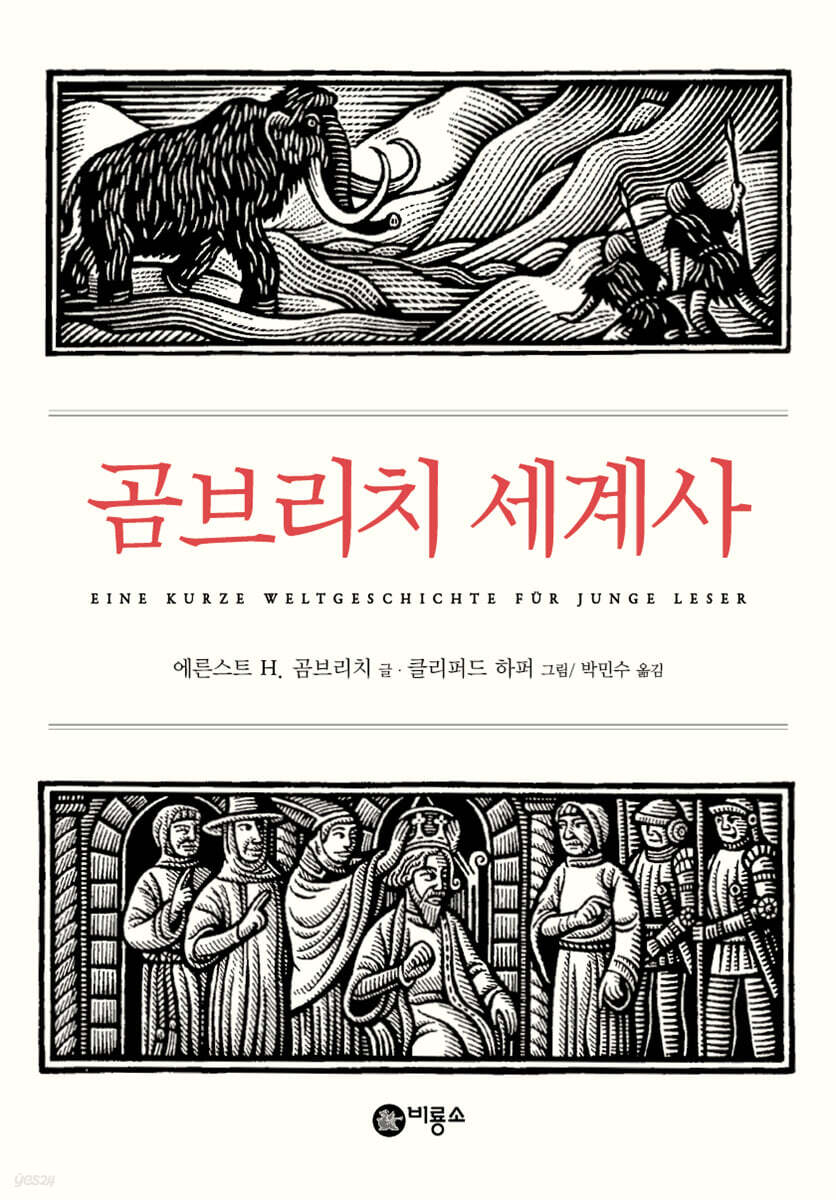 |
Description
Book Introduction
[Los Angeles Times] Book of the Year
Books selected by the Association of American University Presses (AAUP)
[Guardian] Selected as a 'Best Book for Young People'
The latest revised edition of the introductory world history book by world-renowned scholar Gombrich!
This is a world history book for young people published in 1936 by Gombrich, a world-renowned scholar and author of the art world's most essential book, "Gombrich's History of Art."
This book was exported to five countries immediately after its publication, and is now a worldwide bestseller read in dozens of countries.
It was first published in Korea by Biryongso Co., Ltd. in 2010, and has been reprinted 33 times since then.
In 2019, the Yale University Special Edition of Gombrich's World History was released, featuring illustrations and color maps, presenting a fresh design to readers.
This revised edition has been newly designed with wireless binding for easy portability.
It is designed to be easily accessible to both young people who want to understand world history systematically and three-dimensionally, and adults who need culture and common sense.
If you've found the bulky hardcover of "Gombrich's World History" burdensome, experience the unique charm of this world history with this revised edition.
You can directly check out the laudatory reviews left by adults, such as, “Although this book was written for teenagers, it is also a must-read for adults who have only memorized fragments of world history for college entrance exams,” and “This book touches on all aspects of European history, including philosophy, religion, art, and science.”
Books selected by the Association of American University Presses (AAUP)
[Guardian] Selected as a 'Best Book for Young People'
The latest revised edition of the introductory world history book by world-renowned scholar Gombrich!
This is a world history book for young people published in 1936 by Gombrich, a world-renowned scholar and author of the art world's most essential book, "Gombrich's History of Art."
This book was exported to five countries immediately after its publication, and is now a worldwide bestseller read in dozens of countries.
It was first published in Korea by Biryongso Co., Ltd. in 2010, and has been reprinted 33 times since then.
In 2019, the Yale University Special Edition of Gombrich's World History was released, featuring illustrations and color maps, presenting a fresh design to readers.
This revised edition has been newly designed with wireless binding for easy portability.
It is designed to be easily accessible to both young people who want to understand world history systematically and three-dimensionally, and adults who need culture and common sense.
If you've found the bulky hardcover of "Gombrich's World History" burdensome, experience the unique charm of this world history with this revised edition.
You can directly check out the laudatory reviews left by adults, such as, “Although this book was written for teenagers, it is also a must-read for adults who have only memorized fragments of world history for college entrance exams,” and “This book touches on all aspects of European history, including philosophy, religion, art, and science.”
- You can preview some of the book's contents.
Preview
index
Until this book was written
1.
Once upon a time
2.
The greatest inventors in history
3.
The land of the Nile
4.
Mon Tue Wed Thu Fri Sat Sun
5.
There is only one God
6.
The birth of the alphabet
7.
Weapons of Heroes
8.
Fight with the Giant
9.
Sparta and Athens
10.
Land of the Enlightened
11.
Great teacher of a great nation
12.
The world's greatest adventurer
13.
The fight of new warriors
14.
The emperor who hated history
15.
Western rulers
16.
Good news
17.
Life in the Roman Empire and on the Frontier
18.
The era of thunder and lightning
19.
Starry Night
20.
There is no god but Allah, and Muhammad is God's prophet.
21.
Wise Conqueror
22.
The fight for dominance of the Christian world
23.
A knight worthy of being called a knight
24.
Emperor of the Age of Knights
25.
City and Citizens
26.
new era
27.
New world
28.
new faith
29.
The struggle between churches
30.
A time of tragedy
31.
The Unhappy King and the Happy King
32.
Changes in Eastern Europe
33.
Age of Enlightenment
34.
French Revolution
35.
The Last Conqueror
36.
Human and Machine
37.
The World Beyond the Sea
38.
Two New Empires in Europe
39.
Division of the world by the great powers
40.
A Part of World History I Experienced - A Retrospective
Ernst H.
Gombrich's life and works
Translator's Note - World History: A Continuous Dialogue Between Past and Present
1.
Once upon a time
2.
The greatest inventors in history
3.
The land of the Nile
4.
Mon Tue Wed Thu Fri Sat Sun
5.
There is only one God
6.
The birth of the alphabet
7.
Weapons of Heroes
8.
Fight with the Giant
9.
Sparta and Athens
10.
Land of the Enlightened
11.
Great teacher of a great nation
12.
The world's greatest adventurer
13.
The fight of new warriors
14.
The emperor who hated history
15.
Western rulers
16.
Good news
17.
Life in the Roman Empire and on the Frontier
18.
The era of thunder and lightning
19.
Starry Night
20.
There is no god but Allah, and Muhammad is God's prophet.
21.
Wise Conqueror
22.
The fight for dominance of the Christian world
23.
A knight worthy of being called a knight
24.
Emperor of the Age of Knights
25.
City and Citizens
26.
new era
27.
New world
28.
new faith
29.
The struggle between churches
30.
A time of tragedy
31.
The Unhappy King and the Happy King
32.
Changes in Eastern Europe
33.
Age of Enlightenment
34.
French Revolution
35.
The Last Conqueror
36.
Human and Machine
37.
The World Beyond the Sea
38.
Two New Empires in Europe
39.
Division of the world by the great powers
40.
A Part of World History I Experienced - A Retrospective
Ernst H.
Gombrich's life and works
Translator's Note - World History: A Continuous Dialogue Between Past and Present
Publisher's Review
*World history written in simple language that any intelligent child can understand.
World history from ancient times to the present, easy to read without having to memorize
“Most problems can be explained in simple terms, not complex technical jargon, and in terms that any intelligent child can understand.” (p. 14)
“I hope readers will read this book with a relaxed mind, without the burden of having to take notes or memorize names or dates.” (pp. 18-19)
In the early 1930s, Gombrich was asked by an Austrian publisher to translate a children's world history book into English.
But I wasn't very pleased with the book.
It was not a comfortable and easy read.
Eventually, Gombrich decided to write the book himself.
Just like he used to sit his young daughter on his lap and explain his thesis in simple terms.
From the birth of the Earth, Neanderthals, and cave paintings to the French Revolution, the rise of Napoleon, European nationalism and imperialism, and World War I, the scope of this book is truly vast, from ancient times to the present.
But when you look at the beginning of each chapter, the burden of having to read a huge amount of content is reduced.
“Every story begins with the words ‘Once upon a time.’
“The story we are about to read is also about a long time ago.” (p. 21)
“So, about 5,000 years ago, around 3100 BC, there lived a king in Egypt.” (p. 36)
“How does reading work?” You might answer like this.
"That's something every first grader knows.
All you have to do is combine consonants and vowels. “” (Page 65)
The story flows comfortably, as if you were talking to a curious child or telling an old story.
The 40 chapters of this book cover the period of change that shaped modern humanity.
First, we will cover the ancient civilizations that established kingdoms, the Phoenicians who invented the alphabet, and Athens, which showed the beginnings of democracy.
During the conquests of Alexander the Great, Eastern and Western cultures fused, and the laws and roads created by the vast Roman Empire remain relevant to this day.
The era of kingly rule began to disappear with the humanistic culture that sprouted during the Renaissance, the invention of printing that allowed knowledge to spread widely, and the Magna Carta and the French Revolution.
As machines were invented and industrialization accelerated, the desire for independence in former colonial countries became a reality.
Gombrich skillfully connects these difficult-to-summarize historical events in a natural way.
At the same time, he does not spare praise for the cultural achievements of mankind.
Meanwhile, we do not hide the atrocities committed by Europeans in America, Africa, and Asia, and we acknowledge that they are shameful.
In a chapter of Gombrich's own memoir, written later in the 20th century, he unsparingly criticizes the madness of humanity that led to two world wars.
“I would probably be better off keeping my mouth shut about the heinous crimes committed in the 20th century.
This book is for teenagers, and it is not desirable to instill fear in teenagers.
But young people will one day become adults, and so they must learn from history how demagoguery and exclusivity can dehumanize people.” (p. 447)
The author's philosophy of passing on reflection and enlightenment on history to the next generation is deeply moving.
Gombrich views human history as a process of progress toward humanity, despite the suffering of people from terrible wars, disease, famine, and oppression by those in power.
“Another major reason is that the miserable state of poverty is always linked to intolerant mindsets and attitudes.
(…) When earthquakes, floods, or droughts occur in distant areas and cause many casualties, thousands of citizens from wealthy countries often provide relief efforts by providing goods and manpower.
(…) This is also evidence that we can hope for a better future.”
The message of hope delivered by Gombrich, an intellectual and a man who lived through the world before, must always be remembered, both today and in the future.
* Revised edition to complement the limitations of Western history and reflect changed textbook terminology
This revised edition has a lighter binding and other changes.
Gombrich wanted to cover as much of Eastern and Western history as possible, but as a European in the mid-20th century when the book was written, his knowledge of Asian, American, and African history was necessarily limited.
For example, China is described as a place that did not change much from 800 AD to the 1800s.
Even when the Han-centered Ming Dynasty handed over hegemony to the Manchu-centered Qing Dynasty, Chinese culture was described as being well preserved without major conflict.
The author was unaware of the horrors of the wars that had ensued during China's turmoil and the change of dynasties before the continent was unified.
Mexico, too, appears to have been unaware that the vast country that the Spanish soldier Hernan Cortes had gone to conquer was the Aztec Empire, and that its capital was Tenochtitlan.
These limitations of the time were compensated for through editorial and translator's notes without disturbing Gombrich's writing style.
Additionally, the term 'German Emperor', which was used between 962 and 1806 when Germany did not exist as a unified nation, was changed to 'Holy Roman Emperor', so that readers can read it without confusion by changing it to the same terminology as in current world history textbooks.
A true old story about human evolution.
―《Die Zeit》
Explains difficult history in an easy-to-understand way, as if speaking cheerfully.
The history resurrected through this book is a delight to read. —The New York Times
A history book that effectively conveys history through vivid images, stories, and deep humor, demonstrating broad knowledge.
―Publisher's Weekly
Anyone who reads this book will rediscover humanism. —The Wall Street Journal
A masterpiece of non-fiction for young adults.
Full of satire and charm, and easy to follow. —Newsday
The well-constructed narrative is dazzling.
A powerful story filled with trust is incredibly compelling.
Gombrich's spiritual humanity and spirit of tolerance are conveyed. —Philip Pullman (author of The Golden Compass)
World history from ancient times to the present, easy to read without having to memorize
“Most problems can be explained in simple terms, not complex technical jargon, and in terms that any intelligent child can understand.” (p. 14)
“I hope readers will read this book with a relaxed mind, without the burden of having to take notes or memorize names or dates.” (pp. 18-19)
In the early 1930s, Gombrich was asked by an Austrian publisher to translate a children's world history book into English.
But I wasn't very pleased with the book.
It was not a comfortable and easy read.
Eventually, Gombrich decided to write the book himself.
Just like he used to sit his young daughter on his lap and explain his thesis in simple terms.
From the birth of the Earth, Neanderthals, and cave paintings to the French Revolution, the rise of Napoleon, European nationalism and imperialism, and World War I, the scope of this book is truly vast, from ancient times to the present.
But when you look at the beginning of each chapter, the burden of having to read a huge amount of content is reduced.
“Every story begins with the words ‘Once upon a time.’
“The story we are about to read is also about a long time ago.” (p. 21)
“So, about 5,000 years ago, around 3100 BC, there lived a king in Egypt.” (p. 36)
“How does reading work?” You might answer like this.
"That's something every first grader knows.
All you have to do is combine consonants and vowels. “” (Page 65)
The story flows comfortably, as if you were talking to a curious child or telling an old story.
The 40 chapters of this book cover the period of change that shaped modern humanity.
First, we will cover the ancient civilizations that established kingdoms, the Phoenicians who invented the alphabet, and Athens, which showed the beginnings of democracy.
During the conquests of Alexander the Great, Eastern and Western cultures fused, and the laws and roads created by the vast Roman Empire remain relevant to this day.
The era of kingly rule began to disappear with the humanistic culture that sprouted during the Renaissance, the invention of printing that allowed knowledge to spread widely, and the Magna Carta and the French Revolution.
As machines were invented and industrialization accelerated, the desire for independence in former colonial countries became a reality.
Gombrich skillfully connects these difficult-to-summarize historical events in a natural way.
At the same time, he does not spare praise for the cultural achievements of mankind.
Meanwhile, we do not hide the atrocities committed by Europeans in America, Africa, and Asia, and we acknowledge that they are shameful.
In a chapter of Gombrich's own memoir, written later in the 20th century, he unsparingly criticizes the madness of humanity that led to two world wars.
“I would probably be better off keeping my mouth shut about the heinous crimes committed in the 20th century.
This book is for teenagers, and it is not desirable to instill fear in teenagers.
But young people will one day become adults, and so they must learn from history how demagoguery and exclusivity can dehumanize people.” (p. 447)
The author's philosophy of passing on reflection and enlightenment on history to the next generation is deeply moving.
Gombrich views human history as a process of progress toward humanity, despite the suffering of people from terrible wars, disease, famine, and oppression by those in power.
“Another major reason is that the miserable state of poverty is always linked to intolerant mindsets and attitudes.
(…) When earthquakes, floods, or droughts occur in distant areas and cause many casualties, thousands of citizens from wealthy countries often provide relief efforts by providing goods and manpower.
(…) This is also evidence that we can hope for a better future.”
The message of hope delivered by Gombrich, an intellectual and a man who lived through the world before, must always be remembered, both today and in the future.
* Revised edition to complement the limitations of Western history and reflect changed textbook terminology
This revised edition has a lighter binding and other changes.
Gombrich wanted to cover as much of Eastern and Western history as possible, but as a European in the mid-20th century when the book was written, his knowledge of Asian, American, and African history was necessarily limited.
For example, China is described as a place that did not change much from 800 AD to the 1800s.
Even when the Han-centered Ming Dynasty handed over hegemony to the Manchu-centered Qing Dynasty, Chinese culture was described as being well preserved without major conflict.
The author was unaware of the horrors of the wars that had ensued during China's turmoil and the change of dynasties before the continent was unified.
Mexico, too, appears to have been unaware that the vast country that the Spanish soldier Hernan Cortes had gone to conquer was the Aztec Empire, and that its capital was Tenochtitlan.
These limitations of the time were compensated for through editorial and translator's notes without disturbing Gombrich's writing style.
Additionally, the term 'German Emperor', which was used between 962 and 1806 when Germany did not exist as a unified nation, was changed to 'Holy Roman Emperor', so that readers can read it without confusion by changing it to the same terminology as in current world history textbooks.
A true old story about human evolution.
―《Die Zeit》
Explains difficult history in an easy-to-understand way, as if speaking cheerfully.
The history resurrected through this book is a delight to read. —The New York Times
A history book that effectively conveys history through vivid images, stories, and deep humor, demonstrating broad knowledge.
―Publisher's Weekly
Anyone who reads this book will rediscover humanism. —The Wall Street Journal
A masterpiece of non-fiction for young adults.
Full of satire and charm, and easy to follow. —Newsday
The well-constructed narrative is dazzling.
A powerful story filled with trust is incredibly compelling.
Gombrich's spiritual humanity and spirit of tolerance are conveyed. —Philip Pullman (author of The Golden Compass)
GOODS SPECIFICS
- Date of issue: May 31, 2024
- Page count, weight, size: 461 pages | 602g | 144*205*27mm
- ISBN13: 9788949187389
- ISBN10: 8949187388
You may also like
카테고리
korean


korean

![GQ KOREA Mark (Monthly): December [2025]](http://librairie.coreenne.fr/cdn/shop/files/8ef265dbbfbf186523ed75ba7319009d.jpg?v=1765340328&width=3840)


