

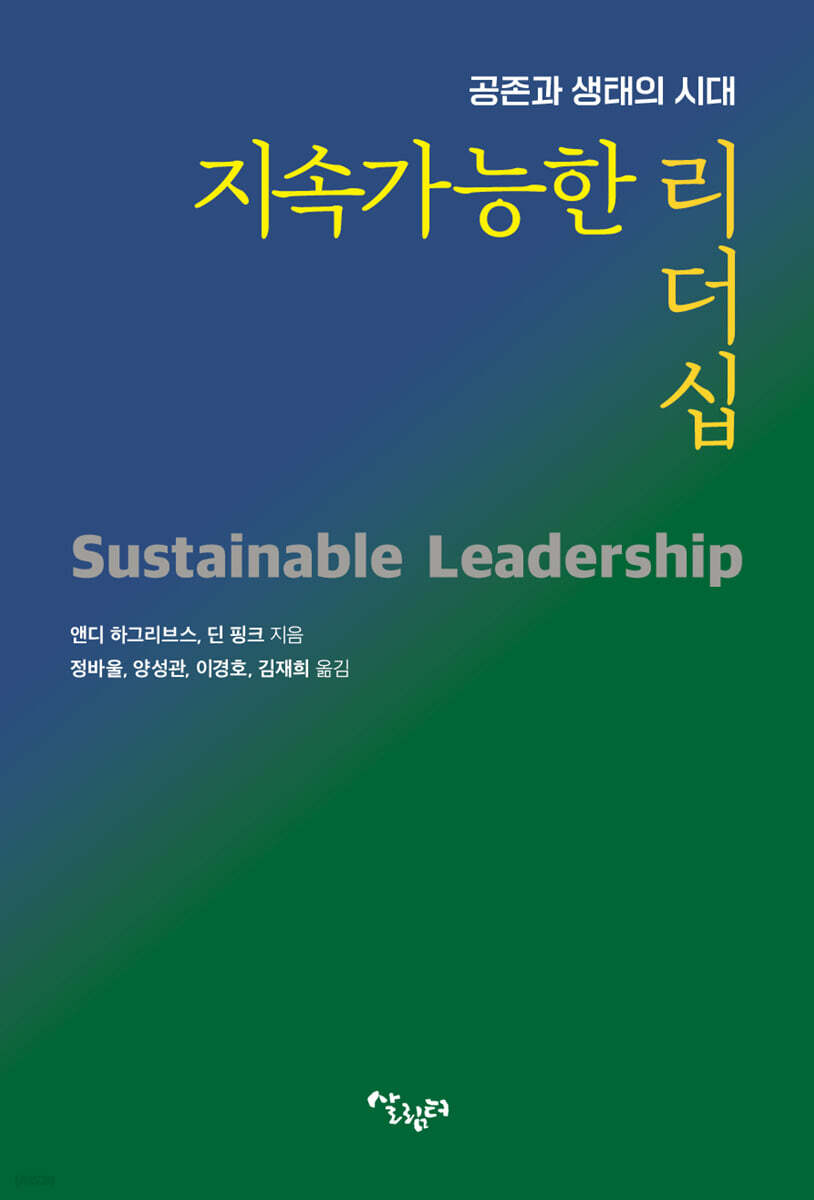
Sustainable Leadership
 |
Description
Book Introduction
What is education?
In 2023, while I was preparing this book, I became acutely aware of the problems that were emerging in the educational field in Korea.
The problems of children's character and universal educational philosophy, which stem from Korea's entrance exam-centered education system, have often been raised as social issues and the subject of major discussions in the past, but the fact that the problems of the teaching profession, which were often hidden among the various problems of our society, have received so much attention may be a phenomenon that shows that the problem has reached a point where it can no longer be hidden.
What do people in Korea consider a good school? It's undeniable that they think of it as a school that pushes students to get into top universities with a brutal schedule and strict management.
I want to deny it, but that's the reality of school.
But our society has only talked from the students' perspective so far.
That's why they look flustered when issues about teachers' human rights, fatigue, and excessive workload come up.
So how can we achieve an education that satisfies the universal right to pursue happiness for both students and teachers in our society? First, what does our concept of good education look like? Could it be that we've been so preoccupied with solving problems that we've neglected the opportunity to deeply examine their root causes? We should reflect on whether we've ever seriously considered whether there's a way for both students and teachers to protect their human rights, fulfill their duties, and enjoy a happy school life.
With the publication of this book, I wanted to once again address the question of whether our education should be left solely to the decisions of the upper echelons, or whether we should now consider whether it is time to do so.
In 2023, while I was preparing this book, I became acutely aware of the problems that were emerging in the educational field in Korea.
The problems of children's character and universal educational philosophy, which stem from Korea's entrance exam-centered education system, have often been raised as social issues and the subject of major discussions in the past, but the fact that the problems of the teaching profession, which were often hidden among the various problems of our society, have received so much attention may be a phenomenon that shows that the problem has reached a point where it can no longer be hidden.
What do people in Korea consider a good school? It's undeniable that they think of it as a school that pushes students to get into top universities with a brutal schedule and strict management.
I want to deny it, but that's the reality of school.
But our society has only talked from the students' perspective so far.
That's why they look flustered when issues about teachers' human rights, fatigue, and excessive workload come up.
So how can we achieve an education that satisfies the universal right to pursue happiness for both students and teachers in our society? First, what does our concept of good education look like? Could it be that we've been so preoccupied with solving problems that we've neglected the opportunity to deeply examine their root causes? We should reflect on whether we've ever seriously considered whether there's a way for both students and teachers to protect their human rights, fulfill their duties, and enjoy a happy school life.
With the publication of this book, I wanted to once again address the question of whether our education should be left solely to the decisions of the upper echelons, or whether we should now consider whether it is time to do so.
- You can preview some of the book's contents.
Preview
index
Preface to the Korean edition
Introduction: Sustainability and Unsustainability
Chapter 1 Depth: Deep and Broad Learning
Chapter II: Sustainability: Sustainment and Leadership Succession
Chapter 3 Width: Decentralization, not Delegation
Chapter IV: Definition: Leadership of Coexistence
Chapter V Diversity: Complexity and Cohesion
Chapter VI: Abundant Resources: Self-Control and Regeneration
Chapter VII Conservation: History and Heritage
Wrapping Up: Putting Sustainable Leadership into Practice
Introduction: Sustainability and Unsustainability
Chapter 1 Depth: Deep and Broad Learning
Chapter II: Sustainability: Sustainment and Leadership Succession
Chapter 3 Width: Decentralization, not Delegation
Chapter IV: Definition: Leadership of Coexistence
Chapter V Diversity: Complexity and Cohesion
Chapter VI: Abundant Resources: Self-Control and Regeneration
Chapter VII Conservation: History and Heritage
Wrapping Up: Putting Sustainable Leadership into Practice
Publisher's Review
Speaking of sustainable leadership
The latest book from Sallimteo, a publisher of education-related books for a long time, is "Sustainable Leadership" by Andy Hargreaves and Dean Pink.
This book, painstakingly written by four co-authors, offers profound insights into the sustainable leadership styles that define our time.
As we read this book, we can also discuss the form of 'leadership' that is absolutely necessary in Korean society at this point in time.
As the translator notes, one of the authors, Andy Hargreaves, is a champion of education reform and educational change.
In particular, he was recently selected as one of the 'Top 10 Most Influential Education Scholars in North America'.
He is an education expert with a long history of experience in teacher education and educational administration programs.
Dean Fink is an experienced practitioner and world-renowned educational leadership consultant who has served as a principal, superintendent, and other educational leaders.
The two have conducted numerous studies together and provided consulting services to international organizations such as UNESCO and the OECD, as well as to senior education policymakers and education leaders in countries such as the United Kingdom, Australia, New Zealand, Hong Kong, Singapore, and the Netherlands.
This book, "Sustainable Leadership," is the definitive condensation of the academic knowledge and consulting experience of these two people.
That's why this news of publication is all the more precious.
In this book, the author emphasizes that to provide quality education that is helpful and sustainable for all students, attention must be paid to sustainable leadership.
The first task for change is to determine whether the change in front of you is a desirable change, and the second task is to determine whether the change is realistically feasible.
And the book argues that an even bigger challenge is to make change sustainable.
Therefore, this book draws on business and environmental literature on sustainability and sustainable development, as well as long-term research on educational change, to present concrete strategies for implementing the seven principles of sustainability in the leadership and transformation of schools and school systems.
The seven principles for sustainable educational change and leadership are depth, continuity, breadth, justice, diversity, resourcefulness, and conservation.
These seven principles present leadership principles that are essential not only for education but also for our times.
With its rich case studies and solid principles, readers will be inspired to consider the concrete practices of sustainable leadership.
Overall, this book offers a unique interpretation that reimagines teacher collaboration and professional learning communities, a compelling analytical framework that unfolds distributed leadership at various levels, and a fresh perspective on change and innovation in education, viewing it as an inbound and outbound trajectory.
Therefore, this book can be proud to say that it provides a wealth of ideas that can be used not only for the leadership required in schools, but also for analyzing and understanding teaching culture, educational change, professional development, and the type of society we should be moving toward.
As this is a translation that took a long time to produce, I hope that leaders in our educational community, teachers and those aspiring to become teachers, and citizens concerned about education will all read and reflect on it at least once.
The more you think about it, the more likely you are to practice sustainable leadership.
The latest book from Sallimteo, a publisher of education-related books for a long time, is "Sustainable Leadership" by Andy Hargreaves and Dean Pink.
This book, painstakingly written by four co-authors, offers profound insights into the sustainable leadership styles that define our time.
As we read this book, we can also discuss the form of 'leadership' that is absolutely necessary in Korean society at this point in time.
As the translator notes, one of the authors, Andy Hargreaves, is a champion of education reform and educational change.
In particular, he was recently selected as one of the 'Top 10 Most Influential Education Scholars in North America'.
He is an education expert with a long history of experience in teacher education and educational administration programs.
Dean Fink is an experienced practitioner and world-renowned educational leadership consultant who has served as a principal, superintendent, and other educational leaders.
The two have conducted numerous studies together and provided consulting services to international organizations such as UNESCO and the OECD, as well as to senior education policymakers and education leaders in countries such as the United Kingdom, Australia, New Zealand, Hong Kong, Singapore, and the Netherlands.
This book, "Sustainable Leadership," is the definitive condensation of the academic knowledge and consulting experience of these two people.
That's why this news of publication is all the more precious.
In this book, the author emphasizes that to provide quality education that is helpful and sustainable for all students, attention must be paid to sustainable leadership.
The first task for change is to determine whether the change in front of you is a desirable change, and the second task is to determine whether the change is realistically feasible.
And the book argues that an even bigger challenge is to make change sustainable.
Therefore, this book draws on business and environmental literature on sustainability and sustainable development, as well as long-term research on educational change, to present concrete strategies for implementing the seven principles of sustainability in the leadership and transformation of schools and school systems.
The seven principles for sustainable educational change and leadership are depth, continuity, breadth, justice, diversity, resourcefulness, and conservation.
These seven principles present leadership principles that are essential not only for education but also for our times.
With its rich case studies and solid principles, readers will be inspired to consider the concrete practices of sustainable leadership.
Overall, this book offers a unique interpretation that reimagines teacher collaboration and professional learning communities, a compelling analytical framework that unfolds distributed leadership at various levels, and a fresh perspective on change and innovation in education, viewing it as an inbound and outbound trajectory.
Therefore, this book can be proud to say that it provides a wealth of ideas that can be used not only for the leadership required in schools, but also for analyzing and understanding teaching culture, educational change, professional development, and the type of society we should be moving toward.
As this is a translation that took a long time to produce, I hope that leaders in our educational community, teachers and those aspiring to become teachers, and citizens concerned about education will all read and reflect on it at least once.
The more you think about it, the more likely you are to practice sustainable leadership.
GOODS SPECIFICS
- Date of issue: February 29, 2024
- Page count, weight, size: 360 pages | 153*224*30mm
- ISBN13: 9791159302701
- ISBN10: 1159302707
You may also like
카테고리
korean


korean

![GQ KOREA Mark (Monthly): December [2025]](http://librairie.coreenne.fr/cdn/shop/files/8ef265dbbfbf186523ed75ba7319009d.jpg?v=1765340328&width=3840)


