

Animal Farm
 |
Description
Book Introduction
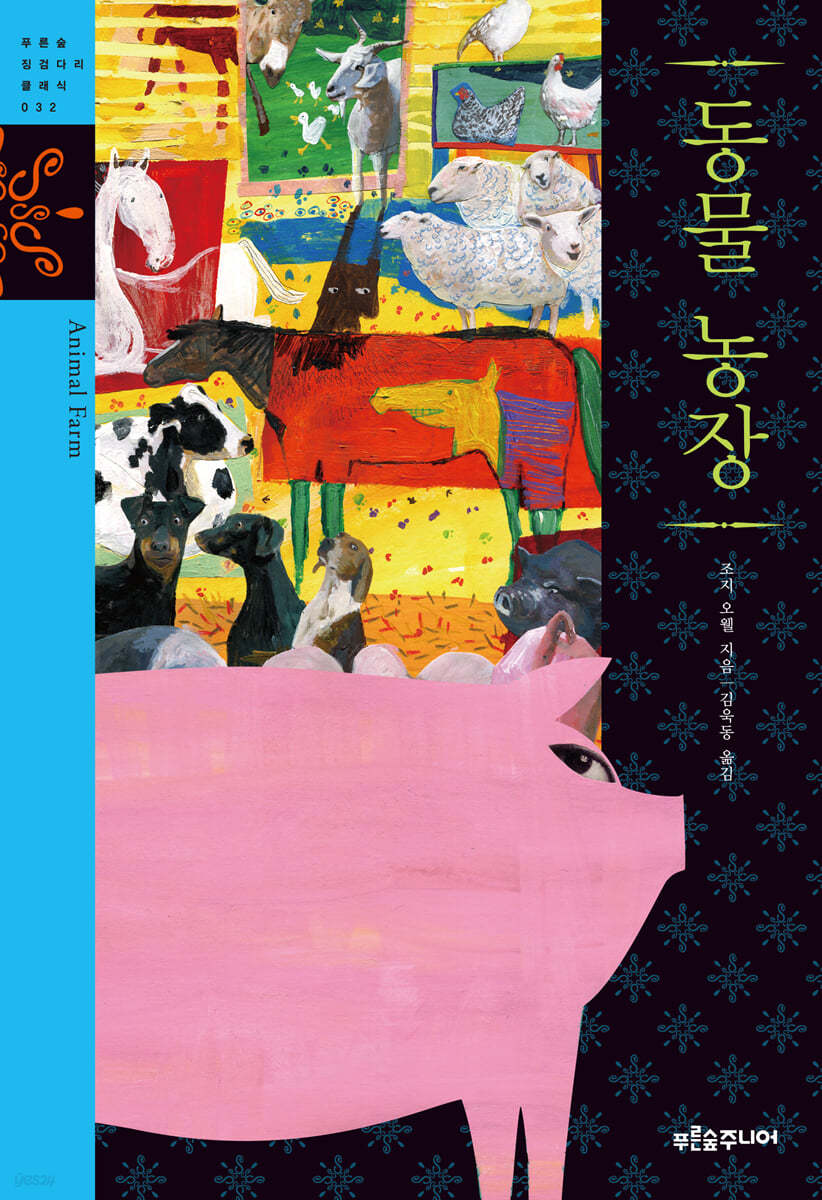
Animal Farm, considered the greatest political allegory of the 20th century, satirically criticizes the problems of dictatorship and totalitarianism under the main plot of animals who were abused and exploited by humans driving out humans and establishing 'Animal Farm' to run it themselves.
Although it borrows the form of a fable, the main animals and events directly allude to the development of the Soviet Union under Stalin from the Russian Revolution.
This book was newly organized in the format of 'Reading Properly' with commentary that matches the needs and demands of young people through field experience, with the planning committee comprised of current Korean language teachers.
'Reading Animal Farm Properly' not only provides a rich explanation of the work, but also details the background of George Orwell's self-proclaimed socialist and how it influenced the work.
It also reveals the forms in which oppression and manipulation of public opinion are manifested in our current society, allowing us to examine the current significance of the work.
Although it borrows the form of a fable, the main animals and events directly allude to the development of the Soviet Union under Stalin from the Russian Revolution.
This book was newly organized in the format of 'Reading Properly' with commentary that matches the needs and demands of young people through field experience, with the planning committee comprised of current Korean language teachers.
'Reading Animal Farm Properly' not only provides a rich explanation of the work, but also details the background of George Orwell's self-proclaimed socialist and how it influenced the work.
It also reveals the forms in which oppression and manipulation of public opinion are manifested in our current society, allowing us to examine the current significance of the work.
- You can preview some of the book's contents.
Preview
index
Chapter 1: Major Inspiration's Dream
Chapter 2: The Day of Rebellion
Chapter 3: Four Feet Good, Two Feet Bad
Chapter 4: The Battle of the Stable
Chapter 5: Debate and Conflict
Chapter 6 For the Windmill
Chapter 7: Cruel Punishment
Chapter 8: A Brutal Victory
Chapter 9: The Boxer Leaves the Farm
Chapter 10: Who is a pig and who is a human?
Reading Animal Farm Properly
Chapter 2: The Day of Rebellion
Chapter 3: Four Feet Good, Two Feet Bad
Chapter 4: The Battle of the Stable
Chapter 5: Debate and Conflict
Chapter 6 For the Windmill
Chapter 7: Cruel Punishment
Chapter 8: A Brutal Victory
Chapter 9: The Boxer Leaves the Farm
Chapter 10: Who is a pig and who is a human?
Reading Animal Farm Properly
Into the book
"Comrades, isn't it obvious that all the misfortunes in our lives stem from human tyranny? If we simply banish humans, the fruits of our labor will all fall into our own hands.
Get rich and free overnight.
So what should we do? We must dedicate ourselves, day and night, body and soul, to the sole purpose of overthrowing humanity!
Comrades, this is the message I want to convey to you.
Let us revolt, revolt! I don't know when that day will come.
It could come in a week, or it could come in a hundred years.
In any case, I am certain that justice will be served soon, just as we can clearly see with our own eyes this straw beneath my feet right now.”
--- p.18~19
“Muriel, read the fourth commandment to me.
“Isn’t it written that you shouldn’t sleep in the bed?”
Muriel fumbled and struggled to read.
“It says this.
“No animal should sleep in a bed with ‘sheets’ on it.”
Strangely enough, Clover couldn't remember whether the fourth commandment had anything to do with sheets.
But anyway, now that it's clearly written on the wall, I figured it must be true.
At this time, Squealer, who happened to be passing by with two or three dogs, clearly revealed the truth of the matter.
“Comrades, I see you’ve heard the rumors.
The story goes that our pigs are sleeping in beds in the main building these days.
That's true.
But is there any reason why that shouldn't be the case? Surely you don't think there's a rule against sleeping in a bed, do you? A bed is just a place to sleep.
Strictly speaking, a bed made of straw in a barn can also be considered a bed.
The rules only prohibit the use of sheets.
Because sheets are a human invention.
We take off the sheets from the beds in the main building and sleep under blankets.
That's a very comfortable bed, too! But considering the mental work we do these days, even that level of comfort isn't enough.
Comrades, are you really trying to deprive us of our rest? You don't want us to be too tired to perform our duties properly, do you? I'm sure none of you are hoping Jones will return, are you?"
--- p.88~89
“Come quickly, come quickly!”
Benjamin shouted loudly.
"Come quickly and see! I'm dragging the boxer right now!"
The animals stopped working and ran towards the farm buildings without even waiting for the pig's command.
As expected, a large cart pulled by two horses was standing in the courtyard.
There was a sign on the package that said something, and a sly-looking man wearing a flat bowler hat was sitting on the stable.
The boxer's stable was empty.
All the animals gathered around the carriage and shouted in unison.
“Goodbye, Boxer!”
"good bye!"
Then Benjamin stamped his little feet and jumped around among the animals, shouting.
“You fools! You fools! You blind men! Can’t you see what’s written on the side of that carriage?”
Hearing that, the animals hesitated and closed their mouths.
Suddenly it became as quiet as a mouse.
Muriel began to read, stuttering each letter.
Then Benjamin pushed her aside and read aloud.
“Alfred Simmonds, Horse Slaughtering and Glue Manufacture, Willingdon.
Trading in animal skins and bone meal.
"Doghouses for sale too.' Don't you know what that means? It means Boxer is being taken to a horse butcher right now!"
Get rich and free overnight.
So what should we do? We must dedicate ourselves, day and night, body and soul, to the sole purpose of overthrowing humanity!
Comrades, this is the message I want to convey to you.
Let us revolt, revolt! I don't know when that day will come.
It could come in a week, or it could come in a hundred years.
In any case, I am certain that justice will be served soon, just as we can clearly see with our own eyes this straw beneath my feet right now.”
--- p.18~19
“Muriel, read the fourth commandment to me.
“Isn’t it written that you shouldn’t sleep in the bed?”
Muriel fumbled and struggled to read.
“It says this.
“No animal should sleep in a bed with ‘sheets’ on it.”
Strangely enough, Clover couldn't remember whether the fourth commandment had anything to do with sheets.
But anyway, now that it's clearly written on the wall, I figured it must be true.
At this time, Squealer, who happened to be passing by with two or three dogs, clearly revealed the truth of the matter.
“Comrades, I see you’ve heard the rumors.
The story goes that our pigs are sleeping in beds in the main building these days.
That's true.
But is there any reason why that shouldn't be the case? Surely you don't think there's a rule against sleeping in a bed, do you? A bed is just a place to sleep.
Strictly speaking, a bed made of straw in a barn can also be considered a bed.
The rules only prohibit the use of sheets.
Because sheets are a human invention.
We take off the sheets from the beds in the main building and sleep under blankets.
That's a very comfortable bed, too! But considering the mental work we do these days, even that level of comfort isn't enough.
Comrades, are you really trying to deprive us of our rest? You don't want us to be too tired to perform our duties properly, do you? I'm sure none of you are hoping Jones will return, are you?"
--- p.88~89
“Come quickly, come quickly!”
Benjamin shouted loudly.
"Come quickly and see! I'm dragging the boxer right now!"
The animals stopped working and ran towards the farm buildings without even waiting for the pig's command.
As expected, a large cart pulled by two horses was standing in the courtyard.
There was a sign on the package that said something, and a sly-looking man wearing a flat bowler hat was sitting on the stable.
The boxer's stable was empty.
All the animals gathered around the carriage and shouted in unison.
“Goodbye, Boxer!”
"good bye!"
Then Benjamin stamped his little feet and jumped around among the animals, shouting.
“You fools! You fools! You blind men! Can’t you see what’s written on the side of that carriage?”
Hearing that, the animals hesitated and closed their mouths.
Suddenly it became as quiet as a mouse.
Muriel began to read, stuttering each letter.
Then Benjamin pushed her aside and read aloud.
“Alfred Simmonds, Horse Slaughtering and Glue Manufacture, Willingdon.
Trading in animal skins and bone meal.
"Doghouses for sale too.' Don't you know what that means? It means Boxer is being taken to a horse butcher right now!"
--- p.151
Publisher's Review
Are all animals equal? Some animals are more equal!
Animal Farm, considered the greatest political allegory of the 20th century, is a satirical critique of the problems of dictatorship and totalitarianism, with the main plot being that animals who were abused and exploited by humans drive out the humans and establish 'Animal Farm' to run it themselves.
The animals who were living in 'Jangwon Farm' while being abused dream of a free world without humans as they listen to the story of the old boar, Major.
The day of rebellion arrives unexpectedly, and under the leadership of the pigs, everyone works hard to create an animal republic where everyone is equal.
But as power gradually becomes more concentrated in the hands of the pigs, hardship and adversity begin to tighten their grip on the animals' lives.
The Seven Commandments, which were created for a perfect animal world, are now being changed one by one for pigs.
Finally, the fundamental idea of animalism, that 'all animals are equal,' is 'all animals are equal.'
But some animals are more equal than others, and it becomes difficult to even distinguish who is human and who is pig.
In the end, the essence of the rebellion that dreamed of an ideal society was completely corrupted.
Animal Farm is no different from before the rebellion, except that the rulers have changed from humans to pigs.
George Orwell, a true socialist who was wary of absolute power
Although Animal Farm borrows the form of a fable, its main animals and events directly allude to the development of the Soviet Union under Stalin after the Russian Revolution.
Orwell believed that socialism was the only ideology that could compete with the dictatorship and totalitarianism that dominated European society at the time.
However, he had a critical view of the Soviet Union, the first socialist state to appear in world history after the Russian Revolution.
Not only was Stalin's rise to power itself barbaric, but the Soviet Union was also seen as having lost its original socialist ideals and degenerated into totalitarianism.
He believed that in order to achieve true socialism, we must first criticize socialism and reflect on the purpose of the revolution.
Animal Farm was a concrete gesture to criticize and denounce the totalitarian future and the helplessness of intellectuals that was right before our eyes.
Because it was so obvious who the characters and situations in the work were directly targeting, it was sometimes considered a fable criticizing communism for a long time, contrary to the author's intention.
However, rather than criticizing a specific social system, this work ultimately sharply satirizes the general aspects of power and dictatorship that can exist in any era or society.
Through this, Orwell wanted to awaken us to the historical truth that totalitarianism and absolute power, whether in a socialist or capitalist society, are bound to corrupt and ultimately destroy humanity.
A detailed and rich explanation from a current Korean language teacher!
When it comes to world-class works for young people, there are usually boring biographies of the author or his life, a few black-and-white photos, or dry commentary at the end of the text.
But 'Blue Forest Stepping Stone Classic' is different.
The planning committee was comprised of current Korean language teachers, and the commentary, tailored to the needs and demands of young people based on their field experience, was newly organized in the format of “Reading Properly.”
'Reading Animal Farm Properly' not only provides a rich explanation of the work, but also details the background of George Orwell's self-proclaimed socialist and how it influenced the work.
It also reveals the forms in which oppression and manipulation of public opinion are manifested in our current society, allowing us to examine the current significance of the work.
Tips included throughout the commentary provide easy access to interesting background knowledge related to the work, including the films and music that influenced it, the unfolding of the Russian Revolution, the author's other masterpiece, 1984, and stories about subversive books.
Knowledge information that covers a wide range of fields, including society, culture, history, science, and geography, will go beyond general knowledge and help young people develop integrated thinking skills.
The animals who were living in 'Jangwon Farm' while being abused dream of a free world without humans as they listen to the story of the old boar, Major.
The day of rebellion arrives unexpectedly, and under the leadership of the pigs, everyone works hard to create an animal republic where everyone is equal.
But as power gradually becomes more concentrated in the hands of the pigs, hardship and adversity begin to tighten their grip on the animals' lives.
The Seven Commandments, which were created for a perfect animal world, are now being changed one by one for pigs.
Finally, the fundamental idea of animalism, that 'all animals are equal,' is 'all animals are equal.'
But some animals are more equal than others, and it becomes difficult to even distinguish who is human and who is pig.
In the end, the essence of the rebellion that dreamed of an ideal society was completely corrupted.
Animal Farm is no different from before the rebellion, except that the rulers have changed from humans to pigs.
George Orwell, a true socialist who was wary of absolute power
Although Animal Farm borrows the form of a fable, its main animals and events directly allude to the development of the Soviet Union under Stalin after the Russian Revolution.
Orwell believed that socialism was the only ideology that could compete with the dictatorship and totalitarianism that dominated European society at the time.
However, he had a critical view of the Soviet Union, the first socialist state to appear in world history after the Russian Revolution.
Not only was Stalin's rise to power itself barbaric, but the Soviet Union was also seen as having lost its original socialist ideals and degenerated into totalitarianism.
He believed that in order to achieve true socialism, we must first criticize socialism and reflect on the purpose of the revolution.
Animal Farm was a concrete gesture to criticize and denounce the totalitarian future and the helplessness of intellectuals that was right before our eyes.
Because it was so obvious who the characters and situations in the work were directly targeting, it was sometimes considered a fable criticizing communism for a long time, contrary to the author's intention.
However, rather than criticizing a specific social system, this work ultimately sharply satirizes the general aspects of power and dictatorship that can exist in any era or society.
Through this, Orwell wanted to awaken us to the historical truth that totalitarianism and absolute power, whether in a socialist or capitalist society, are bound to corrupt and ultimately destroy humanity.
A detailed and rich explanation from a current Korean language teacher!
When it comes to world-class works for young people, there are usually boring biographies of the author or his life, a few black-and-white photos, or dry commentary at the end of the text.
But 'Blue Forest Stepping Stone Classic' is different.
The planning committee was comprised of current Korean language teachers, and the commentary, tailored to the needs and demands of young people based on their field experience, was newly organized in the format of “Reading Properly.”
'Reading Animal Farm Properly' not only provides a rich explanation of the work, but also details the background of George Orwell's self-proclaimed socialist and how it influenced the work.
It also reveals the forms in which oppression and manipulation of public opinion are manifested in our current society, allowing us to examine the current significance of the work.
Tips included throughout the commentary provide easy access to interesting background knowledge related to the work, including the films and music that influenced it, the unfolding of the Russian Revolution, the author's other masterpiece, 1984, and stories about subversive books.
Knowledge information that covers a wide range of fields, including society, culture, history, science, and geography, will go beyond general knowledge and help young people develop integrated thinking skills.
GOODS SPECIFICS
- Date of issue: March 31, 2011
- Page count, weight, size: 192 pages | 330g | 142*205*20mm
- ISBN13: 9788971849149
- ISBN10: 8971849142
You may also like
카테고리
korean


korean

![GQ KOREA Mark (Monthly): December [2025]](http://librairie.coreenne.fr/cdn/shop/files/8ef265dbbfbf186523ed75ba7319009d.jpg?v=1765340328&width=3840)


