

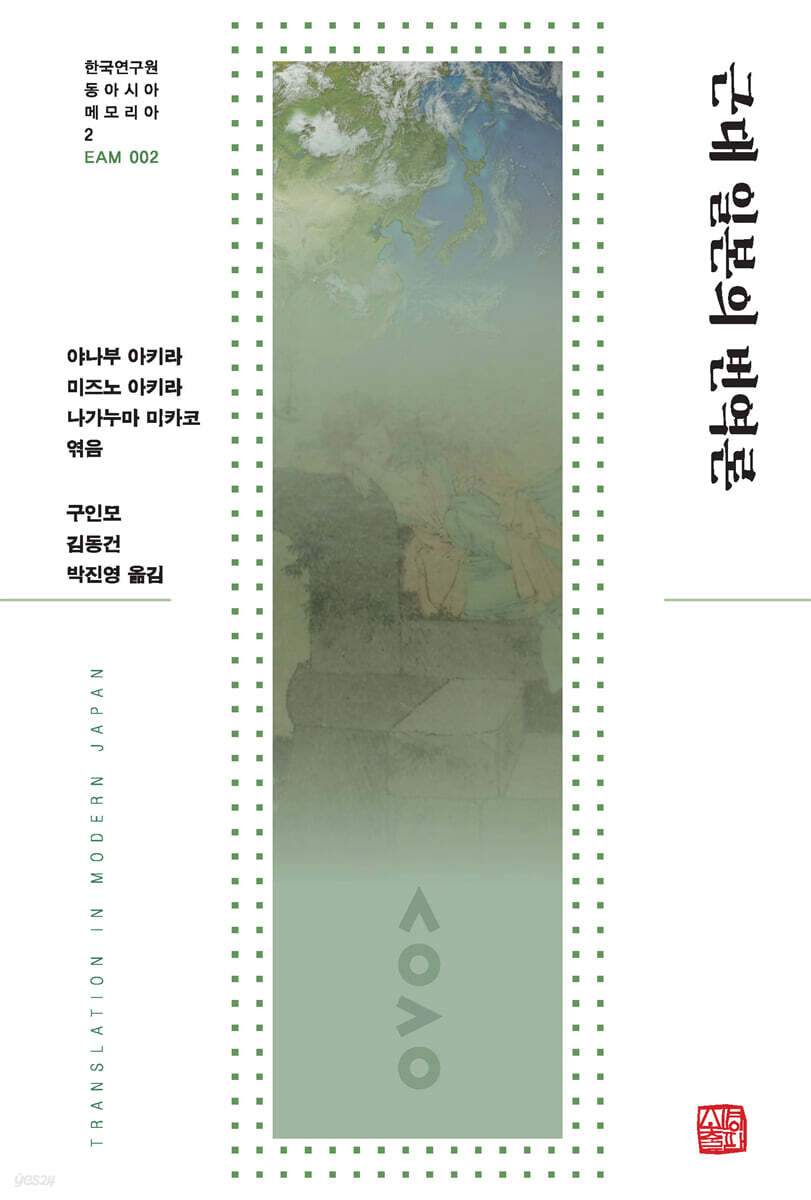
Translation theory in modern Japan
 |
Description
Book Introduction
Demonstrating the status of translation in the journey of imagining literature with the advent of modernity.
Japan is often cited as one example of a country that quickly internalized Western modernity through translation.
In particular, the translation culture that laid the foundation during the Meiji period is no different from casting a model for modern Japan.
This book vividly demonstrates that modern Japanese translation was not merely a hasty imitation or catch-up, but rather a driving force behind the rediscovery of one's own language and the creation of modern literature through encounters with others.
In the process of comprehensively accepting modern knowledge and ideas, literary translation emerged as an important issue.
Modern literature was born and developed only through the core tasks of encountering the culture of the other, the perspective and actual methodology of translation, and the formation of modern sentences that match the translated language and the written language.
And by the 1930s, it had achieved what could be called a sophisticated level of translation theory, and gradually began to establish its own independent theory and history.
The greatest virtue of this book lies in revealing the universality that translation theory should strive for, while also clearly demonstrating that to achieve this, it must begin with the historical nature of translation.
Japan is often cited as one example of a country that quickly internalized Western modernity through translation.
In particular, the translation culture that laid the foundation during the Meiji period is no different from casting a model for modern Japan.
This book vividly demonstrates that modern Japanese translation was not merely a hasty imitation or catch-up, but rather a driving force behind the rediscovery of one's own language and the creation of modern literature through encounters with others.
In the process of comprehensively accepting modern knowledge and ideas, literary translation emerged as an important issue.
Modern literature was born and developed only through the core tasks of encountering the culture of the other, the perspective and actual methodology of translation, and the formation of modern sentences that match the translated language and the written language.
And by the 1930s, it had achieved what could be called a sophisticated level of translation theory, and gradually began to establish its own independent theory and history.
The greatest virtue of this book lies in revealing the universality that translation theory should strive for, while also clearly demonstrating that to achieve this, it must begin with the historical nature of translation.
- You can preview some of the book's contents.
Preview
index
Publisher's Note: Reading Translation Theory
[Part 1] Japanese Translation Theory
Chapter 1: Historical Background
Historical Prerequisites for Japanese Translation | Akira Yanabu
To read this anthology | Akira Mizuno
Guidance for Future Research | Mikako Naganuma
[Part 2] ? Modern Translation Theory Materials and Commentary
Aesop's Fables
Source 1_ Aesop's Fables (Watanabe On)
Release 1_ Akira Mizuno
The Adventures of Telemachus
Data 2-1_ The Tale of Telemachus (Harumatsu Miyajima)
Data 2-2_ The Tale of Telemachus (Izawa Shinzaburo)
Release 2_ Sato Miki
Julius Caesar
Data 3_ Caesar's Anecdote: The Aftermath of His Free Attitude (Tsubouchi Shoyo)
Release 3_ Sato Miki
Colonelm Chilingley's Sayings and Deeds
Data 4_ The Story of the Wind and the Winds (Fujita Mokichi and Ozaki Yasuo)
Release 4_ Akira Mizuno
Rules of Translation
Data 5_ Rules of Translation (Morita Shiken)
Release 5_ Saito Mino
Night and morning
Material 6_ Night and Morning (Morita Shiken)
Release 6_ Saito Mino
Libertarianism
Data 7_ The Right to Freedom (by Takahashi Masaji)
Release 7_Yoichi Yamaoka
Preface to the Complete Works of Fukuzawa
Material 8_ Preface to the Complete Works of Fukuzawa (Yukichi Fukuzawa)
Release 8_ Akira Yanabu
Foreign language studies
Data 9_ Benefits of Foreign Language Study (Kanzo Uchimura)
Release 9_ Kikuko Tanabe
Caesar's murder
Data 10_ Twain Theory: Public Opinion (Yamagata Iso)
Release 10_ Akira Mizuno
Seaweed
Data 11_ Seaweed (Ueda Bin)
Release 11_ Akira Mizuno
My translation criteria
Data 12_ My Translation Standard (Futabatei Shimei)
Release 12_ Gokril Hiroko
Japanese and European texts in translation
Data 13_ Japanese Literature and Syntax as Seen Through Translation (Suematsu Kencho)
Release 13_ Naganuma Mikako
English translation method
Data 14_ Translation method (Goro Takahashi)
Release 14_ Naganuma Mikako
Translation in the Age of the Impromptu Poet and Today
Data 15_ Translation of "The Impromptu Poet" in the Era and Today (Mori Ogai)
Release 15_ Fujinami Fumiko
The impression of the original text and the taste of the translation
Data 16_ The Impression of the Original Text and the Taste of the Translation (Uchida Roan)
Release 16_ Gokril Hiroko
A collection of six representative contemporary Russian writers
Data 17_Collection of Six Representative Contemporary Russian Writers (Nobori Shomu)
Release 17_ Hiroko Gokrill
About the translated version of Faust
Material 18_ On the translated version of "Faust" (Mori Ogai)
Release 18_Fumiko Fujinami
Salambo
Material 19_ Salambo (Ikuta Joko)
Release 19_ Akira Mizuno
The literary movement of representationism
Data 20_ The Literary Movement of the Representationists (Iwano Homei)
Release 20_ Akira Mizuno
The Wealth of Nations
Data 21-1_ The Wealth of Nations (Takeuchi Genji)
Data 21-2_ Theory of National Wealth (Part 1) (Giga Considered)
Release 21_Yoichi Yamaoka
Shakespeare Study Guide
Material 22_ About My Translation (Tsubouchi Shoyo)
Release 22_ Sato Miki
The possibility of translating hokku (發句)
Data 23_ The Possibility of Hokku Translation (Komiya Toyotaka)
Release 23_ Sato Miki
About the poem translation
Material 24_ On the Translation of Poetry (Hagiwara Sakutaro)
Release 24_ Akira Mizuno
Sentence reader
Material 25_ Western and Japanese Sentences (Jun'ichiro Tanizaki)
Release 25_ Naganuma Mikako
Modern Japanese Literature Course
Material 26_ Expression and guidance in translation (Nakamura Hakuyo)
Release 26_ Gokril Hiroko
Translation Theory - Theory and Practice of Translation
Material 27_ Attitude toward Translation (Toyoichiro Nogami)
Release 27_ Naganuma Mikako
The Poverty of Japanese in Superimpose
Material 28_ The Poverty of Japanese in Superimposition (Tatsuo Ota)
Release 28_ Naganuma Mikako
Letter from Rakuchu
Material 29_ Letters from Rakuchu (Oyama Teichi and Yoshikawa Kojiro)
Release 29_Fumiko Fujinami
In lieu of a review
Source of data
Editor/Announcer's Profile
Search
Publisher_ East Asia Symposia
-Publishing the Memoria series
[Part 1] Japanese Translation Theory
Chapter 1: Historical Background
Historical Prerequisites for Japanese Translation | Akira Yanabu
To read this anthology | Akira Mizuno
Guidance for Future Research | Mikako Naganuma
[Part 2] ? Modern Translation Theory Materials and Commentary
Aesop's Fables
Source 1_ Aesop's Fables (Watanabe On)
Release 1_ Akira Mizuno
The Adventures of Telemachus
Data 2-1_ The Tale of Telemachus (Harumatsu Miyajima)
Data 2-2_ The Tale of Telemachus (Izawa Shinzaburo)
Release 2_ Sato Miki
Julius Caesar
Data 3_ Caesar's Anecdote: The Aftermath of His Free Attitude (Tsubouchi Shoyo)
Release 3_ Sato Miki
Colonelm Chilingley's Sayings and Deeds
Data 4_ The Story of the Wind and the Winds (Fujita Mokichi and Ozaki Yasuo)
Release 4_ Akira Mizuno
Rules of Translation
Data 5_ Rules of Translation (Morita Shiken)
Release 5_ Saito Mino
Night and morning
Material 6_ Night and Morning (Morita Shiken)
Release 6_ Saito Mino
Libertarianism
Data 7_ The Right to Freedom (by Takahashi Masaji)
Release 7_Yoichi Yamaoka
Preface to the Complete Works of Fukuzawa
Material 8_ Preface to the Complete Works of Fukuzawa (Yukichi Fukuzawa)
Release 8_ Akira Yanabu
Foreign language studies
Data 9_ Benefits of Foreign Language Study (Kanzo Uchimura)
Release 9_ Kikuko Tanabe
Caesar's murder
Data 10_ Twain Theory: Public Opinion (Yamagata Iso)
Release 10_ Akira Mizuno
Seaweed
Data 11_ Seaweed (Ueda Bin)
Release 11_ Akira Mizuno
My translation criteria
Data 12_ My Translation Standard (Futabatei Shimei)
Release 12_ Gokril Hiroko
Japanese and European texts in translation
Data 13_ Japanese Literature and Syntax as Seen Through Translation (Suematsu Kencho)
Release 13_ Naganuma Mikako
English translation method
Data 14_ Translation method (Goro Takahashi)
Release 14_ Naganuma Mikako
Translation in the Age of the Impromptu Poet and Today
Data 15_ Translation of "The Impromptu Poet" in the Era and Today (Mori Ogai)
Release 15_ Fujinami Fumiko
The impression of the original text and the taste of the translation
Data 16_ The Impression of the Original Text and the Taste of the Translation (Uchida Roan)
Release 16_ Gokril Hiroko
A collection of six representative contemporary Russian writers
Data 17_Collection of Six Representative Contemporary Russian Writers (Nobori Shomu)
Release 17_ Hiroko Gokrill
About the translated version of Faust
Material 18_ On the translated version of "Faust" (Mori Ogai)
Release 18_Fumiko Fujinami
Salambo
Material 19_ Salambo (Ikuta Joko)
Release 19_ Akira Mizuno
The literary movement of representationism
Data 20_ The Literary Movement of the Representationists (Iwano Homei)
Release 20_ Akira Mizuno
The Wealth of Nations
Data 21-1_ The Wealth of Nations (Takeuchi Genji)
Data 21-2_ Theory of National Wealth (Part 1) (Giga Considered)
Release 21_Yoichi Yamaoka
Shakespeare Study Guide
Material 22_ About My Translation (Tsubouchi Shoyo)
Release 22_ Sato Miki
The possibility of translating hokku (發句)
Data 23_ The Possibility of Hokku Translation (Komiya Toyotaka)
Release 23_ Sato Miki
About the poem translation
Material 24_ On the Translation of Poetry (Hagiwara Sakutaro)
Release 24_ Akira Mizuno
Sentence reader
Material 25_ Western and Japanese Sentences (Jun'ichiro Tanizaki)
Release 25_ Naganuma Mikako
Modern Japanese Literature Course
Material 26_ Expression and guidance in translation (Nakamura Hakuyo)
Release 26_ Gokril Hiroko
Translation Theory - Theory and Practice of Translation
Material 27_ Attitude toward Translation (Toyoichiro Nogami)
Release 27_ Naganuma Mikako
The Poverty of Japanese in Superimpose
Material 28_ The Poverty of Japanese in Superimposition (Tatsuo Ota)
Release 28_ Naganuma Mikako
Letter from Rakuchu
Material 29_ Letters from Rakuchu (Oyama Teichi and Yoshikawa Kojiro)
Release 29_Fumiko Fujinami
In lieu of a review
Source of data
Editor/Announcer's Profile
Search
Publisher_ East Asia Symposia
-Publishing the Memoria series
Publisher's Review
I hope that new translation research will be conducted.
This book was also designed to serve as a basic reference for undergraduate and graduate students studying translation around the world, professional researchers in education, and others interested in this interdisciplinary field.
Old Chinese characters in original sources and cited literature were corrected, and hentaigana and compound characters made by combining two or more characters were changed to commonly used kana.
In particular, furigana was added to letters that were difficult to read for the convenience of young readers, but conversely, even the supplementary text in the original text that felt cumbersome was removed.
While considering readability, some old characters, such as katakana notation, original titles, and keywords, were retained to allow a sense of the text's feel at the time.
A lineage of intellect that transcends unknown languages through encounters with others and negotiations with the different at the forefront of modern literature.
The series of texts included in this book are representative materials with such aspects.
This book was also designed to serve as a basic reference for undergraduate and graduate students studying translation around the world, professional researchers in education, and others interested in this interdisciplinary field.
Old Chinese characters in original sources and cited literature were corrected, and hentaigana and compound characters made by combining two or more characters were changed to commonly used kana.
In particular, furigana was added to letters that were difficult to read for the convenience of young readers, but conversely, even the supplementary text in the original text that felt cumbersome was removed.
While considering readability, some old characters, such as katakana notation, original titles, and keywords, were retained to allow a sense of the text's feel at the time.
A lineage of intellect that transcends unknown languages through encounters with others and negotiations with the different at the forefront of modern literature.
The series of texts included in this book are representative materials with such aspects.
GOODS SPECIFICS
- Date of issue: November 15, 2025
- Format: Hardcover book binding method guide
- Page count, weight, size: 524 pages | 152*223*29mm
- ISBN13: 9791175490116
You may also like
카테고리
korean


korean

![GQ KOREA Mark (Monthly): December [2025]](http://librairie.coreenne.fr/cdn/shop/files/8ef265dbbfbf186523ed75ba7319009d.jpg?v=1765340328&width=3840)


