

Henry Kissinger's Leadership
 |
Description
Book Introduction
What qualities are needed in a leader during a period of transition in the world order?
The political choices and decisions of strategic leaders shape the future.
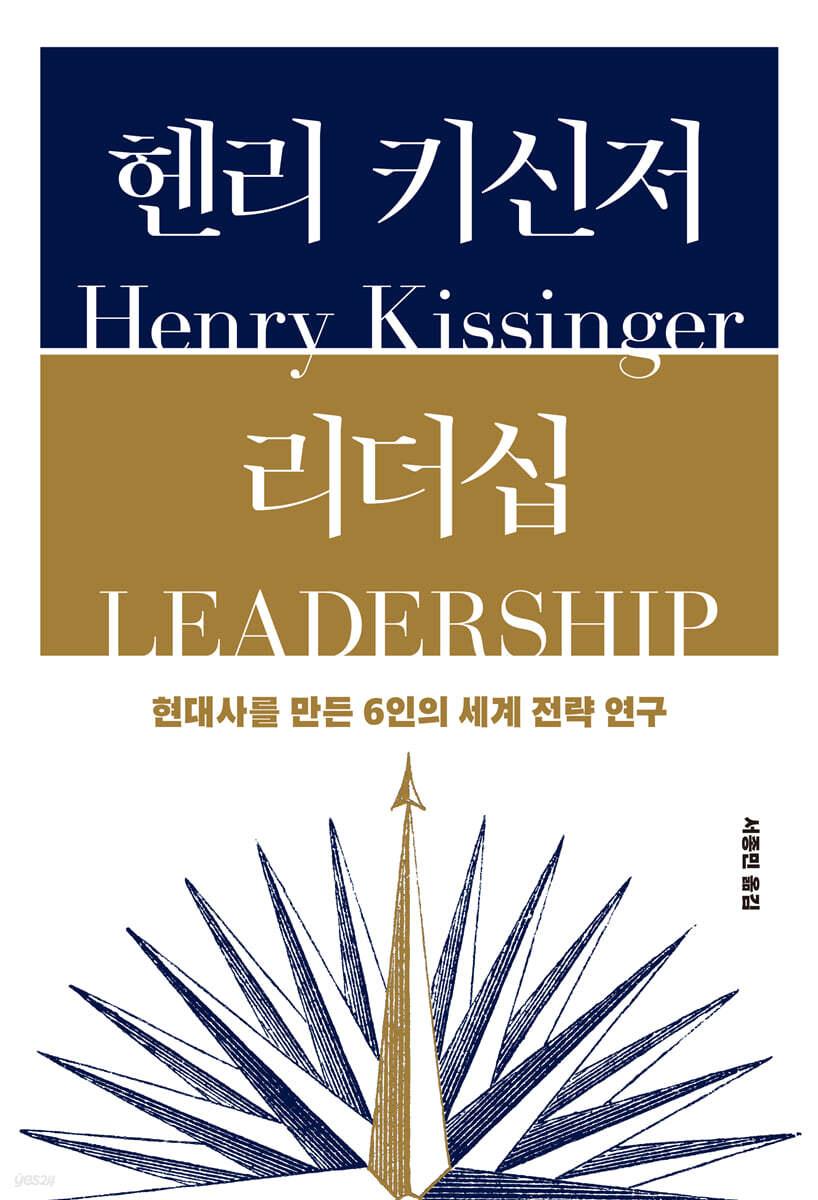
Minumsa has published a book titled "Leadership," which examines the leadership of six leaders of the century who built their societies and international order during the turbulent post-war period, based on the extensive experience gained by Henry Kissinger, a living legend in diplomacy, as National Security Advisor to the President and Secretary of State.
Kissinger, who turned 100 in May 2023 (born 1923), is considered the most authoritative living figure on international relations and the person with access to or production of high-level information.
He interacted with Adenauer, de Gaulle, Nixon, Sadat, Lee Kuan Yew, and Thatcher, who appear in the book, at the times when they were at the height of their influence in their respective countries, and he saw common qualities in their leadership.
These include the ability to understand the circumstances surrounding one's society, the ability to manage the present and develop strategies to create the future, the skill to move society toward lofty goals, and the attitude to quickly compensate for shortcomings.
This book examines six leaders who dedicated themselves to the development of their countries during a time when a new international order was being formed following two world wars. It argues that leaders exist at the intersection of the axes connecting the past and the future, and the axes connecting unchanging values and the aspirations of those who follow them.
Where does social happiness come from? Where does society begin to collapse? What legacy from the past should we preserve, and what should we change or discard? These are the questions we must consider for leadership, which are paramount in a time of transition when values and institutions are losing their meaning and debates are raging over what constitutes a good future. These questions remain relevant to us today.
The political choices and decisions of strategic leaders shape the future.
Minumsa has published a book titled "Leadership," which examines the leadership of six leaders of the century who built their societies and international order during the turbulent post-war period, based on the extensive experience gained by Henry Kissinger, a living legend in diplomacy, as National Security Advisor to the President and Secretary of State.
Kissinger, who turned 100 in May 2023 (born 1923), is considered the most authoritative living figure on international relations and the person with access to or production of high-level information.
He interacted with Adenauer, de Gaulle, Nixon, Sadat, Lee Kuan Yew, and Thatcher, who appear in the book, at the times when they were at the height of their influence in their respective countries, and he saw common qualities in their leadership.
These include the ability to understand the circumstances surrounding one's society, the ability to manage the present and develop strategies to create the future, the skill to move society toward lofty goals, and the attitude to quickly compensate for shortcomings.
This book examines six leaders who dedicated themselves to the development of their countries during a time when a new international order was being formed following two world wars. It argues that leaders exist at the intersection of the axes connecting the past and the future, and the axes connecting unchanging values and the aspirations of those who follow them.
Where does social happiness come from? Where does society begin to collapse? What legacy from the past should we preserve, and what should we change or discard? These are the questions we must consider for leadership, which are paramount in a time of transition when values and institutions are losing their meaning and debates are raging over what constitutes a good future. These questions remain relevant to us today.
- You can preview some of the book's contents.
Preview
index
Introduction: Leadership in History… 9
The Axis of Leadership | The Essence of Leadership Decisions | Six Leaders in Different Contexts | Archetypes of Leadership: Politicians and Prophets | Individuals in History
1 Konrad Adenauer: The Strategy of Humility… 26
The Need for Reform | From Early Life to Internal Exile | The Path to Leadership | Restoring Public Order and the Chancellorship | The Path to a New National Identity | The Soviet Threat and Rearmament | The Inescapable Past: Reparations for the Jews | Two Crises: Suez and Berlin | Three Conversations with Adenauer | October 1957 | May 1961, A Flexible Response | February 1962, Kennedy and Adenauer | German Unification: The Agonizing Wait | The Last Conversation | The Adenauer Tradition
2 Charles de Gaulle: The Strategy of Will … 84
A Chance Encounter|The Beginning of a Journey|The Origin and Goal of the Path|De Gaulle in French History|De Gaulle and World War II|The North African Conflict|The Acquisition of Political Power|A Visit to Moscow|De Gaulle and the Provisional Government|The Wilderness|Failure in Indochina and Frustration in the Middle East|Algeria and De Gaulle's Return|The Fifth Republic|The End of the Algerian Conflict|Germany as the Key to French Policy: De Gaulle and Adenauer|De Gaulle and the Atlantic Alliance|The Nuclear Control Agency|Flexible Response and Nuclear Strategy|What is an Alliance|The End of the Presidential Term|The Essence of De Gaulle's Political Power|De Gaulle and Churchill|Beyond the Mystery
3 Richard Nixon: A Strategy of Equilibrium… 176
The World at the Time of Nixon's Appearance | An Unexpected Proposal | Security-Related Decisions in the Nixon White House | Nixon's Worldview | Connections with Diplomacy | Visit to Europe | The Vietnam War and Its Consequences | Great Power Diplomacy and Arms Control | Immigration from the Soviet Union | Establishment of Diplomatic Relations with China | The Middle East in Chaos | The 1973 Middle East War | The Diplomacy of Armistice | The Peace Negotiation Process in the Middle East | The Cold War Intertwined with Bangladesh | Nixon and the Crisis in the United States
4 Anwar Sadat: A Strategy of Transcendence … 274
Sadat's Special Qualities | The Influence of History | Early Life | Thoughts in Prison | Egyptian Independence | A Spokesman of the Revolution | Nasser and Sadat | Sadat's Perspective | Corrective Revolution | Strategic Patience | The 1973 War | Meir and Sadat | The Tara Palace Conference | From Geneva to the Withdrawal | The Syrian Perspective | Another Step Toward Peace: Sinai Accord II | A Visit to Jerusalem | The Thorny Road to Peace | Stranding | Assassination | Epilogue: An Unrealized Legacy
5 Lee Kuan Yew: A Strategy of Superiority… 368
A Visit to Harvard | A Giant from the Land of Lilliputians | Childhood under Imperialism | The Formation of a Nation | The Formation of a Nation | “Judgment is left to history” | The Formation of an Economy | Lee Kuan Yew and the United States | Lee Kuan Yew and China | Between the United States and China | Lee Kuan Yew's Legacy | The Man Lee Kuan Yew
6 Margaret Thatcher: A Strategy of Faith … 424
The Most Unexpected Leader | Thatcher and the British System | The Challenges Ahead: Britain in the 1970s | Rising from Grantham | Leadership Systems | Economic Reformers | Protecting Sovereignty: The Falklands Dispute | The Hong Kong Negotiations | Inherited Violence and Confrontation: Northern Ireland | Fundamental Truths: The “Special Relationship” and the Cold War | The Grenada Question | Strategic Change: East-West Exchange | Protecting Kuwait’s Sovereignty: The Gulf Crisis | The Limits of Leadership: The Future of Europe and Germany | The Eternal Challenge of Europe | Fall | Epilogue
Conclusion: The Evolution of Leadership… 515
From Aristocracy to Meritocracy | The Cold Reality | The Shaken Meritocracy | Deep Literacy and Visual Culture | Fundamental Values | Leadership and World Order | The Future of Leadership
Acknowledgments … 543
Week … 547
Search … 592
The Axis of Leadership | The Essence of Leadership Decisions | Six Leaders in Different Contexts | Archetypes of Leadership: Politicians and Prophets | Individuals in History
1 Konrad Adenauer: The Strategy of Humility… 26
The Need for Reform | From Early Life to Internal Exile | The Path to Leadership | Restoring Public Order and the Chancellorship | The Path to a New National Identity | The Soviet Threat and Rearmament | The Inescapable Past: Reparations for the Jews | Two Crises: Suez and Berlin | Three Conversations with Adenauer | October 1957 | May 1961, A Flexible Response | February 1962, Kennedy and Adenauer | German Unification: The Agonizing Wait | The Last Conversation | The Adenauer Tradition
2 Charles de Gaulle: The Strategy of Will … 84
A Chance Encounter|The Beginning of a Journey|The Origin and Goal of the Path|De Gaulle in French History|De Gaulle and World War II|The North African Conflict|The Acquisition of Political Power|A Visit to Moscow|De Gaulle and the Provisional Government|The Wilderness|Failure in Indochina and Frustration in the Middle East|Algeria and De Gaulle's Return|The Fifth Republic|The End of the Algerian Conflict|Germany as the Key to French Policy: De Gaulle and Adenauer|De Gaulle and the Atlantic Alliance|The Nuclear Control Agency|Flexible Response and Nuclear Strategy|What is an Alliance|The End of the Presidential Term|The Essence of De Gaulle's Political Power|De Gaulle and Churchill|Beyond the Mystery
3 Richard Nixon: A Strategy of Equilibrium… 176
The World at the Time of Nixon's Appearance | An Unexpected Proposal | Security-Related Decisions in the Nixon White House | Nixon's Worldview | Connections with Diplomacy | Visit to Europe | The Vietnam War and Its Consequences | Great Power Diplomacy and Arms Control | Immigration from the Soviet Union | Establishment of Diplomatic Relations with China | The Middle East in Chaos | The 1973 Middle East War | The Diplomacy of Armistice | The Peace Negotiation Process in the Middle East | The Cold War Intertwined with Bangladesh | Nixon and the Crisis in the United States
4 Anwar Sadat: A Strategy of Transcendence … 274
Sadat's Special Qualities | The Influence of History | Early Life | Thoughts in Prison | Egyptian Independence | A Spokesman of the Revolution | Nasser and Sadat | Sadat's Perspective | Corrective Revolution | Strategic Patience | The 1973 War | Meir and Sadat | The Tara Palace Conference | From Geneva to the Withdrawal | The Syrian Perspective | Another Step Toward Peace: Sinai Accord II | A Visit to Jerusalem | The Thorny Road to Peace | Stranding | Assassination | Epilogue: An Unrealized Legacy
5 Lee Kuan Yew: A Strategy of Superiority… 368
A Visit to Harvard | A Giant from the Land of Lilliputians | Childhood under Imperialism | The Formation of a Nation | The Formation of a Nation | “Judgment is left to history” | The Formation of an Economy | Lee Kuan Yew and the United States | Lee Kuan Yew and China | Between the United States and China | Lee Kuan Yew's Legacy | The Man Lee Kuan Yew
6 Margaret Thatcher: A Strategy of Faith … 424
The Most Unexpected Leader | Thatcher and the British System | The Challenges Ahead: Britain in the 1970s | Rising from Grantham | Leadership Systems | Economic Reformers | Protecting Sovereignty: The Falklands Dispute | The Hong Kong Negotiations | Inherited Violence and Confrontation: Northern Ireland | Fundamental Truths: The “Special Relationship” and the Cold War | The Grenada Question | Strategic Change: East-West Exchange | Protecting Kuwait’s Sovereignty: The Gulf Crisis | The Limits of Leadership: The Future of Europe and Germany | The Eternal Challenge of Europe | Fall | Epilogue
Conclusion: The Evolution of Leadership… 515
From Aristocracy to Meritocracy | The Cold Reality | The Shaken Meritocracy | Deep Literacy and Visual Culture | Fundamental Values | Leadership and World Order | The Future of Leadership
Acknowledgments … 543
Week … 547
Search … 592
Into the book
Adenauer became chancellor at the worst time in German history, and Kennedy became president at the height of American power and confidence.
Adenauer took on the task of rebuilding democratic values based on Christian ethics amid the chaos of unconditional surrender, while Kennedy's grand goal reflected his unwavering belief that America, based on its historic democratic values and superior power, was carrying out its God-given mission.
For Adenauer, rebuilding Europe meant reaffirming traditional values and truths; for Kennedy, it meant affirming his faith in the scientific, political, and moral developments of the modern world.
To succeed, Adenauer had to maintain a stable grip on the German spirit, and to succeed, American presidents, especially Kennedy, had to mobilize existing idealism.
--- p.68
The Allied forces that gracefully paved the way for the Free French to enter Paris and followed behind were not mentioned.
Britain and the United States, who fought the war with enormous damage and sacrifice, were not mentioned either.
The liberation of Paris seemed like a purely French feat.
De Gaulle was trying to convince his audience that this was true, proclaiming that he had created this political reality through sheer force of will.
The seeming lack of gratitude to the liberator and the almost obsessive emphasis on the work that France claimed to have done reflected another purpose.
De Gaulle knew very well that the majority of the French people had already become accustomed to occupation.
To emphasize the occupation period would have led to confusion and ambivalence, and to emphasize what the American and British forces had done could have hindered his ultimate goal of independently restoring French faith.
--- p.119
Establishing diplomatic relations with China was not only a way to respond to contemporary problems, but also a ticket to facing future problems.
Among the many problems, one stands out most clearly.
In other words, with the emergence of various cutting-edge weapons and the rapid development of artificial intelligence, the destructive power of nuclear war has multiplied as modern technology has advanced, and China, Russia, and the United States have each begun to modernize their arsenals.
In an age of weapons that seek out targets directly and learn from experience, and cyberweapons that hide their launch points and hinder quick judgment, establishing a permanent forum for dialogue alongside technological advancements is essential to ensuring the stability of the world order, and perhaps even the survival of human civilization.
--- pp.240~241
Even today, significant conflicts continue to rage in the modern Middle East.
It is a contest between those who support a pluralistic order of religion or ideology, that is, those who believe that individual and communal beliefs can be compatible with a state-based system, and those who reject Sadat, that is, those who are busy linking all areas of life with a comprehensive theology or ideology.
In a world where imperialist ambitions threatened to engulf entire nations and domestic divisions arose, Sadat's vision of sovereign states establishing an international order based on morally defined national interests could have been a bulwark against misfortune.
--- p.363
Today, the world order is threatened from two sides simultaneously.
On the one hand, entire regions are disintegrating as partisan fervor overwhelms traditional structures, while on the other, animosity deepens between powerful nations claiming different legitimacy.
The former risks unleashing a massive chaos, while the latter risks causing catastrophic bloodshed.
Lee Kuan Yew's political power was relevant to both situations.
His life's work has clearly demonstrated that sustainable order and progress can be achieved even in seemingly hopeless environments.
His actions in Singapore and on the world stage serve as a guide to fostering understanding and coexistence across diverse perspectives and backgrounds.
--- p.422
Thatcher revived Britain both economically and spiritually.
When Thatcher became prime minister, Britain's decline was not limited to economic stagnation.
Decline was a collective belief that was eating away at itself.
High inflation, low growth rates, and serious labor disputes were prominent.
In the 1970s, Britain's political center was not functioning properly.
Thatcher rejected the weak agreement and, as opposition leader, painted a positive picture of the future.
After becoming Prime Minister, he took British society to places it had never been before.
This required courage and spirit.
It was the courage to dramatically break away from the conventional wisdom of the time and the spirit to maintain a consistent direction when the bitter medicine brought out the patient's sharp complaints.
--- pp.509~510
Having examined six seminal 20th-century figures and the conditions that enabled them to achieve their accomplishments, anyone seeking leadership might naturally wonder whether it's possible to replicate their achievements.
Will a leader with the character, intellect, and resilience necessary to address the challenges facing the world order emerge? This question has been asked before, but leaders have emerged and demonstrated their resourcefulness through adversity.
When Adenauer asked this question, Sadat, Lee Kuan Yew, and Thatcher were virtually unknown.
Likewise, few who witnessed the fall of France in 1940 could have imagined that de Gaulle would rebuild it over a three-decade career.
When Nixon began talks with China, few of his contemporaries realized what consequences it would produce.
Adenauer took on the task of rebuilding democratic values based on Christian ethics amid the chaos of unconditional surrender, while Kennedy's grand goal reflected his unwavering belief that America, based on its historic democratic values and superior power, was carrying out its God-given mission.
For Adenauer, rebuilding Europe meant reaffirming traditional values and truths; for Kennedy, it meant affirming his faith in the scientific, political, and moral developments of the modern world.
To succeed, Adenauer had to maintain a stable grip on the German spirit, and to succeed, American presidents, especially Kennedy, had to mobilize existing idealism.
--- p.68
The Allied forces that gracefully paved the way for the Free French to enter Paris and followed behind were not mentioned.
Britain and the United States, who fought the war with enormous damage and sacrifice, were not mentioned either.
The liberation of Paris seemed like a purely French feat.
De Gaulle was trying to convince his audience that this was true, proclaiming that he had created this political reality through sheer force of will.
The seeming lack of gratitude to the liberator and the almost obsessive emphasis on the work that France claimed to have done reflected another purpose.
De Gaulle knew very well that the majority of the French people had already become accustomed to occupation.
To emphasize the occupation period would have led to confusion and ambivalence, and to emphasize what the American and British forces had done could have hindered his ultimate goal of independently restoring French faith.
--- p.119
Establishing diplomatic relations with China was not only a way to respond to contemporary problems, but also a ticket to facing future problems.
Among the many problems, one stands out most clearly.
In other words, with the emergence of various cutting-edge weapons and the rapid development of artificial intelligence, the destructive power of nuclear war has multiplied as modern technology has advanced, and China, Russia, and the United States have each begun to modernize their arsenals.
In an age of weapons that seek out targets directly and learn from experience, and cyberweapons that hide their launch points and hinder quick judgment, establishing a permanent forum for dialogue alongside technological advancements is essential to ensuring the stability of the world order, and perhaps even the survival of human civilization.
--- pp.240~241
Even today, significant conflicts continue to rage in the modern Middle East.
It is a contest between those who support a pluralistic order of religion or ideology, that is, those who believe that individual and communal beliefs can be compatible with a state-based system, and those who reject Sadat, that is, those who are busy linking all areas of life with a comprehensive theology or ideology.
In a world where imperialist ambitions threatened to engulf entire nations and domestic divisions arose, Sadat's vision of sovereign states establishing an international order based on morally defined national interests could have been a bulwark against misfortune.
--- p.363
Today, the world order is threatened from two sides simultaneously.
On the one hand, entire regions are disintegrating as partisan fervor overwhelms traditional structures, while on the other, animosity deepens between powerful nations claiming different legitimacy.
The former risks unleashing a massive chaos, while the latter risks causing catastrophic bloodshed.
Lee Kuan Yew's political power was relevant to both situations.
His life's work has clearly demonstrated that sustainable order and progress can be achieved even in seemingly hopeless environments.
His actions in Singapore and on the world stage serve as a guide to fostering understanding and coexistence across diverse perspectives and backgrounds.
--- p.422
Thatcher revived Britain both economically and spiritually.
When Thatcher became prime minister, Britain's decline was not limited to economic stagnation.
Decline was a collective belief that was eating away at itself.
High inflation, low growth rates, and serious labor disputes were prominent.
In the 1970s, Britain's political center was not functioning properly.
Thatcher rejected the weak agreement and, as opposition leader, painted a positive picture of the future.
After becoming Prime Minister, he took British society to places it had never been before.
This required courage and spirit.
It was the courage to dramatically break away from the conventional wisdom of the time and the spirit to maintain a consistent direction when the bitter medicine brought out the patient's sharp complaints.
--- pp.509~510
Having examined six seminal 20th-century figures and the conditions that enabled them to achieve their accomplishments, anyone seeking leadership might naturally wonder whether it's possible to replicate their achievements.
Will a leader with the character, intellect, and resilience necessary to address the challenges facing the world order emerge? This question has been asked before, but leaders have emerged and demonstrated their resourcefulness through adversity.
When Adenauer asked this question, Sadat, Lee Kuan Yew, and Thatcher were virtually unknown.
Likewise, few who witnessed the fall of France in 1940 could have imagined that de Gaulle would rebuild it over a three-decade career.
When Nixon began talks with China, few of his contemporaries realized what consequences it would produce.
--- p.540
Publisher's Review
The Legend of Diplomacy: Kissinger Meets Six Leaders of the Century
Adenauer, de Gaulle, Nixon, Sadat, Lee Kuan Yew, Thatcher
What strategic leadership is needed to address the challenges we face today?
● Leadership that grew up in the middle class and meritocracy rather than hereditary succession and aristocracy
The six leaders we meet in this book were all builders during turbulent times in history, developing their respective societies and international order in the postwar period.
Kissinger worked with them when they were at the height of their influence, as a Harvard professor, as national security adviser to the U.S. president, or as secretary of state, and he developed friendships with them after retirement.
From the outbreak of World War I in August 1914 to the end of World War II in September 1945, the six leaders who navigated the blazing furnace of the so-called Second Thirty Years' War, each in their own way, grew up in a period of cultural upheaval.
In the West's political and social structures, the foundation of the leadership model was irreversibly shifting from hereditary and aristocratic to middle-class and meritocratic.
None of them came from the upper class.
Adenauer's father was a non-commissioned officer in the Prussian army and later worked as a clerk, and his son followed the standard educational curriculum of the German Empire.
De Gaulle's grandparents were both educated and wealthy, but his father was a teacher and he was the first son in his family to hold a high government position.
Nixon grew up in a lower-middle-class family in Southern California.
Sadat was born the son of a clerk and struggled to find a guarantor when applying to the Egyptian military academy.
Born to Chinese Singaporean parents whose families were declining, Lee Kuan Yew relied on scholarships in Singapore and England to continue his education.
Thatcher was the daughter of a grocer and was the second woman and middle-class leader of the British Conservative Party.
No one could have predicted from the outset that he would become such an outstanding person.
Their backgrounds and experiences away from power gave them a clear understanding of what was in the national interest and a perspective that transcended the conventional wisdom of their time.
● The Qualifications of a True Leader: The Crisis of Leadership Education
According to political thinker Yuval Levin, modern elites with excellent test scores and impressive resumes “believe they have earned their power through their own efforts and want to hold it as a right, not a privilege.”
“Americans are increasingly skeptical of the legitimacy of elite claims not because it is so difficult to enter the upper echelons of American society (if it is at all), but because those in that class seem to be free to do whatever they want.
(……) In other words, the problem is not the entry criteria, but the lack of criteria after entry.
“Our elites do not consider themselves aristocrats, so they do not think there is a need for standards or restrictions.”
While 19th-century aristocrats were well aware of the high expectations placed on them, and 20th-century men of ability pursued the value of service, today's elites are busy talking about self-expression and personal development rather than discussing duty.
The modern world is quietly changing human consciousness, almost imperceptibly.
While this transformation is driven by new technologies that mediate our experiences and information about the world, we have not fully understood the long-term impact of these changes, including their impact on leadership.
In an age dominated by images, what is at risk of being lost? There are many names for this: knowledge, wisdom, serious and independent thinking, but the most appropriate one is "deep literacy."
Critic Adam Garfinkel defined it as “jumping into a long piece of writing in a way that anticipates the author’s direction and meaning.”
In the eras of the six leaders discussed in this book, deep literacy was invisible, like background radiation, yet omnipresent and pervasive.
For those involved in politics, deep literacy gave them what Max Weber called “the faculty of perceptiveness,” that is, “the ability to accept the reality that affects me while maintaining inner calm and composure.”
However, printed matter lost its former authority even before the end of the 20th century.
Leaders who have influenced the world and history have benefited from a rigorous humanistic education.
This type of education begins in a formal setting and continues throughout life through reading and discussion.
Today, few people take this first step, and few universities teach statecraft, either explicitly or implicitly.
Moreover, technological changes have made deep literacy less of a lifelong endeavor.
Therefore, to revive meritocracy, we need to re-emphasize humanistic education, encompassing subjects such as philosophy, political science, human geography, modern languages, history, economic thought, literature, and perhaps even the classical cultures that have long nurtured politicians.
● Leadership that leads to peace and coexistence beyond conflict
Many would agree that the current situation facing humanity is the worst crisis since World War II, both politically and economically.
China has emerged as a powerful competitor to the United States in economic and technological terms, to the point that the US Secretary of State himself called Nixon's foreign policy of normalizing diplomatic relations with China a failure.
And as relations between the two countries change, neighboring countries worry about the uncomfortable situation of having to stand in line.
Moreover, the war between Russia and Ukraine, which has lasted for over a year, has made us realize how close to our daily lives the crises of food, energy, security, and human rights have become.
The recent pandemic we all experienced together has made us realize that not only humanity but all life on Earth is interconnected, regardless of national borders. We must work together to overcome the crisis before us.
In a world where technologies capable of elevating or dismantling human civilization are advancing at an alarming rate, there is no perfect solution, not even in military terms or in competition between great powers.
If everyone becomes convinced that the other harbors malicious intent, ideologizes their foreign policy, and bases it on an unfettered technological competition, we risk a tragic cycle of mutual suspicion that sparked World War I, with consequences far more far-reaching than ever before.
Therefore, all parties must now reexamine their own first principles of international conduct and link them to the possibility of coexistence.
Leaders of high-tech societies, in particular, have a moral and strategic obligation to engage in ongoing discussions, both domestically and with potential adversaries, about how to limit the impact and military applications of technology.
These are topics too important to ignore until a crisis strikes.
Just as the discourse of military control contributed to deterring the nuclear age, exploring the impact of emerging technologies at high levels could foster habits of reflection and reciprocal, strategic self-control.
Adenauer, de Gaulle, Nixon, Sadat, Lee Kuan Yew, Thatcher
What strategic leadership is needed to address the challenges we face today?
● Leadership that grew up in the middle class and meritocracy rather than hereditary succession and aristocracy
The six leaders we meet in this book were all builders during turbulent times in history, developing their respective societies and international order in the postwar period.
Kissinger worked with them when they were at the height of their influence, as a Harvard professor, as national security adviser to the U.S. president, or as secretary of state, and he developed friendships with them after retirement.
From the outbreak of World War I in August 1914 to the end of World War II in September 1945, the six leaders who navigated the blazing furnace of the so-called Second Thirty Years' War, each in their own way, grew up in a period of cultural upheaval.
In the West's political and social structures, the foundation of the leadership model was irreversibly shifting from hereditary and aristocratic to middle-class and meritocratic.
None of them came from the upper class.
Adenauer's father was a non-commissioned officer in the Prussian army and later worked as a clerk, and his son followed the standard educational curriculum of the German Empire.
De Gaulle's grandparents were both educated and wealthy, but his father was a teacher and he was the first son in his family to hold a high government position.
Nixon grew up in a lower-middle-class family in Southern California.
Sadat was born the son of a clerk and struggled to find a guarantor when applying to the Egyptian military academy.
Born to Chinese Singaporean parents whose families were declining, Lee Kuan Yew relied on scholarships in Singapore and England to continue his education.
Thatcher was the daughter of a grocer and was the second woman and middle-class leader of the British Conservative Party.
No one could have predicted from the outset that he would become such an outstanding person.
Their backgrounds and experiences away from power gave them a clear understanding of what was in the national interest and a perspective that transcended the conventional wisdom of their time.
● The Qualifications of a True Leader: The Crisis of Leadership Education
According to political thinker Yuval Levin, modern elites with excellent test scores and impressive resumes “believe they have earned their power through their own efforts and want to hold it as a right, not a privilege.”
“Americans are increasingly skeptical of the legitimacy of elite claims not because it is so difficult to enter the upper echelons of American society (if it is at all), but because those in that class seem to be free to do whatever they want.
(……) In other words, the problem is not the entry criteria, but the lack of criteria after entry.
“Our elites do not consider themselves aristocrats, so they do not think there is a need for standards or restrictions.”
While 19th-century aristocrats were well aware of the high expectations placed on them, and 20th-century men of ability pursued the value of service, today's elites are busy talking about self-expression and personal development rather than discussing duty.
The modern world is quietly changing human consciousness, almost imperceptibly.
While this transformation is driven by new technologies that mediate our experiences and information about the world, we have not fully understood the long-term impact of these changes, including their impact on leadership.
In an age dominated by images, what is at risk of being lost? There are many names for this: knowledge, wisdom, serious and independent thinking, but the most appropriate one is "deep literacy."
Critic Adam Garfinkel defined it as “jumping into a long piece of writing in a way that anticipates the author’s direction and meaning.”
In the eras of the six leaders discussed in this book, deep literacy was invisible, like background radiation, yet omnipresent and pervasive.
For those involved in politics, deep literacy gave them what Max Weber called “the faculty of perceptiveness,” that is, “the ability to accept the reality that affects me while maintaining inner calm and composure.”
However, printed matter lost its former authority even before the end of the 20th century.
Leaders who have influenced the world and history have benefited from a rigorous humanistic education.
This type of education begins in a formal setting and continues throughout life through reading and discussion.
Today, few people take this first step, and few universities teach statecraft, either explicitly or implicitly.
Moreover, technological changes have made deep literacy less of a lifelong endeavor.
Therefore, to revive meritocracy, we need to re-emphasize humanistic education, encompassing subjects such as philosophy, political science, human geography, modern languages, history, economic thought, literature, and perhaps even the classical cultures that have long nurtured politicians.
● Leadership that leads to peace and coexistence beyond conflict
Many would agree that the current situation facing humanity is the worst crisis since World War II, both politically and economically.
China has emerged as a powerful competitor to the United States in economic and technological terms, to the point that the US Secretary of State himself called Nixon's foreign policy of normalizing diplomatic relations with China a failure.
And as relations between the two countries change, neighboring countries worry about the uncomfortable situation of having to stand in line.
Moreover, the war between Russia and Ukraine, which has lasted for over a year, has made us realize how close to our daily lives the crises of food, energy, security, and human rights have become.
The recent pandemic we all experienced together has made us realize that not only humanity but all life on Earth is interconnected, regardless of national borders. We must work together to overcome the crisis before us.
In a world where technologies capable of elevating or dismantling human civilization are advancing at an alarming rate, there is no perfect solution, not even in military terms or in competition between great powers.
If everyone becomes convinced that the other harbors malicious intent, ideologizes their foreign policy, and bases it on an unfettered technological competition, we risk a tragic cycle of mutual suspicion that sparked World War I, with consequences far more far-reaching than ever before.
Therefore, all parties must now reexamine their own first principles of international conduct and link them to the possibility of coexistence.
Leaders of high-tech societies, in particular, have a moral and strategic obligation to engage in ongoing discussions, both domestically and with potential adversaries, about how to limit the impact and military applications of technology.
These are topics too important to ignore until a crisis strikes.
Just as the discourse of military control contributed to deterring the nuclear age, exploring the impact of emerging technologies at high levels could foster habits of reflection and reciprocal, strategic self-control.
GOODS SPECIFICS
- Date of issue: May 18, 2023
- Format: Hardcover book binding method guide
- Page count, weight, size: 604 pages | 992g | 153*223*35mm
- ISBN13: 9788937417153
- ISBN10: 8937417154
You may also like
카테고리
korean


korean

![GQ KOREA Mark (Monthly): December [2025]](http://librairie.coreenne.fr/cdn/shop/files/8ef265dbbfbf186523ed75ba7319009d.jpg?v=1765340328&width=3840)


