

Cucumber King
 |
Description
Book Introduction
Christine Noestlinger, whose lively and vibrant writing hides a sharp sense of humor and sharp judgment, explores the contradictions and distrust deeply entrenched within a family through "The Cucumber King."
This work, which takes a unique format in which the protagonist, Wolfgang, a first-year middle school student, reports on the sudden appearance of the 'Cucumber King' and the subsequent events, is filled with vitality throughout with Noestlinger's signature humor.
What does the Cucumber King represent in the story? No one but Wolfgang's family knows of the Cucumber King's existence.
At first, the whole family tries to make the existence of the Cucumber King known to the outside world, but they soon give up because they won't be able to be photographed anyway.
You can find out what the Cucumber King, a damp, mushy creature that eats sprouted potatoes, is talking about by enjoying the humor and free-spirited atmosphere of the author, Noestlinger.
The illustrations by Utah Bauer, who perfectly captures the text's unique characteristics, will further enhance the pleasure of reading "The Cucumber King."
This work, which takes a unique format in which the protagonist, Wolfgang, a first-year middle school student, reports on the sudden appearance of the 'Cucumber King' and the subsequent events, is filled with vitality throughout with Noestlinger's signature humor.
What does the Cucumber King represent in the story? No one but Wolfgang's family knows of the Cucumber King's existence.
At first, the whole family tries to make the existence of the Cucumber King known to the outside world, but they soon give up because they won't be able to be photographed anyway.
You can find out what the Cucumber King, a damp, mushy creature that eats sprouted potatoes, is talking about by enjoying the humor and free-spirited atmosphere of the author, Noestlinger.
The illustrations by Utah Bauer, who perfectly captures the text's unique characteristics, will further enhance the pleasure of reading "The Cucumber King."
- You can preview some of the book's contents.
Preview
Publisher's Review
Published in Germany in 1972 and first introduced in Korea in 1997, 『The Cucumber King』 holds a unique position in the domestic foreign youth literature market.
This work, which served as the first introduction to Korea of Christine Noestlinger, who had already established herself as a world-renowned author, contains a sharp diagnosis of modern society behind the typical fairy tale title and illustrations, and has been a constant topic of conversation not only among young people but also among many adults who love the 'Four Seasons 1318 Library'.
Sageseul Publishing Company carefully reviewed the translation of this book, which is always included on must-read youth literature lists, and redesigned the cover to suit the changing sensibilities of youth literature, publishing a revised edition in 2009.
Christine Noestlinger, whose lively and vibrant writing hides a sharp sense of humor and sharp judgment, explores the contradictions and distrust deeply entrenched within a family.
This work, which takes a unique format in which the protagonist, Wolfgang, a first-year middle school student, reports on the sudden appearance of the 'Cucumber King' and the subsequent events, is filled with vitality throughout with Noestlinger's signature humor.
Wolfgang's family is an ordinary family with his grandfather, father, mother, older sister, and younger brother.
One morning during the Easter holidays, a cucumber-shaped creature, seemingly made of dough, appears at Wolfgang's house and brazenly claims to be King Kumi-Ori II, who lives in the basement and has been driven out by a rebellion by his subjects, and is seeking political asylum.
The family members are displeased with the intruder who acts as if he is the king and is arrogant and authoritarian even in their own home, but only the father treats the king with the utmost respect and actively works to help the king regain his authority.
The problem arises when King Cucumber senses that his position is threatened and tries to uncover his family's secrets.
He realized that each of his family members was harboring a secret, burdened by their father's authority and strictness.
His mother is hiding receipts for expensive purchases he made without his father's knowledge, his sister has a diary full of complaints about him, and Wolfgang has to get his father to sign a math test he got a terrible grade on.
King Oidae steals secret evidence and uses it to win over his father, who is his only supporter.
The cunning and vulgar King Cucumber starkly reveals how many secrets and distrusts were hidden in this seemingly harmless family.
What does the Cucumber King represent in the story? No one but Wolfgang's family knows of the Cucumber King's existence.
At first, the whole family tries to make the existence of the Cucumber King known to the outside world, but they soon give up because they won't be able to be photographed anyway.
Here, Wolfgang's family is already shown to be a people who have lost the will to actively investigate and inform the public about anything, and the cucumber king becomes the very problem that the family has been having.
The author portrayed the family, who had become accustomed to not bringing up problems even when they arose due to the pressure of the father's authority, as the Cucumber King, an unpleasant creature that was damp, mushy, and ate things like sprouted potatoes.
When the cucumber king appears before the family and stirs up their conflict, the mother's lies are revealed, Wolfgang's sexual problems come to the surface, and the grandfather's alienation from his role as an adult is revealed.
Additionally, we can see that the reason the father is loyal to King Oidae is because he projects his own image onto the authoritarian and power-oriented King Oidae.
Wolfgang's worries, such as being ordered by his teacher to get his father's signature on a 40-point math test and the anxiety of failing, which he endures day after day without being able to confide in anyone, are something that everyone has experienced at least once.
When Wolfgang discovers that his confident, top student sister is struggling with her boyfriend and rebelling against her authoritarian father, he feels a kinship with her and confides in her, receiving a lot of help from her to avoid failing.
Wolfgang accepts his grandfather's honest confession, expressing his bitter feelings about his old age and how he can no longer assert his authority as a father once his children reach a certain age, with a different attitude than before.
Although it is not clearly revealed in the ending, the authoritarian and oppressive father also shows a change in attitude through a series of events that occur with the appearance of King Oidae.
He was 'born again' by abandoning the empty authoritarian attitude that he himself could not easily escape.
Here, I am left wondering why the author chose to set the time of the cucumber king's appearance at Easter.
And while everyone else in the family hates the overbearing father and the arrogant King Cucumber, the youngest, Nick, who alone harbors affection for them, resolutely puts King Cucumber in a stroller and throws him outside after a stormy incident.
This may have been possible because Nick was pure and outside the sphere of distrust that surrounded his family.
Wolfgang's family, where each member was focused on their own work and neglected the other family members, began to face problems with the appearance of the Cucumber King. Eventually, the problems were naturally resolved when the burden of the Cucumber King was removed from the house.
In order to expose the falsehood and hypocrisy of patriarchal family relationships, Noestlinger introduces a fictional creature called the Cucumber King into an ordinary family. Rather than listing extreme episodes to reveal the true nature of the father's patriarchal authority, he portrays it more vividly through the hideous and cunning Cucumber King.
This is probably why this work never loses its vitality through humor.
Also, the illustrations by artist Jutta Bauer, who worked with Nöstlinger on many works and best expressed her humor and freedom, have become an image that cannot be left out when thinking of 『The Cucumber King』.
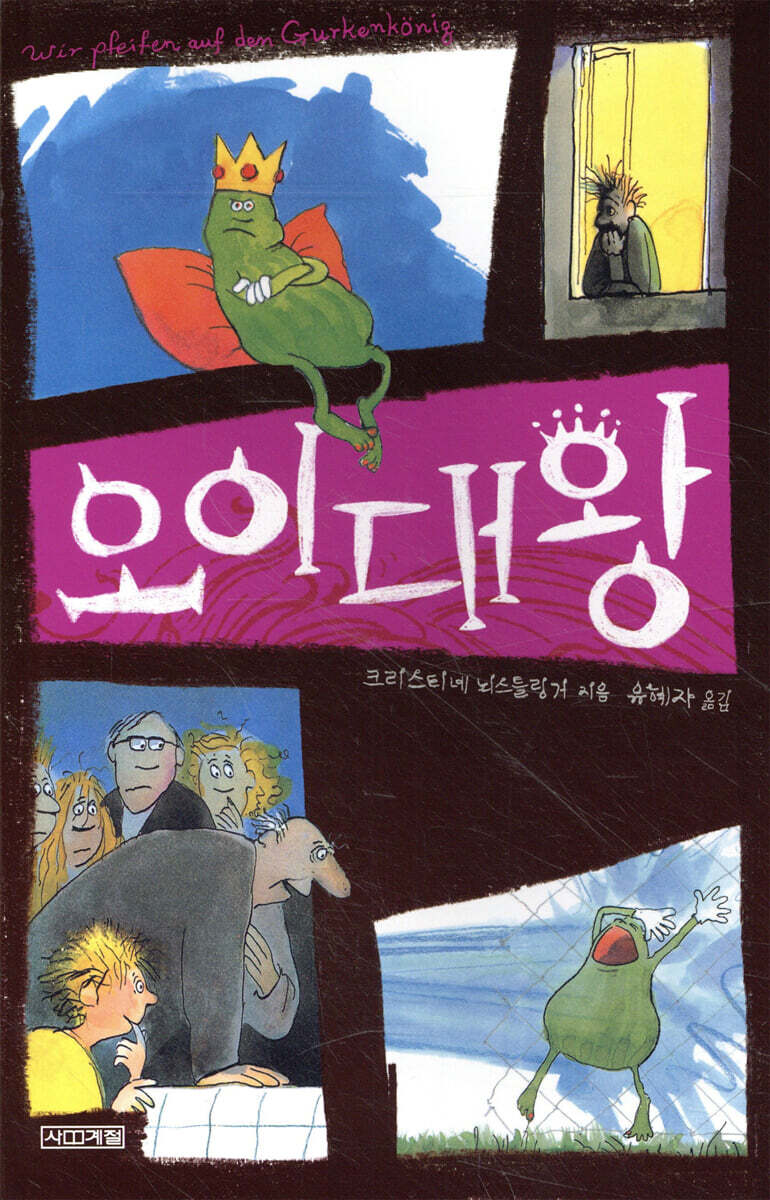
The 2009 revised edition of 『The Cucumber King』 was changed to a cartoon-style cover to dynamically reveal the relationship between Wolfgang's family and the Cucumber King, and the hidden metaphors of the Kumi-Ori tribe ruled by the Cucumber King in the text were explained so that the readers could easily understand them, making every effort to fully preserve the author's intentions and skills.
This work, which served as the first introduction to Korea of Christine Noestlinger, who had already established herself as a world-renowned author, contains a sharp diagnosis of modern society behind the typical fairy tale title and illustrations, and has been a constant topic of conversation not only among young people but also among many adults who love the 'Four Seasons 1318 Library'.
Sageseul Publishing Company carefully reviewed the translation of this book, which is always included on must-read youth literature lists, and redesigned the cover to suit the changing sensibilities of youth literature, publishing a revised edition in 2009.
Christine Noestlinger, whose lively and vibrant writing hides a sharp sense of humor and sharp judgment, explores the contradictions and distrust deeply entrenched within a family.
This work, which takes a unique format in which the protagonist, Wolfgang, a first-year middle school student, reports on the sudden appearance of the 'Cucumber King' and the subsequent events, is filled with vitality throughout with Noestlinger's signature humor.
Wolfgang's family is an ordinary family with his grandfather, father, mother, older sister, and younger brother.
One morning during the Easter holidays, a cucumber-shaped creature, seemingly made of dough, appears at Wolfgang's house and brazenly claims to be King Kumi-Ori II, who lives in the basement and has been driven out by a rebellion by his subjects, and is seeking political asylum.
The family members are displeased with the intruder who acts as if he is the king and is arrogant and authoritarian even in their own home, but only the father treats the king with the utmost respect and actively works to help the king regain his authority.
The problem arises when King Cucumber senses that his position is threatened and tries to uncover his family's secrets.
He realized that each of his family members was harboring a secret, burdened by their father's authority and strictness.
His mother is hiding receipts for expensive purchases he made without his father's knowledge, his sister has a diary full of complaints about him, and Wolfgang has to get his father to sign a math test he got a terrible grade on.
King Oidae steals secret evidence and uses it to win over his father, who is his only supporter.
The cunning and vulgar King Cucumber starkly reveals how many secrets and distrusts were hidden in this seemingly harmless family.
What does the Cucumber King represent in the story? No one but Wolfgang's family knows of the Cucumber King's existence.
At first, the whole family tries to make the existence of the Cucumber King known to the outside world, but they soon give up because they won't be able to be photographed anyway.
Here, Wolfgang's family is already shown to be a people who have lost the will to actively investigate and inform the public about anything, and the cucumber king becomes the very problem that the family has been having.
The author portrayed the family, who had become accustomed to not bringing up problems even when they arose due to the pressure of the father's authority, as the Cucumber King, an unpleasant creature that was damp, mushy, and ate things like sprouted potatoes.
When the cucumber king appears before the family and stirs up their conflict, the mother's lies are revealed, Wolfgang's sexual problems come to the surface, and the grandfather's alienation from his role as an adult is revealed.
Additionally, we can see that the reason the father is loyal to King Oidae is because he projects his own image onto the authoritarian and power-oriented King Oidae.
Wolfgang's worries, such as being ordered by his teacher to get his father's signature on a 40-point math test and the anxiety of failing, which he endures day after day without being able to confide in anyone, are something that everyone has experienced at least once.
When Wolfgang discovers that his confident, top student sister is struggling with her boyfriend and rebelling against her authoritarian father, he feels a kinship with her and confides in her, receiving a lot of help from her to avoid failing.
Wolfgang accepts his grandfather's honest confession, expressing his bitter feelings about his old age and how he can no longer assert his authority as a father once his children reach a certain age, with a different attitude than before.
Although it is not clearly revealed in the ending, the authoritarian and oppressive father also shows a change in attitude through a series of events that occur with the appearance of King Oidae.
He was 'born again' by abandoning the empty authoritarian attitude that he himself could not easily escape.
Here, I am left wondering why the author chose to set the time of the cucumber king's appearance at Easter.
And while everyone else in the family hates the overbearing father and the arrogant King Cucumber, the youngest, Nick, who alone harbors affection for them, resolutely puts King Cucumber in a stroller and throws him outside after a stormy incident.
This may have been possible because Nick was pure and outside the sphere of distrust that surrounded his family.
Wolfgang's family, where each member was focused on their own work and neglected the other family members, began to face problems with the appearance of the Cucumber King. Eventually, the problems were naturally resolved when the burden of the Cucumber King was removed from the house.
In order to expose the falsehood and hypocrisy of patriarchal family relationships, Noestlinger introduces a fictional creature called the Cucumber King into an ordinary family. Rather than listing extreme episodes to reveal the true nature of the father's patriarchal authority, he portrays it more vividly through the hideous and cunning Cucumber King.
This is probably why this work never loses its vitality through humor.
Also, the illustrations by artist Jutta Bauer, who worked with Nöstlinger on many works and best expressed her humor and freedom, have become an image that cannot be left out when thinking of 『The Cucumber King』.
The 2009 revised edition of 『The Cucumber King』 was changed to a cartoon-style cover to dynamically reveal the relationship between Wolfgang's family and the Cucumber King, and the hidden metaphors of the Kumi-Ori tribe ruled by the Cucumber King in the text were explained so that the readers could easily understand them, making every effort to fully preserve the author's intentions and skills.
GOODS SPECIFICS
- Date of issue: February 15, 2009
- Page count, weight, size: 185 pages | 370g | 153*224*20mm
- ISBN13: 9788958283508
- ISBN10: 8958283505
You may also like
카테고리
korean


korean

![GQ KOREA Mark (Monthly): December [2025]](http://librairie.coreenne.fr/cdn/shop/files/8ef265dbbfbf186523ed75ba7319009d.jpg?v=1765340328&width=3840)


