

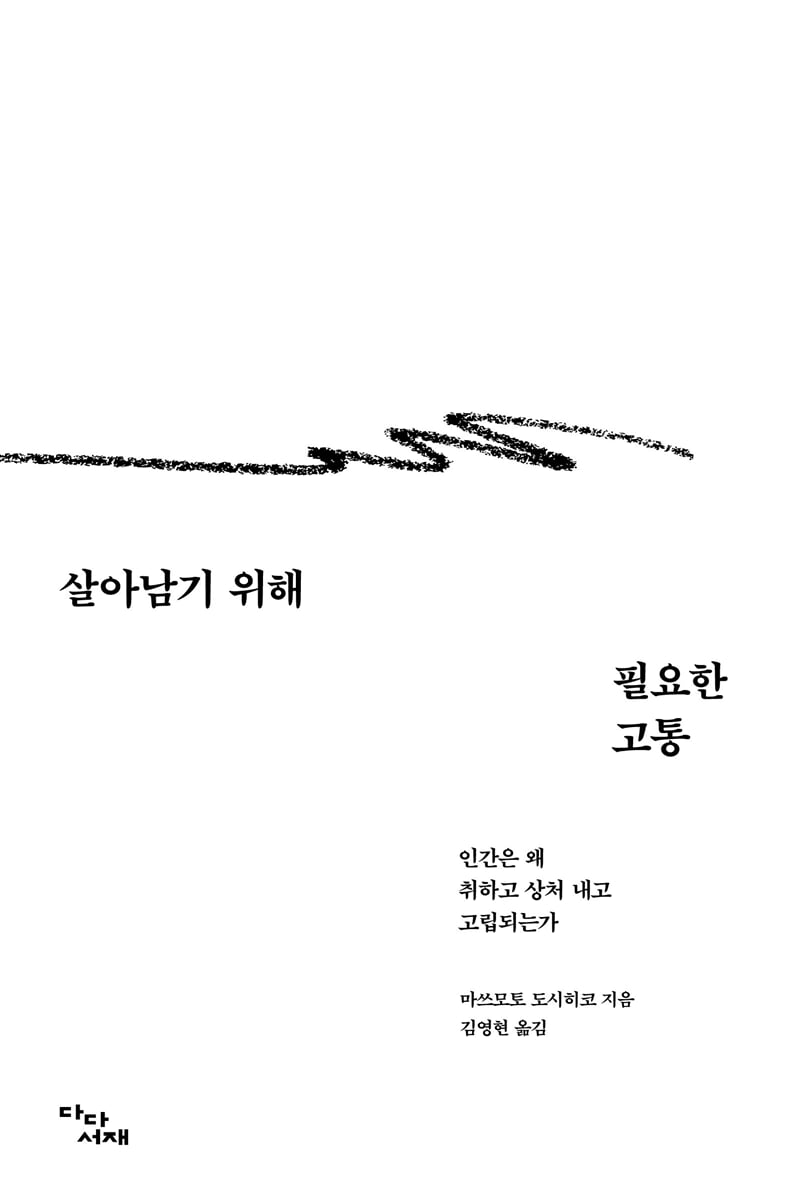
The pain necessary to survive
 |
Description
Book Introduction
"The Pain Necessary for Survival" is an essay written by Toshihiko Matsumoto, a Japanese psychiatrist and leading authority on drug addiction.
This book contains 25 years of experience as a doctor, including first encountering drug addiction in middle school, working as an outsider medical student, and then being unintentionally assigned to a hospital specializing in drug addiction, as well as clinical work on drug addiction, juvenile correction, forensic psychiatry, and suicide prevention research.
The author argues that drug addiction is a disease, not a crime, and that drug addicts should be treated and supported through connection, not punished, as they are seen as "people who cannot depend on others."
The author's candid and honest stories, such as how he was scolded by a patient when he was a rookie who knew nothing, how he lost a patient because he was unable to help them due to his inexperience as a doctor, and how he relied on games to overcome his own difficult daily life while helping a patient with addiction, are moving.
It garnered immediate attention upon its publication in Japan, winning the 70th Japan Essayist Club Award and being selected as one of the Kinokuniya Humanities Award's 2022 Humanities Books.
This book contains 25 years of experience as a doctor, including first encountering drug addiction in middle school, working as an outsider medical student, and then being unintentionally assigned to a hospital specializing in drug addiction, as well as clinical work on drug addiction, juvenile correction, forensic psychiatry, and suicide prevention research.
The author argues that drug addiction is a disease, not a crime, and that drug addicts should be treated and supported through connection, not punished, as they are seen as "people who cannot depend on others."
The author's candid and honest stories, such as how he was scolded by a patient when he was a rookie who knew nothing, how he lost a patient because he was unable to help them due to his inexperience as a doctor, and how he relied on games to overcome his own difficult daily life while helping a patient with addiction, are moving.
It garnered immediate attention upon its publication in Japan, winning the 70th Japan Essayist Club Award and being selected as one of the Kinokuniya Humanities Award's 2022 Humanities Books.
- You can preview some of the book's contents.
Preview
index
Reunion? Why I fell into clinical addiction.
Lifebuoy thrower
Unhealthy habits needed to survive
Beyond myth
Alfa Romeo Capriccio
In Search of Lost Time
Caffeine Cantata
How Enlightenment Became a Curse
Crying, nonsense, and sleep talking
Why do doctors prescribe medications?
Why do people want to get drunk?
Author's Note
References
Lifebuoy thrower
Unhealthy habits needed to survive
Beyond myth
Alfa Romeo Capriccio
In Search of Lost Time
Caffeine Cantata
How Enlightenment Became a Curse
Crying, nonsense, and sleep talking
Why do doctors prescribe medications?
Why do people want to get drunk?
Author's Note
References
Detailed image
Into the book
“People betray, but drugs don’t.” I’ve heard this from many patients in my addiction clinical practice.
They are people who cannot feel secure and depend on others, or who cannot fill the gaping hole in their hearts by 'connecting with others' and instead try to fill it with 'things' like medicine.
But isn't the very act of conveying despair about people to people, even in a twisted and challenging way, a self-revealing desire to 'connect with others'?
--- p.28
All we can do as medical professionals is to provide patients with addiction with the opportunity and information to calmly consider their future, and to support them by saying, "You can do it," while they take action to change themselves.
To use an analogy, all a medical professional can do is throw a lifebuoy—preferably at the perfect timing—to a patient with addiction who has fallen into the sea and point them toward land.
It is up to the addict to grab the lifebuoy with his own hands and swim to land.
--- p.48
Perhaps self-harm is an act of 'suppressing pain with pain'.
It is about using self-harm, a pain that can be explained and controlled, to escape, even if only for a moment, from the pain of trauma, which is something that cannot be explained or controlled.
It helps avoid suicide, at least temporarily.
The same goes for physical pain caused by overeating and vomiting.
So overeating? Vomiting and self-harm are habitual and habitual.
Because ‘relief of pain’ functions as a kind of compensation.
--- p.68
Most children in juvenile detention centers and reformatories were ignored, brutally suppressed, and suspected of lying when they told their stories.
When I tried to understand their situation, it seemed like the only way to survive in that environment was to cut my wrists or abuse drugs to numb the pain.
I also wondered if, by becoming insensitive to my own pain, I had become insensitive to the pain of others and had lost my ability to empathize.
--- p.87
Whenever a heinous juvenile crime occurs, commentators on news shows always make the unsubstantiated claim that “there is a growing number of children who lack a sense of norms.”
They argue that “we need to put more effort into moral education in schools.”
Every time that happens, I think, 'You don't know anything.'
Why do some people disregard and deviate from community norms? The answer is not so clear.
Because they have no trust in the community.
--- p.90
Now, after a quarter of a century of clinical experience with addiction, I have something to be confident about.
Of all the drugs, alcohol is undoubtedly the one that causes the most serious damage to the mind and body.
In fact, many alcoholics suffer from lifestyle diseases such as diabetes, high blood pressure, and hyperlipidemia, and they also suffer from irreversible disorders such as polyneuropathy and brain atrophy, as well as liver, pancreas, and heart disorders.
(...) I can confidently say that the drug that makes people the most violent is alcohol.
Alcohol is behind countless incidents of violent crime, child abuse, domestic violence, dating violence, and car accidents, and the number of incidents is incomparable to that of stimulants.
(...) But why is alcohol okay and stimulants not?
--- p.143
“No, absolutely not” is a lie. There are no good or bad drugs in this world, there are only good and bad uses of drugs, and those who can’t quit the bad ones have a different set of difficulties.
This thought has grown into conviction over time, and I feel I can no longer fool myself.
You could also rephrase it like this:
A person who makes things difficult is a person who is having a hard time.
What the country should do to combat drugs is not to increase legal regulations and create unnecessary criminals.
It is necessary to support 'people' who are suffering from some kind of pain and who cannot help but become addicted to the 'thing' called drugs.
They are people who cannot feel secure and depend on others, or who cannot fill the gaping hole in their hearts by 'connecting with others' and instead try to fill it with 'things' like medicine.
But isn't the very act of conveying despair about people to people, even in a twisted and challenging way, a self-revealing desire to 'connect with others'?
--- p.28
All we can do as medical professionals is to provide patients with addiction with the opportunity and information to calmly consider their future, and to support them by saying, "You can do it," while they take action to change themselves.
To use an analogy, all a medical professional can do is throw a lifebuoy—preferably at the perfect timing—to a patient with addiction who has fallen into the sea and point them toward land.
It is up to the addict to grab the lifebuoy with his own hands and swim to land.
--- p.48
Perhaps self-harm is an act of 'suppressing pain with pain'.
It is about using self-harm, a pain that can be explained and controlled, to escape, even if only for a moment, from the pain of trauma, which is something that cannot be explained or controlled.
It helps avoid suicide, at least temporarily.
The same goes for physical pain caused by overeating and vomiting.
So overeating? Vomiting and self-harm are habitual and habitual.
Because ‘relief of pain’ functions as a kind of compensation.
--- p.68
Most children in juvenile detention centers and reformatories were ignored, brutally suppressed, and suspected of lying when they told their stories.
When I tried to understand their situation, it seemed like the only way to survive in that environment was to cut my wrists or abuse drugs to numb the pain.
I also wondered if, by becoming insensitive to my own pain, I had become insensitive to the pain of others and had lost my ability to empathize.
--- p.87
Whenever a heinous juvenile crime occurs, commentators on news shows always make the unsubstantiated claim that “there is a growing number of children who lack a sense of norms.”
They argue that “we need to put more effort into moral education in schools.”
Every time that happens, I think, 'You don't know anything.'
Why do some people disregard and deviate from community norms? The answer is not so clear.
Because they have no trust in the community.
--- p.90
Now, after a quarter of a century of clinical experience with addiction, I have something to be confident about.
Of all the drugs, alcohol is undoubtedly the one that causes the most serious damage to the mind and body.
In fact, many alcoholics suffer from lifestyle diseases such as diabetes, high blood pressure, and hyperlipidemia, and they also suffer from irreversible disorders such as polyneuropathy and brain atrophy, as well as liver, pancreas, and heart disorders.
(...) I can confidently say that the drug that makes people the most violent is alcohol.
Alcohol is behind countless incidents of violent crime, child abuse, domestic violence, dating violence, and car accidents, and the number of incidents is incomparable to that of stimulants.
(...) But why is alcohol okay and stimulants not?
--- p.143
“No, absolutely not” is a lie. There are no good or bad drugs in this world, there are only good and bad uses of drugs, and those who can’t quit the bad ones have a different set of difficulties.
This thought has grown into conviction over time, and I feel I can no longer fool myself.
You could also rephrase it like this:
A person who makes things difficult is a person who is having a hard time.
What the country should do to combat drugs is not to increase legal regulations and create unnecessary criminals.
It is necessary to support 'people' who are suffering from some kind of pain and who cannot help but become addicted to the 'thing' called drugs.
--- p.259
Publisher's Review
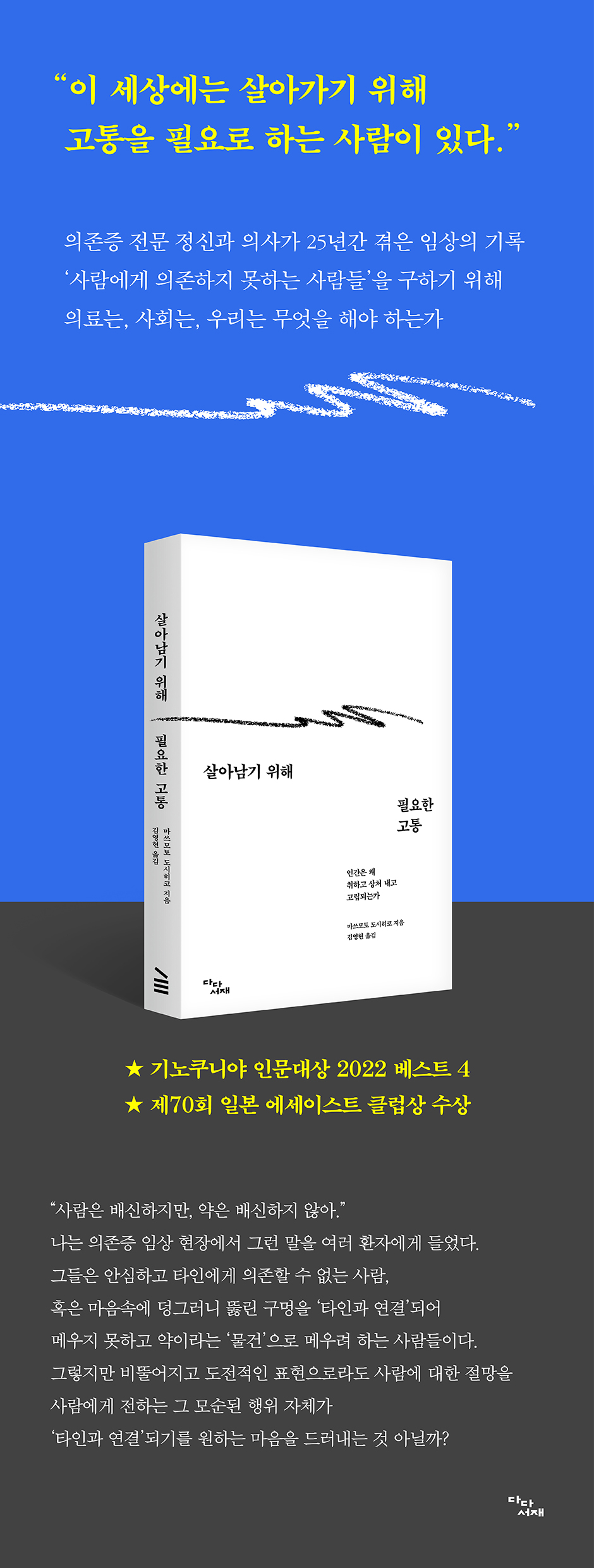
“There are people in this world who need pain to survive.”
25 years of clinical experience from a leading psychiatrist specializing in addiction treatment
To save 'people who cannot depend on others'
What should medicine, society, and us do?
★ Kinokuniya Humanities Award 2022 Humanities Books Best 4
★ Winner of the 70th Japan Essayist Club Award
"The Pain Necessary for Survival" is an essay written by Toshihiko Matsumoto, a Japanese psychiatrist and leading authority on drug addiction.
This book contains 25 years of experience as a doctor, including first encountering drug addiction in middle school, working as an outsider medical student, and then being unintentionally assigned to a hospital specializing in drug addiction, as well as clinical work on drug addiction, juvenile correction, forensic psychiatry, and suicide prevention research.
The author argues that drug addiction is a disease, not a crime, and that drug addicts should be treated and supported through connection, not punished, as they are seen as "people who cannot depend on others."
The author's candid and honest stories, such as how he was scolded by a patient when he was a rookie who knew nothing, how he lost a patient because he was unable to help them due to his inexperience as a doctor, and how he relied on games to overcome his own difficult daily life while helping a dependent patient, are touching and overturn the existing perception of dependence. The book immediately became a hot topic when it was published in Japan, winning the 70th Japan Essayist Club Award and being selected as one of the 'Kinokuniya Humanities Award 2022 Humanities Best 4'.
Drug addiction is a disease, not a crime.
Those who need pain to survive
“No, absolutely not.”
This is the slogan for drug abuse prevention education implemented in Japanese schools.
We are taught that one touch of drugs will ruin your life and that drug abusers are 'monsters' and 'people who have given up on being human.'
Near the facility where drug addicts come and go for rehabilitation, posters opposing the facility are plastered all over the town.
Celebrities who have drug problems are not even protected from basic human rights.
This attitude toward drug addiction is similar in our society.
However, the author points out that this type of education is different from reality and only promotes prejudice against drug addiction.
The social climate that rejects drug addiction isolates those affected and leads them to make more extreme choices.
The author emphasizes that drug addiction is a disease, not a crime, and that patients with drug addiction need appropriate treatment and support to help them reintegrate into society, not harsh punishment.
Based on long-term clinical experience, the author points out that patients with pathological problems such as drug dependence, self-harm, and eating disorders commonly have severe trauma and isolation.
Those who have memories they want to erase, such as a harsh upbringing, discrimination and violence at home and school, and sexual violence, cannot rely on anyone and endure the pain alone, turning to drugs, binge eating, and injuring their bodies.
That is, they maintain an 'unhealthy state' in order to somehow survive without dying.
The author says that this phenomenon of driving oneself into a pathological state in order to survive is not something that only happens to a small number of sick people.
The author himself confesses that he relied on caffeine drugs to focus on his studies during his college years and that he became pathologically addicted to gaming to endure the helplessness of the difficult treatment for his addiction.
The author says many people are obsessed with useless hobbies and eating overly spicy food, simply balancing out their tough daily lives with "unhealthy" activities.
From my encounter with a violent circle during middle school
To this day, I am the leading authority on drug addiction.
At the beginning of the book, the author recalls that his clinical addiction began fatefully during his time in a middle school dominated by violent circles.
At a school where violence between students and teachers was rampant, the author, as a student council member, played a role in persuading students from a violent circle who were addicted to cigarettes and thinner.
A friend who was a special relationship but who could not break up with him in the end followed the author like a ghost throughout his medical career, and the author developed a special affection for young addicts and 'juvenile delinquents'.
In addition to drug addiction, the book also features unforgettable anecdotes from patients he has met over the past 25 years of his medical career, including those with depression, post-traumatic stress disorder, dissociative identity disorder, self-harm, and suicide.
By encountering atypical patients not found in medical textbooks—patients who use illegal drugs to support their families and endure excessive work, people who jump off bridges to take their own lives while gazing at the lights of human society, and patients who inject themselves with bacteria to deal with past trauma—the author begins to break away from the treatment methods long followed by psychiatry and focus on the individual lives of patients.
Even though he is now a leading authority on addiction, the author still calls himself a "patient helper."
And he says he has been fighting against society by constantly challenging its prejudice against addiction.
The person who makes things difficult may be the one who is having a hard time.
The opposite of dependence is not sobriety, but connection.
The author, who was at a loss due to having no knowledge about drug addiction treatment, reached a turning point when he met a self-help group for drug addiction patients.
A patient who had been banned from entering the hospital for using drugs was able to stay off drugs for several months by interacting with other patients at the meeting.
Through that incident, the author realized that what a person with dependence, a person who cannot depend on others, needs is someone they can lean on, and decided to learn about dependence from the person with dependence.
The author experiences something similar in a juvenile correctional facility.
The 'juvenile delinquents' he met while treating patients as a contract doctor were criminals such as biker gang leaders, arsonists, sexual harassers, and extortionists. However, as he listened to their life stories, the author learned that they too were victims of severe violence at home and at school.
Children who said they couldn't trust anyone open their hearts and confess their innermost feelings despite the author's insignificant response and sympathy.
Those children also went in the wrong direction because they were not able to connect with people.
The author says that those who are often criticized for disrupting and causing inconvenience to society may actually be the ones who are suffering the most.
“The person who makes it difficult may be the one who is having a hard time.”
The author points out that the reason some people disregard and deviate from community norms is “because they do not trust the community.”
The author's argument that we should listen to the pain they endure rather than unconditionally condemning those who commit crimes and turning them into criminals will provide a refreshing shock even to Korean society, which is rife with punitive measures.
The author quotes author Johann Hari, who said, “The opposite of dependence is not sobriety, but connection,” and says that society, as well as medical care, must support patients with dependence so that they do not become isolated but connect with others.
This book garnered immediate attention upon its publication in Japan, winning the 70th Japan Essayist Club Award and being selected as one of the "Kinokuniya Humanities Award 2022 Humanities Books Best 4."
25 years of clinical experience from a leading psychiatrist specializing in addiction treatment
To save 'people who cannot depend on others'
What should medicine, society, and us do?
★ Kinokuniya Humanities Award 2022 Humanities Books Best 4
★ Winner of the 70th Japan Essayist Club Award
"The Pain Necessary for Survival" is an essay written by Toshihiko Matsumoto, a Japanese psychiatrist and leading authority on drug addiction.
This book contains 25 years of experience as a doctor, including first encountering drug addiction in middle school, working as an outsider medical student, and then being unintentionally assigned to a hospital specializing in drug addiction, as well as clinical work on drug addiction, juvenile correction, forensic psychiatry, and suicide prevention research.
The author argues that drug addiction is a disease, not a crime, and that drug addicts should be treated and supported through connection, not punished, as they are seen as "people who cannot depend on others."
The author's candid and honest stories, such as how he was scolded by a patient when he was a rookie who knew nothing, how he lost a patient because he was unable to help them due to his inexperience as a doctor, and how he relied on games to overcome his own difficult daily life while helping a dependent patient, are touching and overturn the existing perception of dependence. The book immediately became a hot topic when it was published in Japan, winning the 70th Japan Essayist Club Award and being selected as one of the 'Kinokuniya Humanities Award 2022 Humanities Best 4'.
Drug addiction is a disease, not a crime.
Those who need pain to survive
“No, absolutely not.”
This is the slogan for drug abuse prevention education implemented in Japanese schools.
We are taught that one touch of drugs will ruin your life and that drug abusers are 'monsters' and 'people who have given up on being human.'
Near the facility where drug addicts come and go for rehabilitation, posters opposing the facility are plastered all over the town.
Celebrities who have drug problems are not even protected from basic human rights.
This attitude toward drug addiction is similar in our society.
However, the author points out that this type of education is different from reality and only promotes prejudice against drug addiction.
The social climate that rejects drug addiction isolates those affected and leads them to make more extreme choices.
The author emphasizes that drug addiction is a disease, not a crime, and that patients with drug addiction need appropriate treatment and support to help them reintegrate into society, not harsh punishment.
Based on long-term clinical experience, the author points out that patients with pathological problems such as drug dependence, self-harm, and eating disorders commonly have severe trauma and isolation.
Those who have memories they want to erase, such as a harsh upbringing, discrimination and violence at home and school, and sexual violence, cannot rely on anyone and endure the pain alone, turning to drugs, binge eating, and injuring their bodies.
That is, they maintain an 'unhealthy state' in order to somehow survive without dying.
The author says that this phenomenon of driving oneself into a pathological state in order to survive is not something that only happens to a small number of sick people.
The author himself confesses that he relied on caffeine drugs to focus on his studies during his college years and that he became pathologically addicted to gaming to endure the helplessness of the difficult treatment for his addiction.
The author says many people are obsessed with useless hobbies and eating overly spicy food, simply balancing out their tough daily lives with "unhealthy" activities.
From my encounter with a violent circle during middle school
To this day, I am the leading authority on drug addiction.
At the beginning of the book, the author recalls that his clinical addiction began fatefully during his time in a middle school dominated by violent circles.
At a school where violence between students and teachers was rampant, the author, as a student council member, played a role in persuading students from a violent circle who were addicted to cigarettes and thinner.
A friend who was a special relationship but who could not break up with him in the end followed the author like a ghost throughout his medical career, and the author developed a special affection for young addicts and 'juvenile delinquents'.
In addition to drug addiction, the book also features unforgettable anecdotes from patients he has met over the past 25 years of his medical career, including those with depression, post-traumatic stress disorder, dissociative identity disorder, self-harm, and suicide.
By encountering atypical patients not found in medical textbooks—patients who use illegal drugs to support their families and endure excessive work, people who jump off bridges to take their own lives while gazing at the lights of human society, and patients who inject themselves with bacteria to deal with past trauma—the author begins to break away from the treatment methods long followed by psychiatry and focus on the individual lives of patients.
Even though he is now a leading authority on addiction, the author still calls himself a "patient helper."
And he says he has been fighting against society by constantly challenging its prejudice against addiction.
The person who makes things difficult may be the one who is having a hard time.
The opposite of dependence is not sobriety, but connection.
The author, who was at a loss due to having no knowledge about drug addiction treatment, reached a turning point when he met a self-help group for drug addiction patients.
A patient who had been banned from entering the hospital for using drugs was able to stay off drugs for several months by interacting with other patients at the meeting.
Through that incident, the author realized that what a person with dependence, a person who cannot depend on others, needs is someone they can lean on, and decided to learn about dependence from the person with dependence.
The author experiences something similar in a juvenile correctional facility.
The 'juvenile delinquents' he met while treating patients as a contract doctor were criminals such as biker gang leaders, arsonists, sexual harassers, and extortionists. However, as he listened to their life stories, the author learned that they too were victims of severe violence at home and at school.
Children who said they couldn't trust anyone open their hearts and confess their innermost feelings despite the author's insignificant response and sympathy.
Those children also went in the wrong direction because they were not able to connect with people.
The author says that those who are often criticized for disrupting and causing inconvenience to society may actually be the ones who are suffering the most.
“The person who makes it difficult may be the one who is having a hard time.”
The author points out that the reason some people disregard and deviate from community norms is “because they do not trust the community.”
The author's argument that we should listen to the pain they endure rather than unconditionally condemning those who commit crimes and turning them into criminals will provide a refreshing shock even to Korean society, which is rife with punitive measures.
The author quotes author Johann Hari, who said, “The opposite of dependence is not sobriety, but connection,” and says that society, as well as medical care, must support patients with dependence so that they do not become isolated but connect with others.
This book garnered immediate attention upon its publication in Japan, winning the 70th Japan Essayist Club Award and being selected as one of the "Kinokuniya Humanities Award 2022 Humanities Books Best 4."
GOODS SPECIFICS
- Publication date: December 7, 2022
- Page count, weight, size: 264 pages | 322g | 135*205*20mm
- ISBN13: 9791191716191
- ISBN10: 1191716198
You may also like
카테고리
korean


korean

![GQ KOREA Mark (Monthly): December [2025]](http://librairie.coreenne.fr/cdn/shop/files/8ef265dbbfbf186523ed75ba7319009d.jpg?v=1765340328&width=3840)


