

Wordslut
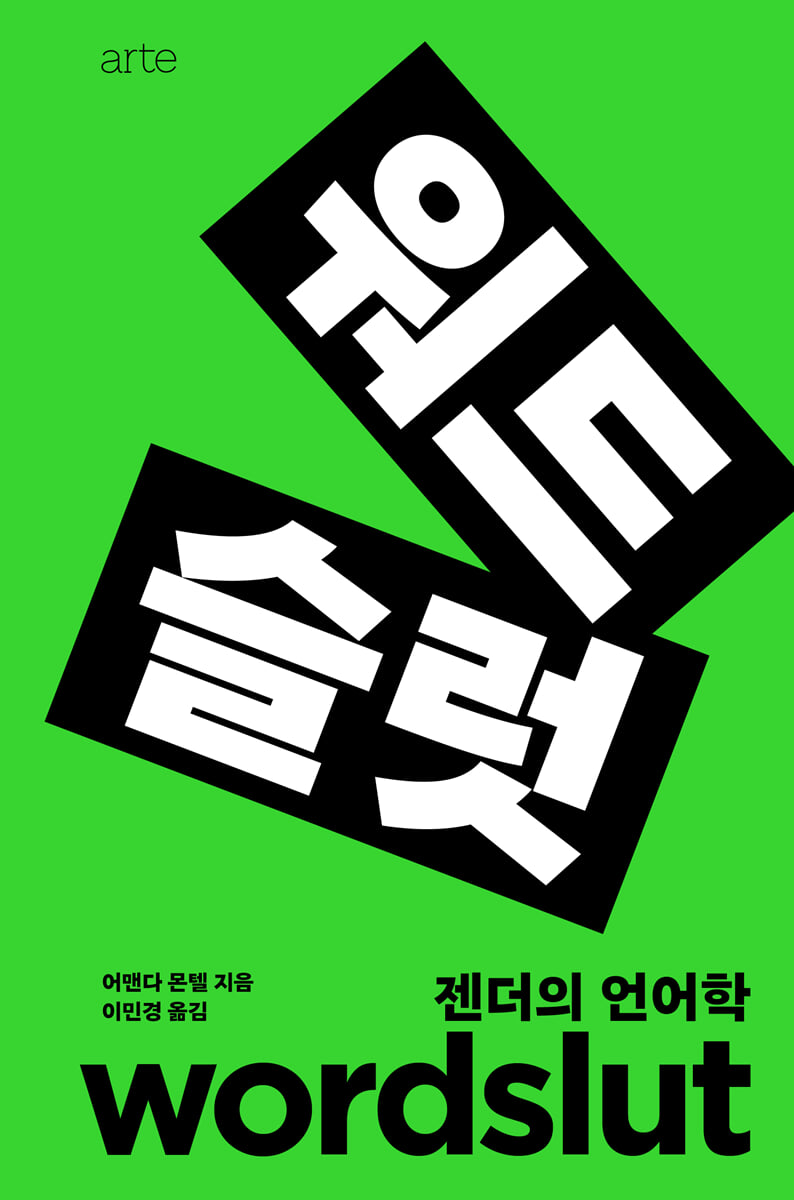 |
Description
Book Introduction
Tracing the Roots of Gender Absurdity in Language Through the Lens of Sociolinguistics
A delightful reflection from a feminist language nerd for those of you who are experiencing discrimination in speech and writing today!
Why are women expected to speak "like men" in public settings? The basic form of language is mostly male, so why is profanity mostly directed at women? Why are women who are insulted always likened to food, animals, or prostitutes? Why is "female language" so easily mocked, while misogynistic expressions quickly become commonplace?
Feminist linguist Amanda Montell traces the roots of gender injustice in language.
His first book, Wordslut, is a result of analyzing and exposing the history of gender-discriminatory language, drawing on the latest sociolinguistic research and examining a wide range of examples, from various documents and media to the public speeches of politicians and the private gossip of individuals.
The book's delightful and unflinching sociolinguistic knowledge will help women reclaim their free speech from the powers that ridicule and suppress it.
If you're a woman who's ever had your language corrected for something that doesn't quite fit with the established language, or if you've ever been judged arrogant for creating your own words without any authority, Wordslut can serve as a clear reference point.
-Lee Min-kyung
A delightful reflection from a feminist language nerd for those of you who are experiencing discrimination in speech and writing today!
Why are women expected to speak "like men" in public settings? The basic form of language is mostly male, so why is profanity mostly directed at women? Why are women who are insulted always likened to food, animals, or prostitutes? Why is "female language" so easily mocked, while misogynistic expressions quickly become commonplace?
Feminist linguist Amanda Montell traces the roots of gender injustice in language.
His first book, Wordslut, is a result of analyzing and exposing the history of gender-discriminatory language, drawing on the latest sociolinguistic research and examining a wide range of examples, from various documents and media to the public speeches of politicians and the private gossip of individuals.
The book's delightful and unflinching sociolinguistic knowledge will help women reclaim their free speech from the powers that ridicule and suppress it.
If you're a woman who's ever had your language corrected for something that doesn't quite fit with the established language, or if you've ever been judged arrogant for creating your own words without any authority, Wordslut can serve as a clear reference point.
-Lee Min-kyung
- You can preview some of the book's contents.
Preview
index
Chapter 0.
Meet the Sociolinguists: What Cool Feminists Are Talking About? 09
Chapter 1.
Slutty Whores and Slutty Lesbians: 33 Gendered Insults I Hate (And Like?)
Chapter 2.
Wait a minute… What does ‘woman’ mean?: More questions about sex, gender, and the language behind them 67
Chapter 3.
“Hmm… you’re right.”: 99 Ways Women Talk About Each Other That Men Never Do
Chapter 4.
Women didn't ruin English - they, well, invented it. 135
Chapter 5.
How to Embarrass People Who Try to Correct Your Grammar 163
Chapter 6.
Confuse the Catcaller: And Breaking the Patriarchy with Language 199
Chapter 7.
Fuck It: Anthem for the Swearing Woman 227
Chapter 8.
"Hen" Clinton and "Sexy" Scarlett: Surviving as a Woman in Public 249
Chapter 9.
Time to make this book a little gayer 271
Chapter 10.
Cyclops, the monster in the panties, the bald bastard: 299 more ways to call a genitalia
Chapter 11.
So... will women rule the English language within a thousand years? 323
Acknowledgments 342
Translator's Note 345
Meet the Sociolinguists: What Cool Feminists Are Talking About? 09
Chapter 1.
Slutty Whores and Slutty Lesbians: 33 Gendered Insults I Hate (And Like?)
Chapter 2.
Wait a minute… What does ‘woman’ mean?: More questions about sex, gender, and the language behind them 67
Chapter 3.
“Hmm… you’re right.”: 99 Ways Women Talk About Each Other That Men Never Do
Chapter 4.
Women didn't ruin English - they, well, invented it. 135
Chapter 5.
How to Embarrass People Who Try to Correct Your Grammar 163
Chapter 6.
Confuse the Catcaller: And Breaking the Patriarchy with Language 199
Chapter 7.
Fuck It: Anthem for the Swearing Woman 227
Chapter 8.
"Hen" Clinton and "Sexy" Scarlett: Surviving as a Woman in Public 249
Chapter 9.
Time to make this book a little gayer 271
Chapter 10.
Cyclops, the monster in the panties, the bald bastard: 299 more ways to call a genitalia
Chapter 11.
So... will women rule the English language within a thousand years? 323
Acknowledgments 342
Translator's Note 345
Detailed image
.jpg)
Into the book
Our speech—our words, our intonation, our sentence structure—are invisible signals that tell people who we are.
This also tells us how to treat ourselves.
If handled incorrectly, fire can be used as a weapon.
If used well, it can change the world.
--- p.13
A similar study on gendered insults conducted at the University of California, Los Angeles, found that 90 percent of slang for women was negative, compared to only 46 percent for men.
This means that the vocabulary people use on a daily basis contains a higher content of insults directed at women than at men.
The study found that there were words with "positive" connotations toward women, but these positive connotations often had sexual connotations, like comparing women to food (such as peaches, treats, and fillets).
--- p.37
The world's four most-referenced dictionaries (Collins Dictionary, Merriam-Webster Dictionary, Dictionary.com, and Oxford English Dictionary) all define the word "woman" as "an adult female."
This definition implies that becoming a woman and becoming an adult woman are inevitably linked.
So what is a woman? All of these dictionaries define woman as "the sex that produces eggs and offspring" (or some variation thereof).
According to the dictionary, one can make the connection that to be a woman one must be an adult capable of producing eggs and offspring.
Justice is physical.
--- p.77
The ways in which women and other socially oppressed people gain power through language are interconnected.
There is a long history of marginalized groups creatively using language to create themselves.
And they are very good at this.
Because whether or not they know who to give credit to for their cool new slang, pronunciation, and accent, the rest of the world will inevitably end up speaking like them.
--- p.159
Think of all the examples of people using "she" instead of "it" to refer to something that isn't a person.
For example, there are things like cars, boats, ships, oceans, countries, the Loch Ness Monster, and hurricanes.
(In the 1950s, the National Weather Service began naming hurricanes after women, borrowing from the tradition of naval meteorologists naming ships after women.
Fortunately, in 1979 the system was changed so that hurricanes now have alternating male and female names.) All of these things have a long history of being big, challenging, and conquered by men.
--- pp.179~180
Political correctness does not harm our freedom of expression in any way.
What's truly threatened by political correctness is the notion that we can separate politics from our word choice, and that our communication style doesn't say anything more about who we are.
As speakers of American English, we have the freedom to choose which language we prefer.
We must recognize that our language reflects our social and moral beliefs.
So, if you use "comedian" instead of "comic," or describe Ferrari as "she," you should know that you will be criticized not just for being sexist, but for showing indifference to gender equality.
It's not that we can't say anything because of political correctness, it's that political neutrality is no longer an option.
--- p.197
Many languages have expressions to describe the act of someone (usually a man) shouting sexual remarks at a stranger (a woman or someone who appears to be a woman) on the street.
Because this phenomenon occurs in almost every country.
--- p.202
In a 2015 New York Times column, Sheryl Sandberg wrote that the “long-term solution to the double oppression of speaking out as a woman” is simple:
Hire more female bosses.
As we've learned, simply adding women to the workforce doesn't guarantee more respect for them.
It can even backfire by making men behave more dominantly by threatening their male colleagues.
But if women occupy the majority or all of the upper ranks, the story changes.
Ethan Burris, a professor at the University of Texas, once studied a credit union where 74 percent of its directors were women.
“It can be solved,” Sandberg wrote.
“If a woman speaks from above, her voice can be heard better than a man’s.”
--- pp.
268~269
Elgin hoped the 'Raadan' vocabulary would include words that effectively encapsulate the physical, social, and emotional experiences women share.
This is because women's language is largely silenced in English or described in complex sentences.
For example, 'Raadan' contains words such as 'having menstruation early', 'making menstruation painful', and 'making menstruation pleasant'.
It also includes being embarrassed and angry for a reason, for no reason, and whether or not there is someone to blame at the time.
The verb 'doroledi' encompasses both the act of overeating due to a woman's inability to properly care for herself and the act of feeling extreme guilt due to her greed for things like delicious food.
The word 'Radiddin' means 'a non-holiday holiday', and although it is easy to think of it as a holiday, it is a burden to women who have to cook, decorate, and greet guests.
This also tells us how to treat ourselves.
If handled incorrectly, fire can be used as a weapon.
If used well, it can change the world.
--- p.13
A similar study on gendered insults conducted at the University of California, Los Angeles, found that 90 percent of slang for women was negative, compared to only 46 percent for men.
This means that the vocabulary people use on a daily basis contains a higher content of insults directed at women than at men.
The study found that there were words with "positive" connotations toward women, but these positive connotations often had sexual connotations, like comparing women to food (such as peaches, treats, and fillets).
--- p.37
The world's four most-referenced dictionaries (Collins Dictionary, Merriam-Webster Dictionary, Dictionary.com, and Oxford English Dictionary) all define the word "woman" as "an adult female."
This definition implies that becoming a woman and becoming an adult woman are inevitably linked.
So what is a woman? All of these dictionaries define woman as "the sex that produces eggs and offspring" (or some variation thereof).
According to the dictionary, one can make the connection that to be a woman one must be an adult capable of producing eggs and offspring.
Justice is physical.
--- p.77
The ways in which women and other socially oppressed people gain power through language are interconnected.
There is a long history of marginalized groups creatively using language to create themselves.
And they are very good at this.
Because whether or not they know who to give credit to for their cool new slang, pronunciation, and accent, the rest of the world will inevitably end up speaking like them.
--- p.159
Think of all the examples of people using "she" instead of "it" to refer to something that isn't a person.
For example, there are things like cars, boats, ships, oceans, countries, the Loch Ness Monster, and hurricanes.
(In the 1950s, the National Weather Service began naming hurricanes after women, borrowing from the tradition of naval meteorologists naming ships after women.
Fortunately, in 1979 the system was changed so that hurricanes now have alternating male and female names.) All of these things have a long history of being big, challenging, and conquered by men.
--- pp.179~180
Political correctness does not harm our freedom of expression in any way.
What's truly threatened by political correctness is the notion that we can separate politics from our word choice, and that our communication style doesn't say anything more about who we are.
As speakers of American English, we have the freedom to choose which language we prefer.
We must recognize that our language reflects our social and moral beliefs.
So, if you use "comedian" instead of "comic," or describe Ferrari as "she," you should know that you will be criticized not just for being sexist, but for showing indifference to gender equality.
It's not that we can't say anything because of political correctness, it's that political neutrality is no longer an option.
--- p.197
Many languages have expressions to describe the act of someone (usually a man) shouting sexual remarks at a stranger (a woman or someone who appears to be a woman) on the street.
Because this phenomenon occurs in almost every country.
--- p.202
In a 2015 New York Times column, Sheryl Sandberg wrote that the “long-term solution to the double oppression of speaking out as a woman” is simple:
Hire more female bosses.
As we've learned, simply adding women to the workforce doesn't guarantee more respect for them.
It can even backfire by making men behave more dominantly by threatening their male colleagues.
But if women occupy the majority or all of the upper ranks, the story changes.
Ethan Burris, a professor at the University of Texas, once studied a credit union where 74 percent of its directors were women.
“It can be solved,” Sandberg wrote.
“If a woman speaks from above, her voice can be heard better than a man’s.”
--- pp.
268~269
Elgin hoped the 'Raadan' vocabulary would include words that effectively encapsulate the physical, social, and emotional experiences women share.
This is because women's language is largely silenced in English or described in complex sentences.
For example, 'Raadan' contains words such as 'having menstruation early', 'making menstruation painful', and 'making menstruation pleasant'.
It also includes being embarrassed and angry for a reason, for no reason, and whether or not there is someone to blame at the time.
The verb 'doroledi' encompasses both the act of overeating due to a woman's inability to properly care for herself and the act of feeling extreme guilt due to her greed for things like delicious food.
The word 'Radiddin' means 'a non-holiday holiday', and although it is easy to think of it as a holiday, it is a burden to women who have to cook, decorate, and greet guests.
--- p.329
Publisher's Review
“If you want to insult a woman, call her a ‘slut’.
“If you want to insult a man, call him ‘woman’?!”
All About Gendered Language and Verbalized Gender
Tracing the Roots of Gender Absurdity in Language Through the Lens of Sociolinguistics
The most controversial topic in sociolinguistics, which deals with the intersection of language and sociology, is 'gender'.
Gender touches almost every aspect of language, from syllables to words, speech patterns and conversational forms.
For example, in the grammatical systems of many languages, the basic form is masculine, and 'masculine' is a synonym for 'person'.
People who are accustomed to gender bias in language naturally perceive animals or characters without gender markers as male.
Gendered language influences our perceptions and behaviors and reinforces male power.
In her first book, Wordslut, feminist linguist and journalist Amanda Montell traces the roots of gender injustice in language through a sociolinguistic lens.
From gender bias and sexism in slang and slang (Chapters 1, 7, and 10), how men's language defines "women" (Chapter 2), the linguistic function of "female language" that is mocked by everyone (Chapters 3 and 4), how men use language as a means of control, such as "catcalling" and "interrupting" (Chapter 6), to why "sounds gay" is more easily used than "sounds lesbian" (Chapter 9), "WordSlut" analyzes and denounces the history of gender-discriminatory language in a multi-layered manner, based on the latest sociolinguistics research, through various media and cases, including various documents and articles, the speech of politicians and celebrities, and even the private gossip of individuals.
So that women can be armed with the unwavering knowledge they need to reclaim the language that has been so long out of our reach.
Old white men have ruled culture for too long, and language is the medium through which culture is created and communicated.
So it's time to challenge why and how we use language, and how we think about it.
- In the text
√ Why are women asked to speak “like men” in public settings?
√ Why is it that ‘woman language’ is easily mocked, while misogynistic expressions quickly become part of everyday language?
Reexamining the "woman's language," once ridiculed by everyone
The bias surrounding women's speech is reproduced countless times in various media.
Unlike men, women speak indirectly and indirectly; women use exaggerated honorifics and apologize excessively; women speak with a lack of confidence, trailing off or raising the end of syllables as if asking questions… … ‘Lady language’ has become a popular derisive symbol of young women’s incompetence.
Progressive commentators satirize the state of affairs by exaggeratedly mimicking the speech patterns of nervous young women, and even demand that women speak confidently to other women—that is, "like white-collar white men"—in the name of feminism.
Amanda Montell points out that the reason "female language" sounds particularly funny is because language reflects the power of culture.
Teaching young women to conform to men's linguistic preferences without reflecting on which groups of speech our society considers the default may serve gender power.
At the same time, as a linguist, he examines the function and significance of the 'female language', which is often ridiculed.
For example, uptalk, which raises the end of a sentence like a question, is not a sign of anxiety or immaturity, but rather a highly collaborative and economical linguistic function that facilitates the handling of sensitive topics, encourages the participation of others, and ensures that no one person monopolizes the conversation.
Linguists agree that the ugliest and most derided utterances, known as "female speech," may be the direction in which standard language will head in the near future.
So if someone makes you (or someone else) feel stupid because you stifle your voice at the end of a sentence, say "sorry" too much, or exhibit other linguistic quirks they don't like, remember:
Even if normative men don't understand you, linguists do.
Ultimately, haters are just bitter that you're changing the world in a way they can't control or understand.
-In the text
√ The basic form of language is mostly masculine, so why is most slang about women?
√ Why are women who are insulted always likened to food, animals, or prostitutes?
An ode to women who are cursed and to women who curse
A study at UCLA collected profanity and slang to create a database of gendered insults.
Of the collected slang terms for women, 90% had negative connotations, while only 46% of the slang terms for men had negative connotations.
The insulted woman was usually likened to one of the following:
Food, animals, or sex workers.
Amanda Montell says it's no accident that we refer to women as edible, inhuman, and sexual objects.
A society's swear words reflect the perspective of cisgender men.
To them, women are either beings who can be eaten or tamed by men at any time, or are selfish and hysterical.
There is a semantic imbalance between swearing from a normative male perspective and swearing from a female perspective.
In contrast to the fact that most swear words are directed at women, the perception surrounding women who swear has historically been negative.
In a study that investigated why men and women swear, men reported that they habitually swear and that they thought it was "normal."
Women, on the other hand, responded that it was because of their deviant and eccentric 'personalities'.
Sociolinguistics research warns that even the simplest, thoughtless insults can maintain and reinforce male power if we fail to recognize the gendered nature of language.
Power doesn't want language to evolve.
The bare minimum of knowledge needed to reclaim a language that has been absent from us for far too long.
A Guide for Feminists Who Want to Speak Their Own Language
Those with social privileges want to somehow prevent the evolution of language.
They deride the ungrammatical nature of alternative hate speech, refuse to learn the difference between sex and gender, and lament that we have entered an age where people are too scared to say anything.
By protecting the existing language, they want to maintain the social hierarchy from which they have benefited.
But as people express their gender identity and sexuality more freely every day, social awareness of hate grows, and the language we use to express ourselves evolves,
It is time to challenge why and how we use language and to examine how we think about it.
If you're a woman who has ever had your language corrected for being out of sync with established norms, if you've ever been judged arrogant for making up your own words without any authority, if you've ever been asked to speak "more like a woman" or "less like a woman" or to remain silent, Wordslut can serve as a clear reference point.
“If you want to insult a man, call him ‘woman’?!”
All About Gendered Language and Verbalized Gender
Tracing the Roots of Gender Absurdity in Language Through the Lens of Sociolinguistics
The most controversial topic in sociolinguistics, which deals with the intersection of language and sociology, is 'gender'.
Gender touches almost every aspect of language, from syllables to words, speech patterns and conversational forms.
For example, in the grammatical systems of many languages, the basic form is masculine, and 'masculine' is a synonym for 'person'.
People who are accustomed to gender bias in language naturally perceive animals or characters without gender markers as male.
Gendered language influences our perceptions and behaviors and reinforces male power.
In her first book, Wordslut, feminist linguist and journalist Amanda Montell traces the roots of gender injustice in language through a sociolinguistic lens.
From gender bias and sexism in slang and slang (Chapters 1, 7, and 10), how men's language defines "women" (Chapter 2), the linguistic function of "female language" that is mocked by everyone (Chapters 3 and 4), how men use language as a means of control, such as "catcalling" and "interrupting" (Chapter 6), to why "sounds gay" is more easily used than "sounds lesbian" (Chapter 9), "WordSlut" analyzes and denounces the history of gender-discriminatory language in a multi-layered manner, based on the latest sociolinguistics research, through various media and cases, including various documents and articles, the speech of politicians and celebrities, and even the private gossip of individuals.
So that women can be armed with the unwavering knowledge they need to reclaim the language that has been so long out of our reach.
Old white men have ruled culture for too long, and language is the medium through which culture is created and communicated.
So it's time to challenge why and how we use language, and how we think about it.
- In the text
√ Why are women asked to speak “like men” in public settings?
√ Why is it that ‘woman language’ is easily mocked, while misogynistic expressions quickly become part of everyday language?
Reexamining the "woman's language," once ridiculed by everyone
The bias surrounding women's speech is reproduced countless times in various media.
Unlike men, women speak indirectly and indirectly; women use exaggerated honorifics and apologize excessively; women speak with a lack of confidence, trailing off or raising the end of syllables as if asking questions… … ‘Lady language’ has become a popular derisive symbol of young women’s incompetence.
Progressive commentators satirize the state of affairs by exaggeratedly mimicking the speech patterns of nervous young women, and even demand that women speak confidently to other women—that is, "like white-collar white men"—in the name of feminism.
Amanda Montell points out that the reason "female language" sounds particularly funny is because language reflects the power of culture.
Teaching young women to conform to men's linguistic preferences without reflecting on which groups of speech our society considers the default may serve gender power.
At the same time, as a linguist, he examines the function and significance of the 'female language', which is often ridiculed.
For example, uptalk, which raises the end of a sentence like a question, is not a sign of anxiety or immaturity, but rather a highly collaborative and economical linguistic function that facilitates the handling of sensitive topics, encourages the participation of others, and ensures that no one person monopolizes the conversation.
Linguists agree that the ugliest and most derided utterances, known as "female speech," may be the direction in which standard language will head in the near future.
So if someone makes you (or someone else) feel stupid because you stifle your voice at the end of a sentence, say "sorry" too much, or exhibit other linguistic quirks they don't like, remember:
Even if normative men don't understand you, linguists do.
Ultimately, haters are just bitter that you're changing the world in a way they can't control or understand.
-In the text
√ The basic form of language is mostly masculine, so why is most slang about women?
√ Why are women who are insulted always likened to food, animals, or prostitutes?
An ode to women who are cursed and to women who curse
A study at UCLA collected profanity and slang to create a database of gendered insults.
Of the collected slang terms for women, 90% had negative connotations, while only 46% of the slang terms for men had negative connotations.
The insulted woman was usually likened to one of the following:
Food, animals, or sex workers.
Amanda Montell says it's no accident that we refer to women as edible, inhuman, and sexual objects.
A society's swear words reflect the perspective of cisgender men.
To them, women are either beings who can be eaten or tamed by men at any time, or are selfish and hysterical.
There is a semantic imbalance between swearing from a normative male perspective and swearing from a female perspective.
In contrast to the fact that most swear words are directed at women, the perception surrounding women who swear has historically been negative.
In a study that investigated why men and women swear, men reported that they habitually swear and that they thought it was "normal."
Women, on the other hand, responded that it was because of their deviant and eccentric 'personalities'.
Sociolinguistics research warns that even the simplest, thoughtless insults can maintain and reinforce male power if we fail to recognize the gendered nature of language.
Power doesn't want language to evolve.
The bare minimum of knowledge needed to reclaim a language that has been absent from us for far too long.
A Guide for Feminists Who Want to Speak Their Own Language
Those with social privileges want to somehow prevent the evolution of language.
They deride the ungrammatical nature of alternative hate speech, refuse to learn the difference between sex and gender, and lament that we have entered an age where people are too scared to say anything.
By protecting the existing language, they want to maintain the social hierarchy from which they have benefited.
But as people express their gender identity and sexuality more freely every day, social awareness of hate grows, and the language we use to express ourselves evolves,
It is time to challenge why and how we use language and to examine how we think about it.
If you're a woman who has ever had your language corrected for being out of sync with established norms, if you've ever been judged arrogant for making up your own words without any authority, if you've ever been asked to speak "more like a woman" or "less like a woman" or to remain silent, Wordslut can serve as a clear reference point.
GOODS SPECIFICS
- Publication date: November 1, 2022
- Format: Hardcover book binding method guide
- Page count, weight, size: 352 pages | 584g | 132*204*30mm
- ISBN13: 9788950942366
- ISBN10: 8950942364
You may also like
카테고리
korean


korean

![GQ KOREA Mark (Monthly): December [2025]](http://librairie.coreenne.fr/cdn/shop/files/8ef265dbbfbf186523ed75ba7319009d.jpg?v=1765340328&width=3840)


