

Park Wan-seo
 |
Description
Book Introduction
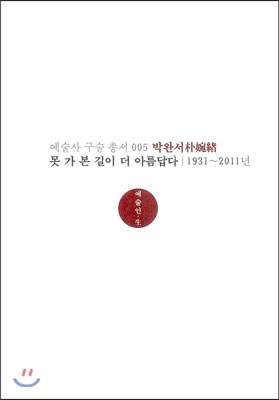
This book introduces the life and works of novelist Park Wan-seo, the fifth artist in the art history oral history series “ArtistㆍLife,” which was first selected as a literary figure.
Park Wan-seo is an author who, with a sharp yet warm gaze, has densely examined her autobiographical experiences during the Japanese colonial period and the Korean War, and has explored and testified to the common lives of ordinary citizens living through Korea's modern history.
This oral history was conducted in 2008 and is the most comprehensive and final oral history of Park Wan-seo, who passed away in 2011.
In addition to her creative activities, we explored aspects of her life that influenced her work, such as her daily life, relationships with friends, and Catholicism, and we also covered a wide range of social activities, such as her interactions with literary figures like Park Kyung-ni and her time as a goodwill ambassador for UNICEF.
To enable comparison between how her oral life is revealed in her works, a wide range of related works, including novels, short stories, and essays, are cited, and approximately 300 annotations are included to aid understanding of her oral history.
Readers will be able to see valuable materials, such as photographs and the last diary, which are being revealed for the first time in this book.
Park Wan-seo is an author who, with a sharp yet warm gaze, has densely examined her autobiographical experiences during the Japanese colonial period and the Korean War, and has explored and testified to the common lives of ordinary citizens living through Korea's modern history.
This oral history was conducted in 2008 and is the most comprehensive and final oral history of Park Wan-seo, who passed away in 2011.
In addition to her creative activities, we explored aspects of her life that influenced her work, such as her daily life, relationships with friends, and Catholicism, and we also covered a wide range of social activities, such as her interactions with literary figures like Park Kyung-ni and her time as a goodwill ambassador for UNICEF.
To enable comparison between how her oral life is revealed in her works, a wide range of related works, including novels, short stories, and essays, are cited, and approximately 300 annotations are included to aid understanding of her oral history.
Readers will be able to see valuable materials, such as photographs and the last diary, which are being revealed for the first time in this book.
- You can preview some of the book's contents.
Preview
index
prolog
Chapter 1 From Bakjeokgol to Hyeonjeong-dong
Chapter 2: Literary Girls of Sookmyung Girls' High School
Chapter 3 War
Chapter 4: Encounters during the PX Era
Chapter 5 Married Life and Debut
Chapter 6: Post-debut activities
Chapter 7: Thoughts on Writing and Paragraph Exchange
Chapter 8: Works other than novels and social activities
Chapter 9: Tracing the Work's Trajectory Home
Chapter 10: Reference Oral Statement by Daughter Ho-Won Suk
Epilogue
Chapter 1 From Bakjeokgol to Hyeonjeong-dong
Chapter 2: Literary Girls of Sookmyung Girls' High School
Chapter 3 War
Chapter 4: Encounters during the PX Era
Chapter 5 Married Life and Debut
Chapter 6: Post-debut activities
Chapter 7: Thoughts on Writing and Paragraph Exchange
Chapter 8: Works other than novels and social activities
Chapter 9: Tracing the Work's Trajectory Home
Chapter 10: Reference Oral Statement by Daughter Ho-Won Suk
Epilogue
Publisher's Review
The fifth artist in "ArtistㆍLife" - novelist Park Wan-seo
The fifth oral history writer in the recently published artist oral history series “ArtistㆍLife” is novelist Park Wan-seo.
As a man of letters, this is my first temperament.
Park Wan-seo is an author who, with a sharp yet warm gaze, has densely examined her autobiographical experiences during the Japanese colonial period and the Korean War, and has explored and testified to the common lives of ordinary citizens living through Korea's modern history.
This oral history was conducted in 2008 and is the most comprehensive and final oral history of Park Wan-seo, who passed away in 2011.
In this oral history, Professor Park Wan-seo reviewed her entire life and mentioned her world of works, not only novels but also essays, short stories, and travelogues.
In addition to her creative activities, we explored aspects of her life that influenced her work, such as her daily life, relationships with friends, and Catholicism, and we also covered a wide range of social activities, such as her interactions with literary figures like Park Kyung-ni and her time as a goodwill ambassador for UNICEF.
The information not obtained from oral history was supplemented through the content of two lectures given by Park Wan-seo to the Arts Committee during her lifetime and an interview with her daughter, Ho Won-suk.
In addition, we corrected information that was previously misunderstood, such as her birthday and blood type, and we cited a wide range of related works, including novels, short stories, and essays, to enable comparison between how her oral life story was revealed in her works. We also added approximately 300 footnotes to aid in understanding her oral story.
Readers will be able to see photographs and the final diary entries, which are being revealed for the first time in this book.
As a Korean woman and mother who lived through turbulent times, Park Wan-seo reflected much of herself and her life in her novels.
Her autobiographical novels, which reveal her experiences of having to take on the role of the head of the household due to the early loss of her father and older brother, also contain experiences from our modern and contemporary history, including the Japanese colonial period, the Korean War, and rapid industrialization.
Because Park Wan-seo has already recounted her life through many novels and essays, the life of the writer revealed in her oral history is not very different from the lives of the protagonists in her novels.
But as literary critic Kim Byeong-ik writes in the book's preface, Park Wan-seo's oral accounts and writings possess "a detailed report of events, an emotional density to them, and differences in intonation in her statements."
In her writing, Park Wan-seo, who sometimes looks at her surroundings “clearly and delicately” but sometimes reveals her inner conflicts “fiercely and seriously,” smoothly tells the story of being born in the countryside and living through the turbulent modern history of Korea, as if “listening to a grandmother’s old story.”
By reading Park Wan-seo's oral history, readers will be able to explore the relationship between her work and her life, while also looking back on the difficult yet tenacious lives of the common people of our country in the 20th century.
The meaning of “ArtistㆍLife”
〈ArtistㆍLife〉 contains the meaning of covering the lives of artists while also containing their vivid voices.
As literary critic Kim Byeong-ik said in the preface to the fifth volume of the Oral History of Art series, Park Wan-seo - The Road Not Taken Is More Beautiful: 1931-2011, this work goes beyond simply being an artist's memoir; it seeks to "see the naked body of modern Korean cultural history through the artists' confessional accounts of their lives," and is an attempt to "provide valuable data and information on the overall picture of our modern and contemporary culture and art through individuals in a different way, through honest conversation and sincere confession."
Their voices offer clues that can fill the many gaps in modern Korean art that have been distorted or obscured by issues such as ideology, politics, and economics.
The Oral History of Art series will not only provide a glimpse into the passionate life of a single artist, but will also serve as a research resource for the study of modern and contemporary Korean artists and a blueprint for restoring the history of modern and contemporary Korean art.
Park Wan-seo
Park Hyo-hyeon
September 15, 1931.
~ 2011.1.22.
novelist.
Born in Gaepung, Gyeonggi-do.
After graduating from Sookmyung Girls' High School, she entered the Department of Korean Literature at Seoul National University, but had to interrupt her studies due to the outbreak of the Korean War.
In 1970, when she was forty, she made her literary debut when her novel “Naked Tree” won the Women’s Dong-A long novel contest.
After that, he published long novels such as 『A Staggering Afternoon』 『Who Ate All Those Singa』 『A Very Old Joke』, short story collections such as 『Mother's Stake』 『Illustration of the Sunset』 『So Lonely You』 『That Man's House』, and prose collections such as 『Applause for the Last Place』 『Why Do I Only Get Indignant Over Small Things』 『The Road Not Taken Is Beautiful』, and continued to write prolifically with his incredible writing skills until the end of his life.
Based on his own lifelong experiences, he portrayed the tragedy of Gaeseong and Seoul at the end of Japanese colonial rule, war, division, and the people who were distorted and hurt within it, as if testifying.
It also persistently addressed the social conditions of Korean society in each era, such as the formation of an urban civilization following economic growth and industrialization, the false and materialistic life within it, the daily lives of the powerless petit bourgeoisie, the reality of women oppressed by capitalism and patriarchy, and the confrontation and overcoming of death.
He won the Korean Literature Writers Award (1980), the Yi Sang Literary Award (1981), the Yi San Literary Award (1991), the Contemporary Literature Award (1993), the Dong-in Literary Award (1994), the Daesan Literary Award (1997), the Manhae Literary Award (1999), and the Hwang Sun-won Literary Award (2001). He also received an honorary doctorate from Seoul National University, his alma mater, in 2006, becoming the first cultural and artistic figure to receive an honorary doctorate.
He passed away in 2011 after battling gallbladder cancer, marking the 41st anniversary of his debut.
He was posthumously awarded the Order of Cultural Merit, Geumgwan.
The fifth oral history writer in the recently published artist oral history series “ArtistㆍLife” is novelist Park Wan-seo.
As a man of letters, this is my first temperament.
Park Wan-seo is an author who, with a sharp yet warm gaze, has densely examined her autobiographical experiences during the Japanese colonial period and the Korean War, and has explored and testified to the common lives of ordinary citizens living through Korea's modern history.
This oral history was conducted in 2008 and is the most comprehensive and final oral history of Park Wan-seo, who passed away in 2011.
In this oral history, Professor Park Wan-seo reviewed her entire life and mentioned her world of works, not only novels but also essays, short stories, and travelogues.
In addition to her creative activities, we explored aspects of her life that influenced her work, such as her daily life, relationships with friends, and Catholicism, and we also covered a wide range of social activities, such as her interactions with literary figures like Park Kyung-ni and her time as a goodwill ambassador for UNICEF.
The information not obtained from oral history was supplemented through the content of two lectures given by Park Wan-seo to the Arts Committee during her lifetime and an interview with her daughter, Ho Won-suk.
In addition, we corrected information that was previously misunderstood, such as her birthday and blood type, and we cited a wide range of related works, including novels, short stories, and essays, to enable comparison between how her oral life story was revealed in her works. We also added approximately 300 footnotes to aid in understanding her oral story.
Readers will be able to see photographs and the final diary entries, which are being revealed for the first time in this book.
As a Korean woman and mother who lived through turbulent times, Park Wan-seo reflected much of herself and her life in her novels.
Her autobiographical novels, which reveal her experiences of having to take on the role of the head of the household due to the early loss of her father and older brother, also contain experiences from our modern and contemporary history, including the Japanese colonial period, the Korean War, and rapid industrialization.
Because Park Wan-seo has already recounted her life through many novels and essays, the life of the writer revealed in her oral history is not very different from the lives of the protagonists in her novels.
But as literary critic Kim Byeong-ik writes in the book's preface, Park Wan-seo's oral accounts and writings possess "a detailed report of events, an emotional density to them, and differences in intonation in her statements."
In her writing, Park Wan-seo, who sometimes looks at her surroundings “clearly and delicately” but sometimes reveals her inner conflicts “fiercely and seriously,” smoothly tells the story of being born in the countryside and living through the turbulent modern history of Korea, as if “listening to a grandmother’s old story.”
By reading Park Wan-seo's oral history, readers will be able to explore the relationship between her work and her life, while also looking back on the difficult yet tenacious lives of the common people of our country in the 20th century.
The meaning of “ArtistㆍLife”
〈ArtistㆍLife〉 contains the meaning of covering the lives of artists while also containing their vivid voices.
As literary critic Kim Byeong-ik said in the preface to the fifth volume of the Oral History of Art series, Park Wan-seo - The Road Not Taken Is More Beautiful: 1931-2011, this work goes beyond simply being an artist's memoir; it seeks to "see the naked body of modern Korean cultural history through the artists' confessional accounts of their lives," and is an attempt to "provide valuable data and information on the overall picture of our modern and contemporary culture and art through individuals in a different way, through honest conversation and sincere confession."
Their voices offer clues that can fill the many gaps in modern Korean art that have been distorted or obscured by issues such as ideology, politics, and economics.
The Oral History of Art series will not only provide a glimpse into the passionate life of a single artist, but will also serve as a research resource for the study of modern and contemporary Korean artists and a blueprint for restoring the history of modern and contemporary Korean art.
Park Wan-seo
Park Hyo-hyeon
September 15, 1931.
~ 2011.1.22.
novelist.
Born in Gaepung, Gyeonggi-do.
After graduating from Sookmyung Girls' High School, she entered the Department of Korean Literature at Seoul National University, but had to interrupt her studies due to the outbreak of the Korean War.
In 1970, when she was forty, she made her literary debut when her novel “Naked Tree” won the Women’s Dong-A long novel contest.
After that, he published long novels such as 『A Staggering Afternoon』 『Who Ate All Those Singa』 『A Very Old Joke』, short story collections such as 『Mother's Stake』 『Illustration of the Sunset』 『So Lonely You』 『That Man's House』, and prose collections such as 『Applause for the Last Place』 『Why Do I Only Get Indignant Over Small Things』 『The Road Not Taken Is Beautiful』, and continued to write prolifically with his incredible writing skills until the end of his life.
Based on his own lifelong experiences, he portrayed the tragedy of Gaeseong and Seoul at the end of Japanese colonial rule, war, division, and the people who were distorted and hurt within it, as if testifying.
It also persistently addressed the social conditions of Korean society in each era, such as the formation of an urban civilization following economic growth and industrialization, the false and materialistic life within it, the daily lives of the powerless petit bourgeoisie, the reality of women oppressed by capitalism and patriarchy, and the confrontation and overcoming of death.
He won the Korean Literature Writers Award (1980), the Yi Sang Literary Award (1981), the Yi San Literary Award (1991), the Contemporary Literature Award (1993), the Dong-in Literary Award (1994), the Daesan Literary Award (1997), the Manhae Literary Award (1999), and the Hwang Sun-won Literary Award (2001). He also received an honorary doctorate from Seoul National University, his alma mater, in 2006, becoming the first cultural and artistic figure to receive an honorary doctorate.
He passed away in 2011 after battling gallbladder cancer, marking the 41st anniversary of his debut.
He was posthumously awarded the Order of Cultural Merit, Geumgwan.
GOODS SPECIFICS
- Date of publication: August 24, 2012
- Page count, weight, size: 384 pages | 928g | 176*248*30mm
- ISBN13: 9788991555556
- ISBN10: 8991555551
You may also like
카테고리
korean


korean

![GQ KOREA Mark (Monthly): December [2025]](http://librairie.coreenne.fr/cdn/shop/files/8ef265dbbfbf186523ed75ba7319009d.jpg?v=1765340328&width=3840)


