

Learning Botanical Art through Flower Paintings
 |
Description
Book Introduction
64 Flowers and Plants Drawn with Watercolor Pencils
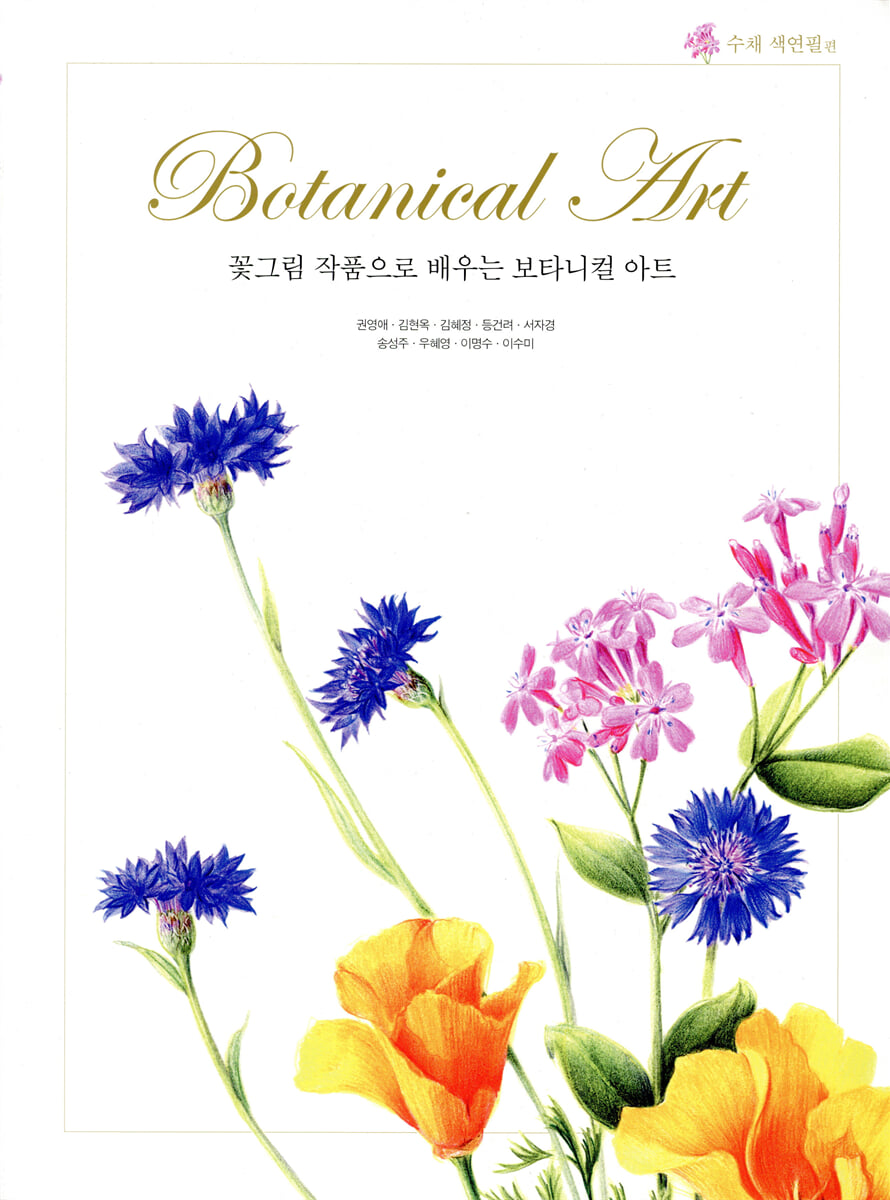
『Learning Botanical Art through Flower Paintings』 is for those who are beginning botanical art and mainly deals with watercolor pencils.
The watercolor pencils, which are mainly covered in this book, allow you to draw with colored pencils and then express the feeling of watercolors with a wet brush.
Because the material is a flower that we can always see close to us and that brings joy to everyone, it makes it so that anyone can have the desire to draw it at least once.
This book contains information on materials, tools, pencil sketching, coloring, flower structure, flower and leaf shapes, and various compositions for drawing flowers, so that those interested in botanical art can draw pictures easily and enjoyably.
『Learning Botanical Art through Flower Paintings』 is for those who are beginning botanical art and mainly deals with watercolor pencils.
The watercolor pencils, which are mainly covered in this book, allow you to draw with colored pencils and then express the feeling of watercolors with a wet brush.
Because the material is a flower that we can always see close to us and that brings joy to everyone, it makes it so that anyone can have the desire to draw it at least once.
This book contains information on materials, tools, pencil sketching, coloring, flower structure, flower and leaf shapes, and various compositions for drawing flowers, so that those interested in botanical art can draw pictures easily and enjoyably.
- You can preview some of the book's contents.
Preview
index
Part 1: Botanical Art Basics
What is botanical art?
Basic Tools
Flower structure
Drawing flowers
Part 2: Botanical Art in Practice
magnolia
Sandersonia
Child's flower
Kara
lily of the valley
lotus flower
Araceae
Golden iris
pansy
Allergy
Yongdam
Cuckoo
morning glory
Iris
pomegranate
Camellia
Cattleya
paprika
Dumebuchu
cyclamen
Eggplant and red onion
fig
hydrangea
blueberries
apologize
lily
Peony
training
Colabi
primrose
walnut
Kudzu
Iris
Shiitake mushrooms
White sugar tree
ground cherry
pine nut
Cornelian cherry
large flower crown
anemone
Rose of Sharon
tulip
apologize
Cattleya
Flower giraffe
Azalea
Bird of Paradise
Objectification
Heliconia
Paulownia tree
Gloriosa
papiopedilum
sitting fan
poppy
Camellia
yucca
artichoke
strawberry
virgin skirt
rose
Hong Ki-rin
bleeding heart
Peony
Lantern flower
Magnolia leaves
What is botanical art?
Basic Tools
Flower structure
Drawing flowers
Part 2: Botanical Art in Practice
magnolia
Sandersonia
Child's flower
Kara
lily of the valley
lotus flower
Araceae
Golden iris
pansy
Allergy
Yongdam
Cuckoo
morning glory
Iris
pomegranate
Camellia
Cattleya
paprika
Dumebuchu
cyclamen
Eggplant and red onion
fig
hydrangea
blueberries
apologize
lily
Peony
training
Colabi
primrose
walnut
Kudzu
Iris
Shiitake mushrooms
White sugar tree
ground cherry
pine nut
Cornelian cherry
large flower crown
anemone
Rose of Sharon
tulip
apologize
Cattleya
Flower giraffe
Azalea
Bird of Paradise
Objectification
Heliconia
Paulownia tree
Gloriosa
papiopedilum
sitting fan
poppy
Camellia
yucca
artichoke
strawberry
virgin skirt
rose
Hong Ki-rin
bleeding heart
Peony
Lantern flower
Magnolia leaves
Detailed image

Into the book
Among the various drawing tools, the pencil, invented hundreds of years ago, is still used today as the most convenient and effective drawing tool.
First of all, pencils are not only a familiar writing tool to everyone, but they can also express a wide range of shades, from the darkest black to light and subtle gray tones.
If you can draw with a pencil, it's not difficult to draw with colored pencils.
The watercolor pencils that will be covered primarily in this book allow you to draw with colored pencils and then express the feel of watercolors with a wet brush.
In fact, watercolor is not an easy tool for beginners to try because it requires dealing with the balance between the brush and water.
As you learn to draw with a pencil, you will gradually gain the courage to express yourself through drawing and learn to draw using various materials.
Moreover, if the material is a flower that we can always see close to us and that brings joy to everyone, then everyone will want to draw it at least once.
Botanical art includes various names such as botanical illustration, plant detailing, and flower drawing.
Botanical art itself uses plants as a subject of aesthetic expression, so scientific precision in plant details is not essential; it only expresses a purely aesthetic connection with the subject.
On the other hand, the primary goal of botanical illustration is scientific precision.
This is because the drawn plant must have detailed and sharp features that distinguish it from other species.
It also includes cross-sections of plants as academic material.
Botanical illustration could be said to have served as a precise photograph of plants before the invention of the camera.
There is little difference between practicing basic lines with colored pencil and pencil.
However, colored pencils can be mixed by layering from light to dark colors.
One thing to keep in mind is that the colored pencil lead should be sharpened as much as possible because it can clump if you mix a lot of colors.
And be careful not to apply too much force to your hands.
If you mix various colors and know a lot about the colors that appear when each color is mixed, it will be of great help when creating actual works.
First of all, pencils are not only a familiar writing tool to everyone, but they can also express a wide range of shades, from the darkest black to light and subtle gray tones.
If you can draw with a pencil, it's not difficult to draw with colored pencils.
The watercolor pencils that will be covered primarily in this book allow you to draw with colored pencils and then express the feel of watercolors with a wet brush.
In fact, watercolor is not an easy tool for beginners to try because it requires dealing with the balance between the brush and water.
As you learn to draw with a pencil, you will gradually gain the courage to express yourself through drawing and learn to draw using various materials.
Moreover, if the material is a flower that we can always see close to us and that brings joy to everyone, then everyone will want to draw it at least once.
Botanical art includes various names such as botanical illustration, plant detailing, and flower drawing.
Botanical art itself uses plants as a subject of aesthetic expression, so scientific precision in plant details is not essential; it only expresses a purely aesthetic connection with the subject.
On the other hand, the primary goal of botanical illustration is scientific precision.
This is because the drawn plant must have detailed and sharp features that distinguish it from other species.
It also includes cross-sections of plants as academic material.
Botanical illustration could be said to have served as a precise photograph of plants before the invention of the camera.
There is little difference between practicing basic lines with colored pencil and pencil.
However, colored pencils can be mixed by layering from light to dark colors.
One thing to keep in mind is that the colored pencil lead should be sharpened as much as possible because it can clump if you mix a lot of colors.
And be careful not to apply too much force to your hands.
If you mix various colors and know a lot about the colors that appear when each color is mixed, it will be of great help when creating actual works.
---In the text
Publisher's Review
This book introduces botanical art, which has recently been receiving much attention.
Botanical art, which has a long history and tradition in the West, is a field originally derived from botany, and is a detailed plant drawing used to collect and examine medicinal herbs and plants.
Therefore, the focus is on accurately describing the characteristics of the plant by precisely observing the details such as the shape and pattern of the leaves, the shape and number of petals, pistils, stamens, sepals, and stems.
This book, planned by the Korean Botanical Artists Association, aims to educate people about botanical art, which had previously relied solely on foreign books, through Korean language and to make Korean artists more widely known. It is aimed at those who are just starting out in botanical art.
Watercolor, which requires handling the balance between brush and water, is not easy for beginners to try, so here we mainly deal with watercolor pencils.
The basic section introduces the basics you need to learn to get started in botanical art, from the tools and methods you need to use when you first start drawing botanicals, the differences in flower structure depending on the species, the shape and arrangement of petals and leaves, essential plant anatomy for drawing botanicals, various methods of composition, sketching techniques, and coloring methods.
This is followed by a practical lesson with beautiful artwork depicting 64 different flowers and plants, detailed cuts, and helpful explanations to help you draw.
Botanical art, which has a long history and tradition in the West, is a field originally derived from botany, and is a detailed plant drawing used to collect and examine medicinal herbs and plants.
Therefore, the focus is on accurately describing the characteristics of the plant by precisely observing the details such as the shape and pattern of the leaves, the shape and number of petals, pistils, stamens, sepals, and stems.
This book, planned by the Korean Botanical Artists Association, aims to educate people about botanical art, which had previously relied solely on foreign books, through Korean language and to make Korean artists more widely known. It is aimed at those who are just starting out in botanical art.
Watercolor, which requires handling the balance between brush and water, is not easy for beginners to try, so here we mainly deal with watercolor pencils.
The basic section introduces the basics you need to learn to get started in botanical art, from the tools and methods you need to use when you first start drawing botanicals, the differences in flower structure depending on the species, the shape and arrangement of petals and leaves, essential plant anatomy for drawing botanicals, various methods of composition, sketching techniques, and coloring methods.
This is followed by a practical lesson with beautiful artwork depicting 64 different flowers and plants, detailed cuts, and helpful explanations to help you draw.
GOODS SPECIFICS
- Date of issue: February 25, 2010
- Page count, weight, size: 184 pages | 1,000g | 210*297*20mm
- ISBN13: 9788940803677
- ISBN10: 8940803671
You may also like
카테고리
korean


korean

![GQ KOREA Mark (Monthly): December [2025]](http://librairie.coreenne.fr/cdn/shop/files/8ef265dbbfbf186523ed75ba7319009d.jpg?v=1765340328&width=3840)


