

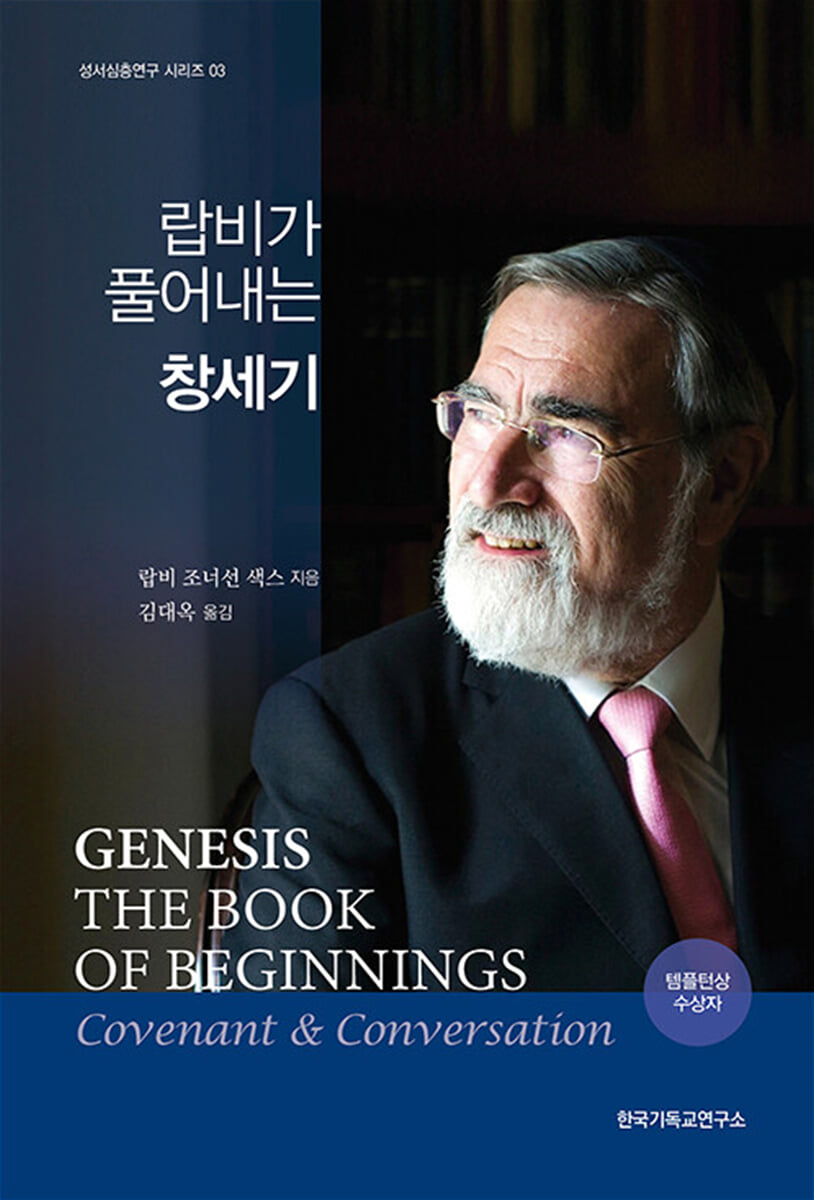
Genesis Unraveled by a Rabbi
 |
Description
Book Introduction
This book is a commentary on Genesis, written especially for the younger generation, by Rabbi Jonathan Sacks, who dedicated his life to studying and teaching the Bible.
It demonstrates the author's remarkable insight and erudition, as well as the rabbinic tradition of meticulous and rich biblical interpretation.
Drawing on the Talmud, Midrash, and many other great commentators of Judaism, we delve deeply into why God's covenant recorded in Genesis is the "first principle" for abundant life and hope for all humanity.
It pursues a fiercely intellectual understanding of the context of the text, connects the past with the present, deeply reflects on human suffering and wounds, and emphasizes faith in the covenant from the perspective of human freedom, creativity, and responsibility.
By presenting the thorough subjectivity of the individual and the path to communal salvation and life, it provides the “meaning of life” that science can never provide.
The author, who emphasizes that Judaism is a “religion of resistance,” helps Protestant churches recover the human dignity and spirit of resistance for peace that they have lost through assimilation into imperialism and capitalism.
It demonstrates the author's remarkable insight and erudition, as well as the rabbinic tradition of meticulous and rich biblical interpretation.
Drawing on the Talmud, Midrash, and many other great commentators of Judaism, we delve deeply into why God's covenant recorded in Genesis is the "first principle" for abundant life and hope for all humanity.
It pursues a fiercely intellectual understanding of the context of the text, connects the past with the present, deeply reflects on human suffering and wounds, and emphasizes faith in the covenant from the perspective of human freedom, creativity, and responsibility.
By presenting the thorough subjectivity of the individual and the path to communal salvation and life, it provides the “meaning of life” that science can never provide.
The author, who emphasizes that Judaism is a “religion of resistance,” helps Protestant churches recover the human dignity and spirit of resistance for peace that they have lost through assimilation into imperialism and capitalism.
index
Publishing the "Bible In-Depth Study Series" / 11
Living with Time: Parasha / 15
Genesis: Introduction / 19
Bereshit (BERESHIT, in the beginning)
Book of Teachings / 31
The Nature of Humanity / 34
The Three Stages of Creation / 39
Violence in the Name of God / 46
Garments of Light / 50
Noah (NOAH, Noah)
Beyond Obedience / 63
Babel: A Tale of Heaven and Earth / 70
Objectivity of Morality / 78
A Drama in Four Acts / 83
LEKH LEKHA (Go Forward)
The Long Journey to Freedom / 91
A New Type of Hero / 98
The Four Dimensions of the Faith Journey / 102
Father and Son / 107
Promise and Fulfillment /113
VAYERA (And He Appeared)
God and Strangers / 125
Challenging God / 131
The Two-faced Jew / 139
A Child's Miracle / 148
Hayei Sarah (The Life of Sarah)
Land and Children / 155
Prayer and Conversation / 161
Parental Authority and Marital Partner Selection /168
On Judaism and Islam / 176
TOLEDOT (genealogy)
Human Cloning and Identity / 183
The Future of the Past / 189
The Courage of Patience / 196
Another Face in / 205
VAYETZEH (And he went out)
Encounter with God / 219
Ladder of Prayer / 225
When "I" am Silent / 231
On Love and Justice / 235
Listening to the Torah / 244
VAYISHLAH (and he sent)
Physical Fear and Moral Anxiety / 257
Face-to-face wrestling / 265
Surviving a Crisis / 278
Jacob's Fate, Israel's Name / 285
VAYESHEV (and he settled down)
Reuben's Tragedy / 295
Rejecting Comfort and Maintaining Hope / 306
Flame and Word / 312
A Tale of Two Women / 318
MIKETZ (at the end)
Man proposes, God decides / 327
Between Freedom and Providence /333
The Universal and the Particular /339
Behind the Mask / 350
VAYIGASH (and he approached)
In Search of Repentance / 359
The Repentant / 370
Does my father love me? /375
Forgiveness / 386
VAYEHI (and he lived)
White Lies / 395
Oblivion and Prosperity / 402
The Future of the Past / 407
Jewish Time / 418
About the Author / 424
Living with Time: Parasha / 15
Genesis: Introduction / 19
Bereshit (BERESHIT, in the beginning)
Book of Teachings / 31
The Nature of Humanity / 34
The Three Stages of Creation / 39
Violence in the Name of God / 46
Garments of Light / 50
Noah (NOAH, Noah)
Beyond Obedience / 63
Babel: A Tale of Heaven and Earth / 70
Objectivity of Morality / 78
A Drama in Four Acts / 83
LEKH LEKHA (Go Forward)
The Long Journey to Freedom / 91
A New Type of Hero / 98
The Four Dimensions of the Faith Journey / 102
Father and Son / 107
Promise and Fulfillment /113
VAYERA (And He Appeared)
God and Strangers / 125
Challenging God / 131
The Two-faced Jew / 139
A Child's Miracle / 148
Hayei Sarah (The Life of Sarah)
Land and Children / 155
Prayer and Conversation / 161
Parental Authority and Marital Partner Selection /168
On Judaism and Islam / 176
TOLEDOT (genealogy)
Human Cloning and Identity / 183
The Future of the Past / 189
The Courage of Patience / 196
Another Face in / 205
VAYETZEH (And he went out)
Encounter with God / 219
Ladder of Prayer / 225
When "I" am Silent / 231
On Love and Justice / 235
Listening to the Torah / 244
VAYISHLAH (and he sent)
Physical Fear and Moral Anxiety / 257
Face-to-face wrestling / 265
Surviving a Crisis / 278
Jacob's Fate, Israel's Name / 285
VAYESHEV (and he settled down)
Reuben's Tragedy / 295
Rejecting Comfort and Maintaining Hope / 306
Flame and Word / 312
A Tale of Two Women / 318
MIKETZ (at the end)
Man proposes, God decides / 327
Between Freedom and Providence /333
The Universal and the Particular /339
Behind the Mask / 350
VAYIGASH (and he approached)
In Search of Repentance / 359
The Repentant / 370
Does my father love me? /375
Forgiveness / 386
VAYEHI (and he lived)
White Lies / 395
Oblivion and Prosperity / 402
The Future of the Past / 407
Jewish Time / 418
About the Author / 424
Into the book
Many traditional commentaries view the Torah through a microscope.
Look at the details and the body fragments separately.
On the other hand, I tried to look at the text through a telescope.
That is, I tried to see the text's place within the larger picture and various concepts of the universe and our place in it that make Judaism so appealing.
--- p.
18
By placing the Genesis story before Exodus, which tells the story of the birth of the Israelites, the Torah implicitly tells us that the personal takes precedence over the political.
The book of Exodus is about great themes: slavery and freedom, miracles and salvation, the deliverance of an entire people from oppression, and an incredible journey across the sea and wilderness.
It is about law, freedom, justice, and the nature of Israel as a people under God's sovereignty.
But by focusing first on individuals and their relationships, Genesis reminds us of the complexities of the human heart that political order alone cannot address.
--- p.
26
The problem is clear.
Adam had just accused his wife of leading him into sin.
He was also sentenced to death.
But why does he turn to her at this very moment and give her a new name? And why does God show kindness to the couple immediately afterward, when they are about to be expelled from Eden? Why does he bestow dignity on the symbol of their sin—the garment that covered their shame?
--- p.
51
Editor's Note: Karen Armstrong says that it was "too late" for God to make a new covenant with Noah after the flood and the near-extinction of humanity, saying, "God's new mercy seems as arbitrary as his anger.
He also points out that “Noah also seems willing to worship a god who has shown such horrifying cruelty.”
“…the 20th century was a long Holocaust.
We have witnessed… too many massacres and genocides.
Believers who rush to defend God here should reflect on the fact that if we defend a God who nearly destroyed all of humanity, it is just as easy to justify earthly rulers who perpetrated similar mass purges.
Genesis does not usually present a smooth and consistent image of God.
…when we reflect on the tragedies that have wreaked havoc on the world, not to mention the atrocities committed by humans, it is difficult to believe that a benevolent God is in charge of the world.
The authors of Genesis do not attempt to deny the theological difficulties inherent in monotheism.
We must not construct a theology so lofty that it dulls our awareness of the horrors and cruelties of life.
Rather, like Jacob, we must accept that we must wrestle painfully in the darkness before we can discern God in such situations.
For example, after the Nazi Holocaust, some Jews concluded that the benevolent, omnipotent, and personified God of classical theism had died in Auschwitz.
But this does not mean that we have given up on the painful pursuit of meaning.
… ” Karen Armstrong, In the Beginning, 45-47.
--- pp.
85-6
If Genesis is taken literally, the universe could have been created in seven days, but anything that involves profound change in the human world takes time.
Biblical dramas are set on a stage called time.
Faith is the ability to live without losing faith in a promise even in the face of delay.
…that was the faith of Abraham and Sarah, of Moses and the prophets and those who followed them.
--- p.
121
Judaism is a continuous discipline that does not take life for granted.
We cherish freedom because we were born slaves.
Because we have always been a small people, we have always known that strength lies not in numbers, but in the faith that breeds courage.
Our ancestors walked through the dark valley of death, so we can never forget the sacredness of life.
--- p.
151
Editor's Note: In 1920, Hitler proposed that Jews be stripped of all their rights as part of the Nazi Party platform.
They made Jews, who made up less than 1% of the German population at the time, into scapegoats for Germany's defeat in World War I.
Not only was there deep-rooted anti-Semitism among Christians, who made up 97% of the German population at the time, but the responsibility for the defeat was shifted to the Jews, as communist revolutionaries such as Leon Trotsky and Rosa Luxemburg were Jewish.
One of the reasons why the majority of the German people gradually agreed with Hitler's propaganda was that many university professors and pastors openly supported Hitler, and so laypeople willingly supported the Nazi Party.
In particular, economically, from 1918 to 1931, the German government's debt repayments, including government bonds issued for the war and war reparations under the Treaty of Versailles, amounted to 38% of the country's total annual income, and the unemployment rate reached 36% after the Great Depression in 1929.
They became enthusiastic about Hitler, who was believed to wash away the shame of the defeated nation through the simple logic and extremism of anti-Semitism.
Historically, the Jews suffered numerous massacres.
But for nearly two decades, until November 1938, when more than 7,000 Jewish businesses and 267 synagogues were destroyed, many Jews said, "No way."
Because I had no idea how vicious the forces of evil could become.
… At that time, there were 350,000 Jews remaining in Germany.
At the time of the invasion of Poland, there were 3.3 million Jews in Poland.
The Nazis murdered an average of 225,000 Jews per month from 1941 to early 1943, and an average of 325,000 per month in 1942-43.
Hitler's hatred of Jews is psychologically very similar to the hatred of fundamentalist Christians toward homosexuals today.
(1) They are very different from us.
(2) They make us very uncomfortable.
(3) They are very dangerous people who destroy families, churches, and society.
(4) We must take steps to make them invisible (doing something).
(5) Taking such extreme measures is the sacred duty of people of faith and patriotism.
See, Peter Hayes, Why? Explaining the Holocaust, W.
W. Norton, 2017; Robert P.
Ericksen, Complicity in the Holocaust: Churches and Universities in Nazi Germany, Cambridge University Press, 2012.
--- pp.
174-5
Translator's Note: All Korean translations of the Bible translate Genesis 27:39 negatively, as "a land where the soil is neither fertile nor dew." The RSV, NRSV, and NIV also translate it negatively.
However, in contrast, the Hebrew Bible (Tanakh) and the KJV translated it in a positive sense as “a place where the land is fertile and where dew falls from heaven.”
--- p.
208
Why did "gift" become "blessing"? Could seeing Esau's face be considered in some way like "seeing the face of God"? And what exactly did Jacob mean when he changed Esau's words, "I have plenty," to "I have everything"? If we can understand these words, perhaps we can also understand the connection between the wrestling match and the encounter that followed.
--- p.
269
It is much easier intellectually and psychologically to think of religion and God as belonging to a completely different dimension, heavenly rather than earthly.
Somewhere other than here, like life after death or the immortal soul, meditative silence or mystical retreat.
So religion can either make us indifferent to the world or reconcile us with it.
That is, either we are indifferent because this is not a place where God is found, or we can be reconciled because in some way human suffering is God's will for us to be rewarded in the world to come.
That's what Karl Marx meant when he wrote his famous words:
“Religion is the sigh of the oppressed creature, the heart of a heartless world, the soul of soulless conditions.
It is the opium of the people (das Opium des Volkes).”
--- p.
289
Judaism is not an escape from the world, but an engagement with it.
Judaism does not anesthetize us from the suffering and blatant injustice of life.
…Judaism calls us to do our part in the most daunting task God has asked of humanity: building relationships, community, and ultimately society to create a home for God’s presence.
And Judaism means wrestling with God and man and not giving up or despairing.
--- p.
291
There are evidences that seem like irreversible losses, an irreversible verdict of history, a fate we must accept.
But the Jews never believed that evidence because they had something else to oppose it.
Because there was an unbreakable faith, trust, and hope that proved more powerful than historical inevitability.
It is no exaggeration to say that the survival of the Jews was maintained by that hope.
And that hope came from a simple, yet not-so-simple phrase in Jacob's life.
He refused to be comforted.
--- p.
311
Another, more heartbreaking topic concerns fathers and sons.
How did Isaac feel when he learned that Abraham had raised the knife to sacrifice him? How did Jacob feel when he learned that Isaac loved Esau more than him? How did Leah's sons feel about Jacob when they learned that he loved Rachel and her children more? Does my father truly love me? These are the questions we feel must have arisen in each of these instances.
Now we see that there is strong reason to assume that Joseph asked himself the same question.
--- p.
384
When men believe that they possess absolute truth, that is, truth as it is in heaven, they wage the most brutal wars.
The crusades and jihad were carried out in the name of truth.
The same was true of the massacres that followed the French Revolution and the atrocities of Stalinist Russia.
--- p.
401
Whether you repent or not, the past is definitely unchangeable.
All of this is true, but it is not the whole truth.
The revolutionary idea behind Joseph and Rakish's words is that there are two conceptions of the past.
The first is what happened, and the second is what it means.
In ancient Israel, a new concept of time was born.
This did more than change Western history.
--- p.
413
Jewish time always faces an open future.
The final chapter has not been written yet.
The Messiah has not yet come.
Until then, the story continues.
And we, along with God, are co-authors of that story.
Look at the details and the body fragments separately.
On the other hand, I tried to look at the text through a telescope.
That is, I tried to see the text's place within the larger picture and various concepts of the universe and our place in it that make Judaism so appealing.
--- p.
18
By placing the Genesis story before Exodus, which tells the story of the birth of the Israelites, the Torah implicitly tells us that the personal takes precedence over the political.
The book of Exodus is about great themes: slavery and freedom, miracles and salvation, the deliverance of an entire people from oppression, and an incredible journey across the sea and wilderness.
It is about law, freedom, justice, and the nature of Israel as a people under God's sovereignty.
But by focusing first on individuals and their relationships, Genesis reminds us of the complexities of the human heart that political order alone cannot address.
--- p.
26
The problem is clear.
Adam had just accused his wife of leading him into sin.
He was also sentenced to death.
But why does he turn to her at this very moment and give her a new name? And why does God show kindness to the couple immediately afterward, when they are about to be expelled from Eden? Why does he bestow dignity on the symbol of their sin—the garment that covered their shame?
--- p.
51
Editor's Note: Karen Armstrong says that it was "too late" for God to make a new covenant with Noah after the flood and the near-extinction of humanity, saying, "God's new mercy seems as arbitrary as his anger.
He also points out that “Noah also seems willing to worship a god who has shown such horrifying cruelty.”
“…the 20th century was a long Holocaust.
We have witnessed… too many massacres and genocides.
Believers who rush to defend God here should reflect on the fact that if we defend a God who nearly destroyed all of humanity, it is just as easy to justify earthly rulers who perpetrated similar mass purges.
Genesis does not usually present a smooth and consistent image of God.
…when we reflect on the tragedies that have wreaked havoc on the world, not to mention the atrocities committed by humans, it is difficult to believe that a benevolent God is in charge of the world.
The authors of Genesis do not attempt to deny the theological difficulties inherent in monotheism.
We must not construct a theology so lofty that it dulls our awareness of the horrors and cruelties of life.
Rather, like Jacob, we must accept that we must wrestle painfully in the darkness before we can discern God in such situations.
For example, after the Nazi Holocaust, some Jews concluded that the benevolent, omnipotent, and personified God of classical theism had died in Auschwitz.
But this does not mean that we have given up on the painful pursuit of meaning.
… ” Karen Armstrong, In the Beginning, 45-47.
--- pp.
85-6
If Genesis is taken literally, the universe could have been created in seven days, but anything that involves profound change in the human world takes time.
Biblical dramas are set on a stage called time.
Faith is the ability to live without losing faith in a promise even in the face of delay.
…that was the faith of Abraham and Sarah, of Moses and the prophets and those who followed them.
--- p.
121
Judaism is a continuous discipline that does not take life for granted.
We cherish freedom because we were born slaves.
Because we have always been a small people, we have always known that strength lies not in numbers, but in the faith that breeds courage.
Our ancestors walked through the dark valley of death, so we can never forget the sacredness of life.
--- p.
151
Editor's Note: In 1920, Hitler proposed that Jews be stripped of all their rights as part of the Nazi Party platform.
They made Jews, who made up less than 1% of the German population at the time, into scapegoats for Germany's defeat in World War I.
Not only was there deep-rooted anti-Semitism among Christians, who made up 97% of the German population at the time, but the responsibility for the defeat was shifted to the Jews, as communist revolutionaries such as Leon Trotsky and Rosa Luxemburg were Jewish.
One of the reasons why the majority of the German people gradually agreed with Hitler's propaganda was that many university professors and pastors openly supported Hitler, and so laypeople willingly supported the Nazi Party.
In particular, economically, from 1918 to 1931, the German government's debt repayments, including government bonds issued for the war and war reparations under the Treaty of Versailles, amounted to 38% of the country's total annual income, and the unemployment rate reached 36% after the Great Depression in 1929.
They became enthusiastic about Hitler, who was believed to wash away the shame of the defeated nation through the simple logic and extremism of anti-Semitism.
Historically, the Jews suffered numerous massacres.
But for nearly two decades, until November 1938, when more than 7,000 Jewish businesses and 267 synagogues were destroyed, many Jews said, "No way."
Because I had no idea how vicious the forces of evil could become.
… At that time, there were 350,000 Jews remaining in Germany.
At the time of the invasion of Poland, there were 3.3 million Jews in Poland.
The Nazis murdered an average of 225,000 Jews per month from 1941 to early 1943, and an average of 325,000 per month in 1942-43.
Hitler's hatred of Jews is psychologically very similar to the hatred of fundamentalist Christians toward homosexuals today.
(1) They are very different from us.
(2) They make us very uncomfortable.
(3) They are very dangerous people who destroy families, churches, and society.
(4) We must take steps to make them invisible (doing something).
(5) Taking such extreme measures is the sacred duty of people of faith and patriotism.
See, Peter Hayes, Why? Explaining the Holocaust, W.
W. Norton, 2017; Robert P.
Ericksen, Complicity in the Holocaust: Churches and Universities in Nazi Germany, Cambridge University Press, 2012.
--- pp.
174-5
Translator's Note: All Korean translations of the Bible translate Genesis 27:39 negatively, as "a land where the soil is neither fertile nor dew." The RSV, NRSV, and NIV also translate it negatively.
However, in contrast, the Hebrew Bible (Tanakh) and the KJV translated it in a positive sense as “a place where the land is fertile and where dew falls from heaven.”
--- p.
208
Why did "gift" become "blessing"? Could seeing Esau's face be considered in some way like "seeing the face of God"? And what exactly did Jacob mean when he changed Esau's words, "I have plenty," to "I have everything"? If we can understand these words, perhaps we can also understand the connection between the wrestling match and the encounter that followed.
--- p.
269
It is much easier intellectually and psychologically to think of religion and God as belonging to a completely different dimension, heavenly rather than earthly.
Somewhere other than here, like life after death or the immortal soul, meditative silence or mystical retreat.
So religion can either make us indifferent to the world or reconcile us with it.
That is, either we are indifferent because this is not a place where God is found, or we can be reconciled because in some way human suffering is God's will for us to be rewarded in the world to come.
That's what Karl Marx meant when he wrote his famous words:
“Religion is the sigh of the oppressed creature, the heart of a heartless world, the soul of soulless conditions.
It is the opium of the people (das Opium des Volkes).”
--- p.
289
Judaism is not an escape from the world, but an engagement with it.
Judaism does not anesthetize us from the suffering and blatant injustice of life.
…Judaism calls us to do our part in the most daunting task God has asked of humanity: building relationships, community, and ultimately society to create a home for God’s presence.
And Judaism means wrestling with God and man and not giving up or despairing.
--- p.
291
There are evidences that seem like irreversible losses, an irreversible verdict of history, a fate we must accept.
But the Jews never believed that evidence because they had something else to oppose it.
Because there was an unbreakable faith, trust, and hope that proved more powerful than historical inevitability.
It is no exaggeration to say that the survival of the Jews was maintained by that hope.
And that hope came from a simple, yet not-so-simple phrase in Jacob's life.
He refused to be comforted.
--- p.
311
Another, more heartbreaking topic concerns fathers and sons.
How did Isaac feel when he learned that Abraham had raised the knife to sacrifice him? How did Jacob feel when he learned that Isaac loved Esau more than him? How did Leah's sons feel about Jacob when they learned that he loved Rachel and her children more? Does my father truly love me? These are the questions we feel must have arisen in each of these instances.
Now we see that there is strong reason to assume that Joseph asked himself the same question.
--- p.
384
When men believe that they possess absolute truth, that is, truth as it is in heaven, they wage the most brutal wars.
The crusades and jihad were carried out in the name of truth.
The same was true of the massacres that followed the French Revolution and the atrocities of Stalinist Russia.
--- p.
401
Whether you repent or not, the past is definitely unchangeable.
All of this is true, but it is not the whole truth.
The revolutionary idea behind Joseph and Rakish's words is that there are two conceptions of the past.
The first is what happened, and the second is what it means.
In ancient Israel, a new concept of time was born.
This did more than change Western history.
--- p.
413
Jewish time always faces an open future.
The final chapter has not been written yet.
The Messiah has not yet come.
Until then, the story continues.
And we, along with God, are co-authors of that story.
--- p.423
Publisher's Review
Questions to Read While Thinking
Why does humanity continue to indulge in consumerism, shirking responsibility, and war, even as climate catastrophe looms?
Why do fundamentalists eagerly anticipate the end of the world and indulge in self-destructive apocalyptic politics?
What is the driving force of philosophy, compassion, and love that can control human infinite desire, technology, power, and hatred?
What is the wisdom of survival and peace in Genesis, based on the constant danger of annihilation and the experience of wandering?
Why does Genesis say that the world was “created by the word” without any violent conflict between the gods?
Why did the other creator gods build temples after struggling with chaos, while God rested?
Why, unlike the events of creation, are individual self-awareness, family reconciliation, and peace painful and time-consuming?
Why is the Bible the word of salvation in an age of scientism, economicism, relativism, cynicism, and fatalism?
Why is the god of absolute power, who suppresses the subjectivity, freedom, creativity, and responsibility of individuals, dead?
Why “Religion without science is blind, and science without religion is lame” (A.
Will it become Einstein?
How does Genesis connect suffering and defeat to eternity, offering a path to hope?
Why are the stories of Adam and Eve, Cain and Abel, Noah's Flood, and the Tower of Babel stages of human maturity?
Why did Adam call the woman “Eve” after being told of her fate and endless labor?
Why is Babel, the first urban civilization in human history, criticized as the birthplace of totalitarianism?
How did the Hebrew Bible offer an alternative to a world that accepted poverty and suffering as its fate?
What are the different characteristics of faith of Abraham, Isaac, Jacob, and Joseph, the fathers of faith?
Why was the “hero of faith” Abraham and not Noah, the “only righteous man” during the time of the Great Flood?
Why did Abraham's departure defy psychological, economic, and genetic determinism?
How did Abraham emerge as an “individual subject” in a world centered on family and groups?
Why was Abraham's departure from Ur, the center of ancient civilization, an anti-imperialist act?
Did Abraham challenge God for Sodom, or did God challenge humanity?
Why did God ask Abraham to sacrifice Isaac, the son of promise he had finally obtained?
Why did Jacob, like Esau, want to become a master in a world where “man is a wolf to man”?
Why was the truth that Jacob wrestled with his entire life “the truth of identity regarding face, name, and blessing”?
Why is Judaism, unlike other religions, negative about “salvation and justice in the afterlife”?
Why did Reuben, despite his high ethical sensibilities, become a hesitant person?
Why did Tamar's bold actions become a model and influence rabbinic thought?
How were the prayers of Abraham, Isaac, and Jacob liturgized into the structure of daily prayer?
Why does the Jewish three-times-a-day prayer consist of three elements, blessings, and prayers?
Why do the differences between Elohim and Hashem, Torah and Chokmah, make Judaism both universal and unique?
Why are the priestly tribe of Levi and the royal tribe of Judah descendants of Leah and not of Rachel?
Why does King David's ancestors include Judah, Tamar, and Ruth, and not Joseph, the prime minister of Egypt?
What steps does Joseph make his brothers go through to ensure that they have fully repented?
Why did Joseph have no contact with his father Jacob even after he became prime minister of Egypt?
Why did Jacob once again bless his second grandson, Ephraim, before his eldest grandson, Manasseh?
Why are sins committed against God atoned for on the Day of Atonement, but sins committed against others not atoned for?
What are the profound structures and messages of these complex stories about sibling rivalry?
What was the first thing the patriarchs chose to do to overcome failure and wounds and gain freedom?
Why do humans who believe they possess the absolute truth of heaven commit the most brutal evil deeds?
What is essential for a weak nation to survive under the oppression and exploitation of powerful nations?
In an age when humanity is an endangered species, what principles should we learn from Genesis?
Why does humanity continue to indulge in consumerism, shirking responsibility, and war, even as climate catastrophe looms?
Why do fundamentalists eagerly anticipate the end of the world and indulge in self-destructive apocalyptic politics?
What is the driving force of philosophy, compassion, and love that can control human infinite desire, technology, power, and hatred?
What is the wisdom of survival and peace in Genesis, based on the constant danger of annihilation and the experience of wandering?
Why does Genesis say that the world was “created by the word” without any violent conflict between the gods?
Why did the other creator gods build temples after struggling with chaos, while God rested?
Why, unlike the events of creation, are individual self-awareness, family reconciliation, and peace painful and time-consuming?
Why is the Bible the word of salvation in an age of scientism, economicism, relativism, cynicism, and fatalism?
Why is the god of absolute power, who suppresses the subjectivity, freedom, creativity, and responsibility of individuals, dead?
Why “Religion without science is blind, and science without religion is lame” (A.
Will it become Einstein?
How does Genesis connect suffering and defeat to eternity, offering a path to hope?
Why are the stories of Adam and Eve, Cain and Abel, Noah's Flood, and the Tower of Babel stages of human maturity?
Why did Adam call the woman “Eve” after being told of her fate and endless labor?
Why is Babel, the first urban civilization in human history, criticized as the birthplace of totalitarianism?
How did the Hebrew Bible offer an alternative to a world that accepted poverty and suffering as its fate?
What are the different characteristics of faith of Abraham, Isaac, Jacob, and Joseph, the fathers of faith?
Why was the “hero of faith” Abraham and not Noah, the “only righteous man” during the time of the Great Flood?
Why did Abraham's departure defy psychological, economic, and genetic determinism?
How did Abraham emerge as an “individual subject” in a world centered on family and groups?
Why was Abraham's departure from Ur, the center of ancient civilization, an anti-imperialist act?
Did Abraham challenge God for Sodom, or did God challenge humanity?
Why did God ask Abraham to sacrifice Isaac, the son of promise he had finally obtained?
Why did Jacob, like Esau, want to become a master in a world where “man is a wolf to man”?
Why was the truth that Jacob wrestled with his entire life “the truth of identity regarding face, name, and blessing”?
Why is Judaism, unlike other religions, negative about “salvation and justice in the afterlife”?
Why did Reuben, despite his high ethical sensibilities, become a hesitant person?
Why did Tamar's bold actions become a model and influence rabbinic thought?
How were the prayers of Abraham, Isaac, and Jacob liturgized into the structure of daily prayer?
Why does the Jewish three-times-a-day prayer consist of three elements, blessings, and prayers?
Why do the differences between Elohim and Hashem, Torah and Chokmah, make Judaism both universal and unique?
Why are the priestly tribe of Levi and the royal tribe of Judah descendants of Leah and not of Rachel?
Why does King David's ancestors include Judah, Tamar, and Ruth, and not Joseph, the prime minister of Egypt?
What steps does Joseph make his brothers go through to ensure that they have fully repented?
Why did Joseph have no contact with his father Jacob even after he became prime minister of Egypt?
Why did Jacob once again bless his second grandson, Ephraim, before his eldest grandson, Manasseh?
Why are sins committed against God atoned for on the Day of Atonement, but sins committed against others not atoned for?
What are the profound structures and messages of these complex stories about sibling rivalry?
What was the first thing the patriarchs chose to do to overcome failure and wounds and gain freedom?
Why do humans who believe they possess the absolute truth of heaven commit the most brutal evil deeds?
What is essential for a weak nation to survive under the oppression and exploitation of powerful nations?
In an age when humanity is an endangered species, what principles should we learn from Genesis?
GOODS SPECIFICS
- Date of issue: August 21, 2023
- Page count, weight, size: 424 pages | 152*224*30mm
- ISBN13: 9791198196262
- ISBN10: 1198196262
You may also like
카테고리
korean


korean

![GQ KOREA Mark (Monthly): December [2025]](http://librairie.coreenne.fr/cdn/shop/files/8ef265dbbfbf186523ed75ba7319009d.jpg?v=1765340328&width=3840)


