

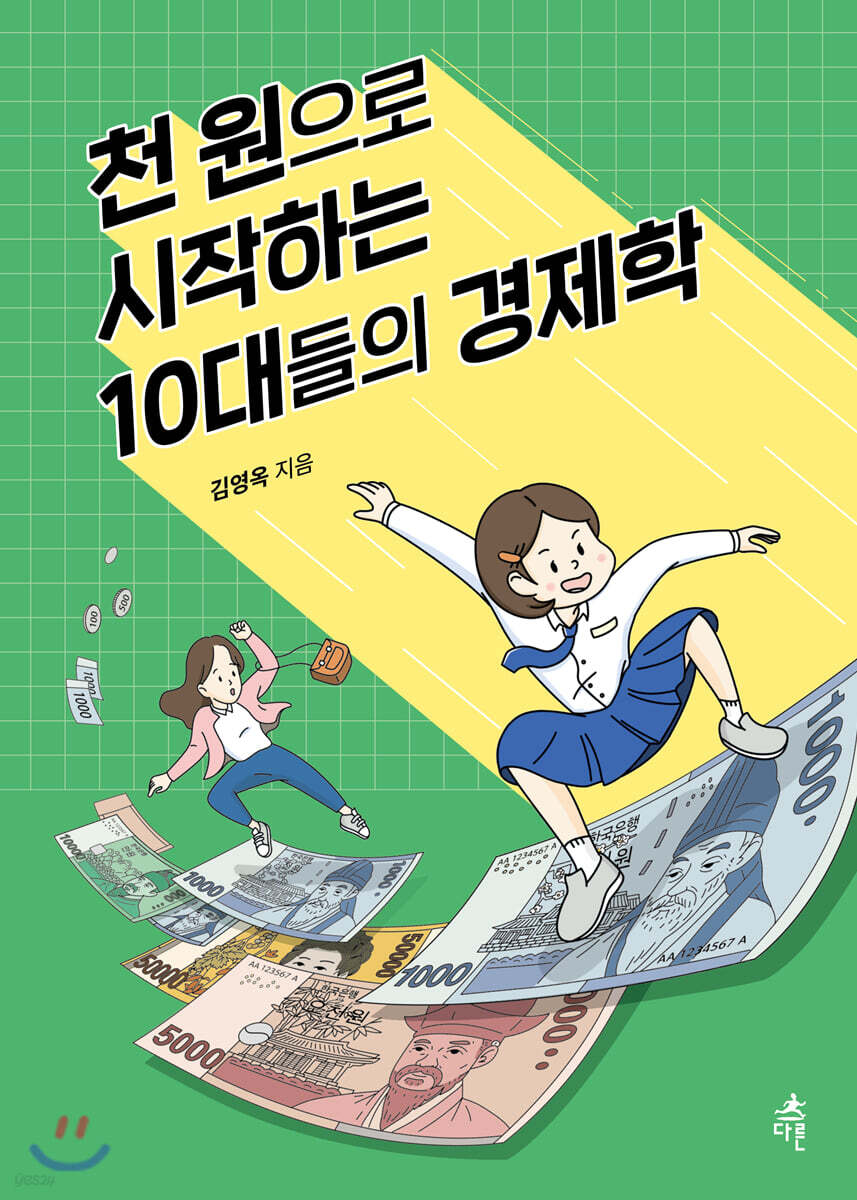
Economics for Teenagers: Starting with a Thousand Won
 |
Description
Book Introduction
Start studying economics with a thousand won?
A very easy financial story between middle school student Yubin and her mother.
Learning the Economics of Allowance Through Key Concepts in Economics Textbooks
Is economics difficult? Easy? Few students would confidently answer "easy!"
The author of this book, expert lecturer Kim Young-ok, discovered that children have a "dual attitude" toward the economy while conducting special economics lectures at elementary, middle, and high schools across the country.
The rich dream, but they hate to study economics.
When 286 middle school students were surveyed about what they wanted to know about the economy, most of them were interested in things related to money, such as how to become rich, part-time jobs, and salary, and were passive when it came to knowing economic concepts and common sense.
Responses were things like, “I’m still a student, do I need to know about economics?” and “I’m not going to major in economics in college later.”
However, the author explains that economics is the most practical knowledge.
"Economics for Teenagers: Starting with a Thousand Won" focuses on the "small allowances" that children encounter in everyday life, for the sake of children who find economics difficult and avoid it.
It combines interesting stories and economic concepts for each amount, such as 1,000 won, 5,000 won, 10,000 won, and 50,000 won.
As the amount of money increases, the scope of concepts covered also expands, so you can naturally draw the big picture of economics.
A very easy financial story between middle school student Yubin and her mother.
Learning the Economics of Allowance Through Key Concepts in Economics Textbooks
Is economics difficult? Easy? Few students would confidently answer "easy!"
The author of this book, expert lecturer Kim Young-ok, discovered that children have a "dual attitude" toward the economy while conducting special economics lectures at elementary, middle, and high schools across the country.
The rich dream, but they hate to study economics.
When 286 middle school students were surveyed about what they wanted to know about the economy, most of them were interested in things related to money, such as how to become rich, part-time jobs, and salary, and were passive when it came to knowing economic concepts and common sense.
Responses were things like, “I’m still a student, do I need to know about economics?” and “I’m not going to major in economics in college later.”
However, the author explains that economics is the most practical knowledge.
"Economics for Teenagers: Starting with a Thousand Won" focuses on the "small allowances" that children encounter in everyday life, for the sake of children who find economics difficult and avoid it.
It combines interesting stories and economic concepts for each amount, such as 1,000 won, 5,000 won, 10,000 won, and 50,000 won.
As the amount of money increases, the scope of concepts covered also expands, so you can naturally draw the big picture of economics.
- You can preview some of the book's contents.
Preview
index
Entering_To you who wants to be rich but has financial difficulties
Introduction of the main characters_Yubin & Mom
Chapter 1.
Banana milk is the economy!
: Supply and Demand in a Thousand Won Per Day
Demand, I want to buy banana milk! | Price elasticity of demand | Supply, I want to sell banana milk! | Price elasticity of supply | Who sets the price of banana milk? | Where supply and demand intersect | What is the difference between quantity demanded and quantity demanded? | How much is my allowance worth?
Teens' Whispering Talk About Allowances_The supply of allowances has increased!
Chapter 2.
Mom, my allowance is too little!
: Consumption and Marginal Utility with 5,000 Won
How to Be a Wise Consumer | Why Do We Spend Money? | Why Do Companies Continue to Build Products? | The Diderot Effect That Shakes Me Up | The Law of Diminishing Marginal Utility
Teens' Whispering Allowance Talk - Delivery Man! Come Quick!
Chapter 3.
Are interest rates talking about gold teeth?
: The value of money and compound interest as seen in 10,000 won
The Difference Between Simple and Compound Interest | The Scary Story of Interest | Money You Get Today and Money You Get Tomorrow
Teenagers' Whispering Talk About Allowance - How often do you get your allowance?
Chapter 4.
The Jjajangmyeon of the past and the Jjajangmyeon of today are different!
: Understanding prices and inflation with 20,000 won
The Relationship Between Prices and Money | How to Know if Prices Are Up or Down | Where Does Our Country Rank in Prices? | Inflation: Is More Money Always Good? | Deflation: How Long Will It Last?
Teens' Whispering Allowance Talk: Please Create a School Bag Price Index
Chapter 5.
Dear Uncle, why is there New Year's money this year?
: Unemployment and the economy in 50,000 won
Why does unemployment occur? | The link between unemployment and inflation | GDP: Tell us how much it has grown.
Teens' Whispering Allowance Talk: The Bungeoppang Man Falls into a Purple Sea
Chapter 6.
The beginning of your journey is exchanging money!
: Exchange rates and international transactions with 100,000 won
The world of daily fluctuating exchange rates | Our behavior changes according to exchange rates | Why is the dollar always the standard? | Who determines exchange rates? | What is Korea's exchange rate system?
Teenager's Whispering Money Talk: I'm Going to the US by Exchanging Money Alone
Chapter 7.
How much are idol concert tickets?
: Opportunity Cost and Economic Choices with 150,000 Won
Why are concert tickets so expensive? | Why do economic problems arise? | Why does opportunity cost matter?
Teens' Whispering Money Talk: I Want to Go to an Idol Concert Too
Chapter 8.
I think I want to buy something!
: Savings and credit cards for 300,000 won
How did con-finance come into being? | Deposit and loan product overview | Interest payment methods for deposits and savings | My smart card life
Teens' Whispering Money Talk: Building a Snowman with Pocket Money
Chapter 9.
Ten thousand won becomes 500 thousand won?
: Insurance and Investments for 500,000 Won
Why do we need insurance? | Stocks: A snapshot of economic trends | Bonds: Lending money to companies | Are stocks only for adults?
Teens' Whispering Money Talk - Funding with One Plus One
Chapter 10.
Making money with cryptocurrency?
: The world of cryptocurrency, as seen from a 1 million won perspective.
A Cashless Society is Coming | A New Currency Will Change the Future | For a New Financial Life
Teens' Whispering Money Talk - Can Grandma Have an Electronic Wallet Too?
Going Out_How Much Am I Worth?
Appendix: Asking 286 Middle School Students About Money
References
Curriculum linkage
Introduction of the main characters_Yubin & Mom
Chapter 1.
Banana milk is the economy!
: Supply and Demand in a Thousand Won Per Day
Demand, I want to buy banana milk! | Price elasticity of demand | Supply, I want to sell banana milk! | Price elasticity of supply | Who sets the price of banana milk? | Where supply and demand intersect | What is the difference between quantity demanded and quantity demanded? | How much is my allowance worth?
Teens' Whispering Talk About Allowances_The supply of allowances has increased!
Chapter 2.
Mom, my allowance is too little!
: Consumption and Marginal Utility with 5,000 Won
How to Be a Wise Consumer | Why Do We Spend Money? | Why Do Companies Continue to Build Products? | The Diderot Effect That Shakes Me Up | The Law of Diminishing Marginal Utility
Teens' Whispering Allowance Talk - Delivery Man! Come Quick!
Chapter 3.
Are interest rates talking about gold teeth?
: The value of money and compound interest as seen in 10,000 won
The Difference Between Simple and Compound Interest | The Scary Story of Interest | Money You Get Today and Money You Get Tomorrow
Teenagers' Whispering Talk About Allowance - How often do you get your allowance?
Chapter 4.
The Jjajangmyeon of the past and the Jjajangmyeon of today are different!
: Understanding prices and inflation with 20,000 won
The Relationship Between Prices and Money | How to Know if Prices Are Up or Down | Where Does Our Country Rank in Prices? | Inflation: Is More Money Always Good? | Deflation: How Long Will It Last?
Teens' Whispering Allowance Talk: Please Create a School Bag Price Index
Chapter 5.
Dear Uncle, why is there New Year's money this year?
: Unemployment and the economy in 50,000 won
Why does unemployment occur? | The link between unemployment and inflation | GDP: Tell us how much it has grown.
Teens' Whispering Allowance Talk: The Bungeoppang Man Falls into a Purple Sea
Chapter 6.
The beginning of your journey is exchanging money!
: Exchange rates and international transactions with 100,000 won
The world of daily fluctuating exchange rates | Our behavior changes according to exchange rates | Why is the dollar always the standard? | Who determines exchange rates? | What is Korea's exchange rate system?
Teenager's Whispering Money Talk: I'm Going to the US by Exchanging Money Alone
Chapter 7.
How much are idol concert tickets?
: Opportunity Cost and Economic Choices with 150,000 Won
Why are concert tickets so expensive? | Why do economic problems arise? | Why does opportunity cost matter?
Teens' Whispering Money Talk: I Want to Go to an Idol Concert Too
Chapter 8.
I think I want to buy something!
: Savings and credit cards for 300,000 won
How did con-finance come into being? | Deposit and loan product overview | Interest payment methods for deposits and savings | My smart card life
Teens' Whispering Money Talk: Building a Snowman with Pocket Money
Chapter 9.
Ten thousand won becomes 500 thousand won?
: Insurance and Investments for 500,000 Won
Why do we need insurance? | Stocks: A snapshot of economic trends | Bonds: Lending money to companies | Are stocks only for adults?
Teens' Whispering Money Talk - Funding with One Plus One
Chapter 10.
Making money with cryptocurrency?
: The world of cryptocurrency, as seen from a 1 million won perspective.
A Cashless Society is Coming | A New Currency Will Change the Future | For a New Financial Life
Teens' Whispering Money Talk - Can Grandma Have an Electronic Wallet Too?
Going Out_How Much Am I Worth?
Appendix: Asking 286 Middle School Students About Money
References
Curriculum linkage
Into the book
Actually, we started studying economics in elementary school.
In particular, we learn about scarcity and opportunity cost in the unit 'Production and Exchange of Necessary Things' in the second semester of the fourth grade social studies course.
In fact, if you go to class at an elementary school, everyone has bright eyes and answers well.
Even up to the 6th grade, I easily remember the concepts I learned.
But, strangely enough, when you go to middle school and ask students about scarcity and opportunity cost, not many of them can answer.
I learned it in the 4th grade of elementary school, but when I ask if they remember, only one or two people raise their hands like beans in a drought.
It seems that many students think that economic common sense is not necessary right now.
In fact, it is knowledge that is absolutely necessary in life.
--- p.6
What concepts were students interested in? According to the survey, they expressed interest in interest, how to become rich, stocks, credit and check cards, part-time jobs, and Bitcoin.
The first thing I wanted to know was how to make a lot of money.
But there was less interest in other economic terms.
I thought words like supply and demand, inflation, compound interest, and simple interest only appeared on tests and were difficult to understand.
I'm curious about things related to money, but I don't want to study economics.
--- p.9
Economics may seem daunting, but it actually allows us to think about many things that happen in our daily lives through economics.
The same thing happened when Yubin bought banana milk at a convenience store.
In economics, the desire to buy something, like Yubin's, is called demand.
A person who wants to buy something is called a demander.
If the desire to buy banana milk is a demand, then Yubin, who wants to buy banana milk, can be called a demander.
--- p.18~19
Now that we've covered demand, let's look at its counterpart, supply. If we understand demand from the perspective of consumers who buy goods, we should understand supply from the perspective of sellers who produce and sell goods.
The banana milk company needs to make money by selling banana milk.
Trying to sell something like this is called supply.
A company that makes and sells banana milk is called a supplier.
A banana milk company would want to sell its milk at a fair price, right? They also consider the costs of producing the milk and the profit they hope to make.
Companies that manufacture goods have specific prices and quantities for how much profit they can make if they sell this much at this price.
In other words, supply is the specific quantity that suppliers are willing to sell at a particular price.
--- p.23
"mom.
“I would like to receive an allowance once a month starting this week.”
Mom asked back, wondering what was going on with the sudden suggestion.
“Why did you suddenly think of that?”
Yubin couldn't bring herself to tell the real reason.
“That’s true.
You know the saying, "Three times three times three times," right? We learned about interest in school today, and in economics, they say that "Three times three times three times three times" is more rational than "Three times three times three times three times."
I also think that if I’m going to receive the money anyway, it’s more economical to receive it in advance.”
“Our Yubin thought about all those things.
But what if I spend all my monthly allowance in one go? Then I'll have a hard time getting by for the rest of the year...
“Think again about which is more economical.”
'Oh my! That could be possible.'
Yubin's head became complicated again after hearing her mother's words.
“Which is more economical?”
After much thought, I came to a conclusion.
Rather than deciding whether to receive your allowance once a week or once a month, it's more economical to think about how to receive more.
In particular, we learn about scarcity and opportunity cost in the unit 'Production and Exchange of Necessary Things' in the second semester of the fourth grade social studies course.
In fact, if you go to class at an elementary school, everyone has bright eyes and answers well.
Even up to the 6th grade, I easily remember the concepts I learned.
But, strangely enough, when you go to middle school and ask students about scarcity and opportunity cost, not many of them can answer.
I learned it in the 4th grade of elementary school, but when I ask if they remember, only one or two people raise their hands like beans in a drought.
It seems that many students think that economic common sense is not necessary right now.
In fact, it is knowledge that is absolutely necessary in life.
--- p.6
What concepts were students interested in? According to the survey, they expressed interest in interest, how to become rich, stocks, credit and check cards, part-time jobs, and Bitcoin.
The first thing I wanted to know was how to make a lot of money.
But there was less interest in other economic terms.
I thought words like supply and demand, inflation, compound interest, and simple interest only appeared on tests and were difficult to understand.
I'm curious about things related to money, but I don't want to study economics.
--- p.9
Economics may seem daunting, but it actually allows us to think about many things that happen in our daily lives through economics.
The same thing happened when Yubin bought banana milk at a convenience store.
In economics, the desire to buy something, like Yubin's, is called demand.
A person who wants to buy something is called a demander.
If the desire to buy banana milk is a demand, then Yubin, who wants to buy banana milk, can be called a demander.
--- p.18~19
Now that we've covered demand, let's look at its counterpart, supply. If we understand demand from the perspective of consumers who buy goods, we should understand supply from the perspective of sellers who produce and sell goods.
The banana milk company needs to make money by selling banana milk.
Trying to sell something like this is called supply.
A company that makes and sells banana milk is called a supplier.
A banana milk company would want to sell its milk at a fair price, right? They also consider the costs of producing the milk and the profit they hope to make.
Companies that manufacture goods have specific prices and quantities for how much profit they can make if they sell this much at this price.
In other words, supply is the specific quantity that suppliers are willing to sell at a particular price.
--- p.23
"mom.
“I would like to receive an allowance once a month starting this week.”
Mom asked back, wondering what was going on with the sudden suggestion.
“Why did you suddenly think of that?”
Yubin couldn't bring herself to tell the real reason.
“That’s true.
You know the saying, "Three times three times three times," right? We learned about interest in school today, and in economics, they say that "Three times three times three times three times" is more rational than "Three times three times three times three times."
I also think that if I’m going to receive the money anyway, it’s more economical to receive it in advance.”
“Our Yubin thought about all those things.
But what if I spend all my monthly allowance in one go? Then I'll have a hard time getting by for the rest of the year...
“Think again about which is more economical.”
'Oh my! That could be possible.'
Yubin's head became complicated again after hearing her mother's words.
“Which is more economical?”
After much thought, I came to a conclusion.
Rather than deciding whether to receive your allowance once a week or once a month, it's more economical to think about how to receive more.
--- p.79
Publisher's Review
I want to be rich
The economy is difficult for children,
Discover the fun economy in everyday life
Is economics difficult? Easy? Few students would confidently answer "easy!"
The author of this book, expert lecturer Kim Young-ok, discovered that children have a "dual attitude" toward the economy while conducting special economics lectures at elementary, middle, and high schools across the country.
The rich dream, but they hate to study economics.
When 286 middle school students were surveyed about what they wanted to know about the economy, most of them were interested in things related to money, such as how to become rich, part-time jobs, and salary, and were passive when it came to knowing economic concepts and common sense.
Responses were things like, “I’m still a student, do I need to know about economics?” and “I’m not going to major in economics in college later.”
However, the author explains that economics is the most practical knowledge.
"Economics for Teenagers: Starting with a Thousand Won" focuses on the "small allowances" that children encounter in everyday life, for the sake of children who find economics difficult and avoid it.
It combines interesting stories and economic concepts for each amount, such as 1,000 won, 5,000 won, 10,000 won, and 50,000 won.
As the amount of money increases, the scope of concepts covered also expands, so you can naturally draw the big picture of economics.
“Mom, is this also economics?”
An economic journey that follows Yubin's concerns.
The main characters of this book are Yubin, who has just started middle school, and her mother.
When Yubin became a middle school student, she had new worries.
Unlike when I was in elementary school, now that I am managing my own allowance, there are many more things to consider.
To Yubin, her mother explains the core concepts of economics by linking them to her worries.
Yubin learns about supply and demand while drinking a 1,000 won banana milk, and thinks about the principle of interest while looking at a bank banner on her way home from school.
The goal is not simply to impart knowledge.
The cute episode of Yubin, who is disappointed by her online shopping mistake and secretly calculates how much money she will receive for New Year's, also teaches her to have a proper attitude toward money.
We also did not miss out on financial common sense, such as the concepts of savings and deposits, and the basics of insurance and stocks.
“Interest rate? Are you talking about gold teeth?”
100% Realistic Introduction to Economics
This book is written for beginners who are new to economics.
The book is filled with real-life stories of students the author met at school.
It's like an episode where a student in class mistakenly thought interest was gold and asked if it was gold.
Above all, we have been faithful to basic and easy explanations so that even beginner readers can understand them.
The author is a financial expert who has taught economics education more than 100 times a year in schools for over 10 years, and is also the mother of two daughters.
Thanks to this, the author was able to build rapport with young people using vocabulary that was easy for them to understand.
By following the honest and cheerful stories of peers, you will become familiar with the economy and realize its necessity.
The economy is difficult for children,
Discover the fun economy in everyday life
Is economics difficult? Easy? Few students would confidently answer "easy!"
The author of this book, expert lecturer Kim Young-ok, discovered that children have a "dual attitude" toward the economy while conducting special economics lectures at elementary, middle, and high schools across the country.
The rich dream, but they hate to study economics.
When 286 middle school students were surveyed about what they wanted to know about the economy, most of them were interested in things related to money, such as how to become rich, part-time jobs, and salary, and were passive when it came to knowing economic concepts and common sense.
Responses were things like, “I’m still a student, do I need to know about economics?” and “I’m not going to major in economics in college later.”
However, the author explains that economics is the most practical knowledge.
"Economics for Teenagers: Starting with a Thousand Won" focuses on the "small allowances" that children encounter in everyday life, for the sake of children who find economics difficult and avoid it.
It combines interesting stories and economic concepts for each amount, such as 1,000 won, 5,000 won, 10,000 won, and 50,000 won.
As the amount of money increases, the scope of concepts covered also expands, so you can naturally draw the big picture of economics.
“Mom, is this also economics?”
An economic journey that follows Yubin's concerns.
The main characters of this book are Yubin, who has just started middle school, and her mother.
When Yubin became a middle school student, she had new worries.
Unlike when I was in elementary school, now that I am managing my own allowance, there are many more things to consider.
To Yubin, her mother explains the core concepts of economics by linking them to her worries.
Yubin learns about supply and demand while drinking a 1,000 won banana milk, and thinks about the principle of interest while looking at a bank banner on her way home from school.
The goal is not simply to impart knowledge.
The cute episode of Yubin, who is disappointed by her online shopping mistake and secretly calculates how much money she will receive for New Year's, also teaches her to have a proper attitude toward money.
We also did not miss out on financial common sense, such as the concepts of savings and deposits, and the basics of insurance and stocks.
“Interest rate? Are you talking about gold teeth?”
100% Realistic Introduction to Economics
This book is written for beginners who are new to economics.
The book is filled with real-life stories of students the author met at school.
It's like an episode where a student in class mistakenly thought interest was gold and asked if it was gold.
Above all, we have been faithful to basic and easy explanations so that even beginner readers can understand them.
The author is a financial expert who has taught economics education more than 100 times a year in schools for over 10 years, and is also the mother of two daughters.
Thanks to this, the author was able to build rapport with young people using vocabulary that was easy for them to understand.
By following the honest and cheerful stories of peers, you will become familiar with the economy and realize its necessity.
GOODS SPECIFICS
- Date of issue: September 30, 2020
- Page count, weight, size: 224 pages | 366g | 150*210*15mm
- ISBN13: 9791156333005
- ISBN10: 1156333008
You may also like
카테고리
korean


korean

![GQ KOREA Mark (Monthly): December [2025]](http://librairie.coreenne.fr/cdn/shop/files/8ef265dbbfbf186523ed75ba7319009d.jpg?v=1765340328&width=3840)


