

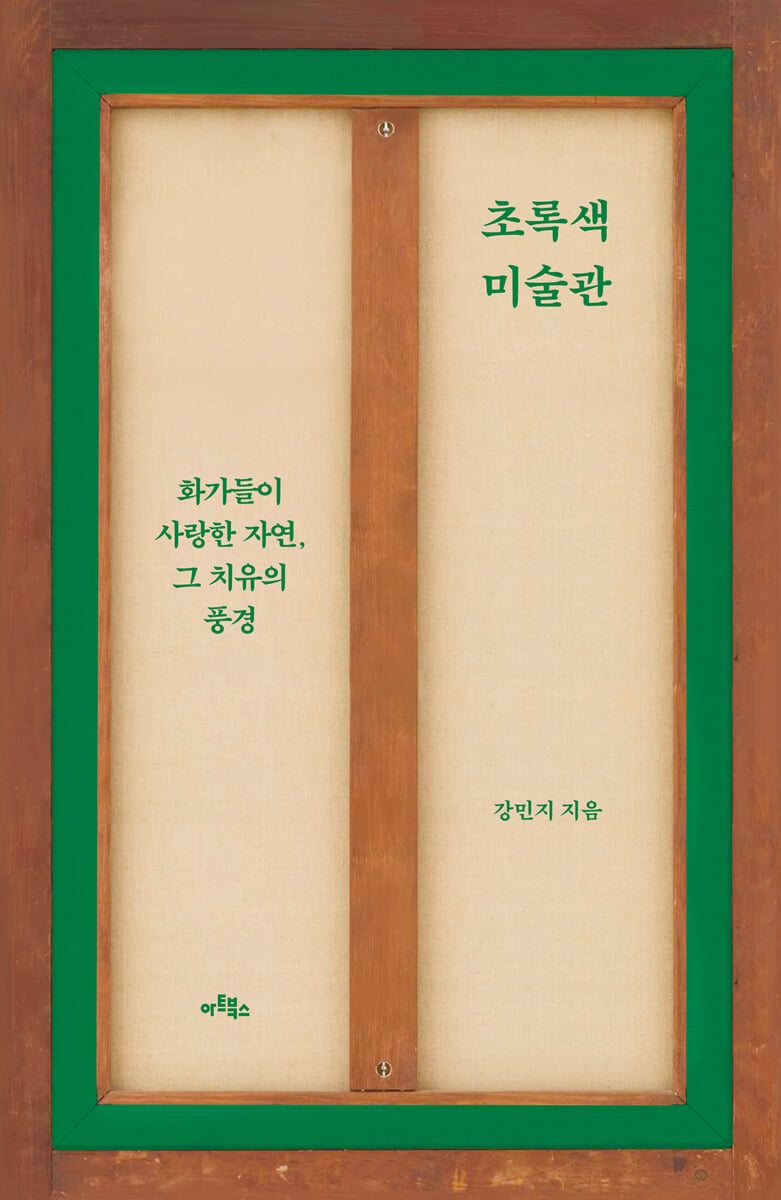
Green Art Museum
 |
Description
Book Introduction
The most refreshing comfort to weary modern people
Green art drawn by painters
Following 『Blue Museum』, which explored the lives of artists and the essence of art through blue paintings, 『Green Museum』, an art essay that delivers deep empathy and fundamental comfort to modern people tired of the complex and arduous daily life, has been published.
According to the 'Biophilia' theory advocated by Harvard University biologist Professor Edward Wilson, humans gain emotional stability through an instinctive connection with nature.
Hippocrates, the 'father of medicine', preached the belief that "nature heals the sick", and Goethe, a master of German literature, also emphasized in his 'Theory of Colors' that green is a color that calms the mind and advised people to always keep green close.
"Green Museum" is a book that delicately unravels the artistic journeys of fifteen painters active between the 16th and 20th centuries, focusing on green, the color closest to life, while paying attention to this instinctive human longing.
The green that bloomed from the tips of the painters' brushes sometimes led the hearts of the viewers with the power of comfort and healing, sometimes with a quiet rest, and sometimes with the light of hope that allowed them to start life again.
And here, as we open the bookshelf imbued with green art, we will regain the sense of peace and life we had forgotten in a feast of green that brightens our eyes.
Green art drawn by painters
Following 『Blue Museum』, which explored the lives of artists and the essence of art through blue paintings, 『Green Museum』, an art essay that delivers deep empathy and fundamental comfort to modern people tired of the complex and arduous daily life, has been published.
According to the 'Biophilia' theory advocated by Harvard University biologist Professor Edward Wilson, humans gain emotional stability through an instinctive connection with nature.
Hippocrates, the 'father of medicine', preached the belief that "nature heals the sick", and Goethe, a master of German literature, also emphasized in his 'Theory of Colors' that green is a color that calms the mind and advised people to always keep green close.
"Green Museum" is a book that delicately unravels the artistic journeys of fifteen painters active between the 16th and 20th centuries, focusing on green, the color closest to life, while paying attention to this instinctive human longing.
The green that bloomed from the tips of the painters' brushes sometimes led the hearts of the viewers with the power of comfort and healing, sometimes with a quiet rest, and sometimes with the light of hope that allowed them to start life again.
And here, as we open the bookshelf imbued with green art, we will regain the sense of peace and life we had forgotten in a feast of green that brightens our eyes.
- You can preview some of the book's contents.
Preview
index
prolog
When life needs a break, look at the color green.
1.
Painters who became Forest Green exemplars
A Generous Heart, Willing to Accept Anything_Camille Pissarro, "A Sunny Morning at Erany"
The only object of comparison is oneself. Henri Rousseau, "Promenade in the Parc Saint-Cloud"
A Masterful Encounter of Sensibility and Reason_Georges Seurat, "A Sunday Afternoon on the Island of La Grande Jatte"
Overcoming Suffering and Wounds with Grace and Wisdom_Gabriele Münter, "Elmau, Fresh Snow Falling in October"
2.
Emerald Green: Painters who moved forward with firm determination
Breaking free from convention and exploring the new_Jean-Honoré Fragonard, "The Swing"
Persistence, the power to endure_Paul Cézanne, "Mont Sainte-Victoire at Laubes"
The Joy of Enduring Art_John Singer Sargent, "Carnations, Lilies, Lilies, Roses"
Gustav Klimt, the painter of light and fascination, "Litzlberg on Lake Attersee"
3.
Lime Green: Painters Who Delivered a New Message
Portrait of a Strange Idea_Giuseppe Arcimboldo, "Vertumnus"
The Sublime Beauty and Spirit of Mother Nature_Caspar David Friedrich, "Landscape with a Mountain Lake and Morning"
The Mysterious Emotions Created by Natural and Artificial Light_John Atkinson Grimshaw, "Southwark Bridge and St. Paul's"
Coloring the World with a Green Feast_Thomas Wilmer Dewing, "Root"
4.
Sage Green: Painters who conveyed warm hearts
Born to spread laughter and happiness, the painter Carl Spitzweg, "Arrival at Seeshaupt"
Warm Heart and Character_Gustave Caillebotte, "The Uphill Road"
A Fairytale World Unfolding on Canvas_Anna Mary Robertson Moses, "Happy Days"
When life needs a break, look at the color green.
1.
Painters who became Forest Green exemplars
A Generous Heart, Willing to Accept Anything_Camille Pissarro, "A Sunny Morning at Erany"
The only object of comparison is oneself. Henri Rousseau, "Promenade in the Parc Saint-Cloud"
A Masterful Encounter of Sensibility and Reason_Georges Seurat, "A Sunday Afternoon on the Island of La Grande Jatte"
Overcoming Suffering and Wounds with Grace and Wisdom_Gabriele Münter, "Elmau, Fresh Snow Falling in October"
2.
Emerald Green: Painters who moved forward with firm determination
Breaking free from convention and exploring the new_Jean-Honoré Fragonard, "The Swing"
Persistence, the power to endure_Paul Cézanne, "Mont Sainte-Victoire at Laubes"
The Joy of Enduring Art_John Singer Sargent, "Carnations, Lilies, Lilies, Roses"
Gustav Klimt, the painter of light and fascination, "Litzlberg on Lake Attersee"
3.
Lime Green: Painters Who Delivered a New Message
Portrait of a Strange Idea_Giuseppe Arcimboldo, "Vertumnus"
The Sublime Beauty and Spirit of Mother Nature_Caspar David Friedrich, "Landscape with a Mountain Lake and Morning"
The Mysterious Emotions Created by Natural and Artificial Light_John Atkinson Grimshaw, "Southwark Bridge and St. Paul's"
Coloring the World with a Green Feast_Thomas Wilmer Dewing, "Root"
4.
Sage Green: Painters who conveyed warm hearts
Born to spread laughter and happiness, the painter Carl Spitzweg, "Arrival at Seeshaupt"
Warm Heart and Character_Gustave Caillebotte, "The Uphill Road"
A Fairytale World Unfolding on Canvas_Anna Mary Robertson Moses, "Happy Days"
Detailed image

Into the book
Nature, full of green and the fresh scent of green, certainly provides energy to our tired days and gives us vitality.
Many people take for granted the formula ‘nature = green’.
Green is reminiscent of nature, and at the same time, it carries a lot of positive meanings that will make you feel good just by hearing it, such as life, plants, rest, abundance, energy, peace, hope, luck, play, youth, and the beginning of love. --- p.6
Painters have found it particularly difficult to portray green beautifully on canvas compared to other colors.
So the challenge of creating a vibrant green paint that would not change and would last a long time was a real challenge for painters.
They developed a pigment by mixing various plants such as turmeric, aloe, and saffron into copper, and worked hard to create a satisfactory green color.
It was not until the late 19th century, with the development of the chemical dye industry, that painters were able to accurately express the color green on canvas, and from then on, they could freely sing of nature on their own stage, the canvas. --- p.7
In 19th century Paris, France, there was a painter who seemed to embody the spirit of Taoism in art.
He is one
He did not stay still, but constantly experimented with new painting techniques and brought about changes in his works.
But the theme was always fresh and lively 'nature'.
He also had a gentle and considerate personality, which warmly embraced his fellow painters, and many painters followed him with respect and affection.
That's why he was called the 'father of impressionism'. --- p.15
The life of the painter Pissarro was far from this stability.
Pissarro was always active in trying progressive painting methods in response to learning and social changes, and was inspired by Corot, Cézanne, and Seurat in turn, and continued to change his painting style.
Accordingly, it is difficult to single out his representative artistic tendencies.
But even amidst the changes in his style, Pissarro's paintings always contained a warm sensibility, just like his personality. --- p.33
"The Promenade in the Parc de Saint-Cloud" is a work that conveys the confidence and experience of Rousseau as a painter who dominated the Parisian art world of the Belle Époque, a period that shone dazzlingly like diamonds, around 1908.
Rousseau expressed the grandeur of nature, a lifelong artistic motif he cherished so much, through a giant street tree, creating a magnificent and elegant scene.
The six figures leisurely crossing the magnificent tree-lined street are drawn very small considering the size of the trees.
Thanks to this, a cute and adorable feeling is conveyed. --- p.50
Although a founding member of the Blue Riders and a painter of exceptional ability, Münter was relegated to the shadows of male painters because she was a woman.
However, a change in status could be felt at the Blue Rider retrospective held in Munich in 1949, and he began to be re-evaluated when he participated as a German representative at the Venice Biennale held in 1950. --- p.89
Painted in 1887, "Mont Sainte-Victoire with a Tall Pine Tree" is so distinct that all objects are clearly recognizable, including the pine tree in the foreground, the houses in the foreground, the bridge on the right, and Mont Sainte-Victoire in the center of the canvas.
In contrast, in the 1905 work “Mont Sainte-Victoire by Laubs,” neither the perspective nor the mountain, house, or trees were depicted in clear and distinct shapes.
The green brushstrokes give it a very rustic, geometric and simple appearance.
It looks like it's shaking as if there's an earthquake.
This is because Cézanne looked at Mont Sainte-Victoire from the same vantage point he always pursued.
Since I first began drawing this mountain, I have been obsessively climbing it and observing it from afar, so you could say that this is a compression of all the perspectives I have observed over the past 30 years. --- p.128
The term 'Renaissance Man' refers to an extraordinary person who excels in various fields.
It is a term derived from the name of the European Renaissance period.
If we were to name the representative Renaissance man who gave birth to this term, we would think of Leonardo da Vinci or Michelangelo, geniuses who were active in various fields such as painter, sculptor, and architect.
But there was another Renaissance man around the same time.
Giuseppe Arcimboldo, a court painter who excelled in various fields such as painting, interior design, costume design, and party directing, while also possessing outstanding wit and ingenious ideas, is just such a person. --- p.177
Grimshaw is also nicknamed 'The Painter of Moonlight'.
As his nickname suggests, he often painted scenes in the evening, late at night when everyone was asleep, and early in the morning before the sun rose.
His representative works are those that delicately express the beauty and sentiment of the mysterious moon illuminating the dark night sky.
"Whitby Harbour by Moonlight," completed in 1867, marks the beginning of his moonlight landscapes. --- p.223
In 1939, a turning point came in Moses' life, which had been spent painting simply all his life.
It was when Louis Caldor, an art collector from New York, happened to see her painting hanging in the window of a pharmacy while traveling through Eaglebridge.
Calder, who was working in the complex and cynical atmosphere of the New York art world at the time, recalls feeling a forgotten peace and vitality in Moses' paintings, which were imbued with a pure and warm sentiment.
He soon purchased all the works displayed in the pharmacy and then visited Moses' house.
There he meets a simple, elderly artist who paints on his kitchen table with children's paints and brushes, without any professional equipment.
This special encounter will soon open up new opportunities.
Many people take for granted the formula ‘nature = green’.
Green is reminiscent of nature, and at the same time, it carries a lot of positive meanings that will make you feel good just by hearing it, such as life, plants, rest, abundance, energy, peace, hope, luck, play, youth, and the beginning of love. --- p.6
Painters have found it particularly difficult to portray green beautifully on canvas compared to other colors.
So the challenge of creating a vibrant green paint that would not change and would last a long time was a real challenge for painters.
They developed a pigment by mixing various plants such as turmeric, aloe, and saffron into copper, and worked hard to create a satisfactory green color.
It was not until the late 19th century, with the development of the chemical dye industry, that painters were able to accurately express the color green on canvas, and from then on, they could freely sing of nature on their own stage, the canvas. --- p.7
In 19th century Paris, France, there was a painter who seemed to embody the spirit of Taoism in art.
He is one
He did not stay still, but constantly experimented with new painting techniques and brought about changes in his works.
But the theme was always fresh and lively 'nature'.
He also had a gentle and considerate personality, which warmly embraced his fellow painters, and many painters followed him with respect and affection.
That's why he was called the 'father of impressionism'. --- p.15
The life of the painter Pissarro was far from this stability.
Pissarro was always active in trying progressive painting methods in response to learning and social changes, and was inspired by Corot, Cézanne, and Seurat in turn, and continued to change his painting style.
Accordingly, it is difficult to single out his representative artistic tendencies.
But even amidst the changes in his style, Pissarro's paintings always contained a warm sensibility, just like his personality. --- p.33
"The Promenade in the Parc de Saint-Cloud" is a work that conveys the confidence and experience of Rousseau as a painter who dominated the Parisian art world of the Belle Époque, a period that shone dazzlingly like diamonds, around 1908.
Rousseau expressed the grandeur of nature, a lifelong artistic motif he cherished so much, through a giant street tree, creating a magnificent and elegant scene.
The six figures leisurely crossing the magnificent tree-lined street are drawn very small considering the size of the trees.
Thanks to this, a cute and adorable feeling is conveyed. --- p.50
Although a founding member of the Blue Riders and a painter of exceptional ability, Münter was relegated to the shadows of male painters because she was a woman.
However, a change in status could be felt at the Blue Rider retrospective held in Munich in 1949, and he began to be re-evaluated when he participated as a German representative at the Venice Biennale held in 1950. --- p.89
Painted in 1887, "Mont Sainte-Victoire with a Tall Pine Tree" is so distinct that all objects are clearly recognizable, including the pine tree in the foreground, the houses in the foreground, the bridge on the right, and Mont Sainte-Victoire in the center of the canvas.
In contrast, in the 1905 work “Mont Sainte-Victoire by Laubs,” neither the perspective nor the mountain, house, or trees were depicted in clear and distinct shapes.
The green brushstrokes give it a very rustic, geometric and simple appearance.
It looks like it's shaking as if there's an earthquake.
This is because Cézanne looked at Mont Sainte-Victoire from the same vantage point he always pursued.
Since I first began drawing this mountain, I have been obsessively climbing it and observing it from afar, so you could say that this is a compression of all the perspectives I have observed over the past 30 years. --- p.128
The term 'Renaissance Man' refers to an extraordinary person who excels in various fields.
It is a term derived from the name of the European Renaissance period.
If we were to name the representative Renaissance man who gave birth to this term, we would think of Leonardo da Vinci or Michelangelo, geniuses who were active in various fields such as painter, sculptor, and architect.
But there was another Renaissance man around the same time.
Giuseppe Arcimboldo, a court painter who excelled in various fields such as painting, interior design, costume design, and party directing, while also possessing outstanding wit and ingenious ideas, is just such a person. --- p.177
Grimshaw is also nicknamed 'The Painter of Moonlight'.
As his nickname suggests, he often painted scenes in the evening, late at night when everyone was asleep, and early in the morning before the sun rose.
His representative works are those that delicately express the beauty and sentiment of the mysterious moon illuminating the dark night sky.
"Whitby Harbour by Moonlight," completed in 1867, marks the beginning of his moonlight landscapes. --- p.223
In 1939, a turning point came in Moses' life, which had been spent painting simply all his life.
It was when Louis Caldor, an art collector from New York, happened to see her painting hanging in the window of a pharmacy while traveling through Eaglebridge.
Calder, who was working in the complex and cynical atmosphere of the New York art world at the time, recalls feeling a forgotten peace and vitality in Moses' paintings, which were imbued with a pure and warm sentiment.
He soon purchased all the works displayed in the pharmacy and then visited Moses' house.
There he meets a simple, elderly artist who paints on his kitchen table with children's paints and brushes, without any professional equipment.
This special encounter will soon open up new opportunities.
--- p.307
Publisher's Review
Painters who loved nature
Painters' Dazzling Journey to Green Art
Painters have found it particularly difficult to portray green beautifully on canvas compared to other colors.
The challenge of creating a vibrant green paint that would remain unchanged for a long time was a great challenge for painters who wanted to capture the beauty of nature.
They developed a dye by mixing various plants such as copper, turmeric, aloe, and saffron, and constantly experimented to find a satisfactory green color.
It was not until the late 19th century, with the development of the chemical dye industry, that painters were able to accurately express green on canvas, but even before then, numerous painters who loved nature expressed green in their own colors, expanding their own artistic worlds.
"Green Museum" focuses on fifteen works that capture the "beautiful green landscapes" that painters have longed for since the 16th century, and covers the history of Western art, the struggles and achievements of artists, and the stories of their lives.
This book, divided into four parts, unfolds like a panorama of the painters' dazzling journey toward verdant art, from the charming paths of secluded forests to the steep paths of rugged mountains.
Part 1 highlights 'master painters' who serve as role models for our lives, such as Camille Pissarro and Henri Rousseau.
Pissarro, who embraced his fellow painters with his gentle and considerate personality, was respected by many.
As if he had embodied the spirit of Taoism, an oriental philosophy, in art, he emphasized the harmonious life of nature and humans, and constantly tried new painting techniques in response to social changes.
He is evaluated as a person who enjoyed painting the simple daily life of rural life and farmers rather than the flashy city life, and who flexibly developed his own painting style while being inspired by Corot, Cézanne, and Seurat.
Henri Rousseau never received formal art training and began his career as a painter at the late age of forty-nine.
Although he was ridiculed as a "Sunday painter" because he worked as a customs officer and painted only on Sundays, he was not swayed by the opinions of others.
Rather, he honed his own imagination and techniques, and opened up a new artistic horizon that Picasso later recognized.
In Part 2, we meet John Singer Sargent and Gustav Klimt, who walked the path of art with strong will.
Sargent, best known for his portrait "Madame X," actually had to leave Paris after being embroiled in controversy over this work.
However, he overcame his ordeal and established his own unique painting style, laying the foundation for the American painting style of the late 19th century in various genres such as landscapes, genre paintings, and portraits.
The book closely follows Sargent's artistic evolution from his childhood to his later years.
Klimt, famous for embroidering canvases with gold, such as “The Kiss” and “Portrait of Adele Bloch-Bauer I,” is a representative Austrian artist.
Unlike his works of vibrant colors, he was extremely introverted and used nature as a source of healing and creativity. In his later years, he expanded his artistic world through lake landscapes dyed in a refreshing green color.
Part 3 introduces painters who sent a new message to the world, such as Giuseppe Arcimboldo, who was favored by the Habsburg emperors with his bizarre imagination, and Caspar David Friedrich, who captured the grandeur of ‘Mother Nature’ on canvas.
The final part concludes the journey with Gustave Caillebotte, who captured the warmth of the world with his affectionate gaze, and Anna Mary Robertson Moses, better known as 'Grandma Moses'.
The book contains many works whose names may be unfamiliar, but just looking at the pictures will make you think, “Where have I seen this before?”
Gabriele Münter, a member of the 19th-century German Blue Rider movement but undervalued and called "Kandinsky's woman," eventually made her mark in art history as a unique expressionist painter.
From John Atkinson Grimshaw, who sensitively captured the changing times, to Thomas Wilmer Dewing, who led American Impressionism, to Carl Spitzweg, who brought hope and smiles to the world.
"Green Museum" sheds new light on the shining moments of artists who have been forgotten or deserve to be re-discovered.
The green comfort of art
That healing time
As we live, there comes a time when we need to take a break from life.
At such times, I recommend standing in front of a green painting that preserves the refreshing and pure beauty of nature.
Even when strong winds blow and rain pours down, nature remains unshaken and remains in its place.
Whenever you suddenly miss nature, open up 『Green Art Museum』.
A book that soothes the wounded hearts of the world, provides warm comfort in the weary daily life, and becomes a space of rest. A book that offers healing and comfort just by existing, like a friend who tenderly accepts the weight of life that is difficult to confide in anyone.
The Green Museum of Art will convey the freshness of nature's fresh green hues and provide a sense of calm and relaxation to those living today.
Painters' Dazzling Journey to Green Art
Painters have found it particularly difficult to portray green beautifully on canvas compared to other colors.
The challenge of creating a vibrant green paint that would remain unchanged for a long time was a great challenge for painters who wanted to capture the beauty of nature.
They developed a dye by mixing various plants such as copper, turmeric, aloe, and saffron, and constantly experimented to find a satisfactory green color.
It was not until the late 19th century, with the development of the chemical dye industry, that painters were able to accurately express green on canvas, but even before then, numerous painters who loved nature expressed green in their own colors, expanding their own artistic worlds.
"Green Museum" focuses on fifteen works that capture the "beautiful green landscapes" that painters have longed for since the 16th century, and covers the history of Western art, the struggles and achievements of artists, and the stories of their lives.
This book, divided into four parts, unfolds like a panorama of the painters' dazzling journey toward verdant art, from the charming paths of secluded forests to the steep paths of rugged mountains.
Part 1 highlights 'master painters' who serve as role models for our lives, such as Camille Pissarro and Henri Rousseau.
Pissarro, who embraced his fellow painters with his gentle and considerate personality, was respected by many.
As if he had embodied the spirit of Taoism, an oriental philosophy, in art, he emphasized the harmonious life of nature and humans, and constantly tried new painting techniques in response to social changes.
He is evaluated as a person who enjoyed painting the simple daily life of rural life and farmers rather than the flashy city life, and who flexibly developed his own painting style while being inspired by Corot, Cézanne, and Seurat.
Henri Rousseau never received formal art training and began his career as a painter at the late age of forty-nine.
Although he was ridiculed as a "Sunday painter" because he worked as a customs officer and painted only on Sundays, he was not swayed by the opinions of others.
Rather, he honed his own imagination and techniques, and opened up a new artistic horizon that Picasso later recognized.
In Part 2, we meet John Singer Sargent and Gustav Klimt, who walked the path of art with strong will.
Sargent, best known for his portrait "Madame X," actually had to leave Paris after being embroiled in controversy over this work.
However, he overcame his ordeal and established his own unique painting style, laying the foundation for the American painting style of the late 19th century in various genres such as landscapes, genre paintings, and portraits.
The book closely follows Sargent's artistic evolution from his childhood to his later years.
Klimt, famous for embroidering canvases with gold, such as “The Kiss” and “Portrait of Adele Bloch-Bauer I,” is a representative Austrian artist.
Unlike his works of vibrant colors, he was extremely introverted and used nature as a source of healing and creativity. In his later years, he expanded his artistic world through lake landscapes dyed in a refreshing green color.
Part 3 introduces painters who sent a new message to the world, such as Giuseppe Arcimboldo, who was favored by the Habsburg emperors with his bizarre imagination, and Caspar David Friedrich, who captured the grandeur of ‘Mother Nature’ on canvas.
The final part concludes the journey with Gustave Caillebotte, who captured the warmth of the world with his affectionate gaze, and Anna Mary Robertson Moses, better known as 'Grandma Moses'.
The book contains many works whose names may be unfamiliar, but just looking at the pictures will make you think, “Where have I seen this before?”
Gabriele Münter, a member of the 19th-century German Blue Rider movement but undervalued and called "Kandinsky's woman," eventually made her mark in art history as a unique expressionist painter.
From John Atkinson Grimshaw, who sensitively captured the changing times, to Thomas Wilmer Dewing, who led American Impressionism, to Carl Spitzweg, who brought hope and smiles to the world.
"Green Museum" sheds new light on the shining moments of artists who have been forgotten or deserve to be re-discovered.
The green comfort of art
That healing time
As we live, there comes a time when we need to take a break from life.
At such times, I recommend standing in front of a green painting that preserves the refreshing and pure beauty of nature.
Even when strong winds blow and rain pours down, nature remains unshaken and remains in its place.
Whenever you suddenly miss nature, open up 『Green Art Museum』.
A book that soothes the wounded hearts of the world, provides warm comfort in the weary daily life, and becomes a space of rest. A book that offers healing and comfort just by existing, like a friend who tenderly accepts the weight of life that is difficult to confide in anyone.
The Green Museum of Art will convey the freshness of nature's fresh green hues and provide a sense of calm and relaxation to those living today.
GOODS SPECIFICS
- Date of issue: November 17, 2025
- Page count, weight, size: 318 pages | 534g | 142*218*20mm
- ISBN13: 9788961964630
- ISBN10: 8961964631
You may also like
카테고리
korean


korean

![GQ KOREA Mark (Monthly): December [2025]](http://librairie.coreenne.fr/cdn/shop/files/8ef265dbbfbf186523ed75ba7319009d.jpg?v=1765340328&width=3840)


