

tide
 |
Description
Book Introduction
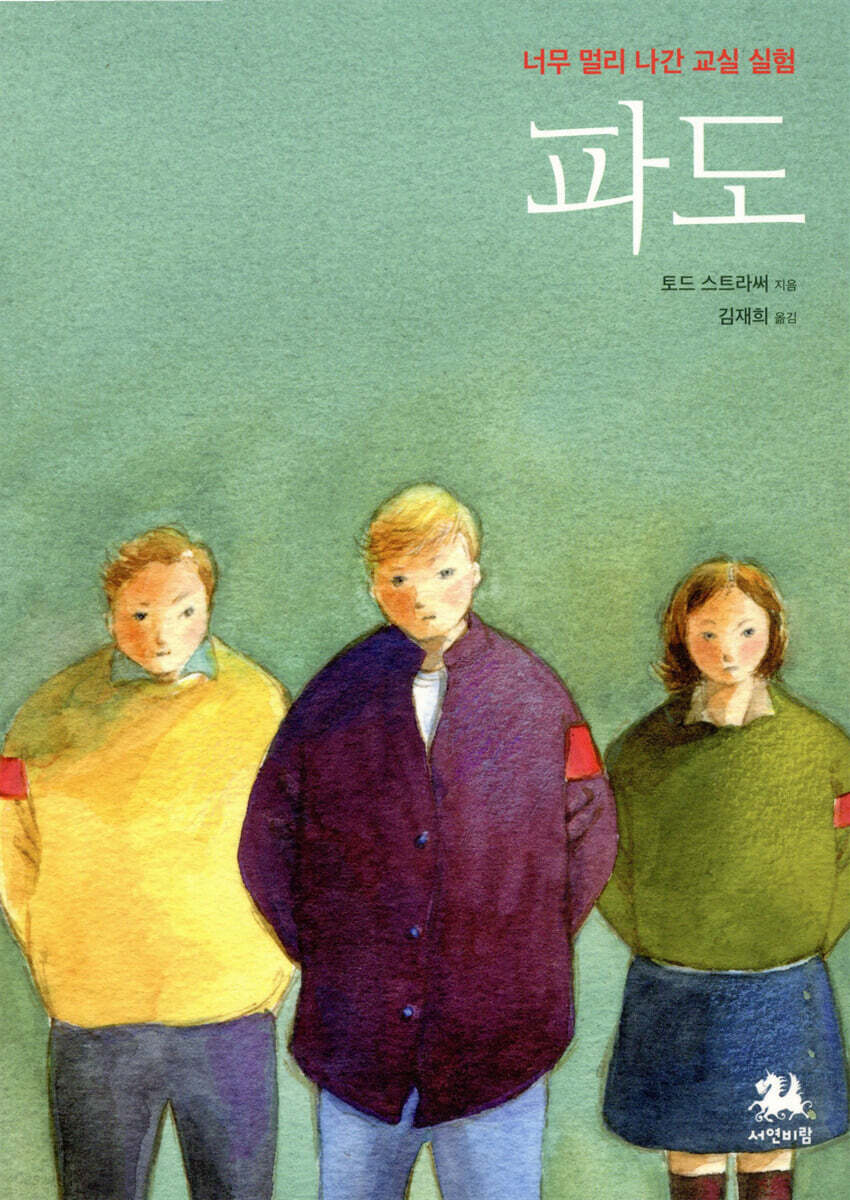
"The Waves" was originally published in the United States, but has been used as a must-read for teenagers since its publication in Germany in the mid-1980s.
As a result, Professor Epa Lang explained, even citizens under the age of 50 who have not experienced Nazi Germany have become wary of totalitarianism.
In other words, this book created an unspoken rule in Germany that any word that could possibly support fascism, regardless of generation, should never even be mentioned.
The young generation in Germany who read this book in high school and debated the question, "Where do gender and racial prejudices, factionalism, and nationalism come from?" are now parents themselves.
As young people, embracing the truth that "history that is not remembered is doomed to repeat itself," began entering society, reflection on history became a natural part of society as a whole.
This is where Germany's strength to acknowledge its terrible past, without making excuses or covering it up, comes from.
The differences between Korea's authoritarian education and Germany's can be summarized in this book.
As a result, Professor Epa Lang explained, even citizens under the age of 50 who have not experienced Nazi Germany have become wary of totalitarianism.
In other words, this book created an unspoken rule in Germany that any word that could possibly support fascism, regardless of generation, should never even be mentioned.
The young generation in Germany who read this book in high school and debated the question, "Where do gender and racial prejudices, factionalism, and nationalism come from?" are now parents themselves.
As young people, embracing the truth that "history that is not remembered is doomed to repeat itself," began entering society, reflection on history became a natural part of society as a whole.
This is where Germany's strength to acknowledge its terrible past, without making excuses or covering it up, comes from.
The differences between Korea's authoritarian education and Germany's can be summarized in this book.
- You can preview some of the book's contents.
Preview
index
introduction
Gordon's people
The rise of Adolf Hitler
Children who crossed from history to everyday life
A one-of-a-kind idea
The bizarre play begins
The magic spell of 'unity'
Frankenstein or Lab Rats
The 'wave' that became a huge movement
School with a fever
A man in a single-piece suit
Small voices amidst the loud shouts
Waves vs. ripples
The Birth of Resistance
A lonely fight
The answer finally found
The Last Command
The End of the Experiment, What's Left Behind
commentary
Translator's Note
Gordon's people
The rise of Adolf Hitler
Children who crossed from history to everyday life
A one-of-a-kind idea
The bizarre play begins
The magic spell of 'unity'
Frankenstein or Lab Rats
The 'wave' that became a huge movement
School with a fever
A man in a single-piece suit
Small voices amidst the loud shouts
Waves vs. ripples
The Birth of Resistance
A lonely fight
The answer finally found
The Last Command
The End of the Experiment, What's Left Behind
commentary
Translator's Note
Publisher's Review
① Raising children who listen well
It offers a poignant reflection on authoritarian Korean education.
The story begins in a middle-class suburban area of the United States.
Ben Ross, who teaches history at Gordon High School, firmly believes that students can grow into democratic citizens through "experiential learning," as emphasized by John Dewey, a leading American educational philosopher.
A new generation teacher with a flexible and open mindset, he prepares a classroom experiment called "Wave" to help his students understand the situation in which civilians were helpless and stood by while brutal Nazi soldiers ran rampant.
The intention was to allow students to experience how individuals can be easily swept up in collective madness and manipulated to the will of those in power through the clever manipulation of power, and to instill in them the judgment to overcome this.
“Gathering strength through training!”
“Gathering strength through community!”
“Gathering strength through practice!”
However, the 'wave' that provided a sense of solidarity like a secret society spread like a cancer cell throughout the school beyond the classroom experiment, and everyone was willingly swept up in the enormous wave and became enthusiastic.
Students who do not belong here are ostracized and even become violent.
② A clear insight into the importance of the ‘power to think for yourself’!
Critical thinking, a core component of German education, focuses on developing citizens who are not swayed by beliefs.
It may be hard to believe, but this 'incident' actually happened.
The school where the experiment, called the "Third Wave" after Nazi Germany's other name, the "Third Reich," was actually conducted was Cubberley High School in Palo Alto.
Ron Jones, a teacher who resigned from the school after the incident, analyzed the 'wave' phenomenon point by point and organized it into a paper titled "The Third Wave" in the spring of 1976.
Through this paper, the 'Third Wave Experiment' was recorded as a very important experiment in crowd psychology that showed how the misuse of power expresses and manipulates the cruelty within humans, along with the Milgram experiment that dealt with the psychological response of obedience to authority and the Stanford Prison Experiment that confirmed human behavior patterns in a state where legitimate ideology and institutional support were guaranteed.
Now in their 60s, these students are engaging in various activities, including opening an online portal, to share their experiences and the lessons they learned with the next generation.
“While belief systems sometimes provide direction and meaning to our lives, the stem cells of fascism are hidden not only in religious or political systems, but also in cultural phenomena that wear the same clothes and sing the same songs, waiting for an opportunity to differentiate into an absurd organization. Therefore, I would like to recommend ‘Waves’ as a useful preventative measure against this.
I sincerely hope that the experiential learning experience of Mr. Ben Ross, which had a profound influence on young people in Germany, will resonate with us in Korea as well, so that the future of our youth will be less distorted and more happy.
Furthermore, I would be even more grateful if I could share this experience with my neighbors and Japanese friends.” - From the translator’s note
It offers a poignant reflection on authoritarian Korean education.
The story begins in a middle-class suburban area of the United States.
Ben Ross, who teaches history at Gordon High School, firmly believes that students can grow into democratic citizens through "experiential learning," as emphasized by John Dewey, a leading American educational philosopher.
A new generation teacher with a flexible and open mindset, he prepares a classroom experiment called "Wave" to help his students understand the situation in which civilians were helpless and stood by while brutal Nazi soldiers ran rampant.
The intention was to allow students to experience how individuals can be easily swept up in collective madness and manipulated to the will of those in power through the clever manipulation of power, and to instill in them the judgment to overcome this.
“Gathering strength through training!”
“Gathering strength through community!”
“Gathering strength through practice!”
However, the 'wave' that provided a sense of solidarity like a secret society spread like a cancer cell throughout the school beyond the classroom experiment, and everyone was willingly swept up in the enormous wave and became enthusiastic.
Students who do not belong here are ostracized and even become violent.
② A clear insight into the importance of the ‘power to think for yourself’!
Critical thinking, a core component of German education, focuses on developing citizens who are not swayed by beliefs.
It may be hard to believe, but this 'incident' actually happened.
The school where the experiment, called the "Third Wave" after Nazi Germany's other name, the "Third Reich," was actually conducted was Cubberley High School in Palo Alto.
Ron Jones, a teacher who resigned from the school after the incident, analyzed the 'wave' phenomenon point by point and organized it into a paper titled "The Third Wave" in the spring of 1976.
Through this paper, the 'Third Wave Experiment' was recorded as a very important experiment in crowd psychology that showed how the misuse of power expresses and manipulates the cruelty within humans, along with the Milgram experiment that dealt with the psychological response of obedience to authority and the Stanford Prison Experiment that confirmed human behavior patterns in a state where legitimate ideology and institutional support were guaranteed.
Now in their 60s, these students are engaging in various activities, including opening an online portal, to share their experiences and the lessons they learned with the next generation.
“While belief systems sometimes provide direction and meaning to our lives, the stem cells of fascism are hidden not only in religious or political systems, but also in cultural phenomena that wear the same clothes and sing the same songs, waiting for an opportunity to differentiate into an absurd organization. Therefore, I would like to recommend ‘Waves’ as a useful preventative measure against this.
I sincerely hope that the experiential learning experience of Mr. Ben Ross, which had a profound influence on young people in Germany, will resonate with us in Korea as well, so that the future of our youth will be less distorted and more happy.
Furthermore, I would be even more grateful if I could share this experience with my neighbors and Japanese friends.” - From the translator’s note
GOODS SPECIFICS
- Date of issue: January 11, 2017
- Page count, weight, size: 272 pages | 354g | 148*210*20mm
- ISBN13: 9791195847402
- ISBN10: 1195847408
You may also like
카테고리
korean


korean

![GQ KOREA Mark (Monthly): December [2025]](http://librairie.coreenne.fr/cdn/shop/files/8ef265dbbfbf186523ed75ba7319009d.jpg?v=1765340328&width=3840)


