

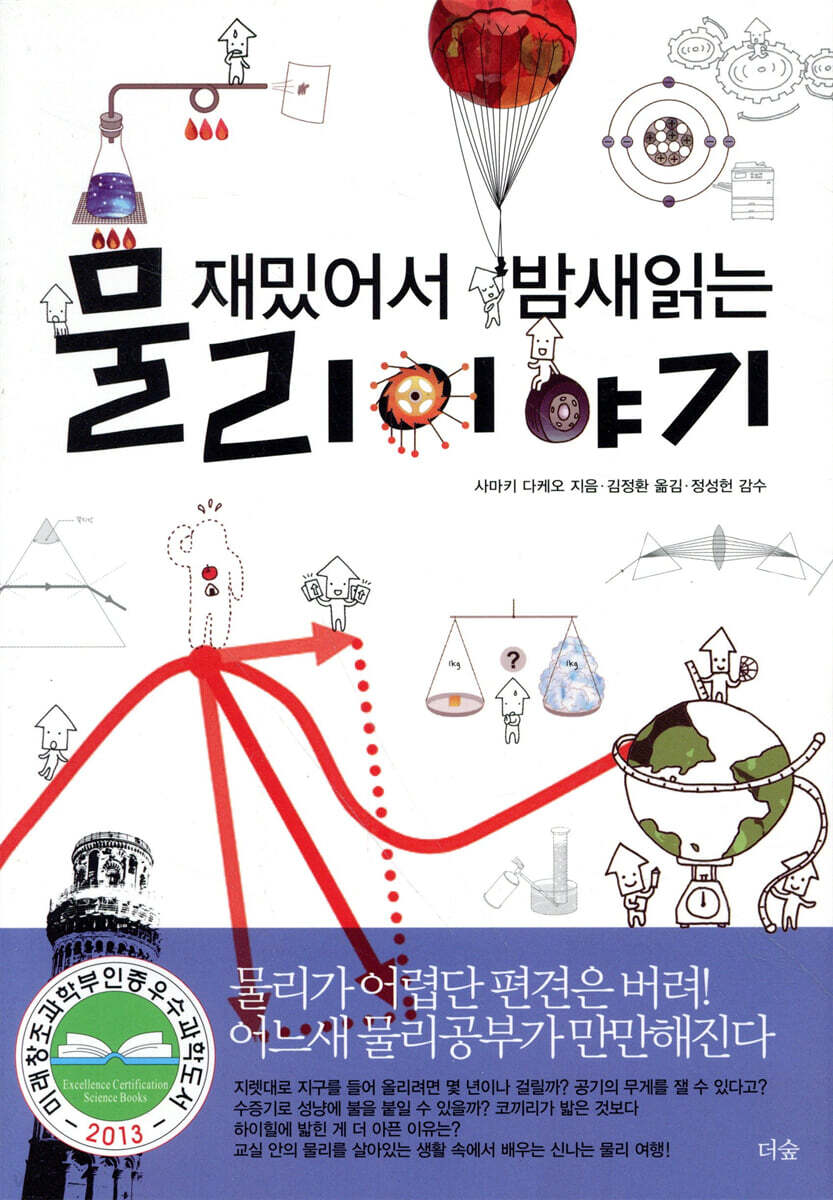
A physics story that's so fun I'll read it all night
 |
Description
Book Introduction
Excellent Science Book Certified by the Ministry of Science, ICT and Future Planning, 2014 Hanuri Open Education Recommended Book, 2014 School Library Journal Recommended Book
This book helps young people understand and study physics, which was once perceived as difficult and boring, in an easy and fun way by finding physics and concepts that were not realistic in the classroom in our daily lives.
This book is a compilation of the author's countless experiences and reflections on what students struggle with and what the problems in science education are while teaching students as a middle and high school science teacher.
This book helps young people understand and study physics, which was once perceived as difficult and boring, in an easy and fun way by finding physics and concepts that were not realistic in the classroom in our daily lives.
This book is a compilation of the author's countless experiences and reflections on what students struggle with and what the problems in science education are while teaching students as a middle and high school science teacher.
- You can preview some of the book's contents.
Preview
index
preface
Chapter 1: The Unbearable Joy of Physics
Can you see your surroundings even in a dark room without light?
The Invisible Man's Fatal Weakness
Why does light refraction occur?
Light invisible to us
What is the difference between heat and temperature?
How high and low can the temperature rise?
Chapter 2: Physics that makes me want to talk about it without even realizing it
If the bottle cap won't open, heat the cap.
The thinner the air, the cooler it is.
What happens to your weight if you eat 1kg of food?
Air has weight too
What is the relationship between gravity and mass?
How did Eratosthenes measure the size of the Earth?
The exact shape of the Earth is a spheroid.
Why do objects float and sink?
Which is heavier, 1 kg of cotton or 1 kg of iron?
The reason the Earth continues to rotate and revolve is 'inertia'.
The Leaning Tower of Pisa Object Drop Experiment Was Fake!?
Does it hurt more when you step on high heels than when you step on an elephant's foot?
Drinking juice using atmospheric pressure?
Chapter 3: A Physics Story That Will Make You Forget About Sleep
What if you drop a ball into a hole through the Earth?
Static electricity is also useful in our lives.
Was static electricity the culprit behind the self-service gas station fire?
Fun science activities with straws
How many years would it take to lift the Earth with a lever?
Humanity dreams of perpetual motion machines.
Conclusion
References
Chapter 1: The Unbearable Joy of Physics
Can you see your surroundings even in a dark room without light?
The Invisible Man's Fatal Weakness
Why does light refraction occur?
Light invisible to us
What is the difference between heat and temperature?
How high and low can the temperature rise?
Chapter 2: Physics that makes me want to talk about it without even realizing it
If the bottle cap won't open, heat the cap.
The thinner the air, the cooler it is.
What happens to your weight if you eat 1kg of food?
Air has weight too
What is the relationship between gravity and mass?
How did Eratosthenes measure the size of the Earth?
The exact shape of the Earth is a spheroid.
Why do objects float and sink?
Which is heavier, 1 kg of cotton or 1 kg of iron?
The reason the Earth continues to rotate and revolve is 'inertia'.
The Leaning Tower of Pisa Object Drop Experiment Was Fake!?
Does it hurt more when you step on high heels than when you step on an elephant's foot?
Drinking juice using atmospheric pressure?
Chapter 3: A Physics Story That Will Make You Forget About Sleep
What if you drop a ball into a hole through the Earth?
Static electricity is also useful in our lives.
Was static electricity the culprit behind the self-service gas station fire?
Fun science activities with straws
How many years would it take to lift the Earth with a lever?
Humanity dreams of perpetual motion machines.
Conclusion
References
Detailed image
Into the book
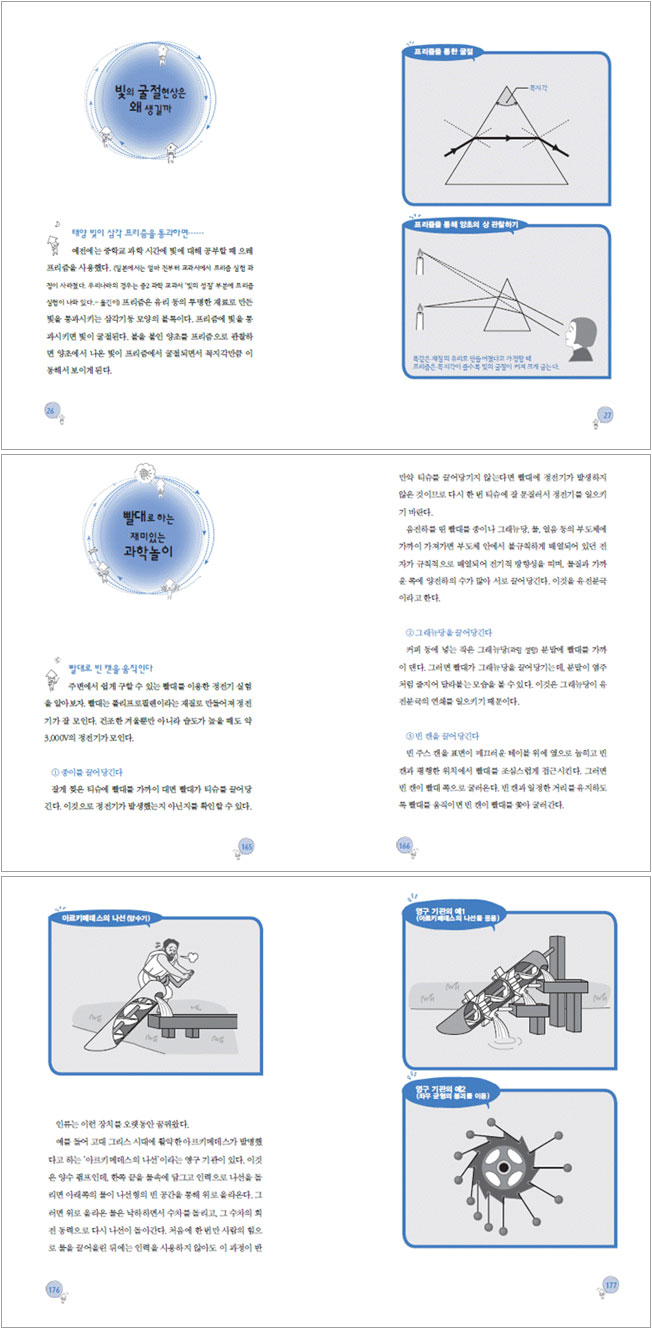
Becoming invisible means that the refractive index of your entire body becomes the same as that of air.
If the refractive index of the entire body were the same as that of water, the refractive index of water would be much greater than that of air, so it would appear as water with a distinct human shape.
Therefore, to become completely invisible and transparent, the refractive index must be the same as that of air.
The human eye has a lens called a crystalline lens.
The lens is made of a transparent protein called crystallin, and its refractive index is only slightly greater than that of water.
Meanwhile, the refractive index of the cornea and vitreous body is the same as that of water.
Light that has flown through the air is refracted by the lens and creates an image on the cells on the retina (it absorbs light and transmits brightness and color signals to the brain). However, if the refractive index of the lens is the same as that of air, the light passes through the lens and the retina as is.
This means that even if light reflected from an object enters the eye, the eye cannot recognize the shape of the object.
Therefore, even if one were to become an invisible man like the protagonist of Wells' novel, one would still be an invisible man with a very fatal weakness.
When we use the word 'weight' in our daily lives, sometimes it means mass, sometimes it means force (the amount of gravitational force an object experiences), and sometimes it doesn't matter.
In elementary school science textbooks, 'weight' was used to mean mass, but in middle school and later science textbooks, it was used to mean 'the amount of gravity an object receives.'
To avoid confusion, we recommend using mass and weight instead of the ambiguous 'weight', as their meanings are different from those used in everyday life.
Mass is a quantity that does not change wherever an object is placed.
Units include grams (g) and kilograms (kg).
An object with a mass of 100 g is 100 g everywhere, and does not change whether on Earth or inside a spaceship.
If a person's weight, or mass, is 50 kg, then that person's weight is 50 kg inside a spaceship or on the moon.
Since the number and type of atoms that make up a body do not change, mass is the same everywhere.
They brought a replica of an elephant's foot from the zoo, measured the width of the foot, and then calculated the pressure it would feel when stepped on by an elephant and when stepped on by high heels.
Which side exerts greater pressure? Let's assume that the area of one elephant's foot is 1,060 cm², or approximately 1,000 cm² (= 0.1 m²), and that its body weight (mass) is 3,000 kg (approximately 30,000 N in force). When stepped on, the weight applied to one foot is one-quarter of the total weight.
Meanwhile, a woman wearing high heels is assumed to weigh 40 kg (approximately 400 N in force), the area of the bottom of the heel is 1 cm in each direction, that is, 1 cm² (= 0.0001 m²), and half of her body weight is applied to it.
If you calculate it, the pressure from being stepped on by high heels is much greater than the pressure from being stepped on by an elephant.
Doesn't it strike you, "High heels on a crowded subway are a real weapon!" For reference, this calculation assumes that the remaining part of the sole of the foot, not touching the human body, is still pressing against the ground when the elephant steps on it.
If the pressure of an elephant's foot were applied only to the area where the person stepped (150 cm² in area), the pressure would be about 7 times greater.
If the refractive index of the entire body were the same as that of water, the refractive index of water would be much greater than that of air, so it would appear as water with a distinct human shape.
Therefore, to become completely invisible and transparent, the refractive index must be the same as that of air.
The human eye has a lens called a crystalline lens.
The lens is made of a transparent protein called crystallin, and its refractive index is only slightly greater than that of water.
Meanwhile, the refractive index of the cornea and vitreous body is the same as that of water.
Light that has flown through the air is refracted by the lens and creates an image on the cells on the retina (it absorbs light and transmits brightness and color signals to the brain). However, if the refractive index of the lens is the same as that of air, the light passes through the lens and the retina as is.
This means that even if light reflected from an object enters the eye, the eye cannot recognize the shape of the object.
Therefore, even if one were to become an invisible man like the protagonist of Wells' novel, one would still be an invisible man with a very fatal weakness.
When we use the word 'weight' in our daily lives, sometimes it means mass, sometimes it means force (the amount of gravitational force an object experiences), and sometimes it doesn't matter.
In elementary school science textbooks, 'weight' was used to mean mass, but in middle school and later science textbooks, it was used to mean 'the amount of gravity an object receives.'
To avoid confusion, we recommend using mass and weight instead of the ambiguous 'weight', as their meanings are different from those used in everyday life.
Mass is a quantity that does not change wherever an object is placed.
Units include grams (g) and kilograms (kg).
An object with a mass of 100 g is 100 g everywhere, and does not change whether on Earth or inside a spaceship.
If a person's weight, or mass, is 50 kg, then that person's weight is 50 kg inside a spaceship or on the moon.
Since the number and type of atoms that make up a body do not change, mass is the same everywhere.
They brought a replica of an elephant's foot from the zoo, measured the width of the foot, and then calculated the pressure it would feel when stepped on by an elephant and when stepped on by high heels.
Which side exerts greater pressure? Let's assume that the area of one elephant's foot is 1,060 cm², or approximately 1,000 cm² (= 0.1 m²), and that its body weight (mass) is 3,000 kg (approximately 30,000 N in force). When stepped on, the weight applied to one foot is one-quarter of the total weight.
Meanwhile, a woman wearing high heels is assumed to weigh 40 kg (approximately 400 N in force), the area of the bottom of the heel is 1 cm in each direction, that is, 1 cm² (= 0.0001 m²), and half of her body weight is applied to it.
If you calculate it, the pressure from being stepped on by high heels is much greater than the pressure from being stepped on by an elephant.
Doesn't it strike you, "High heels on a crowded subway are a real weapon!" For reference, this calculation assumes that the remaining part of the sole of the foot, not touching the human body, is still pressing against the ground when the elephant steps on it.
If the pressure of an elephant's foot were applied only to the area where the person stepped (150 cm² in area), the pressure would be about 7 times greater.
---From the text
Publisher's Review
The third installment of the "Fun to Read All Night" series, "Physics," is finally out!
The concepts and laws of physics that were previously unrealistic are now readily apparent.
Before you know it, studying physics has become easy!
The third installment of the "Fun to Read All Night" series, which breaks the stereotype that science is difficult and practices "fun science" with outrageous stories and interesting experiments, "Fun Physics Stories to Read All Night," has finally been published.
This series is published by the PHP Research Institute, founded by Chairman Konosuke Matsushita of Japan, and is a series that is so loved that books on various fields of science are continuously published. In Korea, since the chemistry and mathematics editions were published, it has received a good response from many teachers and related organizations in schools.
"Physics Stories That Are Fun and Will Keep You Reading All Night" is a book that helps young people understand and study physics, which was once considered difficult and boring, in an easy and fun way by finding physics and concepts that were not realistic in the classroom in our daily lives.
This book is a compilation of the author's countless experiences and reflections on what students struggle with and what the problems in science education are while teaching students as a middle and high school science teacher.
This book covers all aspects of physics, starting with light, heat and temperature, ultra-high temperatures, and ultra-low temperatures that are directly related to our lives, and then on to 'universal gravitation' and 'how to measure the size of the Earth' that were discovered through the exploration of ancient scientists, 'If you drop a ball into a hole through the Earth' that will provide children with curiosity and creative ideas, 'fun science play with straws', and 'Humanity dreams of a perpetual motion machine' that gives them a topic to think about the energy of the future. Young people will truly encounter living physics.
Through this book, young people will not only learn about physics, but will also have the opportunity to view the world through new perspectives by encountering a fascinating world they had never known before.
Lastly, through a review process by current teachers, we revised and supplemented the terms we commonly use to terms currently used in our textbooks, so that it can be helpful for young people to study physics subjects.
The fascinating and intriguing world of physics that you won't be able to stop reading once you start!
A fascinating science book that will have you reading all night long.
The greatest strength of this book is that it makes difficult and boring physics seem easy and straightforward and provides clear answers.
It also provides solutions to various curiosities we experience in our daily lives through physics concepts.
It is composed of various materials to satisfy scientific curiosity, such as why the invisible man that everyone has dreamed of at least once cannot be realized scientifically, the fact that light is an essential element for us to see things but is also a double-edged sword that causes skin cancer, and the fact that air also has weight.
The author says that physics is the study of discovering the laws and principles of the world we live in.
Physics is what allows us to observe various phenomena in our daily lives with a more in-depth perspective.
It is said that if Einstein had not looked at the apples that fell every day differently, the law of universal gravitation would not have been created, and if Archimedes, who was absorbed in thought in the bathtub, had not thought much of the phenomenon of water overflowing, the Archimedes' principle would not have been discovered.
Through this book, we will be able to observe the phenomena of everyday life once again and broaden our horizons.
You will also experience the joy of new questions about the world, such as, "What about this case?" or "What about that case?"
The witty illustrations hidden throughout the book make physics even more interesting.
Understand physics easily through numerous physics experiments!
The best science textbook for young people to learn physics naturally.
This book contains numerous physics experiments.
By heating a coin with a hole in it, you can experiment and think about the space in which atoms move, and by crushing an aluminum can, you can get a feel for the size of atmospheric pressure.
They measure the density of the human body by soaking it in a bathtub, use density to check the freshness of eggs, and even burn paper with high-temperature steam.
All of these are experiments that the author has used for a long time in actual educational settings. Through these various experiments and calculations, he has increased his understanding of physics and has included them all in this book.
This book will serve as a refreshing stimulus for science studies not only for students who read and learn directly, but also for teachers and parents who are considering new directions in science and physics education.
You will find the best introductory physics book.
Reviewer's note
While I was working on the review, I ended up reading this book all night.
About 10 years ago, I planned to write an easy and fun physics story for children, but I postponed it for various reasons. Then, I came across this book.
In short, this book is a science textbook that explains difficult topics in an easy and fun way.
These are like Altolan's contents, written by the author based on his classroom teaching experience, on the essential points that must be addressed in the field of physics.
I hope that through this book, children will learn that physics is not a boring and difficult subject, but that there is another interesting world out there.
"We need idols, but we need more scientists," one commercial says, but perhaps children haven't been able to experience the world of physics as interesting as the "world of idols."
I hope this book will be the key that opens the door to another room for such children.
The concepts and laws of physics that were previously unrealistic are now readily apparent.
Before you know it, studying physics has become easy!
The third installment of the "Fun to Read All Night" series, which breaks the stereotype that science is difficult and practices "fun science" with outrageous stories and interesting experiments, "Fun Physics Stories to Read All Night," has finally been published.
This series is published by the PHP Research Institute, founded by Chairman Konosuke Matsushita of Japan, and is a series that is so loved that books on various fields of science are continuously published. In Korea, since the chemistry and mathematics editions were published, it has received a good response from many teachers and related organizations in schools.
"Physics Stories That Are Fun and Will Keep You Reading All Night" is a book that helps young people understand and study physics, which was once considered difficult and boring, in an easy and fun way by finding physics and concepts that were not realistic in the classroom in our daily lives.
This book is a compilation of the author's countless experiences and reflections on what students struggle with and what the problems in science education are while teaching students as a middle and high school science teacher.
This book covers all aspects of physics, starting with light, heat and temperature, ultra-high temperatures, and ultra-low temperatures that are directly related to our lives, and then on to 'universal gravitation' and 'how to measure the size of the Earth' that were discovered through the exploration of ancient scientists, 'If you drop a ball into a hole through the Earth' that will provide children with curiosity and creative ideas, 'fun science play with straws', and 'Humanity dreams of a perpetual motion machine' that gives them a topic to think about the energy of the future. Young people will truly encounter living physics.
Through this book, young people will not only learn about physics, but will also have the opportunity to view the world through new perspectives by encountering a fascinating world they had never known before.
Lastly, through a review process by current teachers, we revised and supplemented the terms we commonly use to terms currently used in our textbooks, so that it can be helpful for young people to study physics subjects.
The fascinating and intriguing world of physics that you won't be able to stop reading once you start!
A fascinating science book that will have you reading all night long.
The greatest strength of this book is that it makes difficult and boring physics seem easy and straightforward and provides clear answers.
It also provides solutions to various curiosities we experience in our daily lives through physics concepts.
It is composed of various materials to satisfy scientific curiosity, such as why the invisible man that everyone has dreamed of at least once cannot be realized scientifically, the fact that light is an essential element for us to see things but is also a double-edged sword that causes skin cancer, and the fact that air also has weight.
The author says that physics is the study of discovering the laws and principles of the world we live in.
Physics is what allows us to observe various phenomena in our daily lives with a more in-depth perspective.
It is said that if Einstein had not looked at the apples that fell every day differently, the law of universal gravitation would not have been created, and if Archimedes, who was absorbed in thought in the bathtub, had not thought much of the phenomenon of water overflowing, the Archimedes' principle would not have been discovered.
Through this book, we will be able to observe the phenomena of everyday life once again and broaden our horizons.
You will also experience the joy of new questions about the world, such as, "What about this case?" or "What about that case?"
The witty illustrations hidden throughout the book make physics even more interesting.
Understand physics easily through numerous physics experiments!
The best science textbook for young people to learn physics naturally.
This book contains numerous physics experiments.
By heating a coin with a hole in it, you can experiment and think about the space in which atoms move, and by crushing an aluminum can, you can get a feel for the size of atmospheric pressure.
They measure the density of the human body by soaking it in a bathtub, use density to check the freshness of eggs, and even burn paper with high-temperature steam.
All of these are experiments that the author has used for a long time in actual educational settings. Through these various experiments and calculations, he has increased his understanding of physics and has included them all in this book.
This book will serve as a refreshing stimulus for science studies not only for students who read and learn directly, but also for teachers and parents who are considering new directions in science and physics education.
You will find the best introductory physics book.
Reviewer's note
While I was working on the review, I ended up reading this book all night.
About 10 years ago, I planned to write an easy and fun physics story for children, but I postponed it for various reasons. Then, I came across this book.
In short, this book is a science textbook that explains difficult topics in an easy and fun way.
These are like Altolan's contents, written by the author based on his classroom teaching experience, on the essential points that must be addressed in the field of physics.
I hope that through this book, children will learn that physics is not a boring and difficult subject, but that there is another interesting world out there.
"We need idols, but we need more scientists," one commercial says, but perhaps children haven't been able to experience the world of physics as interesting as the "world of idols."
I hope this book will be the key that opens the door to another room for such children.
GOODS SPECIFICS
- Date of issue: June 5, 2013
- Page count, weight, size: 200 pages | 450g | 145*210*20mm
- ISBN13: 9788994418568
- ISBN10: 8994418563
You may also like
카테고리
korean


korean

![GQ KOREA Mark (Monthly): December [2025]](http://librairie.coreenne.fr/cdn/shop/files/8ef265dbbfbf186523ed75ba7319009d.jpg?v=1765340328&width=3840)


