

A teenager who knows a little about biotechnology
 |
Description
Book Introduction
From spider silk stronger than steel to fish that don't freeze
Discover the hidden powers of creatures that transcend the limits of imagination!
The world of biotechnology unfolds when technology is added to science.
Spider silk is 20 times stronger than steel of the same weight.
Fish living in Antarctica do not freeze even in sub-zero temperatures.
Even the smallest and most fragile creatures possess their own special powers.
What if we could harness this power? What if we could harness the properties of spider silk to create lightweight yet strong bulletproof vests, or harness the freezing resistance of Antarctic creatures to grow fruit in the cold? Biotechnology is the field that makes these seemingly science fiction movies a reality.
It is a cutting-edge science with infinite potential, as many as the number of living things, and is expected to develop further in the future.
What's the difference between life science and biotechnology, both taught in school? Life science is the study of discovering new phenomena and principles related to living organisms themselves.
Biotechnology, which differs by one letter, is a discipline that applies the phenomena and principles discovered in life science to real life.
It can be said to be a practical discipline that combines knowledge about life with technology to solve real-world problems.
Biotechnology is playing a vital role in a variety of issues, including developing customized medicines and bio-organs needed in an aging society, restoring ecosystems by decomposing pollutants with microorganisms, and solving food shortages by producing high-quality foods.
According to a 2023 survey of high school students' desired occupations conducted by the Ministry of Education, scientists studying biotechnology ranked a whopping third.
Couldn't we make biotechnology, a core discipline that will become even more important in the future, easier and more fun to learn?
"10 Things You Need to Know About Biotechnology" aims to be accessible to readers new to biotechnology while also accurately conveying the latest scientific knowledge in the field.
If you've ever been curious about the world of biotechnology, which combines life science and technology, check out "10 Things You Should Know About Biotechnology," a book designed for teenagers.
Discover the hidden powers of creatures that transcend the limits of imagination!
The world of biotechnology unfolds when technology is added to science.
Spider silk is 20 times stronger than steel of the same weight.
Fish living in Antarctica do not freeze even in sub-zero temperatures.
Even the smallest and most fragile creatures possess their own special powers.
What if we could harness this power? What if we could harness the properties of spider silk to create lightweight yet strong bulletproof vests, or harness the freezing resistance of Antarctic creatures to grow fruit in the cold? Biotechnology is the field that makes these seemingly science fiction movies a reality.
It is a cutting-edge science with infinite potential, as many as the number of living things, and is expected to develop further in the future.
What's the difference between life science and biotechnology, both taught in school? Life science is the study of discovering new phenomena and principles related to living organisms themselves.
Biotechnology, which differs by one letter, is a discipline that applies the phenomena and principles discovered in life science to real life.
It can be said to be a practical discipline that combines knowledge about life with technology to solve real-world problems.
Biotechnology is playing a vital role in a variety of issues, including developing customized medicines and bio-organs needed in an aging society, restoring ecosystems by decomposing pollutants with microorganisms, and solving food shortages by producing high-quality foods.
According to a 2023 survey of high school students' desired occupations conducted by the Ministry of Education, scientists studying biotechnology ranked a whopping third.
Couldn't we make biotechnology, a core discipline that will become even more important in the future, easier and more fun to learn?
"10 Things You Need to Know About Biotechnology" aims to be accessible to readers new to biotechnology while also accurately conveying the latest scientific knowledge in the field.
If you've ever been curious about the world of biotechnology, which combines life science and technology, check out "10 Things You Should Know About Biotechnology," a book designed for teenagers.
- You can preview some of the book's contents.
Preview
index
Introduction_Is it science or technology?
Chapter 1 Biotechnology, Who Are You?
Golden Rice, benefit humanity widely
What genetically modified lettuce taught us
The boundary between life science and biotechnology
If biotechnology were a tree
Chapter 2 When did biotechnology emerge?
Biotechnology existed 4000 years ago?
What are DNA, base sequences, and genes?
The code of DNA sequences finally solved
The endless possibilities of biotechnology
Chapter 3: The Power of Tiny Microorganisms_Microbial Biotechnology
You, the invisible microbe
Three Reasons Why We Love Germs
How to Transform Bacteria
Each person has a different microbiome
Challenge the realm of the gods
Chapter 4: Plant Biotechnology: Growing Anywhere and Transforming into Anything
The secret hidden in the names of plants
What do you get when you combine potatoes and tomatoes?
If you want to change the genes of a plant
The emergence of genetically modified crops
The transformation of plants is innocent
Chapter 5: From Cloned Sheep to Eco-Friendly Pigs_Animal Biotechnology
Lab animals that have saved countless lives
The Birth and Controversy of Nuclear Substitution Technology
Reasons for swapping nukes
Use of genetically modified animals
Goat making spider webs
Chapter 6: Scientists Heading to the Bottom of the Sea: Marine Biotechnology
Grow shrimp in the desert
How to increase the size of salmon
The emergence of triploid organisms
In search of new genes
Treasures Found in the Sea
Chapter 7 Beyond Disease and Aging_Medical Biotechnology
Check for genetic diseases in the fetus
Genetic testing to predict disease
Genetic Testing and Genetic Discrimination
Viruses that heal genes
Organ transplantation and tissue engineering
Stem cells that make cells grow again
Chapter 8: If There Are Organisms That Eat Pollutants_Environmental Biotechnology
Almost everything is contaminated
Is it possible to purify the environment with living things?
Oil-eating bacteria
Plants that save the earth
The Challenge of Bioremediation
Biotechnology: A Technology That Will Be the Foundation for Utilization and Coexistence
Chapter 1 Biotechnology, Who Are You?
Golden Rice, benefit humanity widely
What genetically modified lettuce taught us
The boundary between life science and biotechnology
If biotechnology were a tree
Chapter 2 When did biotechnology emerge?
Biotechnology existed 4000 years ago?
What are DNA, base sequences, and genes?
The code of DNA sequences finally solved
The endless possibilities of biotechnology
Chapter 3: The Power of Tiny Microorganisms_Microbial Biotechnology
You, the invisible microbe
Three Reasons Why We Love Germs
How to Transform Bacteria
Each person has a different microbiome
Challenge the realm of the gods
Chapter 4: Plant Biotechnology: Growing Anywhere and Transforming into Anything
The secret hidden in the names of plants
What do you get when you combine potatoes and tomatoes?
If you want to change the genes of a plant
The emergence of genetically modified crops
The transformation of plants is innocent
Chapter 5: From Cloned Sheep to Eco-Friendly Pigs_Animal Biotechnology
Lab animals that have saved countless lives
The Birth and Controversy of Nuclear Substitution Technology
Reasons for swapping nukes
Use of genetically modified animals
Goat making spider webs
Chapter 6: Scientists Heading to the Bottom of the Sea: Marine Biotechnology
Grow shrimp in the desert
How to increase the size of salmon
The emergence of triploid organisms
In search of new genes
Treasures Found in the Sea
Chapter 7 Beyond Disease and Aging_Medical Biotechnology
Check for genetic diseases in the fetus
Genetic testing to predict disease
Genetic Testing and Genetic Discrimination
Viruses that heal genes
Organ transplantation and tissue engineering
Stem cells that make cells grow again
Chapter 8: If There Are Organisms That Eat Pollutants_Environmental Biotechnology
Almost everything is contaminated
Is it possible to purify the environment with living things?
Oil-eating bacteria
Plants that save the earth
The Challenge of Bioremediation
Biotechnology: A Technology That Will Be the Foundation for Utilization and Coexistence
Detailed image

Into the book
There is no absolute law or clear boundary dividing the research fields of life sciences and biotechnology, but there are clear differences.
For example, let's say that a substance produced by a certain bacterium during its life cycle is found to be useful to humans.
In this process, it is the job of a life scientist to analyze the characteristics of the bacteria and the types of substances they produce while living, and to study how they affect humans.
Meanwhile, if you want to obtain a large amount of this substance so that many people can benefit, you'll need to grow a lot of bacteria. Mass-cultivating bacteria is the domain of biotechnologists.
--- 「1.
From "Biotechnology, Who Are You?"
The Spanish flu is believed to have caused the most deaths among all flus in human history.
The Spanish flu virus disappeared from the Earth along with its victims without its identity being revealed because all victims of the flu died at the time.
But scientists have recovered the virus from tissue from a Spanish flu victim buried in the permafrost of Alaska.
There are real concerns that synthetic biology could be exploited to develop new biological weapons.
--- 「3.
From "The Power of Tiny Microorganisms_Microbial Biotechnology"
One of the important products that biotechnology aims to create through living organisms is proteins.
Proteins produced in living organisms have complex structures, so synthesizing them artificially requires a long time, multiple steps, and a lot of money.
So biotechnology also creates biological factories that insert useful genes into animals and use the animal's entire body to produce proteins needed by humans.
This will increase efficiency while lowering the cost of producing proteins, and also ensure that the proteins are produced safely from pathogen contamination.
Animals used in this way are called 'bioreactors'.
--- 「5.
From Cloned Sheep to Eco-Friendly Pigs_Animal Biotechnology
It might sound strange to think that viruses could be used to deliver genes to cure human diseases.
Because viruses are known to be agents that cause diseases.
But in fact, viruses have evolved to efficiently deliver their DNA to specific cells while evading the host's immune system.
This is exactly how viruses survive.
By removing the virus's ability to transmit genes while retaining its ability to infect others, we transform the virus into a means of transmitting genes that humans need.
--- 「7.
From “Beyond Disease and Aging_Medical Biotechnology”
One of the great advantages of bioremediation is that it converts harmful substances into less harmful substances such as carbon dioxide, chlorine, water, or simple organic matter.
In particular, because living organisms are used in the purification process, it can be treated more cleanly than other purification methods.
It also has the advantage of being able to perform cleanup work right at the polluted site.
It can be completely purified without disturbing the environment, as there is no need to move the pollutants to another location.
--- 「8.
If there are creatures that eat pollutants_From “Environmental Biotechnology”
We cannot stop exploiting other life forms in human life.
The important thing is 'how to use it'.
Biotechnology was initially studied solely for the benefit of humans, but as it developed, it began to move toward protecting not only humans but also other living beings, and even the nature surrounding all living beings.
In the coming future, we can expect greater benefits and coexistence from biotechnology.
For example, let's say that a substance produced by a certain bacterium during its life cycle is found to be useful to humans.
In this process, it is the job of a life scientist to analyze the characteristics of the bacteria and the types of substances they produce while living, and to study how they affect humans.
Meanwhile, if you want to obtain a large amount of this substance so that many people can benefit, you'll need to grow a lot of bacteria. Mass-cultivating bacteria is the domain of biotechnologists.
--- 「1.
From "Biotechnology, Who Are You?"
The Spanish flu is believed to have caused the most deaths among all flus in human history.
The Spanish flu virus disappeared from the Earth along with its victims without its identity being revealed because all victims of the flu died at the time.
But scientists have recovered the virus from tissue from a Spanish flu victim buried in the permafrost of Alaska.
There are real concerns that synthetic biology could be exploited to develop new biological weapons.
--- 「3.
From "The Power of Tiny Microorganisms_Microbial Biotechnology"
One of the important products that biotechnology aims to create through living organisms is proteins.
Proteins produced in living organisms have complex structures, so synthesizing them artificially requires a long time, multiple steps, and a lot of money.
So biotechnology also creates biological factories that insert useful genes into animals and use the animal's entire body to produce proteins needed by humans.
This will increase efficiency while lowering the cost of producing proteins, and also ensure that the proteins are produced safely from pathogen contamination.
Animals used in this way are called 'bioreactors'.
--- 「5.
From Cloned Sheep to Eco-Friendly Pigs_Animal Biotechnology
It might sound strange to think that viruses could be used to deliver genes to cure human diseases.
Because viruses are known to be agents that cause diseases.
But in fact, viruses have evolved to efficiently deliver their DNA to specific cells while evading the host's immune system.
This is exactly how viruses survive.
By removing the virus's ability to transmit genes while retaining its ability to infect others, we transform the virus into a means of transmitting genes that humans need.
--- 「7.
From “Beyond Disease and Aging_Medical Biotechnology”
One of the great advantages of bioremediation is that it converts harmful substances into less harmful substances such as carbon dioxide, chlorine, water, or simple organic matter.
In particular, because living organisms are used in the purification process, it can be treated more cleanly than other purification methods.
It also has the advantage of being able to perform cleanup work right at the polluted site.
It can be completely purified without disturbing the environment, as there is no need to move the pollutants to another location.
--- 「8.
If there are creatures that eat pollutants_From “Environmental Biotechnology”
We cannot stop exploiting other life forms in human life.
The important thing is 'how to use it'.
Biotechnology was initially studied solely for the benefit of humans, but as it developed, it began to move toward protecting not only humans but also other living beings, and even the nature surrounding all living beings.
In the coming future, we can expect greater benefits and coexistence from biotechnology.
--- From "Biotechnology: The Foundation of Utilization and Coexistence"
Publisher's Review
Have you ever been curious about biotechnology but found it difficult to approach?
Let's take a closer look with six keywords and vivid experiments.
A glance at various topics and latest issues in biotechnology!
This book provides a guide by dividing biotechnology into six fields.
First, we cover microorganisms, plants, and animals according to the most important criteria for dividing living things in the Earth's ecosystem, and then we cover the areas where biotechnology is most actively applied, grouping them into marine, medical, and environmental areas.
Each chapter is structured separately, making it easy to start from the part you want.
For example, if you are curious about medical biotechnology or interested in animal biotechnology, you can start reading from that section.
Another great advantage is that you can cover several topics in biotechnology in one book.
"10 Things You Need to Know About Biotechnology" is written with a focus on interesting examples rather than complex scientific theories.
This book contains vivid experiments being conducted all over the world today, such as synthetic biology that creates microorganisms that never existed before, bioreactors that create vaccines from eggs, and tissue engineering that grows human organs on the backs of mice. This allows readers to understand the latest issues in biotechnology without any background knowledge.
As you turn the pages, you will, as Professor Kim Eung-bin of Yonsei University said, “naturally learn complex concepts without even realizing it.”
Bioethical issues that cannot be overlooked when talking about technology!
How should we utilize it and where should we go next?
Time to read biotechnology for a future where all life is respected.
Biotechnology is a science that deals with life, but at the same time, it is a technology that is used to prioritize human benefit.
As a result, situations arise where the right to life and dignity are not respected.
This is why the advancement of biotechnology is not always welcome.
Biotechnology is the process of freely combining the genes of living organisms and extracting substances useful to humans from their bodies, without actually asking for permission from the living organisms.
"Teenagers Who Know a Little About Biotechnology" focuses on bioethical issues that must be addressed in biotechnology stories.
Along with this, it also included various controversies raised by biotechnology, allowing us to think about the question of 'how to utilize it.'
Teacher Lee Go-eun started writing books because she wanted to tell her students interesting life science stories that she couldn't tell in class.
This book is also filled with such feelings.
It accurately covers the core topics and concepts of biotechnology while not sacrificing fun and friendly explanations.
It is suitable for both students preparing for the medical school entrance exam and readers who want to take a light look at biotechnology.
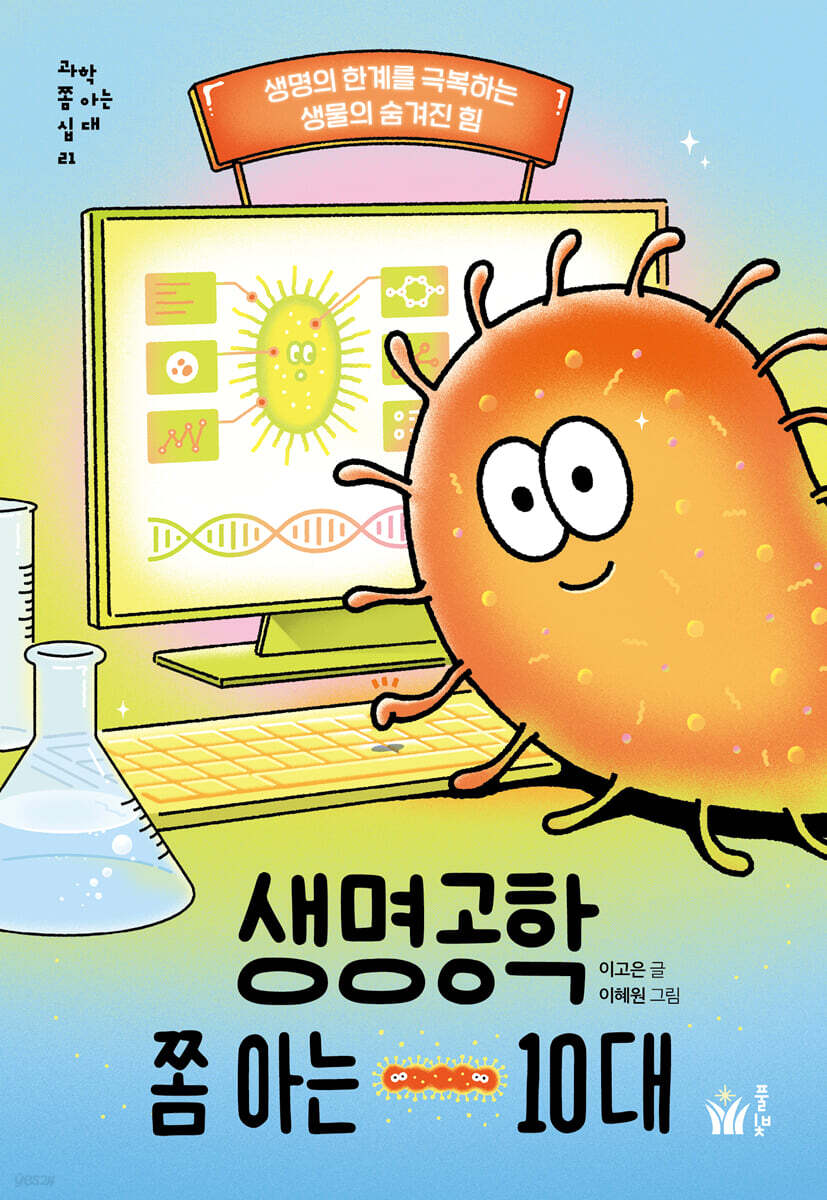
The soft and cute illustrations also help to lower the rigid walls of biotechnology.
If you've ever wondered what kind of future biotechnology, which is being talked about here and there, will bring, read "10 Things You Should Know About Biotechnology" by Lee Go-eun, a biotechnology scientist and current teacher.
Let's take a closer look with six keywords and vivid experiments.
A glance at various topics and latest issues in biotechnology!
This book provides a guide by dividing biotechnology into six fields.
First, we cover microorganisms, plants, and animals according to the most important criteria for dividing living things in the Earth's ecosystem, and then we cover the areas where biotechnology is most actively applied, grouping them into marine, medical, and environmental areas.
Each chapter is structured separately, making it easy to start from the part you want.
For example, if you are curious about medical biotechnology or interested in animal biotechnology, you can start reading from that section.
Another great advantage is that you can cover several topics in biotechnology in one book.
"10 Things You Need to Know About Biotechnology" is written with a focus on interesting examples rather than complex scientific theories.
This book contains vivid experiments being conducted all over the world today, such as synthetic biology that creates microorganisms that never existed before, bioreactors that create vaccines from eggs, and tissue engineering that grows human organs on the backs of mice. This allows readers to understand the latest issues in biotechnology without any background knowledge.
As you turn the pages, you will, as Professor Kim Eung-bin of Yonsei University said, “naturally learn complex concepts without even realizing it.”
Bioethical issues that cannot be overlooked when talking about technology!
How should we utilize it and where should we go next?
Time to read biotechnology for a future where all life is respected.
Biotechnology is a science that deals with life, but at the same time, it is a technology that is used to prioritize human benefit.
As a result, situations arise where the right to life and dignity are not respected.
This is why the advancement of biotechnology is not always welcome.
Biotechnology is the process of freely combining the genes of living organisms and extracting substances useful to humans from their bodies, without actually asking for permission from the living organisms.
"Teenagers Who Know a Little About Biotechnology" focuses on bioethical issues that must be addressed in biotechnology stories.
Along with this, it also included various controversies raised by biotechnology, allowing us to think about the question of 'how to utilize it.'
Teacher Lee Go-eun started writing books because she wanted to tell her students interesting life science stories that she couldn't tell in class.
This book is also filled with such feelings.
It accurately covers the core topics and concepts of biotechnology while not sacrificing fun and friendly explanations.
It is suitable for both students preparing for the medical school entrance exam and readers who want to take a light look at biotechnology.
The soft and cute illustrations also help to lower the rigid walls of biotechnology.
If you've ever wondered what kind of future biotechnology, which is being talked about here and there, will bring, read "10 Things You Should Know About Biotechnology" by Lee Go-eun, a biotechnology scientist and current teacher.
GOODS SPECIFICS
- Date of issue: June 25, 2025
- Page count, weight, size: 160 pages | 256g | 140*203*10mm
- ISBN13: 9791194636076
- ISBN10: 1194636071
You may also like
카테고리
korean


korean

![GQ KOREA Mark (Monthly): December [2025]](http://librairie.coreenne.fr/cdn/shop/files/8ef265dbbfbf186523ed75ba7319009d.jpg?v=1765340328&width=3840)


