

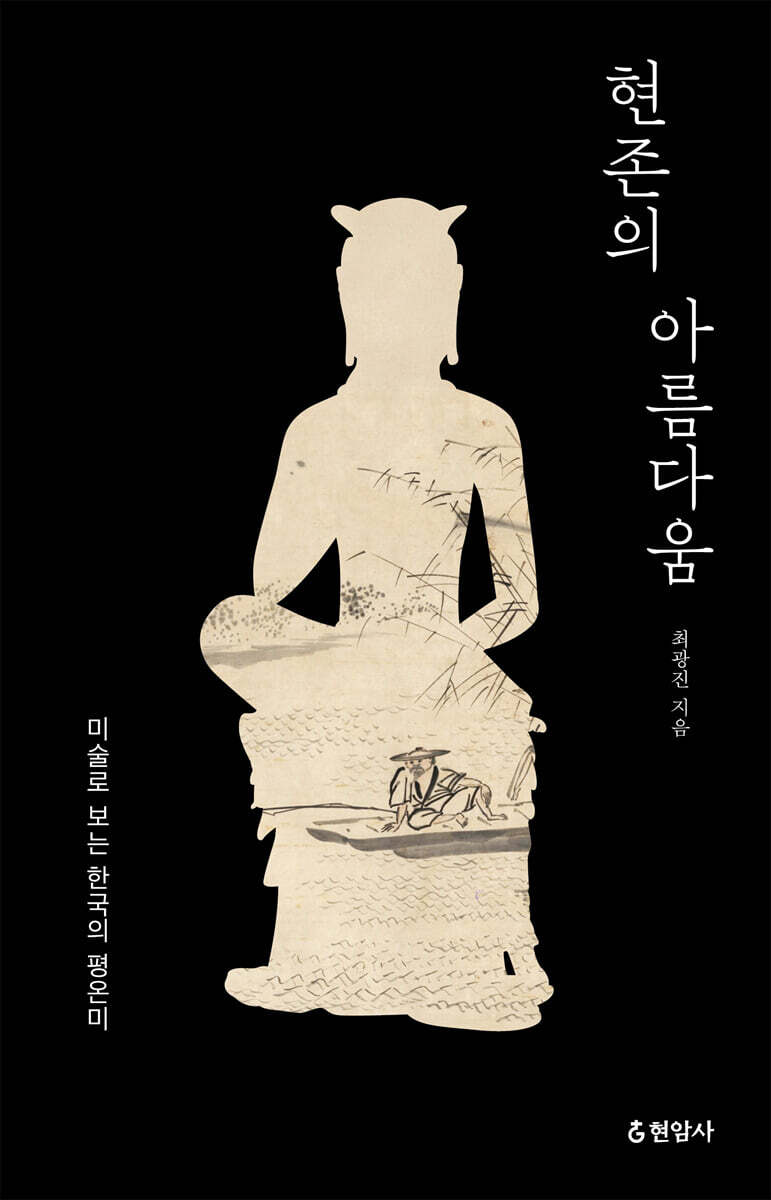
The beauty of existence
 |
Description
Book Introduction
The aesthetics of peace are so desperately needed in these anxious and chaotic times!
Embodying the peaceful human nature through the presence of the here and now
Korean aesthetics, presented through over 100 works.
The indifferent and empty fullness felt in the mind without discernment
'Peace' refers to a state of pure and calm mind without emotional disturbance.
We always strive for a state free from anxiety and fear, but in today's modern society, this is nearly impossible.
In particular, Korea, a peninsula country located on the eastern side of the Eurasian continent, is a border region where continental and maritime powers meet geopolitically and communism and democracy clash ideologically.
Also, religiously, it is a region where Buddhism and Christianity coexist and there is constant conflict.
Moreover, we live in an age steeped in the omnipotence of gold, a time when moral values are collapsing and political chaos is greater than ever.
In a society as gloomy and chaotic as this, the aesthetic sense of peace that can wisely overcome it is desperately needed.
In the Oriental classic 『Chaegeundam』, it is said, “True tranquility is not tranquility in the midst of silence. Only when one can maintain tranquility in the midst of noise can one be said to have reached the true state of tranquility.”
The aesthetic sense suggested in this book is not the comfort that comes from a comfortable environment, but the tranquility felt in a busy reality.
However, this is also a state that religion and meditation have sought to reach, as it is only possible by eliminating all emotions of joy, anger, sorrow, and pleasure and reaching the true nature of the mind.
The author argues that Koreans, with their developed intuition and spirituality, were able to leave behind peaceful and emotional works of art because they directly experienced religious ideologies like Buddhism and Confucianism rather than simply accepting them as formalities.
As Yanagi Muneyoshi said of Korean art, “It is a mysterious mind that quietly delves inward,” this is no different from the state of nirvana that Buddhism pursues.
He also suggests that true rest is not about doing nothing, but actively emptying our thoughts and attachments, and that sometimes we need to simply exist without judgment.
Then, because there is no discrimination, everything becomes one, and the indifferent and empty feeling of fullness that arises is the 'aesthetics of peace' and the 'beauty of presence.'
This book examines how the aesthetic of such tranquility has been expressed in works of art throughout history, from ancient times to the present.
Embodying the peaceful human nature through the presence of the here and now
Korean aesthetics, presented through over 100 works.
The indifferent and empty fullness felt in the mind without discernment
'Peace' refers to a state of pure and calm mind without emotional disturbance.
We always strive for a state free from anxiety and fear, but in today's modern society, this is nearly impossible.
In particular, Korea, a peninsula country located on the eastern side of the Eurasian continent, is a border region where continental and maritime powers meet geopolitically and communism and democracy clash ideologically.
Also, religiously, it is a region where Buddhism and Christianity coexist and there is constant conflict.
Moreover, we live in an age steeped in the omnipotence of gold, a time when moral values are collapsing and political chaos is greater than ever.
In a society as gloomy and chaotic as this, the aesthetic sense of peace that can wisely overcome it is desperately needed.
In the Oriental classic 『Chaegeundam』, it is said, “True tranquility is not tranquility in the midst of silence. Only when one can maintain tranquility in the midst of noise can one be said to have reached the true state of tranquility.”
The aesthetic sense suggested in this book is not the comfort that comes from a comfortable environment, but the tranquility felt in a busy reality.
However, this is also a state that religion and meditation have sought to reach, as it is only possible by eliminating all emotions of joy, anger, sorrow, and pleasure and reaching the true nature of the mind.
The author argues that Koreans, with their developed intuition and spirituality, were able to leave behind peaceful and emotional works of art because they directly experienced religious ideologies like Buddhism and Confucianism rather than simply accepting them as formalities.
As Yanagi Muneyoshi said of Korean art, “It is a mysterious mind that quietly delves inward,” this is no different from the state of nirvana that Buddhism pursues.
He also suggests that true rest is not about doing nothing, but actively emptying our thoughts and attachments, and that sometimes we need to simply exist without judgment.
Then, because there is no discrimination, everything becomes one, and the indifferent and empty feeling of fullness that arises is the 'aesthetics of peace' and the 'beauty of presence.'
This book examines how the aesthetic of such tranquility has been expressed in works of art throughout history, from ancient times to the present.
- You can preview some of the book's contents.
Preview
index
Opening Remarks | Concluding the "Korean Aesthetics and Aesthetic Consciousness" Series
Prologue: What is 'Tranquility'?
Chapter 1: The Serenity of Ancient Buddhist Sculpture
The Smile of Dharma, Free from Worldly Obsessions
Seokguram Grotto's Main Buddha | A Present State Free from Obsession and Delusion
Rock Buddha | The Smile of Nirvana Carved into Granite
The Five Hundred Arhats of Changnyeongsa Temple | The Human, All-Too-Human Appearance of a Saint
Chapter 2: The Peaceful Beauty of Goryeo Discord
Suwolgwaneumdo | The Light that Heals Worldly Suffering
Ksitigarbha Bodhisattva | The Avatamsaka world of the Pure Wonderful Realm that teaches all living beings
Amitabha Buddha | Waves of Light Leading to Paradise
Vairochana Buddha and the Five Hundred Arhats | A Fractal Universe Where Parts Become the Whole
Chapter 3: The Serene Beauty of Joseon Literati Painting
Irrigation | A state of mindlessness, becoming one with the flowing water
Takjokdo | A retreat that simultaneously cleanses the mind and the heat
The aesthetics of waiting to empty the mind
Gwanwoldo | Life's Wisdom Learned from Watching the Full Moon
Leisure | A precious time to discover your true nature
Seowudo | Half the fun of enjoying midday
Taoist figure painting | The state of nirvana reached through deep samadhi
Chapter 4: The Beauty of Serenity Realized in Modern Art
Park Soo-geun | The peaceful daily lives of ordinary people, carved like a rock-carved Buddha.
Choi Jong-tae | The statue of the Virgin Mary, reincarnated as Bangasayusang
Kim Soo-ja | The Aesthetics of Sewing: Healing Binary Oppositions and Conflicts
Conclusion | Like a lotus flower that takes root and blooms in the mud
References
Prologue: What is 'Tranquility'?
Chapter 1: The Serenity of Ancient Buddhist Sculpture
The Smile of Dharma, Free from Worldly Obsessions
Seokguram Grotto's Main Buddha | A Present State Free from Obsession and Delusion
Rock Buddha | The Smile of Nirvana Carved into Granite
The Five Hundred Arhats of Changnyeongsa Temple | The Human, All-Too-Human Appearance of a Saint
Chapter 2: The Peaceful Beauty of Goryeo Discord
Suwolgwaneumdo | The Light that Heals Worldly Suffering
Ksitigarbha Bodhisattva | The Avatamsaka world of the Pure Wonderful Realm that teaches all living beings
Amitabha Buddha | Waves of Light Leading to Paradise
Vairochana Buddha and the Five Hundred Arhats | A Fractal Universe Where Parts Become the Whole
Chapter 3: The Serene Beauty of Joseon Literati Painting
Irrigation | A state of mindlessness, becoming one with the flowing water
Takjokdo | A retreat that simultaneously cleanses the mind and the heat
The aesthetics of waiting to empty the mind
Gwanwoldo | Life's Wisdom Learned from Watching the Full Moon
Leisure | A precious time to discover your true nature
Seowudo | Half the fun of enjoying midday
Taoist figure painting | The state of nirvana reached through deep samadhi
Chapter 4: The Beauty of Serenity Realized in Modern Art
Park Soo-geun | The peaceful daily lives of ordinary people, carved like a rock-carved Buddha.
Choi Jong-tae | The statue of the Virgin Mary, reincarnated as Bangasayusang
Kim Soo-ja | The Aesthetics of Sewing: Healing Binary Oppositions and Conflicts
Conclusion | Like a lotus flower that takes root and blooms in the mud
References
Into the book
The reason why an ordinary Joseon bowl became a national treasure in Japan was not because the work was so great, but because of its aesthetics.
Aesthetics can make the ordinary and trivial precious, and the splendid and beautiful ugly and childish.
Art is ultimately a battle of aesthetics, as its value is determined by how meaning is given to it.
But unfortunately, we learn Western aesthetics or Chinese aesthetics in college without any criticism.
As time goes by, it becomes established as an absolute standard of beauty, and we end up creating styles that meet that standard, knowingly or unknowingly.
In this reality, it is like expecting smoke to come out of a chimney when there is no original and self-generated culture and art to flourish.
---From the "Opening Remarks"
Human emotions are so contagious that when you are around a sad person, you become sad too, and when you are around a happy person, you become happy too.
Anyone who stands before this stone Buddha seems to feel their anxiety and anger disappear, their attachments disarmed, and their body and mind relaxed.
Isn't this the aura of a religious saint who practices love and compassion? The creator of this stone Buddha has captured the saint's peaceful heart forever within the solid granite.
What makes this expression difficult is not simply the skill involved, but the fact that it requires experiencing the emotion firsthand.
---From "The Smile of Nirvana Carved in Granite"
In the Buddhist scripture, the Avatamsaka Sutra, there is a saying, “The one is the whole, and the whole is the one (一中一切多中一).”
This means that there are parts within the whole, but the whole is also contained within the parts.
This is in line with the Eastern thought that I am in the universe and at the same time the universe is in me.
The Avatamsaka world in Buddhism is one in which the whole is in harmony, with each individual playing its own role and interacting equally.
Goryeo Buddhist paintings simultaneously capture both the macroscopic phenomenal world and the microscopic essential world in order to visualize the Avatamsaka world of the universe.
By doing so, we sought to escape from the dichotomous distinction between matter and spirit, phenomenon and idea, and concrete and abstract.
---From "The Light of Healing the Pain of the World"
In today's modern society, obsessed with short-term achievements and exhausted from competition with others, there is no room in the mind to enjoy leisure time.
Moreover, in a capitalist society where money is the goal, leisure time has economic value and is being transformed into an economic activity.
True leisure is not time for others, but time spent thoroughly for oneself, a time to discover one's true nature.
So, how did people in the Joseon Dynasty, who had a more difficult economic situation than today, think about leisure time and how did they use it?
---From "A Precious Time to Discover Your True Nature"
The charm felt in Shin Yun-bok's "Woman of the Lotus Pavilion" is also like that.
In this fleeting moment when she suddenly feels something, her occupation, her work, her name, and her appearance do not matter at all.
True rest is not about doing nothing, but actively emptying our thoughts and minds.
Sometimes we need to just exist without any discrimination or judgment.
Then, because there is no discrimination, everything becomes one, and the feeling of emptiness and fullness that arises is the ‘aesthetics of peace’ and the ‘beauty of presence.’
---From "A Precious Time to Discover Your True Nature"
While Baroque works express dramatic emotions through theatrical effects, the final statue of Jesus is a peaceful face that has overcome all suffering, and is as serene as looking at the Buddha who has reached nirvana.
This is because the theme of his work is not the ideology of a specific religion, but the peaceful nature of human beings that is revealed after the worldly emotions of joy, anger, sorrow, and pleasure have subsided.
So, his image brings to mind a pure soul and warm humanity before it reminds one of a saint of a specific religion.
In this way, the artistic world of the final form longs for and experiences the human nature and the world of the soul, which are difficult to materialize, and gives shape to them through sculpture.
His journey as an artist was to discover the creative divinity in pure human nature and to enjoy the ultimate freedom that comes from it.
In doing so, he dreamed of an art in which truth, goodness, and beauty were fused into a ‘trinity.’
Aesthetics can make the ordinary and trivial precious, and the splendid and beautiful ugly and childish.
Art is ultimately a battle of aesthetics, as its value is determined by how meaning is given to it.
But unfortunately, we learn Western aesthetics or Chinese aesthetics in college without any criticism.
As time goes by, it becomes established as an absolute standard of beauty, and we end up creating styles that meet that standard, knowingly or unknowingly.
In this reality, it is like expecting smoke to come out of a chimney when there is no original and self-generated culture and art to flourish.
---From the "Opening Remarks"
Human emotions are so contagious that when you are around a sad person, you become sad too, and when you are around a happy person, you become happy too.
Anyone who stands before this stone Buddha seems to feel their anxiety and anger disappear, their attachments disarmed, and their body and mind relaxed.
Isn't this the aura of a religious saint who practices love and compassion? The creator of this stone Buddha has captured the saint's peaceful heart forever within the solid granite.
What makes this expression difficult is not simply the skill involved, but the fact that it requires experiencing the emotion firsthand.
---From "The Smile of Nirvana Carved in Granite"
In the Buddhist scripture, the Avatamsaka Sutra, there is a saying, “The one is the whole, and the whole is the one (一中一切多中一).”
This means that there are parts within the whole, but the whole is also contained within the parts.
This is in line with the Eastern thought that I am in the universe and at the same time the universe is in me.
The Avatamsaka world in Buddhism is one in which the whole is in harmony, with each individual playing its own role and interacting equally.
Goryeo Buddhist paintings simultaneously capture both the macroscopic phenomenal world and the microscopic essential world in order to visualize the Avatamsaka world of the universe.
By doing so, we sought to escape from the dichotomous distinction between matter and spirit, phenomenon and idea, and concrete and abstract.
---From "The Light of Healing the Pain of the World"
In today's modern society, obsessed with short-term achievements and exhausted from competition with others, there is no room in the mind to enjoy leisure time.
Moreover, in a capitalist society where money is the goal, leisure time has economic value and is being transformed into an economic activity.
True leisure is not time for others, but time spent thoroughly for oneself, a time to discover one's true nature.
So, how did people in the Joseon Dynasty, who had a more difficult economic situation than today, think about leisure time and how did they use it?
---From "A Precious Time to Discover Your True Nature"
The charm felt in Shin Yun-bok's "Woman of the Lotus Pavilion" is also like that.
In this fleeting moment when she suddenly feels something, her occupation, her work, her name, and her appearance do not matter at all.
True rest is not about doing nothing, but actively emptying our thoughts and minds.
Sometimes we need to just exist without any discrimination or judgment.
Then, because there is no discrimination, everything becomes one, and the feeling of emptiness and fullness that arises is the ‘aesthetics of peace’ and the ‘beauty of presence.’
---From "A Precious Time to Discover Your True Nature"
While Baroque works express dramatic emotions through theatrical effects, the final statue of Jesus is a peaceful face that has overcome all suffering, and is as serene as looking at the Buddha who has reached nirvana.
This is because the theme of his work is not the ideology of a specific religion, but the peaceful nature of human beings that is revealed after the worldly emotions of joy, anger, sorrow, and pleasure have subsided.
So, his image brings to mind a pure soul and warm humanity before it reminds one of a saint of a specific religion.
In this way, the artistic world of the final form longs for and experiences the human nature and the world of the soul, which are difficult to materialize, and gives shape to them through sculpture.
His journey as an artist was to discover the creative divinity in pure human nature and to enjoy the ultimate freedom that comes from it.
In doing so, he dreamed of an art in which truth, goodness, and beauty were fused into a ‘trinity.’
---From "The Statue of the Virgin Mary Reincarnated as a Statue of the Buddha"
Publisher's Review
The peaceful beauty of Korea, alive and breathing in ancient Buddhist statues, Goryeo Buddhist paintings, Joseon literati paintings, and modern art.
This book illuminates the aesthetic of tranquility that Koreans have embodied in their artworks, from ancient Buddhist sculptures to Goryeo Buddhist paintings, Joseon literati paintings, and modern art.
In particular, by comparing works from other countries across the East and West, past and present, we are reconsidering the unique value and meaning of Korea's peaceful beauty.
The author argues that while religious art flourished in neighboring countries like China and Japan, no other country has expressed the Buddhist ideal of tranquility through its art as well as Korea.
In Chapter 1, we looked at works such as the Bangasayusang, the main Buddha of Seokguram Grotto, the rock-carved Buddha, and the Five Hundred Arhats, and compared them with sculptures from other countries that shared Buddhist culture, to see how Koreans sculpted the aesthetic sense of tranquility through ancient Buddhist sculpture.
Chapter 2 examines the tranquil beauty of Buddhist paintings from the Goryeo Dynasty, which adopted Buddhism as its national ideology.
In the West, religious art flourished during a similar period of the Middle Ages, but it was limited to expressing religious content primarily through rigid symbolic iconography.
Goryeo Buddhist paintings also have iconography, but their artistic value was highlighted by focusing on the pictorial expression of the profound spiritual world pursued by Buddhism through unique flowing lines and mysterious colors.
Chapter 3 deals with literati painting during the Joseon Dynasty, when Confucianism was the dominant ideology.
Literati painting, while dealing with the external world, was able to achieve mental peace by vividly expressing the energy gained through resonance with the subject rather than depicting it realistically.
The Gwansudo, Gwanwoldo, Takjokdo, Joaedo, Yeogado, and Osudo introduced in this book are all works that embody mental peace in ordinary daily life.
In Chapter 4, we examine how the aesthetic of tranquility is inherited in contemporary art today, by genre.
In painting, we introduced the work of Park Soo-geun, who carved the good nature of the common people on canvas like a rock-carved Buddha, and in sculpture, we introduced the work of Choi Jong-tae, who created a serene statue of the Virgin Mary modeled after an ancient Buddhist statue of a pensive Bodhisattva.
And as an example of contemporary art, we covered the work of Kim Soo-ja, a world-renowned artist known for her woven bags.
Choi Kwang-jin's "Korean Aesthetics and Aesthetic Consciousness" series is now complete! (5 volumes total)
This book is the final volume in the 'Korean Aesthetics and Aesthetic Consciousness' series, which the author has been writing for 15 years.
Through the first volume of the Korean Aesthetics series and the fourth volume of the Aesthetic Consciousness series, the author diagnoses that the fundamental cause of the gloomy unhappiness in Korean society today is not economic problems, but the loss of cultural identity and the absence of an aesthetic consciousness that can overcome adversity.
He argues that if we restore Korea's four major aesthetics of 'spirit', 'humor', 'simplicity', and 'peace', we can escape today's cultural colony and leap forward as a culturally advanced country.
If spirit is a cheerful aesthetic that overcomes the hardships of life, humor is an optimistic aesthetic that can wisely deal with the absurdity of reality.
And if simplicity is a nature-friendly aesthetic that can heal human-centered culture, then tranquility is a meditative aesthetic that can maintain a calm mind without being swept away by worldly storms.
While this series was being released, the Korean Wave, which started with K-pop, was receiving love from people all over the world.
However, the author says that the Korean Wave without an aesthetic foundation is like a sand castle, and that the completion of the Korean Wave must be none other than Korean aesthetics.
To understand and create Korean culture and art, we need Korean aesthetics, and to wisely overcome today's chaotic and turbulent life, we desperately need a Korean aesthetic consciousness.
The author also says that the coming era will not be an era of selling things, but an era of competing through culture and selling happiness.
In this cultural era, Korea's four major aesthetics can produce useful content that will bring happiness to people around the world and serve as a vaccine to solve the problems of modern society.
By doing so, we can revisit the value of Korean art, which we were not aware of, and revive our fading aesthetic sense, suggesting a "cultural independence movement" for true happiness.
This book illuminates the aesthetic of tranquility that Koreans have embodied in their artworks, from ancient Buddhist sculptures to Goryeo Buddhist paintings, Joseon literati paintings, and modern art.
In particular, by comparing works from other countries across the East and West, past and present, we are reconsidering the unique value and meaning of Korea's peaceful beauty.
The author argues that while religious art flourished in neighboring countries like China and Japan, no other country has expressed the Buddhist ideal of tranquility through its art as well as Korea.
In Chapter 1, we looked at works such as the Bangasayusang, the main Buddha of Seokguram Grotto, the rock-carved Buddha, and the Five Hundred Arhats, and compared them with sculptures from other countries that shared Buddhist culture, to see how Koreans sculpted the aesthetic sense of tranquility through ancient Buddhist sculpture.
Chapter 2 examines the tranquil beauty of Buddhist paintings from the Goryeo Dynasty, which adopted Buddhism as its national ideology.
In the West, religious art flourished during a similar period of the Middle Ages, but it was limited to expressing religious content primarily through rigid symbolic iconography.
Goryeo Buddhist paintings also have iconography, but their artistic value was highlighted by focusing on the pictorial expression of the profound spiritual world pursued by Buddhism through unique flowing lines and mysterious colors.
Chapter 3 deals with literati painting during the Joseon Dynasty, when Confucianism was the dominant ideology.
Literati painting, while dealing with the external world, was able to achieve mental peace by vividly expressing the energy gained through resonance with the subject rather than depicting it realistically.
The Gwansudo, Gwanwoldo, Takjokdo, Joaedo, Yeogado, and Osudo introduced in this book are all works that embody mental peace in ordinary daily life.
In Chapter 4, we examine how the aesthetic of tranquility is inherited in contemporary art today, by genre.
In painting, we introduced the work of Park Soo-geun, who carved the good nature of the common people on canvas like a rock-carved Buddha, and in sculpture, we introduced the work of Choi Jong-tae, who created a serene statue of the Virgin Mary modeled after an ancient Buddhist statue of a pensive Bodhisattva.
And as an example of contemporary art, we covered the work of Kim Soo-ja, a world-renowned artist known for her woven bags.
Choi Kwang-jin's "Korean Aesthetics and Aesthetic Consciousness" series is now complete! (5 volumes total)
This book is the final volume in the 'Korean Aesthetics and Aesthetic Consciousness' series, which the author has been writing for 15 years.
Through the first volume of the Korean Aesthetics series and the fourth volume of the Aesthetic Consciousness series, the author diagnoses that the fundamental cause of the gloomy unhappiness in Korean society today is not economic problems, but the loss of cultural identity and the absence of an aesthetic consciousness that can overcome adversity.
He argues that if we restore Korea's four major aesthetics of 'spirit', 'humor', 'simplicity', and 'peace', we can escape today's cultural colony and leap forward as a culturally advanced country.
If spirit is a cheerful aesthetic that overcomes the hardships of life, humor is an optimistic aesthetic that can wisely deal with the absurdity of reality.
And if simplicity is a nature-friendly aesthetic that can heal human-centered culture, then tranquility is a meditative aesthetic that can maintain a calm mind without being swept away by worldly storms.
While this series was being released, the Korean Wave, which started with K-pop, was receiving love from people all over the world.
However, the author says that the Korean Wave without an aesthetic foundation is like a sand castle, and that the completion of the Korean Wave must be none other than Korean aesthetics.
To understand and create Korean culture and art, we need Korean aesthetics, and to wisely overcome today's chaotic and turbulent life, we desperately need a Korean aesthetic consciousness.
The author also says that the coming era will not be an era of selling things, but an era of competing through culture and selling happiness.
In this cultural era, Korea's four major aesthetics can produce useful content that will bring happiness to people around the world and serve as a vaccine to solve the problems of modern society.
By doing so, we can revisit the value of Korean art, which we were not aware of, and revive our fading aesthetic sense, suggesting a "cultural independence movement" for true happiness.
GOODS SPECIFICS
- Date of issue: March 15, 2025
- Page count, weight, size: 304 pages | 460g | 135*210*19mm
- ISBN13: 9788932324135
You may also like
카테고리
korean


korean

![GQ KOREA Mark (Monthly): December [2025]](http://librairie.coreenne.fr/cdn/shop/files/8ef265dbbfbf186523ed75ba7319009d.jpg?v=1765340328&width=3840)


