

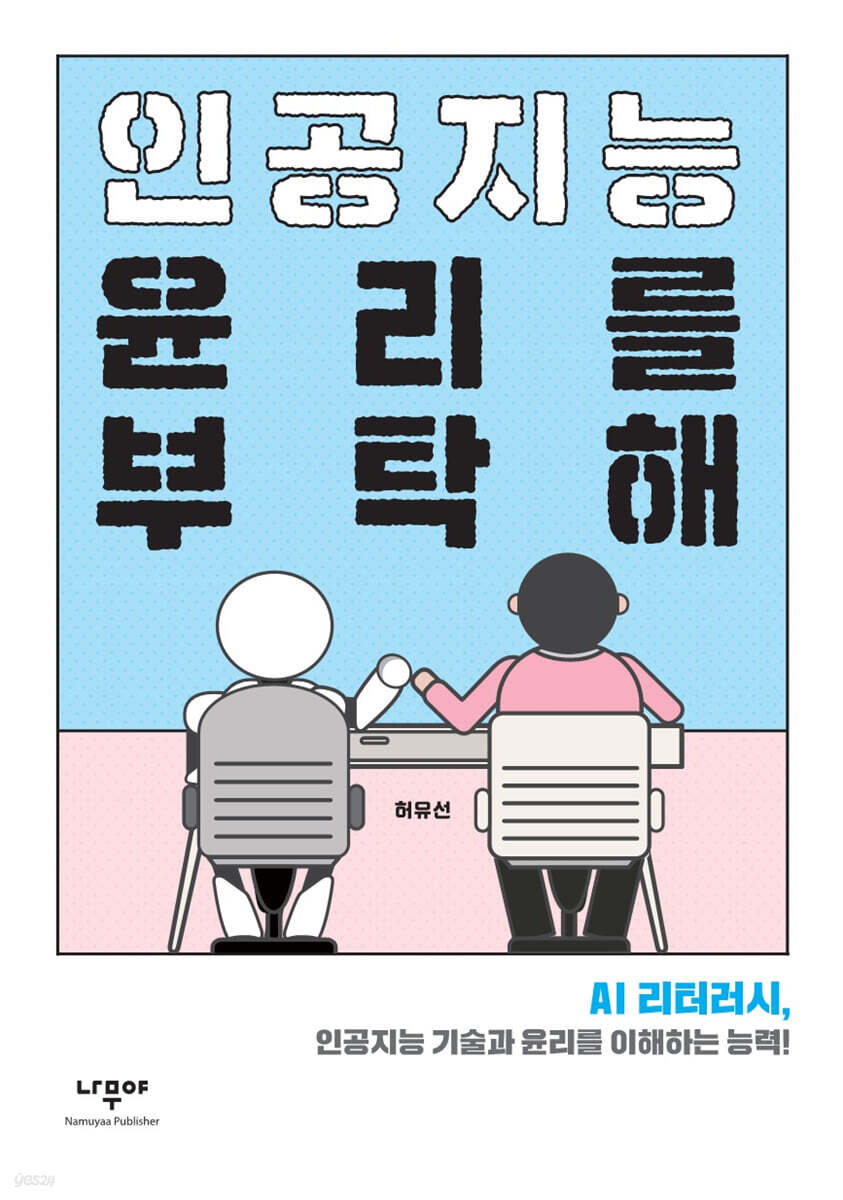
Please take care of AI ethics
 |
Description
Book Introduction
AI literacy: the ability to understand artificial intelligence technology and ethics!
We have entered an era where artificial intelligence is a part of our daily lives.
We order food through Baedal Minjok, get the latest news on YouTube, communicate on Instagram, and even solve difficult tasks with the help of ChatGTP.
But I'm worried that as things get more convenient, faster, and more efficient, they don't seem to be any safer.
As seen in the chatbot Iruda incident, human life is shaken by the social problems that artificial intelligence is creating.
As predictions of the emergence of superintelligence far surpassing human intelligence are growing, will AI technology truly improve human lives? Why are governments and major corporations around the world rushing to advocate and implement "AI ethics"?
This book examines specifically how artificial intelligence technology will impact human life and society, while also suggesting the right direction and solutions through 10 questions we must ask in the age of artificial intelligence.
As an expert in the field of artificial intelligence ethics, the author's explanations are philosophically profound, and the structure is dense with rich knowledge.
It is written in easy language so that even teenagers can read it, and includes a variety of topics for discussion so that people can share their thoughts in the educational field.
As readers gain a thorough understanding of the concept and history of artificial intelligence, they will realize that the emergence of "technology" is always accompanied by the resulting social changes.
You will be able to connect the key topics of AI ethics with specific examples and clearly articulate why they are problematic.
We come to understand that 'value' must be considered in the development and use of artificial intelligence technology, and that technology, life, society, and value are inextricably linked.
We have entered an era where artificial intelligence is a part of our daily lives.
We order food through Baedal Minjok, get the latest news on YouTube, communicate on Instagram, and even solve difficult tasks with the help of ChatGTP.
But I'm worried that as things get more convenient, faster, and more efficient, they don't seem to be any safer.
As seen in the chatbot Iruda incident, human life is shaken by the social problems that artificial intelligence is creating.
As predictions of the emergence of superintelligence far surpassing human intelligence are growing, will AI technology truly improve human lives? Why are governments and major corporations around the world rushing to advocate and implement "AI ethics"?
This book examines specifically how artificial intelligence technology will impact human life and society, while also suggesting the right direction and solutions through 10 questions we must ask in the age of artificial intelligence.
As an expert in the field of artificial intelligence ethics, the author's explanations are philosophically profound, and the structure is dense with rich knowledge.
It is written in easy language so that even teenagers can read it, and includes a variety of topics for discussion so that people can share their thoughts in the educational field.
As readers gain a thorough understanding of the concept and history of artificial intelligence, they will realize that the emergence of "technology" is always accompanied by the resulting social changes.
You will be able to connect the key topics of AI ethics with specific examples and clearly articulate why they are problematic.
We come to understand that 'value' must be considered in the development and use of artificial intelligence technology, and that technology, life, society, and value are inextricably linked.
- You can preview some of the book's contents.
Preview
index
Header - The Age of Artificial Intelligence: A Concern for All of Us
1.
Artificial Intelligence, Who Are You?
2.
Why is AI ethics necessary?
3.
AI speaker, sold my worries?
4.
Would it be fairer if AI judged the results?
5.
Will artificial intelligence replace our jobs?
6.
Will artificial intelligence put democracy at risk?
7.
Can we object to AI decisions?
8.
Should we let AI-powered self-driving cars drive us?
9.
Will AI worsen the climate crisis?
10.
What kind of relationship will we have with artificial intelligence in the future?
1.
Artificial Intelligence, Who Are You?
2.
Why is AI ethics necessary?
3.
AI speaker, sold my worries?
4.
Would it be fairer if AI judged the results?
5.
Will artificial intelligence replace our jobs?
6.
Will artificial intelligence put democracy at risk?
7.
Can we object to AI decisions?
8.
Should we let AI-powered self-driving cars drive us?
9.
Will AI worsen the climate crisis?
10.
What kind of relationship will we have with artificial intelligence in the future?
Detailed image

Publisher's Review
10 Questions We Must Ask in the Age of AI
The use of artificial intelligence is expected to become more active.
Now, artificial intelligence is becoming more than just a tool; it is becoming an 'environment' of our lives.
But compared to that, it doesn't seem like we know much about or are sufficiently prepared for artificial intelligence technology and its social impact.
AI can create malicious deepfake videos of celebrities and spread fake political news.
There have been cases where AI interview systems have been challenged and even led to lawsuits, and there have been violent protests where AI algorithms discriminated against students based on their income levels.
If something goes wrong with AI in weapons or medicine, the implications could be enormous.
This is why this book particularly emphasizes ethics in the age of artificial intelligence through ten questions, asking whether the autonomy of artificial intelligence will put humans at greater risk.
Chapter 1, "Artificial Intelligence, Who Are You?" explores the history of artificial intelligence, which began with the question and imagination, "Can computers think?" and explores the precise concept of artificial intelligence.
Chapter 2, "Why is AI Ethics Necessary?", discusses what AI ethics are, why ethics are so important in the field of AI, and what principles should be established to create and utilize AI that benefits human life and society.
Chapter 3, "AI Speakers: Selling My Worries?", addresses the importance and seriousness of personal information and privacy through the data collection issues of AI speakers.
Chapter 4, "Will AI Judge More Fair?", delves into the issue of AI and the reproduction of discrimination, focusing on the concepts of data bias and algorithmic bias.
Chapter 5, "Will Artificial Intelligence Replace Our Jobs?", describes the changing reality of labor due to the emergence of artificial intelligence technology, providing a clue to interpreting "change" rather than "replacement."
Chapter 6, “Will AI Put Democracy at Risk?” details the 2018 Cambridge Analytica scandal and directly addresses the issue of algorithmically altered disinformation and deepfakes.
Chapter 7, “Can AI Decisions Be Objected to?”, describes the concepts of transparency, understandability, and explainability, emphasizing that the logical reasons for AI decisions must be clearly presented.
In Chapter 8, “Should We Entrust AI-Powered Self-Driving Cars with Driving?”, we use the “Trolley Dilemma” thought experiment to consider who should be held responsible if an AI causes an accident and what the best choice to fulfill responsibility would be.
Chapter 9, "Will AI Worsen the Climate Crisis?" examines the reasons why AI has a negative impact on climate change and reflects on the true nature of the conveniences that technology provides us.
Chapter 10, "What kind of relationship will the future of artificial intelligence have?", observes the emergence of ChatGPT, predicts the emergence of superintelligence, and envisions a desirable future for the type of artificial intelligence we should ultimately pursue.
What if AI replicates the bad aspects of humanity?
The book begins with a friendly question: can we become friends with artificial intelligence?
Now, artificial intelligence is becoming an inseparable part of our lives, so if humans and artificial intelligence are to have such a close relationship, it is desirable for us to strive for a good relationship.
Being friends means respecting and understanding each other and building a relationship that is beneficial to both parties.
At first glance, it may sound strange to say that we respect artificial intelligence rather than humans.
However, if we consider that respecting humans means treating them in a way that allows them to live and flourish to their full potential as human beings, then respecting artificial intelligence is sufficient to develop its potential for its intended purpose and ensure that it functions properly.
To do so, the author raises his voice, saying that a thorough understanding of ‘artificial intelligence technology and ethics’ is essential.
Artificial intelligence is a highly automated system, and because its learning process is completely different from human methods, it is difficult for humans to fully understand its operation process or results.
It is difficult to blindly approach a being that is difficult to understand, and it is also difficult to be certain that such a being will truly benefit us.
So, the core philosophical message of this book is that understanding artificial intelligence requires, in turn, understanding ourselves.
Because artificial intelligence could just repeat the bad aspects of humanity.
To think about this, we need to first consider what is good for us, what a good life or a good society is that everyone would desire.
Therefore, the easier and safer way to understand AI is to know from the beginning what we want AI to do, to determine what AI can and cannot do, and to build AI in a way that we can fully understand.
That's why what we think about now, what choices we make, and what practices we put into practice are so important.
Because from this, the future artificial intelligence, the future environment of our lives, and our relationship with artificial intelligence will all be recreated.
The use of artificial intelligence is expected to become more active.
Now, artificial intelligence is becoming more than just a tool; it is becoming an 'environment' of our lives.
But compared to that, it doesn't seem like we know much about or are sufficiently prepared for artificial intelligence technology and its social impact.
AI can create malicious deepfake videos of celebrities and spread fake political news.
There have been cases where AI interview systems have been challenged and even led to lawsuits, and there have been violent protests where AI algorithms discriminated against students based on their income levels.
If something goes wrong with AI in weapons or medicine, the implications could be enormous.
This is why this book particularly emphasizes ethics in the age of artificial intelligence through ten questions, asking whether the autonomy of artificial intelligence will put humans at greater risk.
Chapter 1, "Artificial Intelligence, Who Are You?" explores the history of artificial intelligence, which began with the question and imagination, "Can computers think?" and explores the precise concept of artificial intelligence.
Chapter 2, "Why is AI Ethics Necessary?", discusses what AI ethics are, why ethics are so important in the field of AI, and what principles should be established to create and utilize AI that benefits human life and society.
Chapter 3, "AI Speakers: Selling My Worries?", addresses the importance and seriousness of personal information and privacy through the data collection issues of AI speakers.
Chapter 4, "Will AI Judge More Fair?", delves into the issue of AI and the reproduction of discrimination, focusing on the concepts of data bias and algorithmic bias.
Chapter 5, "Will Artificial Intelligence Replace Our Jobs?", describes the changing reality of labor due to the emergence of artificial intelligence technology, providing a clue to interpreting "change" rather than "replacement."
Chapter 6, “Will AI Put Democracy at Risk?” details the 2018 Cambridge Analytica scandal and directly addresses the issue of algorithmically altered disinformation and deepfakes.
Chapter 7, “Can AI Decisions Be Objected to?”, describes the concepts of transparency, understandability, and explainability, emphasizing that the logical reasons for AI decisions must be clearly presented.
In Chapter 8, “Should We Entrust AI-Powered Self-Driving Cars with Driving?”, we use the “Trolley Dilemma” thought experiment to consider who should be held responsible if an AI causes an accident and what the best choice to fulfill responsibility would be.
Chapter 9, "Will AI Worsen the Climate Crisis?" examines the reasons why AI has a negative impact on climate change and reflects on the true nature of the conveniences that technology provides us.
Chapter 10, "What kind of relationship will the future of artificial intelligence have?", observes the emergence of ChatGPT, predicts the emergence of superintelligence, and envisions a desirable future for the type of artificial intelligence we should ultimately pursue.
What if AI replicates the bad aspects of humanity?
The book begins with a friendly question: can we become friends with artificial intelligence?
Now, artificial intelligence is becoming an inseparable part of our lives, so if humans and artificial intelligence are to have such a close relationship, it is desirable for us to strive for a good relationship.
Being friends means respecting and understanding each other and building a relationship that is beneficial to both parties.
At first glance, it may sound strange to say that we respect artificial intelligence rather than humans.
However, if we consider that respecting humans means treating them in a way that allows them to live and flourish to their full potential as human beings, then respecting artificial intelligence is sufficient to develop its potential for its intended purpose and ensure that it functions properly.
To do so, the author raises his voice, saying that a thorough understanding of ‘artificial intelligence technology and ethics’ is essential.
Artificial intelligence is a highly automated system, and because its learning process is completely different from human methods, it is difficult for humans to fully understand its operation process or results.
It is difficult to blindly approach a being that is difficult to understand, and it is also difficult to be certain that such a being will truly benefit us.
So, the core philosophical message of this book is that understanding artificial intelligence requires, in turn, understanding ourselves.
Because artificial intelligence could just repeat the bad aspects of humanity.
To think about this, we need to first consider what is good for us, what a good life or a good society is that everyone would desire.
Therefore, the easier and safer way to understand AI is to know from the beginning what we want AI to do, to determine what AI can and cannot do, and to build AI in a way that we can fully understand.
That's why what we think about now, what choices we make, and what practices we put into practice are so important.
Because from this, the future artificial intelligence, the future environment of our lives, and our relationship with artificial intelligence will all be recreated.
GOODS SPECIFICS
- Date of issue: June 20, 2024
- Page count, weight, size: 204 pages | 352g | 152*210*11mm
- ISBN13: 9791188717361
- ISBN10: 1188717367
You may also like
카테고리
korean


korean

![GQ KOREA Mark (Monthly): December [2025]](http://librairie.coreenne.fr/cdn/shop/files/8ef265dbbfbf186523ed75ba7319009d.jpg?v=1765340328&width=3840)


