

Chair
 |
Description
Book Introduction
The most common piece of furniture we see around us, the chair!
Chairs are everywhere around us.
A piece of furniture that is indispensable in every aspect of modern life, we use chairs for eating, working, resting, writing, talking, and even sleeping.
Although we spend most of our time with chairs, how much do we really know about them?
Let's picture a chair in our mind.
A backrest, two armrests, a seat and four legs supporting it.
This is the basic form of the chair we are familiar with.
But this form is only a part of what the chair has.
A chair may have three legs, a single column, or a cantilever structure that is connected in the form of a continuous line.
Armrests may have one, two, or none at all, and the backrest may be long or short, wide or narrow.
The materials range from wood, metal, plastic, marble, to paper and fabric, and are more diverse than you might imagine.
A chair is an object that can be soft or hard, luxurious or very simple, light enough to be lifted with one finger or so heavy that it cannot be lifted or moved by hand.
As such, the shapes of chairs are very diverse.
Since chairs became an everyday item, the number of chairs designed and manufactured is also countless.
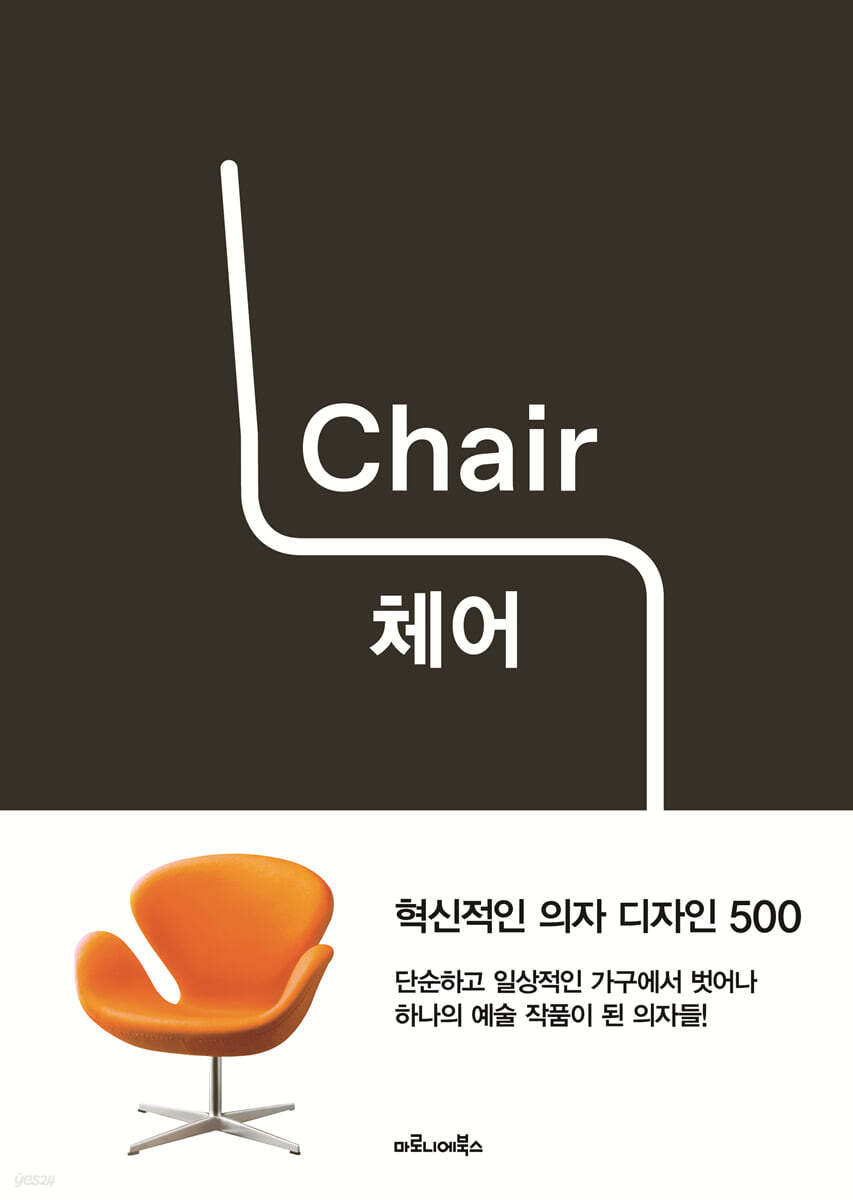
Chair: 500 Innovative Chair Designs presents 500 chair designs that are worthy of introduction.
Chairs are everywhere around us.
A piece of furniture that is indispensable in every aspect of modern life, we use chairs for eating, working, resting, writing, talking, and even sleeping.
Although we spend most of our time with chairs, how much do we really know about them?
Let's picture a chair in our mind.
A backrest, two armrests, a seat and four legs supporting it.
This is the basic form of the chair we are familiar with.
But this form is only a part of what the chair has.
A chair may have three legs, a single column, or a cantilever structure that is connected in the form of a continuous line.
Armrests may have one, two, or none at all, and the backrest may be long or short, wide or narrow.
The materials range from wood, metal, plastic, marble, to paper and fabric, and are more diverse than you might imagine.
A chair is an object that can be soft or hard, luxurious or very simple, light enough to be lifted with one finger or so heavy that it cannot be lifted or moved by hand.
As such, the shapes of chairs are very diverse.
Since chairs became an everyday item, the number of chairs designed and manufactured is also countless.
Chair: 500 Innovative Chair Designs presents 500 chair designs that are worthy of introduction.
- You can preview some of the book's contents.
Preview
index
-Timeline
-Index
-Photo source
-Index
-Photo source
Detailed image

Into the book
Although the earliest examples of Windsor-style chairs date back to the Gothic period, their true development began in the 1700s.
Originally a country chair in England (probably made by wheelwrights), the Windsor chair was used on farms, inns, and in gardens.
The Sax-White Windsor chair is a superb example of the style, beautifully combining a comfortable, light backrest with a wide, oval-shaped seat.
The name 'Saek-Baek' is thought to have originated from the shape and height of the backrest of this chair, which was suitable for use by turning the 'saek (sack)' over to protect against the cold winter wind.
--- p.510, from “Unknown Author, 〈Sack-White Windsor Chair〉”
The comfortable and lightweight folding director's chair is a ubiquitous sight on film sets and symbolizes the director's status as a powerful and authoritative figure.
The seat and back of a folding chair are usually made of durable canvas (which helps distribute the sitter's weight properly) or leather, and are supported by a sturdy frame made of wood or plastic.
Although its exact origins are unknown, the folding director's chair has many historical precedents, including the coronation chair of ancient Rome.
--- p.517, from “Unknown Author, Folding Director’s Chair”
These tiny, colorful, abstract ponies may look like they're for kids, but Eero Aarnio envisioned them as fun chairs for adults.
You can 'ride' a horse by sitting facing forward, or you can sit sideways.
Covered in padding and fabric on a tubular frame, the Pony Chair is a clear example of Pop Art influence, challenging stereotypes about what adult furniture should be.
In the late 1960s, many Scandinavian designers experimented with plastic, fiberglass, and other synthetic materials.
Under the leadership of Aarnio and Verner Panton, geometric shapes were emphasized, which were then transformed into useful furniture.
The Pony Chair is available from Adelta and its stretchy fabric upholstery in white, black, orange and green still provides plenty of room for imagination and fun for adults.
--- p.589, from “Ero Aarnio, Pony Chair”
Dutch design studio Droh Design has made a name for itself in the design world by developing conceptual products that prioritize the process over the outcome of the design process, often with a dash of humor.
Designed by Marijn van der Poll and first presented at the Milan Furniture Fair, the two Hit chairs start out as simple stainless steel cubes, complete with a sledgehammer.
This heavy tool encourages the user to participate in the design process, and when the cube is struck, it forms a chair-like shape (if struck too many times, it becomes a unique sculpture, but the designer doesn't really discourage this). The value of the two Hit chairs, which are both design products and works of art, lies in their ability to transform destructive impulses into creative processes.
--- p.611, from “Marine van der Pol, ‘Two Hit Chairs’”
Italian-born designer Martino Gamper took on the challenge of creating 100 chairs in 100 days in 2007.
Each chair was made from pieces of chairs found on the street or at friends' homes.
Gamper creates a mixture of stylistic elements that combine in unexpected ways, ranging from the poetic to the amusing and even the eccentric, discussing the phenomenon of our striving for perfection.
--- p.617, from “Martino Gamper, 100 Chairs in 100 Days”
Based on ergonomics research conducted at ETH Zurich, a world-renowned authority in applied sciences, the two designers created the concept of a forward-leaning chair.
After two and a half years and over 30 prototypes, the Tip Turn chair was launched in 2011.
The chair's biggest appeal is its simple, innovative design that allows you to lean forward, a posture proven to increase oxygen supply to the body and promote core muscle activity.
The Tip Turn chair is a recyclable, one-piece product manufactured from a single mold.
Originally a country chair in England (probably made by wheelwrights), the Windsor chair was used on farms, inns, and in gardens.
The Sax-White Windsor chair is a superb example of the style, beautifully combining a comfortable, light backrest with a wide, oval-shaped seat.
The name 'Saek-Baek' is thought to have originated from the shape and height of the backrest of this chair, which was suitable for use by turning the 'saek (sack)' over to protect against the cold winter wind.
--- p.510, from “Unknown Author, 〈Sack-White Windsor Chair〉”
The comfortable and lightweight folding director's chair is a ubiquitous sight on film sets and symbolizes the director's status as a powerful and authoritative figure.
The seat and back of a folding chair are usually made of durable canvas (which helps distribute the sitter's weight properly) or leather, and are supported by a sturdy frame made of wood or plastic.
Although its exact origins are unknown, the folding director's chair has many historical precedents, including the coronation chair of ancient Rome.
--- p.517, from “Unknown Author, Folding Director’s Chair”
These tiny, colorful, abstract ponies may look like they're for kids, but Eero Aarnio envisioned them as fun chairs for adults.
You can 'ride' a horse by sitting facing forward, or you can sit sideways.
Covered in padding and fabric on a tubular frame, the Pony Chair is a clear example of Pop Art influence, challenging stereotypes about what adult furniture should be.
In the late 1960s, many Scandinavian designers experimented with plastic, fiberglass, and other synthetic materials.
Under the leadership of Aarnio and Verner Panton, geometric shapes were emphasized, which were then transformed into useful furniture.
The Pony Chair is available from Adelta and its stretchy fabric upholstery in white, black, orange and green still provides plenty of room for imagination and fun for adults.
--- p.589, from “Ero Aarnio, Pony Chair”
Dutch design studio Droh Design has made a name for itself in the design world by developing conceptual products that prioritize the process over the outcome of the design process, often with a dash of humor.
Designed by Marijn van der Poll and first presented at the Milan Furniture Fair, the two Hit chairs start out as simple stainless steel cubes, complete with a sledgehammer.
This heavy tool encourages the user to participate in the design process, and when the cube is struck, it forms a chair-like shape (if struck too many times, it becomes a unique sculpture, but the designer doesn't really discourage this). The value of the two Hit chairs, which are both design products and works of art, lies in their ability to transform destructive impulses into creative processes.
--- p.611, from “Marine van der Pol, ‘Two Hit Chairs’”
Italian-born designer Martino Gamper took on the challenge of creating 100 chairs in 100 days in 2007.
Each chair was made from pieces of chairs found on the street or at friends' homes.
Gamper creates a mixture of stylistic elements that combine in unexpected ways, ranging from the poetic to the amusing and even the eccentric, discussing the phenomenon of our striving for perfection.
--- p.617, from “Martino Gamper, 100 Chairs in 100 Days”
Based on ergonomics research conducted at ETH Zurich, a world-renowned authority in applied sciences, the two designers created the concept of a forward-leaning chair.
After two and a half years and over 30 prototypes, the Tip Turn chair was launched in 2011.
The chair's biggest appeal is its simple, innovative design that allows you to lean forward, a posture proven to increase oxygen supply to the body and promote core muscle activity.
The Tip Turn chair is a recyclable, one-piece product manufactured from a single mold.
--- p.630, from "Edward Barber & Jay Osgerby, "Tip Turn Chair"
Publisher's Review
A collection of 500 chairs that brought about a turning point in the history of chair design.
From its origins in ancient Egypt to the present day, countless chairs have been around us for a long time.
"Chair: 500 Innovative Chair Designs" explores the chair's earliest appearances to today's cutting-edge creations, celebrating the humble chairs that have previously gone unnoticed.
There are countless chairs in the world.
These 500 chair designs were selected because of their innovative design, groundbreaking materials or technologies used in the production process, or unusual shapes, colors, or textures.
For example, some chairs have marked turning points in the history of chair design, creating more ergonomic or previously non-existent types of chairs.
Sometimes, some chairs used new or unexpected materials or production techniques, or took traditional designs to the height of perfection.
After selecting and gathering these special chairs, they were paired based on similarities or differences, harmony or dissonance, and different eras, cultures, or functions.
And through this, I wanted to highlight how these simple objects, pursuing one common goal, can bring amazing diversity to our lives.
As furniture designer Charles Eames once said, the designer's role is "like that of a very good and considerate host who tries his best to anticipate the needs of his guests." And the chair is a prime example of this task perfectly executed.
Why not sit back in your favorite chair, flip through the pages of this book, and embrace the invitations of hundreds of renowned designers?
From its origins in ancient Egypt to the present day, countless chairs have been around us for a long time.
"Chair: 500 Innovative Chair Designs" explores the chair's earliest appearances to today's cutting-edge creations, celebrating the humble chairs that have previously gone unnoticed.
There are countless chairs in the world.
These 500 chair designs were selected because of their innovative design, groundbreaking materials or technologies used in the production process, or unusual shapes, colors, or textures.
For example, some chairs have marked turning points in the history of chair design, creating more ergonomic or previously non-existent types of chairs.
Sometimes, some chairs used new or unexpected materials or production techniques, or took traditional designs to the height of perfection.
After selecting and gathering these special chairs, they were paired based on similarities or differences, harmony or dissonance, and different eras, cultures, or functions.
And through this, I wanted to highlight how these simple objects, pursuing one common goal, can bring amazing diversity to our lives.
As furniture designer Charles Eames once said, the designer's role is "like that of a very good and considerate host who tries his best to anticipate the needs of his guests." And the chair is a prime example of this task perfectly executed.
Why not sit back in your favorite chair, flip through the pages of this book, and embrace the invitations of hundreds of renowned designers?
GOODS SPECIFICS
- Date of issue: June 3, 2024
- Page count, weight, size: 656 pages | 170*242*35mm
- ISBN13: 9788960536579
- ISBN10: 8960536571
You may also like
카테고리
korean


korean

![GQ KOREA Mark (Monthly): December [2025]](http://librairie.coreenne.fr/cdn/shop/files/8ef265dbbfbf186523ed75ba7319009d.jpg?v=1765340328&width=3840)


