

Play-centered curriculum
 |
Description
Book Introduction
Answering Kindergarten Concerns About Play-Centered Curriculum
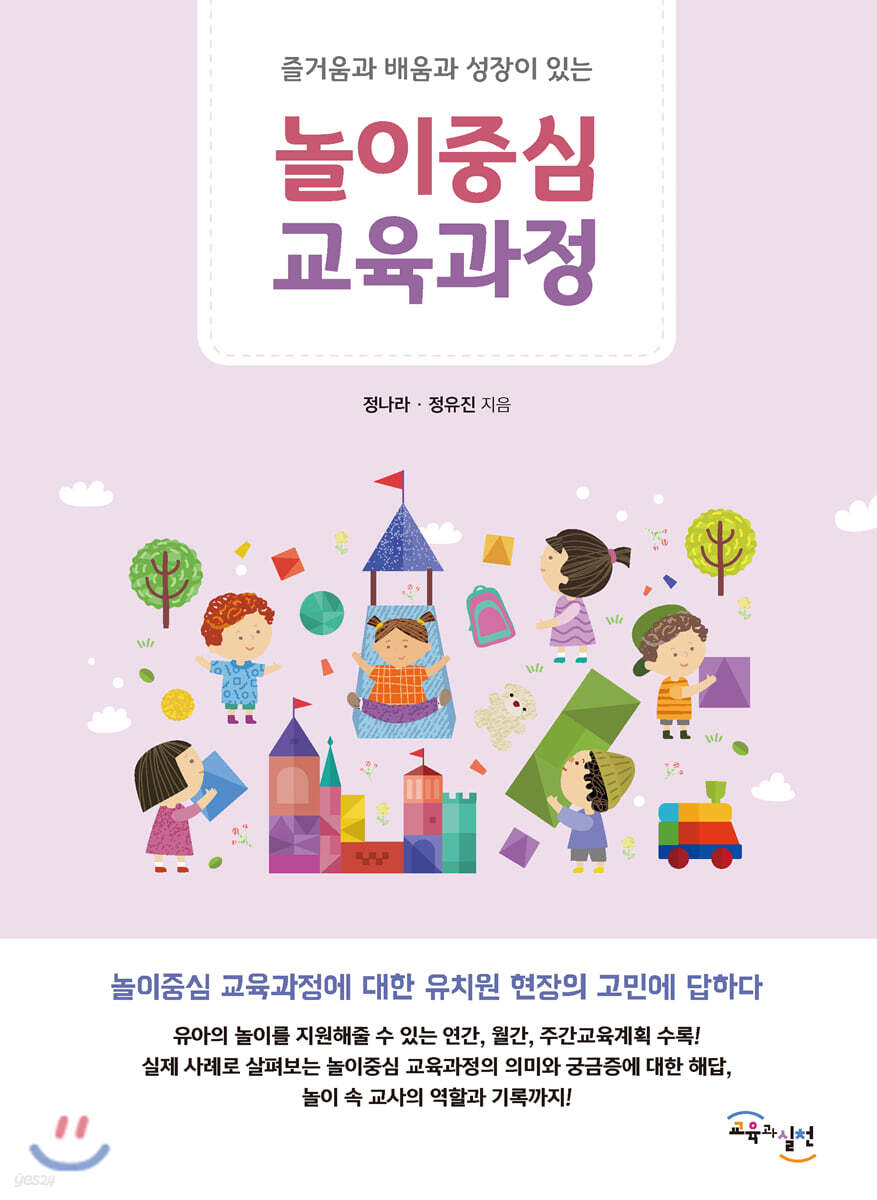
Includes annual, monthly, and weekly educational plans to support your child's play!
The meaning of play-centered curriculum and answers to your questions through real-life examples.
The teacher's role in play and even the records
Understanding and practical knowledge of play-centered curriculum
In July 2019, the Ministry of Education finalized and announced the '2019 Revised Nuri Curriculum,' which will be applied to kindergartens and daycare centers starting in March 2020.
This is also called a ‘play-centered curriculum’ with ‘play-centered’ and ‘child-centered’ as its core concepts.
In kindergartens and daycare centers, the importance of 'play' is widely acknowledged, but in a transitional situation where the curriculum is changing from the past to a different play-centered curriculum, there is considerable confusion about the exact concept of a play-centered curriculum and how classes should be conducted.
The two authors of "Kindergarten Class Management Through Play" have studied, researched, and experienced over a long period of time while preparing a "play-centered curriculum" and have included it in this book.
You will gain a clear understanding of what a play-centered curriculum is and specific practical knowledge on how to implement it.
Includes annual, monthly, and weekly educational plans to support your child's play!
The meaning of play-centered curriculum and answers to your questions through real-life examples.
The teacher's role in play and even the records
Understanding and practical knowledge of play-centered curriculum
In July 2019, the Ministry of Education finalized and announced the '2019 Revised Nuri Curriculum,' which will be applied to kindergartens and daycare centers starting in March 2020.
This is also called a ‘play-centered curriculum’ with ‘play-centered’ and ‘child-centered’ as its core concepts.
In kindergartens and daycare centers, the importance of 'play' is widely acknowledged, but in a transitional situation where the curriculum is changing from the past to a different play-centered curriculum, there is considerable confusion about the exact concept of a play-centered curriculum and how classes should be conducted.
The two authors of "Kindergarten Class Management Through Play" have studied, researched, and experienced over a long period of time while preparing a "play-centered curriculum" and have included it in this book.
You will gain a clear understanding of what a play-centered curriculum is and specific practical knowledge on how to implement it.
- You can preview some of the book's contents.
Preview
index
Recommendation
Entering
Part 1: Approaching a Play-Centered Curriculum
Chapter 1.
Kindergarten Concerns About Play-Centered Curriculum
A play-centered curriculum that makes you think countless times
Play-Centered Curriculum Q&A
A field teacher's reflections on play
The Teacher's Role in Play: A Case Study Through Practice
Chapter 2.
Preparing to take a step further in play-centered curriculum
Elements that must change to operate a play-centered curriculum
A play-centered curriculum model developed through practice
Part 2: Implementing a Play-Centered Curriculum
Chapter 3.
Add playful elements to your teacher's plans.
01 Take out the toy that went under the bed.
02 Introducing my childhood
03 Try to act like a baby like this
04 Let's build a home for our family
05 Find my partner
06 Finding Treasures in the Spring Garden
07 Where are the watermelon seeds hiding?
08 Let's do watermelon curling
09 Build a swimming pool
10 Play with fall clothes
11 Give clothes to your favorite animal
12 Whose tail is it?
13 Call the Wolf
14. Create a backstory for 'The Red Bean Porridge Grandmother and the Tiger'
15 Role Playrooms Suggested by Toddlers
Chapter 4.
Add a playful element to your child's interests.
01 Choose the king of the forest country
02 Let's play movie theater
03 Let's play at the animal hospital
04 I met a butterfly in the spring garden
05 Bees collect honey
06 Decorate a cherry tree with popcorn
07 Make a spring flower frame
08 Take great pictures
09 A fun whale food game I made
10 Who is in the whale food?
11 Whale Food Bingo
12 Move the whale food!
13 Whale Food Sea Animal Name Card Game
14 The Delicious Ice Cream Shop I Created
15 Playing in the water at kindergarten
16 Have fun with air caps
17 Let's play cup stacking game
18 Make a board game
19 I came to the winter fishing spot
Find the 20 Twin Watermelons
21 Decorate your own watermelon
22 Watermelon Bowling
23 Guess the watermelon!
24 Harmonica Eat Watermelon
25 Which ball knocks down the most watermelon pins?
Chapter 5.
Adding learning to toddler-led play
01 Transform into a berry zombie
02 Draw a picture with cherry paint
03 Burjji Alkagi
04 Cherry Zombie Tag
05 What am I in my mother's womb?
06 Playing with the bugs
07 Our Own Dinosaur World
08 Making Dinosaur Bones
09 Dinosaur Family Play and Hospital Play for 3-Year-Olds
10 Dinosaur Ice Cream Shop Play
11 Caterpillars found in the garden
12 The spring garden is rainbow colored
13 Our game of tag
14 Balloon Play We Want to Do
15 In our classroom, we only do things sitting down.
16 Change Change We Change Toys
Coming out
Entering
Part 1: Approaching a Play-Centered Curriculum
Chapter 1.
Kindergarten Concerns About Play-Centered Curriculum
A play-centered curriculum that makes you think countless times
Play-Centered Curriculum Q&A
A field teacher's reflections on play
The Teacher's Role in Play: A Case Study Through Practice
Chapter 2.
Preparing to take a step further in play-centered curriculum
Elements that must change to operate a play-centered curriculum
A play-centered curriculum model developed through practice
Part 2: Implementing a Play-Centered Curriculum
Chapter 3.
Add playful elements to your teacher's plans.
01 Take out the toy that went under the bed.
02 Introducing my childhood
03 Try to act like a baby like this
04 Let's build a home for our family
05 Find my partner
06 Finding Treasures in the Spring Garden
07 Where are the watermelon seeds hiding?
08 Let's do watermelon curling
09 Build a swimming pool
10 Play with fall clothes
11 Give clothes to your favorite animal
12 Whose tail is it?
13 Call the Wolf
14. Create a backstory for 'The Red Bean Porridge Grandmother and the Tiger'
15 Role Playrooms Suggested by Toddlers
Chapter 4.
Add a playful element to your child's interests.
01 Choose the king of the forest country
02 Let's play movie theater
03 Let's play at the animal hospital
04 I met a butterfly in the spring garden
05 Bees collect honey
06 Decorate a cherry tree with popcorn
07 Make a spring flower frame
08 Take great pictures
09 A fun whale food game I made
10 Who is in the whale food?
11 Whale Food Bingo
12 Move the whale food!
13 Whale Food Sea Animal Name Card Game
14 The Delicious Ice Cream Shop I Created
15 Playing in the water at kindergarten
16 Have fun with air caps
17 Let's play cup stacking game
18 Make a board game
19 I came to the winter fishing spot
Find the 20 Twin Watermelons
21 Decorate your own watermelon
22 Watermelon Bowling
23 Guess the watermelon!
24 Harmonica Eat Watermelon
25 Which ball knocks down the most watermelon pins?
Chapter 5.
Adding learning to toddler-led play
01 Transform into a berry zombie
02 Draw a picture with cherry paint
03 Burjji Alkagi
04 Cherry Zombie Tag
05 What am I in my mother's womb?
06 Playing with the bugs
07 Our Own Dinosaur World
08 Making Dinosaur Bones
09 Dinosaur Family Play and Hospital Play for 3-Year-Olds
10 Dinosaur Ice Cream Shop Play
11 Caterpillars found in the garden
12 The spring garden is rainbow colored
13 Our game of tag
14 Balloon Play We Want to Do
15 In our classroom, we only do things sitting down.
16 Change Change We Change Toys
Coming out
Publisher's Review
Teachers' Concerns About Play-Centered Curriculum and the Process of Change Through Play
“I don’t really know what a play-centered curriculum is.” Many teachers struggle to find a clear definition of a play-centered curriculum, and opinions vary, leaving them confused.
So, they think that the play-centered curriculum is difficult and challenging, and they are unable to take on the challenge of change.
Based on these voices from the field, we introduced teachers' concerns about play-centered curriculum and the process of change within play.
We included as many real-life examples as possible, such as what concerns were encountered in the process of moving to a play-centered approach and how they were resolved through interaction with children.
Additionally, play models and various educational plans are included to help teachers easily understand and apply the play-centered curriculum.
In a play-centered curriculum, we support children through play that reflects their interests, characteristics, and experiences, so there are times when the activities introduced in this book cannot be carried out exactly as they are.
So, I recorded in detail the interaction process between the child and the teacher.
Rather than looking at the results of play, it is important to find your own play-centered curriculum by examining what the teacher's concerns were during the process and how they resolved them with the children.
Among the activities introduced, there were some that ended without leading to play or resulted in mistakes.
Sometimes, children feel frustrated when the play they planned to reflect their interests does not go as planned and they feel like a failure.
But the important thing is to learn and grow from mistakes, big and small.
I think of it as a process of becoming a better teacher and I must constantly challenge myself.
Find your own play-centered curriculum
For teachers accustomed to textbooks, the autonomy emphasized in the revised curriculum may make it difficult to implement a play-centered curriculum.
For teachers who have been preparing lessons by referring to textbooks, it is by no means easy to support children's spontaneous and spontaneous play and operate the curriculum autonomously.
"What kind of play should I teach?" "What kind of play should I learn?" "Why a play-centered curriculum all of a sudden? Then wasn't it play-centered until now?" "What kind of classes should I teach?" "Is it play-centered if children just play?" "Is the activity I'm doing a play-centered curriculum?" These are questions and concerns that will likely remain, but we must constantly think about them.
A play-centered curriculum is not simply a change in teaching methods or the introduction of new teaching and learning methods.
While discussing the importance of play, we may have been thinking of play as separate from education.
And because toddlers' play is so commonplace, it's easy to overlook it.
The reason why play-centered curriculum has become such a hot topic is because it aims to enable true play centered on children.
I hope that you will use this book as a foundation for operating a play-centered curriculum that fosters enjoyment, learning, and growth, and establish your own path toward understanding and respecting play and young children.
“I don’t really know what a play-centered curriculum is.” Many teachers struggle to find a clear definition of a play-centered curriculum, and opinions vary, leaving them confused.
So, they think that the play-centered curriculum is difficult and challenging, and they are unable to take on the challenge of change.
Based on these voices from the field, we introduced teachers' concerns about play-centered curriculum and the process of change within play.
We included as many real-life examples as possible, such as what concerns were encountered in the process of moving to a play-centered approach and how they were resolved through interaction with children.
Additionally, play models and various educational plans are included to help teachers easily understand and apply the play-centered curriculum.
In a play-centered curriculum, we support children through play that reflects their interests, characteristics, and experiences, so there are times when the activities introduced in this book cannot be carried out exactly as they are.
So, I recorded in detail the interaction process between the child and the teacher.
Rather than looking at the results of play, it is important to find your own play-centered curriculum by examining what the teacher's concerns were during the process and how they resolved them with the children.
Among the activities introduced, there were some that ended without leading to play or resulted in mistakes.
Sometimes, children feel frustrated when the play they planned to reflect their interests does not go as planned and they feel like a failure.
But the important thing is to learn and grow from mistakes, big and small.
I think of it as a process of becoming a better teacher and I must constantly challenge myself.
Find your own play-centered curriculum
For teachers accustomed to textbooks, the autonomy emphasized in the revised curriculum may make it difficult to implement a play-centered curriculum.
For teachers who have been preparing lessons by referring to textbooks, it is by no means easy to support children's spontaneous and spontaneous play and operate the curriculum autonomously.
"What kind of play should I teach?" "What kind of play should I learn?" "Why a play-centered curriculum all of a sudden? Then wasn't it play-centered until now?" "What kind of classes should I teach?" "Is it play-centered if children just play?" "Is the activity I'm doing a play-centered curriculum?" These are questions and concerns that will likely remain, but we must constantly think about them.
A play-centered curriculum is not simply a change in teaching methods or the introduction of new teaching and learning methods.
While discussing the importance of play, we may have been thinking of play as separate from education.
And because toddlers' play is so commonplace, it's easy to overlook it.
The reason why play-centered curriculum has become such a hot topic is because it aims to enable true play centered on children.
I hope that you will use this book as a foundation for operating a play-centered curriculum that fosters enjoyment, learning, and growth, and establish your own path toward understanding and respecting play and young children.
GOODS SPECIFICS
- Publication date: December 16, 2019
- Page count, weight, size: 349 pages | 730g | 172*235*30mm
- ISBN13: 9791190113052
- ISBN10: 1190113058
You may also like
카테고리
korean


korean

![GQ KOREA Mark (Monthly): December [2025]](http://librairie.coreenne.fr/cdn/shop/files/8ef265dbbfbf186523ed75ba7319009d.jpg?v=1765340328&width=3840)


