

Under Blue Cup
 |
Description
Book Introduction
After a prominent critic recovers from amnesia
Fighting the Aesthetic Meaninglessness of Post-Medium
Author Rosalind Krauss is a renowned art historian and art critic who is well known to us for her translations of 『Sailing in the North Sea』, 『The Unformed』, 『The Flow of Modern Sculpture』, and 『Photography, Index, and Contemporary Art』.
"Under the Blue Cup" is a book of critical theory that passionately confronts the aesthetic meaninglessness of the post-medium condition, taking on a more combative tone after recovering from a ruptured aneurysm that left him with brain damage through three surgeries and arduous cognitive rehabilitation.
The author suffered a ruptured brain aneurysm in 1999, causing near-fatal brain damage.
As a result, the author loses the very foundation for a meaningful relationship with the world, losing both language and memory.
1997, two years before the author suffered a stroke, was also the year the famous Kassel Documenta X was held.
According to the author's experience, from this point on, post-medium installation art seemed to be heading towards its peak, and the various artistic practices that Kassel Documenta presented while declaring that "the white cube is dead" swept away the foundations on which art could generate meaning.
Oblivion is a characteristic feature of post-medium art, which includes installation art, relational aesthetics, anti-white cube aesthetics, conceptual art, deconstructive critiques of the self, and political moralism that kills the joy of reading.
The therapy used to recover cheap, washed-out memories made me aware of the fundamental relationship between media, materiality, time, and the self.
As the author repeatedly states, her recovery of language was possible only after she recovered her memory of herself, the foundation upon which she built her own meaningful world: “Who am I (you)?”
The question, “Who am I (who are you)?” is precisely the foundation that contemporary art has abandoned, and Krauss argues that the condition of the post-medium is a situation in which the medium has forgotten the key to supporting the possibility of art itself.
Fighting the Aesthetic Meaninglessness of Post-Medium
Author Rosalind Krauss is a renowned art historian and art critic who is well known to us for her translations of 『Sailing in the North Sea』, 『The Unformed』, 『The Flow of Modern Sculpture』, and 『Photography, Index, and Contemporary Art』.
"Under the Blue Cup" is a book of critical theory that passionately confronts the aesthetic meaninglessness of the post-medium condition, taking on a more combative tone after recovering from a ruptured aneurysm that left him with brain damage through three surgeries and arduous cognitive rehabilitation.
The author suffered a ruptured brain aneurysm in 1999, causing near-fatal brain damage.
As a result, the author loses the very foundation for a meaningful relationship with the world, losing both language and memory.
1997, two years before the author suffered a stroke, was also the year the famous Kassel Documenta X was held.
According to the author's experience, from this point on, post-medium installation art seemed to be heading towards its peak, and the various artistic practices that Kassel Documenta presented while declaring that "the white cube is dead" swept away the foundations on which art could generate meaning.
Oblivion is a characteristic feature of post-medium art, which includes installation art, relational aesthetics, anti-white cube aesthetics, conceptual art, deconstructive critiques of the self, and political moralism that kills the joy of reading.
The therapy used to recover cheap, washed-out memories made me aware of the fundamental relationship between media, materiality, time, and the self.
As the author repeatedly states, her recovery of language was possible only after she recovered her memory of herself, the foundation upon which she built her own meaningful world: “Who am I (you)?”
The question, “Who am I (who are you)?” is precisely the foundation that contemporary art has abandoned, and Krauss argues that the condition of the post-medium is a situation in which the medium has forgotten the key to supporting the possibility of art itself.
- You can preview some of the book's contents.
Preview
index
Note attached to the Korean version
Acknowledgements
one.
Wash away
two.
On the road
three.
Knight's movement
main
Translator's Note
Search
Acknowledgements
one.
Wash away
two.
On the road
three.
Knight's movement
main
Translator's Note
Search
Into the book
At the time, I was just recovering from a brain injury, so I wanted to bring out the thoughts that flowed down the back of my memory, and this book is a record of myself and of contemporary art trying to break free from self-forgetfulness.
"Under the Blue Cup" is full of writing experiments.
--- p.5
Under Blue Cup, the key word of my memory card that confidently proves the first rule of memory therapy.
If you can remember 'who you are' (a self-awareness that can never be certain for someone who has been in a coma), you now have the essential associative [memory] foundation for teaching yourself how to remember anything.
It may seem strange to treat this narrative as if it were my own, but soon I will disappear after connecting it to contemporary art.
--- p.15
The traditional concept of media is that the medium itself serves as a 'support' for the artwork, such as the base of a canvas for oil painting, or a metal frame for plaster or clay.
In contrast to these traditional foundations, the 'technological foundation' is usually borrowed from available popular culture forms such as animated films, automobiles, investigative journalism, or movies.
--- p.34~35
Under the Blue Cup will explore eight examples that argue for the absolute necessity of extending a particular medium as a basis for aesthetic coherence: Ed Ruscha's use of cars, William Kentridge's elaborate animations achieved through painstaking erasure, James Coleman's adaptation of slide tape as an early form of PowerPoint, Christian Markley's simultaneous use of commercial film soundtracks, Bruce Nauman's adoption of the corridor as an architectural trope, Sophie Calle's parody of investigative journalism, Marcel Broodthaers's embrace of the art book's historical coherence (what André Malraux called a museum without walls), and Harun Farocki's foregrounding of the video editing table.
Through each of these foundations, writers discover their own unique 'rules'.
And these rules further form the basis for the recursive self-evidence of media specificity.
If these artists are 'inventing' their medium, they are resisting contemporary art's forgetfulness of how medium supports the possibilities of art.
If "Under the Blue Cup" makes one point, it is this.
--- p.41~42
Charles Dickens was a master plotter.
…the leisure with which Dickens introduces his subjects is only to set them aside for a moment, and this seems to be a kind of authorial improvisation.
The more you achieve, the more complex it becomes.
--- p.86
Without trying to match the pleasures of a Dickensian text, I wanted to structure Under the Blue Cup like a fugue, a master narrative of the brain's remembering and forgetting, an alphabetically arranged array of aphorisms (each intended to offer its own pleasure).
This allows readers to recognize how the washing away of the brain aneurysm meshes with the stains [of Ed Ruscha] and the oil seeping from the parking lot floor, as well as with Kentridge's eraser marks.
The content of Chapter 1 asks both the subject of the cerebral hemorrhage and the subject of the aesthetic tradition, “Who are you?”
The network of neurons created an alphabetical fullness that moved from A to Z.
--- p.91~92
Here are Roland Barthes's Pleasures, Susan Sontag's Erotics, and the swimming pool wall from Under the Blue Cup.
To give up these pleasures for the sake of 'political moralism' is a disease.
--- p.122
The argument in this book is a call to remember against the seductive song of installation art, "forget."
--- p.125
Almost from the beginning, the artist imagined himself making a hole in the 'transparent solidity' of the canvas, equating the painting with a window.
This was a view that opened up the surface of the painting and also gave depth to that plane.
After the invention of perspective, the window frame became a signifier of the painting itself.
"Under the Blue Cup" is full of writing experiments.
--- p.5
Under Blue Cup, the key word of my memory card that confidently proves the first rule of memory therapy.
If you can remember 'who you are' (a self-awareness that can never be certain for someone who has been in a coma), you now have the essential associative [memory] foundation for teaching yourself how to remember anything.
It may seem strange to treat this narrative as if it were my own, but soon I will disappear after connecting it to contemporary art.
--- p.15
The traditional concept of media is that the medium itself serves as a 'support' for the artwork, such as the base of a canvas for oil painting, or a metal frame for plaster or clay.
In contrast to these traditional foundations, the 'technological foundation' is usually borrowed from available popular culture forms such as animated films, automobiles, investigative journalism, or movies.
--- p.34~35
Under the Blue Cup will explore eight examples that argue for the absolute necessity of extending a particular medium as a basis for aesthetic coherence: Ed Ruscha's use of cars, William Kentridge's elaborate animations achieved through painstaking erasure, James Coleman's adaptation of slide tape as an early form of PowerPoint, Christian Markley's simultaneous use of commercial film soundtracks, Bruce Nauman's adoption of the corridor as an architectural trope, Sophie Calle's parody of investigative journalism, Marcel Broodthaers's embrace of the art book's historical coherence (what André Malraux called a museum without walls), and Harun Farocki's foregrounding of the video editing table.
Through each of these foundations, writers discover their own unique 'rules'.
And these rules further form the basis for the recursive self-evidence of media specificity.
If these artists are 'inventing' their medium, they are resisting contemporary art's forgetfulness of how medium supports the possibilities of art.
If "Under the Blue Cup" makes one point, it is this.
--- p.41~42
Charles Dickens was a master plotter.
…the leisure with which Dickens introduces his subjects is only to set them aside for a moment, and this seems to be a kind of authorial improvisation.
The more you achieve, the more complex it becomes.
--- p.86
Without trying to match the pleasures of a Dickensian text, I wanted to structure Under the Blue Cup like a fugue, a master narrative of the brain's remembering and forgetting, an alphabetically arranged array of aphorisms (each intended to offer its own pleasure).
This allows readers to recognize how the washing away of the brain aneurysm meshes with the stains [of Ed Ruscha] and the oil seeping from the parking lot floor, as well as with Kentridge's eraser marks.
The content of Chapter 1 asks both the subject of the cerebral hemorrhage and the subject of the aesthetic tradition, “Who are you?”
The network of neurons created an alphabetical fullness that moved from A to Z.
--- p.91~92
Here are Roland Barthes's Pleasures, Susan Sontag's Erotics, and the swimming pool wall from Under the Blue Cup.
To give up these pleasures for the sake of 'political moralism' is a disease.
--- p.122
The argument in this book is a call to remember against the seductive song of installation art, "forget."
--- p.125
Almost from the beginning, the artist imagined himself making a hole in the 'transparent solidity' of the canvas, equating the painting with a window.
This was a view that opened up the surface of the painting and also gave depth to that plane.
After the invention of perspective, the window frame became a signifier of the painting itself.
--- p.195
Publisher's Review
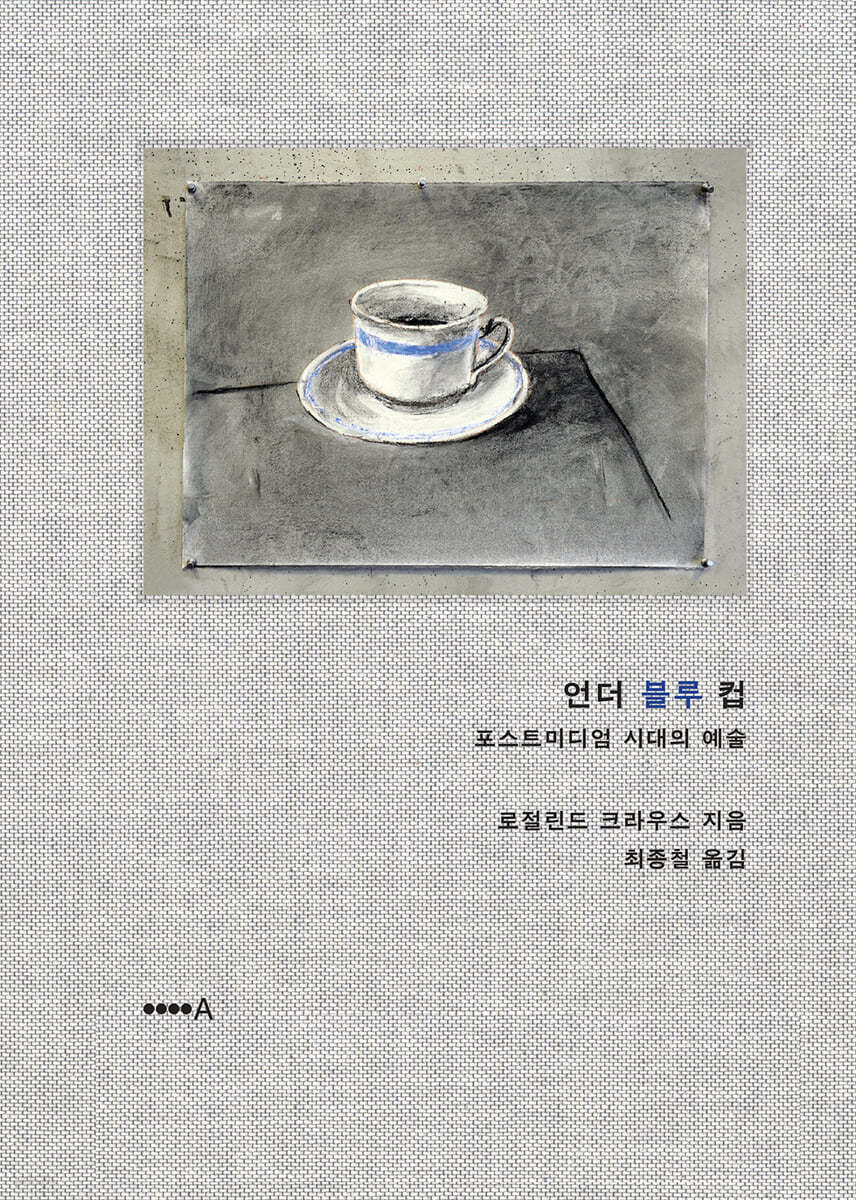
The title of this book, 'Under the Blue Cup,' was one of the memory cards used in the author's cognitive rehabilitation training.
The flashcards contain simple pictures or unrelated word fragments, and the card titled "Under Blue Cup" was the first example word the author encountered in cognitive rehabilitation training.
Amnesia is like being alone in a vast ocean with nothing to rely on.
The author gradually recovers the fragments of life left somewhere in the subconscious, or the history of life remembered by the body, and finally begins to learn the word 'under blue cup'.
According to the author, the 'Under Blue Cup' was an essential medium for her memory recovery, "a practice object for learning to remember and a chance gift passed on to lost memories."
"Under the Blue Cup" begins with the author's story of trying to recover damaged memories, which may at first seem anecdotal.
But this book is far from a memoir.
Rather, this book, with its unique and engaging interweaving of theory, history, and personal narrative, is undoubtedly one of the most important works on media theory.
The author has already conducted very critical research on the 'post-medium condition' in the past, and in 'Sailing in the North Sea', he has proven that Marcel Broodthaers, commonly known as a conceptual artist, is in fact an important artist who explores media.
Krauss says that recovering from his stroke was also about relearning how to write.
It is also a process of rediscovering what is the foundation or basis for meaning in life and art.
So, as the author states in the preface to the Korean edition, this book is full of writing experiments.
The process of finding language is never linear, as there is no secure anchor anywhere.
The author frequently invokes Dickens, arguing that the textual pleasure found in Dickens, a master of plot, or the textual pleasure of which Barthes speaks, and the eroticism of art of which Susan Sontag speaks, are the essence of art.
This book also adopts a unique composition method to provide such textual pleasure.
Just like the rules of freedom that allow for variations on a fugue, aphorisms arranged according to an alphabetic structure contain a rhetorical technique of fragments with unique accents, doubling the pleasure of reading in context.
『Under Blue Cup』 contains over 60 color pictorials.
The pleasure of looking at it is also a great pleasure of this book.
The flashcards contain simple pictures or unrelated word fragments, and the card titled "Under Blue Cup" was the first example word the author encountered in cognitive rehabilitation training.
Amnesia is like being alone in a vast ocean with nothing to rely on.
The author gradually recovers the fragments of life left somewhere in the subconscious, or the history of life remembered by the body, and finally begins to learn the word 'under blue cup'.
According to the author, the 'Under Blue Cup' was an essential medium for her memory recovery, "a practice object for learning to remember and a chance gift passed on to lost memories."
"Under the Blue Cup" begins with the author's story of trying to recover damaged memories, which may at first seem anecdotal.
But this book is far from a memoir.
Rather, this book, with its unique and engaging interweaving of theory, history, and personal narrative, is undoubtedly one of the most important works on media theory.
The author has already conducted very critical research on the 'post-medium condition' in the past, and in 'Sailing in the North Sea', he has proven that Marcel Broodthaers, commonly known as a conceptual artist, is in fact an important artist who explores media.
Krauss says that recovering from his stroke was also about relearning how to write.
It is also a process of rediscovering what is the foundation or basis for meaning in life and art.
So, as the author states in the preface to the Korean edition, this book is full of writing experiments.
The process of finding language is never linear, as there is no secure anchor anywhere.
The author frequently invokes Dickens, arguing that the textual pleasure found in Dickens, a master of plot, or the textual pleasure of which Barthes speaks, and the eroticism of art of which Susan Sontag speaks, are the essence of art.
This book also adopts a unique composition method to provide such textual pleasure.
Just like the rules of freedom that allow for variations on a fugue, aphorisms arranged according to an alphabetic structure contain a rhetorical technique of fragments with unique accents, doubling the pleasure of reading in context.
『Under Blue Cup』 contains over 60 color pictorials.
The pleasure of looking at it is also a great pleasure of this book.
GOODS SPECIFICS
- Date of issue: November 10, 2023
- Format: Hardcover book binding method guide
- Page count, weight, size: 304 pages | 662g | 153*216*23mm
- ISBN13: 9788965642879
- ISBN10: 8965642876
You may also like
카테고리
korean


korean

![GQ KOREA Mark (Monthly): December [2025]](http://librairie.coreenne.fr/cdn/shop/files/8ef265dbbfbf186523ed75ba7319009d.jpg?v=1765340328&width=3840)


