

One Book a Day, Picture Book Empathy Class
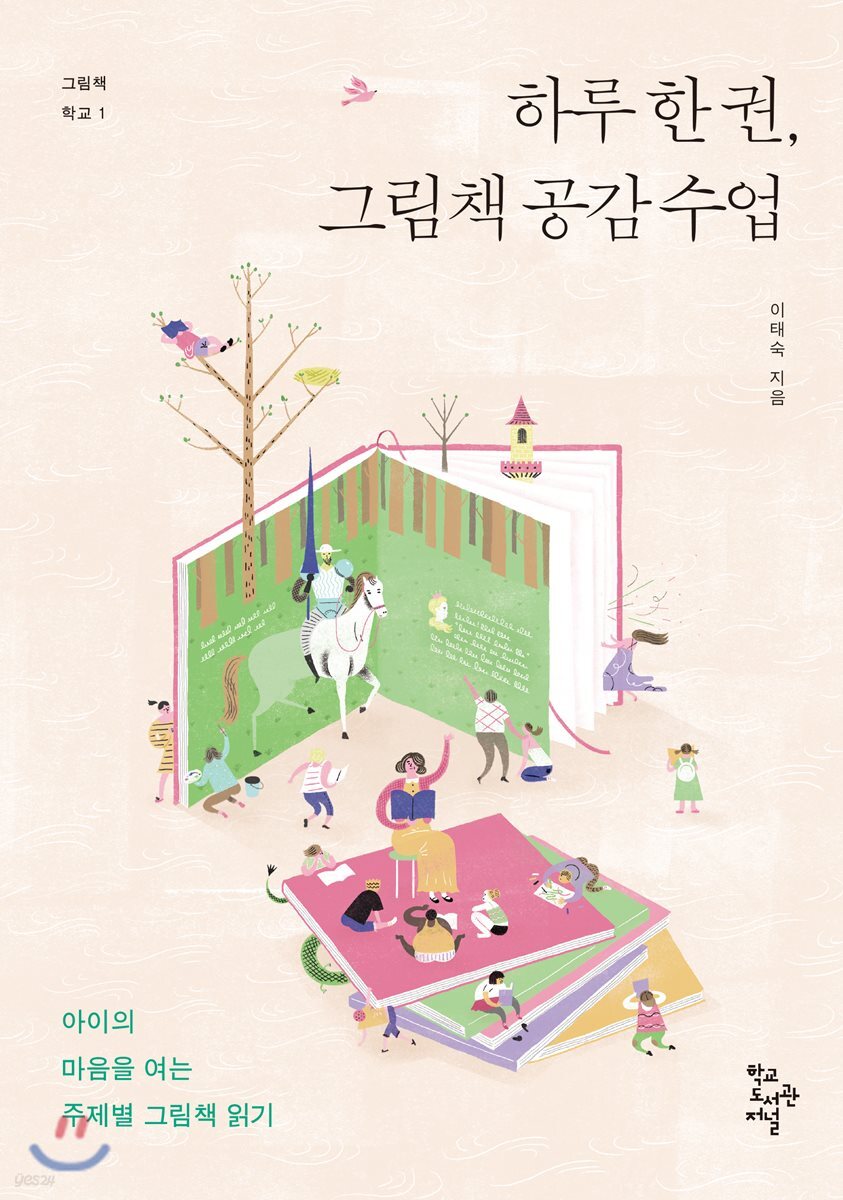 |
Description
Book Introduction
A reading essay by Taesuk Lee, an elementary school teacher who reads picture books every day.
This is a collection of records of reading one picture book to children every morning for five years.
The author read picture books to children on topics such as ‘self-esteem,’ ‘reading habits,’ ‘friends,’ ‘family,’ ‘environment,’ and ‘human rights.’
Then, the children compared picture books by topic, broke down preconceptions, and expanded their thinking.
This book introduces picture books and children's stories by organizing chapters by topic in the order in which the author reads the picture books.
Additionally, we included a story about a Havruta class where students read picture books and asked questions for each topic.
It will be a good guide for teachers and parents who are considering teaching children to read picture books.
This is a collection of records of reading one picture book to children every morning for five years.
The author read picture books to children on topics such as ‘self-esteem,’ ‘reading habits,’ ‘friends,’ ‘family,’ ‘environment,’ and ‘human rights.’
Then, the children compared picture books by topic, broke down preconceptions, and expanded their thinking.
This book introduces picture books and children's stories by organizing chapters by topic in the order in which the author reads the picture books.
Additionally, we included a story about a Havruta class where students read picture books and asked questions for each topic.
It will be a good guide for teachers and parents who are considering teaching children to read picture books.
- You can preview some of the book's contents.
Preview
index
A friendly guide from a teacher crazy about picture books
Preface: Why We Read Picture Books to Children Every Day
Chapter 1: Raising Self-Esteem
You are precious_『You are the best work of art』, 『You are special』
Other things are normal_『My ears are lopsided』
Important facts about me_『Important facts』
I choose my own path!_『Hedgehog X』
A Perfect Life, A Perfect Death_『The Cat Who Lived a Million Times』
|Thinking Beyond Thinking|The Core of Class: Creating Questions_『Chicken Mask』
Chapter 2: Developing Reading Habits
The Taste of Knowledge is Sweet - "The Bee Tree", "Thank You, Teacher"
The purpose of reading is change and growth. _The Secret of the Library
A reading that made me forget the smell of cooking rice: "The Child Who Only Wanted to Read Books"
The Joy of Reading Together_『A Book for Bruno』
Anyone Can Be a Writer!_『Library Mouse』
|Thinking Beyond Thinking|Eating in a hurry causes indigestion_『The Child Who Gobbles Books in a Crunchy Gulp』
Chapter 3 Friends are good
Actually, relationships aren't easy for me either_『Making Friends』
My Imaginary Friend_『Aldo』
A Word of Courage_『Candy Almonds』
Teacher, please don't cry for me_『You are not an outcast』
Waiting and Giving_『Big Wolf Little Wolf』
|Thinking Beyond Thoughts|What about a friend with a different personality?_『I'm happy because of you!』
Chapter 4: Our Family Story
The Shadow of Family_『This is Our Family』
Living as a Mother_『Ppyak's Mom』
My dear father_『Gorilla』
How to Accept Your Parents' Divorce_『Dad Now Lives on Heinrich Street』
The heart opens slowly_『The String of Memory』
|Thoughts Beyond Thought|A Mother's Sublime Love_『Blue Bird』
Chapter 5: How to Protect the Environment?
Let Go, Sally Jane_Miss Rumphius, Let the River Run
If I could see a blue sky every day_『Stop the murky air now』, 『The dust of death is falling』
Can Humans and Nature Coexist?_『Moabi』
What Happened in the Black Sea That Year_『Peter's Sea』
Hope Built on Faith and Perseverance_The Man Who Planted Trees
|Thinking Beyond Thinking|Do We Really Need a Zoo?_『Seeing Each Other』
Chapter 6: All Humans Are Precious
Father of Angels, Janusz Korczak_『March of Angels』, 『Blumka's Diary』
Peace is not easy_『The Lost Children』, 『The Child Who Lost Home』
A Life of Acceptance: "My Sister Virginia Woolf," "You Have a World of Your Own"
A story that must be faced, even if it is uncomfortable_『Flower Grandmother』
A person with a broken beak within themselves_『Broken Beak』, 『Yeong-i's Plastic Umbrella』
|Thinking Beyond Thoughts|The Moment That Changed Ray's Life_『Run!』
Chapter 7: Picture Books Come to Me
I Know the Happiness of a Janitor_『The Happy Janitor』
A Life Filled with Positivity and Joy_『Lydia's Garden』
Why do I have to live like this?_『Pig Book』
How much I love my life_『Dog Poop』
The lonely road the boy walked_『The Crow Boy』
|Thinking Beyond Thought|Children's Writers Who Grew Through Honest Writing_Picture Book Making Project
Appendix: Picture books read to children over the past year
Preface: Why We Read Picture Books to Children Every Day
Chapter 1: Raising Self-Esteem
You are precious_『You are the best work of art』, 『You are special』
Other things are normal_『My ears are lopsided』
Important facts about me_『Important facts』
I choose my own path!_『Hedgehog X』
A Perfect Life, A Perfect Death_『The Cat Who Lived a Million Times』
|Thinking Beyond Thinking|The Core of Class: Creating Questions_『Chicken Mask』
Chapter 2: Developing Reading Habits
The Taste of Knowledge is Sweet - "The Bee Tree", "Thank You, Teacher"
The purpose of reading is change and growth. _The Secret of the Library
A reading that made me forget the smell of cooking rice: "The Child Who Only Wanted to Read Books"
The Joy of Reading Together_『A Book for Bruno』
Anyone Can Be a Writer!_『Library Mouse』
|Thinking Beyond Thinking|Eating in a hurry causes indigestion_『The Child Who Gobbles Books in a Crunchy Gulp』
Chapter 3 Friends are good
Actually, relationships aren't easy for me either_『Making Friends』
My Imaginary Friend_『Aldo』
A Word of Courage_『Candy Almonds』
Teacher, please don't cry for me_『You are not an outcast』
Waiting and Giving_『Big Wolf Little Wolf』
|Thinking Beyond Thoughts|What about a friend with a different personality?_『I'm happy because of you!』
Chapter 4: Our Family Story
The Shadow of Family_『This is Our Family』
Living as a Mother_『Ppyak's Mom』
My dear father_『Gorilla』
How to Accept Your Parents' Divorce_『Dad Now Lives on Heinrich Street』
The heart opens slowly_『The String of Memory』
|Thoughts Beyond Thought|A Mother's Sublime Love_『Blue Bird』
Chapter 5: How to Protect the Environment?
Let Go, Sally Jane_Miss Rumphius, Let the River Run
If I could see a blue sky every day_『Stop the murky air now』, 『The dust of death is falling』
Can Humans and Nature Coexist?_『Moabi』
What Happened in the Black Sea That Year_『Peter's Sea』
Hope Built on Faith and Perseverance_The Man Who Planted Trees
|Thinking Beyond Thinking|Do We Really Need a Zoo?_『Seeing Each Other』
Chapter 6: All Humans Are Precious
Father of Angels, Janusz Korczak_『March of Angels』, 『Blumka's Diary』
Peace is not easy_『The Lost Children』, 『The Child Who Lost Home』
A Life of Acceptance: "My Sister Virginia Woolf," "You Have a World of Your Own"
A story that must be faced, even if it is uncomfortable_『Flower Grandmother』
A person with a broken beak within themselves_『Broken Beak』, 『Yeong-i's Plastic Umbrella』
|Thinking Beyond Thoughts|The Moment That Changed Ray's Life_『Run!』
Chapter 7: Picture Books Come to Me
I Know the Happiness of a Janitor_『The Happy Janitor』
A Life Filled with Positivity and Joy_『Lydia's Garden』
Why do I have to live like this?_『Pig Book』
How much I love my life_『Dog Poop』
The lonely road the boy walked_『The Crow Boy』
|Thinking Beyond Thought|Children's Writers Who Grew Through Honest Writing_Picture Book Making Project
Appendix: Picture books read to children over the past year
Into the book
When you enter the classroom, you meet children whose eyes sparkle with anticipation and excitement.
Introduce yourself to the children and tell them what activities are important to you.
And he says he'll read a picture book to them every morning before class starts.
There is a goal to reading books every day.
The goal is to develop a sound character and discover the joy of reading through the process of reading and understanding the subject matter.
As a result, the books read to me have a certain theme pattern that has been established over time.
The theme that opens the new semester is ‘raising self-esteem.’
--- p.20
When I read to children, they smile comfortably at my voice and actions.
If you stretch out your hand and make a knock on the sky while making a “knock, knock” sound, the children will respond by saying “God!”
Even though they were not instructed to do so in advance, the children happily join in with Hermi and Womi's repeated prayers.
If your child reacts like this on the first day of school, it means your class has a lot of very active and energetic children.
Wow, this is going to be an exciting year! --- p.26
I can't forget the 'reading that nurtures the heart' that I first conducted.
At the end of the class, we had time to look back on the entire class, fill out a questionnaire, and then share our thoughts.
One child's answer to the question, "If you had the chance next time, would you like to participate in this activity again?" caught my attention.
“No, I absolutely will not.
“This activity made me cry so much.” As I was looking through the questionnaire, I came across this sentence and burst into tears.
The child who gave this answer was Yoon.
(Omitted) After crying for a while after seeing Yoon-i's answer, I made up my mind.
"I must continue to read books that nurture my heart until the day I leave the classroom." --- p.32
Now the children eagerly await their Havruta classes.
Every Friday, we distribute a weekly study guide and explain important information about the following week, such as school events and sports competitions. The children check the list of books included in the guide.
I am particularly interested in the Havruta class books.
If there is a school event on Friday, the kids grumble and frown.
“Then I can’t have Havruta classes?” What should I do? I feel as sorry as the kids, but there’s nothing I can do.
However, I just console myself with that sullen voice and promise myself to prepare more meaningfully for the next Havruta class.
--- pp.62-63
The ultimate goal of education is to understand and accept 'living together'.
Reading picture books on the topic of human rights is not intended to understand or acquire knowledge about 'human rights', nor is it intended to help us understand other people's lives.
To teach them that they must live together.
It is important to live a life that acknowledges differences as they are, a life that naturally accepts those differences in everyday life.
Introduce yourself to the children and tell them what activities are important to you.
And he says he'll read a picture book to them every morning before class starts.
There is a goal to reading books every day.
The goal is to develop a sound character and discover the joy of reading through the process of reading and understanding the subject matter.
As a result, the books read to me have a certain theme pattern that has been established over time.
The theme that opens the new semester is ‘raising self-esteem.’
--- p.20
When I read to children, they smile comfortably at my voice and actions.
If you stretch out your hand and make a knock on the sky while making a “knock, knock” sound, the children will respond by saying “God!”
Even though they were not instructed to do so in advance, the children happily join in with Hermi and Womi's repeated prayers.
If your child reacts like this on the first day of school, it means your class has a lot of very active and energetic children.
Wow, this is going to be an exciting year! --- p.26
I can't forget the 'reading that nurtures the heart' that I first conducted.
At the end of the class, we had time to look back on the entire class, fill out a questionnaire, and then share our thoughts.
One child's answer to the question, "If you had the chance next time, would you like to participate in this activity again?" caught my attention.
“No, I absolutely will not.
“This activity made me cry so much.” As I was looking through the questionnaire, I came across this sentence and burst into tears.
The child who gave this answer was Yoon.
(Omitted) After crying for a while after seeing Yoon-i's answer, I made up my mind.
"I must continue to read books that nurture my heart until the day I leave the classroom." --- p.32
Now the children eagerly await their Havruta classes.
Every Friday, we distribute a weekly study guide and explain important information about the following week, such as school events and sports competitions. The children check the list of books included in the guide.
I am particularly interested in the Havruta class books.
If there is a school event on Friday, the kids grumble and frown.
“Then I can’t have Havruta classes?” What should I do? I feel as sorry as the kids, but there’s nothing I can do.
However, I just console myself with that sullen voice and promise myself to prepare more meaningfully for the next Havruta class.
--- pp.62-63
The ultimate goal of education is to understand and accept 'living together'.
Reading picture books on the topic of human rights is not intended to understand or acquire knowledge about 'human rights', nor is it intended to help us understand other people's lives.
To teach them that they must live together.
It is important to live a life that acknowledges differences as they are, a life that naturally accepts those differences in everyday life.
--- p.259
Publisher's Review
“Teacher, what book are you reading today?”
The classroom diary of elementary school teacher Lee Tae-sook, who reads picture books every day.
Tae-sook Lee is an elementary school teacher with 30 years of experience.
Believing that education brings about ‘change,’ he has been reading picture books to children every day for over five years.
When I spent 20 minutes every morning reading picture books to them, the children's morning greeting changed to, "Teacher, what book are we reading today?"
Let's meet the story of a teacher and a child who cried, laughed, experienced emotional changes, and grew while reading picture books.
"One Book a Day, Picture Book Empathy Class" is a book that contains records of Lee Tae-sook communicating and sharing her feelings with children through picture books.
You can get a glimpse into stories of reading picture books to children by topic, serious thoughts on education, and thoughts on reading and picture books.
#self-esteem #reading #friends #family #human rights #environment
Reading picture books by theme to bring about change in children
The author first read picture books to children for fun to get them interested in reading.
Then, I thought that reading picture books with a certain theme would help children form habits and change their values, so I started practicing 'reading picture books by theme.'
As I read picture books by topic, I could see the changes in the children.
Children compared picture books that spoke to the same topic in diverse ways, breaking down their preconceived notions and broadening their horizons to include themselves, the people around them, and even the world in which they live.
The author captures this changing landscape in a warm tone.
Chapter 1, 'Raising Self-Esteem', is a story about reading a picture book to children in March, a month filled with excitement for the new semester, that says, 'You are precious,' and 'You can do it!'
Chapter 2, 'Developing Reading Habits', contains records of reading picture books that arouse curiosity about reading and explain why we should read books and how fun reading can be.
Chapter 3, “Friends are Good,” contains picture book stories that teach children who have trouble with their friendships the importance of friends and how to maintain friendships, while Chapter 4, “Our Family Stories,” introduces books that help children realize the importance of family.
Chapter 5, "How can we protect the environment?", is a record of reading picture books that raise awareness of the severity of environmental issues and foster the will to solve them, and Chapter 6, "All Humans Are Precious," discusses books that address human rights and promote the importance of living together.
Chapter 7, 'Picture Books Come to Me', introduces books that served as stepping stones for the author to enter the world of picture books.
The picture books on each topic covered in the book were carefully selected by the author after collecting and reading over 1,000 picture books.
Picture book stories carefully selected to suit children's level and interests will also serve as good guidelines for educators.
Create questions and expand your thinking
Havruta Class Story
At the end of each chapter, the author includes a story about the Havruta class he conducted every Friday under the title, “Thinking Beyond Thinking.”
The author, who was curious about children's thoughts while reading picture books, held a Havruta class on Fridays, connecting it to the first period, where children read picture books and share their thoughts.
Through question-generating, partner-based discussions, and writing exercises to organize their thoughts, the children's thinking skills grew rapidly. They enjoyed and participated in the Havruta lessons, where their thoughts flowed in a continuous, uninterrupted flow.
The atmosphere of the class is clearly felt in the child's comment, "As I create my own questions, I think a lot, and after creating the questions, I think, 'What would I do?' and I keep thinking about it."
During Havruta time, the children read 『Chicken Mask』 and had time to explore their talents. After watching 『The Child Who Gobbles Books』, they naturally realized the importance of reading while debating the pros and cons of the topic, "Is reading only good for us?" and had a discussion and writing time to look back on friendships with 『I'm Happy Because of You!』.
Just by reading books, asking questions, and talking with friends, I began to explore myself, think about my future path, and understand the ways of the world.
Embracing the child's heart and invisible wounds
Picture book empathy class
There are children with different personalities in the classroom.
There are many different problems that arise from different personalities, such as a child who likes to play, a child who is calm and quiet, a child who is assertive, and a child who is timid and does not take the lead.
Whenever the author sees a child who has been hurt and closed off from relationships with friends or family, he is troubled by the question, 'What role should I play as a teacher?'
The way to open the hearts of such children and heal their wounds was thought to be 'reading'.
The author led children struggling with relationship issues and having trouble adjusting to school life to the library.
I made a pinky promise with my child to read two interesting picture books a day, and when I checked and praised him every day, he broke out of his shell and started telling his stories to his friends and adults.
A child who had difficulty making friends wrote down stories he wanted to tell his friends in a picture book project, and a child who had always hurt others with sharp words learned how to communicate without getting angry and how to apologize for mistakes.
A child who was hurt by family conflict poured out his story by reading a picture book.
This book vividly depicts the process in which children honestly express their pain and sadness and are comforted by picture books.
It will be a good guide for adults who want to nurture the hearts of children.
Additionally, as an appendix to the book, the author includes a list of picture books he read to children over the past year, organized by topic.
Although the book was not fully featured due to its length, the author has compiled all the picture books he read to children so that they can be viewed at a glance.
This will be a good reference list for those who want to read picture books but are unsure which books to start with.
About the 'Picture Book School' series
The School Library Journal's new educational book series, "Picture Book School," is a place for those who believe that picture books can transform education, to share their concerns, experiences, knowledge, and know-how.
The 'Picture Book School' was opened with 'One Book a Day, Picture Book Empathy Class', which is a compilation of records of meeting children with picture books every day.
The classroom diary of elementary school teacher Lee Tae-sook, who reads picture books every day.
Tae-sook Lee is an elementary school teacher with 30 years of experience.
Believing that education brings about ‘change,’ he has been reading picture books to children every day for over five years.
When I spent 20 minutes every morning reading picture books to them, the children's morning greeting changed to, "Teacher, what book are we reading today?"
Let's meet the story of a teacher and a child who cried, laughed, experienced emotional changes, and grew while reading picture books.
"One Book a Day, Picture Book Empathy Class" is a book that contains records of Lee Tae-sook communicating and sharing her feelings with children through picture books.
You can get a glimpse into stories of reading picture books to children by topic, serious thoughts on education, and thoughts on reading and picture books.
#self-esteem #reading #friends #family #human rights #environment
Reading picture books by theme to bring about change in children
The author first read picture books to children for fun to get them interested in reading.
Then, I thought that reading picture books with a certain theme would help children form habits and change their values, so I started practicing 'reading picture books by theme.'
As I read picture books by topic, I could see the changes in the children.
Children compared picture books that spoke to the same topic in diverse ways, breaking down their preconceived notions and broadening their horizons to include themselves, the people around them, and even the world in which they live.
The author captures this changing landscape in a warm tone.
Chapter 1, 'Raising Self-Esteem', is a story about reading a picture book to children in March, a month filled with excitement for the new semester, that says, 'You are precious,' and 'You can do it!'
Chapter 2, 'Developing Reading Habits', contains records of reading picture books that arouse curiosity about reading and explain why we should read books and how fun reading can be.
Chapter 3, “Friends are Good,” contains picture book stories that teach children who have trouble with their friendships the importance of friends and how to maintain friendships, while Chapter 4, “Our Family Stories,” introduces books that help children realize the importance of family.
Chapter 5, "How can we protect the environment?", is a record of reading picture books that raise awareness of the severity of environmental issues and foster the will to solve them, and Chapter 6, "All Humans Are Precious," discusses books that address human rights and promote the importance of living together.
Chapter 7, 'Picture Books Come to Me', introduces books that served as stepping stones for the author to enter the world of picture books.
The picture books on each topic covered in the book were carefully selected by the author after collecting and reading over 1,000 picture books.
Picture book stories carefully selected to suit children's level and interests will also serve as good guidelines for educators.
Create questions and expand your thinking
Havruta Class Story
At the end of each chapter, the author includes a story about the Havruta class he conducted every Friday under the title, “Thinking Beyond Thinking.”
The author, who was curious about children's thoughts while reading picture books, held a Havruta class on Fridays, connecting it to the first period, where children read picture books and share their thoughts.
Through question-generating, partner-based discussions, and writing exercises to organize their thoughts, the children's thinking skills grew rapidly. They enjoyed and participated in the Havruta lessons, where their thoughts flowed in a continuous, uninterrupted flow.
The atmosphere of the class is clearly felt in the child's comment, "As I create my own questions, I think a lot, and after creating the questions, I think, 'What would I do?' and I keep thinking about it."
During Havruta time, the children read 『Chicken Mask』 and had time to explore their talents. After watching 『The Child Who Gobbles Books』, they naturally realized the importance of reading while debating the pros and cons of the topic, "Is reading only good for us?" and had a discussion and writing time to look back on friendships with 『I'm Happy Because of You!』.
Just by reading books, asking questions, and talking with friends, I began to explore myself, think about my future path, and understand the ways of the world.
Embracing the child's heart and invisible wounds
Picture book empathy class
There are children with different personalities in the classroom.
There are many different problems that arise from different personalities, such as a child who likes to play, a child who is calm and quiet, a child who is assertive, and a child who is timid and does not take the lead.
Whenever the author sees a child who has been hurt and closed off from relationships with friends or family, he is troubled by the question, 'What role should I play as a teacher?'
The way to open the hearts of such children and heal their wounds was thought to be 'reading'.
The author led children struggling with relationship issues and having trouble adjusting to school life to the library.
I made a pinky promise with my child to read two interesting picture books a day, and when I checked and praised him every day, he broke out of his shell and started telling his stories to his friends and adults.
A child who had difficulty making friends wrote down stories he wanted to tell his friends in a picture book project, and a child who had always hurt others with sharp words learned how to communicate without getting angry and how to apologize for mistakes.
A child who was hurt by family conflict poured out his story by reading a picture book.
This book vividly depicts the process in which children honestly express their pain and sadness and are comforted by picture books.
It will be a good guide for adults who want to nurture the hearts of children.
Additionally, as an appendix to the book, the author includes a list of picture books he read to children over the past year, organized by topic.
Although the book was not fully featured due to its length, the author has compiled all the picture books he read to children so that they can be viewed at a glance.
This will be a good reference list for those who want to read picture books but are unsure which books to start with.
About the 'Picture Book School' series
The School Library Journal's new educational book series, "Picture Book School," is a place for those who believe that picture books can transform education, to share their concerns, experiences, knowledge, and know-how.
The 'Picture Book School' was opened with 'One Book a Day, Picture Book Empathy Class', which is a compilation of records of meeting children with picture books every day.
GOODS SPECIFICS
- Date of issue: June 5, 2019
- Page count, weight, size: 332 pages | 544g | 147*210*20mm
- ISBN13: 9788969150585
- ISBN10: 8969150587
You may also like
카테고리
korean


korean

![GQ KOREA Mark (Monthly): December [2025]](http://librairie.coreenne.fr/cdn/shop/files/8ef265dbbfbf186523ed75ba7319009d.jpg?v=1765340328&width=3840)


