

Ballet Posture Correction Handbook
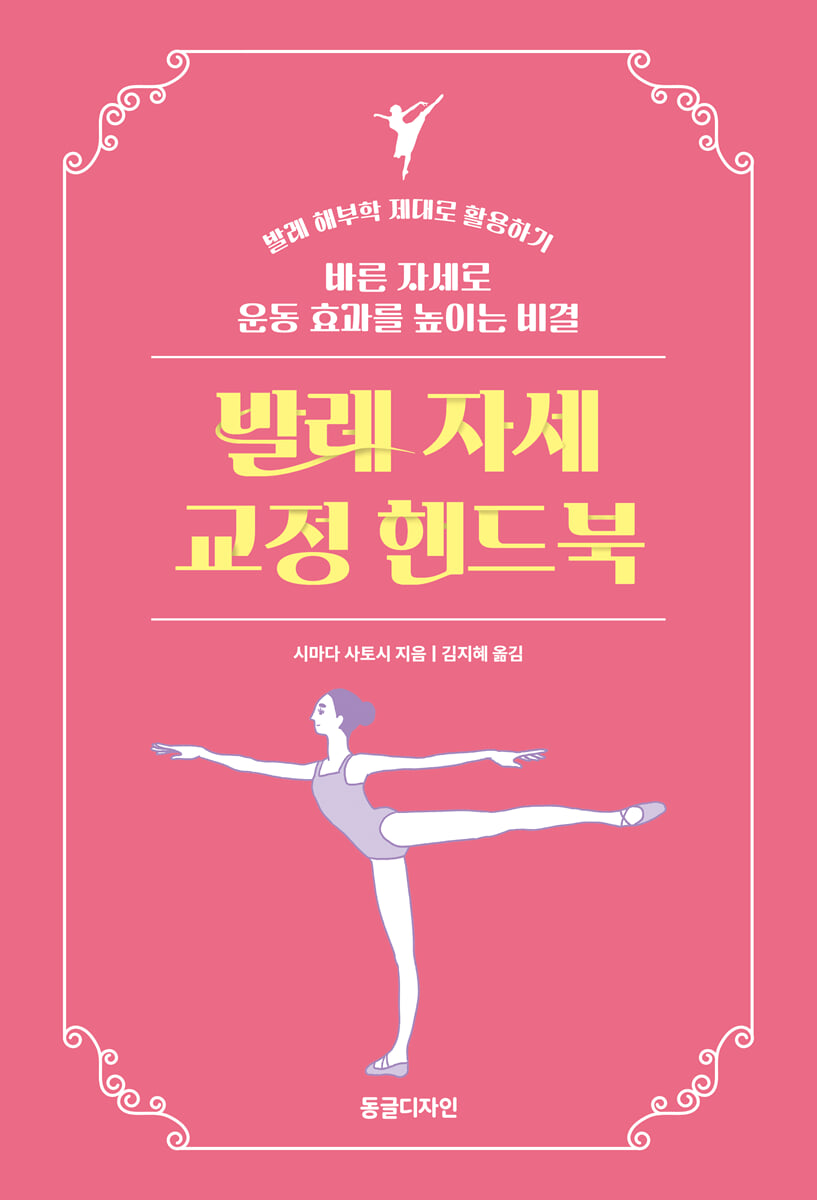 |
Description
Book Introduction
Japan's top dance therapist who analyzed the postures of thousands of ballerinas
We'll teach you the most accurate ballet posture! We'll even correct your body shape all in one go!
Ballet is well known for correcting body shape and creating beautiful body lines.
In particular, it has become a popular exercise for people of all ages and genders because of its strength in correcting posture.
Moreover, even a short period of time spent taking ballet lessons can improve chronic diseases of modern people such as turtle neck, frozen shoulder, and back pain, so many people take ballet classes to relieve pain.
However, it is true that ballet has many movements that are not easy compared to other exercises that are generally easy to do.
Ballet is one of those sports that is difficult to approach easily due to the unfamiliar terminology and the high difficulty of each movement.
But it might feel like you're not making any progress.
If you picture yourself soaring like a member of the National Ballet, but your body is still on the ground and you are constantly receiving instructions from the instructor, open this book.
The Ballet Posture Correction Handbook is a book written by a professional ballerina therapist who has treated thousands of dancers. The author has discovered and published a method to correct one's own body using the unique body use method of ballet while treating approximately 20,000 patients who have visited the clinic.
If you frequently hear comments like, “Your shoulders are up!”, “Stick your toes out!”, or “Your knees are bent!” even though you’ve lowered your shoulders, extended your toes, and straightened your knees, then keep this book by your side.
This book guides you to fully enjoy ballet by providing the reasons for the errors and the tips for correcting them and using your body properly.
We'll teach you the most accurate ballet posture! We'll even correct your body shape all in one go!
Ballet is well known for correcting body shape and creating beautiful body lines.
In particular, it has become a popular exercise for people of all ages and genders because of its strength in correcting posture.
Moreover, even a short period of time spent taking ballet lessons can improve chronic diseases of modern people such as turtle neck, frozen shoulder, and back pain, so many people take ballet classes to relieve pain.
However, it is true that ballet has many movements that are not easy compared to other exercises that are generally easy to do.
Ballet is one of those sports that is difficult to approach easily due to the unfamiliar terminology and the high difficulty of each movement.
But it might feel like you're not making any progress.
If you picture yourself soaring like a member of the National Ballet, but your body is still on the ground and you are constantly receiving instructions from the instructor, open this book.
The Ballet Posture Correction Handbook is a book written by a professional ballerina therapist who has treated thousands of dancers. The author has discovered and published a method to correct one's own body using the unique body use method of ballet while treating approximately 20,000 patients who have visited the clinic.
If you frequently hear comments like, “Your shoulders are up!”, “Stick your toes out!”, or “Your knees are bent!” even though you’ve lowered your shoulders, extended your toes, and straightened your knees, then keep this book by your side.
This book guides you to fully enjoy ballet by providing the reasons for the errors and the tips for correcting them and using your body properly.
index
Header_ I did it as the instructor instructed, but the reason my movements are awkward
Structure of this book
Make sure to do this before the lesson!
Chapter 1.
To create beautiful and slim legs
1.
Let's turn out
2.
Use your inner thighs
3.
Straighten your knees
4.
Your knees and toes should always point in the same direction.
5.
Let's lift our legs higher
6.
Let's point
Chapter 2.
To create a torso that exhibits restrained movements
7.
Let's set it straight
8.
Let's straighten our pelvis
9.
Don't let your pelvis get twisted!
10.
Don't let your center waver!
11.
Tighten your ribs
12.
Let's put the boat in
Chapter 3.
To create flexible shoulders and arms
13.
Drop your shoulders
14.
Elbows go down
15.
Don't hold the bar
16.
Stretch your arms far away
17.
Stretch your neck
Appendix 1.
For those who want to increase flexibility
Appendix 2.
A body map to understand the connection between the feet and the body.
Structure of this book
Make sure to do this before the lesson!
Chapter 1.
To create beautiful and slim legs
1.
Let's turn out
2.
Use your inner thighs
3.
Straighten your knees
4.
Your knees and toes should always point in the same direction.
5.
Let's lift our legs higher
6.
Let's point
Chapter 2.
To create a torso that exhibits restrained movements
7.
Let's set it straight
8.
Let's straighten our pelvis
9.
Don't let your pelvis get twisted!
10.
Don't let your center waver!
11.
Tighten your ribs
12.
Let's put the boat in
Chapter 3.
To create flexible shoulders and arms
13.
Drop your shoulders
14.
Elbows go down
15.
Don't hold the bar
16.
Stretch your arms far away
17.
Stretch your neck
Appendix 1.
For those who want to increase flexibility
Appendix 2.
A body map to understand the connection between the feet and the body.
Detailed image
.jpg)
Into the book
During a lesson, when the instructor says, “Straighten the back of your knees,” some people will tighten their front thighs (quadriceps femoris).
At times like this, be aware of the inner muscles that help straighten your knees.
It is a muscle called the patellar tendon on the inside of the quadriceps femoris, located about 4 cm above the kneecap.
This muscle allows you to lift the inner side of your knee and straighten it.
In ballet, it is not advisable to use the front thighs too much.
Not only will your legs get thicker, but your knees will also bend if you try to lift your kneecap with your front thigh.
--- p.46
Many people complain about their shoulder problems.
The causes are varied.
This is because each person has different parts that they can utilize properly and parts that they cannot.
Dropping your shoulders incorrectly can have negative effects on other parts of your body.
When most people hear the words “pull your shoulders down,” they try to lower their shoulders or arms.
This can cause the ribs to open or the abdomen to tense up, which can cause the shoulders to rise further.
--- p.110
Hand movements in ballet are not simply decorative; they have a functional meaning.
The movement of extending the fingers is linked to the movement of the arm.
Extended fingers stabilize the arm, increasing the connection between the shoulder and torso and creating smooth movement.
Also, the armpits are more usable, allowing you to properly tighten your ribs.
Hands are a part that can easily be neglected.
You might think you don't have the luxury of going that far, but remember that even if you're new to ballet, using your fingers to their fullest will help you move more smoothly.
--- p.118
People whose neck or face is forward also appear to have a short neck.
In most of these cases, the shoulders are also raised.
When we hear in a lesson that “my neck is forward,” most people try to pull their neck back by puffing out their chest or arching their back.
However, this method causes the head to tilt too far back, causing the lower back to curve forward or the center of the body to shift backward.
This is not the right way.
The phenomenon of the neck protruding forward is caused by the position of the arms.
When you work long hours in the office, read, knit, or use your smartphone for long periods of time, your back bends and your neck naturally protrudes forward, resulting in rounded shoulders.
This activity causes the arms to curl inward overall.
We need to correct this from here.
At times like this, be aware of the inner muscles that help straighten your knees.
It is a muscle called the patellar tendon on the inside of the quadriceps femoris, located about 4 cm above the kneecap.
This muscle allows you to lift the inner side of your knee and straighten it.
In ballet, it is not advisable to use the front thighs too much.
Not only will your legs get thicker, but your knees will also bend if you try to lift your kneecap with your front thigh.
--- p.46
Many people complain about their shoulder problems.
The causes are varied.
This is because each person has different parts that they can utilize properly and parts that they cannot.
Dropping your shoulders incorrectly can have negative effects on other parts of your body.
When most people hear the words “pull your shoulders down,” they try to lower their shoulders or arms.
This can cause the ribs to open or the abdomen to tense up, which can cause the shoulders to rise further.
--- p.110
Hand movements in ballet are not simply decorative; they have a functional meaning.
The movement of extending the fingers is linked to the movement of the arm.
Extended fingers stabilize the arm, increasing the connection between the shoulder and torso and creating smooth movement.
Also, the armpits are more usable, allowing you to properly tighten your ribs.
Hands are a part that can easily be neglected.
You might think you don't have the luxury of going that far, but remember that even if you're new to ballet, using your fingers to their fullest will help you move more smoothly.
--- p.118
People whose neck or face is forward also appear to have a short neck.
In most of these cases, the shoulders are also raised.
When we hear in a lesson that “my neck is forward,” most people try to pull their neck back by puffing out their chest or arching their back.
However, this method causes the head to tilt too far back, causing the lower back to curve forward or the center of the body to shift backward.
This is not the right way.
The phenomenon of the neck protruding forward is caused by the position of the arms.
When you work long hours in the office, read, knit, or use your smartphone for long periods of time, your back bends and your neck naturally protrudes forward, resulting in rounded shoulders.
This activity causes the arms to curl inward overall.
We need to correct this from here.
--- p.146
Publisher's Review
“If you want to build a body good for ballet?”
A book that contains principles for easily following difficult ballet movements.
If you've started ballet, you've probably heard your instructor say, "Turn out from your hips!"
In ballet, turnout is connected to every movement.
Therefore, it can be said to be the most basic yet most important movement.
Especially in the beginning of the course, the instructor will give you a lot of advice regarding turn-out.
But it's never easy for beginners to grasp what advice like "your entire leg should point outward" or "rotate your hips" means.
Turn out means that 'both legs should point outwards, and when the legs are turned outwards, the knees and toes should point in the same direction.'
This turnout allows you to raise your legs in various directions, move smoothly in any direction, and most importantly, it helps you maintain your center of gravity.
It also helps prevent injuries and pain.
This basic posture is essential for developing ballet skills, which is why instructors are increasingly vocal about it.
But what if you're struggling with these basic movements? Don't be afraid. Open this book and learn some tips for making turnout easier.
This book is not just a simple posture correction guide.
Using medical principles, it explains the principles of the body and the role of muscles in maintaining posture when performing a turn out.
This book explains the symptoms that can occur through movement and illustrates each movement with pictures to show how to perform muscle exercises.
Additionally, the book is user-friendly enough to allow readers to practice self-training by providing detailed explanations of which muscles to move and develop through human anatomy illustrations.
How to dance as perfectly as possible, with the healthiest posture!
A self-coaching guide to improve your ballet skills and maintain the joy of everyday life.
In ballet class, the next most common phrase you'll hear after "turn out" is probably "straighten up."
This book introduces a method of straightening the body through the familiar movement called 'Ang-o'.
It also presents know-how to more easily and properly perform movements that are often criticized but not performed well, such as “Stand up your pelvis,” “Your pelvis is twisted,” “Pull your stomach in,” and “Drop your shoulders.”
If you use your smartphone for a long time or suffer in front of a computer all day, your shoulders and back will stiffen, your pelvis will become misaligned, and your body will be in a mess.
At this time, if you correct your upper body in daily life and then work, your shoulders will drop and your shoulder blades will come closer together.
I also feel my armpits tightening and getting closer to my back.
If you work while being conscious of these sensations, your neck will not stick forward.
Repeating this method will correct your upper body and will also have beneficial effects on turnouts, high lunges, and instep push-ups.
This means that you can practice ballet while working in your regular office.
If this exercise becomes a habit, it will reduce shoulder stiffness, prevent your neck from protruding forward, and make it easier to turn out.
This book explains ballet in everyday life, the connections between ballet movements, and also coaches the enjoyment of ballet.
Now, the effects of ballet are not limited to diet or body shape.
It has established itself as an exercise that can fill daily health and enjoyment in life.
If you want to learn ballet more easily and enjoyably, start with this book.
If you've ever given up on movements you thought were difficult or impossible and never even tried them, this book will surely bring you great satisfaction.
A book that contains principles for easily following difficult ballet movements.
If you've started ballet, you've probably heard your instructor say, "Turn out from your hips!"
In ballet, turnout is connected to every movement.
Therefore, it can be said to be the most basic yet most important movement.
Especially in the beginning of the course, the instructor will give you a lot of advice regarding turn-out.
But it's never easy for beginners to grasp what advice like "your entire leg should point outward" or "rotate your hips" means.
Turn out means that 'both legs should point outwards, and when the legs are turned outwards, the knees and toes should point in the same direction.'
This turnout allows you to raise your legs in various directions, move smoothly in any direction, and most importantly, it helps you maintain your center of gravity.
It also helps prevent injuries and pain.
This basic posture is essential for developing ballet skills, which is why instructors are increasingly vocal about it.
But what if you're struggling with these basic movements? Don't be afraid. Open this book and learn some tips for making turnout easier.
This book is not just a simple posture correction guide.
Using medical principles, it explains the principles of the body and the role of muscles in maintaining posture when performing a turn out.
This book explains the symptoms that can occur through movement and illustrates each movement with pictures to show how to perform muscle exercises.
Additionally, the book is user-friendly enough to allow readers to practice self-training by providing detailed explanations of which muscles to move and develop through human anatomy illustrations.
How to dance as perfectly as possible, with the healthiest posture!
A self-coaching guide to improve your ballet skills and maintain the joy of everyday life.
In ballet class, the next most common phrase you'll hear after "turn out" is probably "straighten up."
This book introduces a method of straightening the body through the familiar movement called 'Ang-o'.
It also presents know-how to more easily and properly perform movements that are often criticized but not performed well, such as “Stand up your pelvis,” “Your pelvis is twisted,” “Pull your stomach in,” and “Drop your shoulders.”
If you use your smartphone for a long time or suffer in front of a computer all day, your shoulders and back will stiffen, your pelvis will become misaligned, and your body will be in a mess.
At this time, if you correct your upper body in daily life and then work, your shoulders will drop and your shoulder blades will come closer together.
I also feel my armpits tightening and getting closer to my back.
If you work while being conscious of these sensations, your neck will not stick forward.
Repeating this method will correct your upper body and will also have beneficial effects on turnouts, high lunges, and instep push-ups.
This means that you can practice ballet while working in your regular office.
If this exercise becomes a habit, it will reduce shoulder stiffness, prevent your neck from protruding forward, and make it easier to turn out.
This book explains ballet in everyday life, the connections between ballet movements, and also coaches the enjoyment of ballet.
Now, the effects of ballet are not limited to diet or body shape.
It has established itself as an exercise that can fill daily health and enjoyment in life.
If you want to learn ballet more easily and enjoyably, start with this book.
If you've ever given up on movements you thought were difficult or impossible and never even tried them, this book will surely bring you great satisfaction.
GOODS SPECIFICS
- Date of issue: May 12, 2023
- Page count, weight, size: 172 pages | 128*188*20mm
- ISBN13: 9791191925111
- ISBN10: 1191925110
You may also like
카테고리
korean


korean

![GQ KOREA Mark (Monthly): December [2025]](http://librairie.coreenne.fr/cdn/shop/files/8ef265dbbfbf186523ed75ba7319009d.jpg?v=1765340328&width=3840)


