

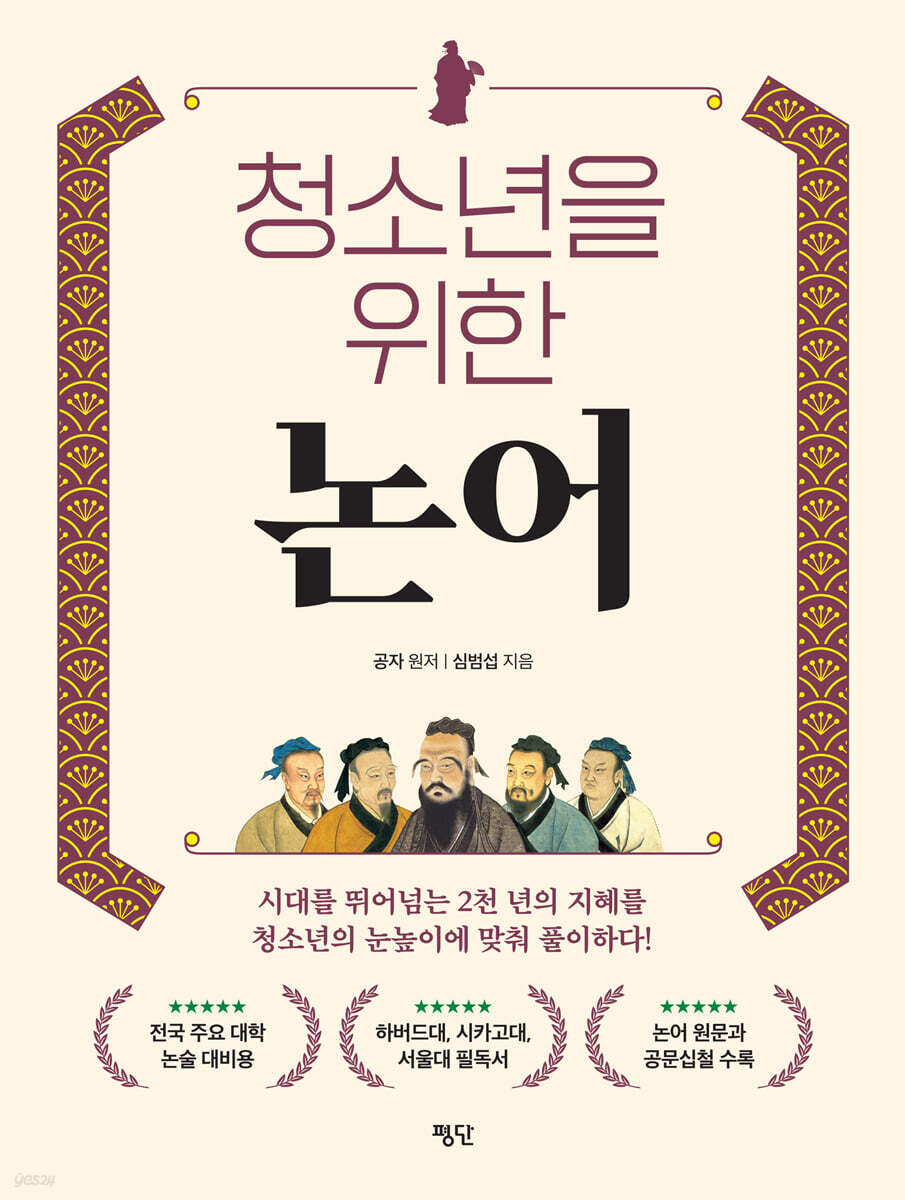
Analects for Youth
 |
Description
Book Introduction
“The Analects are for everyone living in the modern world.
It's full of things you absolutely must do!”
The basic scripture of Confucianism and the pinnacle of the Four Books!
A living, breathing treasure trove of wisdom!
A classic with universal value that transcends time!
The Four Books refer to the Analects of Confucius, Mencius, The Great Learning, and The Doctrine of the Mean as the basic classics of Confucianism.
Since the Song Dynasty's Zhu Xi compiled the commentary on the Four Books, 『Four Books Collection』, it has become a must-read for Confucian scholars, and has remained a must-read for classics regardless of time or place, retaining its value to this day.
The Analects of Confucius, which contains the thoughts of Confucius, one of the four great sages of the world, is considered the most widely read book among Eastern classics by people of all ages and genders, regardless of time or place.
The Analects are a collection of Confucius's conversations with his disciples, scholars, kings, officials, and common people, as well as his disciples' exchanges of teachings with one another.
The book was named “Analects” because it contained discussions between Confucius and his disciples.
"The Analects for Youth" is a book that divides the original text of the Analects, consisting of 20 chapters and approximately 500 sentences, into nine themes and reinterprets and reconstructs Confucius's thoughts to fit the modern era so that not only young people but anyone interested in the classics can easily read it.
In addition, to make reading more enjoyable, it includes over 50 illustrations and tips, and includes photos of the Ten Philosophers of Confucius, who were considered outstanding among Confucius' many disciples.
It's full of things you absolutely must do!”
The basic scripture of Confucianism and the pinnacle of the Four Books!
A living, breathing treasure trove of wisdom!
A classic with universal value that transcends time!
The Four Books refer to the Analects of Confucius, Mencius, The Great Learning, and The Doctrine of the Mean as the basic classics of Confucianism.
Since the Song Dynasty's Zhu Xi compiled the commentary on the Four Books, 『Four Books Collection』, it has become a must-read for Confucian scholars, and has remained a must-read for classics regardless of time or place, retaining its value to this day.
The Analects of Confucius, which contains the thoughts of Confucius, one of the four great sages of the world, is considered the most widely read book among Eastern classics by people of all ages and genders, regardless of time or place.
The Analects are a collection of Confucius's conversations with his disciples, scholars, kings, officials, and common people, as well as his disciples' exchanges of teachings with one another.
The book was named “Analects” because it contained discussions between Confucius and his disciples.
"The Analects for Youth" is a book that divides the original text of the Analects, consisting of 20 chapters and approximately 500 sentences, into nine themes and reinterprets and reconstructs Confucius's thoughts to fit the modern era so that not only young people but anyone interested in the classics can easily read it.
In addition, to make reading more enjoyable, it includes over 50 illustrations and tips, and includes photos of the Ten Philosophers of Confucius, who were considered outstanding among Confucius' many disciples.
- You can preview some of the book's contents.
Preview
index
preface
Speaking of Confucius
Speaking the Analects
Chapter 1: How to Live Like a Human Being
The king also performed the ceremony in harmony.
A gentleman acts based on righteousness.
Love given to everyone is humanity
The wise love water, the kind love mountains.
Is there anyone who doesn't pass through the door?
A virtuous person is not lonely.
Chapter 2: Sincere Attitude and Consideration for Others
It's up to me to make a mountain out of a handful of dirt.
Do everything with reverence
Center your mind with loyalty
Consideration for others is the essence of virtue.
A person's will cannot be taken away by force.
The spontaneity that makes people
Chapter 3: Actions speak louder than words
Seven-legged squirrel refuses an official position
A small person must hide his faults.
Words are enough as long as they convey meaning.
I am a person who waits to be sold at a good price.
If you have a flaw, don't be afraid to fix it.
Chapter 4: Balance between Appearance and Essence
What comes first, appearance or essence?
Neither too much nor too little
The gentleman truly harmonizes, while the mean man only pretends to harmonize.
When you want to use people, you have to do it at the right time.
A king should be kingly and a subject should be subject-like.
Chapter 5: Filial Piety Must Be Without Discord
Make a loved one suffer
Must serve according to example
Three-year mourning is a common mourning custom in the world.
A person who practices filial piety does not harm his superiors.
The beginning of filial piety is taking care of one's own body.
Chapter 6: Talking to Friends
Give sincere advice, but don't insult yourself.
Confucius finds fault with himself.
A person's flaws appear differently depending on the group he belongs to.
Among the three, there is definitely one who can become a teacher.
A gentleman does not form factions even when he associates with others.
Chapter 7: Compete like a gentleman
Follow only loyalty
In the old days, people who learned studied for themselves.
When a person is about to die, his words are kind.
Fishing, but not netting
If you don't look far ahead, you'll end up worrying.
Chapter 8: Learning is learning and practicing.
If you have the ability and practice, you should learn to write.
If you are passive, let it go forward, and if you are enterprising, let it retreat.
If you master the old and know the new, you can become a teacher.
Don't be ashamed to ask your subordinates
Seeing through everything with one principle
Chapter 9: Speaking of Leaders Who Practice
If the leader is right, things will happen on their own.
Hire talented people like Sunim and Tangim.
Owning the world and yet not interfering with it privately
The faults of a gentleman are like an eclipse.
References
Search
Speaking of Confucius
Speaking the Analects
Chapter 1: How to Live Like a Human Being
The king also performed the ceremony in harmony.
A gentleman acts based on righteousness.
Love given to everyone is humanity
The wise love water, the kind love mountains.
Is there anyone who doesn't pass through the door?
A virtuous person is not lonely.
Chapter 2: Sincere Attitude and Consideration for Others
It's up to me to make a mountain out of a handful of dirt.
Do everything with reverence
Center your mind with loyalty
Consideration for others is the essence of virtue.
A person's will cannot be taken away by force.
The spontaneity that makes people
Chapter 3: Actions speak louder than words
Seven-legged squirrel refuses an official position
A small person must hide his faults.
Words are enough as long as they convey meaning.
I am a person who waits to be sold at a good price.
If you have a flaw, don't be afraid to fix it.
Chapter 4: Balance between Appearance and Essence
What comes first, appearance or essence?
Neither too much nor too little
The gentleman truly harmonizes, while the mean man only pretends to harmonize.
When you want to use people, you have to do it at the right time.
A king should be kingly and a subject should be subject-like.
Chapter 5: Filial Piety Must Be Without Discord
Make a loved one suffer
Must serve according to example
Three-year mourning is a common mourning custom in the world.
A person who practices filial piety does not harm his superiors.
The beginning of filial piety is taking care of one's own body.
Chapter 6: Talking to Friends
Give sincere advice, but don't insult yourself.
Confucius finds fault with himself.
A person's flaws appear differently depending on the group he belongs to.
Among the three, there is definitely one who can become a teacher.
A gentleman does not form factions even when he associates with others.
Chapter 7: Compete like a gentleman
Follow only loyalty
In the old days, people who learned studied for themselves.
When a person is about to die, his words are kind.
Fishing, but not netting
If you don't look far ahead, you'll end up worrying.
Chapter 8: Learning is learning and practicing.
If you have the ability and practice, you should learn to write.
If you are passive, let it go forward, and if you are enterprising, let it retreat.
If you master the old and know the new, you can become a teacher.
Don't be ashamed to ask your subordinates
Seeing through everything with one principle
Chapter 9: Speaking of Leaders Who Practice
If the leader is right, things will happen on their own.
Hire talented people like Sunim and Tangim.
Owning the world and yet not interfering with it privately
The faults of a gentleman are like an eclipse.
References
Search
Detailed image

Into the book
Most people know that manners are something that subordinates should show to their superiors.
However, that is not the kind of etiquette we talk about in Confucianism.
There are manners that subordinates must show to their superiors, and there are manners that superiors must show to their subordinates.
Even among friends, there are certain manners that must be observed.
The example we must follow to achieve harmony with others must be applied to everyone, regardless of age or gender.
--- p.26
A consistent attitude is important in leading an honest life.
We must strive to improve our quality of life based on sincerity.
What is needed to produce positive results from that sincerity is concentration.
For example, even if you read every day without fail, if you don't read with concentration, you won't be able to understand the content.
--- p.53
Learning through practice enlarges your capacity and allows you to absorb all knowledge like a sponge.
Such a person will have wisdom, a kind nature, and courage based on justice.
“A wise man is not confused, a kind man is not anxious, and a brave man is not afraid.”
--- p.95
Confucius said:
“Yes.
It is said, 'Yes,' but how can 'Yes' only mean offering jade and silk? 'It is music.
“How can the saying ‘music’ only refer to striking bells and drums?” Filial piety is not just about providing material abundance and happiness to parents.
True filial piety is repaying the unconditional love your parents give you with respect and not letting them worry.
--- p.146
A useful friend is not one who gives you material benefits, but one who helps you improve by pointing out your shortcomings and mistakes.
“When three people walk down the road, there will definitely be someone among them who can be my teacher. I should choose the good person and follow their good points, and look at the shortcomings of the bad person and reflect on myself.” Just as no one has only flaws, everyone has strengths.
Anyone can be a beneficial friend if they can learn from the other person's strengths.
--- p.163
When poor people are in trouble, they tend to flatter the rich, and when they become rich, they sometimes act arrogantly without realizing it.
In general, people try to refrain from this behavior.
However, even if the results of a fair competition are not satisfactory, we need to humbly accept them and prepare for the next one.
This positive and proactive mindset will result in being true to yourself and becoming more mature.
Even if you win a competition, it is the attitude of a winner to look back on yourself and act humbly for the next time.
--- p.197
If a leader makes decisions according to the Doctrine of the Mean, there will be no resentment.
A leader must have the will and act with sincerity to achieve a goal, but must not pursue personal gain, but rather achieve the goal based on the Way. He must abandon impatience and treat members with a relaxed attitude and humility.
The five beautiful actions are to act with caution, be friendly, and not appear authoritarian.
However, that is not the kind of etiquette we talk about in Confucianism.
There are manners that subordinates must show to their superiors, and there are manners that superiors must show to their subordinates.
Even among friends, there are certain manners that must be observed.
The example we must follow to achieve harmony with others must be applied to everyone, regardless of age or gender.
--- p.26
A consistent attitude is important in leading an honest life.
We must strive to improve our quality of life based on sincerity.
What is needed to produce positive results from that sincerity is concentration.
For example, even if you read every day without fail, if you don't read with concentration, you won't be able to understand the content.
--- p.53
Learning through practice enlarges your capacity and allows you to absorb all knowledge like a sponge.
Such a person will have wisdom, a kind nature, and courage based on justice.
“A wise man is not confused, a kind man is not anxious, and a brave man is not afraid.”
--- p.95
Confucius said:
“Yes.
It is said, 'Yes,' but how can 'Yes' only mean offering jade and silk? 'It is music.
“How can the saying ‘music’ only refer to striking bells and drums?” Filial piety is not just about providing material abundance and happiness to parents.
True filial piety is repaying the unconditional love your parents give you with respect and not letting them worry.
--- p.146
A useful friend is not one who gives you material benefits, but one who helps you improve by pointing out your shortcomings and mistakes.
“When three people walk down the road, there will definitely be someone among them who can be my teacher. I should choose the good person and follow their good points, and look at the shortcomings of the bad person and reflect on myself.” Just as no one has only flaws, everyone has strengths.
Anyone can be a beneficial friend if they can learn from the other person's strengths.
--- p.163
When poor people are in trouble, they tend to flatter the rich, and when they become rich, they sometimes act arrogantly without realizing it.
In general, people try to refrain from this behavior.
However, even if the results of a fair competition are not satisfactory, we need to humbly accept them and prepare for the next one.
This positive and proactive mindset will result in being true to yourself and becoming more mature.
Even if you win a competition, it is the attitude of a winner to look back on yourself and act humbly for the next time.
--- p.197
If a leader makes decisions according to the Doctrine of the Mean, there will be no resentment.
A leader must have the will and act with sincerity to achieve a goal, but must not pursue personal gain, but rather achieve the goal based on the Way. He must abandon impatience and treat members with a relaxed attitude and humility.
The five beautiful actions are to act with caution, be friendly, and not appear authoritarian.
--- p.244
Publisher's Review
The 'living' thoughts of Confucius that are still valid today
A book that shows you the way forward when you feel lost and unable to see the future!
A treasure trove of wisdom, the classics! Classics are a repository of knowledge and a guidebook for life, transcending time and imparting life wisdom.
Among them, the book that is recognized as the most valuable is undoubtedly the Analects of Confucius.
The Analects of Confucius are a book that Confucius's disciples wrote after his death, containing all of his teacher's teachings. It is the basic classic of Confucianism, the first of the Four Books, and the essence of Eastern classics.
The reason why the Analects, which accurately embodies the thoughts of Confucius, continue to be valuable as time goes by, regardless of time or place, is because Confucius was not born with exceptional talent, but rather, he was a man who was determined to study and constantly strived for it.
This is also the reason why Confucius is still revered as a sage.
The classics, passed down for thousands of years, are the product of accumulated knowledge based on the experiences of our ancestors. They are not outdated knowledge, but rather “living knowledge” that is still alive and breathing today.
The reason why countless classics, including the Analects, are still loved today rather than being looked down upon as old is because when you know the old, you learn something new by relating it to it.
Confucius himself put it into practice and brought about the results we see today.
Confucius's core idea was 'benevolence', and he considered self-restraint and return to propriety as its core.
He said that one must first practice benevolence towards oneself, and then practice benevolence towards one's parents, siblings, friends, superiors, rulers, and everyone in the world.
Confucius developed benevolence not only as a tool for personal cultivation, but also as a political ideology for governing the nation.
The Analects, which expanded the ideal from the individual to the nation, and the reason why Confucius's thoughts are still highly valued today is because they allow us to find the path of life in the classics.
A guide to the Analects, written for teenagers to easily read
Illustrations and tips to help you understand in a fun way
"The Analects for Youth" reinterprets Confucius's thoughts in a modern way, tailored to the level of young people, so that they can easily understand them.
The illustrations make reading more enjoyable, and the vividness is enhanced by adding tips such as the Ten Tips of Confucius, the outstanding disciples of Gongmun, and the descriptions of characters from the Analects.
Before reading the Analects, we present the life and ideals of Confucius, the background and content of the creation of the Analects, etc., so that you can properly understand the thoughts of Confucius that have been passed down for thousands of years.
Chapter 1, ‘The Way to Live Like a Human Being’, discusses the four virtues of benevolence, righteousness, propriety, wisdom, and wisdom, as well as Tao and virtue, which are the principles that humans must uphold.
Chapter 2, “A sincere attitude and a considerate heart for others,” states that practicing benevolence, righteousness, courtesy, and propriety requires sincerity, courtesy, loyalty, and empathy, and that those who have achieved these are ready to practice benevolence toward others.
In Chapter 3, “Actions Speak Louder Than Words,” Confucius said that words should convey meaning, actions should come before words, and words and actions should be consistent.
It is said that the more you save words, the better, and that you must put what you know into practice to truly know it.
Chapter 4, “Balance between Appearance and Essence,” discusses whether the outward form or the essence of virtue is more important when practicing virtue.
It emphasizes that form and substance must be balanced and that everything must be done in a timely manner.
In Chapter 5, 'Filial Piety Must Not Be Disregarded', it is said that filial piety is showing kindness to one's parents, and that as times change, there is a distorted idea that ancestral rites are an act of worshipping ghosts, but ancestral rites are an expression of respect for deceased ancestors.
In Chapter 6, 'Talking about Friends', it is said that trust is the most important thing in making friends, and that the way to become a good friend is to become a good friend yourself first.
Chapter 7, 'Competing Like a Gentleman', discusses the principles that must be followed in competition and the principles of fair competition.
Chapter 8, “Learning is learning and practicing,” states that specialized knowledge is accumulated by putting what is learned into practice, and that the relationship between teacher and student is mutually beneficial; the teacher is not someone who merely teaches, but rather the student is someone who develops the teacher.
Chapter 9, "Talking about a Leader Who Practices," emphasizes that a leader must always lead by example, and like King Sunim and King Tang, he must carefully examine the talents of his members and appoint them to positions that are appropriate for them, and he must abandon personal feelings.
A book that shows you the way forward when you feel lost and unable to see the future!
A treasure trove of wisdom, the classics! Classics are a repository of knowledge and a guidebook for life, transcending time and imparting life wisdom.
Among them, the book that is recognized as the most valuable is undoubtedly the Analects of Confucius.
The Analects of Confucius are a book that Confucius's disciples wrote after his death, containing all of his teacher's teachings. It is the basic classic of Confucianism, the first of the Four Books, and the essence of Eastern classics.
The reason why the Analects, which accurately embodies the thoughts of Confucius, continue to be valuable as time goes by, regardless of time or place, is because Confucius was not born with exceptional talent, but rather, he was a man who was determined to study and constantly strived for it.
This is also the reason why Confucius is still revered as a sage.
The classics, passed down for thousands of years, are the product of accumulated knowledge based on the experiences of our ancestors. They are not outdated knowledge, but rather “living knowledge” that is still alive and breathing today.
The reason why countless classics, including the Analects, are still loved today rather than being looked down upon as old is because when you know the old, you learn something new by relating it to it.
Confucius himself put it into practice and brought about the results we see today.
Confucius's core idea was 'benevolence', and he considered self-restraint and return to propriety as its core.
He said that one must first practice benevolence towards oneself, and then practice benevolence towards one's parents, siblings, friends, superiors, rulers, and everyone in the world.
Confucius developed benevolence not only as a tool for personal cultivation, but also as a political ideology for governing the nation.
The Analects, which expanded the ideal from the individual to the nation, and the reason why Confucius's thoughts are still highly valued today is because they allow us to find the path of life in the classics.
A guide to the Analects, written for teenagers to easily read
Illustrations and tips to help you understand in a fun way
"The Analects for Youth" reinterprets Confucius's thoughts in a modern way, tailored to the level of young people, so that they can easily understand them.
The illustrations make reading more enjoyable, and the vividness is enhanced by adding tips such as the Ten Tips of Confucius, the outstanding disciples of Gongmun, and the descriptions of characters from the Analects.
Before reading the Analects, we present the life and ideals of Confucius, the background and content of the creation of the Analects, etc., so that you can properly understand the thoughts of Confucius that have been passed down for thousands of years.
Chapter 1, ‘The Way to Live Like a Human Being’, discusses the four virtues of benevolence, righteousness, propriety, wisdom, and wisdom, as well as Tao and virtue, which are the principles that humans must uphold.
Chapter 2, “A sincere attitude and a considerate heart for others,” states that practicing benevolence, righteousness, courtesy, and propriety requires sincerity, courtesy, loyalty, and empathy, and that those who have achieved these are ready to practice benevolence toward others.
In Chapter 3, “Actions Speak Louder Than Words,” Confucius said that words should convey meaning, actions should come before words, and words and actions should be consistent.
It is said that the more you save words, the better, and that you must put what you know into practice to truly know it.
Chapter 4, “Balance between Appearance and Essence,” discusses whether the outward form or the essence of virtue is more important when practicing virtue.
It emphasizes that form and substance must be balanced and that everything must be done in a timely manner.
In Chapter 5, 'Filial Piety Must Not Be Disregarded', it is said that filial piety is showing kindness to one's parents, and that as times change, there is a distorted idea that ancestral rites are an act of worshipping ghosts, but ancestral rites are an expression of respect for deceased ancestors.
In Chapter 6, 'Talking about Friends', it is said that trust is the most important thing in making friends, and that the way to become a good friend is to become a good friend yourself first.
Chapter 7, 'Competing Like a Gentleman', discusses the principles that must be followed in competition and the principles of fair competition.
Chapter 8, “Learning is learning and practicing,” states that specialized knowledge is accumulated by putting what is learned into practice, and that the relationship between teacher and student is mutually beneficial; the teacher is not someone who merely teaches, but rather the student is someone who develops the teacher.
Chapter 9, "Talking about a Leader Who Practices," emphasizes that a leader must always lead by example, and like King Sunim and King Tang, he must carefully examine the talents of his members and appoint them to positions that are appropriate for them, and he must abandon personal feelings.
GOODS SPECIFICS
- Date of issue: March 28, 2025
- Page count, weight, size: 256 pages | 170*225*20mm
- ISBN13: 9788973435845
- ISBN10: 8973435841
You may also like
카테고리
korean


korean

![GQ KOREA Mark (Monthly): December [2025]](http://librairie.coreenne.fr/cdn/shop/files/8ef265dbbfbf186523ed75ba7319009d.jpg?v=1765340328&width=3840)


