

90 Nights at the Louvre Museum
 |
Description
Book Introduction
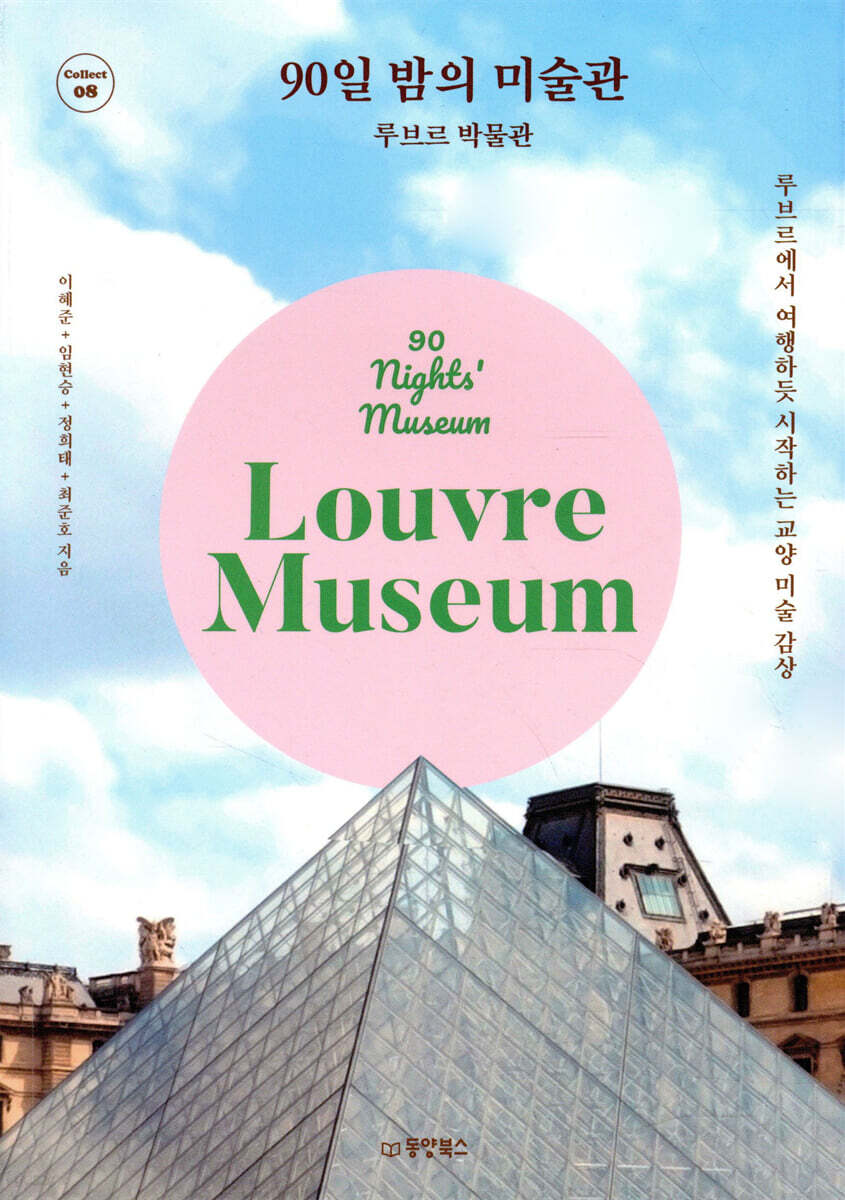
90 nights of art museums, this time to the Louvre Museum! The Louvre tour that has impressed 100,000 visitors in one book A meticulous guide to the Eurobike Country from French nationally certified guides. 『90 Nights at the Museum』, which introduces works from museums across Europe, has now published a new edition titled 'Louvre Museum'. The Louvre Museum is considered the world's greatest in terms of architectural scale, number of collections, and history, and is also the most visited museum in the world. Four French nationally certified guides who have been explaining Louvre works for over 10 years and studied art history for a long time have come together to create this book from Korea's first knowledge guide group, Euro Bicycle Country. In addition to the carefully selected works that have been introduced so far, we will comprehensively introduce jewel-like works and relics that are difficult for travelers with limited time to see but are a shame to miss. Let's slowly turn the pages of the book as if we were actually visiting a museum, starting with the Richelieu, Sully, and Denon wings, and meet the genius painters and sculptors. |
- You can preview some of the book's contents.
Preview
index
Entrance
Welcome to the Louvre Museum
Richelieu exterior
DAY 01 The World's First Writing and Civilization [Ancient Tablets Before Cuneiform]
DAY 02 The First Sculpture with a Smile [Statue of Marie's Supervisor, Abi Il II]
DAY 03 The World's First Heroic Epic [The Lion Tamer]
DAY 04 The Oldest Code [Code of Hammurabi]
DAY 05 Tomb Decorations Prepared While Alive [Philip Poe's Tomb Sculpture]
DAY 06 France's First Portrait [Portrait of Jean Le Bon]
DAY 07 Portraits of the Early French Renaissance [Jean Fouquet, Portrait of Charles VII]
DAY 08 Portrait of the French King Most Beloved [Jean Clouet, King Francis I of France]
DAY 09 The Discovery of Oil Painting and Flanders [Beyden, Annunciation]
DAY 10 The Ultimate Detail [Jan van Eyck, Justice Rolin and the Virgin Mary]
DAY 11 Is this a religious painting? [Quentin Mechis, the moneylender and his wife]
DAY 12: Why Nordic Art Developed So Specially [Reimersbael, the Moneylender]
DAY 13 The Dangers of Blind Faith [Bruegel the Elder(?), The Blind Leading the Blind]
DAY 14 A 16th-Century Courtyard Play [Brueghel the Elder, The Beggars]
DAY 15 A Ship Full of Corruption [Hieronymus Bosch, The Barque of Madmen]
DAY 16 When proposing, use a thistle [Dürer, Self-Portrait with a Thistle]
DAY 17 France's Greatest Painter [Poussin, Self-Portrait]
DAY 18 Painting for the Learned [Poussin, The Shepherds of Arcadia]
DAY 19 The artist's masterpiece and legacy [Poussin, The Four Seasons]
DAY 20: The Landscape Becomes the Protagonist [Lorraine, Odysseus Returning Chryseis to Her Father]
DAY 21 The Sisters' Bold Temptation [Portrait of Sister Gabrielle d'Estrées, School of Fontainebleau]
DAY 22 The Incarnation of Lust for Power [Frances Pourbus II, Queen of France, Marie de' Medici]
DAY 23 A Masterpiece Born of Ambition [Rubens, Marie de' Medici Arriving at the Port of Marseille]
DAY 24 Conducting an Orchestra [Rubens, A Festival or a Village Wedding in the Netherlands]
DAY 25 Another Master of 17th-Century Baroque [Rembrandt, The Meditating Philosopher]
DAY 26: The Painter's Longing Hidden in the Holy Spirit [Rembrandt, The Pilgrims at Emmaus]
DAY 27 The World's Most Honest Self-Portrait [Rembrandt, Self-Portrait at the Easel]
DAY 28: Not Just a Flower Painting [Boscart, Bouquets Inside a Stone Arch with a View of the Landscape]
DAY 29: A Lively, Smiling Face [Frans Hals, Bohemian]
DAY 30: Breathtaking Silence [Vermeer, The Woman Knitting Lace]
DAY 31 This is how you do Photoshop [Hans Holbein, Anne of Cleves]
Sully Hall
DAY 32 The Sun of 17th-Century France [Portrait of Louis XIV by Ilya Sainte Rigaud]
DAY 33: Those Who Pretend to Play on the Folly of Youth [La Tour, The Ace of Diamonds Conman]
DAY 34 Peace Becomes to Her in Penitence [La Tour, Mary Magdalene Before the Lamp]
DAY 35 The Stages of Love Expressed in Pictures [Bato, Pilgrimage to Cythera]
DAY 36 Their Secret Private Life [Fragonade, The Lock]
DAY 37 The Beauty of an Oriental Woman [Ingres, Bathing Woman]
DAY 38: Colors That Hold Secrets [Martin Drolling, Inside the Kitchen]
DAY 39 The Camera Can't Read Her Mind [Camille Corot, The Woman in Blue]
DAY 40 The bird that forgot the night spread its wings [Georges Braque, The Bird]
DAY 41 The Guardians of the Louvre [Giant Sphinx]
DAY 42: The Ancient Egyptians Don't Die [The Uncovered Mummy]
DAY 43 Ancient Egypt's Highest Elite [Seated Scribe]
DAY 44: A Guide for the Dead [The Book of the Dead by the Scribe Nepköd]
DAY 45 Women Who Want to Be Like the Moon Goddess [Artemis Leaning on a Deer]
DAY 46: Greek Humor Ridiculously Mocking Prejudice [Sleeping Hermaphrodite]
DAY 47 The Greek God Who Came Down to Us [Zeus, God of the Heavens and Lord of Olympus]
DAY 48 The Greek Ideal Man [Borghese's Ares]
DAY 49: The End of the Proud [Marsyas is Punished]
DAY 50 The Ideal Model of Power [Hermes, or Cincinnatus, Tying Sandal Laces]
DAY 51 Embracing the Enemy with Mercy [Athena, Pallas of Velletri]
DAY 52: The Woman Who Restored the Louvre's Fame [Venus de Milo]
Denongwan
DAY 53 Oath of Victory to the Louvre [Nike]
DAY 54 Let's Talk About Life Together [Couple's Coffin]
DAY 55 Intentional Incompleteness [Michelangelo, The Slaves]
DAY 56 Doubt and Love Cannot Coexist [Canova, Psyche Reincarnated by Eros' Kiss]
DAY 57 Where the Tastes of the Powerful Began [Apollo Gallery]
DAY 58: Jewels of Power [Jewels of the Apollo Gallery: Permanent, Legend, and Ortensia]
DAY 59 The Baptismal Vessel of Two Religions [Muhammad ibn al-Zain, Saint-Louis' Baptismal Vessel]
DAY 60 France, the Land of Art [Salon Carré]
DAY 61: The Details That Created the Renaissance [Chimabue, Maestro]
DAY 62 The Beginning of a Plausible Painting [Giotto, St. Francis Receiving the Stigmata]
DAY 63 Painting on a giant drawing [Uccello, The Battle of San Romano]
DAY 64 When the Bible Meets Myth [Mantegna, St. Sebastian]
DAY 65 The Duality of Venus [Mantegna, Mars and Venus]
DAY 66: Empathy Created by Someone's Memory [Girandayo, Elderly and Children]
DAY 67: The Great Artist [Da Vinci, The Virgin of the Rocks]
DAY 68 Da Vinci's Last Gesture [Da Vinci, John the Baptist]
DAY 69 The Most Human Genius [Da Vinci, Madonna and Child with Saint Anne]
DAY 70 From Da Vinci's Woman to Everyone's Woman [Da Vinci, Mona Lisa]
DAY 71 Raphael and the Mona Lisa [Raphael, Portrait of Baldassare Castiglione]
DAY 72: Are all paintings attributed to Raphael? [Raphael, Archangel Michael]
DAY 73 Raphael and Elegance [Raphael, The Beautiful Gardener]
DAY 74 How to Express Your Individuality [Titian, The Man in the White Gloves]
DAY 75 Painters of Venice [Titian, Pastoral Concert]
DAY 76 The Most Luxurious Religious Painting [Veronese, The Wedding at Cana]
DAY 77 Painters in Mannerism [Arcimboldo, The Four Seasons]
DAY 78 A Clear and Certain Tragedy [Caravaggio, The Death of the Virgin]
DAY 79 Spanish Painters [Muriyo, the Young Beggar]
DAY 80 A Woman Who Wanted to Be Remembered for Her Beauty [Goya, The Countess of Carpio]
DAY 81 The French Kings Who Loved Art [Salon Denon]
DAY 82: The Traces of Revolution [David Atelier, The Death of Marat (Reproduction)]
DAY 83 First solo exhibition at the Louvre [David, The Intervention of the Sabine Women]
DAY 84 The Beginning of the Napoleonic Era [David, Coronation of Napoleon I and Empress Josephine]
DAY 85 Finding Your Ideal Type [Ingres, Grande Odalisque]
DAY 86 A Painter Ahead of His Time [Gro, Napoleon Visits the Plague Station in Jaffa]
DAY 87: A Drama of Humans, Not Gods [Jericho, The Raft of the Medusa]
DAY 88 Romantic Tragedy [Delacroix, The Death of Sardanapalus]
DAY 89 A Torch for Democracy [Delacroix, Liberty Leading the People]
DAY 90 A Story Created by Nature [Turner, Riverside Landscape with a Distant View]
View according to the flow of art history
References
Welcome to the Louvre Museum
Richelieu exterior
DAY 01 The World's First Writing and Civilization [Ancient Tablets Before Cuneiform]
DAY 02 The First Sculpture with a Smile [Statue of Marie's Supervisor, Abi Il II]
DAY 03 The World's First Heroic Epic [The Lion Tamer]
DAY 04 The Oldest Code [Code of Hammurabi]
DAY 05 Tomb Decorations Prepared While Alive [Philip Poe's Tomb Sculpture]
DAY 06 France's First Portrait [Portrait of Jean Le Bon]
DAY 07 Portraits of the Early French Renaissance [Jean Fouquet, Portrait of Charles VII]
DAY 08 Portrait of the French King Most Beloved [Jean Clouet, King Francis I of France]
DAY 09 The Discovery of Oil Painting and Flanders [Beyden, Annunciation]
DAY 10 The Ultimate Detail [Jan van Eyck, Justice Rolin and the Virgin Mary]
DAY 11 Is this a religious painting? [Quentin Mechis, the moneylender and his wife]
DAY 12: Why Nordic Art Developed So Specially [Reimersbael, the Moneylender]
DAY 13 The Dangers of Blind Faith [Bruegel the Elder(?), The Blind Leading the Blind]
DAY 14 A 16th-Century Courtyard Play [Brueghel the Elder, The Beggars]
DAY 15 A Ship Full of Corruption [Hieronymus Bosch, The Barque of Madmen]
DAY 16 When proposing, use a thistle [Dürer, Self-Portrait with a Thistle]
DAY 17 France's Greatest Painter [Poussin, Self-Portrait]
DAY 18 Painting for the Learned [Poussin, The Shepherds of Arcadia]
DAY 19 The artist's masterpiece and legacy [Poussin, The Four Seasons]
DAY 20: The Landscape Becomes the Protagonist [Lorraine, Odysseus Returning Chryseis to Her Father]
DAY 21 The Sisters' Bold Temptation [Portrait of Sister Gabrielle d'Estrées, School of Fontainebleau]
DAY 22 The Incarnation of Lust for Power [Frances Pourbus II, Queen of France, Marie de' Medici]
DAY 23 A Masterpiece Born of Ambition [Rubens, Marie de' Medici Arriving at the Port of Marseille]
DAY 24 Conducting an Orchestra [Rubens, A Festival or a Village Wedding in the Netherlands]
DAY 25 Another Master of 17th-Century Baroque [Rembrandt, The Meditating Philosopher]
DAY 26: The Painter's Longing Hidden in the Holy Spirit [Rembrandt, The Pilgrims at Emmaus]
DAY 27 The World's Most Honest Self-Portrait [Rembrandt, Self-Portrait at the Easel]
DAY 28: Not Just a Flower Painting [Boscart, Bouquets Inside a Stone Arch with a View of the Landscape]
DAY 29: A Lively, Smiling Face [Frans Hals, Bohemian]
DAY 30: Breathtaking Silence [Vermeer, The Woman Knitting Lace]
DAY 31 This is how you do Photoshop [Hans Holbein, Anne of Cleves]
Sully Hall
DAY 32 The Sun of 17th-Century France [Portrait of Louis XIV by Ilya Sainte Rigaud]
DAY 33: Those Who Pretend to Play on the Folly of Youth [La Tour, The Ace of Diamonds Conman]
DAY 34 Peace Becomes to Her in Penitence [La Tour, Mary Magdalene Before the Lamp]
DAY 35 The Stages of Love Expressed in Pictures [Bato, Pilgrimage to Cythera]
DAY 36 Their Secret Private Life [Fragonade, The Lock]
DAY 37 The Beauty of an Oriental Woman [Ingres, Bathing Woman]
DAY 38: Colors That Hold Secrets [Martin Drolling, Inside the Kitchen]
DAY 39 The Camera Can't Read Her Mind [Camille Corot, The Woman in Blue]
DAY 40 The bird that forgot the night spread its wings [Georges Braque, The Bird]
DAY 41 The Guardians of the Louvre [Giant Sphinx]
DAY 42: The Ancient Egyptians Don't Die [The Uncovered Mummy]
DAY 43 Ancient Egypt's Highest Elite [Seated Scribe]
DAY 44: A Guide for the Dead [The Book of the Dead by the Scribe Nepköd]
DAY 45 Women Who Want to Be Like the Moon Goddess [Artemis Leaning on a Deer]
DAY 46: Greek Humor Ridiculously Mocking Prejudice [Sleeping Hermaphrodite]
DAY 47 The Greek God Who Came Down to Us [Zeus, God of the Heavens and Lord of Olympus]
DAY 48 The Greek Ideal Man [Borghese's Ares]
DAY 49: The End of the Proud [Marsyas is Punished]
DAY 50 The Ideal Model of Power [Hermes, or Cincinnatus, Tying Sandal Laces]
DAY 51 Embracing the Enemy with Mercy [Athena, Pallas of Velletri]
DAY 52: The Woman Who Restored the Louvre's Fame [Venus de Milo]
Denongwan
DAY 53 Oath of Victory to the Louvre [Nike]
DAY 54 Let's Talk About Life Together [Couple's Coffin]
DAY 55 Intentional Incompleteness [Michelangelo, The Slaves]
DAY 56 Doubt and Love Cannot Coexist [Canova, Psyche Reincarnated by Eros' Kiss]
DAY 57 Where the Tastes of the Powerful Began [Apollo Gallery]
DAY 58: Jewels of Power [Jewels of the Apollo Gallery: Permanent, Legend, and Ortensia]
DAY 59 The Baptismal Vessel of Two Religions [Muhammad ibn al-Zain, Saint-Louis' Baptismal Vessel]
DAY 60 France, the Land of Art [Salon Carré]
DAY 61: The Details That Created the Renaissance [Chimabue, Maestro]
DAY 62 The Beginning of a Plausible Painting [Giotto, St. Francis Receiving the Stigmata]
DAY 63 Painting on a giant drawing [Uccello, The Battle of San Romano]
DAY 64 When the Bible Meets Myth [Mantegna, St. Sebastian]
DAY 65 The Duality of Venus [Mantegna, Mars and Venus]
DAY 66: Empathy Created by Someone's Memory [Girandayo, Elderly and Children]
DAY 67: The Great Artist [Da Vinci, The Virgin of the Rocks]
DAY 68 Da Vinci's Last Gesture [Da Vinci, John the Baptist]
DAY 69 The Most Human Genius [Da Vinci, Madonna and Child with Saint Anne]
DAY 70 From Da Vinci's Woman to Everyone's Woman [Da Vinci, Mona Lisa]
DAY 71 Raphael and the Mona Lisa [Raphael, Portrait of Baldassare Castiglione]
DAY 72: Are all paintings attributed to Raphael? [Raphael, Archangel Michael]
DAY 73 Raphael and Elegance [Raphael, The Beautiful Gardener]
DAY 74 How to Express Your Individuality [Titian, The Man in the White Gloves]
DAY 75 Painters of Venice [Titian, Pastoral Concert]
DAY 76 The Most Luxurious Religious Painting [Veronese, The Wedding at Cana]
DAY 77 Painters in Mannerism [Arcimboldo, The Four Seasons]
DAY 78 A Clear and Certain Tragedy [Caravaggio, The Death of the Virgin]
DAY 79 Spanish Painters [Muriyo, the Young Beggar]
DAY 80 A Woman Who Wanted to Be Remembered for Her Beauty [Goya, The Countess of Carpio]
DAY 81 The French Kings Who Loved Art [Salon Denon]
DAY 82: The Traces of Revolution [David Atelier, The Death of Marat (Reproduction)]
DAY 83 First solo exhibition at the Louvre [David, The Intervention of the Sabine Women]
DAY 84 The Beginning of the Napoleonic Era [David, Coronation of Napoleon I and Empress Josephine]
DAY 85 Finding Your Ideal Type [Ingres, Grande Odalisque]
DAY 86 A Painter Ahead of His Time [Gro, Napoleon Visits the Plague Station in Jaffa]
DAY 87: A Drama of Humans, Not Gods [Jericho, The Raft of the Medusa]
DAY 88 Romantic Tragedy [Delacroix, The Death of Sardanapalus]
DAY 89 A Torch for Democracy [Delacroix, Liberty Leading the People]
DAY 90 A Story Created by Nature [Turner, Riverside Landscape with a Distant View]
View according to the flow of art history
References
Detailed image

Into the book
The only difference is the era, but the artists who greet you at the Louvre are the same people as us.
Some people may have very serious and meticulous personalities, while others may have gentle and very warm personalities.
Certainly, many artists have reflected this aspect of their personality in their work.
Imagine this as you appreciate the work.
Perhaps you will find your 'life's work' at the Louvre Museum, filled with unfamiliar old stories.
--- p.7
If you go to a museum, you can see a display of small stones with numerous letters written on them.
If you look at it without knowing, you might think it's just a display of old stones, but the short sentences or words written on each stone are important clues that can help you find out many stories, such as which regions traded with which regions thousands of years ago and how the relationships between regions were formed as a result.
Even though you can't read them, it's a truly moving experience to see the handiwork of people who lived on Earth about 5,000 years ago.
--- p.43, from “The World’s First Writing and Civilization”
As the letter written by Poussin states, he had a very difficult time drawing this self-portrait.
Also, the act of drawing one's own image did not suit him well, as it revealed vanity.
So, this is a work that he created after much thought and consideration to capture his true inner and outer appearance.
If you were to paint a self-portrait, what kind of image would you want to portray, and what hidden meanings would you want to convey? If you imagine your own self-portrait while looking at this work, wouldn't you be able to understand a little bit about what he wanted and intended?
--- p.122, from “The Greatest Painters of France”
The fact that light itself speaks and carries meaning as a means of conveying the spirit, without any facial expressions or symbolic objects, is why Rembrandt is called a great painter, a wizard of light and darkness.
--- p.158, from “Another Master of the 17th Century Baroque”
The importance and value of speech and writing to the ancient Egyptians can be seen even through their names.
The name given to one at birth was called 'Ren', which is a form of the soul.
Because I thought that giving a name was like giving life to something.
Therefore, they believed that the more their name was called, the longer they would live, and they valued it accordingly.
--- p.247, from “The Highest Elite of Ancient Egypt”
It is not easy to see the Mona Lisa, which was created 500 years ago, at the Louvre Museum.
Because of the tight security and the correspondingly huge number of spectators.
Instead, we may discover a 21st-century Mona Lisa.
If you enter the Mona Lisa's room, try to admire the work from a distance.
The Mona Lisa and the countless visitors admiring it will come into view.
If we were to capture this scene in a photograph, wouldn't it be possible to say that this too is a work of art?
--- p.382, from “From Da Vinci’s Woman to Everyone’s Woman”
In this way, the mood and expression of a portrait always change depending on the painter.
Like the contrasting feeling between Raphael and Titian compared earlier.
Where do your tastes lie? If these two painters were to open a modern-day photography studio, would you head to the refined and elegant Raphael Studio or the unique Titian Studio? Alternatively, perhaps learning how to express your own individuality by referencing these artists might be a good approach.
Some people may have very serious and meticulous personalities, while others may have gentle and very warm personalities.
Certainly, many artists have reflected this aspect of their personality in their work.
Imagine this as you appreciate the work.
Perhaps you will find your 'life's work' at the Louvre Museum, filled with unfamiliar old stories.
--- p.7
If you go to a museum, you can see a display of small stones with numerous letters written on them.
If you look at it without knowing, you might think it's just a display of old stones, but the short sentences or words written on each stone are important clues that can help you find out many stories, such as which regions traded with which regions thousands of years ago and how the relationships between regions were formed as a result.
Even though you can't read them, it's a truly moving experience to see the handiwork of people who lived on Earth about 5,000 years ago.
--- p.43, from “The World’s First Writing and Civilization”
As the letter written by Poussin states, he had a very difficult time drawing this self-portrait.
Also, the act of drawing one's own image did not suit him well, as it revealed vanity.
So, this is a work that he created after much thought and consideration to capture his true inner and outer appearance.
If you were to paint a self-portrait, what kind of image would you want to portray, and what hidden meanings would you want to convey? If you imagine your own self-portrait while looking at this work, wouldn't you be able to understand a little bit about what he wanted and intended?
--- p.122, from “The Greatest Painters of France”
The fact that light itself speaks and carries meaning as a means of conveying the spirit, without any facial expressions or symbolic objects, is why Rembrandt is called a great painter, a wizard of light and darkness.
--- p.158, from “Another Master of the 17th Century Baroque”
The importance and value of speech and writing to the ancient Egyptians can be seen even through their names.
The name given to one at birth was called 'Ren', which is a form of the soul.
Because I thought that giving a name was like giving life to something.
Therefore, they believed that the more their name was called, the longer they would live, and they valued it accordingly.
--- p.247, from “The Highest Elite of Ancient Egypt”
It is not easy to see the Mona Lisa, which was created 500 years ago, at the Louvre Museum.
Because of the tight security and the correspondingly huge number of spectators.
Instead, we may discover a 21st-century Mona Lisa.
If you enter the Mona Lisa's room, try to admire the work from a distance.
The Mona Lisa and the countless visitors admiring it will come into view.
If we were to capture this scene in a photograph, wouldn't it be possible to say that this too is a work of art?
--- p.382, from “From Da Vinci’s Woman to Everyone’s Woman”
In this way, the mood and expression of a portrait always change depending on the painter.
Like the contrasting feeling between Raphael and Titian compared earlier.
Where do your tastes lie? If these two painters were to open a modern-day photography studio, would you head to the refined and elegant Raphael Studio or the unique Titian Studio? Alternatively, perhaps learning how to express your own individuality by referencing these artists might be a good approach.
--- p.404, from “How to Reveal Your Individuality”
Publisher's Review
The Louvre is wider and more impressive than we knew.
Take a leisurely look around with a French nationally certified guide
One Art a Day Louvre Museum Intensive Tour
“Where is the Mona Lisa?”
It is said that the first thing visitors to the Louvre Museum wonder is where the Mona Lisa is.
Of course, you can't talk about the Louvre without mentioning Leonardo da Vinci's Mona Lisa.
But the Louvre has countless other gems of its own.
It houses over 600,000 works and artifacts spanning French and world history from ancient times to the 18th century, with approximately 35,000 of these pieces on display on a rotating basis for regular periods.
It is said that it would take more than two months to look at one piece of art for just one minute.
Through cuneiform tablets that resemble childish drawings, you can glimpse the daily lives of people of that time, and seeing carvings that capture the smiles of people from thousands of years ago can warm your heart.
Detailed sculptures depicting the gods of Greco-Roman mythology sometimes tell shocking stories, but also convey love and humor.
You can also observe changes in painting over time.
You can't miss out on the fun of encountering historical figures through portraits of kings or self-portraits of painters, or discovering hidden symbols in religious paintings.
Breathtakingly detailed paintings and bold expressions ahead of their time captivate the viewer's gaze for a long time.
Richelieu, Sully, and Denon wings
A realistic composition based on the viewing route
This book is divided into the 'Richelieu Wing', 'Sully Wing', and 'Denon Wing', similar to the structure of the Louvre Museum, and introduces the works in a way that best suits the viewing route.
If you have ever visited the Louvre Museum, you will naturally remember seeing the artwork in person, and if you have not, this will be an opportunity to imagine the atmosphere in which the Louvre displays the artwork.
The Richelieu Museum is the least visited by tourists, but is full of hidden gems.
Artifacts from ancient Mesopotamia, such as the Code of Hammurabi, as well as works by Baroque masters Rubens and Rembrandt, are also on display.
The Sully Wing is where the first cornerstone of the Louvre was laid, and you can see Egyptian antiquities and French paintings, along with the sphinx, which creates a mysterious atmosphere.
And the Denon wing is the most visited place by tourists, and world-famous works such as the Mona Lisa, The Coronation of Napoleon, and the Nike are on display.
“Discover your masterpiece at the Louvre Museum, filled with unfamiliar tales from the past!”
This book contains works from the vast Louvre collection that four 'French Nationally Certified Guides' who have been active in 'Eurobike Country' for a long time have carefully selected to show not only the works that they must show to travelers from Korea, but also the works that they were unable to show.
French nationally certified guides are guides who submit a thesis that encapsulates their know-how, history, and knowledge of art history, and are qualified through an examination. Their qualifications are based on a deep understanding of the work and the ability to interpret it.
Moreover, because the authors have told stories to audiences of all ages and genders, they have the power to convey deep emotions in a way that is easy for anyone to understand.
Therefore, although this book covers a wide range of works, it is not heavy or burdensome, and rather than providing a set answer, it leaves room for each reader to have their own unique appreciation.
The 'Guide Notes', written based on over 10 years of experience visiting the Louvre, broaden your appreciation by introducing other works that would be good to see together or short stories related to the works.
I hope it will be available soon
Includes 10 Eurobike Country Tour coupons
Although it may not be possible to go right away, we hope to have 10 Eurobike Country Tour coupons available soon, filled with the excitement of travel.
The Louvre Museum is reportedly reopening soon, so let's take a moment to hope! The Louvre Museum has recently made 482,000 works of art available for free on its website (collections.louvre.fr), so you can try to appease your disappointment online.
〈90 Nights at the Museum: The Louvre〉 is the eighth book in the ‘Collect’ series, which Dongyang Books started with the goal of creating books that readers would want to keep by their side for a long time.
Own a book with in-depth commentary on the Louvre Museum's representative works, along with illustrations!
Take a leisurely look around with a French nationally certified guide
One Art a Day Louvre Museum Intensive Tour
“Where is the Mona Lisa?”
It is said that the first thing visitors to the Louvre Museum wonder is where the Mona Lisa is.
Of course, you can't talk about the Louvre without mentioning Leonardo da Vinci's Mona Lisa.
But the Louvre has countless other gems of its own.
It houses over 600,000 works and artifacts spanning French and world history from ancient times to the 18th century, with approximately 35,000 of these pieces on display on a rotating basis for regular periods.
It is said that it would take more than two months to look at one piece of art for just one minute.
Through cuneiform tablets that resemble childish drawings, you can glimpse the daily lives of people of that time, and seeing carvings that capture the smiles of people from thousands of years ago can warm your heart.
Detailed sculptures depicting the gods of Greco-Roman mythology sometimes tell shocking stories, but also convey love and humor.
You can also observe changes in painting over time.
You can't miss out on the fun of encountering historical figures through portraits of kings or self-portraits of painters, or discovering hidden symbols in religious paintings.
Breathtakingly detailed paintings and bold expressions ahead of their time captivate the viewer's gaze for a long time.
Richelieu, Sully, and Denon wings
A realistic composition based on the viewing route
This book is divided into the 'Richelieu Wing', 'Sully Wing', and 'Denon Wing', similar to the structure of the Louvre Museum, and introduces the works in a way that best suits the viewing route.
If you have ever visited the Louvre Museum, you will naturally remember seeing the artwork in person, and if you have not, this will be an opportunity to imagine the atmosphere in which the Louvre displays the artwork.
The Richelieu Museum is the least visited by tourists, but is full of hidden gems.
Artifacts from ancient Mesopotamia, such as the Code of Hammurabi, as well as works by Baroque masters Rubens and Rembrandt, are also on display.
The Sully Wing is where the first cornerstone of the Louvre was laid, and you can see Egyptian antiquities and French paintings, along with the sphinx, which creates a mysterious atmosphere.
And the Denon wing is the most visited place by tourists, and world-famous works such as the Mona Lisa, The Coronation of Napoleon, and the Nike are on display.
“Discover your masterpiece at the Louvre Museum, filled with unfamiliar tales from the past!”
This book contains works from the vast Louvre collection that four 'French Nationally Certified Guides' who have been active in 'Eurobike Country' for a long time have carefully selected to show not only the works that they must show to travelers from Korea, but also the works that they were unable to show.
French nationally certified guides are guides who submit a thesis that encapsulates their know-how, history, and knowledge of art history, and are qualified through an examination. Their qualifications are based on a deep understanding of the work and the ability to interpret it.
Moreover, because the authors have told stories to audiences of all ages and genders, they have the power to convey deep emotions in a way that is easy for anyone to understand.
Therefore, although this book covers a wide range of works, it is not heavy or burdensome, and rather than providing a set answer, it leaves room for each reader to have their own unique appreciation.
The 'Guide Notes', written based on over 10 years of experience visiting the Louvre, broaden your appreciation by introducing other works that would be good to see together or short stories related to the works.
I hope it will be available soon
Includes 10 Eurobike Country Tour coupons
Although it may not be possible to go right away, we hope to have 10 Eurobike Country Tour coupons available soon, filled with the excitement of travel.
The Louvre Museum is reportedly reopening soon, so let's take a moment to hope! The Louvre Museum has recently made 482,000 works of art available for free on its website (collections.louvre.fr), so you can try to appease your disappointment online.
〈90 Nights at the Museum: The Louvre〉 is the eighth book in the ‘Collect’ series, which Dongyang Books started with the goal of creating books that readers would want to keep by their side for a long time.
Own a book with in-depth commentary on the Louvre Museum's representative works, along with illustrations!
GOODS SPECIFICS
- Date of issue: May 31, 2021
- Page count, weight, size: 496 pages | 714g | 148*210*24mm
- ISBN13: 9791157687114
- ISBN10: 1157687113
You may also like
카테고리
korean


korean

![GQ KOREA Mark (Monthly): December [2025]](http://librairie.coreenne.fr/cdn/shop/files/8ef265dbbfbf186523ed75ba7319009d.jpg?v=1765340328&width=3840)


