

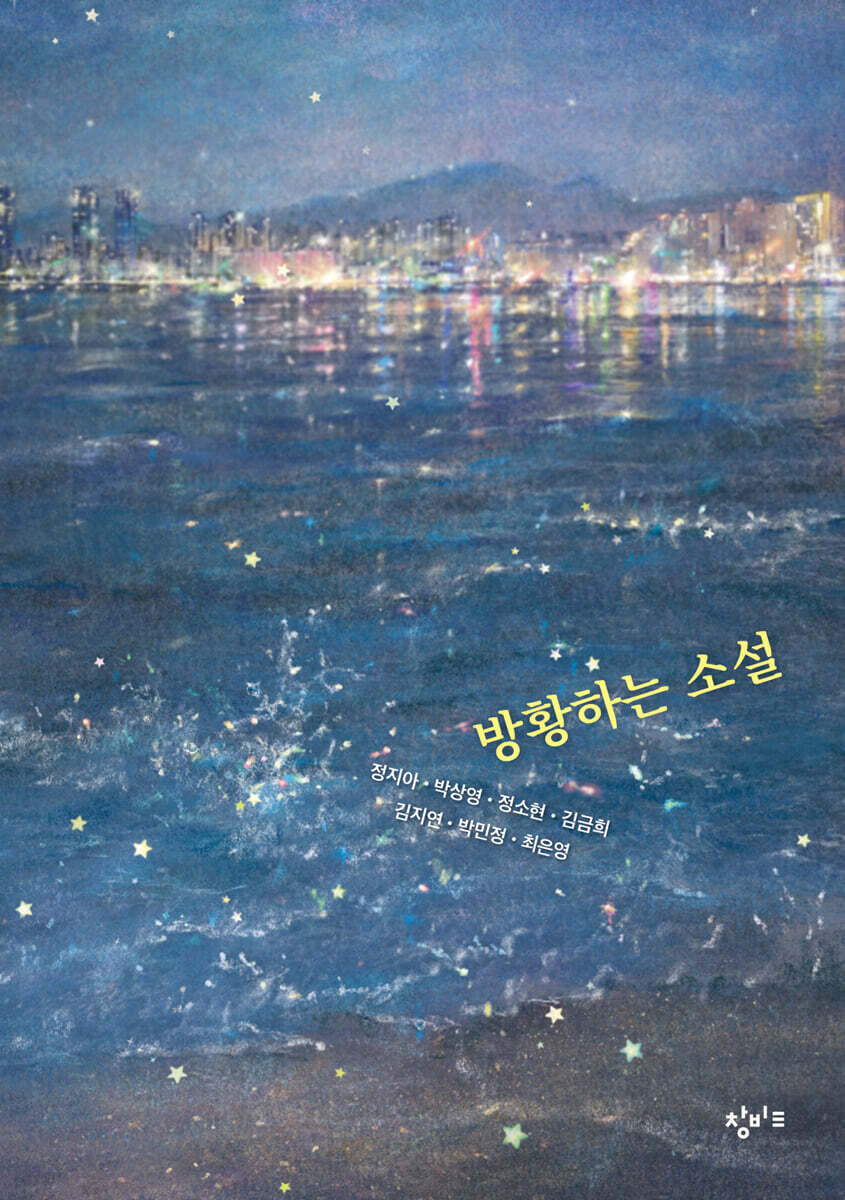
Wandering Novel
 |
Description
Book Introduction
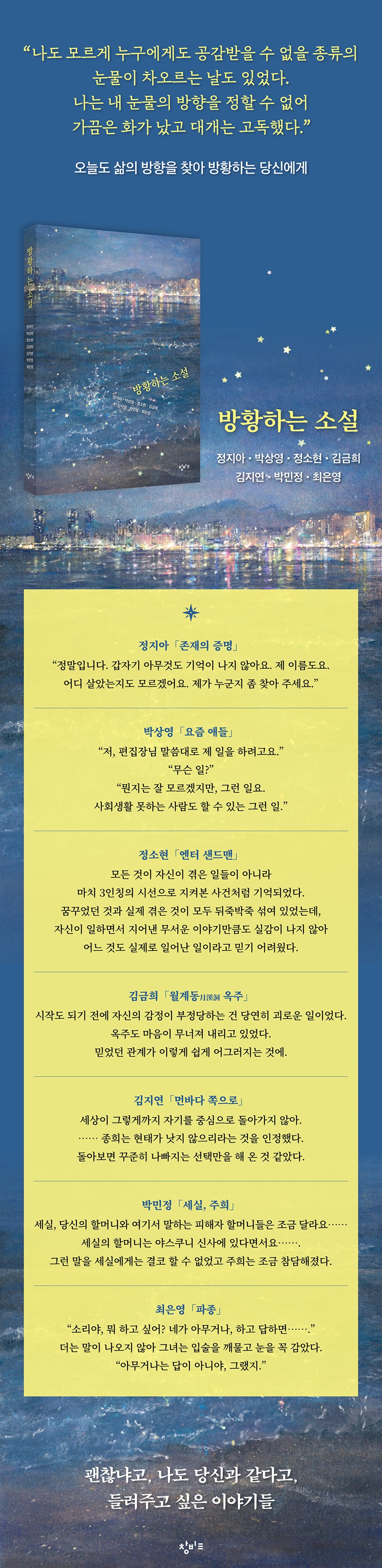
“There were days when tears welled up in my eyes without me knowing, a kind that no one could relate to.
“I couldn’t direct my tears, so sometimes I felt angry and mostly lonely.”
Stories I want to tell you today as you wander in search of direction in life.
『Wandering Novels』, a collection of seven short stories on the theme of wandering, has been published.
The collection of short stories contains stories of wandering by authors Jeong Ji-ah, Park Sang-young, Jeong So-hyeon, Kim Geum-hee, Kim Ji-yeon, Park Min-jeong, and Choi Eun-young.
We tend to think of wandering as something exclusive to adolescence.
However, the works in 『Wandering Novels』 tell the story of people of various ages wandering for various reasons, such as wandering due to memory loss, adaptation and wandering of a newcomer to society, wandering due to trauma, and wandering about human relationships.
This book will offer a small measure of courage and hope to young people and readers in their 20s and 30s who are finding their way in life by building relationships big and small.
I hope that I can realize that the wandering that comes back to me in a relentless manner is not a misfortune that happens only to me, and that I can gain the strength to get back on my feet again.
This book is the eleventh in a series of themed novels published by Changbi Education, and follows the first book in the series, 『Sweating Novel』, which deals with labor; 『Remembering Novel』, which deals with disaster; and 『Coexisting Novel』, which aims to unite our society with the socially disadvantaged.
“I couldn’t direct my tears, so sometimes I felt angry and mostly lonely.”
Stories I want to tell you today as you wander in search of direction in life.
『Wandering Novels』, a collection of seven short stories on the theme of wandering, has been published.
The collection of short stories contains stories of wandering by authors Jeong Ji-ah, Park Sang-young, Jeong So-hyeon, Kim Geum-hee, Kim Ji-yeon, Park Min-jeong, and Choi Eun-young.
We tend to think of wandering as something exclusive to adolescence.
However, the works in 『Wandering Novels』 tell the story of people of various ages wandering for various reasons, such as wandering due to memory loss, adaptation and wandering of a newcomer to society, wandering due to trauma, and wandering about human relationships.
This book will offer a small measure of courage and hope to young people and readers in their 20s and 30s who are finding their way in life by building relationships big and small.
I hope that I can realize that the wandering that comes back to me in a relentless manner is not a misfortune that happens only to me, and that I can gain the strength to get back on my feet again.
This book is the eleventh in a series of themed novels published by Changbi Education, and follows the first book in the series, 『Sweating Novel』, which deals with labor; 『Remembering Novel』, which deals with disaster; and 『Coexisting Novel』, which aims to unite our society with the socially disadvantaged.
- You can preview some of the book's contents.
Preview
index
Preface · Cheering on all the flowers that bloom while swaying
Jeong Ji-ah · Proof of Existence
Park Sang-young · Kids these days
Jung So-hyun · Enter Sandman
Kim Geum-hee and Ok-ju of Wolgye-dong
Kim Ji-yeon · Towards the Far Sea
Park Min-jeong, Cecil, and Joo-hee
Choi Eun-young · Pajong
Jeong Ji-ah · Proof of Existence
Park Sang-young · Kids these days
Jung So-hyun · Enter Sandman
Kim Geum-hee and Ok-ju of Wolgye-dong
Kim Ji-yeon · Towards the Far Sea
Park Min-jeong, Cecil, and Joo-hee
Choi Eun-young · Pajong
Detailed image
Into the book
“It’s true.
Suddenly I can't remember anything.
My name too.
I don't even know where I lived.
“Please help me find out who I am.”
--- From "Jung Ji-ah, Proof of Existence"
“I will do my job as the editor said.”
“What’s going on?”
“I don’t know exactly what it is, but it’s something like that.
“It’s something that even people who can’t function in society can do.”
--- From "Park Sang-young, Kids These Days"
Everything was remembered as if it were something I had witnessed through a third-person perspective, rather than something I had personally experienced.
The things I dreamed of and the things I actually experienced were all mixed up, and it was hard to believe that any of it had actually happened, as it felt less real than the scary stories I had made up while working.
--- From "Jung So-hyun, Enter Sandman"
It was naturally painful to have one's feelings denied before even starting.
Okju's heart was also breaking.
How can a relationship that was once trusted be so easily broken?
--- From "Kim Geum-hee, Okju of Wolgye-dong"
The world doesn't revolve around you that much.
Hyun-tae seemed to think that it was only a matter of time before people would find him in this small Republic of Korea, no matter what path he took.
Jong-hee admitted that Hyun-tae would not get better.
Looking back, it seems like I've been making only worse choices.
--- From "Kim Ji-yeon, Towards the Far Sea"
Cecil, your grandmother and the grandmothers of the victims we are talking about here are a little different… … Cecil’s grandmother is at the Yasukuni Shrine… … .
She could never say such things to Cecil, and Joohee felt a little miserable.
--- From "Park Min-jeong, Cecil, and Joo-hee"
"What do you want to do, Sori? If you say anything..."
Unable to speak any more, she bit her lip and squeezed her eyes shut.
“Just anything is not the answer, is it?”
Suddenly I can't remember anything.
My name too.
I don't even know where I lived.
“Please help me find out who I am.”
--- From "Jung Ji-ah, Proof of Existence"
“I will do my job as the editor said.”
“What’s going on?”
“I don’t know exactly what it is, but it’s something like that.
“It’s something that even people who can’t function in society can do.”
--- From "Park Sang-young, Kids These Days"
Everything was remembered as if it were something I had witnessed through a third-person perspective, rather than something I had personally experienced.
The things I dreamed of and the things I actually experienced were all mixed up, and it was hard to believe that any of it had actually happened, as it felt less real than the scary stories I had made up while working.
--- From "Jung So-hyun, Enter Sandman"
It was naturally painful to have one's feelings denied before even starting.
Okju's heart was also breaking.
How can a relationship that was once trusted be so easily broken?
--- From "Kim Geum-hee, Okju of Wolgye-dong"
The world doesn't revolve around you that much.
Hyun-tae seemed to think that it was only a matter of time before people would find him in this small Republic of Korea, no matter what path he took.
Jong-hee admitted that Hyun-tae would not get better.
Looking back, it seems like I've been making only worse choices.
--- From "Kim Ji-yeon, Towards the Far Sea"
Cecil, your grandmother and the grandmothers of the victims we are talking about here are a little different… … Cecil’s grandmother is at the Yasukuni Shrine… … .
She could never say such things to Cecil, and Joohee felt a little miserable.
--- From "Park Min-jeong, Cecil, and Joo-hee"
"What do you want to do, Sori? If you say anything..."
Unable to speak any more, she bit her lip and squeezed her eyes shut.
“Just anything is not the answer, is it?”
--- From "Choi Eun-young, Sowing"
Publisher's Review
The world is the same, but I'm the only one who's hurting and having a hard time.
But at the end of wandering, the face of hope appears.
Life is wandering, and wandering is a part of life.
Maybe the purpose of life is not to find something, but to wander.
Without wandering, we can't get anywhere.
Every wandering is the beginning of a new discovery.
Here is a protagonist who has completely forgotten his own existence and is worried about how to prove himself.
His story opens the door to wandering.
Jeong Ji-ah's "Proof of Existence" talks about who I am and what I need to prove myself through 'him' who suddenly suffers from amnesia one day.
“I couldn’t remember why I came at all.
I couldn't even tell where I was.
“It was like the Alps with his head shrouded in clouds.” (Page 14) A man who tries to recall himself through the objects and belongings around him but has trouble doing so. However, he is satisfied with the fact that he cannot remember himself as he checks his tastes in coffee, coffee cups, designer chairs, and sofas.
After a commotion at the police station, he finally finds his way home with help from others and falls into a comfortable sleep on the sofa.
“Memories may fade, but tastes never disappear.” (p. 37)
Whether or not he finds out who I am the next day, proving myself to 'him' is no longer a matter of importance.
Jeong So-hyun's "Enter Sandman" is a story about the trauma and wandering of Jisoo, who is left alone in the rubble of a tragic explosion that causes a building to collapse, killing her friend Eun-ha.
Ji-hoon, who survived the explosion and tried to find Eun-ha after talking to her, finds out that Eun-ha is dead and that the person he later talked to was not Eun-ha, but Ji-soo.
Enter Sandman, the song that two, no, three of them sang while waiting to be rescued from the rubble.
Jisoo and Jihoon are in the same situation and have suffered similar traumas, but they stay by each other's side.
But that doesn't mean we can move forward together.
'Jisoo' just wants to ignore reality and live in the world she imagined.
Only after the strange death of Ji-hoon does Ji-soo finally feel “a very clear and solid pain, the first I have felt since the accident” (p. 128).
Jisoo will be in despair for a while, but now she can step out into the real world.
Even alone.
Eunyoung Choi's "Sowing" is a story about the protagonist, "She," reconciling with her child, "Sori," as she recalls the love of her older brother, who took care of her in place of her abusive father and mother who passed away at an early age.
Like those who have lost someone precious, 'she' lives on, trying hard to ignore the moments she spent with her brother.
“It has become difficult to look at his photos stored on my phone.
“I didn’t want to see her.” (Page 234) The short period after the divorce when she lived with ‘Sori’ and tended the garden with her older brother must have been the most stable time for both ‘her’ and ‘Sori’.
The painful separation that came as soon as stability was regained created an invisible wall between 'her' and 'Sori'.
'Sori' missed his uncle who looked at him as he was.
“Sori, what do you want to do? If you say anything…” “Anything isn’t the answer, that’s right.” (Page 252) Recalling their uncle, the two decide to renovate and brighten that space again.
I level the field and sow the seeds, hoping that even the painful wounds will never be erased.
Stories of your and my wanderings, felt separately yet together in society.
The form and time of wandering that comes to us are all different.
In the process of going through it, you bump into people, fight with them, and sometimes try to remain silent.
The fact that we are different from each other sometimes becomes the reason for wandering.
Park Sang-young's "Kids These Days" begins with Nam-joon, a rookie reporter who has become a news anchor, reminiscing about his first work experience with Eunchae.
Namjoon, who started his career as an intern at a magazine at the age of 26, dreams of becoming a full-time reporter while willingly doing the work of “making drip coffee from morning to night so that the coffee never runs out and watering the large rubber tree in the office” (p. 50).
However, the inconsistent instructions and incomprehensible attitude of the shooter 'Bae Seo-jeong', who is only four years younger than him, made him experience the bitterness of social life.
Despite his efforts, Namjoon could no longer tolerate Bae Seo-jeong's contemptuous attitude and left the company.
“Senior, you know, I didn’t want to hear praise, I just wanted to be treated like a human being.” (Page 79) As time passed, the day came when Namjun understood Bae Seo-jeong.
Those times may have been a time of wandering for Bae Seo-jeong as well, but was it really necessary to discourage the spirit of young people just by saying, “kids these days”?
That kind of thing just remains as a misunderstanding without being understood.
Ok-ju, from Kim Geum-hee's "Ok-ju of Wolgye-dong," goes to study abroad in China after her discordant family falls apart and she breaks up with her lover and friend, Hyeon-woo.
'Okju' tries to get along with people somehow.
One night, when he was quite drunk and unable to enter the dormitory, he received help from a Chinese man named Yehui to warm up his body and the two became friends.
As Yehui tutors Okju and some of her friends in Chinese, they begin to hang out together.
But it's part of youth that exciting relationships don't always last.
I decided to spend my summer vacation with my friends at Yehui's hometown, but the trip did not go smoothly.
The blossoming love, the drifting feelings, and the heart that shakes off and leaves because it feels like all of these things are ruining the friendship are all wandering.
“Okju’s heart was also breaking.
How can a relationship that was once trusted be so easily broken?
“It seemed as if time had turned around and I was left alone again.” (pp. 156-157) In the end, the beautiful lake remained as a memory for both ‘Ok-ju’ and ‘Ye-hui.’
Still, with that memory, ‘Ok-ju’ continues to live today as ‘Ok-ju’.
Even if we can't meet.
Hyun-tae, in Kim Ji-yeon's "Towards the Far Sea," lives with anxiety symptoms.
In an attempt to stop Hyun-tae from smoking, playing thumping games, and playing the guitar at home, Jong-hee lies that the people in the apartment dislike him and that the man living downstairs will kill them.
Hyun-tae, who had been listening to Jong-hee's words, experiences a series of events and accepts Jong-hee's lies as something that would actually happen.
The two leave Seoul, wandering in fear that someone might kill them.
The two work and live in a remote pension by the sea.
I had found stability to the point where I thought I could live like this forever, but my life of avoiding problems instead of resolving them began to crack even with the slightest breeze.
A truck that seems to be following him, a man in a blue hat who just looks at the room and leaves, a guest who wants to stay one more night - these all become objects of fear for Hyun-tae, who is once gripped by anxiety.
As Jong-hee said, “Looking back, it seems like I’ve only been making choices that have steadily gotten worse” (page 178), bad choices can easily lead to the next bad choice.
This novel foreshadows the end of a life of hiding or running away.
In Park Min-jeong's "Cecil, Joo-hee," Joo-hee experiences an incident where drunken men surround her at a New Orleans festival, shouting at her and putting necklaces on her.
'Cecil' is a Japanese woman who came to work in Korea because she wanted to learn about the country of her favorite singer.
Joohee and Cecil work at Juju House, and on weekends, at Cecil's request, she also gives private Korean lessons.
Cecil often compliments Joohee, saying she's pretty and cute, but Joohee doesn't like hearing such compliments.
I hated it even more after the incident in New Orleans.
Although they seem close, Joo-hee and Cecil are stuck in the same place, unable to get any closer.
Our grandmothers who lived as comfort women at the end of the Pacific War and the grandmother of 'Cecil', a member of the Himeyuri Student Corps.
“Cecil, your grandmother and the grandmothers of the victims we are talking about here are a little different… I heard Cecil’s grandmother is at Yasukuni Shrine…” (page 224) In front of a relationship that seems similar yet different, like parallel lines, ‘Joo-hee’ eventually swallows what she wants to say.
Among the seven works, I hope there is a story that resembles the wandering you have endured while struggling.
I hope these stories will give you strength as you wander around searching for direction in life.
But at the end of wandering, the face of hope appears.
Life is wandering, and wandering is a part of life.
Maybe the purpose of life is not to find something, but to wander.
Without wandering, we can't get anywhere.
Every wandering is the beginning of a new discovery.
Here is a protagonist who has completely forgotten his own existence and is worried about how to prove himself.
His story opens the door to wandering.
Jeong Ji-ah's "Proof of Existence" talks about who I am and what I need to prove myself through 'him' who suddenly suffers from amnesia one day.
“I couldn’t remember why I came at all.
I couldn't even tell where I was.
“It was like the Alps with his head shrouded in clouds.” (Page 14) A man who tries to recall himself through the objects and belongings around him but has trouble doing so. However, he is satisfied with the fact that he cannot remember himself as he checks his tastes in coffee, coffee cups, designer chairs, and sofas.
After a commotion at the police station, he finally finds his way home with help from others and falls into a comfortable sleep on the sofa.
“Memories may fade, but tastes never disappear.” (p. 37)
Whether or not he finds out who I am the next day, proving myself to 'him' is no longer a matter of importance.
Jeong So-hyun's "Enter Sandman" is a story about the trauma and wandering of Jisoo, who is left alone in the rubble of a tragic explosion that causes a building to collapse, killing her friend Eun-ha.
Ji-hoon, who survived the explosion and tried to find Eun-ha after talking to her, finds out that Eun-ha is dead and that the person he later talked to was not Eun-ha, but Ji-soo.
Enter Sandman, the song that two, no, three of them sang while waiting to be rescued from the rubble.
Jisoo and Jihoon are in the same situation and have suffered similar traumas, but they stay by each other's side.
But that doesn't mean we can move forward together.
'Jisoo' just wants to ignore reality and live in the world she imagined.
Only after the strange death of Ji-hoon does Ji-soo finally feel “a very clear and solid pain, the first I have felt since the accident” (p. 128).
Jisoo will be in despair for a while, but now she can step out into the real world.
Even alone.
Eunyoung Choi's "Sowing" is a story about the protagonist, "She," reconciling with her child, "Sori," as she recalls the love of her older brother, who took care of her in place of her abusive father and mother who passed away at an early age.
Like those who have lost someone precious, 'she' lives on, trying hard to ignore the moments she spent with her brother.
“It has become difficult to look at his photos stored on my phone.
“I didn’t want to see her.” (Page 234) The short period after the divorce when she lived with ‘Sori’ and tended the garden with her older brother must have been the most stable time for both ‘her’ and ‘Sori’.
The painful separation that came as soon as stability was regained created an invisible wall between 'her' and 'Sori'.
'Sori' missed his uncle who looked at him as he was.
“Sori, what do you want to do? If you say anything…” “Anything isn’t the answer, that’s right.” (Page 252) Recalling their uncle, the two decide to renovate and brighten that space again.
I level the field and sow the seeds, hoping that even the painful wounds will never be erased.
Stories of your and my wanderings, felt separately yet together in society.
The form and time of wandering that comes to us are all different.
In the process of going through it, you bump into people, fight with them, and sometimes try to remain silent.
The fact that we are different from each other sometimes becomes the reason for wandering.
Park Sang-young's "Kids These Days" begins with Nam-joon, a rookie reporter who has become a news anchor, reminiscing about his first work experience with Eunchae.
Namjoon, who started his career as an intern at a magazine at the age of 26, dreams of becoming a full-time reporter while willingly doing the work of “making drip coffee from morning to night so that the coffee never runs out and watering the large rubber tree in the office” (p. 50).
However, the inconsistent instructions and incomprehensible attitude of the shooter 'Bae Seo-jeong', who is only four years younger than him, made him experience the bitterness of social life.
Despite his efforts, Namjoon could no longer tolerate Bae Seo-jeong's contemptuous attitude and left the company.
“Senior, you know, I didn’t want to hear praise, I just wanted to be treated like a human being.” (Page 79) As time passed, the day came when Namjun understood Bae Seo-jeong.
Those times may have been a time of wandering for Bae Seo-jeong as well, but was it really necessary to discourage the spirit of young people just by saying, “kids these days”?
That kind of thing just remains as a misunderstanding without being understood.
Ok-ju, from Kim Geum-hee's "Ok-ju of Wolgye-dong," goes to study abroad in China after her discordant family falls apart and she breaks up with her lover and friend, Hyeon-woo.
'Okju' tries to get along with people somehow.
One night, when he was quite drunk and unable to enter the dormitory, he received help from a Chinese man named Yehui to warm up his body and the two became friends.
As Yehui tutors Okju and some of her friends in Chinese, they begin to hang out together.
But it's part of youth that exciting relationships don't always last.
I decided to spend my summer vacation with my friends at Yehui's hometown, but the trip did not go smoothly.
The blossoming love, the drifting feelings, and the heart that shakes off and leaves because it feels like all of these things are ruining the friendship are all wandering.
“Okju’s heart was also breaking.
How can a relationship that was once trusted be so easily broken?
“It seemed as if time had turned around and I was left alone again.” (pp. 156-157) In the end, the beautiful lake remained as a memory for both ‘Ok-ju’ and ‘Ye-hui.’
Still, with that memory, ‘Ok-ju’ continues to live today as ‘Ok-ju’.
Even if we can't meet.
Hyun-tae, in Kim Ji-yeon's "Towards the Far Sea," lives with anxiety symptoms.
In an attempt to stop Hyun-tae from smoking, playing thumping games, and playing the guitar at home, Jong-hee lies that the people in the apartment dislike him and that the man living downstairs will kill them.
Hyun-tae, who had been listening to Jong-hee's words, experiences a series of events and accepts Jong-hee's lies as something that would actually happen.
The two leave Seoul, wandering in fear that someone might kill them.
The two work and live in a remote pension by the sea.
I had found stability to the point where I thought I could live like this forever, but my life of avoiding problems instead of resolving them began to crack even with the slightest breeze.
A truck that seems to be following him, a man in a blue hat who just looks at the room and leaves, a guest who wants to stay one more night - these all become objects of fear for Hyun-tae, who is once gripped by anxiety.
As Jong-hee said, “Looking back, it seems like I’ve only been making choices that have steadily gotten worse” (page 178), bad choices can easily lead to the next bad choice.
This novel foreshadows the end of a life of hiding or running away.
In Park Min-jeong's "Cecil, Joo-hee," Joo-hee experiences an incident where drunken men surround her at a New Orleans festival, shouting at her and putting necklaces on her.
'Cecil' is a Japanese woman who came to work in Korea because she wanted to learn about the country of her favorite singer.
Joohee and Cecil work at Juju House, and on weekends, at Cecil's request, she also gives private Korean lessons.
Cecil often compliments Joohee, saying she's pretty and cute, but Joohee doesn't like hearing such compliments.
I hated it even more after the incident in New Orleans.
Although they seem close, Joo-hee and Cecil are stuck in the same place, unable to get any closer.
Our grandmothers who lived as comfort women at the end of the Pacific War and the grandmother of 'Cecil', a member of the Himeyuri Student Corps.
“Cecil, your grandmother and the grandmothers of the victims we are talking about here are a little different… I heard Cecil’s grandmother is at Yasukuni Shrine…” (page 224) In front of a relationship that seems similar yet different, like parallel lines, ‘Joo-hee’ eventually swallows what she wants to say.
Among the seven works, I hope there is a story that resembles the wandering you have endured while struggling.
I hope these stories will give you strength as you wander around searching for direction in life.
GOODS SPECIFICS
- Date of issue: December 22, 2023
- Page count, weight, size: 256 pages | 406g | 148*210*16mm
- ISBN13: 9791165702359
- ISBN10: 1165702355
You may also like
카테고리
korean


korean

![GQ KOREA Mark (Monthly): December [2025]](http://librairie.coreenne.fr/cdn/shop/files/8ef265dbbfbf186523ed75ba7319009d.jpg?v=1765340328&width=3840)


