

Awkward Classics Lesson 3
 |
Description
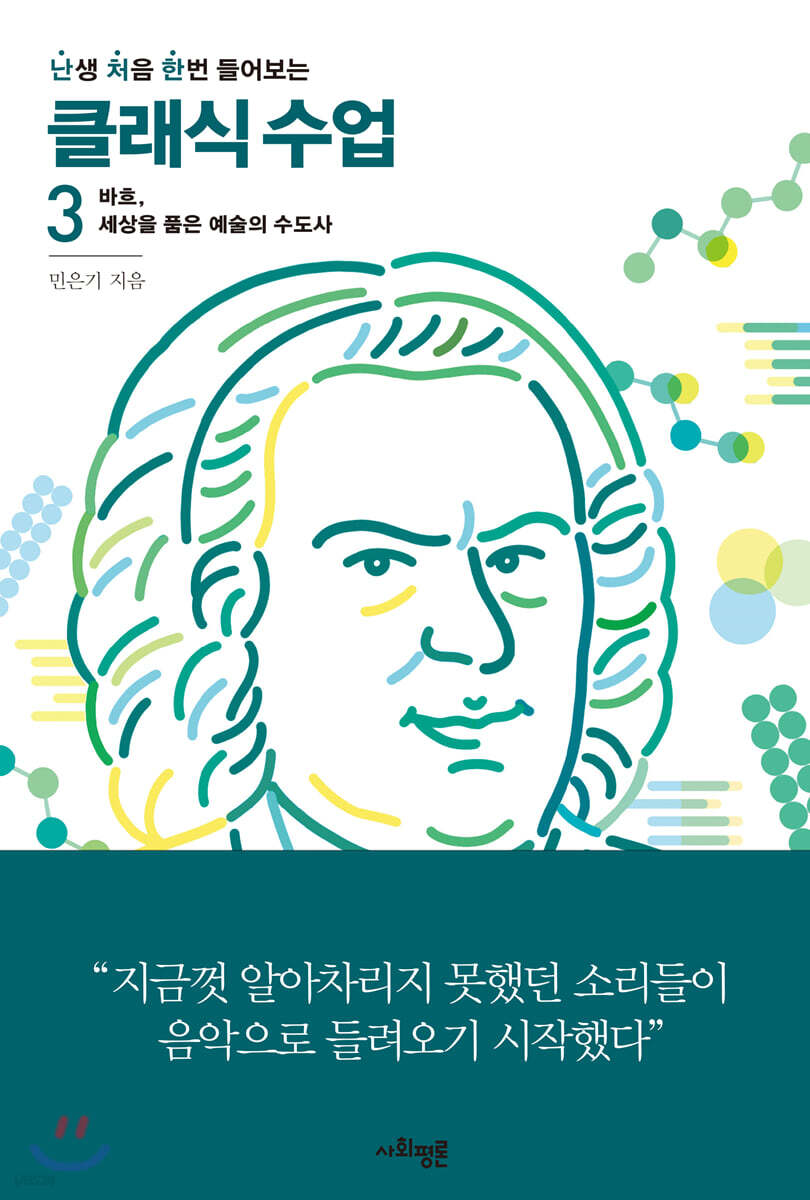
Book Introduction
“Classical music, shall we start listening to it in earnest now?”
How many authors would be brave enough to open a book and honestly declare, "Classical music isn't easy," from the very beginning, to a reader eager to learn classical music? Perhaps it was Professor Min Eun-ki, author of "My First Classical Music Lesson" (hereafter, "Awkward Classical Music Lesson"), who was able to do so.
Professor Min Eun-ki is a diligent scholar who, while being a true researcher, has never strayed from reality.
He is a first-generation Korean musicologist who has been a professor of composition at Seoul National University since 1995, but he is also a social intellectual who has always met people outside of the university through numerous public lectures and writings.
Perhaps no other scholar has worked as hard as Professor Min Eun-ki to introduce the world of classical music to the vast majority of Koreans, despite his keen understanding that it may be unfamiliar.
Why classical music, anyway? According to the author, it's because classical music is a shared cultural heritage of humanity, a legacy we all share. It's a shame to live without it.
“Classical music is a type of music that moves you more deeply the more you listen to it.
You can listen to it for a long time without getting tired of it.
As is often the case with other things that bear the name of classic.”
If we are beings who have to listen to something to survive anyway, then classic music, which is not influenced by trends, is probably the music genre that we can listen to for the longest time.
How many authors would be brave enough to open a book and honestly declare, "Classical music isn't easy," from the very beginning, to a reader eager to learn classical music? Perhaps it was Professor Min Eun-ki, author of "My First Classical Music Lesson" (hereafter, "Awkward Classical Music Lesson"), who was able to do so.
Professor Min Eun-ki is a diligent scholar who, while being a true researcher, has never strayed from reality.
He is a first-generation Korean musicologist who has been a professor of composition at Seoul National University since 1995, but he is also a social intellectual who has always met people outside of the university through numerous public lectures and writings.
Perhaps no other scholar has worked as hard as Professor Min Eun-ki to introduce the world of classical music to the vast majority of Koreans, despite his keen understanding that it may be unfamiliar.
Why classical music, anyway? According to the author, it's because classical music is a shared cultural heritage of humanity, a legacy we all share. It's a shame to live without it.
“Classical music is a type of music that moves you more deeply the more you listen to it.
You can listen to it for a long time without getting tired of it.
As is often the case with other things that bear the name of classic.”
If we are beings who have to listen to something to survive anyway, then classic music, which is not influenced by trends, is probably the music genre that we can listen to for the longest time.
- You can preview some of the book's contents.
Preview
index
Ⅰ It all started with Bach - Tradition and Innovation in Music
01 The Greatest Thing Humans Have Made 02 The Monk of Art Who Embraces the World
Ⅱ Musicians of a Small German Town - A History of Western Christian Music
01 Love of music engraved in the blood 02 Flowing through a thousand years, reaching Germany 03 Beautiful codes forever
Ⅲ The Path to becoming a craftsman - The development of string instruments and the organ
01 A young and confident musician 02 When the organ sounds in the castle in the sky 03 A time when it was as comfortable as a dream
Ⅳ Echoes inscribed on St. Thomas Church - Cantor Bach of Leipzig
01 Heavy workload, shining faith 02 'Little Bachs' spreading throughout the world
V Becoming an Eternally Shining Star - The Origins of Western Music Revisited
01 Until God Calls Me 02 Bach, Resurrected
Detailed image

Into the book
The more you listen to Bach's music, the more it feels like a language of the soul, not just a collection of simple sounds.
It's too beautiful, pure, and upright to be music created by humans.
It would be difficult not to feel a thrill running through your body as you listen to Bach's music resonating through the church pipe organ.
--- p.
6
Cultural phenomena do not change overnight.
That is why scholars have very different opinions on how to divide the eras.
But when it comes to music, there's one point we all agree on: with Bach's death in 1750, an era ended.
Bach is not just one individual.
He is a unique musician who synthesizes the legacy of the past and provides nutrients for moving forward into a new era.
--- p.
26~27
It is an instrument that can compete with an orchestra, as it can express not only a loud volume that can overwhelm a large space, but also a variety of tones.
So when I introduce organ music, I often say, “Anyone who can hear organ music can hear all music.”
Mozart also admired the organ, calling it “the king of instruments.”
--- p.
134
Even if it feels difficult, rather than avoiding it because you don't know much, I recommend listening to it little by little whenever you have the chance, like now.
If you listen carefully to how the topic that came up at the beginning is transformed to create responses, and how those responses overlap one by one to create results, at some point you will hear sounds that you hadn't heard before.
It's really funny when it starts to sound like that.
Of course, it's also good for showing off.
--- p.
191
Could the fundamental value of the song "Spring" lie in its ability to effectively portray the sounds of birds? Think about it.
If you want to hear birdsong, just listen to birdsong, and if you want to appreciate poetry, just read poetry.
Of course, that's not to say that it's not fun to hear poetry imitating bird sounds through music.
I'm just saying that's not the point.
I think this song is so loved and important because it brings joy and happiness to people even without poetry.
And what we want to understand is that essential part of music.
--- p.
241
It is said that Bach composed four or five Passions, each according to a different Gospel, but currently only the Matthew Passion, the John Passion, and one movement of the Mark Passion remain.
Even though no one recognized them, they did their best to create masterpieces.
I respect you.
Who else but Bach could have accomplished such a feat solely out of a sense of duty as a cantor?
It could be said that this is a miraculous achievement achieved by an outstanding genius armed with a strong faith and constantly pushing himself.
--- p.
322~324
Bach provided the foundational material for music not only for famous musicians like Beethoven and Mozart, but also for countless unknown musicians and even modern musicians.
Anyone who studies music cannot help but feel a sense of familiarity and respect for Bach.
So, I feel like I want to accept the slightly ticklish expression 'father of music'.
It's too beautiful, pure, and upright to be music created by humans.
It would be difficult not to feel a thrill running through your body as you listen to Bach's music resonating through the church pipe organ.
--- p.
6
Cultural phenomena do not change overnight.
That is why scholars have very different opinions on how to divide the eras.
But when it comes to music, there's one point we all agree on: with Bach's death in 1750, an era ended.
Bach is not just one individual.
He is a unique musician who synthesizes the legacy of the past and provides nutrients for moving forward into a new era.
--- p.
26~27
It is an instrument that can compete with an orchestra, as it can express not only a loud volume that can overwhelm a large space, but also a variety of tones.
So when I introduce organ music, I often say, “Anyone who can hear organ music can hear all music.”
Mozart also admired the organ, calling it “the king of instruments.”
--- p.
134
Even if it feels difficult, rather than avoiding it because you don't know much, I recommend listening to it little by little whenever you have the chance, like now.
If you listen carefully to how the topic that came up at the beginning is transformed to create responses, and how those responses overlap one by one to create results, at some point you will hear sounds that you hadn't heard before.
It's really funny when it starts to sound like that.
Of course, it's also good for showing off.
--- p.
191
Could the fundamental value of the song "Spring" lie in its ability to effectively portray the sounds of birds? Think about it.
If you want to hear birdsong, just listen to birdsong, and if you want to appreciate poetry, just read poetry.
Of course, that's not to say that it's not fun to hear poetry imitating bird sounds through music.
I'm just saying that's not the point.
I think this song is so loved and important because it brings joy and happiness to people even without poetry.
And what we want to understand is that essential part of music.
--- p.
241
It is said that Bach composed four or five Passions, each according to a different Gospel, but currently only the Matthew Passion, the John Passion, and one movement of the Mark Passion remain.
Even though no one recognized them, they did their best to create masterpieces.
I respect you.
Who else but Bach could have accomplished such a feat solely out of a sense of duty as a cantor?
It could be said that this is a miraculous achievement achieved by an outstanding genius armed with a strong faith and constantly pushing himself.
--- p.
322~324
Bach provided the foundational material for music not only for famous musicians like Beethoven and Mozart, but also for countless unknown musicians and even modern musicians.
Anyone who studies music cannot help but feel a sense of familiarity and respect for Bach.
So, I feel like I want to accept the slightly ticklish expression 'father of music'.
--- p.
398
398
Publisher's Review
Mozart, Beethoven, Bach, and Handel
"The Embarrassing Classical Music Class" is a series that was first released in late 2018 after extensive preparation by the publishing company Social Criticism and Professor Min Eun-ki, who shared the same concern that there was a lack of easy-to-pick-up introductory classical music books.
As it took a long time, the series was meticulously planned.
From the most basic of basics, Do-Re-Mi-Fa-So-La-Si, to the symphony, the flower of instrumental music, and from the first song of mankind to today's popular pop songs, it guides you step by step through time and space and genres to the best path to the world of classical music.
This is why both the first volume, Mozart, and the second volume, Beethoven, which followed, were quickly established as the "bible" for beginners of classical music, receiving favorable reviews such as "a rare, informative and useful introductory book" and "a book that balances musical works and background knowledge."
About a year later, 『The Awkward Classical Music Lessons』 returned with Volume 3 on Bach and Volume 4 on Handel.
Bach and Handel are a duo of masters who are often called the 'father and mother of music' and are a perfect fit for the term 'classic'.
If the previous Mozart and Beethoven chapters focused on building the foundational muscles for classical music, this journey, following in the footsteps of two musicians of the same age who lived just before that time, leads readers to fully immerse themselves in Baroque music, the root of Western music.
As a bonus, you can experience Europe, which was precariously strung across the Middle Ages, with all five senses, as if you were breathing through the life stories of these two people, which are more exciting than biographies and more vivid than history books.
The next five volumes will cover Chopin and Liszt, representative pianists of the Romantic era, the most brilliant period of classical music.
You can listen to music and take lectures anytime, anywhere with just a smartphone.
The friendly structure that was particularly well-received in 『The Story of Studying Art for the First Time in My Life』, which opened the 'Embarrassing Series' with unprecedented popularity among domestic planning knowledge and culture books, is continued in 『Embarrassing Classical Class』.
The text is written in a one-on-one conversation format that is easy to read, with images appearing when needed and QR codes appearing at appropriate places to connect to the music so you don't have to search for it separately.
Additionally, each page is filled with illustrator Kang Han's sensual drawings and carefully selected photographs, maximizing the viewing enjoyment.
In particular, the newly published Volumes 3 and 4 of "Awkward Classics Class" contain more visual materials than ever before, with approximately 190 and 160 pages respectively, providing a richer reading experience.
Bach, music written with the soul
When asked when classical music began, most musicians first think of Bach.
This book deals with the music of Bach, the teacher of all musicians.
At the same time, it goes back to the music that created Bach, that is, the 'tradition' that became the root of Western music.
It is Christianity.
The only place in medieval Europe that embraced and developed music was the church.
When we think of medieval churches, we often think of a dreary image, but the Gothic church, the epitome of medieval churches, was a fantastical space filled with light filtering through stained glass and the sound of an organ piped through pipes.
To create such spaces, the Church has always needed musicians for nearly a thousand years, and Bach was one of them.
He was especially famous as an organist in his time.
In fact, it is no exaggeration to say that the fate of the organist, who must constantly struggle in places unseen, is the very life of Bach, who produced countless masterpieces while giving all glory to God.
But now, of course, Bach the composer is much more famous than Bach the performer.
He was a composer who literally closed and opened an era.
From the beautiful melody of 'Aria on the G String' to the innovative destruction of the 'Goldberg Variations' and the 'Well-Tempered Clavier' that ushered in the next era of music, Bach passed away quietly as a conscientious craftsman, creating music that synthesized and surpassed tradition.
This book provides a friendly and in-depth introduction to the nearly forgotten world of Bach's music, while also pointing out the influence of the sinister German nationalism that was one of the reasons for Bach's later revival.
By following this three-volume journey that spans the ages from the early Middle Ages to the modern era, you can escape the strictness and boringness associated with the name Bach and touch the essence of music.
Perhaps in its essence lies the reason why Bach still resonates so strongly today, the “language of our soul” that his music carries.
"The Embarrassing Classical Music Class" is a series that was first released in late 2018 after extensive preparation by the publishing company Social Criticism and Professor Min Eun-ki, who shared the same concern that there was a lack of easy-to-pick-up introductory classical music books.
As it took a long time, the series was meticulously planned.
From the most basic of basics, Do-Re-Mi-Fa-So-La-Si, to the symphony, the flower of instrumental music, and from the first song of mankind to today's popular pop songs, it guides you step by step through time and space and genres to the best path to the world of classical music.
This is why both the first volume, Mozart, and the second volume, Beethoven, which followed, were quickly established as the "bible" for beginners of classical music, receiving favorable reviews such as "a rare, informative and useful introductory book" and "a book that balances musical works and background knowledge."
About a year later, 『The Awkward Classical Music Lessons』 returned with Volume 3 on Bach and Volume 4 on Handel.
Bach and Handel are a duo of masters who are often called the 'father and mother of music' and are a perfect fit for the term 'classic'.
If the previous Mozart and Beethoven chapters focused on building the foundational muscles for classical music, this journey, following in the footsteps of two musicians of the same age who lived just before that time, leads readers to fully immerse themselves in Baroque music, the root of Western music.
As a bonus, you can experience Europe, which was precariously strung across the Middle Ages, with all five senses, as if you were breathing through the life stories of these two people, which are more exciting than biographies and more vivid than history books.
The next five volumes will cover Chopin and Liszt, representative pianists of the Romantic era, the most brilliant period of classical music.
You can listen to music and take lectures anytime, anywhere with just a smartphone.
The friendly structure that was particularly well-received in 『The Story of Studying Art for the First Time in My Life』, which opened the 'Embarrassing Series' with unprecedented popularity among domestic planning knowledge and culture books, is continued in 『Embarrassing Classical Class』.
The text is written in a one-on-one conversation format that is easy to read, with images appearing when needed and QR codes appearing at appropriate places to connect to the music so you don't have to search for it separately.
Additionally, each page is filled with illustrator Kang Han's sensual drawings and carefully selected photographs, maximizing the viewing enjoyment.
In particular, the newly published Volumes 3 and 4 of "Awkward Classics Class" contain more visual materials than ever before, with approximately 190 and 160 pages respectively, providing a richer reading experience.
Bach, music written with the soul
When asked when classical music began, most musicians first think of Bach.
This book deals with the music of Bach, the teacher of all musicians.
At the same time, it goes back to the music that created Bach, that is, the 'tradition' that became the root of Western music.
It is Christianity.
The only place in medieval Europe that embraced and developed music was the church.
When we think of medieval churches, we often think of a dreary image, but the Gothic church, the epitome of medieval churches, was a fantastical space filled with light filtering through stained glass and the sound of an organ piped through pipes.
To create such spaces, the Church has always needed musicians for nearly a thousand years, and Bach was one of them.
He was especially famous as an organist in his time.
In fact, it is no exaggeration to say that the fate of the organist, who must constantly struggle in places unseen, is the very life of Bach, who produced countless masterpieces while giving all glory to God.
But now, of course, Bach the composer is much more famous than Bach the performer.
He was a composer who literally closed and opened an era.
From the beautiful melody of 'Aria on the G String' to the innovative destruction of the 'Goldberg Variations' and the 'Well-Tempered Clavier' that ushered in the next era of music, Bach passed away quietly as a conscientious craftsman, creating music that synthesized and surpassed tradition.
This book provides a friendly and in-depth introduction to the nearly forgotten world of Bach's music, while also pointing out the influence of the sinister German nationalism that was one of the reasons for Bach's later revival.
By following this three-volume journey that spans the ages from the early Middle Ages to the modern era, you can escape the strictness and boringness associated with the name Bach and touch the essence of music.
Perhaps in its essence lies the reason why Bach still resonates so strongly today, the “language of our soul” that his music carries.
GOODS SPECIFICS
- Date of issue: June 17, 2020
- Page count, weight, size: 412 pages | 660g | 153*224*30mm
- ISBN13: 9791162731154
- ISBN10: 116273115X
You may also like
카테고리
korean


korean

![GQ KOREA Mark (Monthly): December [2025]](http://librairie.coreenne.fr/cdn/shop/files/8ef265dbbfbf186523ed75ba7319009d.jpg?v=1765340328&width=3840)


