

Drama Leviticus
 |
Description
Book Introduction
“Why are there so many sacrifices?”
“You’re telling me not to eat pork belly, seonjitguk, or sundae?”
“What is the purpose of holiness?”
Easily overcome Leviticus, which is as difficult as Mount Everest
It lets you taste the grace and emotion contained within.
Most believers, as they read through the Bible, come to Leviticus and feel a sense of fear and frustration, as if they have encountered a high mountain that is difficult to overcome.
But Leviticus is a beautiful mountain that, when you get to know it, creates a breathtaking spectacle that is difficult to describe.
Although this has become quite lax in modern times, Jews begin teaching their children Torah when they turn five.
The first Torah is not Genesis, but Leviticus.
Why do they start teaching their young children from the boring, rigid, and even difficult book of Leviticus? Because Leviticus contains the essence of the gospel and is a textbook for the life of faith, both for "worship" and "life," that all believers should know.
In other words, it tells us in detail how we, as God's chosen people and royal priests, should worship and live in our daily lives.
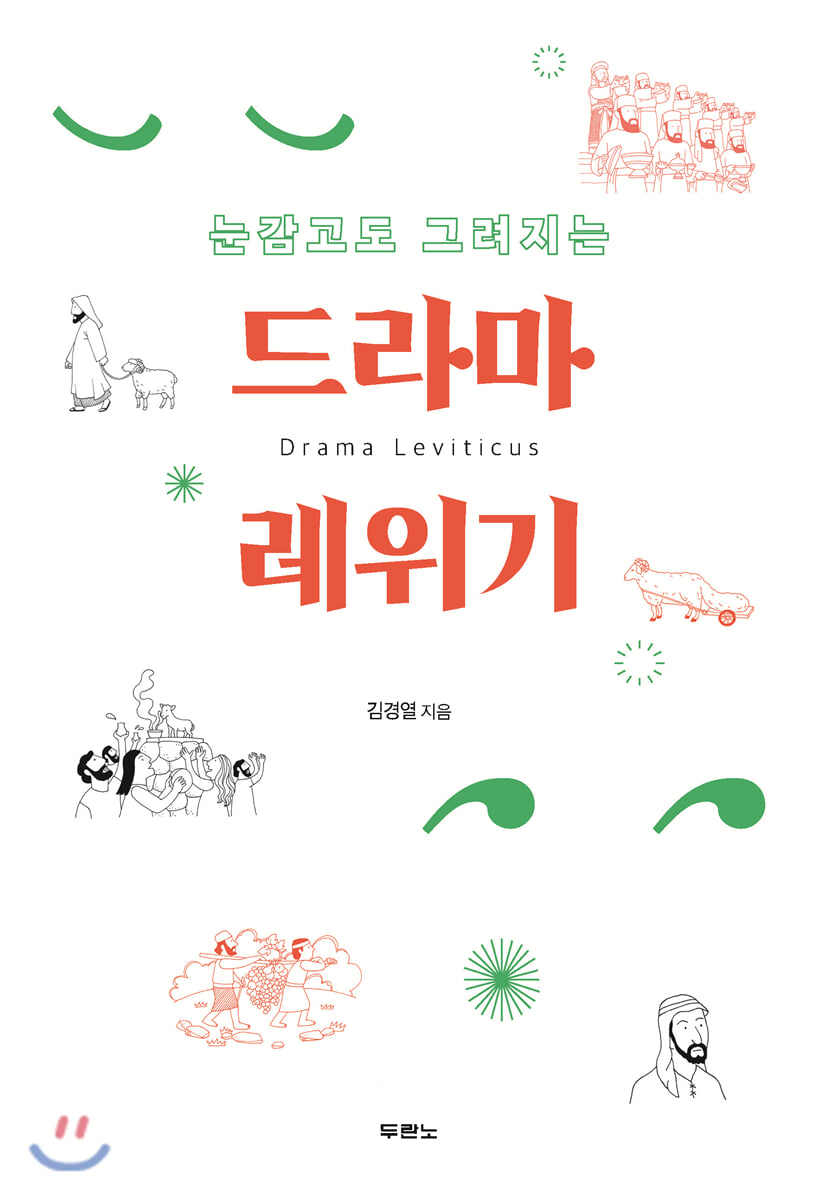
In 『Drama Leviticus』, the author, known as a ‘Leviticus expert’, adds dramatic elements to guide readers through the text of Leviticus, allowing them to picture it with their eyes closed.
Several characters take to the stage in each chapter of Leviticus to tell different stories.
We also added illustrations and diagrams to make Leviticus feel three-dimensional and vivid.
First, it kindly explains why there are so many different types of sacrifices and what the five major sacrifices are: burnt offerings, grain offerings, peace offerings, sin offerings, and guilt offerings.
These five sacrifices give us insight into what they mean and teach us about our lives and worship today.
It also clearly explains the fundamental principles of purity and uncleanness, such as, 'Why am I dirty and you are clean?' and 'Why should I eat this and not that?'
Above all, it helps us, as God's people, to see the core of what it means to live a life that is distinct from that of the Gentiles, that is, a life that is holy and sanctified.
As we steadily ascend the mountain of Leviticus with this book, it will provide preachers with a treasure trove, theologians with an inexhaustible source of theological wisdom, and all laypeople with concrete guidance for their lives of faith.
“You’re telling me not to eat pork belly, seonjitguk, or sundae?”
“What is the purpose of holiness?”
Easily overcome Leviticus, which is as difficult as Mount Everest
It lets you taste the grace and emotion contained within.
Most believers, as they read through the Bible, come to Leviticus and feel a sense of fear and frustration, as if they have encountered a high mountain that is difficult to overcome.
But Leviticus is a beautiful mountain that, when you get to know it, creates a breathtaking spectacle that is difficult to describe.
Although this has become quite lax in modern times, Jews begin teaching their children Torah when they turn five.
The first Torah is not Genesis, but Leviticus.
Why do they start teaching their young children from the boring, rigid, and even difficult book of Leviticus? Because Leviticus contains the essence of the gospel and is a textbook for the life of faith, both for "worship" and "life," that all believers should know.
In other words, it tells us in detail how we, as God's chosen people and royal priests, should worship and live in our daily lives.
In 『Drama Leviticus』, the author, known as a ‘Leviticus expert’, adds dramatic elements to guide readers through the text of Leviticus, allowing them to picture it with their eyes closed.
Several characters take to the stage in each chapter of Leviticus to tell different stories.
We also added illustrations and diagrams to make Leviticus feel three-dimensional and vivid.
First, it kindly explains why there are so many different types of sacrifices and what the five major sacrifices are: burnt offerings, grain offerings, peace offerings, sin offerings, and guilt offerings.
These five sacrifices give us insight into what they mean and teach us about our lives and worship today.
It also clearly explains the fundamental principles of purity and uncleanness, such as, 'Why am I dirty and you are clean?' and 'Why should I eat this and not that?'
Above all, it helps us, as God's people, to see the core of what it means to live a life that is distinct from that of the Gentiles, that is, a life that is holy and sanctified.
As we steadily ascend the mountain of Leviticus with this book, it will provide preachers with a treasure trove, theologians with an inexhaustible source of theological wisdom, and all laypeople with concrete guidance for their lives of faith.
- You can preview some of the book's contents.
Preview
index
prolog
Introduction_Leviticus that makes you yawn
Part 1: Why are there so many sacrifices?
1.
Making a Blood Covenant / Exodus 24
2.
The Tabernacle, God's Bridal Chamber / Exodus 32-40
3.
Why are there so many sacrifices? / Leviticus 1-7
4.
Burnt Offerings, Offerings of Dedication / Leviticus 1
5.
True worship, false worship
6.
Grain offerings, wheat offerings / Leviticus 2
7.
A Fun Bulgogi Party! / Chapter 3
8.
Sin Offering, Wash Away Your Sins and Impurities! / Leviticus 4-5
9.
Compensate for the cost of the goods! / Lev 5-7
10.
Worship, worship of the cross!
11.
My sins defile the temple!
12.
The Day of Atonement, Israel's Reset! / Leviticus 4, 16
13.
Do you want to be hit by the fire of grace or the fire of judgment? / Leviticus 8-10
Part 2 What is the purpose of holiness?
14.
Holy and profane, clean and unclean
15.
Touch and you die! Dynamic Holy
16.
Don't eat pork belly!
17.
What is the standard for determining right and wrong? / Leviticus 11
18.
Why am I dirty and you are clean? / Leviticus 12
19.
Eurachacha! Zaraat? / Leviticus 13-14
20.
What is flowing out of my body? / Leviticus 15
21.
Do not eat either the soup of the ox or the soup of the sundae! / Lev 17
22.
Beasts, do not cross the line! / Leviticus 18-20
23.
A holy life is loving God and loving your neighbor / Leviticus 19
24.
Priests who cannot attend funerals / Leviticus 21-22
25.
The late rain has fallen! This year will be a bumper crop again!
26.
The Feasts of Israel / Leviticus 23
27.
Jubilee, a Day of Social and Cosmic Reset / Lev 25
28.
What is the land flowing with milk and honey? / Leviticus 26
Introduction_Leviticus that makes you yawn
Part 1: Why are there so many sacrifices?
1.
Making a Blood Covenant / Exodus 24
2.
The Tabernacle, God's Bridal Chamber / Exodus 32-40
3.
Why are there so many sacrifices? / Leviticus 1-7
4.
Burnt Offerings, Offerings of Dedication / Leviticus 1
5.
True worship, false worship
6.
Grain offerings, wheat offerings / Leviticus 2
7.
A Fun Bulgogi Party! / Chapter 3
8.
Sin Offering, Wash Away Your Sins and Impurities! / Leviticus 4-5
9.
Compensate for the cost of the goods! / Lev 5-7
10.
Worship, worship of the cross!
11.
My sins defile the temple!
12.
The Day of Atonement, Israel's Reset! / Leviticus 4, 16
13.
Do you want to be hit by the fire of grace or the fire of judgment? / Leviticus 8-10
Part 2 What is the purpose of holiness?
14.
Holy and profane, clean and unclean
15.
Touch and you die! Dynamic Holy
16.
Don't eat pork belly!
17.
What is the standard for determining right and wrong? / Leviticus 11
18.
Why am I dirty and you are clean? / Leviticus 12
19.
Eurachacha! Zaraat? / Leviticus 13-14
20.
What is flowing out of my body? / Leviticus 15
21.
Do not eat either the soup of the ox or the soup of the sundae! / Lev 17
22.
Beasts, do not cross the line! / Leviticus 18-20
23.
A holy life is loving God and loving your neighbor / Leviticus 19
24.
Priests who cannot attend funerals / Leviticus 21-22
25.
The late rain has fallen! This year will be a bumper crop again!
26.
The Feasts of Israel / Leviticus 23
27.
Jubilee, a Day of Social and Cosmic Reset / Lev 25
28.
What is the land flowing with milk and honey? / Leviticus 26
Detailed image

Into the book
Leviticus begins by directly following the final scene of Exodus.
That is, God called Moses, who was trembling outside the “tent of meeting” (tabernacle) and unable to enter due to the overwhelming manifestation of God’s glory, saying, “Moses, come into the tent of meeting.”
As such, Exodus and Leviticus are books that must be read in succession.
Now the place to meet God has changed from the top of Mount Sinai to the tabernacle.
Even Moses, the greatest man in the world, could only enter the tabernacle after being called by God, and from then on he would receive God's words from the tabernacle.
This is the word of Leviticus.
God first told the people what they were to do in the tabernacle.
It was none other than teaching us how to use the tabernacle.
What is the work the people are to do at the tabernacle? It is 'sacrifice.'
--- p.34
In fact, Christians in the New Testament are not at the level of ordinary priests, but at the level of high priests.
Because we are a ‘royal priesthood,’ and because we can enter the Holy of Holies like the high priests of the Old Testament by holding the hand of Jesus, the only high priest.
Therefore, the 'clothes of Christ' symbolically worn by Christians would refer to the holy garments of the high priest.
We are clothed with Christ, the only high priest.
So how cinematic and how distinct we are!
--- p.126
In the Old Testament, God resided in the temple and passively taught his holiness through isolation and prohibition of contact.
But now in the New Testament, he lifts the isolation and the blockade and actively reveals his holiness together with Jesus Christ.
In the Old Testament, humans and things were made holy only through direct contact with God.
Now in the New Testament, Jesus, the source of holiness, brings about the same history through contact.
God, who had blocked the impurity, now enters the world of impurity.
Jesus approaches the unclean first.
Even though the holy comes into contact with the unclean, the holy is not damaged and resolves the unclean.
Furthermore, humans are transformed into holy beings through Him.
Therefore, Christians are called ‘saints’ (holy multitude).
--- p.152
A holy life is a life that loves all people.
A holy person must use his or her own strength to care for the socially disadvantaged and become a helper of his or her neighbors.
Christians must be able to resist injustice for the sake of justice in the community.
Christians must seek ways to help the poor, the disabled, the socially disadvantaged, and the marginalized, and to live with them.
This is a life that overcomes greed and selfishness.
Jesus taught that we should not seek revenge but rather “love our enemies and pray for those who persecute us” (Matthew 5:43-44).
He also said that the entire law is summarized in two commandments: “Love the Lord your God and love your neighbor as yourself” (Matthew 22:37-40).
It is clear that He drew these words from Leviticus 19.
In short, loving God and loving your neighbor is the holy life that Leviticus 19 speaks of.
That is, God called Moses, who was trembling outside the “tent of meeting” (tabernacle) and unable to enter due to the overwhelming manifestation of God’s glory, saying, “Moses, come into the tent of meeting.”
As such, Exodus and Leviticus are books that must be read in succession.
Now the place to meet God has changed from the top of Mount Sinai to the tabernacle.
Even Moses, the greatest man in the world, could only enter the tabernacle after being called by God, and from then on he would receive God's words from the tabernacle.
This is the word of Leviticus.
God first told the people what they were to do in the tabernacle.
It was none other than teaching us how to use the tabernacle.
What is the work the people are to do at the tabernacle? It is 'sacrifice.'
--- p.34
In fact, Christians in the New Testament are not at the level of ordinary priests, but at the level of high priests.
Because we are a ‘royal priesthood,’ and because we can enter the Holy of Holies like the high priests of the Old Testament by holding the hand of Jesus, the only high priest.
Therefore, the 'clothes of Christ' symbolically worn by Christians would refer to the holy garments of the high priest.
We are clothed with Christ, the only high priest.
So how cinematic and how distinct we are!
--- p.126
In the Old Testament, God resided in the temple and passively taught his holiness through isolation and prohibition of contact.
But now in the New Testament, he lifts the isolation and the blockade and actively reveals his holiness together with Jesus Christ.
In the Old Testament, humans and things were made holy only through direct contact with God.
Now in the New Testament, Jesus, the source of holiness, brings about the same history through contact.
God, who had blocked the impurity, now enters the world of impurity.
Jesus approaches the unclean first.
Even though the holy comes into contact with the unclean, the holy is not damaged and resolves the unclean.
Furthermore, humans are transformed into holy beings through Him.
Therefore, Christians are called ‘saints’ (holy multitude).
--- p.152
A holy life is a life that loves all people.
A holy person must use his or her own strength to care for the socially disadvantaged and become a helper of his or her neighbors.
Christians must be able to resist injustice for the sake of justice in the community.
Christians must seek ways to help the poor, the disabled, the socially disadvantaged, and the marginalized, and to live with them.
This is a life that overcomes greed and selfishness.
Jesus taught that we should not seek revenge but rather “love our enemies and pray for those who persecute us” (Matthew 5:43-44).
He also said that the entire law is summarized in two commandments: “Love the Lord your God and love your neighbor as yourself” (Matthew 22:37-40).
It is clear that He drew these words from Leviticus 19.
In short, loving God and loving your neighbor is the holy life that Leviticus 19 speaks of.
--- p.258
Publisher's Review
Let's clear up some misconceptions about Leviticus!
Q.
Leviticus is a difficult book to understand?
No.
Traditional Jews teach their children the first steps in the Bible around the age of five.
Q.
Leviticus is a manual for priests?
No.
A book for all believers, containing the standards for religious life.
Q.
Leviticus is a difficult book to understand?
No.
Traditional Jews teach their children the first steps in the Bible around the age of five.
Q.
Leviticus is a manual for priests?
No.
A book for all believers, containing the standards for religious life.
GOODS SPECIFICS
- Publication date: December 23, 2020
- Page count, weight, size: 324 pages | 466g | 150*220*30mm
- ISBN13: 9788953139343
- ISBN10: 8953139341
You may also like
카테고리
korean


korean

![GQ KOREA Mark (Monthly): December [2025]](http://librairie.coreenne.fr/cdn/shop/files/8ef265dbbfbf186523ed75ba7319009d.jpg?v=1765340328&width=3840)


