

A History of Korean Classical Literature for Youth
 |
Description
Book Introduction
“By the time you turn the last page of this book, I hope to have transported you into the broader and deeper world of classics.”
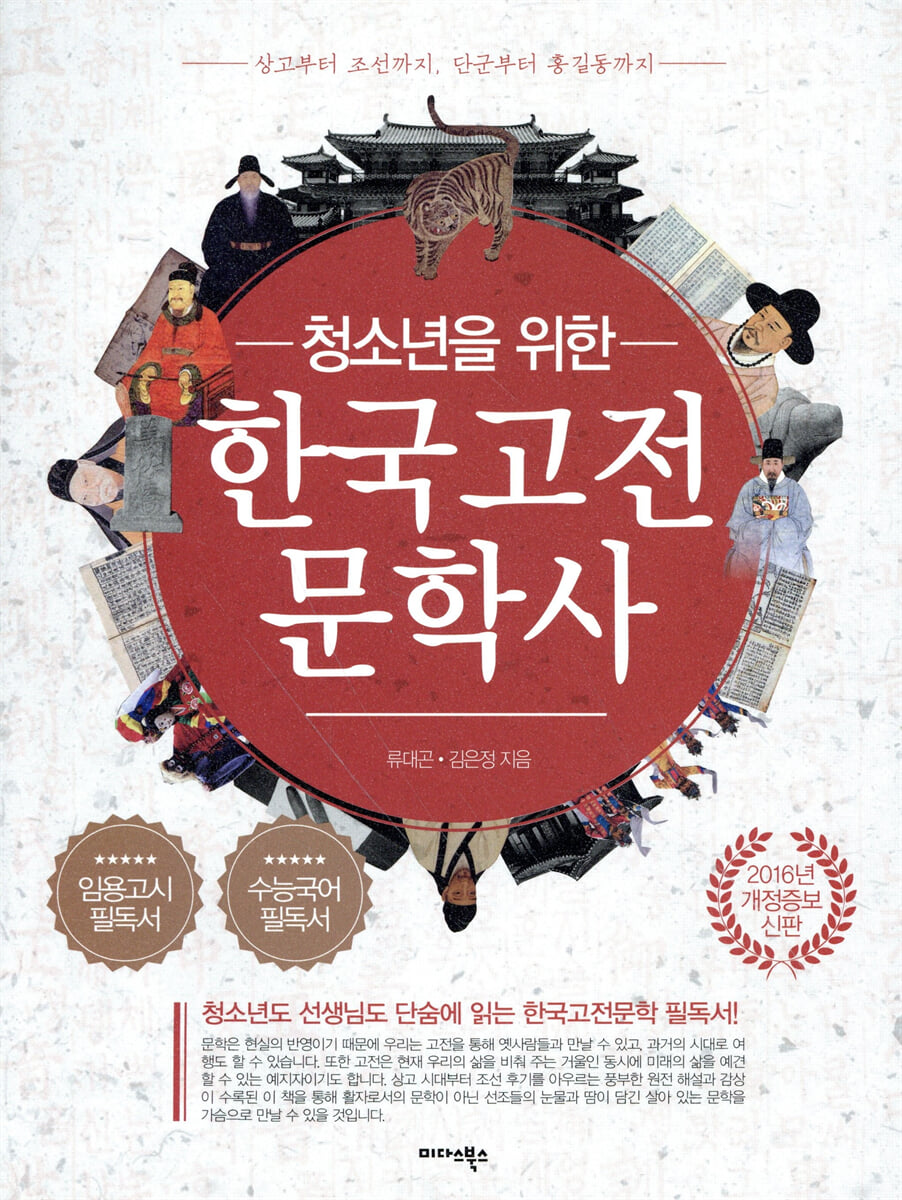
『A History of Korean Classical Literature for Youth』 is a book on the history of Korean classical literature tailored to the perspective of young people, breaking through the reality that the history of Korean classical literature exists only as an introductory text for university majors.
This study demonstrates the continuity of our literary history from ancient times to the present day, and examines how classical Korean literature has organically developed and changed over time.
Through this, we provide a single volume that easily introduces classical literature, appreciated and explained from various perspectives, to young people who have only encountered classical literature in fragments.
This newly published revised and expanded edition maintains the same honest perspective, while also including a wider range of perspectives and a wealth of original sources to benefit readers.
『A History of Korean Classical Literature for Youth』, which has been consistently chosen for the past seven years since its publication, has now been reborn in a new form, and will serve as a special opportunity to attract the interest of readers who have been indifferent to our classics or have lost interest due to difficult commentary.
『A History of Korean Classical Literature for Youth』 is a book on the history of Korean classical literature tailored to the perspective of young people, breaking through the reality that the history of Korean classical literature exists only as an introductory text for university majors.
This study demonstrates the continuity of our literary history from ancient times to the present day, and examines how classical Korean literature has organically developed and changed over time.
Through this, we provide a single volume that easily introduces classical literature, appreciated and explained from various perspectives, to young people who have only encountered classical literature in fragments.
This newly published revised and expanded edition maintains the same honest perspective, while also including a wider range of perspectives and a wealth of original sources to benefit readers.
『A History of Korean Classical Literature for Youth』, which has been consistently chosen for the past seven years since its publication, has now been reborn in a new form, and will serve as a special opportunity to attract the interest of readers who have been indifferent to our classics or have lost interest due to difficult commentary.
- You can preview some of the book's contents.
Preview
index
When publishing a book
Introduction
Ⅰ.
Literature of the Ancient World - The Birth of Our Literature
Poetry literature
1.
ancient songs
2.
Hyangga
3. Limited time
narrative literature
1.
tale
2.
essay
Ⅱ.
Literature of the Goryeo Dynasty - The Heyday of Chinese Literature
Poetry literature
1.
Goryeo songs
2.
The game is
3.
father
4.
One hour
narrative literature
1.
Home appliances
2.
Chinese prose and literary criticism
Ⅲ.
Literature of the Early Joseon Dynasty - The Beginning of True Korean Literature
Poetry literature
1.
movement
2.
Unhae
3.
The game is
4.
lyrics
5.
father
6.
One hour
narrative literature
1.
novel
2.
Literature and Criticism of the Fallen
Ⅳ.
Literature of the Late Joseon Dynasty: The Growth of Common People's Consciousness and the Era of Prose Literature
Poetry literature
1.
lyrics
2.
father
3.
folk songs
4.
One hour
narrative literature
1.
novel
2.
Essays and Reviews
3.
epic shamanism
4.
Pansori
5.
folk drama
Search
Introduction
Ⅰ.
Literature of the Ancient World - The Birth of Our Literature
Poetry literature
1.
ancient songs
2.
Hyangga
3. Limited time
narrative literature
1.
tale
2.
essay
Ⅱ.
Literature of the Goryeo Dynasty - The Heyday of Chinese Literature
Poetry literature
1.
Goryeo songs
2.
The game is
3.
father
4.
One hour
narrative literature
1.
Home appliances
2.
Chinese prose and literary criticism
Ⅲ.
Literature of the Early Joseon Dynasty - The Beginning of True Korean Literature
Poetry literature
1.
movement
2.
Unhae
3.
The game is
4.
lyrics
5.
father
6.
One hour
narrative literature
1.
novel
2.
Literature and Criticism of the Fallen
Ⅳ.
Literature of the Late Joseon Dynasty: The Growth of Common People's Consciousness and the Era of Prose Literature
Poetry literature
1.
lyrics
2.
father
3.
folk songs
4.
One hour
narrative literature
1.
novel
2.
Essays and Reviews
3.
epic shamanism
4.
Pansori
5.
folk drama
Search
Detailed image
Publisher's Review
If books are human life, then the history of books is the history of human life.
Our classical literature began with our lives.
At first, music, dance, and literature were not distinguished as a primitive comprehensive art form directed towards collective and magical gods.
However, as we enter the Three Kingdoms period, the protagonists are replaced by humans from gods, and the era of legends and folk tales begins.
During the Goryeo Dynasty, Chinese literature developed due to the implementation of the civil service examination system and the influx of Chinese culture.
Afterwards, in the early Joseon Dynasty, numerous works that had been passed down orally were recorded in Hunminjeongeum, and foreign literature also began to be actively translated.
In the late Joseon Dynasty, as the limitations of the dynastic system became apparent, commoners began to join the literary enthusiasts.
This has led to a diversification of literary expression and themes.
In this way, our literature has been born, grown, and died along with our lives.
Because it was written with an understanding of literary trends and a conviction that writers and their times are one, the revision allowed us to more firmly weave together the four thousand years of Korean classical literature history, featuring many writers and works, into a single, major flow.
The core of 『A History of Korean Classical Literature for Youth』
1) Our literary history is not disconnected.
Our Korean literature history has continued from ancient times to the present.
Even the distinction between ‘ancient times’ and ‘modern times’ is actually just a convenient choice for efficient research.
However, there are those who make the tragic claim that our Korean literature history is disconnected.
The so-called 'traditional severance theory' states that Korean literature before and after the Enlightenment Period is clearly divided, and that literature before that period is merely literature from the past that lacks the modern spirit.
But if you actually read classical literature, you can see how its traditions leave their mark on modern literature.
Rather than simply asserting the continuity of Korean literature from nationalism and cultural centricity, it seeks to prove it by finding actual evidence in classical Korean literature.
2) Korean classical literature follows history.
In order to understand how each era was influenced by the previous era and how it influenced the next era, we paid careful attention to the division and arrangement of the eras in the history of classical Korean literature, and the relationships between them were explained in the text.
I focused on the rise and fall of dynasties throughout history, the division and unification of nations and nations, world affairs, and major events and voices.
Additionally, in the history of classical literature, certain principles were examined in the emergence of genres and their mutual influence.
Through this, we can understand the changes in time and the overall appearance of classical literature according to history.
3) Showing the forest of classical literature
Under the premise that 'literature is life', it shows how to read classical literature by accepting various perspectives.
The classical literature that today's youth are exposed to is based on the absolutist view that the work should be appreciated solely based on the situations and elements within the work, completely excluding external factors outside of the work itself.
Because of this, young people are forced to appreciate classical literature only through a narrow perspective.
It's like going into a forest and being satisfied with seeing a few trees.
Classical literature, like other literary works, is organically connected to the author, the reader, and the reality in which the work was created.
Appreciating classical literature from this perspective will allow young people to see the entire forest, not just a few trees.
4) You can understand it by reading just one book.
It is structured so that it can be understood without needing to look for other explanations or references.
The grand history of classical literature, with its careful division into periods, can be understood in its entirety without the need for a separate chronology.
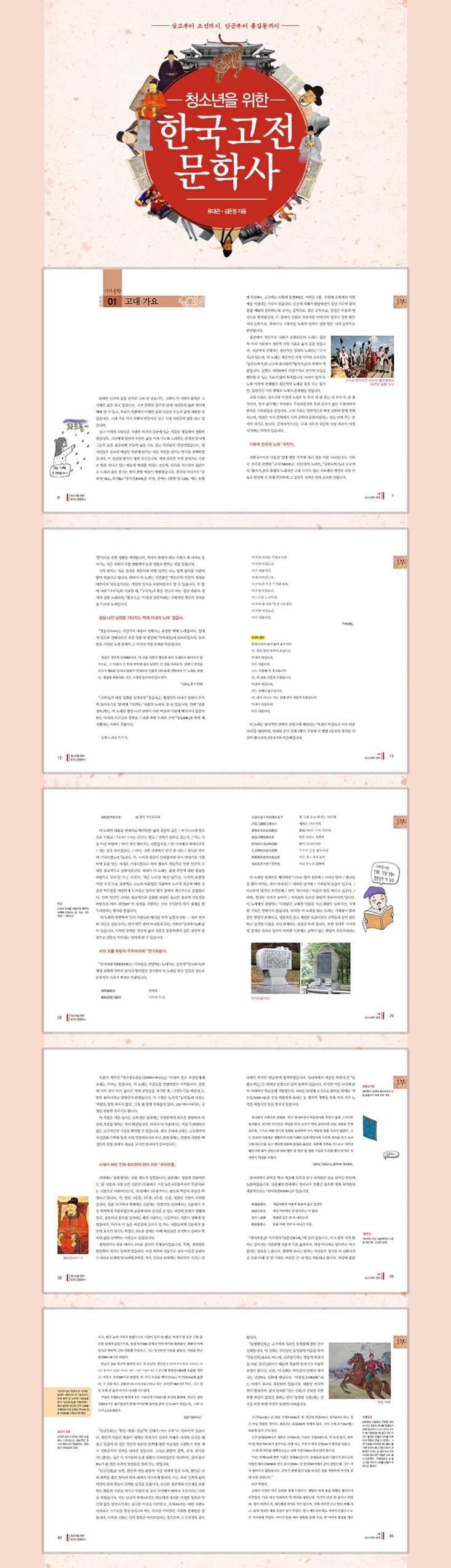
Additionally, the glossary, detailed explanations, and broad perspectives on the work attached to the side of the text allow you to focus solely on the book without worrying about other things while reading.
Additionally, the writing style, which has been revised to become clear enough to be used as an exam answer in itself, increases the understanding of the content.
Our classical literature began with our lives.
At first, music, dance, and literature were not distinguished as a primitive comprehensive art form directed towards collective and magical gods.
However, as we enter the Three Kingdoms period, the protagonists are replaced by humans from gods, and the era of legends and folk tales begins.
During the Goryeo Dynasty, Chinese literature developed due to the implementation of the civil service examination system and the influx of Chinese culture.
Afterwards, in the early Joseon Dynasty, numerous works that had been passed down orally were recorded in Hunminjeongeum, and foreign literature also began to be actively translated.
In the late Joseon Dynasty, as the limitations of the dynastic system became apparent, commoners began to join the literary enthusiasts.
This has led to a diversification of literary expression and themes.
In this way, our literature has been born, grown, and died along with our lives.
Because it was written with an understanding of literary trends and a conviction that writers and their times are one, the revision allowed us to more firmly weave together the four thousand years of Korean classical literature history, featuring many writers and works, into a single, major flow.
The core of 『A History of Korean Classical Literature for Youth』
1) Our literary history is not disconnected.
Our Korean literature history has continued from ancient times to the present.
Even the distinction between ‘ancient times’ and ‘modern times’ is actually just a convenient choice for efficient research.
However, there are those who make the tragic claim that our Korean literature history is disconnected.
The so-called 'traditional severance theory' states that Korean literature before and after the Enlightenment Period is clearly divided, and that literature before that period is merely literature from the past that lacks the modern spirit.
But if you actually read classical literature, you can see how its traditions leave their mark on modern literature.
Rather than simply asserting the continuity of Korean literature from nationalism and cultural centricity, it seeks to prove it by finding actual evidence in classical Korean literature.
2) Korean classical literature follows history.
In order to understand how each era was influenced by the previous era and how it influenced the next era, we paid careful attention to the division and arrangement of the eras in the history of classical Korean literature, and the relationships between them were explained in the text.
I focused on the rise and fall of dynasties throughout history, the division and unification of nations and nations, world affairs, and major events and voices.
Additionally, in the history of classical literature, certain principles were examined in the emergence of genres and their mutual influence.
Through this, we can understand the changes in time and the overall appearance of classical literature according to history.
3) Showing the forest of classical literature
Under the premise that 'literature is life', it shows how to read classical literature by accepting various perspectives.
The classical literature that today's youth are exposed to is based on the absolutist view that the work should be appreciated solely based on the situations and elements within the work, completely excluding external factors outside of the work itself.
Because of this, young people are forced to appreciate classical literature only through a narrow perspective.
It's like going into a forest and being satisfied with seeing a few trees.
Classical literature, like other literary works, is organically connected to the author, the reader, and the reality in which the work was created.
Appreciating classical literature from this perspective will allow young people to see the entire forest, not just a few trees.
4) You can understand it by reading just one book.
It is structured so that it can be understood without needing to look for other explanations or references.
The grand history of classical literature, with its careful division into periods, can be understood in its entirety without the need for a separate chronology.
Additionally, the glossary, detailed explanations, and broad perspectives on the work attached to the side of the text allow you to focus solely on the book without worrying about other things while reading.
Additionally, the writing style, which has been revised to become clear enough to be used as an exam answer in itself, increases the understanding of the content.
GOODS SPECIFICS
- Date of publication: September 26, 2016
- Page count, weight, size: 384 pages | 829g | 175*233*22mm
- ISBN13: 9788966374748
- ISBN10: 8966374743
You may also like
카테고리
korean


korean

![GQ KOREA Mark (Monthly): December [2025]](http://librairie.coreenne.fr/cdn/shop/files/8ef265dbbfbf186523ed75ba7319009d.jpg?v=1765340328&width=3840)


