

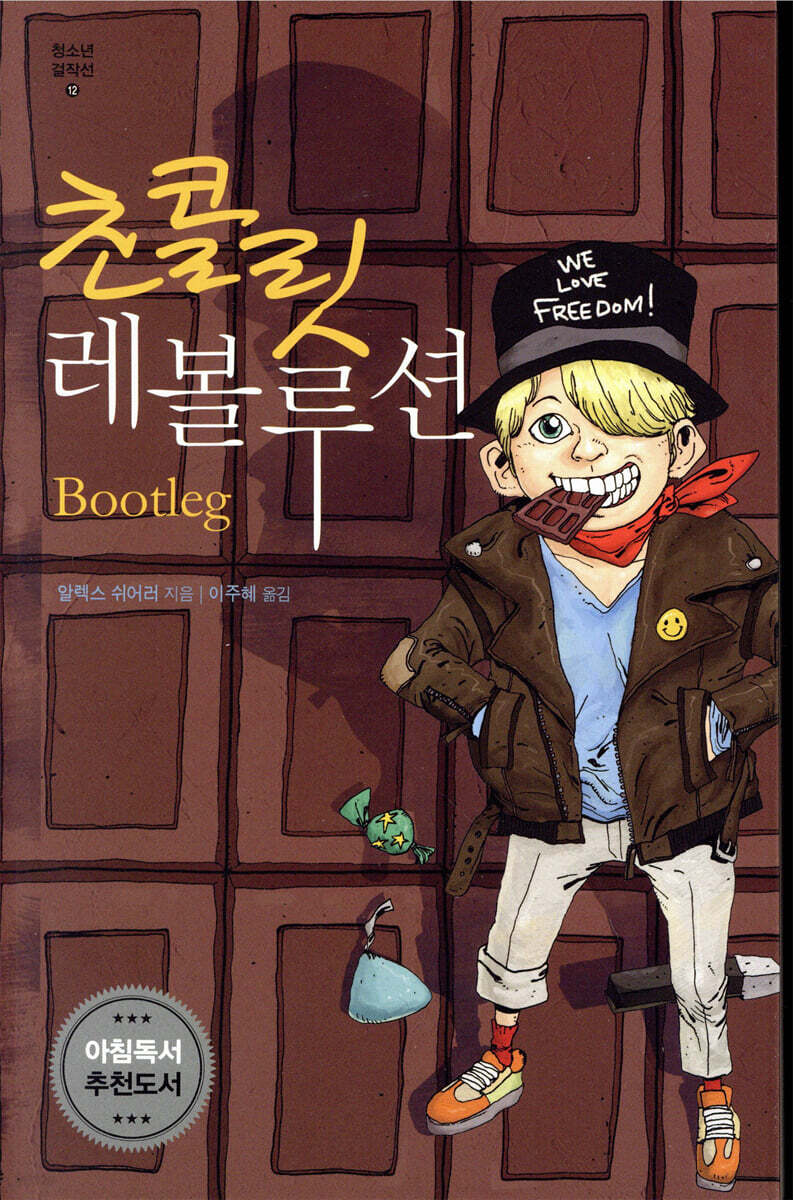
Chocolate Revolution
 |
Description
Book Introduction
The small courage of each and every person changes the world!
A delightful and exhilarating chocolate revolution of two boys who rebel against the world of irresponsible adults.
This book is a young adult novel about the adventures of two boys who rise up against a dictatorship that suppresses the people's right to eat, including banning chocolate.
This is a work that stands out with the quirky imagination and lively political satire of Alex Shearer, the author who has secured a large fan base in Korea with 『Beyond the Blue Sky』 and 『13 Months, 13 Weeks, 13 Days, and the Night of the Full Moon』.
The novel's popularity led to its adaptation into a BBC TV drama, a manga, and an anime in Japan, which further garnered attention.
This work is one that allows you to feel the power of storytelling, as it unfolds a heavy theme in a lighthearted manner, like a cartoon, without taking it too seriously.
A delightful and exhilarating chocolate revolution of two boys who rebel against the world of irresponsible adults.
This book is a young adult novel about the adventures of two boys who rise up against a dictatorship that suppresses the people's right to eat, including banning chocolate.
This is a work that stands out with the quirky imagination and lively political satire of Alex Shearer, the author who has secured a large fan base in Korea with 『Beyond the Blue Sky』 and 『13 Months, 13 Weeks, 13 Days, and the Night of the Full Moon』.
The novel's popularity led to its adaptation into a BBC TV drama, a manga, and an anime in Japan, which further garnered attention.
This work is one that allows you to feel the power of storytelling, as it unfolds a heavy theme in a lighthearted manner, like a cartoon, without taking it too seriously.
- You can preview some of the book's contents.
Preview
index
Chapter 1 For the health of the people
Chapter 2 Chocolate Detector
Chapter 3 Grandma Barbie
Chapter 4: Throw away the chocolate
Chapter 5: A Simple Lunch
Chapter 6: Black Market
Chapter 7 Chocolate Substitutes
Chapter 8: A bag of sugar, a slice of cake
Chapter 9 Mr. Blaze
Chapter 10: Cooking with a Book
Chapter 11: A Plausible Combination
Chapter 12: Find the Secret
Chapter 13: The Former Chocolate Man
Chapter 14: Building a Den
Chapter 15: Opening a New Clinic
Chapter 16: Watching the Net
Chapter 17: Police Raid
Chapter 18: Chocolate, Forever
Chapter 19: Fatal Wiretapping
Chapter 20: Cousin Arnold
Chapter 21 National Window Cleaners Association
Chapter 22: Re-education Camps
Chapter 23 Frankie Crowley
Chapter 24: Reeducation and Release
Chapter 25 is coming soon
Chapter 26: The Poor Old Man
Chapter 27: Secret Plan
Chapter 28 I Need Help
Chapter 29: Taking Action
Chapter 30 Now on air
Chapter 31: Chocolate and Freedom
Chapter 32: Epilogue
Chapter 2 Chocolate Detector
Chapter 3 Grandma Barbie
Chapter 4: Throw away the chocolate
Chapter 5: A Simple Lunch
Chapter 6: Black Market
Chapter 7 Chocolate Substitutes
Chapter 8: A bag of sugar, a slice of cake
Chapter 9 Mr. Blaze
Chapter 10: Cooking with a Book
Chapter 11: A Plausible Combination
Chapter 12: Find the Secret
Chapter 13: The Former Chocolate Man
Chapter 14: Building a Den
Chapter 15: Opening a New Clinic
Chapter 16: Watching the Net
Chapter 17: Police Raid
Chapter 18: Chocolate, Forever
Chapter 19: Fatal Wiretapping
Chapter 20: Cousin Arnold
Chapter 21 National Window Cleaners Association
Chapter 22: Re-education Camps
Chapter 23 Frankie Crowley
Chapter 24: Reeducation and Release
Chapter 25 is coming soon
Chapter 26: The Poor Old Man
Chapter 27: Secret Plan
Chapter 28 I Need Help
Chapter 29: Taking Action
Chapter 30 Now on air
Chapter 31: Chocolate and Freedom
Chapter 32: Epilogue
Into the book
After the election and when the People's Health Party came to power, Smudge heard his mom and dad arguing.
“It’s all because of people like you.”
Mom said.
“They are in power because people don’t vote like you do.
Don't you know the saying, 'When good people do nothing, evil prevails'? It's all your fault."
But Dad didn't say anything.
He just went back to the bakery with a sullen face, muttered something, and pounded on the poor bread mold.
--- p.18
What was strange was that the majority of the people did not actually vote for the People's Health Party.
“I don’t understand, Mom.”
When Huntley returned home, he asked his mother.
“How can people who are not wanted by the majority of the people win elections and come to power?”
Mom thought for a moment and then spoke in a clear tone.
“It’s because of political apathy, Huntley.”
Huntley wasn't sure exactly what political apathy meant.
“In a word, it means you’re lazy.
It means that too many people didn't vote simply because they didn't want to bother going to the polls.
Even if it's not me, someone else will vote against it, so why bother bothering me? That's the attitude.
But if you look at it, other people thought the same thing and didn't vote.
Do you know what I mean?
“A little bit.”
But Huntley still didn't quite understand what was being said.
“What do you call that?”
"democracy."
Mom answered.
“Whether you like it or not, the People’s Health Party is now in power.
They will control the government for the next five years and will be able to vote out any opposition.
So when they say chocolate is bad for you, it's bad.
If I tell you not to eat sugar anymore, then you shouldn't eat it.
That's the law.
“You can’t bring about change through sit-ins or street marches.”
“But, Mom.
“I’m not sure if eating a little chocolate is such a bad thing.”
“Mom, too.
What this mom knows is that there are a lot of people in this world who love to preach to others, telling them what to do, what not to do, how to live, because they think they know what's right for them.
“They don’t doubt their own thinking at all because they believe that the path they know is the only right path.”
--- p.48
“Huntley.
If the law is unjust and unfair, if it is obviously wrong, would you be willing to break it?
Huntley looked around.
I thought I heard my father's voice above my head.
My father was saying that even bad laws are laws and must be obeyed.
But then I remembered what my father once said: the law must uphold natural justice and common sense.
At that time, my father also said that we must listen to our conscience and fight against barbarism, injustice, and violence.
He said that you don't have to blindly obey orders, so choose what's right.
“If the law is wrong, shouldn’t we fight against it and correct it?”
Smudger said.
“Yes, if you are talking about special laws regarding candy and chocolate, then that may be true.
But why are you doing that?”
“That’s right, I know where you can get some chocolate.”
"what?"
“Listen carefully.
If you listen to the rumors going around, it's not the end just because the National Health Party banned chocolate and candy.
"Didn't you hear what Inspector Chocolate said to Dave Cheng earlier? He said something about the black market."
"that's right.
“That’s right.”
“Rumor has it that some people stocked up on chocolate in the weeks leading up to the chocolate ban.
Like a mountain, huge.
There's a secret warehouse full of chocolate that the government doesn't know about, and chocolate is being traded on the black market.
I also know where to go to get it.”
Huntley gaped at Smudger.
"You know? Where can I get it? Is it real chocolate?"
--- p.71~72
Although they had resolved from the beginning not to be influenced by their new venture, both boys began to show subtle changes due to their roles as chocolate smugglers.
Now more and more people are recognizing Huntley and Smudger.
Smudger wore a baseball cap pulled down askew and a pair of scratched, old sunglasses, even though it was raining.
“I can’t stand it without shade.
“The sunlight is so dazzling.”
Smudger leaned against the streetlight, wanting to look cool, and spoke.
Huntley's appearance remained the same, but he often found himself checking his hair in the mirror of the store's glass door, thinking to himself:
Well, here comes a handsome smuggler!
Power corrupts, and absolute power corrupts absolutely.
Vanity is not always a bad thing, as it is not in the same category as power (if it weren't for vanity, you wouldn't even wash your face), but it often ruins a person's character, judgment, and rational thinking.
A vain person may overestimate his or her abilities and refuse to believe in himself or herself.
But if, as Smudger suggests, you can't even flaunt a little flair, why embark on such a perilous adventure? Why live such an anxious, dangerous, and uncertain life just to see a movie?
If you were an actor or a singer, you could brag and show off, but if you were a smuggler, you had to be as humble as possible.
Smugglers must not stand out in the crowd.
The most ordinary and nondescript-looking is the best.
Even Smudge knew everything.
But I either deliberately didn't think about it or pretended to forget.
Only one person was different.
Only one person in the school noticed this subtle change.
He observed and recorded the minute changes.
And we reported the newly discovered facts to the relevant authorities.
It was none other than Frankie Crowley.
“It’s all because of people like you.”
Mom said.
“They are in power because people don’t vote like you do.
Don't you know the saying, 'When good people do nothing, evil prevails'? It's all your fault."
But Dad didn't say anything.
He just went back to the bakery with a sullen face, muttered something, and pounded on the poor bread mold.
--- p.18
What was strange was that the majority of the people did not actually vote for the People's Health Party.
“I don’t understand, Mom.”
When Huntley returned home, he asked his mother.
“How can people who are not wanted by the majority of the people win elections and come to power?”
Mom thought for a moment and then spoke in a clear tone.
“It’s because of political apathy, Huntley.”
Huntley wasn't sure exactly what political apathy meant.
“In a word, it means you’re lazy.
It means that too many people didn't vote simply because they didn't want to bother going to the polls.
Even if it's not me, someone else will vote against it, so why bother bothering me? That's the attitude.
But if you look at it, other people thought the same thing and didn't vote.
Do you know what I mean?
“A little bit.”
But Huntley still didn't quite understand what was being said.
“What do you call that?”
"democracy."
Mom answered.
“Whether you like it or not, the People’s Health Party is now in power.
They will control the government for the next five years and will be able to vote out any opposition.
So when they say chocolate is bad for you, it's bad.
If I tell you not to eat sugar anymore, then you shouldn't eat it.
That's the law.
“You can’t bring about change through sit-ins or street marches.”
“But, Mom.
“I’m not sure if eating a little chocolate is such a bad thing.”
“Mom, too.
What this mom knows is that there are a lot of people in this world who love to preach to others, telling them what to do, what not to do, how to live, because they think they know what's right for them.
“They don’t doubt their own thinking at all because they believe that the path they know is the only right path.”
--- p.48
“Huntley.
If the law is unjust and unfair, if it is obviously wrong, would you be willing to break it?
Huntley looked around.
I thought I heard my father's voice above my head.
My father was saying that even bad laws are laws and must be obeyed.
But then I remembered what my father once said: the law must uphold natural justice and common sense.
At that time, my father also said that we must listen to our conscience and fight against barbarism, injustice, and violence.
He said that you don't have to blindly obey orders, so choose what's right.
“If the law is wrong, shouldn’t we fight against it and correct it?”
Smudger said.
“Yes, if you are talking about special laws regarding candy and chocolate, then that may be true.
But why are you doing that?”
“That’s right, I know where you can get some chocolate.”
"what?"
“Listen carefully.
If you listen to the rumors going around, it's not the end just because the National Health Party banned chocolate and candy.
"Didn't you hear what Inspector Chocolate said to Dave Cheng earlier? He said something about the black market."
"that's right.
“That’s right.”
“Rumor has it that some people stocked up on chocolate in the weeks leading up to the chocolate ban.
Like a mountain, huge.
There's a secret warehouse full of chocolate that the government doesn't know about, and chocolate is being traded on the black market.
I also know where to go to get it.”
Huntley gaped at Smudger.
"You know? Where can I get it? Is it real chocolate?"
--- p.71~72
Although they had resolved from the beginning not to be influenced by their new venture, both boys began to show subtle changes due to their roles as chocolate smugglers.
Now more and more people are recognizing Huntley and Smudger.
Smudger wore a baseball cap pulled down askew and a pair of scratched, old sunglasses, even though it was raining.
“I can’t stand it without shade.
“The sunlight is so dazzling.”
Smudger leaned against the streetlight, wanting to look cool, and spoke.
Huntley's appearance remained the same, but he often found himself checking his hair in the mirror of the store's glass door, thinking to himself:
Well, here comes a handsome smuggler!
Power corrupts, and absolute power corrupts absolutely.
Vanity is not always a bad thing, as it is not in the same category as power (if it weren't for vanity, you wouldn't even wash your face), but it often ruins a person's character, judgment, and rational thinking.
A vain person may overestimate his or her abilities and refuse to believe in himself or herself.
But if, as Smudger suggests, you can't even flaunt a little flair, why embark on such a perilous adventure? Why live such an anxious, dangerous, and uncertain life just to see a movie?
If you were an actor or a singer, you could brag and show off, but if you were a smuggler, you had to be as humble as possible.
Smugglers must not stand out in the crowd.
The most ordinary and nondescript-looking is the best.
Even Smudge knew everything.
But I either deliberately didn't think about it or pretended to forget.
Only one person was different.
Only one person in the school noticed this subtle change.
He observed and recorded the minute changes.
And we reported the newly discovered facts to the relevant authorities.
It was none other than Frankie Crowley.
--- p.177~178
Publisher's Review
There is a strange country where chocolate is banned by law.
In this country, where a party with the suspicious name of the "National Health Party" is in power, not only eating chocolate, but also making and distributing it is prohibited.
It is the fault of adults who are indifferent and skeptical about the elections that determine the future of the country that we have reached this point.
Smudger and Huntley, who used to stop by a convenience store on their way home from school to buy chocolate or candy, one day see a notice saying 'Complete Chocolate Ban' posted all over the street.
The ruling party, the People's Health Party, has strictly banned all sugar-containing foods, including chocolate, in the name of protecting the health of the people.
A bizarrely shaped chocolate-sniffing car roams the neighborhood, cleaning up every last trace of chocolate.
Anyone caught with chocolate will be taken to a re-education camp where they will be 'brain washed'.
The good intention of protecting the health of the people has led to a terrifying reign of terror.
Huntley recalls the words of his late father.
“The road to hell is always paved with good intentions.”
In a harsh reality where people get arrested for eating chocolate, and where even the happy memories that chocolate brings are confiscated, Huntley and Smudger meet a black market chocolate dealer by chance and fall in love with the charm of chocolate that makes people happy again.
And with boyish spirit and courage, he begins to fight against injustice.
Will their fight to retrieve the forbidden chocolate be successful?
We all know chocolate isn't good for you, but banning it by law? And then starting a revolution against it? Isn't that a bit ridiculous? Some might ask.
But the implications of chocolate here are not limited to the freedom to choose what to eat.
Reminiscent of American gangster films set in the Prohibition era of the 1930s or resistance films against the Nazis, this novel weaves weighty themes of democracy and political participation into a somewhat cartoonish setting.
Our difficult modern history (we don't have to go far.
(Recall the candlelight protests surrounding the opening of the US beef import market in 2008!), and the recent wave of revolutions sweeping the Arab world. In this fable-like story, readers will come to realize anew the preciousness of freedom.
What is most impressive is its scathing critique of the public's political apathy.
“How can people who are not wanted by the majority of the people win elections and come to power?”
Mom thought for a moment and then spoke in a clear tone.
“It’s because of political apathy, Huntley.”
Huntley wasn't sure exactly what political apathy meant.
“In a word, it means you’re lazy.
It means that too many people didn't vote simply because they didn't want to bother going to the polls.
Even if it's not me, someone else will vote against it, so why bother bothering me? That's the attitude.
But if you think about it, other people thought the same thing and didn't vote.
Do you understand what I mean?” (Page 47)
In fact, the majority of the people did not vote for the People's Health Party in the election.
I just didn't vote.
In other words, it can be seen that the public's political apathy has created this absurd and terrible situation.
At this point, we cannot help but look back at our political reality.
Feeling skeptical and disillusioned by the chaotic political reality, we do not participate in elections, which are called the "flowers of democracy," but we are giving up our rights and duties as the owners of our own country.
You will come to a keen realization of the extremely obvious fact that democracy does not come about on its own, but develops and is completed through the active participation of the public.
We hope you enjoy the amazing power of storytelling that unfolds a weighty theme in a lighthearted, cartoon-like manner, without taking it too seriously.
In this country, where a party with the suspicious name of the "National Health Party" is in power, not only eating chocolate, but also making and distributing it is prohibited.
It is the fault of adults who are indifferent and skeptical about the elections that determine the future of the country that we have reached this point.
Smudger and Huntley, who used to stop by a convenience store on their way home from school to buy chocolate or candy, one day see a notice saying 'Complete Chocolate Ban' posted all over the street.
The ruling party, the People's Health Party, has strictly banned all sugar-containing foods, including chocolate, in the name of protecting the health of the people.
A bizarrely shaped chocolate-sniffing car roams the neighborhood, cleaning up every last trace of chocolate.
Anyone caught with chocolate will be taken to a re-education camp where they will be 'brain washed'.
The good intention of protecting the health of the people has led to a terrifying reign of terror.
Huntley recalls the words of his late father.
“The road to hell is always paved with good intentions.”
In a harsh reality where people get arrested for eating chocolate, and where even the happy memories that chocolate brings are confiscated, Huntley and Smudger meet a black market chocolate dealer by chance and fall in love with the charm of chocolate that makes people happy again.
And with boyish spirit and courage, he begins to fight against injustice.
Will their fight to retrieve the forbidden chocolate be successful?
We all know chocolate isn't good for you, but banning it by law? And then starting a revolution against it? Isn't that a bit ridiculous? Some might ask.
But the implications of chocolate here are not limited to the freedom to choose what to eat.
Reminiscent of American gangster films set in the Prohibition era of the 1930s or resistance films against the Nazis, this novel weaves weighty themes of democracy and political participation into a somewhat cartoonish setting.
Our difficult modern history (we don't have to go far.
(Recall the candlelight protests surrounding the opening of the US beef import market in 2008!), and the recent wave of revolutions sweeping the Arab world. In this fable-like story, readers will come to realize anew the preciousness of freedom.
What is most impressive is its scathing critique of the public's political apathy.
“How can people who are not wanted by the majority of the people win elections and come to power?”
Mom thought for a moment and then spoke in a clear tone.
“It’s because of political apathy, Huntley.”
Huntley wasn't sure exactly what political apathy meant.
“In a word, it means you’re lazy.
It means that too many people didn't vote simply because they didn't want to bother going to the polls.
Even if it's not me, someone else will vote against it, so why bother bothering me? That's the attitude.
But if you think about it, other people thought the same thing and didn't vote.
Do you understand what I mean?” (Page 47)
In fact, the majority of the people did not vote for the People's Health Party in the election.
I just didn't vote.
In other words, it can be seen that the public's political apathy has created this absurd and terrible situation.
At this point, we cannot help but look back at our political reality.
Feeling skeptical and disillusioned by the chaotic political reality, we do not participate in elections, which are called the "flowers of democracy," but we are giving up our rights and duties as the owners of our own country.
You will come to a keen realization of the extremely obvious fact that democracy does not come about on its own, but develops and is completed through the active participation of the public.
We hope you enjoy the amazing power of storytelling that unfolds a weighty theme in a lighthearted, cartoon-like manner, without taking it too seriously.
GOODS SPECIFICS
- Date of issue: March 23, 2011
- Page count, weight, size: 384 pages | 446g | 140*215*30mm
- ISBN13: 9788983946553
- ISBN10: 8983946555
You may also like
카테고리
korean


korean

![GQ KOREA Mark (Monthly): December [2025]](http://librairie.coreenne.fr/cdn/shop/files/8ef265dbbfbf186523ed75ba7319009d.jpg?v=1765340328&width=3840)


