

improvisation
 |
Description
Book Introduction
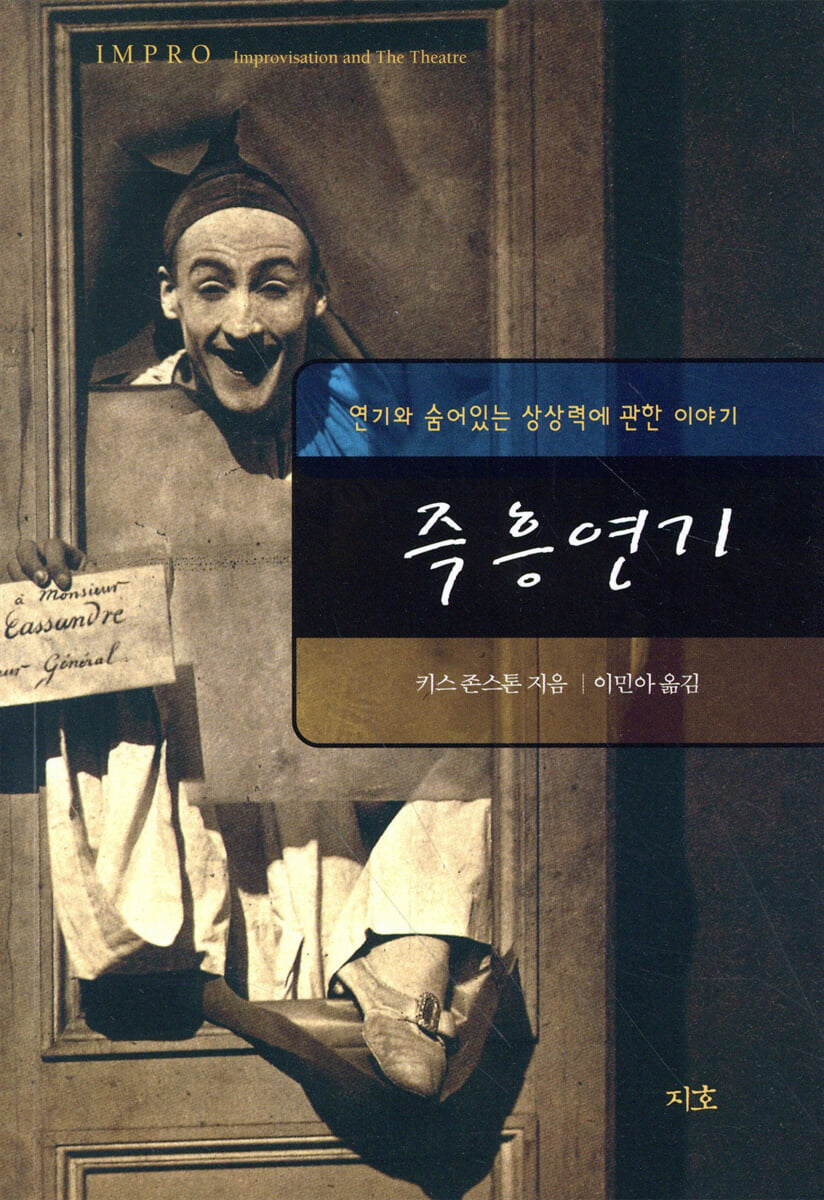
A unique acting theory by Keith Johnston, who is considered a master of the theater world along with Stanislavsky.
The author, who was a playleader at the Royal Theatre Company of England and taught acting to actors, criticized the existing educational methods that had blocked the creative spirit of individuals and developed the 'improvisational acting' method that helps freely express the imagination and talent latent within.
Improvisation, performed without a script or prior knowledge of acting, stimulates the free imagination of each individual through the interpretation of a situation in the moment, and allows the actors to create their own story.
The acting techniques and creative process introduced in this book will provide a refreshing inspiration not only to actors but also to general readers who have not had the opportunity to unleash their creativity.
The author, who was a playleader at the Royal Theatre Company of England and taught acting to actors, criticized the existing educational methods that had blocked the creative spirit of individuals and developed the 'improvisational acting' method that helps freely express the imagination and talent latent within.
Improvisation, performed without a script or prior knowledge of acting, stimulates the free imagination of each individual through the interpretation of a situation in the moment, and allows the actors to create their own story.
The acting techniques and creative process introduced in this book will provide a refreshing inspiration not only to actors but also to general readers who have not had the opportunity to unleash their creativity.
index
1.
Recommendation
2.
Notes on Myself
3.
Status Trading Game
4.
Spontaneity
5.
Narrative Skills
6.
Mask and Trance
7.
supplement
Recommendation
2.
Notes on Myself
3.
Status Trading Game
4.
Spontaneity
5.
Narrative Skills
6.
Mask and Trance
7.
supplement
Into the book
There was a scene in one improv where I told Richardson Morgan that I was about to get fired, and he said that the reason he failed at his job was because he had cancer.
I think Ben Bennison played the boss, and he was very rough with Rick.
It was one of the most brutal scenes I've ever seen, and the audience was laughing like crazy.
I don't think I've ever seen an audience laugh as hard as they did then.
The actors opened up and exposed the audience to their greatest fears and uncertainties, and those worries and anxieties seemed to be released in waves of screams and laughter, and the actors knew exactly what they were doing and how slowly to turn the screw.
Students must be tricked into believing that the content doesn't matter and that they will figure it out on their own.
Otherwise, students will not achieve anything.
The same kind of trick would have to be used when telling students that what they imagine is not their own, that their imagination has nothing to do with it, and that they are not responsible for what their 'minds' suggest.
Eventually, students learn to control without trying to control.
They will begin to understand that everything is just a shell.
Anyone who teaches improvisation should guide people in a way that frees them from responsibility.
They will be strong enough to take responsibility for it themselves after a long time.
By then they will have a much truer idea of who they are.
I think Ben Bennison played the boss, and he was very rough with Rick.
It was one of the most brutal scenes I've ever seen, and the audience was laughing like crazy.
I don't think I've ever seen an audience laugh as hard as they did then.
The actors opened up and exposed the audience to their greatest fears and uncertainties, and those worries and anxieties seemed to be released in waves of screams and laughter, and the actors knew exactly what they were doing and how slowly to turn the screw.
Students must be tricked into believing that the content doesn't matter and that they will figure it out on their own.
Otherwise, students will not achieve anything.
The same kind of trick would have to be used when telling students that what they imagine is not their own, that their imagination has nothing to do with it, and that they are not responsible for what their 'minds' suggest.
Eventually, students learn to control without trying to control.
They will begin to understand that everything is just a shell.
Anyone who teaches improvisation should guide people in a way that frees them from responsibility.
They will be strong enough to take responsibility for it themselves after a long time.
By then they will have a much truer idea of who they are.
--- p.
276-277
276-277
'Many students start improvising or performing a scene quite weakly.
It's as if he's sick and has lost all his energy...
They have learned how to seek sympathy.
No matter how easy the problem is, they resort to old tricks with an expression of inadequacy.
This strategy makes the viewer sympathize with them if they fail, and conversely, expect greater rewards if they succeed.
But with this kind of laid-back attitude, failure is almost certain, and everyone ends up getting fed up with him.
It might have worked when you were young, but when adults take that attitude, no one sympathizes.
But even as adults, we still do that.
Once students laugh at themselves like that and realize how unproductive that attitude is, their "sick"-looking faces instantly transform into healthy expressions.
The atmosphere of the entire group will also change on the spot.
Another common tactic is to anticipate problems and prepare solutions in advance.
(Almost all students do this.
It probably started when I was learning to read.
They try to predict in advance which paragraph will be their turn and solve it in advance.
There are two disadvantages here.
First, you miss the opportunity to learn from other students' attempts, and second, the likelihood of making a calculation error is so high that you become paralyzed by fear if you are asked to read another paragraph nearby.) Most students don't realize how inefficient such a technique is.
The idea that teachers would be interested in such things is also unfortunately quite quaint.
I also explained how the strategy of sitting in the back row isolates one from the group, and how the 'detached' and 'objective' 'critical' attitude disrupts immersion. 'Many students start an improvisation or a scene quite weakly.
It's as if he's sick and has lost all his energy...
They have learned how to seek sympathy.
No matter how easy the problem is, they resort to old tricks with an expression of inadequacy.
This strategy makes the viewer sympathize with them if they fail, and conversely, expect greater rewards if they succeed.
But with this kind of laid-back attitude, failure is almost certain, and everyone ends up getting fed up with him.
It might have worked when you were young, but when adults take that attitude, no one sympathizes.
But even as adults, we still do that.
Once students laugh at themselves like that and realize how unproductive that attitude is, their "sick"-looking faces instantly transform into healthy ones.
The atmosphere of the entire group will also change on the spot.
Another common tactic is to anticipate problems and prepare solutions in advance.
(Almost all students do this.
It probably started when I was learning to read.
They try to predict in advance which paragraph will be their turn and solve it in advance.
There are two disadvantages here.
First, you miss the opportunity to learn from other students' attempts, and second, the likelihood of making a calculation error is so high that you become paralyzed by fear if you are asked to read another paragraph nearby.) Most students don't realize how inefficient such a technique is.
The idea that teachers would be interested in such things is also unfortunately quite quaint.
I also explained how the strategy of sitting in the back row isolates one from the group, and how the 'detached' and 'objective' 'critical' stance disrupts immersion.
It's as if he's sick and has lost all his energy...
They have learned how to seek sympathy.
No matter how easy the problem is, they resort to old tricks with an expression of inadequacy.
This strategy makes the viewer sympathize with them if they fail, and conversely, expect greater rewards if they succeed.
But with this kind of laid-back attitude, failure is almost certain, and everyone ends up getting fed up with him.
It might have worked when you were young, but when adults take that attitude, no one sympathizes.
But even as adults, we still do that.
Once students laugh at themselves like that and realize how unproductive that attitude is, their "sick"-looking faces instantly transform into healthy expressions.
The atmosphere of the entire group will also change on the spot.
Another common tactic is to anticipate problems and prepare solutions in advance.
(Almost all students do this.
It probably started when I was learning to read.
They try to predict in advance which paragraph will be their turn and solve it in advance.
There are two disadvantages here.
First, you miss the opportunity to learn from other students' attempts, and second, the likelihood of making a calculation error is so high that you become paralyzed by fear if you are asked to read another paragraph nearby.) Most students don't realize how inefficient such a technique is.
The idea that teachers would be interested in such things is also unfortunately quite quaint.
I also explained how the strategy of sitting in the back row isolates one from the group, and how the 'detached' and 'objective' 'critical' attitude disrupts immersion. 'Many students start an improvisation or a scene quite weakly.
It's as if he's sick and has lost all his energy...
They have learned how to seek sympathy.
No matter how easy the problem is, they resort to old tricks with an expression of inadequacy.
This strategy makes the viewer sympathize with them if they fail, and conversely, expect greater rewards if they succeed.
But with this kind of laid-back attitude, failure is almost certain, and everyone ends up getting fed up with him.
It might have worked when you were young, but when adults take that attitude, no one sympathizes.
But even as adults, we still do that.
Once students laugh at themselves like that and realize how unproductive that attitude is, their "sick"-looking faces instantly transform into healthy ones.
The atmosphere of the entire group will also change on the spot.
Another common tactic is to anticipate problems and prepare solutions in advance.
(Almost all students do this.
It probably started when I was learning to read.
They try to predict in advance which paragraph will be their turn and solve it in advance.
There are two disadvantages here.
First, you miss the opportunity to learn from other students' attempts, and second, the likelihood of making a calculation error is so high that you become paralyzed by fear if you are asked to read another paragraph nearby.) Most students don't realize how inefficient such a technique is.
The idea that teachers would be interested in such things is also unfortunately quite quaint.
I also explained how the strategy of sitting in the back row isolates one from the group, and how the 'detached' and 'objective' 'critical' stance disrupts immersion.
--- p.
57
57
If I bring a cup of tea to a friend and say, 'Get up, you old cow,' or 'Mama, have a cup of tea,' I am either pretending to elevate or degrade my status.
If students understand that they are already playing status games among their friends, they already know most of the status games I am going to teach them.
If I bring a cup of tea to a friend and say, 'Get up, you old cow,' or 'Mama, have a cup of tea,' I am either pretending to elevate or degrade my status.
If students understand that they are already playing status games among their friends, they already know most of the status games I am going to teach them.
If students understand that they are already playing status games among their friends, they already know most of the status games I am going to teach them.
If I bring a cup of tea to a friend and say, 'Get up, you old cow,' or 'Mama, have a cup of tea,' I am either pretending to elevate or degrade my status.
If students understand that they are already playing status games among their friends, they already know most of the status games I am going to teach them.
--- p.67
GOODS SPECIFICS
- Date of issue: October 31, 2000
- Page count, weight, size: 415 pages | 426g | 128*188*30mm
- ISBN13: 9788986270433
- ISBN10: 8986270439
You may also like
카테고리
korean


korean

![GQ KOREA Mark (Monthly): December [2025]](http://librairie.coreenne.fr/cdn/shop/files/8ef265dbbfbf186523ed75ba7319009d.jpg?v=1765340328&width=3840)


