

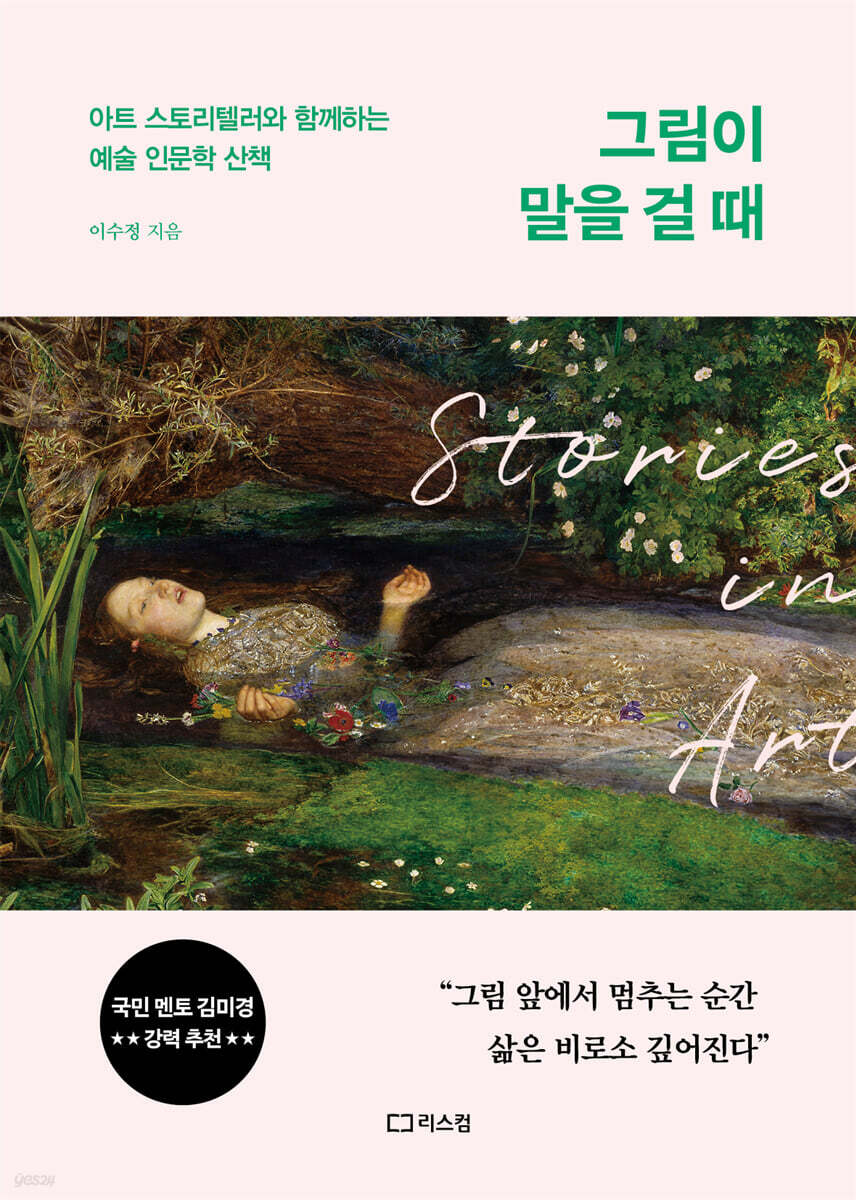
When a picture speaks
 |
Description
Book Introduction
Life becomes deeper the moment you stop in front of a painting.
A Walk Through the Arts and Humanities with Art Storytellers
★★Highly recommended by national mentor instructor Kim Mi-kyung★★
Have you ever felt comforted by a single painting in the midst of a complex daily life? [When a Painting Speaks] is not simply a book about art appreciation; it's a book that allows you to reflect on yourself through art and adjust the pace of your life.
Artist Lee Su-jeong, who has been active as an art education content planner and art storyteller, delicately interprets the inner world of humans and the emotions of the times through her paintings.
The book unfolds a rich artistic narrative, connecting myth, literature, and historical backgrounds, centered around 30 artists and over 50 works.
We encounter the faces of emotion in Goya's despair, Van Gogh's loneliness, and the traces of the times left behind by Courbet and Mantegna.
Holbein, Rubens, Raphael, and Michelangelo endured suffering in the name of power and God, resisting and praying through their paintings, while Frida Kahlo, Chagall, and Suzanne Valadon transformed their suffering into art by capturing their lives of love and loss on canvas.
In addition, the Pre-Raphaelites, Millais, and Hayez depict myths and literature, showing the moment when a painting becomes a story and a language.
The author has given lectures on art to numerous corporations, institutions, art enthusiasts, and the general public, focusing on interpreting art not simply as an object of appreciation, but as a “language for interpreting life.”
His stories, which pursue deeper emotions and narratives than the splendid history of art, contain sincerity beyond the paintings.
So this book makes you stop and take a second look at life at the moment when a single picture speaks to you.
Readers will discover themselves through paintings and experience a journey of artistic humanities that reflects on the 'here and now.'
A Walk Through the Arts and Humanities with Art Storytellers
★★Highly recommended by national mentor instructor Kim Mi-kyung★★
Have you ever felt comforted by a single painting in the midst of a complex daily life? [When a Painting Speaks] is not simply a book about art appreciation; it's a book that allows you to reflect on yourself through art and adjust the pace of your life.
Artist Lee Su-jeong, who has been active as an art education content planner and art storyteller, delicately interprets the inner world of humans and the emotions of the times through her paintings.
The book unfolds a rich artistic narrative, connecting myth, literature, and historical backgrounds, centered around 30 artists and over 50 works.
We encounter the faces of emotion in Goya's despair, Van Gogh's loneliness, and the traces of the times left behind by Courbet and Mantegna.
Holbein, Rubens, Raphael, and Michelangelo endured suffering in the name of power and God, resisting and praying through their paintings, while Frida Kahlo, Chagall, and Suzanne Valadon transformed their suffering into art by capturing their lives of love and loss on canvas.
In addition, the Pre-Raphaelites, Millais, and Hayez depict myths and literature, showing the moment when a painting becomes a story and a language.
The author has given lectures on art to numerous corporations, institutions, art enthusiasts, and the general public, focusing on interpreting art not simply as an object of appreciation, but as a “language for interpreting life.”
His stories, which pursue deeper emotions and narratives than the splendid history of art, contain sincerity beyond the paintings.
So this book makes you stop and take a second look at life at the moment when a single picture speaks to you.
Readers will discover themselves through paintings and experience a journey of artistic humanities that reflects on the 'here and now.'
- You can preview some of the book's contents.
Preview
index
prolog
An art gallery comes to your day
Chapter 1
I was in the picture
The day Black spoke to me, I met Goya.
A very lonely letter from Van Gogh
The unfinished beauty created by the tip of Ingres' brush
Courbet's hidden truth
Aura shattered in the ravages of war
Mantegna's paintings, which preserve the Renaissance like fragments
God was once human
The suffering god with a human face
Chapter 2
Paintings that endure the artist's wounds and life
Portrait of a Bloody Court, the Shadow Left by Holbein
200% customer satisfaction guaranteed!
Raphael's dream of paradise, a paradise completed in painting
Michelangelo's ceiling, Paradise painted with agony
It's not a crime to be in love
Suzanne Valadon, who portrays moving love
Frida, self-portrait painted in the colors of sadness
Chagall's Blue Lovers, The Day My Bruised Heart Dancing
Chapter 3
Pictures, another language
Why Tragedy Was Beautiful
Even death is sweet: Millais's watery confession
The end and beginning of life
The Weapon of God Abandoned on Hayez's Canvas
Solidarity among those left behind in Langley's paintings
The warmest comfort created by humans, the face of an angel
Turner's light never ages.
Solitude, Aging, and the Art Beyond
Chapter 4
Everything Beyond the Picture
The Bells of Sorrow by Millet
A supporting actor who becomes a lead actor
Venus, the birth of the sensual goddess
Bruegel's timid mockery of the world
Turrell's Light, Haning's Provocation
The conman who created the perfect 'genuine'
Matisse painting light in black
Goya, Painting the Sorrow Beyond Fear
Epilogue
Meet me in front of the painting
An art gallery comes to your day
Chapter 1
I was in the picture
The day Black spoke to me, I met Goya.
A very lonely letter from Van Gogh
The unfinished beauty created by the tip of Ingres' brush
Courbet's hidden truth
Aura shattered in the ravages of war
Mantegna's paintings, which preserve the Renaissance like fragments
God was once human
The suffering god with a human face
Chapter 2
Paintings that endure the artist's wounds and life
Portrait of a Bloody Court, the Shadow Left by Holbein
200% customer satisfaction guaranteed!
Raphael's dream of paradise, a paradise completed in painting
Michelangelo's ceiling, Paradise painted with agony
It's not a crime to be in love
Suzanne Valadon, who portrays moving love
Frida, self-portrait painted in the colors of sadness
Chagall's Blue Lovers, The Day My Bruised Heart Dancing
Chapter 3
Pictures, another language
Why Tragedy Was Beautiful
Even death is sweet: Millais's watery confession
The end and beginning of life
The Weapon of God Abandoned on Hayez's Canvas
Solidarity among those left behind in Langley's paintings
The warmest comfort created by humans, the face of an angel
Turner's light never ages.
Solitude, Aging, and the Art Beyond
Chapter 4
Everything Beyond the Picture
The Bells of Sorrow by Millet
A supporting actor who becomes a lead actor
Venus, the birth of the sensual goddess
Bruegel's timid mockery of the world
Turrell's Light, Haning's Provocation
The conman who created the perfect 'genuine'
Matisse painting light in black
Goya, Painting the Sorrow Beyond Fear
Epilogue
Meet me in front of the painting
Detailed image

Into the book
Artists each drew their own maps in their own way.
The map captures the questions they had, the emotions they felt, and even the atmosphere of the times.
Now, with that map in hand, we embark on a quiet, profound journey through the time and space that the artists have traversed.
Art is not a special experience that comes to us suddenly one day, but rather a language of everyday life that already stays with us affectionately.
As long as we have eyes to perceive it and a heart to feel it, we can encounter art anytime, anywhere.
--- p.11
Proving that even if life is full of wounds and deprivation, flowers can bloom even in the gaps.
That is the miracle of art that Van Gogh left us.
His work seems to say, 'I was lonely and had a hard time just like you.
It comes across as the confession of an old friend whispering, 'But I never gave up.'
When we each have to bear the burden of our own difficult lives, let us look to [The Starry Night Over the Rhone].
If you stand quietly next to Van Gogh, who is looking up at the sky with tears in his eyes, he will calmly say this.
'Life is like that.
Joy and sorrow, love and hurt, they all pass by like a river flowing quietly under the stars.
But look, even in the darkness, the stars still shine.
So it's okay... it's okay.'
--- p.31
Suzanne Valadon's masterpiece, [The Blue Room], depicts a woman wearing striped pants and smoking a cigarette, lying sideways on a bed with blue bedding.
When we first encounter this painting, we feel unfamiliar.
This is because her posture is reminiscent of poses traditionally used for female nudes in Western art history, but is far from a sensual or submissive image.
She exudes the aura of a 'strong older sister' these days.
Her ample body, loose clothing, and appearance, which seem to have been etched with the hardships of life, exude a sense of dignity rather than shabbiness.
She doesn't seem like she'd bow her head in front of anyone, but she shows that the power of humanity itself exists without idealizing or beautifying it on canvas.
This is the power of Susan's paintings.
--- p.154
A painting is not simply a visual artifact.
The essence of a work of art cannot be fully explained by its visible colors, shapes, and formative beauty alone.
A single work of art is the artist's life flowing from his fingertips, a record imbued with the air of the times he breathed and the time he lived.
In other words, it is an artistic legacy that contains the entirety of the creator's 'lived time' and the reverberations of existence.
But Vermeer's life was not in Meyheren's paintings.
It was a sand castle built on the name 'Vermeer', and the moment that name was erased, the emotion also crumbled.
--- p.308
When a picture speaks to us, we must stop before it.
Because those words are ultimately born in our hearts.
So now, after you close this book, I hope you will occasionally stop quietly in front of a painting.
Let us listen to that world of silence that contains more than words.
I hope that through art we can imagine someone's life and look into our own hearts.
So that small but solid changes can permeate your daily life.
And someday, I hope you can talk to yourself in front of the painting.
The map captures the questions they had, the emotions they felt, and even the atmosphere of the times.
Now, with that map in hand, we embark on a quiet, profound journey through the time and space that the artists have traversed.
Art is not a special experience that comes to us suddenly one day, but rather a language of everyday life that already stays with us affectionately.
As long as we have eyes to perceive it and a heart to feel it, we can encounter art anytime, anywhere.
--- p.11
Proving that even if life is full of wounds and deprivation, flowers can bloom even in the gaps.
That is the miracle of art that Van Gogh left us.
His work seems to say, 'I was lonely and had a hard time just like you.
It comes across as the confession of an old friend whispering, 'But I never gave up.'
When we each have to bear the burden of our own difficult lives, let us look to [The Starry Night Over the Rhone].
If you stand quietly next to Van Gogh, who is looking up at the sky with tears in his eyes, he will calmly say this.
'Life is like that.
Joy and sorrow, love and hurt, they all pass by like a river flowing quietly under the stars.
But look, even in the darkness, the stars still shine.
So it's okay... it's okay.'
--- p.31
Suzanne Valadon's masterpiece, [The Blue Room], depicts a woman wearing striped pants and smoking a cigarette, lying sideways on a bed with blue bedding.
When we first encounter this painting, we feel unfamiliar.
This is because her posture is reminiscent of poses traditionally used for female nudes in Western art history, but is far from a sensual or submissive image.
She exudes the aura of a 'strong older sister' these days.
Her ample body, loose clothing, and appearance, which seem to have been etched with the hardships of life, exude a sense of dignity rather than shabbiness.
She doesn't seem like she'd bow her head in front of anyone, but she shows that the power of humanity itself exists without idealizing or beautifying it on canvas.
This is the power of Susan's paintings.
--- p.154
A painting is not simply a visual artifact.
The essence of a work of art cannot be fully explained by its visible colors, shapes, and formative beauty alone.
A single work of art is the artist's life flowing from his fingertips, a record imbued with the air of the times he breathed and the time he lived.
In other words, it is an artistic legacy that contains the entirety of the creator's 'lived time' and the reverberations of existence.
But Vermeer's life was not in Meyheren's paintings.
It was a sand castle built on the name 'Vermeer', and the moment that name was erased, the emotion also crumbled.
--- p.308
When a picture speaks to us, we must stop before it.
Because those words are ultimately born in our hearts.
So now, after you close this book, I hope you will occasionally stop quietly in front of a painting.
Let us listen to that world of silence that contains more than words.
I hope that through art we can imagine someone's life and look into our own hearts.
So that small but solid changes can permeate your daily life.
And someday, I hope you can talk to yourself in front of the painting.
--- p.333
Publisher's Review
Curation where the narrative lives on, rather than the artist's name.
Van Gogh's loneliness, Frida Kahlo's wounds, Michelangelo's agony, Goya's despair...
The emotions and agitation of the artists in the paintings resemble those of us living today.
The author introduces not only familiar paintings from art history but also hidden masterpieces lesser known to the public, suggesting to readers that "art serves as a mirror reflecting life."
[When Pictures Speak] features painters we are familiar with, as well as names we are hearing for the first time.
But not a single person passes by meaninglessly.
The author does not describe the picture.
Instead, it extends the narrative of the painting and quietly follows the life of each artist.
In this way, around 30 artists and 50 works of art walk into our lives today.
The power of this book lies in the curation itself, which selects artists based on their emotional ties and interpretations in one's own language, rather than simply considering their art historical significance.
30 artists, 50 works, and one question
Chapter 1, 'I Was in the Painting', tells us that art can be a mirror that reflects human emotions through artists such as Van Gogh, Ingres, and Courbet.
Chapter 2, “Artists’ Wounds, Paintings That Endure Life,” presents human stories of artists such as Frida Kahlo, Chagall, and Michelangelo enduring pain and creating their paintings.
Chapter 3, 'Painting, Another Language', deals with paintings intertwined with mythology and literature, including those of the Pre-Raphaelite school, and examines the process by which paintings become narratives.
Chapter 4, “Everything Beyond Painting,” illuminates art outside of painting through the periphery of painting.
This book follows the confessions and traces of the times contained in the brushes of painters and asks us a single question.
What does art tell us? And have we ever truly listened to what it says?
A unique art essay that makes you see the invisible.
Another special thing about this book is that it goes beyond the 'eyes that see the painting' to also illuminate the 'world surrounding the painting'.
Rather than simply commenting on the work, it delicately points out how even a single frame reflects the tastes and power of the times, and how a single myth has been interpreted and reconstructed differently in each era.
In particular, it includes events in the art world that have constantly sparked debates between artistry and strategy, under the provocative question, "Is modern art a fraud?", helping readers broadly understand the social context surrounding art.
A book that helps you develop a perspective that goes beyond the picture itself and looks beyond it.
For those who view art not simply as an object of appreciation, but as another window through which to read the times and understand humanity, this book will serve as a profound and engaging guide.
Van Gogh's loneliness, Frida Kahlo's wounds, Michelangelo's agony, Goya's despair...
The emotions and agitation of the artists in the paintings resemble those of us living today.
The author introduces not only familiar paintings from art history but also hidden masterpieces lesser known to the public, suggesting to readers that "art serves as a mirror reflecting life."
[When Pictures Speak] features painters we are familiar with, as well as names we are hearing for the first time.
But not a single person passes by meaninglessly.
The author does not describe the picture.
Instead, it extends the narrative of the painting and quietly follows the life of each artist.
In this way, around 30 artists and 50 works of art walk into our lives today.
The power of this book lies in the curation itself, which selects artists based on their emotional ties and interpretations in one's own language, rather than simply considering their art historical significance.
30 artists, 50 works, and one question
Chapter 1, 'I Was in the Painting', tells us that art can be a mirror that reflects human emotions through artists such as Van Gogh, Ingres, and Courbet.
Chapter 2, “Artists’ Wounds, Paintings That Endure Life,” presents human stories of artists such as Frida Kahlo, Chagall, and Michelangelo enduring pain and creating their paintings.
Chapter 3, 'Painting, Another Language', deals with paintings intertwined with mythology and literature, including those of the Pre-Raphaelite school, and examines the process by which paintings become narratives.
Chapter 4, “Everything Beyond Painting,” illuminates art outside of painting through the periphery of painting.
This book follows the confessions and traces of the times contained in the brushes of painters and asks us a single question.
What does art tell us? And have we ever truly listened to what it says?
A unique art essay that makes you see the invisible.
Another special thing about this book is that it goes beyond the 'eyes that see the painting' to also illuminate the 'world surrounding the painting'.
Rather than simply commenting on the work, it delicately points out how even a single frame reflects the tastes and power of the times, and how a single myth has been interpreted and reconstructed differently in each era.
In particular, it includes events in the art world that have constantly sparked debates between artistry and strategy, under the provocative question, "Is modern art a fraud?", helping readers broadly understand the social context surrounding art.
A book that helps you develop a perspective that goes beyond the picture itself and looks beyond it.
For those who view art not simply as an object of appreciation, but as another window through which to read the times and understand humanity, this book will serve as a profound and engaging guide.
GOODS SPECIFICS
- Date of issue: June 12, 2025
- Page count, weight, size: 336 pages | 556g | 150*210*18mm
- ISBN13: 9791156167907
You may also like
카테고리
korean


korean

![GQ KOREA Mark (Monthly): December [2025]](http://librairie.coreenne.fr/cdn/shop/files/8ef265dbbfbf186523ed75ba7319009d.jpg?v=1765340328&width=3840)


