

How to Write a Reasonable Mystery
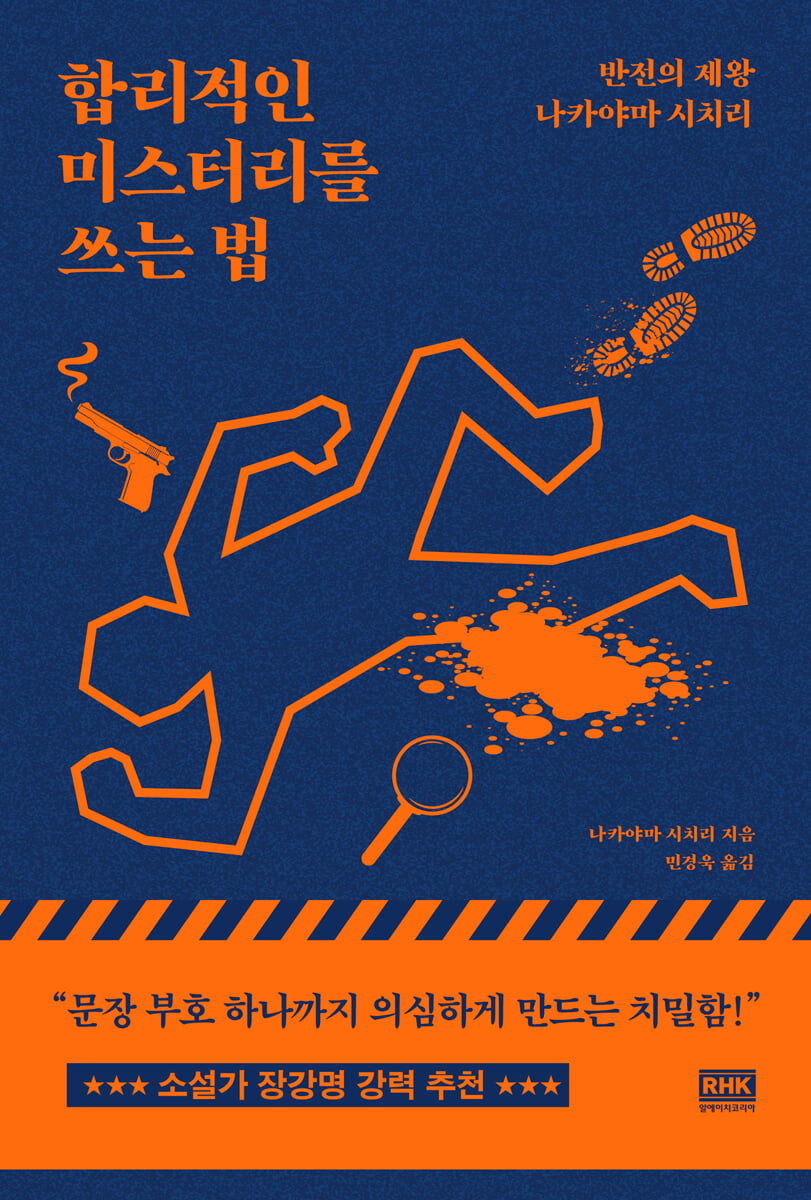 |
Description
Book Introduction
《Serial Killer Frog Man》 《Sonata of Atonement》,
The Writing Secrets of Bestselling Author Shichiri Nakayama
Shichiri Nakayama, renowned for surprising readers with his twists and turns, reveals his lifelong love for mystery and his approach to his work.
Approaching 65, he is a writer in his 16th year since his debut, and is currently the most diligent writer in the Japanese publishing industry.
With his 77th work about to be published, he has achieved everything anyone dreams of, from winning major literary awards to having his work adapted into films and becoming a bestseller.
In fact, he was an ordinary office worker before he debuted with 'This Mystery is Amazing!'
I didn't achieve my dream of becoming a novelist overnight. Having experienced the bitterness of failure, I learned how to be selected for a contest, never heeding even the smallest piece of advice from those around me, and instead, I aimed to write a work that would meet the judges' feedback.
After his debut, he faithfully responded to the requests from each publisher, regardless of the offers that came his way, and as a result, the current 'Nakayama Shichiri World' was born.
You can choose from nine options, and this book contains vivid records of everything from writing a work that meets all the requirements to becoming a writer who maintains stamina despite limited sleep and nutrition intake and always meets deadlines.
Although he introduced a very reasonable secret, if you look at the actual content, you can see that he is approaching this business with more sincerity than anyone else, so it is interesting in that you can learn about his attitude toward work.
The Writing Secrets of Bestselling Author Shichiri Nakayama
Shichiri Nakayama, renowned for surprising readers with his twists and turns, reveals his lifelong love for mystery and his approach to his work.
Approaching 65, he is a writer in his 16th year since his debut, and is currently the most diligent writer in the Japanese publishing industry.
With his 77th work about to be published, he has achieved everything anyone dreams of, from winning major literary awards to having his work adapted into films and becoming a bestseller.
In fact, he was an ordinary office worker before he debuted with 'This Mystery is Amazing!'
I didn't achieve my dream of becoming a novelist overnight. Having experienced the bitterness of failure, I learned how to be selected for a contest, never heeding even the smallest piece of advice from those around me, and instead, I aimed to write a work that would meet the judges' feedback.
After his debut, he faithfully responded to the requests from each publisher, regardless of the offers that came his way, and as a result, the current 'Nakayama Shichiri World' was born.
You can choose from nine options, and this book contains vivid records of everything from writing a work that meets all the requirements to becoming a writer who maintains stamina despite limited sleep and nutrition intake and always meets deadlines.
Although he introduced a very reasonable secret, if you look at the actual content, you can see that he is approaching this business with more sincerity than anyone else, so it is interesting in that you can learn about his attitude toward work.
- You can preview some of the book's contents.
Preview
index
Entering the current point of mystery
Chapter 1: What is Mystery?
10 Must-Read Mystery Classics | Mysteries are supported by small clues | Stay away from the borderline of the Unfair | The Missing Link | The Headless Corpse is a Genre | The Existence of a Captivating Detective | Howdunnit is Difficult | Tricks are Tools, Not Purposes | The Minimum Rules | Twists Come from Falls | Social Mysteries | The Road Less Traveled | Tips for Writing Social Mysteries | Find the Greatest Common Divisor | The Unique Charm of Mystery Novels
Chapter 2: Nakayama Shichiri's Mystery Writing Method
How to write a plot | Theme, plot, character, and tricks | A plot that follows the deductive method | The order in which information is revealed rather than tricks | Write down every sentence that comes to mind | Finish elaborating at the plot stage | The appropriate length for establishing the theme and plot | Divide it into introduction, development, turn, and conclusion | There are only 26 narrative patterns | The difference between imitation and homage | It's helpful to know the basics of writers and their works | Good ideas, bad ideas | The amount of input is important | Is it really necessary to do research? | All the information is in the map | How riddles are created | In the end, it all comes back to the initial idea | 90 percent of conversations with editors are small talk | Publishers' writing requests | Target readers vs. the public | Wanting to leave a mark on readers | Between old and new values | The way of thinking of a common-sense person
Chapter 3: How to Make Mysteries More Interesting
Captivate your readers early on | How to create characters that are easy to empathize with | The necessity of the roles of Holmes and Watson | Naming characters | Minimum requirements for a novel | The meaning of prologues and introductions | The main characters in a novel change the world | How to create foreshadowing and clues | How to avoid pathetic twists | Widen it rather than hurdun it | How to create tension in sentences | Characteristics of Nakayama Shichiri | Appropriate use of punctuation | The problem of reading kanji and unifying them | How to use single-line spacing | The problem of determining the first and third person | Description rather than explanation | Research for realism | Points to note in dialogue | Description of action scenes | Points to watch out for in depicting violence | Key points in musical performance scenes | How to use metaphors effectively | The most important thing when distinguishing the historical setting | Write 25 pages of manuscript paper a day | Writing environment | Titles that sell and titles that don't | Leave the design, band, and outline to the editor | The key to character development | Examples of character development in works | About character connections | About unpublished works | About serialization | How much originality is necessary | How to find your own style | Should you reference other authors' work? | Is copying sentences helpful? | About the evaluation of others | Commercial publishing versus self-publishing | The need for recognition and the love of storytelling
Chapter 4 Mystery and Life
Why I Became a Mystery Writer | Should Writers Gain Social Experience? | Trends and Countermeasures for Rookie Awards | When to Become a Full-Time Writer | An Era Where You'll Disappear from the Industry If You Don't Write | If You've Debuted, Write, Write, Write | How to Prevent Dozing Off While Writing | The Secret to Staying Healthy | Watching Movies and Reading Are More Like Meals Than Hobbies | When I'm Stuck for Ideas, I Watch Unrelated Movies | Unravel a Clue | How to Deal with Visualization | Difficult Requests | Books and Paperbacks | How to Communicate with Editors | Interactions Between Writers | About Writers' Social Media | There's No Joy, Anger, Sorrow, Only Joy and Happiness | Getting Angry is a Loss | A Bookstore is a Writer's Report Card | Osamu Tezuka in My Heart | Everything is an Activity for Continued Writing
References
Chapter 1: What is Mystery?
10 Must-Read Mystery Classics | Mysteries are supported by small clues | Stay away from the borderline of the Unfair | The Missing Link | The Headless Corpse is a Genre | The Existence of a Captivating Detective | Howdunnit is Difficult | Tricks are Tools, Not Purposes | The Minimum Rules | Twists Come from Falls | Social Mysteries | The Road Less Traveled | Tips for Writing Social Mysteries | Find the Greatest Common Divisor | The Unique Charm of Mystery Novels
Chapter 2: Nakayama Shichiri's Mystery Writing Method
How to write a plot | Theme, plot, character, and tricks | A plot that follows the deductive method | The order in which information is revealed rather than tricks | Write down every sentence that comes to mind | Finish elaborating at the plot stage | The appropriate length for establishing the theme and plot | Divide it into introduction, development, turn, and conclusion | There are only 26 narrative patterns | The difference between imitation and homage | It's helpful to know the basics of writers and their works | Good ideas, bad ideas | The amount of input is important | Is it really necessary to do research? | All the information is in the map | How riddles are created | In the end, it all comes back to the initial idea | 90 percent of conversations with editors are small talk | Publishers' writing requests | Target readers vs. the public | Wanting to leave a mark on readers | Between old and new values | The way of thinking of a common-sense person
Chapter 3: How to Make Mysteries More Interesting
Captivate your readers early on | How to create characters that are easy to empathize with | The necessity of the roles of Holmes and Watson | Naming characters | Minimum requirements for a novel | The meaning of prologues and introductions | The main characters in a novel change the world | How to create foreshadowing and clues | How to avoid pathetic twists | Widen it rather than hurdun it | How to create tension in sentences | Characteristics of Nakayama Shichiri | Appropriate use of punctuation | The problem of reading kanji and unifying them | How to use single-line spacing | The problem of determining the first and third person | Description rather than explanation | Research for realism | Points to note in dialogue | Description of action scenes | Points to watch out for in depicting violence | Key points in musical performance scenes | How to use metaphors effectively | The most important thing when distinguishing the historical setting | Write 25 pages of manuscript paper a day | Writing environment | Titles that sell and titles that don't | Leave the design, band, and outline to the editor | The key to character development | Examples of character development in works | About character connections | About unpublished works | About serialization | How much originality is necessary | How to find your own style | Should you reference other authors' work? | Is copying sentences helpful? | About the evaluation of others | Commercial publishing versus self-publishing | The need for recognition and the love of storytelling
Chapter 4 Mystery and Life
Why I Became a Mystery Writer | Should Writers Gain Social Experience? | Trends and Countermeasures for Rookie Awards | When to Become a Full-Time Writer | An Era Where You'll Disappear from the Industry If You Don't Write | If You've Debuted, Write, Write, Write | How to Prevent Dozing Off While Writing | The Secret to Staying Healthy | Watching Movies and Reading Are More Like Meals Than Hobbies | When I'm Stuck for Ideas, I Watch Unrelated Movies | Unravel a Clue | How to Deal with Visualization | Difficult Requests | Books and Paperbacks | How to Communicate with Editors | Interactions Between Writers | About Writers' Social Media | There's No Joy, Anger, Sorrow, Only Joy and Happiness | Getting Angry is a Loss | A Bookstore is a Writer's Report Card | Osamu Tezuka in My Heart | Everything is an Activity for Continued Writing
References
Detailed image

Into the book
Even among detectives, there are those with god-like abilities who can accomplish anything, and those who struggle and fail.
There is no right answer.
It's important to let the story roll through the characters.
So I create a detective that fits the theme of the novel.
Since about five years ago, there has been an increase in requests to "write a novel that can become a series," so I've been thinking deeply about various things, including what kind of characters would be most likely to become a series.
Thanks to that, all the books I've written are now part of a series.
Simply put, if you make a detective compelling, it's easy to make a series.
--- p.23
I write stories with the hope that they will give people hope or provide some guidance.
Otherwise people won't want to talk.
Osawa Arimasa always says that if nothing remains in the mind, it becomes boring for both the writer and the reader.
At least you have to leave a fingernail mark.
Most novelists, myself included, struggle to leave that mark.
Of course, there are geniuses who can do it without any difficulty at all.
--- p.38
"Serial Killer Frog Man" is a story about brutal murders, and it was written in a way that it starts off with a part that makes you wonder if the story is this heinous.
The exception is when the protagonist is an ordinary person, like in "The Unprotected."
You need to think about the character or the work as a whole and decide what color to start with.
--- p.88
I came to understand my sentence habits while writing my second piece.
First of all, there are fewer commas (,).
As a general rule of thumb in Japanese, the longer the sentence, the more commas there are.
I break that rule on purpose.
As mentioned before, the purpose is to maintain tension.
Japanese has surprisingly strict rules about where to put commas, and if you follow all of them, it will just end up being a plain sentence, so I intentionally avoid using commas.
I think that much is acceptable.
Gaps in sentences reduce tension and make it difficult to read quickly.
However, if the sentences are too long, it is difficult to maintain the tension, so a line is added to take a breather.
There is no right answer.
It's important to let the story roll through the characters.
So I create a detective that fits the theme of the novel.
Since about five years ago, there has been an increase in requests to "write a novel that can become a series," so I've been thinking deeply about various things, including what kind of characters would be most likely to become a series.
Thanks to that, all the books I've written are now part of a series.
Simply put, if you make a detective compelling, it's easy to make a series.
--- p.23
I write stories with the hope that they will give people hope or provide some guidance.
Otherwise people won't want to talk.
Osawa Arimasa always says that if nothing remains in the mind, it becomes boring for both the writer and the reader.
At least you have to leave a fingernail mark.
Most novelists, myself included, struggle to leave that mark.
Of course, there are geniuses who can do it without any difficulty at all.
--- p.38
"Serial Killer Frog Man" is a story about brutal murders, and it was written in a way that it starts off with a part that makes you wonder if the story is this heinous.
The exception is when the protagonist is an ordinary person, like in "The Unprotected."
You need to think about the character or the work as a whole and decide what color to start with.
--- p.88
I came to understand my sentence habits while writing my second piece.
First of all, there are fewer commas (,).
As a general rule of thumb in Japanese, the longer the sentence, the more commas there are.
I break that rule on purpose.
As mentioned before, the purpose is to maintain tension.
Japanese has surprisingly strict rules about where to put commas, and if you follow all of them, it will just end up being a plain sentence, so I intentionally avoid using commas.
I think that much is acceptable.
Gaps in sentences reduce tension and make it difficult to read quickly.
However, if the sentences are too long, it is difficult to maintain the tension, so a line is added to take a breather.
--- p.113
Publisher's Review
The King of Reversals Reveals the Minimum Rules of Etiquette
There was a man who liked reading mystery novels.
He was fascinated by mystery novels from a young age, and read all the works of famous authors. After reading the works of Edogawa Ranpo, he began to write his own.
He applied for a novel rookie award, but when he failed to make it to the final round, he realized the wall of reality and immediately got a job at a company after graduating from college, working as an ordinary office worker.
Then, I went to an event hosted by a novelist I liked, and suddenly I thought, 'If I don't write now, I won't be able to write again,' so I picked up my pen.
At the age of 48, Shichiri Nakayama, who debuted as a writer on the recommendation of mystery novel fans, turned her passion into a career and, after much trial and error, found the most reasonable way to continue her passion.
This book is a true trade secret from a professional writer.
When planning a plot, try to keep it to 2,000 characters or less, and be sure to strictly adhere to deadlines and length, as this is a way to respect the editor's efforts and opinions.
Maintaining good health is also a writer's responsibility, so I recommend using a good chair if possible, avoiding overeating, managing stress appropriately, and exercising regularly.
He couldn't finish his manuscript, but whenever he felt sleepy, he would prick the soles of his feet with a needle until the blood flowed. At this point, you might think that there is no such thing as a life for a monk.
However, without this level of sincerity and effort, you cannot have a long run as a writer or write works.
Knowing that Nakayama Shichiri is the most prolific writer among working writers and the one whose works have been adapted into series and movies the most, you can never overlook these methods.
“The number of periods is the writer’s wealth.”
On the meticulousness of doubting even punctuation marks
In Chapter 1, "What is Mystery?", we explore how to incorporate familiar classics like The Unfair, The Missing Link, and The Headless Body into our work.
The background of his character creation, which is characterized by his outstanding skill in creating attractive characters including the Inmyeonchang Detective, is also revealed.
Chapter 2, 'Nakayama Shichiri's Mystery Writing Method', deals with the full-fledged writing method.
What is noteworthy here is not his writing style, but his thoughts on why to write a plot and how to arrange themes and tricks.
It is natural for an author to wish for the success of his work, but because of this, the advice of professional authors to not neglect the most important aspect of work design comes across as realistic.
Chapter 3, “How to Make Mystery More Interesting,” clearly explains a point that can easily be overlooked while chasing the fun of the work.
It provides a refreshing solution to common concerns that you may encounter in the workplace, such as naming novels with many characters, determining personas, and adding tension to sentences.
This is a useful tip from my experience, especially when it comes to depictions of violence, which are often present in mysteries.
Chapter 4, 'Mystery and Life', provides a close-up look into the writer's life, which is rarely known.
It's as interesting as watching a documentary, with vivid details like why he became a mystery writer, why he became a successful writer, and how he maintains his health and interacts well with people even though he's over 60.
His words that all of this is ultimately for the sake of making a living as a writer are touching and reveal his sincerity towards his work.
In the hope that readers will forget their worries while reading his books, Nakayama Shichiri concludes his book by stating that he will continue writing manuscripts until he dies. In an age where AI can instantly produce thousands of characters, this analogical resolution feels like a reversal.
There was a man who liked reading mystery novels.
He was fascinated by mystery novels from a young age, and read all the works of famous authors. After reading the works of Edogawa Ranpo, he began to write his own.
He applied for a novel rookie award, but when he failed to make it to the final round, he realized the wall of reality and immediately got a job at a company after graduating from college, working as an ordinary office worker.
Then, I went to an event hosted by a novelist I liked, and suddenly I thought, 'If I don't write now, I won't be able to write again,' so I picked up my pen.
At the age of 48, Shichiri Nakayama, who debuted as a writer on the recommendation of mystery novel fans, turned her passion into a career and, after much trial and error, found the most reasonable way to continue her passion.
This book is a true trade secret from a professional writer.
When planning a plot, try to keep it to 2,000 characters or less, and be sure to strictly adhere to deadlines and length, as this is a way to respect the editor's efforts and opinions.
Maintaining good health is also a writer's responsibility, so I recommend using a good chair if possible, avoiding overeating, managing stress appropriately, and exercising regularly.
He couldn't finish his manuscript, but whenever he felt sleepy, he would prick the soles of his feet with a needle until the blood flowed. At this point, you might think that there is no such thing as a life for a monk.
However, without this level of sincerity and effort, you cannot have a long run as a writer or write works.
Knowing that Nakayama Shichiri is the most prolific writer among working writers and the one whose works have been adapted into series and movies the most, you can never overlook these methods.
“The number of periods is the writer’s wealth.”
On the meticulousness of doubting even punctuation marks
In Chapter 1, "What is Mystery?", we explore how to incorporate familiar classics like The Unfair, The Missing Link, and The Headless Body into our work.
The background of his character creation, which is characterized by his outstanding skill in creating attractive characters including the Inmyeonchang Detective, is also revealed.
Chapter 2, 'Nakayama Shichiri's Mystery Writing Method', deals with the full-fledged writing method.
What is noteworthy here is not his writing style, but his thoughts on why to write a plot and how to arrange themes and tricks.
It is natural for an author to wish for the success of his work, but because of this, the advice of professional authors to not neglect the most important aspect of work design comes across as realistic.
Chapter 3, “How to Make Mystery More Interesting,” clearly explains a point that can easily be overlooked while chasing the fun of the work.
It provides a refreshing solution to common concerns that you may encounter in the workplace, such as naming novels with many characters, determining personas, and adding tension to sentences.
This is a useful tip from my experience, especially when it comes to depictions of violence, which are often present in mysteries.
Chapter 4, 'Mystery and Life', provides a close-up look into the writer's life, which is rarely known.
It's as interesting as watching a documentary, with vivid details like why he became a mystery writer, why he became a successful writer, and how he maintains his health and interacts well with people even though he's over 60.
His words that all of this is ultimately for the sake of making a living as a writer are touching and reveal his sincerity towards his work.
In the hope that readers will forget their worries while reading his books, Nakayama Shichiri concludes his book by stating that he will continue writing manuscripts until he dies. In an age where AI can instantly produce thousands of characters, this analogical resolution feels like a reversal.
GOODS SPECIFICS
- Date of issue: May 28, 2025
- Page count, weight, size: 244 pages | 142*210*20mm
- ISBN13: 9788925573601
- ISBN10: 8925573601
You may also like
카테고리
korean


korean

![GQ KOREA Mark (Monthly): December [2025]](http://librairie.coreenne.fr/cdn/shop/files/8ef265dbbfbf186523ed75ba7319009d.jpg?v=1765340328&width=3840)


