

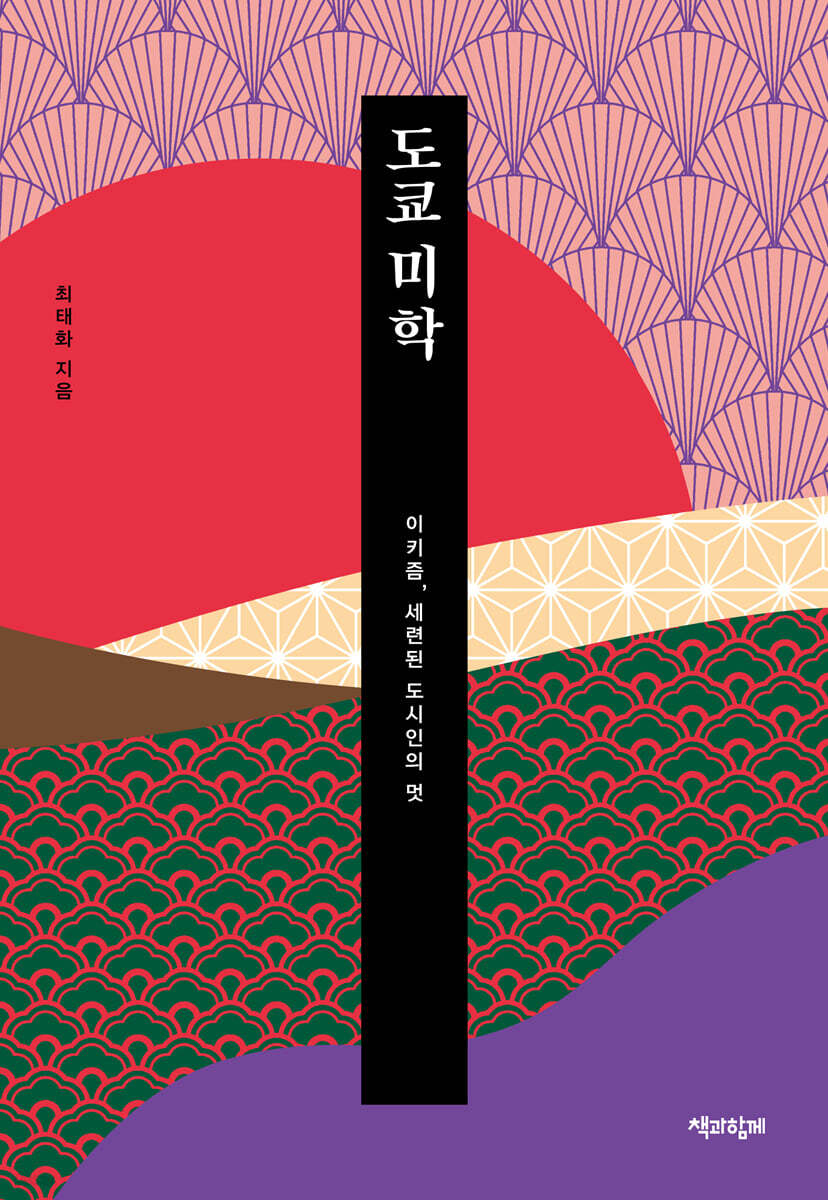
Tokyo Aesthetics
 |
Description
Book Introduction
How was the aesthetic sense of metropolis Tokyo formed?
Born in a red-light district and a Kabuki theater
The urban aesthetics of 'Iki-ism' from Edo to Tokyo
In Japan, there is a concept called the three major traditional aesthetics.
The aesthetic sense of the Heian period nobles was 'mono no aware', the aesthetic sense of the Edo period ruling class was 'wabi sabi', and the aesthetic sense of the common people was 'iki'.
This book focuses on the aesthetic consciousness called 'Iki' and examines its manifestation and the process through which it gained status as a form of popular culture.
'Iki' emerged in conjunction with the background of the birth of the metropolis of Edo, today's Tokyo, and the characteristics of that city.
Originating in the red-light districts and Kabuki theaters of 19th-century Edo, 'Iki' later became established as a universal aesthetic and moral code for the common people.
In this process, ‘Iki’ is further expanded into the concept of ‘Ikism.’
In 20th-century Tokyo, "Ikism" has faded and become a bygone trend, but it continues to live on in films such as "Im Chi-chan" as a nostalgia for the old days.
However, in the 21st century, 'Iki' was rediscovered and re-emerged as 'modern ikiism'.
In particular, with the 2020 Tokyo Olympics as an opportunity, 'Iki' made a splendid comeback, alongside a modernized aesthetic.
In today's cutting-edge city of Tokyo, "Iki" still holds its position as a keyword representing "Japanese beauty."
Born in a red-light district and a Kabuki theater
The urban aesthetics of 'Iki-ism' from Edo to Tokyo
In Japan, there is a concept called the three major traditional aesthetics.
The aesthetic sense of the Heian period nobles was 'mono no aware', the aesthetic sense of the Edo period ruling class was 'wabi sabi', and the aesthetic sense of the common people was 'iki'.
This book focuses on the aesthetic consciousness called 'Iki' and examines its manifestation and the process through which it gained status as a form of popular culture.
'Iki' emerged in conjunction with the background of the birth of the metropolis of Edo, today's Tokyo, and the characteristics of that city.
Originating in the red-light districts and Kabuki theaters of 19th-century Edo, 'Iki' later became established as a universal aesthetic and moral code for the common people.
In this process, ‘Iki’ is further expanded into the concept of ‘Ikism.’
In 20th-century Tokyo, "Ikism" has faded and become a bygone trend, but it continues to live on in films such as "Im Chi-chan" as a nostalgia for the old days.
However, in the 21st century, 'Iki' was rediscovered and re-emerged as 'modern ikiism'.
In particular, with the 2020 Tokyo Olympics as an opportunity, 'Iki' made a splendid comeback, alongside a modernized aesthetic.
In today's cutting-edge city of Tokyo, "Iki" still holds its position as a keyword representing "Japanese beauty."
- You can preview some of the book's contents.
Preview
index
Beginning: A Sensibility Blossomed in the City, A Journey Towards "Ikism"
Chapter 1: The Three Great Traditional Aesthetics of Japan: Monono-Aware, Wabi-Sabi, and Iki
1.
The aristocratic aesthetic sense of "mono no aware"
2.
The warrior's aesthetic sense of 'wabi-sabi'
3.
The common people's aesthetic sense, 'Iki'
Chapter 2: The Space of "Iki" and Its Protagonists: The Great City of Oedo and Edo's Citizens, Edokko
1.
The Birth of Edo and Its Urban Speciality
2.
The Formation of a Consumer Society and the Shift of Work
3.
The irony of disaster: fire is the flower of Edo
4.
Shitamachi scenery that gives the city its character
5.
The Birth of Edokko, the Protagonist of "Iki"
Chapter 3: The Extraordinary Everyday, the Extraordinary Everyday: The Beauty of Edo, "Ikism"
1.
The extraordinary everyday life, the brothel
2.
Kabuki, the extraordinary in everyday life
3.
The beauty of Edo expressed by 'Iki'
4.
Inase style combination
5.
Pleasure Born from Chaos: Why Pop Culture Became a Fear
Chapter 4: 20th Century Tokyo: The Changing Face of Popular Aesthetics
1.
'Iki and Inasehan' Imhyeop movie
2.
An ode to the outdated Edokko: "Man is in Trouble"
3.
The Urban Aesthetics of Late 20th-Century Tokyo as Seen Through "Tokyo Love Story"
4.
Things That Remain: Iki Remembered by Advertising
Chapter 5: Urban Regeneration and Modern Ikism in 21st-Century Edo-Tokyo
1.
The 'Cool Japan' Project and 'Iki'
2.
The "Japan Park" Project and "Iki" and "Inase" from "Hinoyojin"
3.
Shitamachi, returning to the heart of Tokyo
4.
The Tokyo Olympics and 'Modern Ikism'
Chapter 6: The Development of Korean Urban Aesthetics
Going Out: Urban Sensibility as Seen from the Perspective of 'Ikism'
main
References
Chapter 1: The Three Great Traditional Aesthetics of Japan: Monono-Aware, Wabi-Sabi, and Iki
1.
The aristocratic aesthetic sense of "mono no aware"
2.
The warrior's aesthetic sense of 'wabi-sabi'
3.
The common people's aesthetic sense, 'Iki'
Chapter 2: The Space of "Iki" and Its Protagonists: The Great City of Oedo and Edo's Citizens, Edokko
1.
The Birth of Edo and Its Urban Speciality
2.
The Formation of a Consumer Society and the Shift of Work
3.
The irony of disaster: fire is the flower of Edo
4.
Shitamachi scenery that gives the city its character
5.
The Birth of Edokko, the Protagonist of "Iki"
Chapter 3: The Extraordinary Everyday, the Extraordinary Everyday: The Beauty of Edo, "Ikism"
1.
The extraordinary everyday life, the brothel
2.
Kabuki, the extraordinary in everyday life
3.
The beauty of Edo expressed by 'Iki'
4.
Inase style combination
5.
Pleasure Born from Chaos: Why Pop Culture Became a Fear
Chapter 4: 20th Century Tokyo: The Changing Face of Popular Aesthetics
1.
'Iki and Inasehan' Imhyeop movie
2.
An ode to the outdated Edokko: "Man is in Trouble"
3.
The Urban Aesthetics of Late 20th-Century Tokyo as Seen Through "Tokyo Love Story"
4.
Things That Remain: Iki Remembered by Advertising
Chapter 5: Urban Regeneration and Modern Ikism in 21st-Century Edo-Tokyo
1.
The 'Cool Japan' Project and 'Iki'
2.
The "Japan Park" Project and "Iki" and "Inase" from "Hinoyojin"
3.
Shitamachi, returning to the heart of Tokyo
4.
The Tokyo Olympics and 'Modern Ikism'
Chapter 6: The Development of Korean Urban Aesthetics
Going Out: Urban Sensibility as Seen from the Perspective of 'Ikism'
main
References
Into the book
If you shorten the vague expression “a special society established as a passage between the sexes” to two letters, it becomes “brothel.”
If the space of 'wabi-sabi' was a tea room where people drank tea, the space of 'iki' was a brothel where people drank alcohol.
The fact that brothels were the center of culture may be a phenomenon that is difficult for Koreans to understand with common sense.
However, it is clear that brothels were one of the centers of commoner culture during the Edo period.
It seems somewhat understandable that the elites of the Meiji era viewed Edo popular culture as a vulgar culture they wanted to hide from Westerners.
---From "Chapter 1: The Three Great Traditional Aesthetics of Japan: Monono-Aware, Wabi-Sabi, and Iki"
The desire of Edo citizens to enjoy life led popular culture and arts to become more refined and sophisticated.
As fashion, behavior, and food cultures that the public finds cool emerge and are followed, a cycle of cultural emergence, popularity, and death begins to operate.
Edokko culture added urban sophistication.
Edo was the center of culture, and all kinds of cultural heritage that began in Edo spread throughout Japan through well-maintained roads and a well-developed publishing system.
---From "Chapter 2: The Space of 'Iki' and Its Protagonist: The Great City of Oedo and Edo Citizen Edokko"
It is truly an exquisite expression that the red-light district, where the extraordinary daily life of acting out a love that must appear real and seems real but is not real, and the Kabuki theater, where the acting (performance) that appears real but is unrealistic and extraordinary but takes place as everyday life, were collectively called Akubasho (?場所), meaning a bad place.
The brothel, along with Kabuki, is a bad place, but it is also an indispensable evil, a space for everyday life to deal with extraordinary situations.
---From "Chapter 3: The Unusual Everyday, the Unusual Everyday: The Beauty of Edo, 'Ikism'"
Tokyo was completing the infrastructure necessary for a first-class city, including an airport monorail, the Metropolitan Expressway, and the Shinkansen, with the goal of hosting the 1964 Tokyo Olympics.
Among them, Tokyo Tower, built especially for television broadcasting, became a symbolic declaration for the Japanese that Tokyo, which had been reduced to ruins by air raids, had been restored and could once again stand shoulder to shoulder with world-class cities such as New York, London, and Paris.
The image of Tokyo that Japan wanted to show the world through the Olympics was also that of a sophisticated international city that could compete with other world-class cities.
To this end, lifestyles and cultures that would be perceived as unsightly by the world (Western white people) were either expelled or hidden behind walls (so as not to be shown on TV).
It was violence in the name of city beautification, such as driving out homeless people in the city center or regulating entertainment businesses that were detrimental to public morals.
---From "Chapter 4: 20th Century Tokyo, Changes in Popular Aesthetics"
The "Cool Japan" and "Japan Expo" projects, with the 2020 Tokyo Olympics in mind, provided an opportunity to reinterpret the traditional aesthetic of "iki" from the Edo period, which had remained a source of nostalgia, in a modern way.
'Modern Ikism', which is in line with modern trends, is receiving attention from the mass media in conjunction with the urban regeneration plan for Edo-Tokyo centered around the old Edo shitamachi.
“Tokyo Sentimental” was a drama that well showed the flow of the times when “the center of Tokyo” changed from Tokyo Tower to Tokyo Skytree, and Edo culture and Edo aesthetics, “Iki,” were being re-examined.
---From "Chapter 5 Urban Regeneration and 'Modern Ikism' in 21st Century Edo-Tokyo"
The aesthetics of the masses are recorded and depicted in the mass media, which in turn has a greater influence on the masses.
After the publication of the book, Korea's mass media expanded to include newspapers, movies, radio, and television, just like in other countries around the world. Korea's mass media also faithfully reflected the trends and aesthetics of the Korean public, and had a strong influence on the public.
If the space of 'wabi-sabi' was a tea room where people drank tea, the space of 'iki' was a brothel where people drank alcohol.
The fact that brothels were the center of culture may be a phenomenon that is difficult for Koreans to understand with common sense.
However, it is clear that brothels were one of the centers of commoner culture during the Edo period.
It seems somewhat understandable that the elites of the Meiji era viewed Edo popular culture as a vulgar culture they wanted to hide from Westerners.
---From "Chapter 1: The Three Great Traditional Aesthetics of Japan: Monono-Aware, Wabi-Sabi, and Iki"
The desire of Edo citizens to enjoy life led popular culture and arts to become more refined and sophisticated.
As fashion, behavior, and food cultures that the public finds cool emerge and are followed, a cycle of cultural emergence, popularity, and death begins to operate.
Edokko culture added urban sophistication.
Edo was the center of culture, and all kinds of cultural heritage that began in Edo spread throughout Japan through well-maintained roads and a well-developed publishing system.
---From "Chapter 2: The Space of 'Iki' and Its Protagonist: The Great City of Oedo and Edo Citizen Edokko"
It is truly an exquisite expression that the red-light district, where the extraordinary daily life of acting out a love that must appear real and seems real but is not real, and the Kabuki theater, where the acting (performance) that appears real but is unrealistic and extraordinary but takes place as everyday life, were collectively called Akubasho (?場所), meaning a bad place.
The brothel, along with Kabuki, is a bad place, but it is also an indispensable evil, a space for everyday life to deal with extraordinary situations.
---From "Chapter 3: The Unusual Everyday, the Unusual Everyday: The Beauty of Edo, 'Ikism'"
Tokyo was completing the infrastructure necessary for a first-class city, including an airport monorail, the Metropolitan Expressway, and the Shinkansen, with the goal of hosting the 1964 Tokyo Olympics.
Among them, Tokyo Tower, built especially for television broadcasting, became a symbolic declaration for the Japanese that Tokyo, which had been reduced to ruins by air raids, had been restored and could once again stand shoulder to shoulder with world-class cities such as New York, London, and Paris.
The image of Tokyo that Japan wanted to show the world through the Olympics was also that of a sophisticated international city that could compete with other world-class cities.
To this end, lifestyles and cultures that would be perceived as unsightly by the world (Western white people) were either expelled or hidden behind walls (so as not to be shown on TV).
It was violence in the name of city beautification, such as driving out homeless people in the city center or regulating entertainment businesses that were detrimental to public morals.
---From "Chapter 4: 20th Century Tokyo, Changes in Popular Aesthetics"
The "Cool Japan" and "Japan Expo" projects, with the 2020 Tokyo Olympics in mind, provided an opportunity to reinterpret the traditional aesthetic of "iki" from the Edo period, which had remained a source of nostalgia, in a modern way.
'Modern Ikism', which is in line with modern trends, is receiving attention from the mass media in conjunction with the urban regeneration plan for Edo-Tokyo centered around the old Edo shitamachi.
“Tokyo Sentimental” was a drama that well showed the flow of the times when “the center of Tokyo” changed from Tokyo Tower to Tokyo Skytree, and Edo culture and Edo aesthetics, “Iki,” were being re-examined.
---From "Chapter 5 Urban Regeneration and 'Modern Ikism' in 21st Century Edo-Tokyo"
The aesthetics of the masses are recorded and depicted in the mass media, which in turn has a greater influence on the masses.
After the publication of the book, Korea's mass media expanded to include newspapers, movies, radio, and television, just like in other countries around the world. Korea's mass media also faithfully reflected the trends and aesthetics of the Korean public, and had a strong influence on the public.
---From "Chapter 6: The Development of Korean Urban Aesthetics"
Publisher's Review
How was the aesthetic sense of metropolis Tokyo formed?
Born in a red-light district and a Kabuki theater
The urban aesthetics of 'Iki-ism' from Edo to Tokyo
In Japan, there is a concept called the three major traditional aesthetics.
The aesthetic sense of the Heian period nobles was 'mono no aware', the aesthetic sense of the Edo period ruling class was 'wabi sabi', and the aesthetic sense of the common people was 'iki'.
This book focuses on the aesthetic consciousness called 'Iki' and examines its manifestation and the process through which it gained status as a form of popular culture.
'Iki' emerged in conjunction with the background of the birth of the metropolis of Edo, today's Tokyo, and the characteristics of that city.
Originating in the red-light districts and Kabuki theaters of 19th-century Edo, 'Iki' later became established as a universal aesthetic and moral code for the common people.
In this process, ‘Iki’ is further expanded into the concept of ‘Ikism.’
In 20th-century Tokyo, "Ikism" has faded and become a bygone trend, but it continues to live on in films such as "Im Chi-chan" as a nostalgia for the old days.
However, in the 21st century, 'Iki' was rediscovered and re-emerged as 'modern ikiism'.
In particular, with the 2020 Tokyo Olympics as an opportunity, 'Iki' made a splendid comeback, alongside a modernized aesthetic.
In today's cutting-edge city of Tokyo, "Iki" still holds its position as a keyword representing "Japanese beauty."
A new phenomenon that emerged after the 19th century
The aesthetic sense of the common people, 'Iki'
Japan's aesthetic sense is known worldwide for its aristocratic aesthetic of "mono no aware" that has been passed down since the Heian period, and the samurai aesthetic of the Edo period, "wabi sabi."
Monono Aware, defined as the aesthetic pleasure obtained when feeling affection, consideration, compassion, and sympathy based on empathy for an object, is explained through The Tale of Genji, which is considered the essence of classical Japanese literature.
Additionally, the aesthetic sense of "wabi-sabi" of the warrior class that developed during the Sengoku and Edo periods became a representative image of Japan through the neat and static atmosphere of tea ceremonies, Japanese gardens, and Matsuo Basho's haikai.
Meanwhile, 'Iki' was the aesthetic consciousness of the common people that began in the 19th century.
The chōnin class, who were born and raised in Edo and made a living in Edo, are called 'Edokko'.
The culture of Edokko surpassed that of the ruling class of the time, the samurai class, and the central culture of the Edo period began to be led by these chōnin.
Born in Edo, 'Edokko' means a person who is not concerned with small things and is not obsessed with money, and the aesthetic sense they created was 'Iki'.
Blooming in red-light districts and Kabuki theaters
Expanding across the entire cultural and artistic field
In order to understand 'Iki', it is first necessary to explain the special characteristics of the city of 'Edo', which serves as its spatial background, and the common people 'Edokko' who lived there.
Unlike the country bumpkin samurai who only stayed in Edo for a short time due to the sankin-kotai system (a system in which the eldest son and wife of a daimyo were taken as hostages and forced to stay in Edo when the daimyo returned to his domain and was not in Edo), the Edokko, who took pride in Edo itself as their home and were born in Edo, created a culture that reflected their desires and enjoyed it.
In Edo, a huge consumer society, jonin who had accumulated economic wealth emerged as the main characters in the center of popular culture.
This book focuses on the red-light districts and Kabuki theaters as the birthplaces of 'iki'.
The red-light district, where love that seems real but is not real takes place, and the Kabuki theater, where acting that seems real but is unreal takes place, are magical spaces that sometimes make the extraordinary into the ordinary and sometimes make the ordinary into the extraordinary, and are at the center of popular culture for the common people.
This book explains, through specific examples, how the aesthetic consciousness of the courtesans born here was expressed as "Iki" and eventually spread to the lower classes and became popular, and how the culture of Edo citizens, who relieved their dissatisfaction and suffering from reality in permanent theaters where the performing art called Kabuki was performed, came into contact with "Iki."
Since then, 'Iki' has expanded into a concept that means an aesthetic style that is common in all cultural and artistic fields, including literature, art, music, architecture, fashion, and food, to the point that it could be called 'Ikism' without any exaggeration.
From Edo to Tokyo:
Yakuza Films and the Nostalgia of Outdated Edokko
After the Meiji Restoration, the ideology of modern Japan went beyond the Japanese spirit of learning Western technology and moving towards the Westernization of everything through the policy of leaving Asia and entering Europe.
Eventually, Japanese modern art and aesthetics became linked with Western modern art and the latest aesthetic trends in the West.
The space remained the same, but Edo had changed into Tokyo.
Media that projected 'Ikism', such as Kabuki and kimono, have stopped being able to follow the cycle of fashion and have become relics of an old era.
In the 20th century, Japanese martial arts films, commonly called yakuza films, evoked nostalgia for the bygone era by presenting protagonists who were bold but stubborn, prone to fighting but brimming with chivalry and a sense of justice, in addition to the aesthetics of "iki and inasehan," or "iki."
These series of martial arts films usually feature the protagonist venting his pent-up anger through bloody combat in the midst of a confrontation between a group of thugs and gamblers with a classic Edokko mentality and the new yakuza and evil criminals who threaten them.
In other words, the yakuza films of the 1960s depicted the confrontation between the romantic yakuza that had continued since the Edo period and the brutal yakuza of the modern era, where the old sentiments had disappeared.
Meanwhile, Dora-san, the protagonist of the world's longest-running film series, "It's Tough Being a Man," shows Edokko as an outdated figure.
In particular, Dora's attire was a clear symbol of the fact that pursuing the aesthetics of "iki" and "inase" in the 1960s was itself a relic of the old days.
However, the public showed great affection for the protagonist, who was portrayed as being out of touch with the times, a country bumpkin, and a man who never lived a successful life, only repeating failures.
This was ultimately a nostalgia for the sentiment of the old Edo period, when the jonin helped each other and lived together, which is encapsulated in the word "recognition."
The revival of 'Iki':
From the era of Tokyo Tower to the era of Tokyo Skytree
The vibrant 20th-century Tokyo has aged over a century, and an urban regeneration project is underway to inject new life into the city.
The direction of Tokyo's regeneration was determined by fusion with tradition, unlike the 20th century, which pursued only Westernization.
After a period of separation, Edo and Tokyo were reconnected under the name "Edo-Tokyo."
The "Cool Japan" project and the "Japan Expo" project, aimed at strengthening the country's soft power in preparation for the 2020 Tokyo Olympics, became levers for summoning Edo.
The center of Tokyo has returned from the forest of buildings surrounding Tokyo Tower to Shitamachi, the center of the old Edo common people.
Tokyo Tower, built to transmit analog broadcasts, gave way to Tokyo Skytree, a digital broadcasting tower, as its central location.
The place where Tokyo Skytree was built was the old Shitamachi area.
Perhaps Edo and Tokyo were not separate from the beginning.
'Ikism', which had been left behind as an aesthetic of nostalgia and outdated quaintness, began to revive as 'modern ikism', a new aesthetic motif suited to 21st century Edo-Tokyo, following the flow of the times.
Interesting stories showcasing elements of Japanese aesthetics.
Joseon's bowl is a Japanese national treasure?
Among the Japanese tea ceremonies, the person who perfected the style of 'Wabi-cha', which contains the aesthetic sense of 'Wabi-sabi', was Sen Rikyu, the tea teacher of Oda Nobunaga and Toyotomi Hideyoshi.
Rikyu created all the rules regarding the process of brewing tea, how to drink it, the shape of tea utensils, and where to place them.
Through him, the aesthetic sense of 'wabi' was given the meaning of enjoying the beauty of intentional insufficiency and a quiet atmosphere.
It was thought that tea utensils with an imperfect, simple, and frugal shape were suitable for 'wabicha'.
The simple and imperfect form of the vessel made by the unknown potter was best suited to none other than the Joseon bowl.
The original purpose of the bowl was to serve soup, so it was larger than a typical teacup.
These bowls were called 'Oidochawan (大井?茶碗)', meaning large, and were considered the best tea utensils.
Also, the entire collection of large and small Joseon porcelains, including the 'Oido Chawan', is called the 'Gorae Chawan (高麗茶碗)', or Goryeo teacup, and was considered the best teaware for 'Wabicha'.
The 'Oido Chawan', which symbolizes simplicity and imperfection, became extremely popular as a substitute for the expensive 'famous' teaware of China, and ironically, the Joseon bowl became a no-brand 'famous' that was traded at a much higher price than the 'famous' Chinese teaware.
Among these 'Oido Chawan', there is a tea bowl called 'Kizaemon' which is currently designated as a national treasure of Japan.
These Joseon bowls are said to be one of the causes of the Imjin War, also known as the Porcelain War.
Yoshiwara, a brothel approved by the shogunate
A brothel is a space where several brothels are gathered together and surrounded by a high wall.
Even before the Edo period, red-light districts existed in cities such as Kyoto, Osaka, and Nagoya.
In 1618, in Edo, a red-light district called "Yoshiwara" was built around Nihonbashi Ningyocho with the approval of the shogunate.
After suffering severe damage from a fire, Yoshiwara moved to a large area of land, almost the size of a town, near Sensoji, a famous temple in Asakusa, and became an even larger and more extravagant red-light district.
Yoshiwara was often used as a major spatial background for kabuki, novels, paintings, etc., adding to its dramatic specialness.
Yoshiwara's clientele was originally high-ranking warriors at the daimyo level, but gradually descended to the lower classes, and after moving to Asakusa, Yoshiwara's main clientele included not only the warrior class but also the bourgeois jonin class.
To accommodate the upper-class guests, the owners of the kiru also became well-versed in tea ceremony, flower arrangement, painting, fashion, incense, and rituals in order to cultivate a culture that suited them, and they also became patrons of kabuki actors, painters, and writers.
He also taught the courtesans who served guests general cultural knowledge.
The highest class courtesans of Yoshiwara, who had cultural sophistication and created trends, were called 'Oiran', and those who sang and danced were called 'Geisha', which means entertainer.
With the mingling of masters, guests, courtesans, and geishas, Yoshiwara became the center of a new culture and a place where the latest trends emerged.
Kabuki actors, Edo idols who led cutting-edge trends
Kabuki was one of the greatest forms of entertainment during the Edo period.
Just as we go to the theater to watch a movie, the citizens of Edo went to the theater to watch Kabuki.
The etymology of Kabuki is katamuki (傾き), which means deviation from the norm.
Kabukimono (かぶき者) was a term used to refer to a person who wore flashy clothes like a cloak with leather lining, had an exaggerated hairstyle, carried a large sword, or had a large pipe, and had a striking appearance, and engaged in violent behavior and exaggerated language.
These kabuki-mono were accepted by the Edokko, who suffered from the oppression of the samurai class and the hardships of life, as symbols of rebellion against common sense, power, and order in the world, and so kabuki featuring these deviant kabuki-mono as protagonists gained explosive popularity among the Edokko.
Thanks to the popularity of Kabuki, several permanent Kabuki theaters were established in Edo.
Theaters had to share a limited number of kabuki actors.
Every early September, each theater selects actors who will perform in their theater for the year.
They had to compete with each other to bring in popular actors, which led to an increase in the actors' guarantees, to the point where the term "thousand-dollar actor" (千?役者) was coined.
The expression '1,000 nyang' is an exaggeration meaning that a lot of money was received, but in today's money, 1,000 nyang is about 1.5 billion won, so it is easy to guess how much money was exchanged.
Why do yakuza have dragon tattoos?
During the Edo period, the term yakuza did not directly refer to organized crime groups, but rather to wealthy people who did not stay in one place and worked irregularly.
The occupations called yakuza included 'hikeshi', a firefighter, 'tobi', a carpenter, 'tekiya', a goods dealer, 'hikyaku', a transporter, and 'bakuto', a gambler.
People in professions like carpenters who worked almost naked because their clothes got in the way, gamblers who rolled dice naked to show they were not cheating, and firefighters who often exposed their naked bodies for fear of their clothes catching fire and causing burns, felt ashamed to take off their clothes but show their white bodies.
It became fashionable to cover up bare skin with tattoos.
Tattoos became symbols of their profession for those who performed masculine jobs, such as carpenters and firefighters, and who exposed their bodies.
Even the bravest 'Hikeshi (firefighter)' would be afraid of fire and risk their lives.
The 'Hikeshi' who had to risk their lives at fire sites had a strong belief in Narita Fudo, the god of fire and water.
The image of Narita Fudo, who governs both water and fire, is expressed in forms that feature swords, flames, and dragons, such as the image of Fudo Myo-o holding a sword in his right hand with a dragon engulfed in flames circling around him, or the image of a sword standing on a rock with a black dragon engulfed in flames coiled around it.
The 'Hikeshi' tattooed the image of Narita Fudo on themselves and used it as a talisman to protect themselves.
The origin of the tattoo we commonly call a dragon tattoo was due to these circumstances.
In this way, the 'Hikeshi' tattoo became a symbol of a 'good and gentle' man.
In novels and Kabuki, the tattooed swordsman began to be portrayed as an ideal figure who helped the weak and defeated the strong.
The dragon tattoos on the back, which are considered a symbol of the yakuza today, originated from the traditions of these Hikeshi.
Born in a red-light district and a Kabuki theater
The urban aesthetics of 'Iki-ism' from Edo to Tokyo
In Japan, there is a concept called the three major traditional aesthetics.
The aesthetic sense of the Heian period nobles was 'mono no aware', the aesthetic sense of the Edo period ruling class was 'wabi sabi', and the aesthetic sense of the common people was 'iki'.
This book focuses on the aesthetic consciousness called 'Iki' and examines its manifestation and the process through which it gained status as a form of popular culture.
'Iki' emerged in conjunction with the background of the birth of the metropolis of Edo, today's Tokyo, and the characteristics of that city.
Originating in the red-light districts and Kabuki theaters of 19th-century Edo, 'Iki' later became established as a universal aesthetic and moral code for the common people.
In this process, ‘Iki’ is further expanded into the concept of ‘Ikism.’
In 20th-century Tokyo, "Ikism" has faded and become a bygone trend, but it continues to live on in films such as "Im Chi-chan" as a nostalgia for the old days.
However, in the 21st century, 'Iki' was rediscovered and re-emerged as 'modern ikiism'.
In particular, with the 2020 Tokyo Olympics as an opportunity, 'Iki' made a splendid comeback, alongside a modernized aesthetic.
In today's cutting-edge city of Tokyo, "Iki" still holds its position as a keyword representing "Japanese beauty."
A new phenomenon that emerged after the 19th century
The aesthetic sense of the common people, 'Iki'
Japan's aesthetic sense is known worldwide for its aristocratic aesthetic of "mono no aware" that has been passed down since the Heian period, and the samurai aesthetic of the Edo period, "wabi sabi."
Monono Aware, defined as the aesthetic pleasure obtained when feeling affection, consideration, compassion, and sympathy based on empathy for an object, is explained through The Tale of Genji, which is considered the essence of classical Japanese literature.
Additionally, the aesthetic sense of "wabi-sabi" of the warrior class that developed during the Sengoku and Edo periods became a representative image of Japan through the neat and static atmosphere of tea ceremonies, Japanese gardens, and Matsuo Basho's haikai.
Meanwhile, 'Iki' was the aesthetic consciousness of the common people that began in the 19th century.
The chōnin class, who were born and raised in Edo and made a living in Edo, are called 'Edokko'.
The culture of Edokko surpassed that of the ruling class of the time, the samurai class, and the central culture of the Edo period began to be led by these chōnin.
Born in Edo, 'Edokko' means a person who is not concerned with small things and is not obsessed with money, and the aesthetic sense they created was 'Iki'.
Blooming in red-light districts and Kabuki theaters
Expanding across the entire cultural and artistic field
In order to understand 'Iki', it is first necessary to explain the special characteristics of the city of 'Edo', which serves as its spatial background, and the common people 'Edokko' who lived there.
Unlike the country bumpkin samurai who only stayed in Edo for a short time due to the sankin-kotai system (a system in which the eldest son and wife of a daimyo were taken as hostages and forced to stay in Edo when the daimyo returned to his domain and was not in Edo), the Edokko, who took pride in Edo itself as their home and were born in Edo, created a culture that reflected their desires and enjoyed it.
In Edo, a huge consumer society, jonin who had accumulated economic wealth emerged as the main characters in the center of popular culture.
This book focuses on the red-light districts and Kabuki theaters as the birthplaces of 'iki'.
The red-light district, where love that seems real but is not real takes place, and the Kabuki theater, where acting that seems real but is unreal takes place, are magical spaces that sometimes make the extraordinary into the ordinary and sometimes make the ordinary into the extraordinary, and are at the center of popular culture for the common people.
This book explains, through specific examples, how the aesthetic consciousness of the courtesans born here was expressed as "Iki" and eventually spread to the lower classes and became popular, and how the culture of Edo citizens, who relieved their dissatisfaction and suffering from reality in permanent theaters where the performing art called Kabuki was performed, came into contact with "Iki."
Since then, 'Iki' has expanded into a concept that means an aesthetic style that is common in all cultural and artistic fields, including literature, art, music, architecture, fashion, and food, to the point that it could be called 'Ikism' without any exaggeration.
From Edo to Tokyo:
Yakuza Films and the Nostalgia of Outdated Edokko
After the Meiji Restoration, the ideology of modern Japan went beyond the Japanese spirit of learning Western technology and moving towards the Westernization of everything through the policy of leaving Asia and entering Europe.
Eventually, Japanese modern art and aesthetics became linked with Western modern art and the latest aesthetic trends in the West.
The space remained the same, but Edo had changed into Tokyo.
Media that projected 'Ikism', such as Kabuki and kimono, have stopped being able to follow the cycle of fashion and have become relics of an old era.
In the 20th century, Japanese martial arts films, commonly called yakuza films, evoked nostalgia for the bygone era by presenting protagonists who were bold but stubborn, prone to fighting but brimming with chivalry and a sense of justice, in addition to the aesthetics of "iki and inasehan," or "iki."
These series of martial arts films usually feature the protagonist venting his pent-up anger through bloody combat in the midst of a confrontation between a group of thugs and gamblers with a classic Edokko mentality and the new yakuza and evil criminals who threaten them.
In other words, the yakuza films of the 1960s depicted the confrontation between the romantic yakuza that had continued since the Edo period and the brutal yakuza of the modern era, where the old sentiments had disappeared.
Meanwhile, Dora-san, the protagonist of the world's longest-running film series, "It's Tough Being a Man," shows Edokko as an outdated figure.
In particular, Dora's attire was a clear symbol of the fact that pursuing the aesthetics of "iki" and "inase" in the 1960s was itself a relic of the old days.
However, the public showed great affection for the protagonist, who was portrayed as being out of touch with the times, a country bumpkin, and a man who never lived a successful life, only repeating failures.
This was ultimately a nostalgia for the sentiment of the old Edo period, when the jonin helped each other and lived together, which is encapsulated in the word "recognition."
The revival of 'Iki':
From the era of Tokyo Tower to the era of Tokyo Skytree
The vibrant 20th-century Tokyo has aged over a century, and an urban regeneration project is underway to inject new life into the city.
The direction of Tokyo's regeneration was determined by fusion with tradition, unlike the 20th century, which pursued only Westernization.
After a period of separation, Edo and Tokyo were reconnected under the name "Edo-Tokyo."
The "Cool Japan" project and the "Japan Expo" project, aimed at strengthening the country's soft power in preparation for the 2020 Tokyo Olympics, became levers for summoning Edo.
The center of Tokyo has returned from the forest of buildings surrounding Tokyo Tower to Shitamachi, the center of the old Edo common people.
Tokyo Tower, built to transmit analog broadcasts, gave way to Tokyo Skytree, a digital broadcasting tower, as its central location.
The place where Tokyo Skytree was built was the old Shitamachi area.
Perhaps Edo and Tokyo were not separate from the beginning.
'Ikism', which had been left behind as an aesthetic of nostalgia and outdated quaintness, began to revive as 'modern ikism', a new aesthetic motif suited to 21st century Edo-Tokyo, following the flow of the times.
Interesting stories showcasing elements of Japanese aesthetics.
Joseon's bowl is a Japanese national treasure?
Among the Japanese tea ceremonies, the person who perfected the style of 'Wabi-cha', which contains the aesthetic sense of 'Wabi-sabi', was Sen Rikyu, the tea teacher of Oda Nobunaga and Toyotomi Hideyoshi.
Rikyu created all the rules regarding the process of brewing tea, how to drink it, the shape of tea utensils, and where to place them.
Through him, the aesthetic sense of 'wabi' was given the meaning of enjoying the beauty of intentional insufficiency and a quiet atmosphere.
It was thought that tea utensils with an imperfect, simple, and frugal shape were suitable for 'wabicha'.
The simple and imperfect form of the vessel made by the unknown potter was best suited to none other than the Joseon bowl.
The original purpose of the bowl was to serve soup, so it was larger than a typical teacup.
These bowls were called 'Oidochawan (大井?茶碗)', meaning large, and were considered the best tea utensils.
Also, the entire collection of large and small Joseon porcelains, including the 'Oido Chawan', is called the 'Gorae Chawan (高麗茶碗)', or Goryeo teacup, and was considered the best teaware for 'Wabicha'.
The 'Oido Chawan', which symbolizes simplicity and imperfection, became extremely popular as a substitute for the expensive 'famous' teaware of China, and ironically, the Joseon bowl became a no-brand 'famous' that was traded at a much higher price than the 'famous' Chinese teaware.
Among these 'Oido Chawan', there is a tea bowl called 'Kizaemon' which is currently designated as a national treasure of Japan.
These Joseon bowls are said to be one of the causes of the Imjin War, also known as the Porcelain War.
Yoshiwara, a brothel approved by the shogunate
A brothel is a space where several brothels are gathered together and surrounded by a high wall.
Even before the Edo period, red-light districts existed in cities such as Kyoto, Osaka, and Nagoya.
In 1618, in Edo, a red-light district called "Yoshiwara" was built around Nihonbashi Ningyocho with the approval of the shogunate.
After suffering severe damage from a fire, Yoshiwara moved to a large area of land, almost the size of a town, near Sensoji, a famous temple in Asakusa, and became an even larger and more extravagant red-light district.
Yoshiwara was often used as a major spatial background for kabuki, novels, paintings, etc., adding to its dramatic specialness.
Yoshiwara's clientele was originally high-ranking warriors at the daimyo level, but gradually descended to the lower classes, and after moving to Asakusa, Yoshiwara's main clientele included not only the warrior class but also the bourgeois jonin class.
To accommodate the upper-class guests, the owners of the kiru also became well-versed in tea ceremony, flower arrangement, painting, fashion, incense, and rituals in order to cultivate a culture that suited them, and they also became patrons of kabuki actors, painters, and writers.
He also taught the courtesans who served guests general cultural knowledge.
The highest class courtesans of Yoshiwara, who had cultural sophistication and created trends, were called 'Oiran', and those who sang and danced were called 'Geisha', which means entertainer.
With the mingling of masters, guests, courtesans, and geishas, Yoshiwara became the center of a new culture and a place where the latest trends emerged.
Kabuki actors, Edo idols who led cutting-edge trends
Kabuki was one of the greatest forms of entertainment during the Edo period.
Just as we go to the theater to watch a movie, the citizens of Edo went to the theater to watch Kabuki.
The etymology of Kabuki is katamuki (傾き), which means deviation from the norm.
Kabukimono (かぶき者) was a term used to refer to a person who wore flashy clothes like a cloak with leather lining, had an exaggerated hairstyle, carried a large sword, or had a large pipe, and had a striking appearance, and engaged in violent behavior and exaggerated language.
These kabuki-mono were accepted by the Edokko, who suffered from the oppression of the samurai class and the hardships of life, as symbols of rebellion against common sense, power, and order in the world, and so kabuki featuring these deviant kabuki-mono as protagonists gained explosive popularity among the Edokko.
Thanks to the popularity of Kabuki, several permanent Kabuki theaters were established in Edo.
Theaters had to share a limited number of kabuki actors.
Every early September, each theater selects actors who will perform in their theater for the year.
They had to compete with each other to bring in popular actors, which led to an increase in the actors' guarantees, to the point where the term "thousand-dollar actor" (千?役者) was coined.
The expression '1,000 nyang' is an exaggeration meaning that a lot of money was received, but in today's money, 1,000 nyang is about 1.5 billion won, so it is easy to guess how much money was exchanged.
Why do yakuza have dragon tattoos?
During the Edo period, the term yakuza did not directly refer to organized crime groups, but rather to wealthy people who did not stay in one place and worked irregularly.
The occupations called yakuza included 'hikeshi', a firefighter, 'tobi', a carpenter, 'tekiya', a goods dealer, 'hikyaku', a transporter, and 'bakuto', a gambler.
People in professions like carpenters who worked almost naked because their clothes got in the way, gamblers who rolled dice naked to show they were not cheating, and firefighters who often exposed their naked bodies for fear of their clothes catching fire and causing burns, felt ashamed to take off their clothes but show their white bodies.
It became fashionable to cover up bare skin with tattoos.
Tattoos became symbols of their profession for those who performed masculine jobs, such as carpenters and firefighters, and who exposed their bodies.
Even the bravest 'Hikeshi (firefighter)' would be afraid of fire and risk their lives.
The 'Hikeshi' who had to risk their lives at fire sites had a strong belief in Narita Fudo, the god of fire and water.
The image of Narita Fudo, who governs both water and fire, is expressed in forms that feature swords, flames, and dragons, such as the image of Fudo Myo-o holding a sword in his right hand with a dragon engulfed in flames circling around him, or the image of a sword standing on a rock with a black dragon engulfed in flames coiled around it.
The 'Hikeshi' tattooed the image of Narita Fudo on themselves and used it as a talisman to protect themselves.
The origin of the tattoo we commonly call a dragon tattoo was due to these circumstances.
In this way, the 'Hikeshi' tattoo became a symbol of a 'good and gentle' man.
In novels and Kabuki, the tattooed swordsman began to be portrayed as an ideal figure who helped the weak and defeated the strong.
The dragon tattoos on the back, which are considered a symbol of the yakuza today, originated from the traditions of these Hikeshi.
GOODS SPECIFICS
- Date of issue: April 15, 2025
- Page count, weight, size: 224 pages | 145*210*20mm
- ISBN13: 9791194263395
- ISBN10: 1194263399
You may also like
카테고리
korean


korean

![GQ KOREA Mark (Monthly): December [2025]](http://librairie.coreenne.fr/cdn/shop/files/8ef265dbbfbf186523ed75ba7319009d.jpg?v=1765340328&width=3840)


