

Easy-to-Read Classic Novels 7: The Tale of Heungbu and Nolbu, The Tale of Onggojip
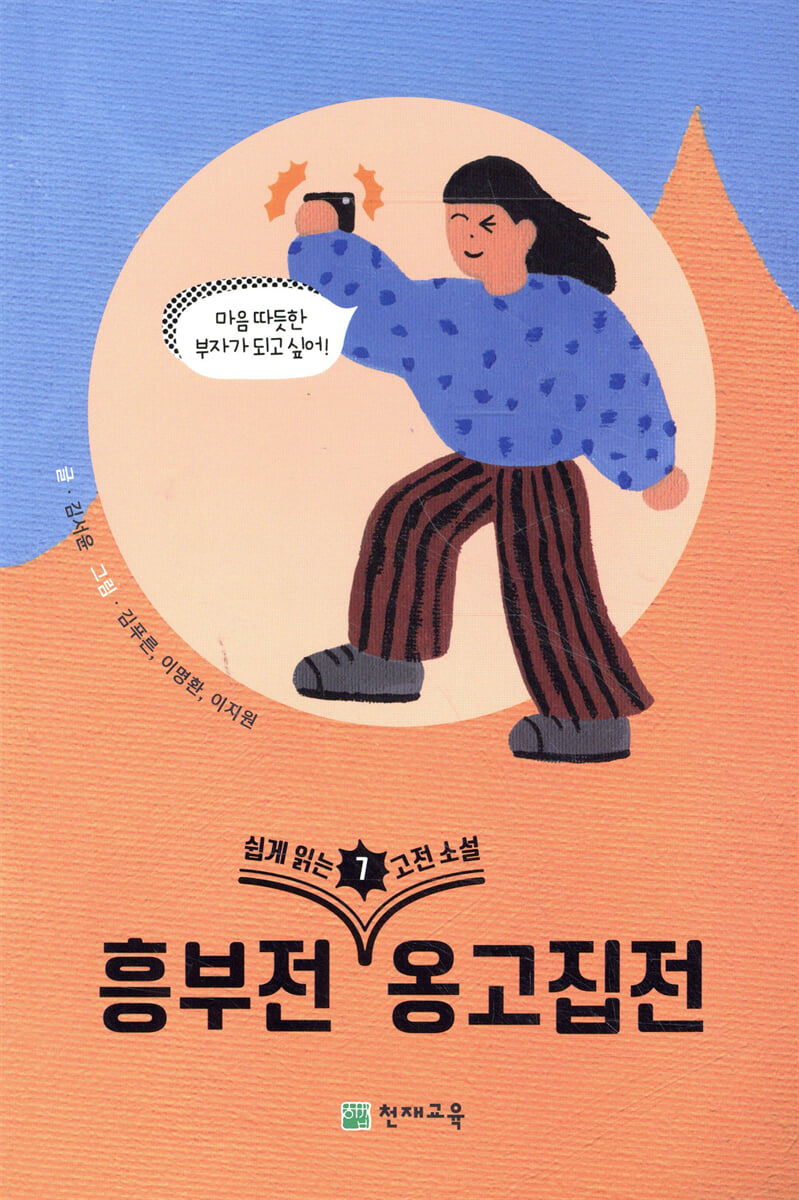 |
Description
Book Introduction
[Easy to Read Classic Novels] is a series of classic novels that easily explain the essential classic novels that appear in textbooks and the CSAT, written at a level suitable for middle school students. By reading two classic novels that appear in textbooks and the CSAT as one topic, you can improve your integrated thinking skills.
This series not only reinterprets classic novels that students often find difficult in an easy and fun way, but also features a structure that allows students to understand the works in a step-by-step and integrated manner through various activities before, during, and after reading.
[Easy to Read Classic Novels 7_Heungbu and Nolbu, Onggojip] is a book that combines the story of the wicked older brother Nolbu and the kind younger brother Heungbu [Heungbu and Nolbu] and the story of the stingy rich man Onggojip who suffers because of a fake Onggojip [Onggojip] with the theme of 'money and ethics'. In each work, Nolbu and Onggojip live only for money and torment their family and neighbors, eventually experiencing ruin.
Please read the story while paying attention to their backgrounds, current social status, how they are punished, and subsequent personality changes.
Through these two works, we will be able to understand the social landscape of the late Joseon Dynasty, when capitalism was sprouting, and think about the value of living together with others and practicing sharing.
This series not only reinterprets classic novels that students often find difficult in an easy and fun way, but also features a structure that allows students to understand the works in a step-by-step and integrated manner through various activities before, during, and after reading.
[Easy to Read Classic Novels 7_Heungbu and Nolbu, Onggojip] is a book that combines the story of the wicked older brother Nolbu and the kind younger brother Heungbu [Heungbu and Nolbu] and the story of the stingy rich man Onggojip who suffers because of a fake Onggojip [Onggojip] with the theme of 'money and ethics'. In each work, Nolbu and Onggojip live only for money and torment their family and neighbors, eventually experiencing ruin.
Please read the story while paying attention to their backgrounds, current social status, how they are punished, and subsequent personality changes.
Through these two works, we will be able to understand the social landscape of the late Joseon Dynasty, when capitalism was sprouting, and think about the value of living together with others and practicing sharing.
- You can preview some of the book's contents.
Preview
index
preface
Why should we read “The Tale of Heungbu” and “The Tale of Onggojip” together?
Introductory cartoon
First story_〈Heungbu and Nolbu〉
Characters in the story
Heungbu, driven out empty-handed
Heungbu visits Nolbu's house
I tried to sell it even though it was a commodity
A swallow nestled in Heungbu's house
It's a sawing machine
Nolbu visits Heungbu's house
A swallow nestled in Nolbu's house
I put it down slowly and gently
The sawing never stops
Nolbu, riding the last beat
Check the plot of "Heungbu and Nolbu"
The Ethical Consciousness of Harmony and Coexistence in "The Tale of Heungbu and Nolbu"
The Second Story_〈The Story of Onggojip〉
Characters in the story
Onggojip, there is no such unfilial son.
The reason why Ambassador Hak visited Onggojip
The Onggojip family is turned upside down
A fake that looks more real than the real thing
Distinguishing between the real and the fake in front of the lord
stubbornness, losing everything
Onggojip meets a Taoist priest in the mountains
Check the plot of "Onggojipjeon"
For true humanity, caring for family and neighbors, "Onggojipjeon"
Discussion_Is greed for money a bad thing?
Why should we read “The Tale of Heungbu” and “The Tale of Onggojip” together?
Introductory cartoon
First story_〈Heungbu and Nolbu〉
Characters in the story
Heungbu, driven out empty-handed
Heungbu visits Nolbu's house
I tried to sell it even though it was a commodity
A swallow nestled in Heungbu's house
It's a sawing machine
Nolbu visits Heungbu's house
A swallow nestled in Nolbu's house
I put it down slowly and gently
The sawing never stops
Nolbu, riding the last beat
Check the plot of "Heungbu and Nolbu"
The Ethical Consciousness of Harmony and Coexistence in "The Tale of Heungbu and Nolbu"
The Second Story_〈The Story of Onggojip〉
Characters in the story
Onggojip, there is no such unfilial son.
The reason why Ambassador Hak visited Onggojip
The Onggojip family is turned upside down
A fake that looks more real than the real thing
Distinguishing between the real and the fake in front of the lord
stubbornness, losing everything
Onggojip meets a Taoist priest in the mountains
Check the plot of "Onggojipjeon"
For true humanity, caring for family and neighbors, "Onggojipjeon"
Discussion_Is greed for money a bad thing?
Detailed image

Publisher's Review
1.
Adding interest to the subject matter of the work through cartoons closely related to students' real lives
You can get a taste of the theme that combines familiar and unfamiliar works in a unique and fun comic.
2.
Read classic novels without burden with easy-to-understand explanations.
It is a small book that fits in one hand, and the text explains difficult vocabulary in an easy-to-understand way, so you can read it easily and enjoyably without fear of the classics.
3.
Increase your understanding of the work through various reading activities before, during, and after reading.
Before reading the work, you can understand the characters and their relationships, solve thought-provoking questions to develop your thinking skills, and then, after reading the work, you can deeply appreciate the work through the plot, commentary, and discussion activities.
4.
Build your knowledge easily and enjoyably with digital resources suited to new readers and the times.
The QR code in the work synopsis confirmation corner provides a “vocabulary quiz,” and the QR code in the work commentary corner provides a “5-minute commentary” video containing the work’s synopsis and points of appreciation.
Adding interest to the subject matter of the work through cartoons closely related to students' real lives
You can get a taste of the theme that combines familiar and unfamiliar works in a unique and fun comic.
2.
Read classic novels without burden with easy-to-understand explanations.
It is a small book that fits in one hand, and the text explains difficult vocabulary in an easy-to-understand way, so you can read it easily and enjoyably without fear of the classics.
3.
Increase your understanding of the work through various reading activities before, during, and after reading.
Before reading the work, you can understand the characters and their relationships, solve thought-provoking questions to develop your thinking skills, and then, after reading the work, you can deeply appreciate the work through the plot, commentary, and discussion activities.
4.
Build your knowledge easily and enjoyably with digital resources suited to new readers and the times.
The QR code in the work synopsis confirmation corner provides a “vocabulary quiz,” and the QR code in the work commentary corner provides a “5-minute commentary” video containing the work’s synopsis and points of appreciation.
GOODS SPECIFICS
- Publication date: December 20, 2022
- Page count, weight, size: 208 pages | 312g | 148*220*11mm
- ISBN13: 9791125966036
- ISBN10: 1125966033
- Reference book for use in grades: Common for middle school students
- Reference book usage semester: Common semester
- Reference book difficulty: Medium Reference book difficulty guide
You may also like
카테고리
korean


korean

![GQ KOREA Mark (Monthly): December [2025]](http://librairie.coreenne.fr/cdn/shop/files/8ef265dbbfbf186523ed75ba7319009d.jpg?v=1765340328&width=3840)


