

Gerhard Richter
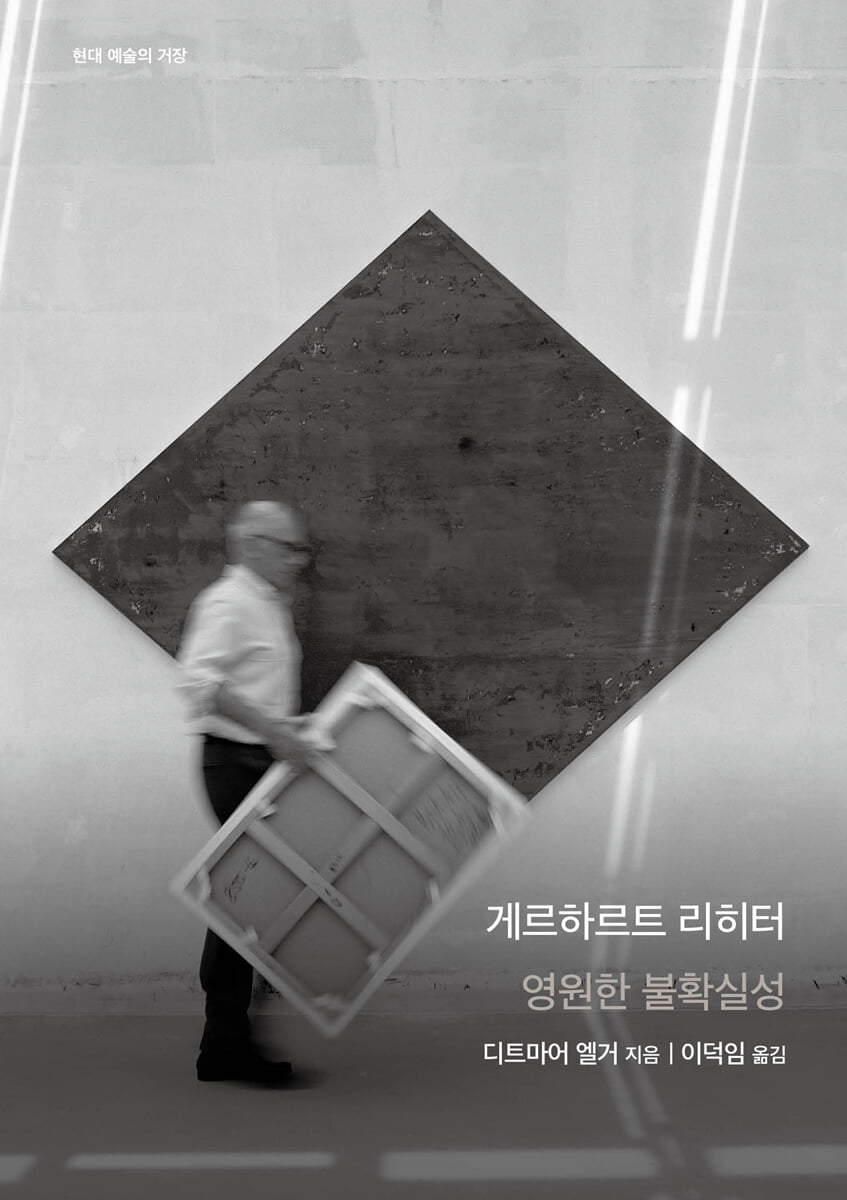 |
Description
Book Introduction
Gerhard Richter, the enigmatic master of modern art,
A reliable biography written by his friend, secretary, and archivist.
The descriptions of painter Gerhard Richter are dazzling: a living legend, the most influential artist of our time, the founder of photo-painting, and the owner of a work that fetched 60 billion won at auction.
Although his paintings are displayed in numerous exhibitions, collections, and art markets, there is more to him than meets the eye.
That's understandable, as it's been Richter's long-standing strategy to keep his private life hidden.
This also seems to reflect the influence of his experience of having to secretly escape from former East Germany.
Richter's personal tendency to adamantly refuse to make personal comments about his paintings has led some critics to characterize them as "artworks without an author."
This makes his work more difficult to analyze, frustrating and sometimes perplexing critics.
The author, Dietmar Elger, was a friend, secretary, and director of the Richter Archive, a seemingly enigmatic figure, and is considered one of the greatest connoisseurs of Richter's work.
He observed this master of modern art from up close and wrote a biography that comprehensively covers not only his private life but also his world of works.
The author, who has worked as a curator of painting and sculpture for many years and has planned exhibitions and catalogs for various contemporary artists including Andy Warhol, Donald Judd, and Richard Tuttle, delves into the personal backgrounds of many of Richter's pictorial motifs in this book, providing readers with deep insights into the life and work of this great artist.
A reliable biography written by his friend, secretary, and archivist.
The descriptions of painter Gerhard Richter are dazzling: a living legend, the most influential artist of our time, the founder of photo-painting, and the owner of a work that fetched 60 billion won at auction.
Although his paintings are displayed in numerous exhibitions, collections, and art markets, there is more to him than meets the eye.
That's understandable, as it's been Richter's long-standing strategy to keep his private life hidden.
This also seems to reflect the influence of his experience of having to secretly escape from former East Germany.
Richter's personal tendency to adamantly refuse to make personal comments about his paintings has led some critics to characterize them as "artworks without an author."
This makes his work more difficult to analyze, frustrating and sometimes perplexing critics.
The author, Dietmar Elger, was a friend, secretary, and director of the Richter Archive, a seemingly enigmatic figure, and is considered one of the greatest connoisseurs of Richter's work.
He observed this master of modern art from up close and wrote a biography that comprehensively covers not only his private life but also his world of works.
The author, who has worked as a curator of painting and sculpture for many years and has planned exhibitions and catalogs for various contemporary artists including Andy Warhol, Donald Judd, and Richard Tuttle, delves into the personal backgrounds of many of Richter's pictorial motifs in this book, providing readers with deep insights into the life and work of this great artist.
- You can preview some of the book's contents.
Preview
index
Recommendation
introduction
1.
Dresden
2.
Capitalist Realism
3.
exhibition
4.
conversion
5.
Uncle Rudy
6.
Breaking Style as a Style Principle
7.
Venice Biennale
8.
tourist
9.
Juno and Janus
10.
October 18, 1977
11.
Hanbalt
12.
First look
13.
Birkenau
main
Copyright of the painting
Search
introduction
1.
Dresden
2.
Capitalist Realism
3.
exhibition
4.
conversion
5.
Uncle Rudy
6.
Breaking Style as a Style Principle
7.
Venice Biennale
8.
tourist
9.
Juno and Janus
10.
October 18, 1977
11.
Hanbalt
12.
First look
13.
Birkenau
main
Copyright of the painting
Search
Detailed image
.jpg)
Into the book
Having experienced all the ideologies created by humans over a century, from the modern era to the early modern era, this old skeptic was unable to see or picture this world through any particular trend or concept.
Even though I don't know, I've probably experienced situations where the artist's cause and determination have become nothing more than scraps of paper every time the world order has changed drastically.
For him, who learned that “it is easy to start, but difficult to reach the end,” the words “I draw” were more urgent than “I drew a great piece of work.”
In a reality where there can be no absolute picture, no beautiful utopia, and no clear truth, he created an artistic formula for viewing the world by repeatedly absorbing and spitting out modernism and postmodernism.
---From "Yoon Hye-jeong - Recommendation"
The current living environment, which Richter created himself in the early 1990s, architecturally demonstrates the relationship between the artist's artistic work and his private life.
Two independent buildings stand on a spacious site on the outskirts of Cologne.
A windowless studio facing the street sits like a screen in front of the artist's home, nestled in a pristine garden.
Although Richter occasionally receives public honors, such as at exhibition openings, he generally prefers to remain hidden from the art world, hiding in the anonymity of his private life.
Trying to shield himself from the public eye is also an old strategy of Gerhard Richter.
When asked by Wulf Herzogenrath in 1972 to submit a portrait for use in an exhibition catalog, Richter instead sent a passport photo of a janitor working at the Düsseldorf Academy of Fine Arts.
---From the "Preface"
Gerhard was his mother's favorite child.
She projected her ideals and unfulfilled hopes onto Gerhard.
He inspired the fifteen-year-old boy by becoming enthusiastic about Nietzsche's writings and awakened his interest in various classical literature, including Goethe and Schiller.
On the other hand, she constantly criticized her husband for his lack of interest in culture.
Moreover, his father constantly repeated to young Gerhard that he was a failure.
---「1.
From "Dresden"
The decision to return to art studies five years after graduating from the Dresden Academy of Fine Arts was a momentous decision in Gerhard Richter's career.
In fact, he had no interest in art education in the traditional sense of the word at the time.
If that were the case, I would have received a better education in Dresden than in Düsseldorf.
At the time, Richter needed a place where he could escape his personal and artistic isolation, work, and above all, meet other artists.
That is, after escaping East Germany, what I missed most was the community and conversations with like-minded people.
His dream was fulfilled beyond his expectations when he studied at the Düsseldorf Academy of Fine Arts.
Richter met his friends and artistic partners of the 1960s, Konrad Lueck, Sigmar Polke and Blinky Palermo, all here.
---「2.
From “Capitalist Realism”
Like the Impressionist art photographers, the blurring technique also served as a visual expression of Richter's philosophical stance on a perception of reality that could no longer believe in the possibility of clear truth.
In a 1972 interview with Rolf Schön, Richter said:
“There is nothing clearer about reality than my relationship to it, which is made up of ambiguity, uncertainty, transience, and fragmentation.”
---「3.
From the "Exhibition"
Critics have often interpreted Richter's choice of photographic images as motifs between 1962 and 1967 as a "subjective meaninglessness" and "indiscriminate arbitrariness."
His method of juxtaposing or indiscriminately arranging images from various areas of life and thematic contexts did not reveal any concept of their content.
Only the medium context of having a circular photographic image tied all the works together.
Moreover, it was difficult to find any indication that the author had any particular interest in any particular subject.
The fact that various templates were chosen and printed in a personal environment does not show the motivation behind the content of the work, but only reveals that the materials were easy to obtain.
In late 1997, Susanne Ehrenfried wrote in her essay on Richter's portraits, Ohne Eigenschaften, Without Character:
“Terms such as absence of selection, absence of composition, absence of style, absence of content are characteristic of Richter’s work.” Richter has long been interpreted in this way, and he himself has repeatedly supported this interpretation by emphasizing his indifferent attitude towards the subject matter of his paintings.
“I pursue no purpose, no system, no tendency.
I have no platform, no style, no mission.
Neither the technical issues, nor the subject matter of the work, nor the artisanal variations are of any interest to me.
I don't want to make any decisions, and I don't know what I want.
I am inconsistent, indifferent and passive.
“I like things that are unconstrained and unprescriptive, and endless uncertainty.”
---「5.
From "Uncle Rudy"
Richter still remembers the awe he felt at the time for the work of artists like Carl Andre and Sol LeWitt, and the self-reproach he felt that he could never create anything like it.
So, while the original Corsican motifs arose from artistic anxiety, they were by no means formed in opposition to minimal and conceptual art.
Rather, Gerhard Richter initially described these works as personal paintings without artistic aspirations to be trend-setting.
Nevertheless, it took courage for Richter to paint romantic landscapes.
He gained this courage by convincing himself that he was painting for himself and not for the public.
“These paintings are not so much about opposing minimal art as about giving up on it because I had nothing to do in that field.
So, I thought I would become a weirdo who does what I love, doesn't belong anywhere, and creates a romantic atmosphere."
---「6.
From "Breaking Style as a Style Principle"
This interplay between representation and representation of reality can be applied to any motif, but Gerhard Richter deliberately chose this approach in two works.
This not only gives substantial legitimacy to the elongated form of the work, but above all, it shows the pictorial concept of the work thematically.
Both paintings strikingly reflect Richter's fundamental artistic concern to use the possibilities and limitations of painting to perceive and understand reality.
Therefore, this work represents, above all, Richter's skepticism toward all attempts to express this world in pictures.
When even ordinary brushstrokes, upon closer inspection, turn out to be nothing more than mere appearances, one wonders how long such attempts can last.
In the grayscale photo-paintings of the 1960s, blurriness signifies the inaccuracy of the depicted reality and thus expresses a lack of perceptual ability.
However, in "Stroke", the fragmentation of the perceptual process shows that a holistic experience of reality is impossible.
The picture clearly reveals both.
On the one hand, it is an illusionistic expression of pictorial gestures, but on the other hand, it shows the viewers the realism of color materials.
Both perceptual possibilities can vary depending on the viewer's perspective.
In his talk, Richter compared his painting to the uncertainty principle established in 1927 by physicist and Nobel laureate Werner Heisenberg.
According to Heisenberg's insight, the position and velocity of an atomic particle cannot be measured simultaneously and with equal precision.
Any attempt to define one of the two criteria more precisely inevitably introduces uncertainty into the definition of the other.
Even though I don't know, I've probably experienced situations where the artist's cause and determination have become nothing more than scraps of paper every time the world order has changed drastically.
For him, who learned that “it is easy to start, but difficult to reach the end,” the words “I draw” were more urgent than “I drew a great piece of work.”
In a reality where there can be no absolute picture, no beautiful utopia, and no clear truth, he created an artistic formula for viewing the world by repeatedly absorbing and spitting out modernism and postmodernism.
---From "Yoon Hye-jeong - Recommendation"
The current living environment, which Richter created himself in the early 1990s, architecturally demonstrates the relationship between the artist's artistic work and his private life.
Two independent buildings stand on a spacious site on the outskirts of Cologne.
A windowless studio facing the street sits like a screen in front of the artist's home, nestled in a pristine garden.
Although Richter occasionally receives public honors, such as at exhibition openings, he generally prefers to remain hidden from the art world, hiding in the anonymity of his private life.
Trying to shield himself from the public eye is also an old strategy of Gerhard Richter.
When asked by Wulf Herzogenrath in 1972 to submit a portrait for use in an exhibition catalog, Richter instead sent a passport photo of a janitor working at the Düsseldorf Academy of Fine Arts.
---From the "Preface"
Gerhard was his mother's favorite child.
She projected her ideals and unfulfilled hopes onto Gerhard.
He inspired the fifteen-year-old boy by becoming enthusiastic about Nietzsche's writings and awakened his interest in various classical literature, including Goethe and Schiller.
On the other hand, she constantly criticized her husband for his lack of interest in culture.
Moreover, his father constantly repeated to young Gerhard that he was a failure.
---「1.
From "Dresden"
The decision to return to art studies five years after graduating from the Dresden Academy of Fine Arts was a momentous decision in Gerhard Richter's career.
In fact, he had no interest in art education in the traditional sense of the word at the time.
If that were the case, I would have received a better education in Dresden than in Düsseldorf.
At the time, Richter needed a place where he could escape his personal and artistic isolation, work, and above all, meet other artists.
That is, after escaping East Germany, what I missed most was the community and conversations with like-minded people.
His dream was fulfilled beyond his expectations when he studied at the Düsseldorf Academy of Fine Arts.
Richter met his friends and artistic partners of the 1960s, Konrad Lueck, Sigmar Polke and Blinky Palermo, all here.
---「2.
From “Capitalist Realism”
Like the Impressionist art photographers, the blurring technique also served as a visual expression of Richter's philosophical stance on a perception of reality that could no longer believe in the possibility of clear truth.
In a 1972 interview with Rolf Schön, Richter said:
“There is nothing clearer about reality than my relationship to it, which is made up of ambiguity, uncertainty, transience, and fragmentation.”
---「3.
From the "Exhibition"
Critics have often interpreted Richter's choice of photographic images as motifs between 1962 and 1967 as a "subjective meaninglessness" and "indiscriminate arbitrariness."
His method of juxtaposing or indiscriminately arranging images from various areas of life and thematic contexts did not reveal any concept of their content.
Only the medium context of having a circular photographic image tied all the works together.
Moreover, it was difficult to find any indication that the author had any particular interest in any particular subject.
The fact that various templates were chosen and printed in a personal environment does not show the motivation behind the content of the work, but only reveals that the materials were easy to obtain.
In late 1997, Susanne Ehrenfried wrote in her essay on Richter's portraits, Ohne Eigenschaften, Without Character:
“Terms such as absence of selection, absence of composition, absence of style, absence of content are characteristic of Richter’s work.” Richter has long been interpreted in this way, and he himself has repeatedly supported this interpretation by emphasizing his indifferent attitude towards the subject matter of his paintings.
“I pursue no purpose, no system, no tendency.
I have no platform, no style, no mission.
Neither the technical issues, nor the subject matter of the work, nor the artisanal variations are of any interest to me.
I don't want to make any decisions, and I don't know what I want.
I am inconsistent, indifferent and passive.
“I like things that are unconstrained and unprescriptive, and endless uncertainty.”
---「5.
From "Uncle Rudy"
Richter still remembers the awe he felt at the time for the work of artists like Carl Andre and Sol LeWitt, and the self-reproach he felt that he could never create anything like it.
So, while the original Corsican motifs arose from artistic anxiety, they were by no means formed in opposition to minimal and conceptual art.
Rather, Gerhard Richter initially described these works as personal paintings without artistic aspirations to be trend-setting.
Nevertheless, it took courage for Richter to paint romantic landscapes.
He gained this courage by convincing himself that he was painting for himself and not for the public.
“These paintings are not so much about opposing minimal art as about giving up on it because I had nothing to do in that field.
So, I thought I would become a weirdo who does what I love, doesn't belong anywhere, and creates a romantic atmosphere."
---「6.
From "Breaking Style as a Style Principle"
This interplay between representation and representation of reality can be applied to any motif, but Gerhard Richter deliberately chose this approach in two works.
This not only gives substantial legitimacy to the elongated form of the work, but above all, it shows the pictorial concept of the work thematically.
Both paintings strikingly reflect Richter's fundamental artistic concern to use the possibilities and limitations of painting to perceive and understand reality.
Therefore, this work represents, above all, Richter's skepticism toward all attempts to express this world in pictures.
When even ordinary brushstrokes, upon closer inspection, turn out to be nothing more than mere appearances, one wonders how long such attempts can last.
In the grayscale photo-paintings of the 1960s, blurriness signifies the inaccuracy of the depicted reality and thus expresses a lack of perceptual ability.
However, in "Stroke", the fragmentation of the perceptual process shows that a holistic experience of reality is impossible.
The picture clearly reveals both.
On the one hand, it is an illusionistic expression of pictorial gestures, but on the other hand, it shows the viewers the realism of color materials.
Both perceptual possibilities can vary depending on the viewer's perspective.
In his talk, Richter compared his painting to the uncertainty principle established in 1927 by physicist and Nobel laureate Werner Heisenberg.
According to Heisenberg's insight, the position and velocity of an atomic particle cannot be measured simultaneously and with equal precision.
Any attempt to define one of the two criteria more precisely inevitably introduces uncertainty into the definition of the other.
---「9.
From "Juno and Janus"
From "Juno and Janus"
Publisher's Review
In an era that predicts the 'end of painting'
A glimpse into the aesthetics of a pioneer who constantly explores possibilities.
Gerhard Richter, who is well into his nineties, is a true master among masters who has steadily expanded the realm of painting by crossing the boundaries between photography and painting, abstraction and figuration, color and monochrome, and modernism and postmodernism, while achieving tremendous commercial success in the art market.
Richter's achievement, above all, was that he transferred the characteristics of photography to painting, and realized in his work the possibility of continuing to paint even in an era when the 'end of painting' was predicted.
A representative example is the creation of a unique style called 'photo painting' by transferring photographs taken by the artist himself or scraped from mass media onto canvas and using blurring techniques, abstract brushstrokes, and geometric compositions.
This book vividly and specifically contains the critics' comments on 'photo-painting' and Richter's responses to them, allowing us to take a step closer to Richter's unique aesthetic that seems elusive yet still manages to be grasped.
For example, one critic, in a paper on Richter's portraits completed in the style of photopaintings, remarked:
“Terms such as absence of selection, absence of composition, absence of style, absence of content are characteristic of Richter’s work.” Richter supports this interpretation by responding as follows:
“I pursue no purpose, no system, no tendency.
I have no platform, no style, no mission.
Neither the technical issues, nor the subject matter of the work, nor the artisanal variations are of any interest to me.
I don't want to make any decisions, and I don't know what I want.
I am inconsistent, indifferent and passive.
“I like things that are unconstrained and unprescriptive, and endless uncertainty.”
A work recognized by readers and critics
A rich selection of Richter's major works from each era
The German edition on which this book is based was first published in 2002, followed by a second edition in 2008, and a third edition in 2018, demonstrating its trust and recognition among readers and critics.
In the third edition, the author corrects errors in information and adds information on the development of Gerhard Richter's work over recent years.
In the 2000s, Richter once again expanded his artistic spectrum by implementing new production methods through reverse glass painting and digital "STRIP".
Unfortunately, domestic readers have had few opportunities to encounter Richter's work in person.
The exhibition “4900 Colors” held at Espace Louis Vuitton Seoul in 2021 and the exhibition “Gerhard Richter/ A.
R. Penk》is the whole story.
This book includes "Self-Portrait" painted by Richter in his teens, "Hanging", a black and white photograph taken in East Germany in 1955, "Table", catalogue raisonné No. 1, representative photo-paintings "Woman Descending a Staircase" and "Woman with an Umbrella", a large-scale painting "Emma (Nude on a Staircase)" that appears to parody Duchamp's work, "Aunt Marianne" and "Heide" that allow the viewer to experience the criminal system of the Nazi regime through the fate of an individual, "Uncle Rudi" that depicts Richter's maternal uncle who was like a hero to him, and "Horst with a Dog" that conveys the emotional distance from his father, "192 Colors" from his early color panel works, and several landscape paintings such as "Landscape near Huvelat" and "Seascape", "48 Portraits" painted for the 36th Venice Biennale, "Static" with its dramatic color composition, and "Station" that reminds us of the transience of life and death. Richter's major works are carefully selected by period, including "Candlelight" and "Skull," "Betty" which depicts the back of his daughter, and his recent works "Strip" and "Birkenau."
Here, Hye-Jeong Yoon, director of Kukje Gallery and author of My Private Artists and Life, Art, adds richness and depth to the book by incorporating her personal experiences with Richter, such as the moment she first encountered Richter's representative works and her brief meeting with Sabine Moritz (Richter's third wife), as well as her unique thoughts on the artist's art in her "Recommendation."
A glimpse into the aesthetics of a pioneer who constantly explores possibilities.
Gerhard Richter, who is well into his nineties, is a true master among masters who has steadily expanded the realm of painting by crossing the boundaries between photography and painting, abstraction and figuration, color and monochrome, and modernism and postmodernism, while achieving tremendous commercial success in the art market.
Richter's achievement, above all, was that he transferred the characteristics of photography to painting, and realized in his work the possibility of continuing to paint even in an era when the 'end of painting' was predicted.
A representative example is the creation of a unique style called 'photo painting' by transferring photographs taken by the artist himself or scraped from mass media onto canvas and using blurring techniques, abstract brushstrokes, and geometric compositions.
This book vividly and specifically contains the critics' comments on 'photo-painting' and Richter's responses to them, allowing us to take a step closer to Richter's unique aesthetic that seems elusive yet still manages to be grasped.
For example, one critic, in a paper on Richter's portraits completed in the style of photopaintings, remarked:
“Terms such as absence of selection, absence of composition, absence of style, absence of content are characteristic of Richter’s work.” Richter supports this interpretation by responding as follows:
“I pursue no purpose, no system, no tendency.
I have no platform, no style, no mission.
Neither the technical issues, nor the subject matter of the work, nor the artisanal variations are of any interest to me.
I don't want to make any decisions, and I don't know what I want.
I am inconsistent, indifferent and passive.
“I like things that are unconstrained and unprescriptive, and endless uncertainty.”
A work recognized by readers and critics
A rich selection of Richter's major works from each era
The German edition on which this book is based was first published in 2002, followed by a second edition in 2008, and a third edition in 2018, demonstrating its trust and recognition among readers and critics.
In the third edition, the author corrects errors in information and adds information on the development of Gerhard Richter's work over recent years.
In the 2000s, Richter once again expanded his artistic spectrum by implementing new production methods through reverse glass painting and digital "STRIP".
Unfortunately, domestic readers have had few opportunities to encounter Richter's work in person.
The exhibition “4900 Colors” held at Espace Louis Vuitton Seoul in 2021 and the exhibition “Gerhard Richter/ A.
R. Penk》is the whole story.
This book includes "Self-Portrait" painted by Richter in his teens, "Hanging", a black and white photograph taken in East Germany in 1955, "Table", catalogue raisonné No. 1, representative photo-paintings "Woman Descending a Staircase" and "Woman with an Umbrella", a large-scale painting "Emma (Nude on a Staircase)" that appears to parody Duchamp's work, "Aunt Marianne" and "Heide" that allow the viewer to experience the criminal system of the Nazi regime through the fate of an individual, "Uncle Rudi" that depicts Richter's maternal uncle who was like a hero to him, and "Horst with a Dog" that conveys the emotional distance from his father, "192 Colors" from his early color panel works, and several landscape paintings such as "Landscape near Huvelat" and "Seascape", "48 Portraits" painted for the 36th Venice Biennale, "Static" with its dramatic color composition, and "Station" that reminds us of the transience of life and death. Richter's major works are carefully selected by period, including "Candlelight" and "Skull," "Betty" which depicts the back of his daughter, and his recent works "Strip" and "Birkenau."
Here, Hye-Jeong Yoon, director of Kukje Gallery and author of My Private Artists and Life, Art, adds richness and depth to the book by incorporating her personal experiences with Richter, such as the moment she first encountered Richter's representative works and her brief meeting with Sabine Moritz (Richter's third wife), as well as her unique thoughts on the artist's art in her "Recommendation."
GOODS SPECIFICS
- Date of issue: December 15, 2024
- Format: Hardcover book binding method guide
- Page count, weight, size: 676 pages | 914g | 137*195*41mm
- ISBN13: 9788932431574
- ISBN10: 8932431574
You may also like
카테고리
korean


korean

![GQ KOREA Mark (Monthly): December [2025]](http://librairie.coreenne.fr/cdn/shop/files/8ef265dbbfbf186523ed75ba7319009d.jpg?v=1765340328&width=3840)


