

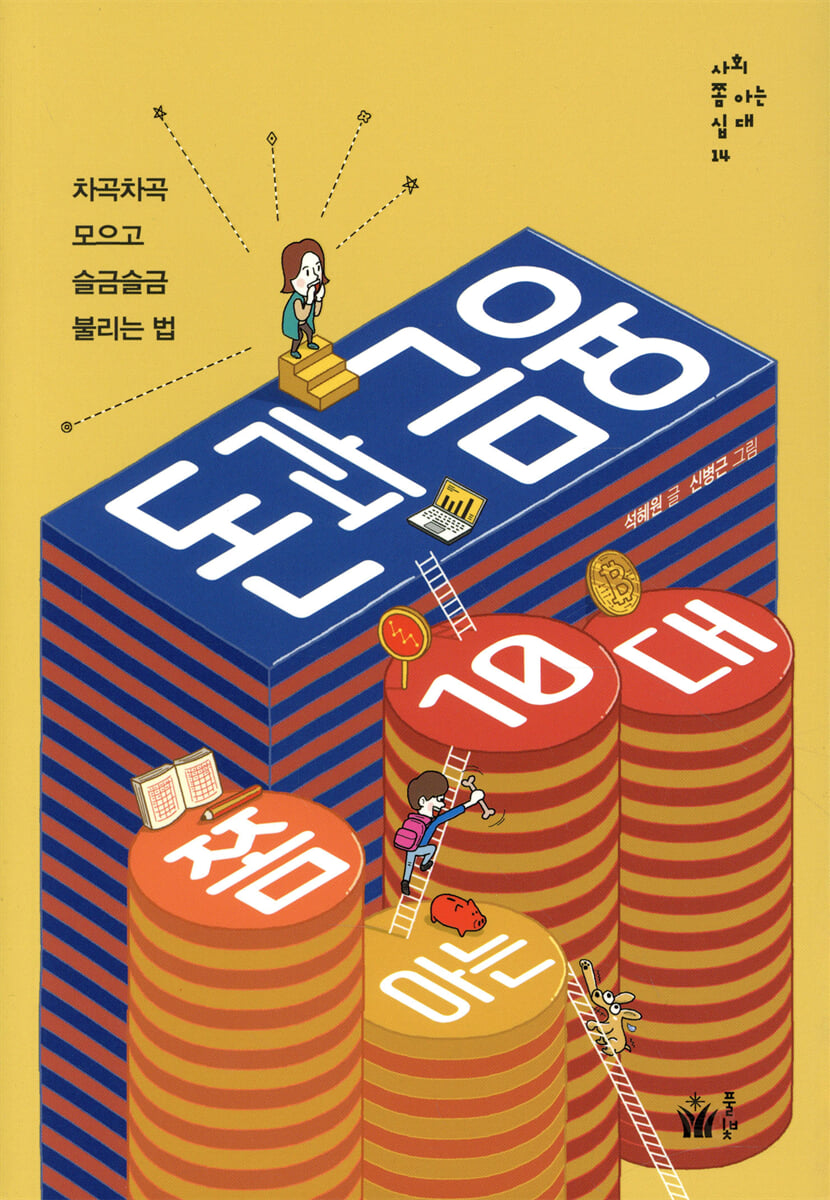
10 teenagers who know a little about money and finance
 |
Description
Book Introduction
How can I live without worrying about money?
"Savings are the only answer? Or a quick hit with stocks?"
Teenagers, it's time to wake up from financial illiteracy!
The days of receiving allowance from parents and saving it little by little in a bank account are over.
With the stock investment craze sweeping the youth, parents are also taking an early interest in their children's economic education.
It is time to go beyond simply ‘money management’ and learn ‘financial management.’
In fact, commercial banks are revealing their desire to secure future customers by launching financial platforms specifically for teenagers.
One bank's teen-focused card reportedly sold 100,000 cards within a month of its launch, while another youth-focused financial service reportedly attracted a million cumulative signups within a year.
So how much do teenagers know about money and finance?
This book is a friendly and thorough introduction to economics for young people who are interested in money and finance but skip the basics and rush into practice, or for financially illiterate people who only know how to save.
From the gold coins of King Croesus to today's cryptocurrencies, we explore money, the foundation of the economy, and cover everything from banking, stocks, bonds, investments, and financial planning to how to literally save and grow slowly.
Rather than providing superficial tips, it teaches you how to develop an eye for reading economic trends, understand your financial situation, and cultivate the power to proactively plan your future.
"Savings are the only answer? Or a quick hit with stocks?"
Teenagers, it's time to wake up from financial illiteracy!
The days of receiving allowance from parents and saving it little by little in a bank account are over.
With the stock investment craze sweeping the youth, parents are also taking an early interest in their children's economic education.
It is time to go beyond simply ‘money management’ and learn ‘financial management.’
In fact, commercial banks are revealing their desire to secure future customers by launching financial platforms specifically for teenagers.
One bank's teen-focused card reportedly sold 100,000 cards within a month of its launch, while another youth-focused financial service reportedly attracted a million cumulative signups within a year.
So how much do teenagers know about money and finance?
This book is a friendly and thorough introduction to economics for young people who are interested in money and finance but skip the basics and rush into practice, or for financially illiterate people who only know how to save.
From the gold coins of King Croesus to today's cryptocurrencies, we explore money, the foundation of the economy, and cover everything from banking, stocks, bonds, investments, and financial planning to how to literally save and grow slowly.
Rather than providing superficial tips, it teaches you how to develop an eye for reading economic trends, understand your financial situation, and cultivate the power to proactively plan your future.
- You can preview some of the book's contents.
Preview
index
Introduction - Have you heard of the 'poor tribe'?
Chapter 1: Do you want to be rich?
Oh my, I'm financially illiterate!
Why do we need financial literacy?
Lifestyle habits that will blow away your money worries
Let's save money little by little and slowly accumulate it.
Chapter 2: Evolving Money
When were coins created?
Who first created paper money?
What is plastic money?
Are cryptocurrencies also money?
Chapter 3: Understanding Finance Step by Step
A financial department store with everything
Let me introduce you to the bank of banks.
Why issue stocks and bonds?
Want to try investing in stocks?
Stock prices that change without rest
Insurance is a way to prepare for unexpected risks.
Chapter 4 You need to know this much before making financial investments.
Interest rate is the price of borrowing money.
Rule of 72
When the value of money falls, prices rise.
Rising benchmark interest rates and shrinking money supply
What are negative interest rates?
If you have bad credit, you can't borrow money.
Chapter 5 Financial Investment: Carefully and Long-Term with Your Extra Money
Three things to consider when choosing a financial product
Let's keep the lessons of the dot-com bubble in mind.
Back to the Basics
If you are hesitant about direct investment, start with indirect investment.
Don't put all your eggs in one basket
Chapter 6: How to Choose Among Various Financial Products
Let's do financial planning first
Let's develop an eye for reading economic trends.
Portfolio, it changes every time!
If you know how to fish
If you are greedy, your judgment will be clouded.
Know your investment tendencies and consider various factors.
Outgoing Writing - Don't Become the Master or Servant of Money
Chapter 1: Do you want to be rich?
Oh my, I'm financially illiterate!
Why do we need financial literacy?
Lifestyle habits that will blow away your money worries
Let's save money little by little and slowly accumulate it.
Chapter 2: Evolving Money
When were coins created?
Who first created paper money?
What is plastic money?
Are cryptocurrencies also money?
Chapter 3: Understanding Finance Step by Step
A financial department store with everything
Let me introduce you to the bank of banks.
Why issue stocks and bonds?
Want to try investing in stocks?
Stock prices that change without rest
Insurance is a way to prepare for unexpected risks.
Chapter 4 You need to know this much before making financial investments.
Interest rate is the price of borrowing money.
Rule of 72
When the value of money falls, prices rise.
Rising benchmark interest rates and shrinking money supply
What are negative interest rates?
If you have bad credit, you can't borrow money.
Chapter 5 Financial Investment: Carefully and Long-Term with Your Extra Money
Three things to consider when choosing a financial product
Let's keep the lessons of the dot-com bubble in mind.
Back to the Basics
If you are hesitant about direct investment, start with indirect investment.
Don't put all your eggs in one basket
Chapter 6: How to Choose Among Various Financial Products
Let's do financial planning first
Let's develop an eye for reading economic trends.
Portfolio, it changes every time!
If you know how to fish
If you are greedy, your judgment will be clouded.
Know your investment tendencies and consider various factors.
Outgoing Writing - Don't Become the Master or Servant of Money
Detailed image
.jpg)
Into the book
As our living environment becomes more complex by the day, the risk of making wrong decisions increases.
In the past, when choosing a financial product, you only needed to know about time deposits, regular savings, and regular deposits.
Now, there are so many different types of products, and their characteristics have become complex.
If you invest incorrectly without knowing, you run the risk of losing all your seed money, not to mention making money.
Seed money is a portion of money that has been set aside and saved for a certain period of time, and is used as a starting point for better investments or purchases.
But if you don't know much about finance, you'll end up making bad choices, and those bad choices will end up ruining your life.
Greenspan said that financial literacy is like a compass or GPS for navigation in life.
In an age where finance has become a part of our lives, not knowing about finance is like being blind, which is why we call it financial illiteracy.
--- p.20~21
But with the advent of cryptocurrencies, people have come to realize something profound.
I am convinced that invisible electronic signals can be used as a means of payment that can freely cross borders.
So, central banks of various countries are trying to issue digital currencies using blockchain technology.
If a central bank digital currency is issued, its value will remain stable, unlike Bitcoin.
Although it has no physical form, the country will guarantee its value, just like the banknotes and coins currently in use.
What will happen if the use of such digital currencies becomes widespread? Naturally, the use of physical banknotes and coins will gradually decline.
--- p.52
Insurance was created to prepare for future risks, but there are insurance products that add investment features to their original functions.
You might think that an insurance product that both prepares you for risk and allows you to save money is better, right? Strictly speaking, that's not true.
The value of currency decreases over time, but insurance contracts are generally long-term.
Since the currency value at the time of receiving the insurance money is lower than the currency value during the period of paying the insurance premium, the actual investment return is often negative when considering fluctuations in the currency value.
So, it is wise to only consider insurance as a hedge against risk and invest in products with high real returns.
--- p.81
I'll give you some useful information to consider when weighing profitability and safety.
It's not a rule that must be followed, but it's called the '100-age rule'.
When investing in high-risk financial products like stocks, you should limit your investment to the amount calculated by subtracting your age from 100, and leave the rest of your money in safe financial products like deposits.
When people living off their pensions after retirement ask me for good stock recommendations, I advise them to save safely and reduce their living expenses.
If you're young, even if you invest and lose money, you can still save money because you'll still have income.
Also, through the experience of loss, you can develop a cool-headed and meticulous investment attitude, which can be a blessing in disguise.
But when you suffer losses as you get older, the heartache increases and it even harms your health.
--- p.113
Before drawing, you usually first think about what you want to express and how. There's also work to be done before choosing a financial product.
Financial planning.
Financial planning is the process of setting financial goals and then considering your income to create a plan for managing your money, including spending, saving, growing, and dividing it.
Financial planning can help you avoid unnecessary spending and save money efficiently.
In the past, when choosing a financial product, you only needed to know about time deposits, regular savings, and regular deposits.
Now, there are so many different types of products, and their characteristics have become complex.
If you invest incorrectly without knowing, you run the risk of losing all your seed money, not to mention making money.
Seed money is a portion of money that has been set aside and saved for a certain period of time, and is used as a starting point for better investments or purchases.
But if you don't know much about finance, you'll end up making bad choices, and those bad choices will end up ruining your life.
Greenspan said that financial literacy is like a compass or GPS for navigation in life.
In an age where finance has become a part of our lives, not knowing about finance is like being blind, which is why we call it financial illiteracy.
--- p.20~21
But with the advent of cryptocurrencies, people have come to realize something profound.
I am convinced that invisible electronic signals can be used as a means of payment that can freely cross borders.
So, central banks of various countries are trying to issue digital currencies using blockchain technology.
If a central bank digital currency is issued, its value will remain stable, unlike Bitcoin.
Although it has no physical form, the country will guarantee its value, just like the banknotes and coins currently in use.
What will happen if the use of such digital currencies becomes widespread? Naturally, the use of physical banknotes and coins will gradually decline.
--- p.52
Insurance was created to prepare for future risks, but there are insurance products that add investment features to their original functions.
You might think that an insurance product that both prepares you for risk and allows you to save money is better, right? Strictly speaking, that's not true.
The value of currency decreases over time, but insurance contracts are generally long-term.
Since the currency value at the time of receiving the insurance money is lower than the currency value during the period of paying the insurance premium, the actual investment return is often negative when considering fluctuations in the currency value.
So, it is wise to only consider insurance as a hedge against risk and invest in products with high real returns.
--- p.81
I'll give you some useful information to consider when weighing profitability and safety.
It's not a rule that must be followed, but it's called the '100-age rule'.
When investing in high-risk financial products like stocks, you should limit your investment to the amount calculated by subtracting your age from 100, and leave the rest of your money in safe financial products like deposits.
When people living off their pensions after retirement ask me for good stock recommendations, I advise them to save safely and reduce their living expenses.
If you're young, even if you invest and lose money, you can still save money because you'll still have income.
Also, through the experience of loss, you can develop a cool-headed and meticulous investment attitude, which can be a blessing in disguise.
But when you suffer losses as you get older, the heartache increases and it even harms your health.
--- p.113
Before drawing, you usually first think about what you want to express and how. There's also work to be done before choosing a financial product.
Financial planning.
Financial planning is the process of setting financial goals and then considering your income to create a plan for managing your money, including spending, saving, growing, and dividing it.
Financial planning can help you avoid unnecessary spending and save money efficiently.
--- p.135~136
Publisher's Review
Does a successful life mean 'getting rich'?
Studying finance is like designing your own life.
The secret to living well, not just getting rich, is revealed!
One of the biggest concerns of children these days is 'getting rich overnight'.
It is not uncommon to see young people who dream of making a lot of money through stocks, or who are interested in real estate and hope to become building owners in the future.
There is also a growing number of contents offering 'honey tips' for easy financial investment success.
Is there really a shortcut to becoming rich overnight?
With the economic downturn and the COVID-19 pandemic making these difficult times, we're surrounded by a plethora of compelling economic and financial information.
It is a reality that even young people easily utilize financial platforms before they have learned proper economic concepts and basic knowledge.
《Teenagers Who Know a Little About Money and Finance》 provides the financial foundation necessary for these teenagers.
Just skimming through this book, which explains unfamiliar economic and financial terms like the differences between the KOSPI and KOSDAQ indices and negative interest rates, will make economic news easier to understand.
It also offers practical advice for prudent and safe financial investments.
There are also interesting stories, such as the story of the famous scientist Newton's failed stock investment.
Above all, I want to let young people, who easily mistake finance for 'information on how to make a lot of money' or 'a way to become rich', know that studying finance is merely a milestone for 'living well'.
Now it is time to practice how to manage my own 'life' called 'me'.
“You need to know this much before investing.”
A conversation with an honest and realistic financial expert.
Complete your financial literacy with one book!
《Teenagers Who Know a Little About Money and Finance》 is not a book about economic theory, but rather a book that solidifies the financial literacy that today's youth need.
Looking at the reality that the number of "poor people" who cannot escape poverty no matter how hard they work is increasing, it seems that the ability to healthily manage one's money and financial assets has now become another important qualification.
By following the friendly conversation between the protagonist and his friend, a financial expert who has built up a financial portfolio that will allow him to avoid financial worries in his later years, teenagers can naturally acquire everything from trivial financial terms they have always wondered about to types of financial products and investment knowledge.
You can also indirectly experience this by looking at the example of a person who has been learning how to save money, grow money, and protect money since childhood.
It will also serve as a friendly guide for teenagers and adults who are struggling with financial difficulties due to the vast amount of information and abstract concepts.
Studying finance is like designing your own life.
The secret to living well, not just getting rich, is revealed!
One of the biggest concerns of children these days is 'getting rich overnight'.
It is not uncommon to see young people who dream of making a lot of money through stocks, or who are interested in real estate and hope to become building owners in the future.
There is also a growing number of contents offering 'honey tips' for easy financial investment success.
Is there really a shortcut to becoming rich overnight?
With the economic downturn and the COVID-19 pandemic making these difficult times, we're surrounded by a plethora of compelling economic and financial information.
It is a reality that even young people easily utilize financial platforms before they have learned proper economic concepts and basic knowledge.
《Teenagers Who Know a Little About Money and Finance》 provides the financial foundation necessary for these teenagers.
Just skimming through this book, which explains unfamiliar economic and financial terms like the differences between the KOSPI and KOSDAQ indices and negative interest rates, will make economic news easier to understand.
It also offers practical advice for prudent and safe financial investments.
There are also interesting stories, such as the story of the famous scientist Newton's failed stock investment.
Above all, I want to let young people, who easily mistake finance for 'information on how to make a lot of money' or 'a way to become rich', know that studying finance is merely a milestone for 'living well'.
Now it is time to practice how to manage my own 'life' called 'me'.
“You need to know this much before investing.”
A conversation with an honest and realistic financial expert.
Complete your financial literacy with one book!
《Teenagers Who Know a Little About Money and Finance》 is not a book about economic theory, but rather a book that solidifies the financial literacy that today's youth need.
Looking at the reality that the number of "poor people" who cannot escape poverty no matter how hard they work is increasing, it seems that the ability to healthily manage one's money and financial assets has now become another important qualification.
By following the friendly conversation between the protagonist and his friend, a financial expert who has built up a financial portfolio that will allow him to avoid financial worries in his later years, teenagers can naturally acquire everything from trivial financial terms they have always wondered about to types of financial products and investment knowledge.
You can also indirectly experience this by looking at the example of a person who has been learning how to save money, grow money, and protect money since childhood.
It will also serve as a friendly guide for teenagers and adults who are struggling with financial difficulties due to the vast amount of information and abstract concepts.
GOODS SPECIFICS
- Publication date: December 20, 2021
- Page count, weight, size: 168 pages | 262g | 140*203*10mm
- ISBN13: 9791161728216
- ISBN10: 116172821X
You may also like
카테고리
korean


korean

![GQ KOREA Mark (Monthly): December [2025]](http://librairie.coreenne.fr/cdn/shop/files/8ef265dbbfbf186523ed75ba7319009d.jpg?v=1765340328&width=3840)


