

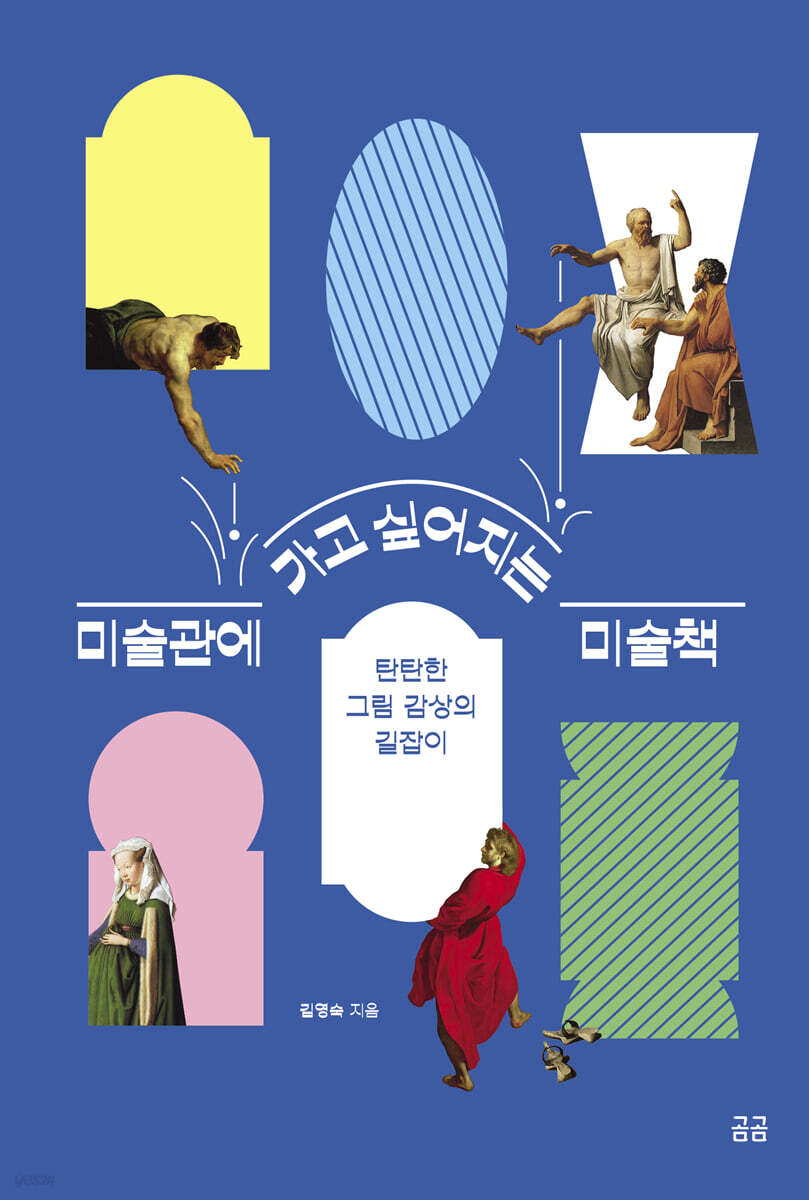
Art books that make you want to go to an art museum
 |
Description
Book Introduction
A delightful introduction to picture reading for teenagers
An introductory book on art for teenagers by art storyteller Kim Young-sook, who introduces art in a more accessible and approachable way than anyone else.
『Art Books That Make You Want to Go to an Art Museum』, which has been consistently loved by readers for over 10 years since its first publication in 2009, has been newly revised.
The content has been modified to suit today's sensibilities, and the book has been produced in a small, lightweight binding that fits comfortably in one hand, allowing people to encounter the paintings more closely in their daily lives.
"Art Books That Make You Want to Go to Art Museums" is a delightful introduction to reading art for people who have been to art museums and read art books, but still have no idea what is so moving about them or why everyone says they are great.
The author guides readers through the world of pictures in an exciting way with his unique writing style that has received enthusiastic responses from readers.
Appreciating art doesn't necessarily require a lot of knowledge.
But there is a world of difference between seeing a painting with knowledge and seeing a painting just for the sake of seeing it.
So what is the minimum knowledge you need to know to enter the world of art?
"The Art Book That Will Make You Want to Go to the Museum" reveals four secret spells that unlock the hidden stories within paintings.
The questions are, ‘How was it painted?’, ‘What era was it?’, ‘What kind of painter was it?’, and ‘What was it painted?’
If you just follow someone to an art museum and stand in front of a painting without any preparation, it will be difficult to get any particular feeling from looking at any of the paintings.
The author says, “There is a big difference between just glancing at something, whether it be a person or a picture, and looking at it with interest.”
'Why did he choose to paint this scene, using these colors?' 'What kind of life did the artist live?' Let's stand in front of the painting and ask ourselves these questions.
The picture will slowly begin to tell me a story.
An introductory book on art for teenagers by art storyteller Kim Young-sook, who introduces art in a more accessible and approachable way than anyone else.
『Art Books That Make You Want to Go to an Art Museum』, which has been consistently loved by readers for over 10 years since its first publication in 2009, has been newly revised.
The content has been modified to suit today's sensibilities, and the book has been produced in a small, lightweight binding that fits comfortably in one hand, allowing people to encounter the paintings more closely in their daily lives.
"Art Books That Make You Want to Go to Art Museums" is a delightful introduction to reading art for people who have been to art museums and read art books, but still have no idea what is so moving about them or why everyone says they are great.
The author guides readers through the world of pictures in an exciting way with his unique writing style that has received enthusiastic responses from readers.
Appreciating art doesn't necessarily require a lot of knowledge.
But there is a world of difference between seeing a painting with knowledge and seeing a painting just for the sake of seeing it.
So what is the minimum knowledge you need to know to enter the world of art?
"The Art Book That Will Make You Want to Go to the Museum" reveals four secret spells that unlock the hidden stories within paintings.
The questions are, ‘How was it painted?’, ‘What era was it?’, ‘What kind of painter was it?’, and ‘What was it painted?’
If you just follow someone to an art museum and stand in front of a painting without any preparation, it will be difficult to get any particular feeling from looking at any of the paintings.
The author says, “There is a big difference between just glancing at something, whether it be a person or a picture, and looking at it with interest.”
'Why did he choose to paint this scene, using these colors?' 'What kind of life did the artist live?' Let's stand in front of the painting and ask ourselves these questions.
The picture will slowly begin to tell me a story.
- You can preview some of the book's contents.
Preview
index
Invitation letter
Finding the hidden joy in the picture
1 Drawing the world in a new way - how did you draw it?
Similar, but much more beautiful - Renaissance art│Giotto Dibondone
Can't you draw it a little strangely? - Mannerism│El Greco
Feeling ready to jump out at any moment - Baroque Art│Michelangelo Merisi da Caravaggio
A Wonderful World Where Ordinary People Become Masters - Realism│Gustave Courbet
Your first impression was really bad! - Impressionism│Claude Monet
What if smells had colors? - After Impressionism│Paul Cézanne
What is this? What on earth is he painting? - Cubism│Pablo Ruiz Picasso
Abstraction is not graffiti! - Abstraction│Wassily Kandinsky? Piet Mondrian
2. Painters who cried out to the world, “This isn’t right.” - What era was it?
Wake up, this is the right thing to do!│Jacques-Louis David
Emotion and Reason: Two Faces, Similar Yet Different│Theodore Géricault
Drawing a Hateful and Ugly King│Francisco de Goya
I just painted hard│Jean-François Millet
3 Although my life was difficult - what kind of painter was I?
I was truly happy because I loved.│Lee Jung-seop
Entering the Painting to Go Out into the World│Henri de Toulouse-Lautrec
Painting the Sad and Painful Heart│Vincent van Gogh
Even if I live in a crooked house, even if the world abandons me│Kim Jeong-hee
A Devoted Love for the World│Koo Bon-woong
4 What you see is not everything - What is being painted?
Painting Dreamscapes│Salvador Dali
Who is the most beautiful? │ Peter Paul Rubens
Oh, isn't this Judas? │ Dirk Bouts
Finding Hidden Meanings in Paintings│Jan van Eyck
supplement
Art Exhibition Showing Art Styles - A Chronological Look at the Changes in Art
Finding the hidden joy in the picture
1 Drawing the world in a new way - how did you draw it?
Similar, but much more beautiful - Renaissance art│Giotto Dibondone
Can't you draw it a little strangely? - Mannerism│El Greco
Feeling ready to jump out at any moment - Baroque Art│Michelangelo Merisi da Caravaggio
A Wonderful World Where Ordinary People Become Masters - Realism│Gustave Courbet
Your first impression was really bad! - Impressionism│Claude Monet
What if smells had colors? - After Impressionism│Paul Cézanne
What is this? What on earth is he painting? - Cubism│Pablo Ruiz Picasso
Abstraction is not graffiti! - Abstraction│Wassily Kandinsky? Piet Mondrian
2. Painters who cried out to the world, “This isn’t right.” - What era was it?
Wake up, this is the right thing to do!│Jacques-Louis David
Emotion and Reason: Two Faces, Similar Yet Different│Theodore Géricault
Drawing a Hateful and Ugly King│Francisco de Goya
I just painted hard│Jean-François Millet
3 Although my life was difficult - what kind of painter was I?
I was truly happy because I loved.│Lee Jung-seop
Entering the Painting to Go Out into the World│Henri de Toulouse-Lautrec
Painting the Sad and Painful Heart│Vincent van Gogh
Even if I live in a crooked house, even if the world abandons me│Kim Jeong-hee
A Devoted Love for the World│Koo Bon-woong
4 What you see is not everything - What is being painted?
Painting Dreamscapes│Salvador Dali
Who is the most beautiful? │ Peter Paul Rubens
Oh, isn't this Judas? │ Dirk Bouts
Finding Hidden Meanings in Paintings│Jan van Eyck
supplement
Art Exhibition Showing Art Styles - A Chronological Look at the Changes in Art
Detailed image
.jpg)
Into the book
The world doesn't revolve solely around a few heroes who are too distant to be approached.
Perhaps we need the strength of ordinary people who are quietly faithful to their own lives right next to us.
Ordinary people who no one recognizes, no one looks at, who sometimes suffer losses, and sometimes live helplessly at the mercy of the powerful, have been forced to wander outside the picture for too long in the name of 'ordinary'.
Courbet called them the protagonists of his paintings.
--- pp.48~49, from “A Wonderful World Where Ordinary People Become Masters_Gustave Courbet”
Romantic paintings featured subjects such as moonlight, roses, and longing for lovers, as well as anything that stimulates human emotions.
Pain, suffering, anger, loneliness, sadness, etc.
Neoclassicism did not place much importance on portraying each individual's emotions.
But Romantic painters painted wild and capricious scenes of nature, where the sky was clear and then suddenly turned to thunder and rain, and also cruel scenes of anger and sorrow.
--- p.86, from “Emotion and Reason, Two Similar yet Different Faces_Theodore Géricault”
Nowadays, no one looks at a Van Gogh painting and says, “The wheat fields really look like wheat fields,” or “The crows really look like crows.”
The reason we love his paintings is because when we stand in front of them, we seem to see his vague, sad, and painful heart.
Perhaps it is easy to draw the 'appearance' of a person crying.
But how should we portray the "heart" of someone who wants to cry? We call that inner feeling "inner."
Van Gogh wanted to portray his inner self, and he did so beautifully.
Perhaps we need the strength of ordinary people who are quietly faithful to their own lives right next to us.
Ordinary people who no one recognizes, no one looks at, who sometimes suffer losses, and sometimes live helplessly at the mercy of the powerful, have been forced to wander outside the picture for too long in the name of 'ordinary'.
Courbet called them the protagonists of his paintings.
--- pp.48~49, from “A Wonderful World Where Ordinary People Become Masters_Gustave Courbet”
Romantic paintings featured subjects such as moonlight, roses, and longing for lovers, as well as anything that stimulates human emotions.
Pain, suffering, anger, loneliness, sadness, etc.
Neoclassicism did not place much importance on portraying each individual's emotions.
But Romantic painters painted wild and capricious scenes of nature, where the sky was clear and then suddenly turned to thunder and rain, and also cruel scenes of anger and sorrow.
--- p.86, from “Emotion and Reason, Two Similar yet Different Faces_Theodore Géricault”
Nowadays, no one looks at a Van Gogh painting and says, “The wheat fields really look like wheat fields,” or “The crows really look like crows.”
The reason we love his paintings is because when we stand in front of them, we seem to see his vague, sad, and painful heart.
Perhaps it is easy to draw the 'appearance' of a person crying.
But how should we portray the "heart" of someone who wants to cry? We call that inner feeling "inner."
Van Gogh wanted to portray his inner self, and he did so beautifully.
--- p.136, from “Drawing the Sad and Painful ‘Heart’_Vincent van Gogh”
Publisher's Review
1.
A delightful introduction to picture reading for teenagers
An introductory book on art for teenagers by art storyteller Kim Young-sook, who introduces art in a more accessible and approachable way than anyone else.
"Art Books That Make You Want to Go to an Art Museum," which has been consistently loved by readers for over 10 years since its first publication in 2009, has been newly revised.
The content has been modified to suit today's sensibilities, and the book has been produced in a small, lightweight binding that fits comfortably in one hand, allowing people to encounter the paintings more closely in their daily lives.
"Art Books That Make You Want to Go to Art Museums" is a delightful introduction to reading art for people who have been to art museums and read art books, but still have no idea what is so moving about them or why everyone says they are great.
The author guides readers through the world of pictures in an exciting way with his unique writing style that has received enthusiastic responses from readers.
Appreciating art doesn't necessarily require a lot of knowledge.
But there is a world of difference between seeing a painting with knowledge and seeing a painting just for the sake of seeing it.
So what is the minimum knowledge you need to know to enter the world of art?
"Art Books That Make You Want to Go to the Museum" reveals four secret spells that reveal the stories hidden deep within paintings.
The questions are, ‘How was it painted?’, ‘What era was it?’, ‘What kind of painter was it?’, and ‘What was it painted?’
If you just follow someone to an art museum and stand in front of a painting without any preparation, it will be difficult to get any particular feeling from looking at any of the paintings.
The author says, “There is a big difference between just glancing at something, whether it be a person or a picture, and looking at it with interest.”
'Why did he choose to paint this scene, using these colors?' 'What kind of life did the artist live?' Let's stand in front of the painting and ask ourselves these questions.
The picture will slowly begin to tell me a story.
From children to teenagers and adults, who have never had the opportunity to enjoy or seriously encounter art before, this book opens the way to communicating with art through basic points and easy-to-understand knowledge for appreciating art, and presents a delightful first experience of finding joy in art.
When you look at a painting, if you know which artist painted it in which era, using which method, and why, you can hear the story hidden deep within the painting.
Rather than just glancing at it, if you know the ‘story within the painting’, you will see the painting differently.
I hope that after reading this book, art galleries will no longer be places to go to get admission tickets for school assignments, but rather places to fully enjoy the "pleasure of knowing and seeing art."
-From the “Invitation”
2.
Four Ways to Connect with Art
《Art Book That Makes You Want to Go to an Art Museum》 is structured around the four most basic questions when looking at a painting.
Part 1 teaches us how to understand paintings through the art movement, that is, the way they were painted.
This book introduces how artists who sought to see the world from a unique perspective and paint in unique ways created new artistic trends.
Renaissance, Baroque, Impressionism… … .
It is an art movement that I often come across when I open an art book, but it always feels difficult.
However, if we read the art trends through the eyes of painters who pursued change, we can see the flow of the Renaissance, Mannerism, Baroque, Rococo, and then 19th century Neoclassicism and Romanticism, Realism and Impressionism, Cubism, and Abstractionism.
You can also learn about the changes in art styles and how the standards of beauty have changed over time.
Part 2 uses sociological methods to teach us how to read paintings through the context of the times depicted.
Through the stories of painters who resisted through their paintings those things that hindered a righteous and happy life, we examine the historical events that occurred during that era and how painters expressed their own voices in their paintings.
Although he was able to enjoy a comfortable life as a royal painter, Goya did not turn away from the dark side of the world and painted socially critical paintings. Millet, who made poor farmers the main characters of his paintings, and the stories and paintings of passionate painters who sought to change the absurd world where the powerless suffered, also serve as another window into the world today.
Goya was a royal painter, and he could have lived comfortably just by painting as he was told.
But he never lost interest and affection for the world he belonged to.
In his later years, Goya painted only in black to express the dark hearts of humans that darken the world.
Goya published many paintings that denounced the violence and foolishness of the world, and through his paintings he shouted to the foolish people who had turned a blind eye to the voice of truth, “Wake up!”
-From "Drawing a Ugly and Ugly King_Francisco de Goya" (page 99)
Part 3 is an authorial approach, a method of reading paintings through the personal history and psychology of the artist.
This is a method of viewing paintings by understanding the unconsciousness, desires, conflicts, and impulses of artists who have lived particularly painful and difficult lives.
Along with Van Gogh, who lived a lonely and miserable life without the world's recognition during his lifetime, you can also encounter the works of Korean painters such as Kim Jeong-hee, Koo Bon-woong, and Lee Jung-seob.
At first glance, they may seem like just well-drawn or slightly unusual paintings, but when you learn about their life journeys and the joys and sorrows they have lived, you can share stories with the paintings in a completely new way.
Part 4 is iconographic method, which is a method of interpreting the message contained in the painting.
Beyond simply figuring out what was painted, finding the meaning of the symbols hidden in the painting by the artist is a way to understand the content of the painting.
If you understand the symbolic signs that the painters of the time hid in the paintings like riddles, the paintings will appear much richer.
At the end of the book, a virtual art museum is set up, hosting an 'art exhibition showing art styles.'
Among the works introduced in this book, we will review important paintings that clearly show the flow of artistic styles in chronological order.
By looking at the text introducing the art styles of each era and their representative paintings together, you can grasp the changes in art trends at a glance.
3.
Reading the world through pictures
Questions like, 'What kind of life did the artist live, and how did he see the world?' and 'What story did he want to tell through his paintings?' make us think about how the artist wanted to see the world and what he wanted to say.
This naturally leads to the question, 'How should we view the world now?'
"Art Books That Make You Want to Go to an Art Museum" is full of stories of artists who sought to express themselves and communicate with the world through their paintings.
These stories allow us to reflect on how we view and understand the world today, and how we express and develop our own thoughts.
It provides an opportunity for honest reflection on myself and the world through painting.
This book naturally shows us how to 'read the world' beyond 'reading paintings' by talking about Cezanne's still lifes that seem like a jumbled mess and Picasso's portraits that are fragmented and distorted and look like monsters.
There are things in the world we live in that we must sometimes stand up and look down to see their true nature.
Conversely, there are things that can only be seen properly when looking up from a low position.
But we stand still, not moving, and observe the other person only through our own eyes.
Perhaps the world is noisier because of those who try to observe everything unilaterally through their own eyes.
Cézanne's paintings seem to quietly tell such people to see things differently and to cherish and feel the many things they convey to each other.
-From "If Smell Has Color_Paul Cézanne" (page 62)
When we sit still and observe someone, we only see one side of that person.
But if I move with sincerity, I can observe all aspects of him in three dimensions.
Also, if I unconditionally see him as a bad person and never move my heart, he will become a bad person to me forever.
But like Picasso, if you observe many different aspects of a person, you can understand that person more deeply.
Everyone has different sides to them.
To look at all of those aspects carefully, that is to see three-dimensionally.
-From "What Is This? What on Earth Is He Drawing?_Pablo Ruiz Picasso" (p. 67)
A delightful introduction to picture reading for teenagers
An introductory book on art for teenagers by art storyteller Kim Young-sook, who introduces art in a more accessible and approachable way than anyone else.
"Art Books That Make You Want to Go to an Art Museum," which has been consistently loved by readers for over 10 years since its first publication in 2009, has been newly revised.
The content has been modified to suit today's sensibilities, and the book has been produced in a small, lightweight binding that fits comfortably in one hand, allowing people to encounter the paintings more closely in their daily lives.
"Art Books That Make You Want to Go to Art Museums" is a delightful introduction to reading art for people who have been to art museums and read art books, but still have no idea what is so moving about them or why everyone says they are great.
The author guides readers through the world of pictures in an exciting way with his unique writing style that has received enthusiastic responses from readers.
Appreciating art doesn't necessarily require a lot of knowledge.
But there is a world of difference between seeing a painting with knowledge and seeing a painting just for the sake of seeing it.
So what is the minimum knowledge you need to know to enter the world of art?
"Art Books That Make You Want to Go to the Museum" reveals four secret spells that reveal the stories hidden deep within paintings.
The questions are, ‘How was it painted?’, ‘What era was it?’, ‘What kind of painter was it?’, and ‘What was it painted?’
If you just follow someone to an art museum and stand in front of a painting without any preparation, it will be difficult to get any particular feeling from looking at any of the paintings.
The author says, “There is a big difference between just glancing at something, whether it be a person or a picture, and looking at it with interest.”
'Why did he choose to paint this scene, using these colors?' 'What kind of life did the artist live?' Let's stand in front of the painting and ask ourselves these questions.
The picture will slowly begin to tell me a story.
From children to teenagers and adults, who have never had the opportunity to enjoy or seriously encounter art before, this book opens the way to communicating with art through basic points and easy-to-understand knowledge for appreciating art, and presents a delightful first experience of finding joy in art.
When you look at a painting, if you know which artist painted it in which era, using which method, and why, you can hear the story hidden deep within the painting.
Rather than just glancing at it, if you know the ‘story within the painting’, you will see the painting differently.
I hope that after reading this book, art galleries will no longer be places to go to get admission tickets for school assignments, but rather places to fully enjoy the "pleasure of knowing and seeing art."
-From the “Invitation”
2.
Four Ways to Connect with Art
《Art Book That Makes You Want to Go to an Art Museum》 is structured around the four most basic questions when looking at a painting.
Part 1 teaches us how to understand paintings through the art movement, that is, the way they were painted.
This book introduces how artists who sought to see the world from a unique perspective and paint in unique ways created new artistic trends.
Renaissance, Baroque, Impressionism… … .
It is an art movement that I often come across when I open an art book, but it always feels difficult.
However, if we read the art trends through the eyes of painters who pursued change, we can see the flow of the Renaissance, Mannerism, Baroque, Rococo, and then 19th century Neoclassicism and Romanticism, Realism and Impressionism, Cubism, and Abstractionism.
You can also learn about the changes in art styles and how the standards of beauty have changed over time.
Part 2 uses sociological methods to teach us how to read paintings through the context of the times depicted.
Through the stories of painters who resisted through their paintings those things that hindered a righteous and happy life, we examine the historical events that occurred during that era and how painters expressed their own voices in their paintings.
Although he was able to enjoy a comfortable life as a royal painter, Goya did not turn away from the dark side of the world and painted socially critical paintings. Millet, who made poor farmers the main characters of his paintings, and the stories and paintings of passionate painters who sought to change the absurd world where the powerless suffered, also serve as another window into the world today.
Goya was a royal painter, and he could have lived comfortably just by painting as he was told.
But he never lost interest and affection for the world he belonged to.
In his later years, Goya painted only in black to express the dark hearts of humans that darken the world.
Goya published many paintings that denounced the violence and foolishness of the world, and through his paintings he shouted to the foolish people who had turned a blind eye to the voice of truth, “Wake up!”
-From "Drawing a Ugly and Ugly King_Francisco de Goya" (page 99)
Part 3 is an authorial approach, a method of reading paintings through the personal history and psychology of the artist.
This is a method of viewing paintings by understanding the unconsciousness, desires, conflicts, and impulses of artists who have lived particularly painful and difficult lives.
Along with Van Gogh, who lived a lonely and miserable life without the world's recognition during his lifetime, you can also encounter the works of Korean painters such as Kim Jeong-hee, Koo Bon-woong, and Lee Jung-seob.
At first glance, they may seem like just well-drawn or slightly unusual paintings, but when you learn about their life journeys and the joys and sorrows they have lived, you can share stories with the paintings in a completely new way.
Part 4 is iconographic method, which is a method of interpreting the message contained in the painting.
Beyond simply figuring out what was painted, finding the meaning of the symbols hidden in the painting by the artist is a way to understand the content of the painting.
If you understand the symbolic signs that the painters of the time hid in the paintings like riddles, the paintings will appear much richer.
At the end of the book, a virtual art museum is set up, hosting an 'art exhibition showing art styles.'
Among the works introduced in this book, we will review important paintings that clearly show the flow of artistic styles in chronological order.
By looking at the text introducing the art styles of each era and their representative paintings together, you can grasp the changes in art trends at a glance.
3.
Reading the world through pictures
Questions like, 'What kind of life did the artist live, and how did he see the world?' and 'What story did he want to tell through his paintings?' make us think about how the artist wanted to see the world and what he wanted to say.
This naturally leads to the question, 'How should we view the world now?'
"Art Books That Make You Want to Go to an Art Museum" is full of stories of artists who sought to express themselves and communicate with the world through their paintings.
These stories allow us to reflect on how we view and understand the world today, and how we express and develop our own thoughts.
It provides an opportunity for honest reflection on myself and the world through painting.
This book naturally shows us how to 'read the world' beyond 'reading paintings' by talking about Cezanne's still lifes that seem like a jumbled mess and Picasso's portraits that are fragmented and distorted and look like monsters.
There are things in the world we live in that we must sometimes stand up and look down to see their true nature.
Conversely, there are things that can only be seen properly when looking up from a low position.
But we stand still, not moving, and observe the other person only through our own eyes.
Perhaps the world is noisier because of those who try to observe everything unilaterally through their own eyes.
Cézanne's paintings seem to quietly tell such people to see things differently and to cherish and feel the many things they convey to each other.
-From "If Smell Has Color_Paul Cézanne" (page 62)
When we sit still and observe someone, we only see one side of that person.
But if I move with sincerity, I can observe all aspects of him in three dimensions.
Also, if I unconditionally see him as a bad person and never move my heart, he will become a bad person to me forever.
But like Picasso, if you observe many different aspects of a person, you can understand that person more deeply.
Everyone has different sides to them.
To look at all of those aspects carefully, that is to see three-dimensionally.
-From "What Is This? What on Earth Is He Drawing?_Pablo Ruiz Picasso" (p. 67)
GOODS SPECIFICS
- Date of issue: August 2, 2021
- Page count, weight, size: 200 pages | 304g | 135*200*11mm
- ISBN13: 9791160806724
- ISBN10: 1160806721
You may also like
카테고리
korean


korean

![GQ KOREA Mark (Monthly): December [2025]](http://librairie.coreenne.fr/cdn/shop/files/8ef265dbbfbf186523ed75ba7319009d.jpg?v=1765340328&width=3840)


