

Economics Recommendations for Teenagers
 |
Description
Book Introduction
The Usefulness of Economics They Don't Teach You in School
Explaining the reasons and value of studying economics during adolescence.
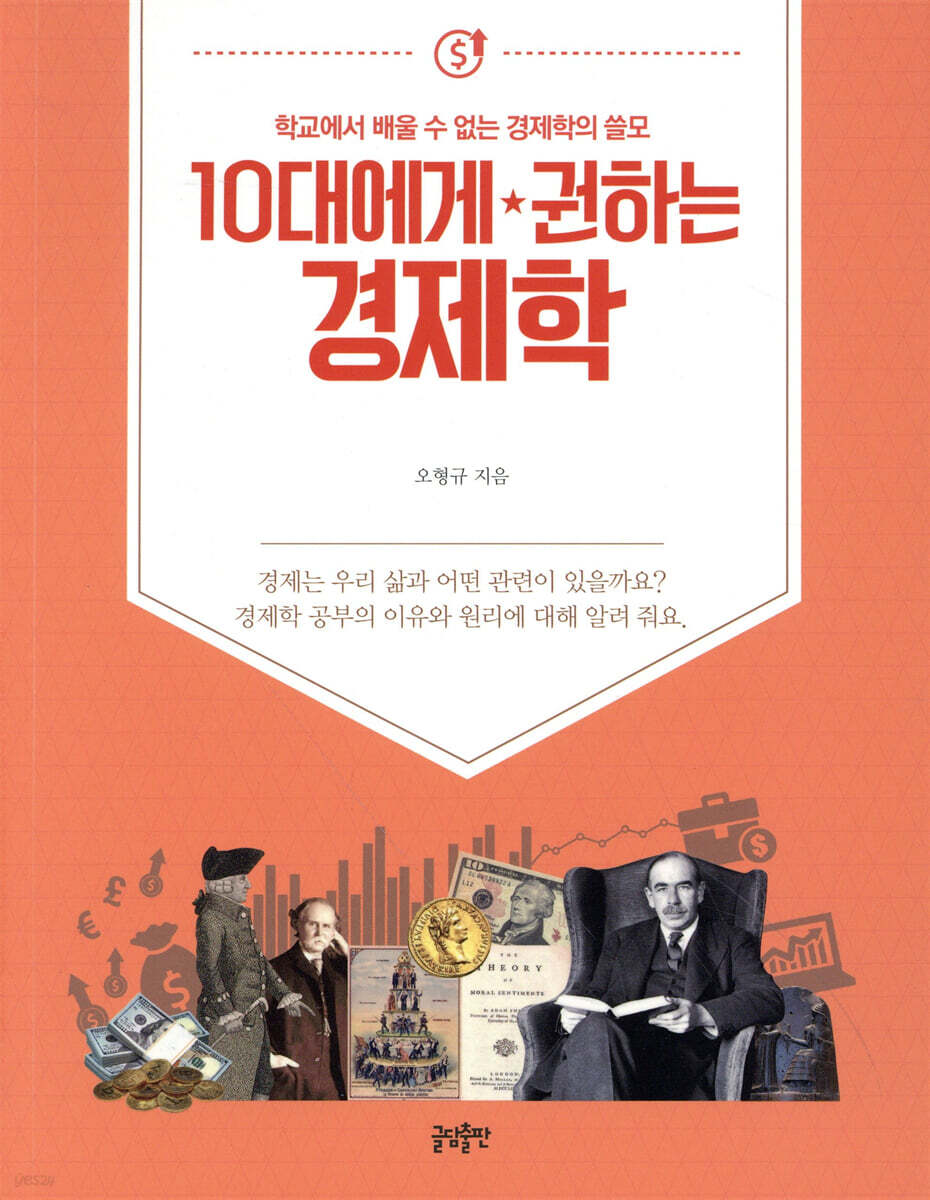
"Economics for Teenagers" introduces the reasons why teenagers, who have a lot to do, should study economics now and its usefulness.
It shows how studying economics in adolescence can become a weapon in life through economic principles and concepts hidden in everyday life, such as the tteokbokki you ate with a friend today, the clothes you are wearing, and the career path you choose.
It also introduces the major economic theories that changed the world and left their mark on economics through the stories of seven representative economists, including Adam Smith, the 'father of economics', and John Maynard Keynes, the 'savior of the Great Depression'.
250 years of economic history at a glance.
Along with this, we introduce a fun way to study economics through familiar means such as proverbs and movies, so that you can easily approach the difficult subject of economics.
As written by an economics journalist with 32 years of experience who strives to spread the word that economics can be fun, even young people unfamiliar with economics will be drawn in from the moment they open the first page.
You will be amazed at how fun and useful economics can be.
Explaining the reasons and value of studying economics during adolescence.
"Economics for Teenagers" introduces the reasons why teenagers, who have a lot to do, should study economics now and its usefulness.
It shows how studying economics in adolescence can become a weapon in life through economic principles and concepts hidden in everyday life, such as the tteokbokki you ate with a friend today, the clothes you are wearing, and the career path you choose.
It also introduces the major economic theories that changed the world and left their mark on economics through the stories of seven representative economists, including Adam Smith, the 'father of economics', and John Maynard Keynes, the 'savior of the Great Depression'.
250 years of economic history at a glance.
Along with this, we introduce a fun way to study economics through familiar means such as proverbs and movies, so that you can easily approach the difficult subject of economics.
As written by an economics journalist with 32 years of experience who strives to spread the word that economics can be fun, even young people unfamiliar with economics will be drawn in from the moment they open the first page.
You will be amazed at how fun and useful economics can be.
- You can preview some of the book's contents.
Preview
index
prolog
CHAPTER 01.
What is economics?
01.
With infinite wants and scarce resources, how can we satisfy everyone?
02.
The word economy comes from 'gyeongsejemin' (governance of the people).
03.
The economy is a lot like the human body.
04.
Economics is a discipline that considers the standard of living of citizens.
05.
Economics is very close to our daily lives.
Thinking Plus+ Economic principles and natural laws have many similarities.
CHAPTER 02.
How did economics come into being?
01.
Economics is not something that suddenly appeared.
02.
In the East, economic principles have been known for a long time.
03.
The Industrial Revolution in Britain gave birth to economics.
04.
Latecomer countries had different economic theories.
Think Plus + 'The Key to a National Economy' is GDP
CHAPTER 03.
Who studied economics and how?
01. Adam Smith, the 'Father of Economics'
02.
David Ricardo believed that free trade benefits everyone.
03.
Karl Marx predicted the collapse of the capitalist economy
Alfred Marshall, who emphasized 'cool reason and warm heart'
05.
John Maynard Keynes, who came forward as a relief pitcher during the Great Depression
06.
Joseph Schumpeter said that economic development comes from "creative destruction."
07.
Milton Friedman, who valued markets and freedom of choice
Think Plus+ Can economists predict the future of the economy?
CHAPTER 04.
How does economics relate to our lives?
01.
We play games and flirt every day
02.
The more developed a country is, the more diverse the types of jobs are.
03.
We also measure the economy by waste emissions.
Can learning economics help you manage your finances better?
CHAPTER 05.
How do you study economics?
01.
What is the easy way to study economics?
02.
Proverbs contain economic principles.
03.
You can also study economics through novels and movies.
04.
What can I do if I study economics?
Think Plus+ What is the difference between economics and business administration?
CHAPTER 01.
What is economics?
01.
With infinite wants and scarce resources, how can we satisfy everyone?
02.
The word economy comes from 'gyeongsejemin' (governance of the people).
03.
The economy is a lot like the human body.
04.
Economics is a discipline that considers the standard of living of citizens.
05.
Economics is very close to our daily lives.
Thinking Plus+ Economic principles and natural laws have many similarities.
CHAPTER 02.
How did economics come into being?
01.
Economics is not something that suddenly appeared.
02.
In the East, economic principles have been known for a long time.
03.
The Industrial Revolution in Britain gave birth to economics.
04.
Latecomer countries had different economic theories.
Think Plus + 'The Key to a National Economy' is GDP
CHAPTER 03.
Who studied economics and how?
01. Adam Smith, the 'Father of Economics'
02.
David Ricardo believed that free trade benefits everyone.
03.
Karl Marx predicted the collapse of the capitalist economy
Alfred Marshall, who emphasized 'cool reason and warm heart'
05.
John Maynard Keynes, who came forward as a relief pitcher during the Great Depression
06.
Joseph Schumpeter said that economic development comes from "creative destruction."
07.
Milton Friedman, who valued markets and freedom of choice
Think Plus+ Can economists predict the future of the economy?
CHAPTER 04.
How does economics relate to our lives?
01.
We play games and flirt every day
02.
The more developed a country is, the more diverse the types of jobs are.
03.
We also measure the economy by waste emissions.
Can learning economics help you manage your finances better?
CHAPTER 05.
How do you study economics?
01.
What is the easy way to study economics?
02.
Proverbs contain economic principles.
03.
You can also study economics through novels and movies.
04.
What can I do if I study economics?
Think Plus+ What is the difference between economics and business administration?
Detailed image
Publisher's Review
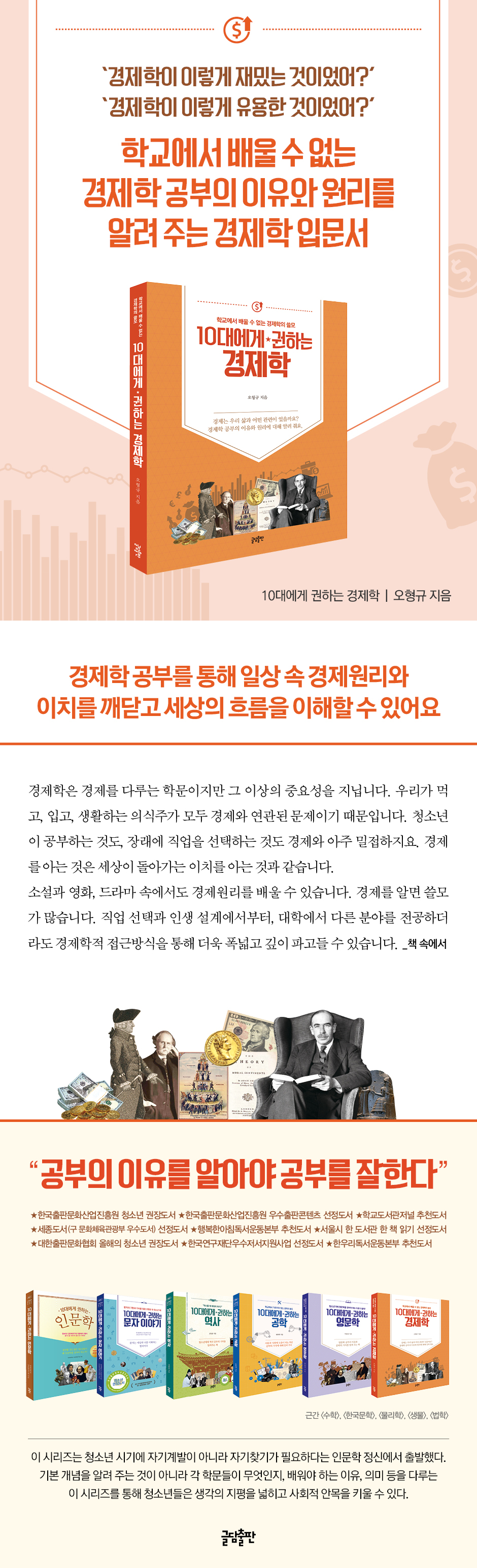
An introductory economics book that explains the reasons and principles of studying economics through the daily lives of teenagers.
Economics, full of formulas and diagrams, feels difficult and rigid.
Of course, if it's not something you're going to major in and it's not an elective for the college entrance exam, you don't feel the need to study it.
But economics, simply put, is the study of how we eat well and live well.
Economics is very closely related to our daily lives.
The reason we hesitate about whether to eat Jjajangmyeon or Jjamppong is because of the opportunity cost that arises from that choice.
Opportunity cost refers to the value that must be given up due to a choice.
The idol goods we buy today, the tteokbokki we eat with friends, even the things we study and the careers we choose in the future are all closely related to the economy.
This book explains why we should study economics through the economic principles and logic hidden in everyday life.
A glance at world history since the modern era
A History of Economics Through the Eyes of Seven Leading Economists
This book also introduces major economic theories along with the 250-year history of economics through seven leading economists, including Adam Smith and John Maynard Keynes.
By introducing the historical background and upbringing of each character, it is easy to understand why they advocated such economic theories.
And they tell us how their economic theories changed society.
For example, he explains why Marx published the Communist Manifesto through the extremely poor conditions of workers at the time.
And we'll introduce how his arguments have had a positive impact on today's income gap and inequality issues.
As you enjoy reading the author's stories of economists, you'll naturally come to understand the major economic theories and concepts that have shaped the world.
An easy way to study economics through familiar means such as movies, novels, and proverbs.
For young people who want to study economics but don't know where to start, we teach you how to study the basic principles of economics without formulas.
In "The Adventures of Tom Sawyer," Tom, who is punished by his aunt to paint a fence, pretends that it is an impossible task and asks his friends to do it for him.
This explains the concept of 'scarcity'.
The 'prisoner's dilemma' is explained through the content of [The Dark Knight], which states that among the two ships that have installed bombs, the people on the ship that blows up the other ship first will be spared.
The proverb, "A master who weeds is like a servant who does ninety-nine," explains the concept of the "principal-agent problem," which is a problem that arises when an agent pursues his own interests rather than those of the principal.
In this way, this book introduces a method for young people to study economics easily and without burden through familiar means such as movies, novels, and proverbs.
Economics, full of formulas and diagrams, feels difficult and rigid.
Of course, if it's not something you're going to major in and it's not an elective for the college entrance exam, you don't feel the need to study it.
But economics, simply put, is the study of how we eat well and live well.
Economics is very closely related to our daily lives.
The reason we hesitate about whether to eat Jjajangmyeon or Jjamppong is because of the opportunity cost that arises from that choice.
Opportunity cost refers to the value that must be given up due to a choice.
The idol goods we buy today, the tteokbokki we eat with friends, even the things we study and the careers we choose in the future are all closely related to the economy.
This book explains why we should study economics through the economic principles and logic hidden in everyday life.
A glance at world history since the modern era
A History of Economics Through the Eyes of Seven Leading Economists
This book also introduces major economic theories along with the 250-year history of economics through seven leading economists, including Adam Smith and John Maynard Keynes.
By introducing the historical background and upbringing of each character, it is easy to understand why they advocated such economic theories.
And they tell us how their economic theories changed society.
For example, he explains why Marx published the Communist Manifesto through the extremely poor conditions of workers at the time.
And we'll introduce how his arguments have had a positive impact on today's income gap and inequality issues.
As you enjoy reading the author's stories of economists, you'll naturally come to understand the major economic theories and concepts that have shaped the world.
An easy way to study economics through familiar means such as movies, novels, and proverbs.
For young people who want to study economics but don't know where to start, we teach you how to study the basic principles of economics without formulas.
In "The Adventures of Tom Sawyer," Tom, who is punished by his aunt to paint a fence, pretends that it is an impossible task and asks his friends to do it for him.
This explains the concept of 'scarcity'.
The 'prisoner's dilemma' is explained through the content of [The Dark Knight], which states that among the two ships that have installed bombs, the people on the ship that blows up the other ship first will be spared.
The proverb, "A master who weeds is like a servant who does ninety-nine," explains the concept of the "principal-agent problem," which is a problem that arises when an agent pursues his own interests rather than those of the principal.
In this way, this book introduces a method for young people to study economics easily and without burden through familiar means such as movies, novels, and proverbs.
GOODS SPECIFICS
- Publication date: November 5, 2020
- Page count, weight, size: 224 pages | 440g | 170*220*20mm
- ISBN13: 9791186650974
- ISBN10: 1186650974
You may also like
카테고리
korean


korean

![GQ KOREA Mark (Monthly): December [2025]](http://librairie.coreenne.fr/cdn/shop/files/8ef265dbbfbf186523ed75ba7319009d.jpg?v=1765340328&width=3840)


