

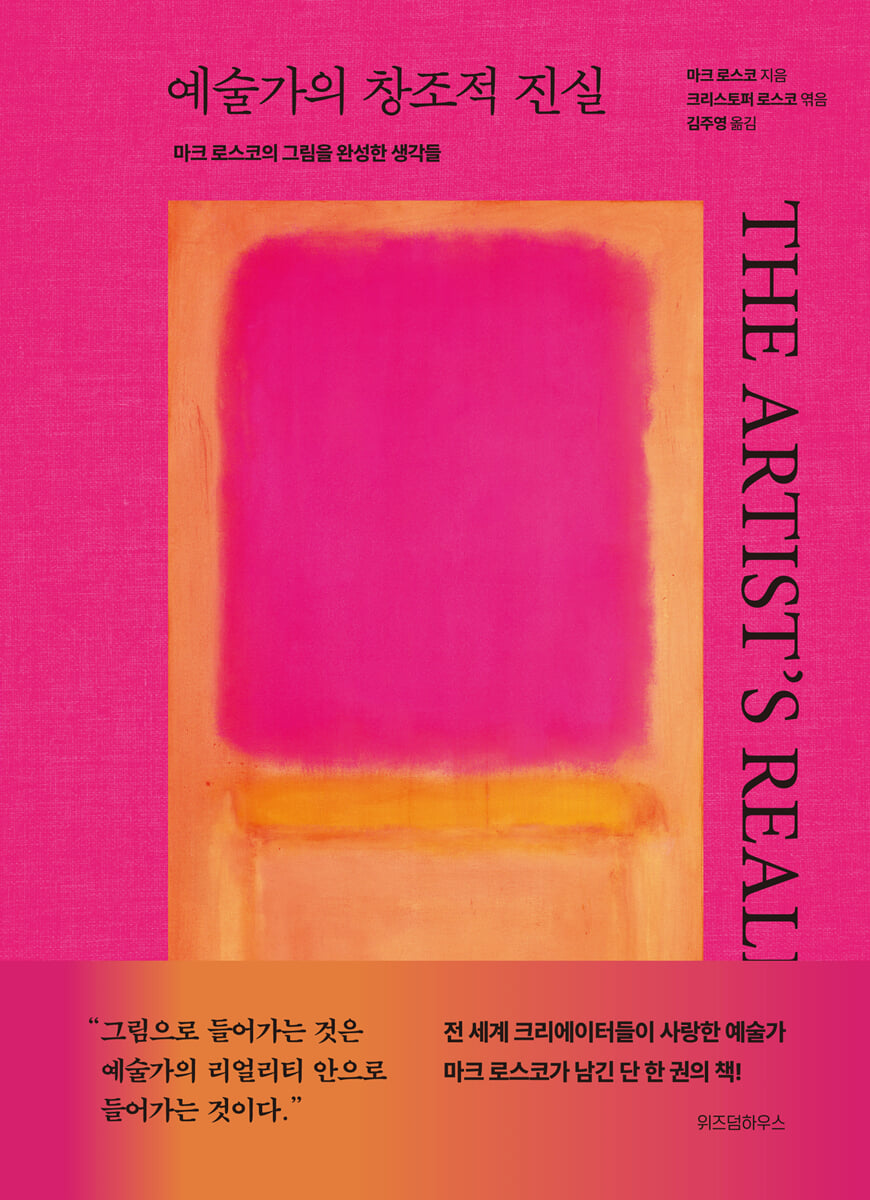
The artist's creative truth
 |
Description
Book Introduction
The book that begins Mark Rothko's philosophy on art.
Why are we moved by Mark Rothko's 'Painting of Nothing'?
What did he want to convey through this harmony of intense colors?
《The Artist's Creative Truth》 is a book compiled by the son of Mark Rothko, who discovered by chance decades after discovering manuscripts written by Mark Rothko, considered one of the greatest modern artists, between the late 1930s and early 1940s.
In the book, Roscoe discusses various thoughts on art and artists, including modern art and art history, mythology and indigenous art, living as an artist, the true meaning of art, and reflections on beauty.
In it, we can glimpse Roscoe's own efforts to find reality and truth as an artist and a thinker.
Why are we moved by Mark Rothko's 'Painting of Nothing'?
What did he want to convey through this harmony of intense colors?
《The Artist's Creative Truth》 is a book compiled by the son of Mark Rothko, who discovered by chance decades after discovering manuscripts written by Mark Rothko, considered one of the greatest modern artists, between the late 1930s and early 1940s.
In the book, Roscoe discusses various thoughts on art and artists, including modern art and art history, mythology and indigenous art, living as an artist, the true meaning of art, and reflections on beauty.
In it, we can glimpse Roscoe's own efforts to find reality and truth as an artist and a thinker.
- You can preview some of the book's contents.
Preview
index
Introduction _ About Father Mark Rothko (Christopher Rothko)
The Artist's Dilemma
Art as a Biological Function
Art as Action
Integrity of the formative process
Art, Reality, Sensibility
Individualization and generalization
Post-Renaissance generalization
Emotional Impressionism and Dramatic Impressionism
objective impressionism
plasticity
space
beauty
naturalism
Topic and Subject
myth
Myths of today
Modern Art and Primitive Civilization
contemporary art
primitivism
indigenous art
Conclusion _ Mark Rothko, the Painter of Thought (Makoto Fujimura)
The Artist's Dilemma
Art as a Biological Function
Art as Action
Integrity of the formative process
Art, Reality, Sensibility
Individualization and generalization
Post-Renaissance generalization
Emotional Impressionism and Dramatic Impressionism
objective impressionism
plasticity
space
beauty
naturalism
Topic and Subject
myth
Myths of today
Modern Art and Primitive Civilization
contemporary art
primitivism
indigenous art
Conclusion _ Mark Rothko, the Painter of Thought (Makoto Fujimura)
Detailed image
Into the book
He wasn't interested in drawing likenesses.
Instead, I wanted to give the painting a realistic weight and a sense of real existence.
Each work of art has its own reality.
In other words, a painting is not simply an imitation of the world that surrounds us and that we can perceive with our eyes.
--- p.27~28
Rather than raising your voice to prove it, if a lie is repeated many times, the truth will naturally reveal itself.
No one questions the authority of doctors or plumbers, but everyone considers themselves to be excellent judges and appropriate arbiters of what art is and how it should be made.
--- p.65
People who are not artists do not understand that man cannot live by bread alone, but artists understand that man must have bread to live.
--- p.79
Both artists and plants must overcome the demands of their environment to survive.
Survival means having one's own identity, one's own intentions, and one's own unique role.
From this perspective, art is about the unique elements that surround it, and it is a story that overwhelms those who would interfere with it.
Sometimes art, in order to survive, temporarily evades itself by appearing as something it is not.
It will also disguise itself.
And whenever the opportunity arises, I will take off my disguise and appear as my true self.
--- p.92
Beethoven's Symphony No. 6, "Pastoral," cannot be understood by reading pastoral poems, describing forests and fields, fords and streams, or studying the sounds of birds or the laws of harmony.
Law books cannot reconstruct the School of Athens depicted by Raphael.
And anyone who has gained knowledge about a painting or a book by reading the reviews of professional critics has no experience with art itself.
Each reality, each truth, is confined within its own realm and is perceived through its own means.
--- p.101
An artist's reality reflects how he or she understands his or her time, and his or her creative work embodies that understanding.
--- p.103
In each era, artists deal with their own firm truths, or variations of those truths.
The passion we pour into such things is the greatest gift an artist can give us.
--- p.147
Beauty means 'emotional elevation', and this is the result of a characteristic common to all great works of art.
If we apply this definition of beauty to the concept of plasticity, the sum total of all plasticity in a painting should have the power to evoke a sense of beauty.
--- p.181
Artists can go beyond depicting outward appearances and use their skills to portray inner truths.
This is possible by paying attention to the subtle but profound details that are difficult to express on the surface and drawing them.
The more profound the better.
--- p.189
It is this heroic problem that distinguishes art from mere descriptive anecdote.
Because art always ultimately deals with the problem of generalization.
Art must provide a dimension of infinity in any situation.
Instead, I wanted to give the painting a realistic weight and a sense of real existence.
Each work of art has its own reality.
In other words, a painting is not simply an imitation of the world that surrounds us and that we can perceive with our eyes.
--- p.27~28
Rather than raising your voice to prove it, if a lie is repeated many times, the truth will naturally reveal itself.
No one questions the authority of doctors or plumbers, but everyone considers themselves to be excellent judges and appropriate arbiters of what art is and how it should be made.
--- p.65
People who are not artists do not understand that man cannot live by bread alone, but artists understand that man must have bread to live.
--- p.79
Both artists and plants must overcome the demands of their environment to survive.
Survival means having one's own identity, one's own intentions, and one's own unique role.
From this perspective, art is about the unique elements that surround it, and it is a story that overwhelms those who would interfere with it.
Sometimes art, in order to survive, temporarily evades itself by appearing as something it is not.
It will also disguise itself.
And whenever the opportunity arises, I will take off my disguise and appear as my true self.
--- p.92
Beethoven's Symphony No. 6, "Pastoral," cannot be understood by reading pastoral poems, describing forests and fields, fords and streams, or studying the sounds of birds or the laws of harmony.
Law books cannot reconstruct the School of Athens depicted by Raphael.
And anyone who has gained knowledge about a painting or a book by reading the reviews of professional critics has no experience with art itself.
Each reality, each truth, is confined within its own realm and is perceived through its own means.
--- p.101
An artist's reality reflects how he or she understands his or her time, and his or her creative work embodies that understanding.
--- p.103
In each era, artists deal with their own firm truths, or variations of those truths.
The passion we pour into such things is the greatest gift an artist can give us.
--- p.147
Beauty means 'emotional elevation', and this is the result of a characteristic common to all great works of art.
If we apply this definition of beauty to the concept of plasticity, the sum total of all plasticity in a painting should have the power to evoke a sense of beauty.
--- p.181
Artists can go beyond depicting outward appearances and use their skills to portray inner truths.
This is possible by paying attention to the subtle but profound details that are difficult to express on the surface and drawing them.
The more profound the better.
--- p.189
It is this heroic problem that distinguishes art from mere descriptive anecdote.
Because art always ultimately deals with the problem of generalization.
Art must provide a dimension of infinity in any situation.
--- p.241
Publisher's Review
“In every picture, its own reality,
“Here is an artist who strives to find the truth.”
Mark Rothko, an artist who sought to express the inexpressible
A source of delicate and special creativity
Huge canvas, intense colors, simple expressions.
When people talk about modern art master Mark Rothko, they often think of his unique painting style.
Before becoming a unique painter with both individuality and genius, Mark Rothko was a man who constantly pondered and explored art and himself as an artist.
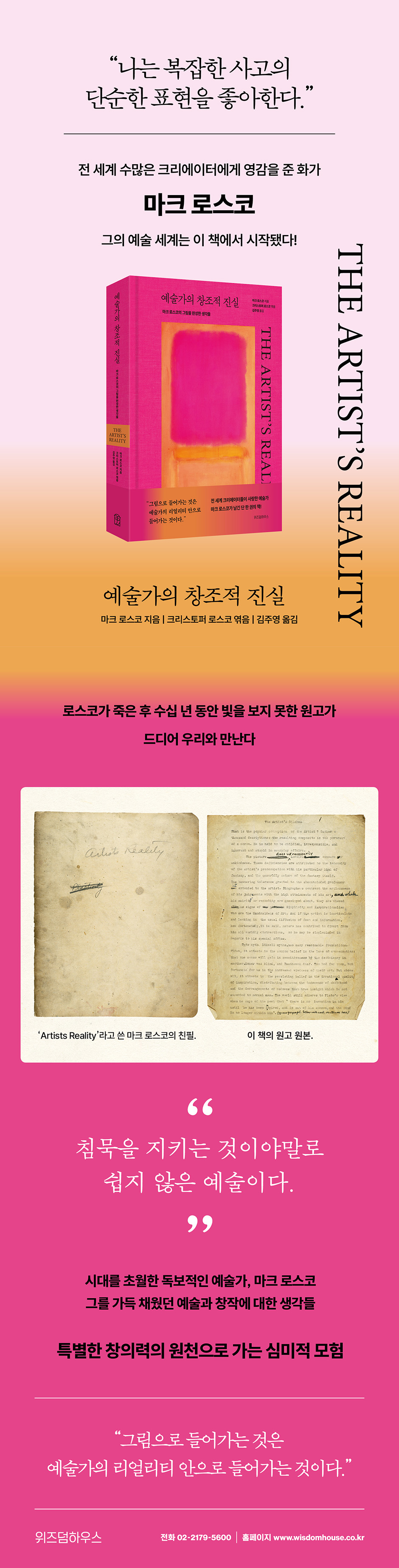
《The Artist's Creative Truth》 was written by Roscoe just before he became a great painter. After his death, his son discovered the manuscript in a storage room and compiled and published it.
As the titles of each chapter suggest, this book presents a variety of thoughts related to art that interested Roscoe during his lifetime.
Roscoe writes candidly about the various elements necessary to complete the exterior and interior of a work of art, including the artist's concerns, subject matter, form, beauty, space, mythology, naturalism, and indigenous art.
Mark Rothko is an artist who has inspired many creators, including Steve Jobs and RM.
As a creator, his philosophy and intense thinking have come to us over a long period of time.
“I took pictures of each and every page of the fragile manuscript.”
The manuscript, once a subject of much speculation, finally meets the world.
Mark Rothko committed suicide in his studio on February 25, 1970.
After his sudden death, an ugly property dispute began, during which it was discovered that there was a manuscript written by Roscoe.
A manuscript that had been rumored but no one knew existed suddenly became a point of contention.
But as the dispute dragged on, the manuscript of the rumor was forgotten, and no one even thought to look for it.
The manuscript was first revealed in 1988.
I discovered it by chance while organizing the warehouse.
However, the manuscript remained abandoned for a long time after that.
Christopher Rothko, Mark Rothko's son, reveals how he discovered the manuscript for this book, why it took so long to get published, his concerns about publishing the book, and his thoughts about his father as an artist as he read the manuscript himself and arranged the text after deciding to publish it.
He also estimates the time period of the text's composition based on his examination of letters exchanged with acquaintances and the themes covered in his paintings during his lifetime.
And he explains the mood and context of the text by connecting it to the situation he knows about his father.
The writings of a great New York artist, who would go on to influence many people long after his death, written over 80 years ago, come to us in this way.
“This is Roscoe’s development as an artist and thinker.”
In times of change, he took up the pen instead of the brush.
Mark Rothko achieved great fame even during his lifetime.
He was a painter whose work was recognized by the world to the extent that he received a commission for the 'Seagram Project' for a then-unprecedented sum of $35,000.
But Roscoe was different when he wrote the manuscript for this book.
I was in a slump and couldn't pull myself together.
He didn't sell his work or hold any exhibitions.
They were separated because they could not maintain their marriage.
Roscoe wrote in this context.
So, in your writing, you can sometimes feel complaints and nervousness, sometimes fear, and occasionally regret.
Roscoe also criticizes certain artists who were popular at the time.
While reading this book, we need to remember the situation and psychological basis Roscoe was in at the time.
There are works that come to mind when we think of Mark Rothko, such as reds, oranges, and violets that fill large canvases.
《The Artist's Creative Truth》 is a book that records what Roscoe thought about art, creation, etc. before he created the masterpieces that made him a great artist.
Even if you just look at the works of Roscoe that were included in the main text of the book and were created around the time this book was written, you can feel a clear difference from the representative works of his that we know.
He was going through a new movement as an artist.
And he was writing his thoughts about art and artists without showing them to anyone.
If this book had not come out, it would probably have ended up being Roscoe's own.
But his sentences, after many twists and turns, became a book, and only then did he share his thoughts with us in the future.
“He wrote a book because he couldn’t express himself satisfactorily through pictures.”
The Key to the Mysterious City of Mark Rothko
These manuscripts by Mark Rothko were first published as a book in the United States in 2006, and 17 years later they were reorganized into a revised edition.
In preparing the revised edition, Rothko's son, Christopher Rothko, added a note from artist Makoto Fujimura, dedicated to Mark Rothko, and added supporting material that slightly advanced the date of the book's writing.
When the first edition was published, it was said that the manuscript was written between 1940 and 1941, but after publication, additional evidence was found to indicate that it was written in the 1930s.
He is convinced by carefully comparing the contents of this book with other writings of his father, Mark Rothko, called 'Memo Notes'.
This fact will provide new intellectual interest for Roscoe's fans, connecting his work and writings from the 1930s.
Roscoe never finished his manuscript properly.
There are many parts that are difficult to understand, some sentences are very long and difficult to understand, and some sentences do not have proper periods.
As his son Christopher notes in his "Introduction," the writings are rife with metaphors that seem "to show off intellectual prowess," and they often use a vast amount of ambiguous and confusing words.
But we must examine his perspective on himself as an artist.
Even amidst public indifference, we must read Roscoe's writings with the understanding that he was not a bystander but a participant who contemplated art and constantly devoted himself to creation.
Later he would be called the great painter of silence.
His beginning is right here.
“Here is an artist who strives to find the truth.”
Mark Rothko, an artist who sought to express the inexpressible
A source of delicate and special creativity
Huge canvas, intense colors, simple expressions.
When people talk about modern art master Mark Rothko, they often think of his unique painting style.
Before becoming a unique painter with both individuality and genius, Mark Rothko was a man who constantly pondered and explored art and himself as an artist.
《The Artist's Creative Truth》 was written by Roscoe just before he became a great painter. After his death, his son discovered the manuscript in a storage room and compiled and published it.
As the titles of each chapter suggest, this book presents a variety of thoughts related to art that interested Roscoe during his lifetime.
Roscoe writes candidly about the various elements necessary to complete the exterior and interior of a work of art, including the artist's concerns, subject matter, form, beauty, space, mythology, naturalism, and indigenous art.
Mark Rothko is an artist who has inspired many creators, including Steve Jobs and RM.
As a creator, his philosophy and intense thinking have come to us over a long period of time.
“I took pictures of each and every page of the fragile manuscript.”
The manuscript, once a subject of much speculation, finally meets the world.
Mark Rothko committed suicide in his studio on February 25, 1970.
After his sudden death, an ugly property dispute began, during which it was discovered that there was a manuscript written by Roscoe.
A manuscript that had been rumored but no one knew existed suddenly became a point of contention.
But as the dispute dragged on, the manuscript of the rumor was forgotten, and no one even thought to look for it.
The manuscript was first revealed in 1988.
I discovered it by chance while organizing the warehouse.
However, the manuscript remained abandoned for a long time after that.
Christopher Rothko, Mark Rothko's son, reveals how he discovered the manuscript for this book, why it took so long to get published, his concerns about publishing the book, and his thoughts about his father as an artist as he read the manuscript himself and arranged the text after deciding to publish it.
He also estimates the time period of the text's composition based on his examination of letters exchanged with acquaintances and the themes covered in his paintings during his lifetime.
And he explains the mood and context of the text by connecting it to the situation he knows about his father.
The writings of a great New York artist, who would go on to influence many people long after his death, written over 80 years ago, come to us in this way.
“This is Roscoe’s development as an artist and thinker.”
In times of change, he took up the pen instead of the brush.
Mark Rothko achieved great fame even during his lifetime.
He was a painter whose work was recognized by the world to the extent that he received a commission for the 'Seagram Project' for a then-unprecedented sum of $35,000.
But Roscoe was different when he wrote the manuscript for this book.
I was in a slump and couldn't pull myself together.
He didn't sell his work or hold any exhibitions.
They were separated because they could not maintain their marriage.
Roscoe wrote in this context.
So, in your writing, you can sometimes feel complaints and nervousness, sometimes fear, and occasionally regret.
Roscoe also criticizes certain artists who were popular at the time.
While reading this book, we need to remember the situation and psychological basis Roscoe was in at the time.
There are works that come to mind when we think of Mark Rothko, such as reds, oranges, and violets that fill large canvases.
《The Artist's Creative Truth》 is a book that records what Roscoe thought about art, creation, etc. before he created the masterpieces that made him a great artist.
Even if you just look at the works of Roscoe that were included in the main text of the book and were created around the time this book was written, you can feel a clear difference from the representative works of his that we know.
He was going through a new movement as an artist.
And he was writing his thoughts about art and artists without showing them to anyone.
If this book had not come out, it would probably have ended up being Roscoe's own.
But his sentences, after many twists and turns, became a book, and only then did he share his thoughts with us in the future.
“He wrote a book because he couldn’t express himself satisfactorily through pictures.”
The Key to the Mysterious City of Mark Rothko
These manuscripts by Mark Rothko were first published as a book in the United States in 2006, and 17 years later they were reorganized into a revised edition.
In preparing the revised edition, Rothko's son, Christopher Rothko, added a note from artist Makoto Fujimura, dedicated to Mark Rothko, and added supporting material that slightly advanced the date of the book's writing.
When the first edition was published, it was said that the manuscript was written between 1940 and 1941, but after publication, additional evidence was found to indicate that it was written in the 1930s.
He is convinced by carefully comparing the contents of this book with other writings of his father, Mark Rothko, called 'Memo Notes'.
This fact will provide new intellectual interest for Roscoe's fans, connecting his work and writings from the 1930s.
Roscoe never finished his manuscript properly.
There are many parts that are difficult to understand, some sentences are very long and difficult to understand, and some sentences do not have proper periods.
As his son Christopher notes in his "Introduction," the writings are rife with metaphors that seem "to show off intellectual prowess," and they often use a vast amount of ambiguous and confusing words.
But we must examine his perspective on himself as an artist.
Even amidst public indifference, we must read Roscoe's writings with the understanding that he was not a bystander but a participant who contemplated art and constantly devoted himself to creation.
Later he would be called the great painter of silence.
His beginning is right here.
GOODS SPECIFICS
- Date of issue: August 30, 2024
- Format: Hardcover book binding method guide
- Page count, weight, size: 328 pages | 620g | 150*212*23mm
- ISBN13: 9791171712397
- ISBN10: 1171712391
You may also like
카테고리
korean


korean

![GQ KOREA Mark (Monthly): December [2025]](http://librairie.coreenne.fr/cdn/shop/files/8ef265dbbfbf186523ed75ba7319009d.jpg?v=1765340328&width=3840)


