

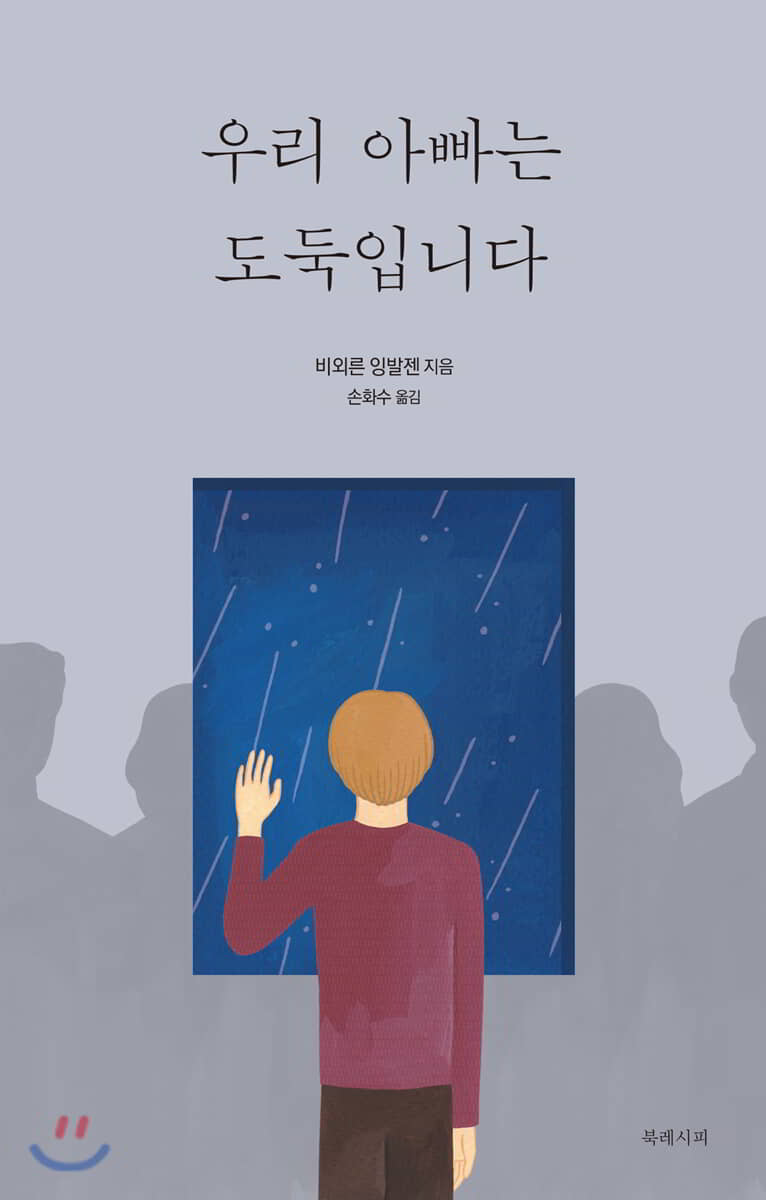
My father is a thief
 |
Description
Book Introduction
“Tell me what your father did!”
The story of a boy suffering from social prejudice and bullying.
One day, his father is suddenly arrested by the police, and Leo doesn't understand what is happening.
His mother cries and tells him that they have to move, and his school friends gossip that Leo's father is a thief.
In a small rural town, the father is suddenly branded as a notorious thief.
Because of this, Leo is bullied by everyone, but he can neither fight nor run away.
We must accept reality as it is.
Will the boy and his father ever be able to reconcile in this open ending?
The story of a boy suffering from social prejudice and bullying.
One day, his father is suddenly arrested by the police, and Leo doesn't understand what is happening.
His mother cries and tells him that they have to move, and his school friends gossip that Leo's father is a thief.
In a small rural town, the father is suddenly branded as a notorious thief.
Because of this, Leo is bullied by everyone, but he can neither fight nor run away.
We must accept reality as it is.
Will the boy and his father ever be able to reconcile in this open ending?
- You can preview some of the book's contents.
Preview
Detailed image
Publisher's Review
In a small, isolated town, what if something unexpected happens to someone?
Stories of people living in isolation amid indifference and coldness
Winner of several prestigious European literary awards, My Father is a Thief is a book written to tell the story of marginalized people living in a small, isolated village.
Although the book depicts a child who is bullied because of his parents' mistakes, it depicts a broader community plagued by petty crime.
Her father is arrested and her mother faces a wall of revenge and cynicism from those around her.
While the author cautions us that small acts of revenge and self-righteousness can lead to the worst possible outcome, he also leaves us with a message of hope through an open ending.
The reason I wrote this book was to talk about the marginalized people living in small, remote villages.
The people in the neighborhood know who I am, who my parents are, and what happened in my house.
But what happens when something unexpected happens to someone? What happens when someone does something bad? People who steal things tend to go to jail.
But what will the remaining family members experience? How will the neighborhood and society as a whole view them? - From the introduction
A fairy tale for adults that soothes the wounds of childhood hurt by the mistakes of adults.
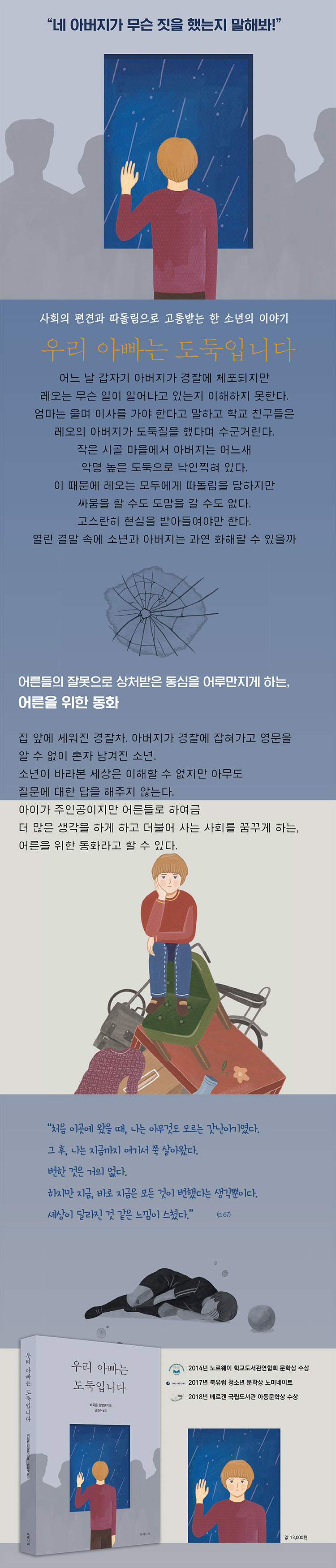
A police car parked in front of the house.
A boy who is left alone after his father is arrested by the police and cannot understand what is happening.
It's a rather sad book that deals with the public, yet never justifiable, story that can happen in a small-town setting.
However, the sentences are very concise and the writing is clear and lucid.
That alone is enough to read the characters' emotions.
The world the boy sees is incomprehensible, but no one gives him answers to his questions.
Sometimes the irony is portrayed humorously, but at other times it leaves the reader feeling sad.
Writers generally find themes in life and write novels, essays, or poems.
And there is a distinction between books written for children and books written for adults.
Bjorn Ingvalsen encompasses them all.
"My Dad is a Thief" is a fairy tale for adults, with a child as the main character, but it also makes adults think more and dream of a society where we live together.
“Bjorn Ingvalsen, through a dynamic plot, portrays the suffering of victims of bullying, while also expressing the indifference and coldness of those who stand by in silence.
“It conveys morals and lessons to readers in a moving way without superficially stating them.”
- Stavanger Aftenblad (Norwegian daily newspaper)
“A truly special book that expresses human emotions with such sincerity.” - NRK (Norwegian National Broadcasting Corporation)
A harsh reality portrayed through the eyes of a child who cannot understand why he must suffer.
Bjorn Ingvalsen is very adept at seeing the world through the eyes of a boy.
The conversations between adults reflected in Leo's eyes are filled with lies, shock, confusion, and sadness.
For Leo, his father is no longer the father who takes responsibility for a warm and happy home.
I can't even meet my father who suddenly goes to prison.
So from the very beginning of the book, the father disappears from the boy's life.
Even that, the boy hears the news from his neighbor.
Your father was arrested by the police.
Inside the house, a mother is crying among strangers.
Without any explanation, Mom has to go with them.
Leo's head is full of questions, but there is no one to answer them.
Only coldness, alienation, and discrimination await the boy.
The boy can no longer play soccer with his friends or walk side by side with them on the way to school, and he becomes increasingly isolated from the world amidst everyone's gossip.
In religion class, we often talked about stealing.
They say you shouldn't steal.
I wish the teacher hadn't told me about stealing.
Every time the teacher looked away, a paper ball flew at my head.
Some fell to the floor and absorbed the stagnant water.
After a while, more and more wet paper balls began to appear on the watery floor.
(p.
85)
It is not uncommon to find books about children who are bullied due to their parents' mistakes.
But this book depicts the stark reality in another way.
My father is a thief and is in prison.
It was not clear whether he was falsely accused or actually committed a crime.
The conclusion is not revealed until the end of the book.
There are only guesses.
Will the father ever be able to return to his child?
A story about a small family taking on a huge community.
In this painful story, we can vaguely read the message the author is trying to convey.
That a child cannot be punished for the sins of his father.
An open ending: Will the boy find hope again?
My father was branded a notorious thief by everyone in the small town.
My father stole tools and equipment from the factory where he worked, stole from his coworkers, and broke into neighbors' homes and garages.
It's heartbreaking to imagine Leo's emotions when he discovers that the bike he received for his birthday has been stolen.
Your father is a thief.
Everyone says so.
Everyone hates your father because he is a thief.
And everyone hates you because your father is a thief.
So what should we do? Should we fight? Should we hide? We must acknowledge the undeniable truth.
Everyone is right.
My father is a thief.
“When I first came here, I was a newborn baby who didn’t know anything.
Since then, I have lived here ever since.
Little has changed.
But now, right now, I just feel like everything has changed.
“I had a fleeting feeling that the world had changed.” (p.
67)
Leo's father cannot make excuses or apologize.
In the story, he exists completely outside the frame.
But everyone says Leo's father stole everything.
Even my mother says that all the money has been taken out of her bank account.
But Björn Ingvalsen installed devices here and there to show that not everyone in the small rural community was so pessimistic.
Perhaps the boy and his father can have some sort of reconciliation.
The hint lies in the book's open ending.
Stories of people living in isolation amid indifference and coldness
Winner of several prestigious European literary awards, My Father is a Thief is a book written to tell the story of marginalized people living in a small, isolated village.
Although the book depicts a child who is bullied because of his parents' mistakes, it depicts a broader community plagued by petty crime.
Her father is arrested and her mother faces a wall of revenge and cynicism from those around her.
While the author cautions us that small acts of revenge and self-righteousness can lead to the worst possible outcome, he also leaves us with a message of hope through an open ending.
The reason I wrote this book was to talk about the marginalized people living in small, remote villages.
The people in the neighborhood know who I am, who my parents are, and what happened in my house.
But what happens when something unexpected happens to someone? What happens when someone does something bad? People who steal things tend to go to jail.
But what will the remaining family members experience? How will the neighborhood and society as a whole view them? - From the introduction
A fairy tale for adults that soothes the wounds of childhood hurt by the mistakes of adults.
A police car parked in front of the house.
A boy who is left alone after his father is arrested by the police and cannot understand what is happening.
It's a rather sad book that deals with the public, yet never justifiable, story that can happen in a small-town setting.
However, the sentences are very concise and the writing is clear and lucid.
That alone is enough to read the characters' emotions.
The world the boy sees is incomprehensible, but no one gives him answers to his questions.
Sometimes the irony is portrayed humorously, but at other times it leaves the reader feeling sad.
Writers generally find themes in life and write novels, essays, or poems.
And there is a distinction between books written for children and books written for adults.
Bjorn Ingvalsen encompasses them all.
"My Dad is a Thief" is a fairy tale for adults, with a child as the main character, but it also makes adults think more and dream of a society where we live together.
“Bjorn Ingvalsen, through a dynamic plot, portrays the suffering of victims of bullying, while also expressing the indifference and coldness of those who stand by in silence.
“It conveys morals and lessons to readers in a moving way without superficially stating them.”
- Stavanger Aftenblad (Norwegian daily newspaper)
“A truly special book that expresses human emotions with such sincerity.” - NRK (Norwegian National Broadcasting Corporation)
A harsh reality portrayed through the eyes of a child who cannot understand why he must suffer.
Bjorn Ingvalsen is very adept at seeing the world through the eyes of a boy.
The conversations between adults reflected in Leo's eyes are filled with lies, shock, confusion, and sadness.
For Leo, his father is no longer the father who takes responsibility for a warm and happy home.
I can't even meet my father who suddenly goes to prison.
So from the very beginning of the book, the father disappears from the boy's life.
Even that, the boy hears the news from his neighbor.
Your father was arrested by the police.
Inside the house, a mother is crying among strangers.
Without any explanation, Mom has to go with them.
Leo's head is full of questions, but there is no one to answer them.
Only coldness, alienation, and discrimination await the boy.
The boy can no longer play soccer with his friends or walk side by side with them on the way to school, and he becomes increasingly isolated from the world amidst everyone's gossip.
In religion class, we often talked about stealing.
They say you shouldn't steal.
I wish the teacher hadn't told me about stealing.
Every time the teacher looked away, a paper ball flew at my head.
Some fell to the floor and absorbed the stagnant water.
After a while, more and more wet paper balls began to appear on the watery floor.
(p.
85)
It is not uncommon to find books about children who are bullied due to their parents' mistakes.
But this book depicts the stark reality in another way.
My father is a thief and is in prison.
It was not clear whether he was falsely accused or actually committed a crime.
The conclusion is not revealed until the end of the book.
There are only guesses.
Will the father ever be able to return to his child?
A story about a small family taking on a huge community.
In this painful story, we can vaguely read the message the author is trying to convey.
That a child cannot be punished for the sins of his father.
An open ending: Will the boy find hope again?
My father was branded a notorious thief by everyone in the small town.
My father stole tools and equipment from the factory where he worked, stole from his coworkers, and broke into neighbors' homes and garages.
It's heartbreaking to imagine Leo's emotions when he discovers that the bike he received for his birthday has been stolen.
Your father is a thief.
Everyone says so.
Everyone hates your father because he is a thief.
And everyone hates you because your father is a thief.
So what should we do? Should we fight? Should we hide? We must acknowledge the undeniable truth.
Everyone is right.
My father is a thief.
“When I first came here, I was a newborn baby who didn’t know anything.
Since then, I have lived here ever since.
Little has changed.
But now, right now, I just feel like everything has changed.
“I had a fleeting feeling that the world had changed.” (p.
67)
Leo's father cannot make excuses or apologize.
In the story, he exists completely outside the frame.
But everyone says Leo's father stole everything.
Even my mother says that all the money has been taken out of her bank account.
But Björn Ingvalsen installed devices here and there to show that not everyone in the small rural community was so pessimistic.
Perhaps the boy and his father can have some sort of reconciliation.
The hint lies in the book's open ending.
GOODS SPECIFICS
- Date of issue: July 19, 2019
- Page count, weight, size: 204 pages | 308g | 120*188*20mm
- ISBN13: 9791188140893
- ISBN10: 1188140892
You may also like
카테고리
korean


korean

![GQ KOREA Mark (Monthly): December [2025]](http://librairie.coreenne.fr/cdn/shop/files/8ef265dbbfbf186523ed75ba7319009d.jpg?v=1765340328&width=3840)


